4 641 résultats
193651694Prague: ÚstÅ™ednà knihovna lavnÃho mÄ›sta Prahy Prague Central Library/ Printed by V. Neubert and Sons 1936. First edition. Softcover. Large quarto. Unpaginated. Black paper wrappers. Main title page and additional exhibition title page both illustrated with striking photo-montage in b/w. Title page signed in pen by Karel Hajek.<br /> <br /> This finely printed photo-illustrated work was published to coincide with the the exhibition of photography by acclaimed Czech photographer and photo-journalist Karel Hajek 1900-1978 held in January 1936 at the Prague Central Library. Images throughout the publication are all gorgeous examples of vibrant b/w photogravure printing. The layout design and typography of the work was created by Hajek in collaboration with the acclaimed Czech illustrator puppeteer and animator Jiřà Trnka 1912-1969. Following the title page with a playful photomontage showing the photographer in a newsprint suit is a page of introductory text for the exhibition from writer playwright and filmmaker Vladislav VanÄura 1891-1942 art critic Bohumil Markalous 1882-1952 and finally Hajek himself. This is followed by a beautiful full-page photomontage of images by Hajek which serves as an introduction to the exhibition. A selection of 7 captioned images from the exhibition is then followed by a text page of technical information concerning the photography and a full list of the 181 photos included in the exhibition along with their respective film stocks. The final pages are comprised of numerous finely photo-illustrated period advertisements all also printed very nicely in photogravure. A now very scarce document of the early career of this important figure of Czech photo-journalism.<br /> <br /> Minor scratches and abrasions to the front wrappers. Light chipping with tiny stains along the bottom edge of the back wrapper. Lightly rubbed at the head and tail of the spine. Starting at the gutter of the interior front cover. All images throughout very clean and nice. Wrappers in very good interior in very good condition overall. 5 OCLC copies worldwide. Not found in 'Czech and Slovak Photo Publications 1918–1989' Manfred Heiting ed. [Ústřední knihovna lavního města Prahy] (Prague Central Library)/ Printed by V. Neubert and Sons unknown
193345815Kharkiv: Рух Ruch 1933. First edition. Hardcover. fair to vg. Quarto. 105pp. 1. B/w photo-illustrated dust jacket with black lettering on red on the front cover. Yellow cloth boards with red lettering and a cut/out from a b/w photograph mounted on the front cover. Red endpapers. This scarce work is a comprehensive monograph on the life and early career of acclaimed Ukrainian stage and film actor Amvrosi Buchma 1891-1957. Buchma's most notable film roles are perhaps in Aleksandr Dovzhenko's "Arsenal" 1929 pictured in this book and Sergei Eisenstien's "Ivan the Terrible Pt. I & II" 1944 and 1958. He was a prominent member of the Berezil theater from 1922-1936. Issued to commemorate the 25th anniversary of his entry to the stage as a professional actor the publication is illustrated throughout with countless b/w photographic reproductions and covers the actor's work on both stage and screen. Index of images and table of contents at the back.<br /> <br /> Biographic text captions throughout and index in both Ukrainian and German. <br /> <br /> Dust jacket with some tears and reinforced with Japan tissue. Binding lightly sunned with some minor rubbing and bumping to extremities. Interior front cover with name of a previous owner in ink. Minor smudging throughout. Dj in fair binding in very good interior in very good condition overall. Extremely scarce. Protected by modern mylar. English text on the bottom of the last page: "Life and Work of the Ucranian sic actor Amvrosi Buchma by Kost Burovi. Рух (Ruch) hardcover
2080202102502006Kage Shobo Co. Ltd. N.A. Soft Cover. Fine. The book is in fine condition. Kage Shobo Co., Ltd. paperback
1924059773New York Ny: G. P. Putnam's Sons / Knickerbocker Press 1924. 1st Edition 1st Printing. Hardcover. Very Good/No Jacket. Plates And Illustrations In Text. Xv 184 Pp. #32 Of A Limited Edition Of 110 Copies Of Which 100 Were For Sale. Faux Vellum Spine Blue Boards Spine An Cover Labels Printed In Blue Blue And White Illustrated Endpapers The Trade Edition Had Map Endpapers. First Edition Signed By Kent On Limitation Page And Again In The Two Color Woodcut Bound Before The Half Title And With The Extra Illustration Not Present In The Trade Edition Placed After The Introduction. Light Wear Showing With Tinybumps/Splits/ Frays At Corners. Hinges Tight. Faint Damp Stain In Small Area At Top Of Spine Panel Affecting Upper 2/3 Of The Spine Label And 1/2" Across Bottom Edge Of Spine. <br/> <br/> G. P. Putnam's Sons / Knickerbocker Press hardcover
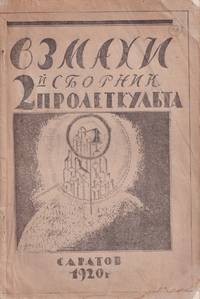
54158Saratov: Saratovskii Proletkul't Saratov. Profes.-Tekhnich. Shkola Gubpoligrafotdela 1920. Octavo 26 × 17.4 cm. Original pictorial wrappers; 96 pp. Frontis portrait of F. I. Kalinin on better stock and seven leaves of plates. Good or better; wear to wrappers and spine; with soil to edges and restoration to upper and lower corners; some chipping to spine. Very rare anthology one of only two published by the Proletkult Proletarian Culture movement in Saratov near the Volga River. It was intended to give a representative overview of the literary and visual works of local proletarian writers and artists who were inspired by the larger movement in the Soviet Union and even abroad and were active in various local workshops and studios. Founded in 1917 at a congress of worker creative workshops Proletkult "began as a loose coalition of clubs factory committees worker's theaters and educational societies devoted to the cultural needs of the working class." With support from the minister of education Anatoly Lunacharsky and theoretical guidance by Aleksandr Bogdanov who believed that only art made by the proletariat can reflect most accurately the reality of the proletariat "by 1918 it had expanded into a national movement with a much more ambitious purpose: to define a unique proletarian culture that would inform and inspire the new society" Lynn Mally. Culture of the Future: The Proletkult Movement in Revolutionary Russia 1990; pp. xviii.<br /> <br /> This volume opens with a tribute to F. I. Kalinin 1882-1920 a Russian revolutionary and literary critic who had served as chairman of Proletkult prior to his untimely death. It contains poetry and prose by young proletarian writers some of which signed other texts under pseudonyms. While many of them praise the virtues of hard work industrialization and the revolutionary struggle others are more lyrical in tone. Among the authors are K. Prokof'ev Aleksandr Zirikh Nina Smirnova D. Maslennikov I. Toom A. Belov Ivan Kuznetsov P. Teplova A. Vinokurov S. Zas'ko A. Strokova A. Miadzelets and A. Masterkov. With seven leaves of plates featuring reproductions of works signed Balakirev Rall' Brusnikin three works Leimik and Pimenov. The wrapper design is credited to one M. Vasil'ev a student of the "IZO" art workshop in Saratov. A section of "Proletsmekh" includes satirical texts. A final section on the chronology of the Proletkult movement contains historical notes as well as proceedings from the second Saratov Gubernia conference of Proletkult groups with detailed reports on arts and literary activities in the region as well as the preparations for the present publication noted to have been printed in only 700 copies.<br /> <br /> Not in Getty.<br /> <br /> As of January 2024 KVK OCLC show a single holding of the first volume at Stanford. unknown
1936028494New York / Los Angeles: Merle Armitage / Lynton Kistler 1936. 1st Edition 1st Printing. Hardcover. Near Fine. Original Signed Lithograph By Pasquale Giovanni Napolitano. 60 Pp. Beige Morocco Blindstamped In Similar But Not Duplicative Design As The Regular Clothbound Issue But In A Larger Format 6 9/16" X 5 3/32" Which Preserves More Of The Original Lithographic Drawing We Also Have Available Separately A Full Page Printing Of The Lithograph Signed And Annotated By Napolitano Which Image Is Abbreviated Even In This Large Paper Copy.There Is A Stated Limitation Of 112 Copies This Copy Numbered 116 One Of Armitage's Copies Of A Small Overage In The Print Run. Designed By Merle Armitage Printed By Adcraft Under Supervision Of Lynton R. Kistler. Frontispiece Lithograph Portrait Of Picasso By Napolitano Pulled By Hand From Stone By Lynton Kistler And Signed In Pencil By Napolitano. Text Printed In Bodoni 12 Pt. Additionally Inscribed By Armitage "A Special Leather Bound Copy For Napolitano Merle Armitage 1936". A Near Fine Copy Slight Rubbing At Corners Of Binding. A Possibly Unique Armitage Printing In This Larger Format. <br/> <br/> Merle Armitage / Lynton Kistler hardcover
337904Faber and Faber 1954. FIRST EDITION 2nd IMP. IN ORIGINAL JACKET octavo red cloth boards white lettering to spine 248pp VG spine sl cocked minor fading & water staining to base of spine & boards sl bruising & rubbing to extrems sl fading to top edge of spine & boards minor discolouration to rear board light tanning & foxing to page edges & eps prev. owner's name in ink to ffep v sl water staining to base of both pastedowns page block in very tidy condition in d/w VG- moderate creasing & chipping/tearing to edges with some minor loss light tanning to spine light to moderate chafing & soiling sl surface loss at creases 1cm scuff to rear all corners lightly clipped- inc. price clipping minor water staining to spine & rear- possible minor colour bleeding any water damage is quite minor and mostly confined to internal sides Faber and Faber 1954 hardcover
1993109336First Impressions. 1993. First Impressions. Seattle. Distributed by Mandarke Press in the UK. First edition. 1993. In three large 4to hardback volumes. Black cloth gilt no wrappers issued. Trade hardcover edition. Illustrated throughout. marbled endpapers.Head and tails of spine very slightly crumpled slight rubbing to upper boards more so to vol. I otherwise a remarkably clean and sound set. SCARCE. hardcover
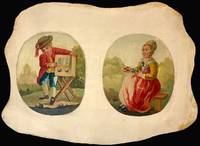
3220070<p><em>Two oil painted scenes of children each set against a white ground one scene depicting a girl and the other a boy with a large portable peep-show each medallion measuring 210 × 180 mm on unstretched fine-grain canvas light surface wear; otherwise fresh.</em></p><p>A rare image in an unusual medium. We have been unable to ascertain whether the tapestries were ever realised from these designs.</p>
1940BAWDENED001019Faber & Faber London. 1940. First edition. Octavo. 108 pages. Pictorial boards with cover design printed in blue and black and title-page design by Edward Bawden. One of Bawden's own copies: his pictorial bookplate is on the front pastedown and he has signed the front free endpaper.Tail of spine slightly pushed. Near fine in good dusty and slightly marked price-clipped dustwrapper with shallow chipping to the edges the front flap partially torn away and a closed tear along the length of the spine. Part of the original wraparound band is present. Faber & Faber, London. hardcover
1935BAWDENED003265Faber & Faber London. 1935. First edition. Octavo. 126 pages. Pictorial boards printed in blue and reddish-brown and black-and-white title-page by Edward Bawden.One of Bawden's own copies: his pictorial bookplate is on the front pastedown and he has signed the front free endpaper.Spine darkened. Very good. No dustwrapper. Faber & Faber, London. hardcover
1937BAWDENED003305Faber & Faber London. 1937. First edition. Octavo. 117 pages. Original pictorial boards with design in green and red and title-page design by Edward Bawden.One of Bawden's own copies: his pictorial bookplate is on the front pastedown and he has signed the front free endpaper.Spine darkened. Head and tail of spine a bit pushed. Very good. No dustwrapper. Faber & Faber, London. hardcover
1925877511925. DESIGN Shimomura TAMAHIRO. TAMAHIRO GASHU. Kyoto & Tokyo: Unsodo Taisho 14 1925. Single sheets cord-bound into illustrated boards with a printed paper title label. 36.2 X 25.3 cm. There are 16 pages of color woodblock printed designs and 30 pages of bw collotypes. One of the hybrid design books that Unsodo created in the 20s and 30s. Very clean and bright in the original publisher's slipcase. A very unusual and late effort by Tamahiro 1878-1926 an important Unsodo designer who began his work for them at the turn of the century. Even more unusual in such lovely original condition. Complete. unknown
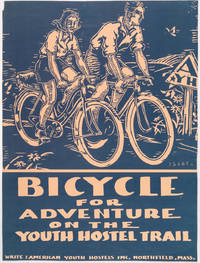
1939List01103Holyoke and Northfield: Litho Inc. / American Youth Hostels 1939. First Edition. Includes: Bicycle for Adventure on the Youth Hostel Trail. Holyoke Massachusetts c. 1939: Valley Litho Inc. Lithographed poster 19 x 25 inches; Take to the A.Y.H. Trail. Northfield 1939: American Youth Hostels . Lithographed poster 17 x 22 inches; Hostellers Know.Northfield 1939: American Youth Hostels Inc. Lithographed poster 17 x 22 inches. All are signed “Isabel†in images. Excellent condition overall with some toning small chips and various wear to margins but overall quite well preserved. Near Fine. Isabel and Monroe Smith a married couple from Northfield Massachusetts started the American Youth Hostel movement in 1933 after gaining inspiration from Richard Schirrman’s German Hosteling Organization. The movement grew quickly with thirty hostels operating throughout New England within the first year. The first hostel was the Northfield Chateau a large mansion on Birnham Road that was eventually demolished in 1963. The network of chaperoned hostels created the opportunity for safe bicycle-based travel as shown in the posters offered here. <br /> <br /> Offered here are three early posters from the movement designed by Isabel Smith each with her signature in the image. All posters are variations on the cycling theme. One of them states that “When the grand day’s bicycling is done… no fare can compare with the Royal ‘Hostellers’ Own.†Smith’s design aesthetic is quite accomplished and we are surprised to find no examples of these in institutional collections. Overall a visually compelling group uncommon. Litho Inc. / American Youth Hostels unknown
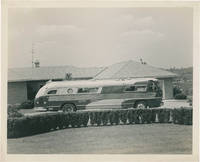
1954160645Loudonville OH: The Flxible Company 1954. Archive of 22 vintage photographs of the Flxible Land Cruiser motorhome circa 1954. Of the 22 photographs in the collection 17 bear stamps on the versos six bear annotations noting serial number and descriptions and eleven bear stamps noting the serial number model and company. <br /> <br /> The collection includes one photograph of the exterior of the motorhome and 21 photographs of the very mid-century modern interior frequently with models in various positions demonstrating the vehicle's comfort and luxury. Eight of the photographs note a serial number beginning with "B53" and one photograph notes a serial number beginning with "B54" likely indicating production in 1953 and 1954.<br /> <br /> Founded in 1913 in Loudonville Ohio Flxible was a manufacturer of motorcycle sidecars funeral cars ambulances intercity coaches and transit buses. In 1948 Flxible introduced its Land Cruiser model a standard 29 passenger Clipper shell with an elaborately furnished interior heralding a new era in recreational vehicles and introducing the motorhome to the American public during the automobile boom of the 1950s and 1960s. Notably the vehicle proved popular with R&B and country musicians providing a comfortable and practical vehicle for touring preceding the arrival of the modern tour bus. The company sold its Land Cruiser division to Custom Coach Corporation in 1955 and discontinued marketing the finished conversions while continuing to manufacture the shells of the vehicles. The last Flxible vehicles were produced in 1995 and the company declared bankruptcy in 1996.<br /> <br /> 10 x 8 inches. Very Good plus with approximately half the photographs with faint cracking to the emulsion and four with even toning. The Flxible Company unknown
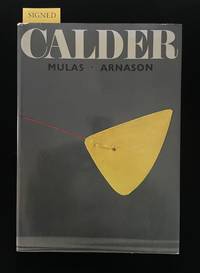
013557NY: Viking 1971. Hardcover. Near Fine/Near Fine. Presentation copy by Calder to author and art historian Arnason. Inscribed with Icelandic spelling of Arnason's name in blue ink on the ffe by artist Calder to H. Harvard Arnason who wrote the critical text and Arnason's wife Elinor: "to Elinor and Hahvrarhd Arnaasonn Goda Knjda. Sandi Calder Hotel Stanhope Hope for lunch" H. Harvard Arnason 1909 - 1986 was Canadian-born of Icelandic immigrant parents. As an art-historian educator and museum administrator he served as executive at the Guggenheim Museum in NYC in the 1960s and authored many books; his "History of Modern Art" 1968 remains the authoritative textbook on the topic. Near fine in dustjacket. Viking hardcover
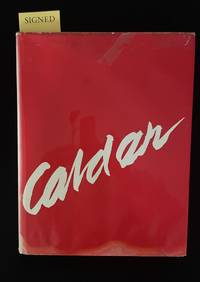
1966013558NY: Van Nostrand 1966. 1st Edition. Hardcover. Near Fine/VG-. Presentation copy from Calder to book's author Arnason. Inscribed by Calder on the title page to H. Harvard Arnason with an exclamation coming from Calder's mouth in a photograph of him opposite page: "Hello Harvey! Glad you survived. Sandy Calder". Arnason in turn inscribed the book on the upper right corner ffe "to Robert Goldwater and Louise Bourgeois with affection and respect extending over many years Harvard Arnason 6/21/67" Arnason 1909 - 1986 was an art-historian educator and museum administrator who served as executive at the Guggenheim Museum in NYC in the 1960s and authored many books; his "History of Modern Art" 1968 remains the authoritative textbook on the topic. Robert Goldwater 1907 - 1973 was an art historian African arts scholar and the first director of the Museum of Primitive Art New York from 1957 to 1973. Louise Bourgeois 1911 - 2010 French artist and sculptor was his wife. Book near fine; dustjacket spine heavily faded. Van Nostrand hardcover
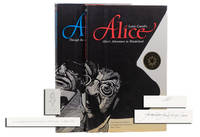
10150Berkeley: University of California Press 1982. First Trade Edition. Hardcover. Near fine/near fine. Two-Volume Set. Tall quarto. 9 x 13.75 in. 150; 167 5 pp. Fully illustrated with black & white reproductions of artworks by Barry Moser illustrated endpapers. Volume I: Near fine in original red quarter-cloth over lavender boards lettering on spine in purple mild sunning to top and especially bottom of boards light spotting to fore- and bottom edge; near fine pictorial dust jacket. Volume II: Near fine in original blue quarter-cloth over light blue boards lettering on spine in blue subtle sunning to top and bottom of boards light spotting to fore- and bottom edge. Near fine pictorial dust jacket. Overall both volumes square clean and bright. Both copies inscribed affectionately by Moser to NC artist George Cress. Alice's Adventures in Wonderland is inscribed on the title page "for my dear friend George Cress"; Through the Looking Glass and what Alice Found There is inscribed on the title page "for my mentor George Cress dear friend splendid artist" with a pencil drawing of a horse chess-piece opposite on frontispiece. Very handsome set with kind association. University of California Press hardcover
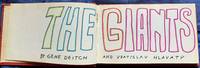
19689054no place: By the author 1968. Fine. 1968. Hardcover. Unpaged; 98 pp. ; 5' x 8 1/2"; plain red cloth over boards; tan endpapers; hand-drawn and colored drawings on each page you can feel the ink on the paper's surface. Designed in the form of a flip book which format Deitch had used in 1967 with "Nudnik the cut finger fumble" published by Cinémathèque Canadienne occasion of the World Retrospective of Animation Cinema as part of Expo 67. This work appears to have never been published in book form but was produced as a film. The book appears to be unique bound as a 'pitch bible' for The Giants. There are several pastedown replacements/edits on pages form textual parts to half to whole page. It appears that some leaves are actually two pages stuck together as another way of removing or editing parts or reusing the back side of a page to redraw a part. One of these was just separated enough to be able to see partial drawings 'inside' so to speak. Eugene Merril Deitch born August 8 1924 1 is an American illustrator animator and film director. Based in Prague since 1959 Deitch is known for creating animated cartoons such as Munro Tom Terrific and Nudnik as well as his work on the Popeye and Tom and Jerry series. The background leading up to the creation of The Giants as a film as well as its sensational reception and subsequent banishment is a fascinating and complex drama. The inspiration for the story according to Deitch was the Israeli - Palestinian conflict: "But first back to the dilemma of the offer by the Czechs to back an original film by me. I didn't want to offend them with an all-out no. I just said that I couldn't afford to do a film without a hard-currency backer. But that didn't stop me from thinking about the idea and a statement I had long wished to make about the futility of violence - violence begetting counter-violence. The seemingly endless blow and counter-blow between Israel and the Palestinian was on my mind. It had been going on a long time already in the mid-60s and as of this writing it is still going on. So even though I couldn't make such a film for the Czechs The Prague government at that time strictly backed the Palestinian - no evenhanded story about that could possibly be filmed here however I might mask it. But I nursed a hope that I might someday find a backer so I worked up a storyboard. I titled it 'The Giants'." It was to be staged with symbolic characters two equally ugly snarling spitting dwarfish figures one solid blue and the other a flaming magenta on a deathly landscape. They hurl venomous insults at each other to the constant irritating rasping sound of locusts. One dwarf loudly calls out the name of his protector. Thunderous earthshaking footsteps are heard and giant feet and legs the same color as the summoning dwarf stride in and stand behind him. Then the other dwarf turns and calls out the name of his protector. More thundering footsteps and a giant of his color strides in. Then the two dwarfs goad each of their giants to engage in a series of blows and counter blows. After numerous drastic exchanges and a devious peace conference the two giants ultimately abandon their two irreconcilable clients to fight it out by themselves. But the mean-spirited dwarfs have no stomach for personal battle and so cling together in a terrified embrace repeatedly moaning" How will we get along without our protectors" "I got the wildest designer in the country Vratislav Hlavat_ to give the film the highly bizarre look the story demanded. Hlavat was not only a wild designer but also a wild adventurer. He and few other hot-eyed pals were flying on natural gas in homemade balloons! I brought in my most promising assistant Milan Klikar to do the layouts. Then just as we were ready to begin animation the Russians came in! After a week of terror I put Zdenka and the Giants layouts in my little Saab car and drove over the border to Austria. I couldn't take a chance of being expelled from the country . By the author (1968) hardcover
20043115272London: Thames & Hudson. 2004. First Edition; First Printing. Hardcover. Fine in Fine dust jacket. First edition. Warmly INSCRIBED by David Hockney in year of publication to his long-time framer Jerry Solomon on title page. 9" X 9 1/2" 368pp. 325 illustrations. 277 in colour. Fine in fine dust jacket. ; 9" X 9 1/2"; 368 pages . 0500093148 . Thames & Hudson hardcover
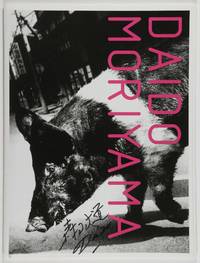
200448646London: Guiding Light/Michael Hoppen Gallery 2004. Limited first edition. Softcover. near fine. 1/100. 15 1/2 x 11 1/2". Elephant folio. 82pp. 2. Unbound folded leaves. House in a lined translucent and re-sealable electrostatic shielding bag with a hand-numbered sticker on the front. Printed photo-illustrated b/w wrapper with pink lettering on the front cover. #95 from a limited edition of 100 numbered copies with a signed original 8x10" b/w print. Print protected in plastic. This copy is also signed by the photographer on the front cover of the publication in black marker. <br /> <br /> A large scale catalog issued in conjunction with the exhibition Daido Moriyama: Vintage Prints at the Shine Gallery and Michael Hoppen Gallery London held February 2004. Profusely illustrated throughout with finely printed large scale b/w photographic reproductions after unpublished images from the acclaimed Japanese photographer's work. Initial text from photographer William Klein and gallerist Michael Hoppen on the interior front cover. <br /> <br /> From the publisher: "A collection of rare vintage prints from Moriyama's own personal collection providing a substantial body of work from the 1960's 70's and 80's previously unseen in public. A stray dog is caught in strong shadows against a high-contrast background piercing the viewer with an unwavering gaze. The best-known image of Moriyama it encapsulates perfectly the detached observation and raw unsettling style of this highly influential Japanese photographer. Along with Eikoh Hosoe and Kikuji Kawada Moriyama has gone from being one of Japan's most radical and rebellious photographers to being one of it's most celebrated and important visual artists today the Japanese equivalent of Robert Frank. Recently Moriyama has had important retrospectives at the San Francisco Museum of Modern Art the Shimane Art Museum Kashiro Art Museum Japan and the Fondation Cartier." <br /> <br /> Catalog and print both in near fine condition overall. Guiding Light/Michael Hoppen Gallery unknown
19913117196London: ANTHONY D'Offay GALLERY. Fine in Fine dust jacket. 1991. First Edition; First Printing. Hardcover. First edition. SIGNED by Gerhard Richter on half-title. Fine in fine dust jacket. 91pp. 9 3/4" X 11 3/4" Exhibition 22 April to 17 June 1991. ; 9 3/4" X 11 3/4"; 91 pages . ANTHONY D'Offay GALLERY hardcover
194739069Fanara Egypt: Der Tribüne 1947. First edition. Softcover. g to g. Folio. Unpaginated. 11 leaves. Original illustrated wrappers. This rare issue of "Schlemil" a German POW Camp Newspaper provides a first-hand account of the feelings and emotions of the men as well as their day-to-day activities during their internment in Fanara Egypt. This issue the fourth was the first published in 1947 issues 1-3 were published in 1946. The last issue No. 8 was also also published in 1947 shortly before the prisoners were shipped home 1947 through 1948. Of all the German POW camps camp 307 had the highest rate of German mortality. The reason can primarily be found in the harsh climatic conditions. Indeed unlike to the soldiers of the Africa corps who were fit for the tropics the soldiers who were taken prisoners in Italy Greece and its islands had many difficulties with the climate in Egypt. Hot wind and sandstorms in spring great heat in summer and severe cold in the winter impaired life in the strange climate. This led to the well known "Declaration of the captured Lutheran Pastors in Egypt". The front cover of this copy of "Schlemihl" features a drawing depicting a German POW painting a newlywed couple with the year 1947 at the upper left corner. The illustrator must have expressed to see his wish come true being freed and shipped home and marry his sweetheart. The newspaper contains poetry and short stories with a strong anti-Nazi stance. There are 5 other illustrations throughout the whole issue. Each leaf is printed on recto only. Some age-toning and creasing to wrappers with tiny chipping and closed tear at upper front and back cover. Upper corner slightly creased throughout. Text in German. Wrappers in overall good interior in good condition. Declaration of the captured Lutheran Pastors in Egypt:<br /> <br /> The captured Lutheran Pastors in Egypt moved by the emotional situation of their fellow prisoners in the Middle East which has become extraordinarily critical and in obedience to their sworn duties of office would like to make the following declaration before the British authorities before the German public before their fellow prisoners and also before the Christians of the world.<br /> <br /> For at least the last two and a half years and for the most part substantially longer periods German Prisoners of War have been held in the Middle East whose number at this time amounts to more than 60 000. They have been put to work in a climate which for half the year is positively unbearable for a European. Through the long duration of imprisonment through the separation from their relatives through the bad news from home through the impossibility of effectively helping them their relatives and for many the “C†people through the completely immeasurable continuance of their imprisonment the emotional burden of these prisoners has reached a degree which gives grounds for the gravest fears for the future.<br /> <br /> The symptoms which are already manifesting themselves are shocking enough: the incidences where prisoners break down emotionally so completely that they become mentally ill are increasing. Alone in one Work Company 2719 of 5000 men no fewer than six prisoners have been admitted to the appropriate department of the British military hospital because of mental illness. Above all the cases are increasing where prisoners are ending their own lives which appear unbearable to them. In the last month in just one of the three British Military Districts in Egypt five cases of suicide are known to us.<br /> <br /> This is because the majority of Prisoners of War in the Middle East have come to a total collapse of trust in the promises and declarations of the British custodial powers. The emotional strain which has arisen from this among the Prisoners of War is extreme. The most important reasons to name only these few which have led to this crisis are the following:<br /> <br /> 1. At the end of last year more than eighteen months after the capitulation the Prisoners of War were advised of the Repatriation Plan as it was to be binding for the year 1947. This Repatriation Plan gave the individual the opportunity to envisage within an admittedly broad framework according to his score and his political classification his return home. This plan has not been carried out.<br /> <br /> On 30 September 1947 the British Government announced that it would be necessary for it to reduce the repatriation to a fraction of the planned quota because of shortages of ships. Can one think ill of Prisoners of War that they held the following declaration which had been printed in the papers for some time against the British Prime Minister Attlee: that the work of the Prisoners of War at this time was the only available reparation from Germany and could not be done without Or that they received the impression from the speech to the Lower House on March 27 of the Member of Parliament for Ipswich Mr. R.R. Stokes that the reason for the sluggish pace of the repatriation from the Middle East is that the local British authorities held the manpower of the Prisoners of War to be so indispensable that they would simply have to wait for repatriation Can one think ill of the German Prisoners of War who due to previous experience are already full of mistrust today take into consideration that the almost complete halt to repatriation will not just last until the end of the year but that probably the closing date for repatriation the end of 1948 won’t be adhered to<br /> <br /> With great and honest thankfulness the Prisoners of War of the Middle East have experienced the intervention for the easing of the lot of the captured and their speedier return home by men of the British public above all from a great number of Bishops the Member of Parliament Stokes a man such as Viktor Gollancz and finally a group of more than sixty Lower House members. In the Middle East hardly any of this has come about and the result is growing bitterness and hopelessness instability and despair amongst the Prisoners of War. <br /> <br /> 2. A further and exceedingly grave burden for the morale and emotional bearing of the Prisoners of War lies in the recently released regulation that in future Prisoners of War will only be allowed to take in the vicinity of ten pounds of approved luggage to Germany. Germany faces another winter of starvation. Thousands of Prisoners of War have saved their hard earned tiny wages for months and years and have allowed themselves nothing in order to be able to bring a few tins of fat which is lacking most and other foodstuffs to their relatives. Many came to terms with the repeated deferment of their repatriation and found themselves a new mainstay by telling themselves: I can help my relatives to at least a small extent by sending along foodstuffs especially fat with returning comrades.<br /> <br /> Because of the new announcement all this is brought to nought. It has aroused bitterness particularly because it is so completely incomprehensible. The foodstuffs in question are in the markets in Egypt and can be obtained in the camp canteens in great quantities to be used by the Prisoners of War at will. Why should they not be able to save these and take them home No one is hurt by this and the money which is spent stays in the country. <br /> <br /> Finally particularly destructive and embittering is the thought that contrary to the natural development of things where the treatment of Prisoners of war should be gentler and better with the growing interval since the end of the war it is only becoming sharper and more severe. The Prisoners of War can absolutely not understand that they who have actually already have been discriminated against through their late return home are further discriminated against in the hardest and most burdensome way by the aforementioned announcement while the comrades who were lucky enough to return home earlier could take such foodstuffs so vitally necessary for a starving Germany freely and without limits.<br /> <br /> 3. A further hardship and exceedingly heavy emotional burden is the treatment of the Prisoners of War who have placed under “Automatical Arrest†A.A. namely those whose identity is suspected to be that of a wanted war criminal or those who are needed as witnesses in such a case. They are held in custody here indefinitely often being unable to discover why and without sentence. Despite the fact that the British authorities have had at least two years and often considerably longer at their disposal to prove identities and make investigations in countless cases the affected Prisoners of War are put under “A.A.†only hours before their repatriation. In two cases men were even fetched down from the repatriation ship a procedure which it is hardly too harsh to characterise with the expression “emotional abuseâ€. <br /> <br /> Apart from all rules about humanity this kind of procedure also contradicts all accepted laws in the Allied countries in that Prisoners of War are punished for being war criminals when they haven’t been convicted. Indefinite imprisonment for a Prisoner of War who has waited for repatriation according to a classification and score is nothing other than punishment.<br /> <br /> An example: A Prisoner of War rank Oberfeldwebel Staff Sergeant was placed under “A.A.†in December 1945 without being given any notice because he was mistaken for his brother a Leutnant Second Lieutenant who had died in the war. His assertions were not believed. He pointed out that a comrade of his dead brother could be found in the same camp and could be interrogated about this. This was refused. Only after the intervention of a Lower House member Mr. Stokes who was approached about it was the case taken up. The interrogation of the commandant was carried out and the affected person released although subject to the agreement of a superior central office. He has still not been repatriated to this day despite being scheduled for repatriation by British doctors since April because of severe asthma. That is one of several dozen cases.<br /> <br /> It is understandable that the feeling of complete absence of rights emotionally oppresses particularly these Prisoners of War and brings them to despair. <br /> <br /> 4. The Prisoners of War gratefully acknowledge that the vast majority of commandants of camps and of work companies honestly strive to lighten their burden through good food through the improvement of canteens and recreation rooms through sporting events radio cinema theatre and musical performances and also through opportunities for further education. They have complete understanding for the fact that because of their special situation in Egypt their freedom of movement cannot be as extensive as in England itself.<br /> <br /> What they do not understand however is the severity of punishment with which often only a trifling offence is often only punished by mistake. In many cases the admissible maximum penalty – twenty-eight days’ detention - is lengthened. In most of the cases the severity of the punishment bears no relationship to the severity of the misdemeanour. An example: In recent times a Prisoner of War was punished with fourteen days’ detention and loss of Work Points ie the extension of his captivity by many months because he had accidentally and not on purpose had the command post flag of a passing British military car. Examples of this sort could be continued for a long time. The severity of such penalties have a particularly hard emotional effect on the Prisoners of War who are in the third to fifth year of their captivity none of them any longer in complete possession of their emotional resilience. They therefore experience these punishments as more severe than another person would. <br /> <br /> We captured Lutheran Pastors in Egypt have hitherto purposely kept silent before the public about the completely unnecessary cases of severity and the partly open injustice for example physical mistreatment of Prisoners of War in the Detention Centres. We have tried through personal calls at the responsible British departments to do away with these things in the belief that this was about the unauthorised actions of a subordinate authority such as they appear in every human community.<br /> <br /> We asked ourselves earnestly whether we could continue to keep silence in the present situation. In thinking this we considered that one had - and rightly so - reproached our Nation and our Lutheran Church with silence when we should have spoken out. In the Stuttgart Declaration of October 1945 the Lutheran Church did penitence for this failure before the whole world.<br /> <br /> From this in earnest self-examination we came to the opinion that in further silence toward the injustice that has happened and still does happen to the Prisoners of War in the Middle East we would be guilty before the office of spiritual care which is our command before our consciences before our Lutheran Church in Germany and our German People and not least before God the Lord in front of whose Judgment Seat we will all one day need to answer for ourselves. We would have to be silent if our opponents in the past war had told us that they wanted to fall upon us in the name of revenge and retaliation. Then we would only have been able to say to our fellow captives: See where unlawfulness and Godlessness lead; see how the dreadful law of retaliation makes itself felt! In that case we could only have bowed dumbly before the deserved justice of God.<br /> <br /> But our former opponents did not say this. Rather they ceremoniously proclaimed that in the names of justice and humanity and in the spirit of Christendom with their unchanging qualities they had gone into the war and brought it to an end. In this spirit they would lead our people in a new way.<br /> <br /> That however gives us the courage and the right; today it lays the holy duty upon us as spiritual carers for our fellow captive brothers with all the earnestness of our duty of care to beg their leading personages and their responsible authorities to no longer passively watch the injustice that has been and is still being done to the Prisoners of War in the Middle East but rather to remedy the great spiritual need and despair which daily continue to gain ground through practical effective and quick measures.<br /> <br /> We have the bitter and serious concern that otherwise our fellow captives in the Middle East will lose the ultimate and best thing that we in the spirit of Christ so dearly wanted to show them how many have already lost it!: the belief and trust that in this world not power not the spirit of vengeance and retribution not the justice of the strong have the last word; rather that co-existence in the spirit of right justice humanity reconciliation and brotherly helpfulness within nations and between nations is possible.<br /> <br /> In the name and by order of the captured Lutheran Pastors in Egypt.<br /> <br /> Signed Norbert Rückert<br /> <br /> Dean of Pastors for the Middle East<br /> <br /> P.W. Camp 380<br /> <br /> 11 October 1947. Der Tribüne unknown
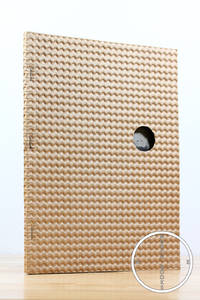
196330459New York: Film Culture 1963. Paperback. First Edition. 8.25 x 11in. Unpaginated complete. Publisher's 'waved' cardboard wraps by Maciunas with the cut-out revealing Brakhage's solarized eye. The most lauded and sought after of Brakhage's writings. Signed and inscribed by the author: "Jan. 14 1999. To Stan Fowler Stan Brakhage." This copy was signed in conjunction with The Stan Brakhage film festival at the Boulder Public Library with the original program laid-in. NEAR FINE. Shows the panels ever so slightly rubbed a small single spot of discoloration at the spine else Fine/As New. An exceptionally maintained copy. As pictured. Film Culture paperback
19933115419Sacramento: Cotangent. Fine in Fine dust jacket. 1993. First Edition; First Printing. Softcover. Limited edition. Copy #25 of 200 of which 185 are hand-bound and laid into printed black dust jackets. SIGNED by William T. Vollmann and designer Ben Pax on colophon. Printed by the Poltroon Press. 30pp. 8 1/4" X 10" Preceded in 1990 by a CoTangent edition of one handwritten folio copy. This copy may be unique as the author has made a watercolor painting of a hand on the half-title page. The story was first published in 1991 in the collection "Thirteen Stories and Thirteen Epitaphs." The present edition has some minor corrections and revisions. ; 8 1/4" X 10"; 30 pages . Cotangent. paperback