29 262 résultats
1960151331N.p.: N.p. 1960. Vintage satin banner with hand-sewn lettering by an unknown artist made after Paul Krassner and John Francis Putnam's 1963 poster. <br/><br/>Krassner created the "Fuck Communism" poster for sale through his satirical underground magazine The Realist with typography by longtime Mad magazine art director Putnam. In addition to publishing The Realist from 1958 to 2001 Krassner was a founder of the radical activist group the Youth International Party The Yippies and an early member of Ken Kesey's Merry Pranksters. <br/><br/>In the words of occasional Realist contributor Kurt Vonnegut "At the beginning of the 1960s FUCK was believed to be so full of bad magic as to be unprintable. . By having FUCK and COMMUNISM fight it out in a single sentence Krassner wasn't merely being funny as heck. He was demonstrating how preposterous it was for so many people to be responding to both words with such cockamamie Pavlovian fear and alarm." <br/><br/>36 x 14 inches. Near Fine. N.p. unknown books
19651002159Rome: Faro Disegni 1965. Beautiful archive of midcentury porcelain designs each an original hand-colored work of art spanning a wide variety of botanical geometric and figural styles. Some feature realistic portraits of flowers and birds while others are much more stylized: traditional folk motifs linear Art Nouveau florals bright mod blossoms. This is a working archive: many of the images are annotated and corrected in pencil and themes like the firebird are developed over multiple sheets. Of the 168 designs that survive eight are unnumbered and the others are numbered as follows: 1-47 49-67 69-138 140-144 146-155 157-165. Roman firm Faro Disegni is best known for their textile designs; this archive testifies to their participation in other aspects of the decorative arts. A remarkable survival. Collection of 168 original hand-colored designs for porcelain plates each on a separate sheet of various sizes: a group of 111 designs executed in pencil ink and watercolor on heavy paper most measuring 14.5 x 13 inches and a smaller group of 57 sketches executed primarily in pencil and crayon on onionskin measuring less than 12 inches square. Most designs labeled "Faro Disegni" and numbered in ink; a few designs mounted many marked in pencil with annotations in French and English. Housed in two chemises within a custom clamshell box. Faro Disegni unknown books
54717Moscow: Moskovskoe arkhitekturnoe obshchestvo 1923. Quarto 32.5 × 25.2 cm. Original printed wrappers 50 14 pp. Wrappers lightly soiled and chipped along edges; non-professional restoration to spine and lower right corner. About good or better. A single volume double issue of a short-lived journal of the Moscow Architectural Society MAO with Constructivist wrappers by one of the masters of Constructivist architecture and theatre design Aleksndr Vesnin 1883-1959 illustrated with numerous photographs plans and elevations. Founded in 1867 the Society continued to operate after the Bolshevik Revolution led by prominent architect Aleksei Shchusev in 1922-1930. An introductory statement by Shchusev opens this first issue of the journal: "Our journal must cover most fully all the questions that concern us from general philosophical and architectural problems and ending with the basics of everyday life from questions of abstract form to elements of composition and construction." Moisei Ginzburg another major Soviet Constructivist acted as the head editor of the new journal contributing an extensive essay from the editor on industrial architecture of the United States. Other contributors to the volume include the art critic and collector Pavel Ettinger architect Ivan Rylskii and art historian Sergei Shervinskii among others. Typical for NEP New Economic Policy publications the volume closes with 12 pages of advertising of building materials construction companies and other services and products related to architecture and design. From the library of architect A. V. Ikonnikov.<br /> <br /> As of February 2025 KVK OCLC show holdings at four institutions in North America. unknown
1904SB-21961Paris, Librairie Centrale des Beaux-arts, 1904. Grüner Original-Halblederband im Großformat 38,5 x 30 cm mit goldgeprägtem Rückentitel, floraler goldgeprägter Ornamentik und Kopfgoldschnitt; Buchdeckel mit bläulichen Marmorbezügen und großen Lederecken; farbig marmorierte Vorsätze Mit 50 nummerierten Bildtafeln auf Karton. Den Tafeln vorgebunden ist ein handschriftliches alphabetisches Verzeichnis der auf den Tafeln abgebildeten Pflanzen (Index) in englischer Sprache, das durchaus nützlich ist, aber auch, sollte es als störend empfunden werden, entfernt werden kann. Gesuchtes Standardwerk über die florale Bildsprache des Jugendstils und die Verwendung floraler Motive in der dekorativen Kunst, im Besonderen bei der Tapetenherstellung, bei Teppichen und Wandteppichen, in der Keramik, im Buchwesen, bei Stickereien und Wohntextilien, in der Glaskunst und Glasmalerei, bei Mosaiken, in der Goldschmiedekunst usw. Enthalten sind 50 mehrfarbige florale Bildtafeln auf Karton. Maurice Pillard Verneuil (1869 - 1942), ein Schüler des französisch- schweizerischen Dekorationskünstlers Eugène Grasset (1845 - 1917), entwickelte früh, inspiriert von japanischer Kunst, eine Vorliebe für farbkräftige florale Designs, die zu seinem Leitmotiv bei der Gestaltung von Fliesen, Textilien und Tapeten wurden. Seine Entwürfe umfassten sowohl die Jugendstil- als auch die Art-Deco-Epoche. In einer späteren Schaffensperiode wandte er sich stärker geometrischen Formen zu. Wie Henri Toulouse-Lautrec (1864 - 1901) und der Graphiker und Maler Jules Chéret (1836 - 1932) trat auch Verneuil mit zahlreichen Plakatarbeiten in Erscheinung.
1932894051932. DESIGN Iida Shiko. HOEN-CHO. Kyoto: Maria Gabo Showa 7 1932 Oblong orihon folding album in the original publisher's chitsu clasped case. 28.3 x 39.0 cm. There are 23 ornately printed circular designs with metallic inks etc. Maria Gabo was not prolific but what they printed was always done with first rate craftsmanship. unknown
1902845761902. DESIGN Matsuoka Tokikata; Honma Hyakuri. Kojitsu Sosho SHOKUMON ZUE. 7 vols. originally privately published by Hyakuri apparently from 1815-25 as a completion of work begun by Tokikata in the late 18th very early 19th century. This is the reprint of this classic work done as part of the "Kojitsu Sosho" Classic Library series published by Yoshikawa Hanshichi et al in Meiji 34 35 19012 Very slightly smaller than the original volumes each about 18.2 x 24.9 cm string-bound Japanese-style fukuro toji with printed paper title labels - all bindings match. Hundreds of beautiful color textile designs reproduced in color woodcut. Nobleman Ladies Ceremonial dress Brocades Imperial costumes all are covered. Retains most of the appeal of the original edition. Slight external wear lovely inside. unknown
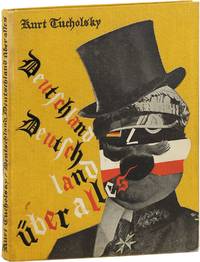
192984810Berlin: Neuer Deutscher Verlag 1929. First German Edition. First Printing cloth issue with 1.-20. Tausend printed on title page. Octavo 24cm; yellow decorative cloth with photomontage by John Heartfield applied to covers and titles stamped in black on spine; yellow topstain; 231pp 5; illus; text is in German. Contemporary October 1929 owner's name penciled to front endpaper; slight forward lean light overall dust-soil to cloth with pictorial elements well-preserved and largely unrubbed; browning to endpapers with mild wear to base of spine; a presentable copy Very Good lacking the rare dustjacket. A powerful piece of social criticism by Tucholsky one of the most prominent German-Jewish authors and journalists of the Weimar Republic. Produced with graphic designer John Heartfield Tucholsky managed to combine vicious attacks on everything he disliked about Germany with a declaration of love for his country. He warned of a government with anti-democratic tendencies and the impending threat of National Socialism - a plea almost to revolutionize a dormant country - though his fears were realized in 1933 when Hitler assumed the position of Chancellor of Germany. Axel Eggebrecht one of Tucholsky's contemporaries said of Deutschland: "If this book were to turn out to be quite a big success it might be realized that the dream of awakening is still very vivid in Germany." Deutschland was listed on the Nazis list of censored books and though it did go through a second printing few enough survived destruction. <br /> <br /> The present example is one of apparently two variant bindings for the first printing with no extablished priority known to us. While the pictorial cloth binding is the variant we have seen and handled most often we note another in yellow cloth without the pictorial elements and titles stamped in black on spine and front cover. A well-preserved example and a high-point of Heartfield's graphic design and layout work. Pachnicke & Honnef 60a-69 p.148-161. Neuer Deutscher Verlag unknown
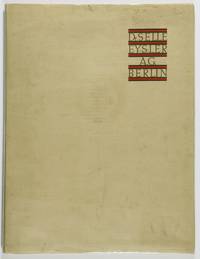
193051604Berlin: Dr. Selle-Eysler A.G. 1930. First printing. Softcover. Very good- to fine condition. Folio 15 1/4 x 11 3/4". Unpaginated 45 leaves. Original stiff ivory paper boards with embossed circular company logo in silver and red on cover with tissue guard in original stiff ivory parchment dustjacket with gilt lettering and red and black ruling on cover. Frontispiece silkscreen. Double page silkscreen with white lettering on gilt background announcing the 25th company anniversary. The dedication page with a silkscreen with gilt lettering and the founder's portrait Dr. med. Gustav Selle in gilt and black both silkscreens. Second frontispiece with gilt company buildings in gilt title page with bold gilt lettering and red and black ruling. Decorative initials. <br /> <br /> Lavish company history of the Selle-Eysler A.G. one of the first industrial graphic design companies specializing in photographic photomechanical and electromechanical procedures to prepare artwork photographs and graphic design for the printing process. Following the title page four pages with high quality offset reproductions of photographs of the company founder Erich Zander the cofounder Siegmund Labisch both full page and five members of the corporate board on one page. The photographs are rendered in photogravure and many of the designs with gilt overprinting.<br /> <br /> Striking work celebrating the 25th anniversary featuring the highest quality of graphic design and printing stating an example for the company intrinsically linked to the history of these techniques. This book is profusely illustrated with numerous b/w and color photographs of prepress procedures printing facilities company employees and contains an extensive section with color reproductions of various magazines including :Elegante Welt" "Das Magazin" "Wahre Geschichten"Deutsche Illustrierte" "Lustige Blätter" and others printed by the company. Includes various diagrams. Typesetting clichés and printing by the Dr. Selle-Eysler AG. Printed to heavy flat as well as glossy paper. Scarce in original dustjacket.<br /> <br /> Text in German. Dustjacket with light wear along edges minor chips and creasing closed tears reinforced with clear tape along inside bottom of front flap cover and spine and lightly rubbed. Binding with small strip of sunning along top of front cover interior in fine condition. Dr. Selle-Eysler A.G. unknown
1932894051932. DESIGN Iida Shikô. HÔEN-CHÔ. Kyoto: Maria Gabô Shôwa 7 1932 Oblong orihon folding album in the original publisher's chitsu clasped case. 28.3 x 39.0 cm. There are 23 ornately printed circular designs with metallic inks etc. Maria Gabô was not prolific but what they printed was always done with first rate craftsmanship. unknown books
1902845761902. DESIGN Matsuoka Tokikata; Honma Hyakuri. Kojitsu Sôsho SHOKUMON ZUE. 7 vols. originally privately published by Hyakuri apparently from 1815-25 as a completion of work begun by Tokikata in the late 18th very early 19th century. This is the reprint of this classic work done as part of the "Kojitsu Sôsho" Classic Library series published by Yoshikawa Hanshichi et al in Meiji 34 35 19012 Very slightly smaller than the original volumes each about 18.2 x 24.9 cm string-bound Japanese-style fukuro toji with printed paper title labels - all bindings match. Hundreds of beautiful color textile designs reproduced in color woodcut. Nobleman Ladies Ceremonial dress Brocades Imperial costumes all are covered. Retains most of the appeal of the original edition. Slight external wear lovely inside. unknown books
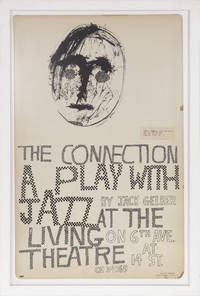
1959158542New York: Inkweed Studios 1959. Vintage poster for the 1959 off-Broadway play which opened on July 15 1959 at the Living Theatre. Poster designed by Inkweed Studios with a label affixed to the recto stating showtimes. Presumably either unique or produced in very small quantity. Mounted on art board as issued and used.<br /> <br /> Founded in 1951 by Beat poet Kabbalist and Lower East Side underground luminary Lionel Ziprin with his wife illustrator and dancer Joanne Ziprin Inkweed Studios was originally created to produce "studio cards"-greeting cards to rival the mass-produced cards produced by the Hallmark Company. While not financially successful Inkweed did produce many outstanding graphics such as the poster on offer here. The company also served as the launching pad for the graphic work of artists such as Harry Smith Jordan Belson Bruce Conner Barbara Remington and William Mohr. <br /> <br /> Jack Gelber's landmark play within a play observes a producer and writer attempting to stage a production using "real" heroin addicts largely jazz musicians waiting for their score interspersed with jazz music. Notable not only for its honest depiction of addiction the play also radically re-imagined the relationship between audience and actor with actors utilizing the theatre's aisles as performance areas an actor presented as an audience member and actors remaining in character and panhandling during intermission. A key play in the history of American jazz and an evocative portrait and product of the Beat era. Winner of three Obie Awards including Best New Play Best All-Around Production and Best Actor for Warren Finnerty. Made into an equally groundbreaking and largely unrecognized motion picture in 1961 directed by Shirley Clarke and starring Finnerty and William Redfield.<br /> <br /> 13.75 x 21.75 inches archivally framed to 16.25 x 24.25 inches. Very Good plus with some light corner and edgewear a small chip to the bottom right corner and a small bruise to the mid-right edge. Inkweed Studios unknown
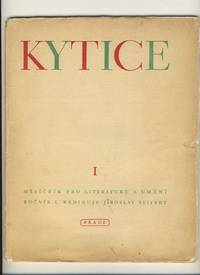
19465888Prague: Prace 1946-48 1946 Quarto ½-cloth 568 528 408pp. The complete run of an important postwar journal edited by Jaroslav Seifert who published this review of literature and art for the three years of relative freedom after WWII which presented new talents championed a free discourse on art and literature protested the increasing management of the communists and hailed the avant-garde tradition of the First Republic which now came under official fire and soon extinguished free public discourse. In addition to premiering some of his own work under this banner new work by Frantisek Halas Vilem Zavada E. Frinta E. Hostovsky and a host of new postwar writers. Numerous artists contributed graphics to this journal including Muzika Filla Prochazka Pelc Divis Spala Kotik Sivko Tichy Zrzavy. Worldcat finds only one complete set in North America. Prague: Prace, 1946-48 hardcover
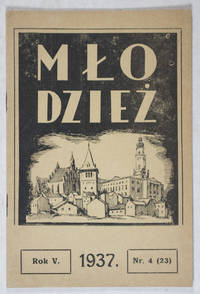
193740404Drohobycz/Drohobych: Komitetu Redakcyjnego Uczniow Panstw. Gimn. w Drohobyczu 1937. First edition. Softcover. vg to near fine. Large octavo. 15pp. 1. Original tan illustrated stapled wrappers with black and white lettering on cover. Design and cover illustration by Bruno Schulz depicting the buildings of Drohobycz. This is vol. 5 issue 4 from the youth magazine November/December 1937. Co-published by students of the "State Gymnasium of Jagiello High School" and the private "Co-Educational Sienkiewicz High School" the periodical ran from 1933-1938. The publication covers the topics of celebrations of the Polish Independence Day November 11 gymnasium chronicles contribution on sports poetry and other material. Illustrated with two b/w reproductions of photographs. The final chapter of memoirs describes the Scout Units of the gymnasium and its history. Photographic reproductions from glass negatives courtesy of "Skauts."<br /> <br /> Wrappers with minor smudges and scratches to the front cover. The back cover contains light scribbling in pet at the top left corner. Wrappers in very good interior in near fine condition overall. Extremely scarce. Bruno Schulz 1892-1942 was a Polish Jewish novelist and painter who studied and lived most of his life in Drohobycz. <br /> <br /> Editorial attribution of the cover to Bruno Schulz in the second issue of the magazine where the editor thanks Schulz for his contribution. Komitetu Redakcyjnego Uczniow Panstw. Gimn. w Drohobyczu unknown
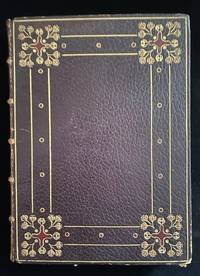
1894013830Boston: Copeland and Day 1894. First Edition Thus. Hardcover. Very Good. As stated on the colophon the first complete edition this one of 500 copies on French paper with lettering and decorations by Bertram Grosvenor Goodhue in a custom inlay leather binding by Virginia Chester signed and dated 1911. Full dark green crushed morocco elaborately decorated front and rear covers and their versos aeg. Executed in Art Nouveau style perfectly appropriate to Goodhue's decorations. Signed by Chester with gilt pressed conjoined initials VC flanked by 19 and 11 for 1911 at the bottom of the rear inside cover. Spine moderately worn corners worn joints too more noticeably to front and shallow loss at spine ends more noticeably at top. Chester dropped out of university in Illinois in 1902 due to illness and took up bookbinding as a hobby. She never returned to college but continued professionally with bookbinding studying in Chicago with Gertrude Stiles in New York with Helen Haskell and in Paris with Henri Mulhae and Jules Domont. Around 1912 or so she returned to the Chicago and opened her own bookbinding studio in the Fine Arts Building. Penciled at the bottom of the fly leaf is perhaps her notes or a collector's: "Virgina Chester / Chicago/ 1024 Fine Arts Bldg/ code/ 11/28/13/ code". This binding appears to have been influenced by French design and technique. Copeland and Day hardcover
1963KOS02201158Theatre Company folk art 1963. Soft Cover. Fine. KOS02201158 Theatre Company folk art paperback
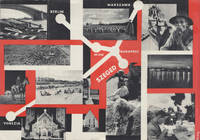
19322866Szeged 1932. Fold out. In very good condtion. Design by George Buday Photos by Judit Karasz. Design by George Buday Photos by Judit Karasz. Fold out. 1 p. 30 x 40 cm English text and illustrations on the back. Kárász’s photographs explore the material qualities and structures of everyday things. Whether folded fabric parched soil or cotton wool the physical nature of the subject is the primary focus. Informed by her Bauhaus teacher László Moholy-Nagy she felt that photography could make tangible aspects of its subject matter that could not be detected by the eye alone. In each case the resulting image is carefully constructed from a delicate balance of light and shadow across the surface of the chosen material. Kárász studied under photographer Walter Peterhan. Tate. unknown
1931NASHPAUL010890Printed at the Curwen Press for Bryant and May Ltd London. 1931. First edition. Royal octavo. 54 pages. Numerous black and white photographs by Brugui�re. Card wrappers with a brilliant colour lithograph design by Paul Nash. An advertising booklet for the manufacturers of matchsticks.Fine in the original Bryant & May printed manila envelope which is nicked creased and lightly stained. Very scarce. Printed at the Curwen Press for Bryant and May Ltd, London. unknown
190843370ABPetersburg 1908. Imp.-2° (ca 69 x 51 cm). In sehr schlichter privater Mappe. Die Tafeln im weißen Rand teils schwach wasserrandig. Die Karten geringf. angestaubt, eine Karte mit 2 Einrissen im weißen Rand. Die Abbildungen selbst sauber.
ARTE-ALBUM PITTORESCO DISEGNATO ED INCISO DA SAVERIO PISTOLESI-3 VOLUMI-1861 3 VOLUMI, 297 INCISIONI IN RAME, GRANDE FORMATO, CM. 32,5 X 24. LEGATURA IN MEZZA PELLE, PIATTI RIGIDI MARMORIZZATI. DORSO A QUATTRO NERVI, PIATTI MOLTO CONSUMATI E CON MANCANZE, DORSI CONSUMATI E CON ALCUNI STRAPPI, 2 TAVOLE DEL VOLUME 2 PARZIALMENTE STACCATE. LEGGERE FIORITURE AI MARGINI DI BUONA PARTE DELLE PAGINE IN QUALCHE CASO PIÙ' MARCATE MA IN PREVALENZA AI MARGINI BIANCHI. FIORITURE PIÙ' DIFFUSE AI FRONTESPIZI, SOPRATTUTTO AL VOLUME 1.
1934891821934. DESIGN BOOK Yoshida Gyokujo compiler. TANSAI GAFU. Kyoto Happpodo Showa 9 1934. 2 vols. complete. Tall folios 36.7 x 25.4 cm orihon folded album in woodcut printed paper over board covers with printed paper title labels. There are 25 total full page color woodblock prints. Interesting style mixing flat solid colors with small naturalistic elements in a single print. Good impressions and colors. Complete in clasped chitsu case with printed silk label. Case is worn books about good. The set eventually ran to 4 volumes these are the first two produced. unknown
1934891821934. DESIGN BOOK Yoshida Gyokujô compiler. TANSAI GAFU. Kyoto Happpôdô Shôwa 9 1934. 2 vols. complete. Tall folios 36.7 x 25.4 cm orihon folded album in woodcut printed paper over board covers with printed paper title labels. There are 25 total full page color woodblock prints. Interesting style mixing flat solid colors with small naturalistic elements in a single print. Good impressions and colors. Complete in clasped chitsu case with printed silk label. Case is worn books about good. The set eventually ran to 4 volumes these are the first two produced. unknown books
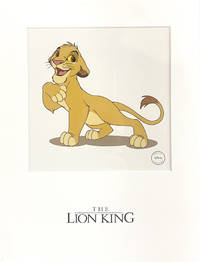
1418<p>Thick quarto 193 pages illustrated throughout in black and white and in colour. Blue cloth with pasted on illustration on front cover gold printed spine gilt edges. Complete with the matted certified Sericel the certificate of authenticity kept in a special gold printed envelope. All together in blue cloth covered and gold printed slipcase.</p><p>- First edition. Christopher Finch's copy signed by Peter Schneider Walt Disney's President of Feature Animation Don Hahn the Producer of Walt Disney's animated film The LION KING and the film's Directors Rob Minkoff and Roger Allers inscribed with drawing also by Allers Minkoff on page 164 furthermore signed and warmly inscribed on the first free endpapers title page and throughout the whole book by all artists and members of the production staff who worked on the film including among which Doug Ball Kathy Bailey Hans Bacher Barry Johnson Brose Johnson Rick Hoppe Brian Mckim Tony Bancroft Carol J. Choy Chris Sanders Brenda Chapman Debbie Dubois Tony Fucile Ellen Woodbury Ron Husband Nik Ranieri and Ross Edmonds.</p> Hyperion hardcover
1969230704052059ybvkTokyo, Kodansha, Showa 42-43 (1968-1969). Each volume with few pages Introduction, some 100 glossy-paper colour-plates tipped-on cardboards, ca. 20 glossy black-and-white plates, ca. 40 pages commentary. - Heavy gilt-titled raw-cloth (silk?) bindings in thick cloth-folders with wings and bone-clasps, protected by publisher's illustrated (clan-signs) matted thick cardboard-boxes; Folio (overall ca. 45 x 32 x 22 cm; ca. 21 kg.)!
19802092902138900104Kodansha 1980. Soft Cover. Fine. Number of books: 3 Kodansha paperback
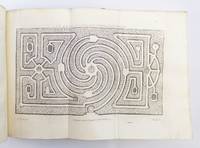
1728ST19567-025London: Bernard Linton 1728. Second Edition in English. "With very large Additions and a new Treatise of Flowers and Orange-Trees. 255 x 195 mm. 10 1/8 x 7 3/4. viii 297 i.e. 299 17 pp.Translated by John James. <br/> Contemporary calf boards capably rebacked in a lighter calf raised bands dark brown morocco label with gilt lettering. With tailpieces a number of illustrations and 38 folding plates of garden plans. Front pastedown with armorial bookplate of Whyte Melville of Bennochy and Strathkinness; front free endpaper with ink singature of Robert Melvill and the armorial bookplate of Francis Gray Smart. Hunt 471; Henrey 950; Fowler 171 first edition in English; Harris 381. Original boards somewhat crackled as nearly always with treated calf and slightly marked corners quite worn a hint of browning to title and final leaf of ads otherwise a very desirable copy the text and plates in remarkably clean and bright condition.<br/> <br/> This is the definitive guide to formal gardening practices in the 18th century containing a thorough exploration of both theory and practice that is elucidated by nearly 40 folding plates drawn by one of the most influential architects of the period. Henrey calls it "the first important book on garden design to appear in England in the eighteenth century" and according to the Met museum's website the work "became the standard international text of the grand French manner of garden design." The text includes a wide array of design recommendations that comprise elements such as labyrinths groves bowling greens porticos colonnades and stairways; examples of different types of ornamentation and embellishment such as statuary and water features; recommendations for the best type of trees to employ; and practical advice for the care and management of plants and gardens. It is also notable as the first book to describe the "ha-ha" a type of fence with a sunken grade on one side creating an invisible livestock barrier while also preserving an unspoiled view of the countryside beyond it. The name supposedly derives from the astonished sound a viewer would make when encountering this ingenious solution. The work was originally published anonymously in French in 1709 and the first edition in English translated by architect John James appeared in 1712. Although the title page of the present work credits it to the great French architect Alexander Le Blond named "architecte du Roi" in France and the chief architect of St. Petersburg it is actually the work of his pupil Antoine Joseph Dezallier D'Argenville 1680-1765. Le Blond however did provide most of the drawings for the plates which beautifully illustrate the various garden designs and structural plans. Our three previous owners are of some interest. The signature on the front free endpaper is probably that of General Robert Melvill or Mellville 1723-1809 who served in the West Indies during the Seven Years' war. He became a plantation owner and governor of the Grenadines Dominica St. Vincent Tobago and Grenada. After returning to Great Britain in 1771 Melvill pursued academic interests and became a member Royal Society and the Society of Antiquaries of London as well as a member of the Royal Society of Edinburgh. Because he was a bachelor Melvill's estate went to his cousin John Whyte-Melville 1797-1883 a renowned golfer he became captain of the Royal and Ancient Golf Club in 1823 and the father of the novelist and poet George John Whyte-Melville. Francis Gray Smart 1844-1913 was a homeopathic physician who founded the Tunbridge Wells Homeopathic Hospital. He was also an antiquary and avid coin collector who became a member of the Linnean Society the Society of Antiquaries and the British Numismatic Society. Considered apart from the book's sturdy though not especially attractive exterior the contents here are unexpectedly fresh clean and bright--unusual in a type of book that might normally have experienced use in an unprotected environment. Bernard Linton unknown