1 091 résultats
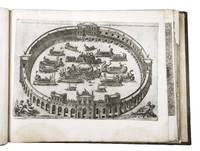
1550ABC_49514Italy 1550. 17th-century gold-tooled brown calf sewn on 6 supports with the corresponding raised bands on the spine a red morocco title label on the spine with the title "Novissima urbis Romae descriptio" lettered in gold gold-tooled board edges. Large oblong folio ca. 59 x 42.3 cm. With 76 full-page engravings and 12 full-page etchings. Remarkable album with 77 beautiful examples of 16th-century Italian cartography all in very fine dark impressions. The collection includes plans of important Italian towns such as Rome Venice Genoa Naples Milan Florence Palermo Siena Bologna and Pisa as well as detailed views of individual buildings and monuments in Rome. They are engraved by several cartographers from the school of Antonio Lafreri 1512-1577 primarily Claudio Duchetti d. 1585 Matteo Florimi d. 1613 and Lafreri himself. Florimi's works are among the rarest of the Lafreri school map makers especially his Siena imprints of which several have here been included.In the middle of the 16th century Italy was the centre of map production and distribution in Europe. This industry primarily took place in Venice and Rome. The most notable of the publishers in Rome was Lafreri. His most important and most popular work is the Speculum Romanae magnificentiae a collection of plans an views of Rome's monuments; no two copies of the Speculum are the same. The present collection contains more than thirty plates from the Speculum. When Lafreri died his nephew Claudio Duchetti inherited the company. He continued to produce the Speculum plates but often made small adjustments and signed his own name at the bottom. Most of the Speculum plates in the present album are by Duchetti. After his death the copperplates were sold to other publishers such as Giovanni Orlandi before 1590-after 1640 who reissued them. The majority of the plates in the present album were printed by Orlandi in 1602.The album further contains 32 engraved city plans mostly of Italian towns although a few foreign cities are also included; one of the rarest is the view of Moscow which is also included here. The collection ends with a incomplete series of 11 etchings of landscapes and biblical scenes.A list of contents is available upon request.With the bookplate of Louis Routy de Charodon seigneur de Grésigny and Charodon 1710-1794 on the front pastedown and remnants of another bookplate above. The boards are somewhat scratched and stained the spine shows traces of use the edges of the boards have been professionally restored and the boards have been lengthened to fit the maps. The maps are slightly browned some are slightly foxed the first few maps have been mounted onto 17th-century leaves the longer maps are somewhat soiled on the fore edge three maps are restored at the fore edge and one at the bottom edge some maps have been cut slightly short. Otherwise in good condition.l Cf. Parshall P. "Antonio Lafreri's "Speculum Romanae magnificentiae"" in: Print Quarterly vol. 23 1 2006 pp. 3-28. hardcover
1790ST19326Amsterdam: H. Keyzer H. Gartman en W. Vermandel 1790. 555 x 345 mm. 21 7/8 x 13 3/4". 2 p.l. 62 folding plates. <br/> Attractive late 19th or early 20th century retrospective polished brown calf by L. Guétant stamp-signed in gilt on tail of spine double gilt-ruled border floral cornerpieces raised bands spine panels with scrolling floral borders and central flower ornament gilt titling. With title vignette and 62 ENGRAVED FOLDING PLATES ALL WITH BEAUTIFUL HAND COLORING AND HIGHLIGHTED WITH GOLD depicting Bible scenes from the Old and New Testament 61 of which are by Jan Luyken. A Large Paper Copy. For earlier editions: Graesse IV p. 308; Brunet III 1245-46; Klaversma & Hannema 159-164. Light rubbing to joints and edges boards just a little marked trivial foxing and faint spots here and there but A REMARKABLY FINE COPY the binding lustrous and showing little wear the paper extremely bright and fresh the margins immense and the paint and gold unusually vibrant.<br/> <br/> The marvelous illustrations of Dutch engraver and poet Jan Luyken comprise this collection of "remarkable stories" from the Bible each depicted with panoramic grandeur and enhanced with a wide range of finely applied colors and gold. Luyken 1649-1712 had written and illustrated erotic poetry as a young man but later became a devout Pietist after reading the works of German mystic Jakob Böhme. He became a member of the Baptist Church in 1673 and thereafter devoted his talents to producing religious works. The vast scenes here are notable in their scale detail and animation. There are a number of battle scenes from the Old Testament as well as dramatic depictions of the plagues and a fascinating episode from the histories of Josephus depicting Herod's soldiers being lowered down the side of a cliff in large boxes suspended from chains in order to attack the thieves hiding in caverns on the cliffside. There is a majestic portrayal of the Queen of Sheba arriving at the court of Solomon a peaceful scene of Adam naming the beasts in the Garden of Eden and a festive celebration of the Feast of Tabernacles. New Testament scenes include a terrifying final judgment a blinding conversion of St. Paul and scenes from that Apostle's travels. The engravings have one common trait: they are heavily populated whether by men or beasts and one of Luyken's special gifts is to render every person in the crowd as an individual with his own concerns and reactions to the events at hand. The engravings while already greatly pleasing in black and white are even more stirring and memorable when seen in the full color and gold used here. Expansive tableaus are given greater definition and clarity and events such as Noah’s flood and the destruction of Sodom and Gomorrah are rendered even more successful in expressing the awesome powers of the Almighty. The illustrations are quite definitely Protestant in point of view: there are no depictions of the Virgin Mary not even a Nativity scene. Except for engravings of the Annunciation to the Shepherds and the Massacre of the Holy Innocents the illustrations focus on Jesus as an adult and on the work of his Apostles spreading the gospel. There were earlier editions containing Luyken's 62 large plates which originally appeared without text as here in 1708 and they appeared again with a text in Dutch in 1729 and in French in 1732. Copies of these editions appear with some regularity in the marketplace but are usually not colored and are often found incomplete or with other major condition issues. We can trace no record in RBH or OCLC of a copy of our 1790 edition and we can find nothing that compares with the quality of coloring and grand height attained by the monumental margins seen here. H. Keyzer, H. Gartman en W. Vermandel unknown
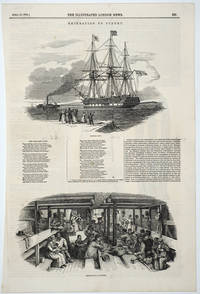
28182A valuable reference collection of images and articles that shaped perceptions of Australia to the wider world in the 19th century. This is a collection of over 800 woodcut illustrations and articles from the 19th century from the Illustrated London News The Graphic and The Illustrated Times & other less successful periodicals. The images of the ILN and Graphic are a comprehensive and systematic collection of Australian related images and articles from 1842 ILN and 1870 Graphic through the end of 1899. This collection was started in London in the late 1970s. It was our intention to create a comprehensive reference of every woodcut image of Australian interest in the two major British periodicals from their start date to 1900. We were living in North London not too far from Omniphil Limited a company based in Chesham Bucks. They were the preeminent dealers in woodcut images from British periodicals in the 1970s and 80s. We visited their premises repeatedly and sat and turned the pages of every single volume of their reference set noting the images related to Australia and purchasing a copy of those images. Another component of the collection is an assemblage of Australian images from lesser-known periodicals such as the Illustrated Times the Pictorial Times The Illustrated News of the World Gleason's Pictorial Drawing Room Companion Harper's Weekly Canadian Illustrated News and a few singletons from the Illustrated Family Paper l'Opinion Publique and the Australasian Sketcher. <br /> <br /> An important component of this collection is the associated Excel listing of the prints & text. These are indexed by year month & day image title print size associated text and folder number. <br /> <br /> The total collection is housed in nine A3 folders with fixed sleeves. Early years have 2 sheets per sleeve; later years are sometimes grouped together to fit into the available room in the album. The folders are approx. 12 ½" x 17" x 1". They were manufactured in England by Rexel Nyrex with the following label in the back inside cover "Rexel / Nyrex / PFV / A3 / 24 Made in Gt. Britain." The company still manufactures plastic products. We have not been able to ascertain if these are archival but the prints have been in the folders for at least 43 years and there has been no degradation. <br /> <br /> The only exception to the completeness of the collection is ship prints which were quite expensive at the time we assembled the collection. <br /> <br /> The collection is organized in three parts: <br /> Part I - The Illustrated London News 1842-1899; Part II - The Graphic 1870-1899; Part III - The Illustrated Times the Pictorial Times and other British & North American periodicals 1845-1883.<br /> <br /> Combined these original woodblock prints and articles are a valuable reference collection that shaped perceptions of Australia to the wider world in the 19th century a collection which would now be all but impossible to assemble. <br /> <br /> Part I<br /> Australian images from The Illustrated London News British periodical from its start in 1842 thru 1899. A comprehensive collection of Australian related images & articles from this groundbreaking periodical - the world's first illustrated weekly news magazine; the first periodical to employ special war correspondents and illustrators; the first to publish color supplements. The Australian material begins in the first publication on May 14 1842 and runs through the last article in the century in June 1899 and has approximately 467 images and 29 substantial articles. <br /> <br /> Australia is mentioned in the text of the first issue with an article "Sheep Farming in Australia" on p.15 about 4 column inches from the Inverness Courier. On the verso is an amusing illustration of a publicity stunt of the publishers. The founder Herbert Ingram paid hundreds of men to carry large sign boards in the streets reading "The Illustrated London News 30 Engravings Price 6D." The highly exaggerated drawing shows the sign bearers stretching as far as the eye can see on London footpaths. The caption reads "The 'Illustrated London News' Published Every Saturday. Thirty Engravings. Price Sixpence. The above engraving represents the public announcement of this paper on Friday last. Two hundred men paraded the streets of London to proclaim the advent of this important publication." Below the rule is printed "London: Printed by R. Palmer at the Office of Palmer & Clayton 10 Crane-court; and published by J. Clayton at 320 Strand. - Saturday May 14 1842." The first image of an Australian subject is in the December 23 1843 issue "New Government House Sydney" with text. The revenue stamp appears at the bottom left of the page. The discovery of gold in Australia is announced in a long article on the cover on Sept. 6 1851 entitled "Another El Dorado" in an article 15 column inches long. The last image is from June 1899 the Australian cricketeers in London- "The Australian Cricket Team / The Team up-river: leaving Boulter's Lock / The Test match at Lords Between England and Australia: Trumper and Hill at the Wickets". <br /> <br /> The ILN collection is housed in six A3 folders with fixed sleeves. Early years have 2 sheets per sleeve; later years are sometimes grouped together to fit into the available room in the album.<br /> <br /> Folder 1 - 1842-1852; 68 images & 12 articles<br /> Folder 2 - 1852-1854; 70 images & 13 articles<br /> Folder 3 - 1855-1861; 50 images & 1 article<br /> Folder 4 - 1862-1864; 55 images & 1 article<br /> Folder 5 - 1865-1884; 90 images & 2 articles<br /> Folder 6 - 1886-1899; 135 images<br /> <br /> Although Gale subscription service has a digitized resource titled the "Illustrated London News Historical Archive 1842-2003" this collection is invaluable as it is composed of the actual period woodblock prints and articles accessible in six A 3 folders. <br /> <br /> Part II<br /> Australian images from The Graphic British periodical from its start in 1869 thru 1899. Australian related images from The Graphic the British weekly illustrated newspaper first published on 4 Dec 1869 which was set up as a rival to the Illustrated London News. <br /> <br /> The Australian images begin in March 1870 and runs through 1899 approximately 242 images. There are 13 double page images 2 full weekly issues for the Sydney & Melbourne Exhibitions with the continuing supplements; 1 color Christmas issue; 74 full page and 39 half page illustrations. Highlights include images of bush and settlers' lives Tichborne case cricket Victorian gold the Kelly gang black trackers wool shipping ostriches a shearing dispute. <br /> <br /> The first Australian related image in The Graphic was published on the cover of the March 12th 1870 edition "Picnic in Australia To the Officers of the Flying Squadron." The last image for the 19th century is dated July 1899. The Graphic is housed in two folders are A3 approx. 12 ½" x 17" x 1". <br /> <br /> Part III<br /> Australian images from The Illustrated Times the Pictorial Times and other British periodicals as well as North American periodicals including Gleason's Pictorial Drawing Room Companion Harper's Weekly and others. London; New York; Boston; Canada: Various publishers 1845-1883. A collection of some of the scarcer woodcut images of Australian related images from various shorter-lived illustrated periodicals published in England and North America. These include The Pictorial Times The Illustrated Times The Illustrated News of the World Gleason's Pictorial Drawing Room Companion Harper's Weekly Canadian Illustrated News and a few singletons from the Illustrated Family Paper l'Opinion Publique and the Australasian Sketcher. These are scarcer publications than the market-dominating Illustrated London News & The Graphic. The collection starts in March 1870 and runs through 1899 approximately 107 images. <br /> <br /> Of particular interest is a series in the Illustrated Times entitled "England Versus Australia" illustrated by Florence Claxton. Claxton was an English artist who spent part of her adolescence in Sydney NSW in the 1850s. Throughout 1863 and early 1864 Miss Claxton drew imagined comparisons between the two environments not uniformly biased towards either country. In the first "Daughters Here" has a group of gentlewomen sitting in a lovely drawing room making lace playing piano or gazing in the mirror. "Sons There" shows the men doing the laundry mending and cooking. "Governesses Here" shows a gaggle of governesses seemingly subject to the whims of a butler; "Want of Governesses There" shows a home with the mother distraught the children causing absolute pandemonium & the father sitting and reading the paper. In another "Needlewomen Here" the seamstresses work themselves to exhaustion in a dark room with one light; "A Modiste There" shows a prosperous woman with many customers. <br /> <br /> We did not have access to a reference set for these smaller publications so these images are an assemblage not a comprehensive and consistent collection. <br /> <br /> The Pictorial Times. 1843-1848 Opened by Henry Vizetelly his brother and Andrew Spottiswoode. Eventually it was purchased by Ingram owner of the ILN and merged with The Lady's Newspaper. Unfortunately this newspaper did not date their issues but sometimes dates are to be found in text.<br /> <br /> The Illustrated Times. 1855-1862. A rival to the ILN edited by Henry Vizetelly who had left the ILN to open it. Vizetelly campaigned in the 1850s for the repeal of the Stamp Act. Its eventual repeal was a great boon allowing the new paper to be published at the low price of two pence.<br /> <br /> The Illustrated News of the World 1858-1864. This was published by John Tallis famed for his atlases with maps adorned with views. According to OCLC: 7091980 It started in Feb. 1858 and ceased in Aug. 1864<br /> .<br /> Gleason's Pictorial Drawing-Room Companion was a 19th-century illustrated periodical published in Boston Massachusetts. The magazine was founded by Frederick Gleason in 1851. According to OCLC: 10261386 it ran from 1851 - 1854. The publication name was changed to Ballou's Pictorial Drawing-Room Companion in 1855 after managing editor Maturin Murray Ballou bought out the interest of Gleason. Unfortunately this newspaper did not date their issues but sometimes dates are to be found in text.<br /> <br /> Harper's Weekly A Journal of Civilization was an American political magazine based in New York City. Published by Harper & Brothers from 1857 until 1916 it featured foreign and domestic news fiction essays on many subjects and humor alongside illustrations. It carried extensive coverage of the American Civil War including many illustrations of events from the war. During its most influential period it was the forum of the political cartoonist Thomas Nast. <br /> <br /> This collection is housed in one A3 folder approx. 12 ½ x 17" x 1" with fixed sleeves. The prints & text are indexed by newspaper and thence by year month & day image title print size & associated text including some artists and folder number. <br /> <br /> A collection of primary source documents revealing the perceptions and attitudes towards Australia in the 19th century. hardcover
1939SPENDERS007080Atelier 17 Paris & New York. March 1939. First edition. Octavo. Spender's poem ''Fall of a City'' and Louis Aragon's translation ''Chute d'une Cit�'' together with nine engravings loose within wrappers. The engravings were printed by Atelier 17 and Henri Hecht and include one with aquatint and roulette one with soft ground etching one drypoint and one etching. All are on Montval handmade paper with deckle-edges. Held within the original plain board chemise but lacking the slipcase which had a Hayter titling-piece pasted onto the front. Stanley Hayter founded Atelier 17 in Paris in 1927 and it continues to this day in Rue Didot albeit with the name changed to Atelier Contrepoint. This production was his contribution to the raising of funds to help children orphaned by the Spanish Civil War.101 numbered copies were printed for sale and 12 for the contributors. This copy is unnumbered and hors commerce marked ''h.c'' on the limitation page. Each copy including this one was signed by Spender and Aragon at their respective contribution and by each artist in the lower margin of the etched sheet.Fine in custom burgundy morocco box with ''FRATERNITY'' in gilt on the lid. Very scarce with all nine loose etchings as most sets have been broken up for piecemeal sale. Atelier 17, Paris & New York. March, unknown
1630ABC_49153Flanders and Paris: various publishers 1630. Several prints are tipped into a 19th-century elaborately gold- and blind-tooled brown morocco album a blind-tooled ornament in the centre of both boards with the crowned initials J.B. on the front surrounded by a double fillet frame with elaborate corner pieces gold-tooled board edges and turn-ins gilt edges white watered silk endpapers. The work is housed in a 19th-century marbled slipcase with a paper label with the name of Countess Julie Visart de Bocarmé mounted on the front. The remaining prints have been tipped onto a sheet of sturdy paper inserted into a clear plastic file folder which are loosely inserted into a 19th-century elaborately gold- and blind-tooled purple morocco album with the word "album" lettered in gold on the front surrounded by a blind-tooled Gothic style border and an elaborate gold-tooled border gilt edges black watered silk end papers. Oblong folio ca. 29 x 42.5 cm; sheet size ca. 12 x 9 to 35 x 23 cm. With 24 contemporary hand-coloured engravings of which some heightened with gold 1 contemporary hand-coloured woodcut illustration 1 chromolithographed print 7 watercolour drawings including 2 on vellum 3 silk embroidered prints in various sizes and 1 image made of paper ornaments glued onto a black netting fabric. Further with a folded alphabetical list of the Antwerp printers and engravers of devotional prints in a 19th-century hand tipped onto the first leaf of the album. 2 volumes. Remarkable collection of 37 devotional prints and drawings including fifteen printed on vellum and two "clad" prints. The majority of the prints and drawings were made in the 17th and 18th centuries but a small number of 19th-century examples is also included. The prints all depicting Catholic saints and scenery are decorated with a wide variety of techniques. Most are hand coloured and heightened with gold but several are clad in fabric embroidered cut out to resemble lace sometimes backed with coloured paper or metal foil to highlight the cut outs and one was made by gluing paper ornaments onto a black netting fabric. The present collection which was owned and probably compiled by the Belgian Countess Julie Alexandrine Marie Josèphe Visart de Bocarmé 1823-1862 not only offers a fascinating sample of popular printing culture in Flanders but also highlights the endless creativity of both the creators and consumers of these prints.Devotional prints were initially used as images for the illiterate replacing written or printed texts. They were intended for private devotion and often bought and decorated by women. The present prints were mainly engraved by 17th-century Flemish printmakers such as Cornelius de Boudt 1660-1738 Michiel Cabbaey 1660-1722 Guillaume Collaert ca. 1595-ca. 1651 Lodewijk Joseph Fruytiers 1713-1782 Jacob de Man ca. 1643-1719 and Theodoor van Merlen III 1661-1749. In contrast to most examples of this genre most of the present engravings are printed on vellum and beautifully coloured by a contemporary hand partly heightened in gold for the halos of the saints. The prints include biblical scenes showing Christ on the Cross Joseph Mary the Apostles and John the Baptist. The majority of the prints depict portraits of Catholic saints such as Anthony of Padua 1195-1231 Apollonia of Alexandria d. 249 Dorothea of Caesarea d. ca. 311 Francis of Assisi ca. 1181-1226 Francis Xavier 1506-1552 Helena of Constantinople ca. 246-330 Peter of Alcántara 1499-1562 and Rosalia of Palermo 1130-1166. A complete list of contents is available upon request.With the initials of Belgian Countess Julie Visart de Bocarmé stamped in gold on the front board and her manuscript ownerships label Julie Visart de Bocarmé Baronesse G.v.Z.v.N. mounted on the front of the slipcase. Further with the printed label of Cabasson Successeur de Terzuolo-Despilly Papetier du Roi Rue de la Chaussée dAntin No. 15 mounted on the verso of the first flyleaf of the brown album all prints and drawings have been tipped onto a white sheet of paper with a manuscript collection number at the top. The boards are slightly rubbed and scratched. The first few leaves of the purple album have been removed to make space for the collection. The prints and drawing show traces of use with some browning and occasional creasing soiling or foxing. The edges and corners of the slipcase are scuffed and the lower right corner of the paper label is torn off. Otherwise in good condition.l K. van den Bergh Bidprentjes in de Zuidelijke Nederlanden 1975; J.A.J.M. Verspaandonk Het hemels prentenboek. Devotie- en bidprentjes vanaf de 17e eeuw tot het begin van de 20e eeuw 1975. various publishers, hardcover
1960140940127New York: Tiber Press 1960. First Edition. Fine. Complete in four folio volumes each measuring 17½" x14¼". Each volume with three full-page color silkscreen prints and additional prints at title page and upper cover original cloth-backed illustrated boards. First Edition. No. 47 of 200 copies. Each volume signed by the poet and artist on the limitation page. A Fine set bright and sharp in publisher's thick acetate jackets housed in cloth slipcase with light shelf wear.<br /> <br /> <p>A visionary collaboration between the leading lights of the New York School of poetry and four second generation abstract expressionist artists produced at the height of their creative collective powers. A heady encapsulation of the New York literary and visual avant garde at the dawning of the '60s. Tiber Press unknown
1960140946279New York: Tiber Press 1960. First Edition. Fine. First edition. Complete in four folio volumes each measuring 17½" x14¼". Each volume with three full-page color silkscreen prints and additional prints at title page and upper cover original cloth-backed illustrated boards. First Edition. No. 77 of 200 copies. Each volume signed by the poet and artist on the limitation page. A Fine set bright and sharp in publisher's thick acetate jackets housed in cloth slipcase with trivial shelf wear. <p>A visionary collaboration between the leading lights of the New York School of poetry and four second generation abstract expressionist artists produced at the height of their creative collective powers. A heady encapsulation of the New York literary and visual avant garde at the dawning of the '60s. Tiber Press unknown
160918688<p>Text in Latin. 2nd enhanced edition. Black straight-grain morocco leather over bevel-edge wood boards; gilt ruled frames on covers; brass clasps at fore edge; gilt title and rolls on spine; French Stormont pattern marbled end papers; two color print throughout; large font throughout; woodcut decorative drop-cap initials throughout. Clean covers and spine; front cover detached; light edge wear somewhat heavier at cover fore corners; brass clasps are intact and VG condition; rear cover spine and text block are tightly bound; lacking Title Page and 3 other prelim leaves ll. 7 8 1 and 4 interior leaves including 4 plates pp 56 250 264 314; ll. D4b Q5b R4b V5b; 53 intact full page copperplate engravings and 35 of 38 1/3 page engraved tailpiece vignettes range from Good but light to Fine though 1 plate has light ink attempt to cover angels privates p. 662; l. Tt1b; few light smudges interior otherwise very clean. Note that leaf 7 is lacking which has dedication or honors the pope; catchword at tail of l. 6b is 'PAV' indicating Pope Paul V 1605-1621 on missing leaf rather than Clement VIII 1592-1605 as in some copies. 23 x 17 cm; 696 pp.</p> Antverpiae (Antwerp): Ex Officina Plantiniana, Apud Ioannem Moreti (Plantin-Moretus Press) hardcover
18482111902160200704Sculpture by Kisuke Oshima 1848. Soft Cover. Fine. Volume: 1 Sculpture by Kisuke Oshima paperback
19001421261900. JAPANESE ORNAMENTAL WOODBLOCK PRINTS. Bijutsu Kai. Collection of Pictures Regarding Colour Designs for Japanese Textiles Costumes. Five parts in one volume. Five folding plates and 18 full-page coloured woodblock prints per section for a total of 95 original illustrations. 8vo 232 x 160 mm. bound in Japanese accordion style with Japanese fold pages and silk-thread stitched spine in new linen cloth folding box with leather spine label. Kyoto: Geisodo ca. 1900. A superb set of this important compendium of early Japanese textile designs showing a great variety of patterns and scenes. The woodblock prints are often exceptional Japanese images very much in the wabi-sabi tradition. Not in Hillier The Art of the Japanese Book 1987. hardcover
1927355490725414London 1927. First Edition. Hard Cover. London: Published by the Fleuron Limited and printed at the Curwen Press 1927-1930. CONTAINS SIGNED WOOD ENGRAVINGS BY JOHN NASH IN VOLUME 3 AND ERIC RAVILIOUS IN VOLUME 4. Publisher's yellow brown pink or purple buckram with gilt lettering to the spine t.e.g. others uncut spines a little faded. Robert Gibbings writes on the Golden Cockerel Press Eric Gill on intaglio printing from woodblocks Paul Nash on woodcut patterns Douglas Percy Bliss on the tools of the wood-engraver etc. W A Thorpe on the Wood-Engravings of John Nash Wood and Metal in the Invention of Printing by Victor Scholderer German Woodcut Lettering by Dr. Julius Rodenberg et al. Generously illustrated with examples of the work of many of the great wood engravers of the time Eric Ravilious John Nash Tirzah Garwood Gwen Raverat Clare Leighton et al. Vol 1 yellow buckram from 1927 is # 25 of 75 copies of which 70 are for sale. Vol 2 brown buckram from 1928 is # 42 of 80 copies of which 75 are for sale. In addition to the blocks in the text there is a fold-out in collotype of woodcut wall-papers opposite page 1. Vol 3 pink buckram from 1929 is # 18 of 80 copies of which 75 are for sale and contains one of the few woodcuts to be produced in Tirzah Garwood's lifetime Vol 4 purple buckram from 1930 is # 27 of 75 copies of which 70 are for sale. A very good set. Containing signed wood-engravings by Eric Ravilious and John Nash. NB: THESE SPECIAL EDITION SETS ARE VERY RARE AS THE SIGNED ENGRAVINGS BY ERIC RAVILIOUS AND JOHN NASH ARE USUALLY FOUND REMOVED. NNB: Dustwrappers not present. Further photographs available upon request. hardcover
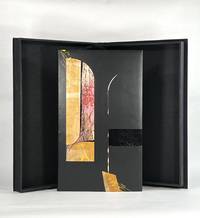
10427Berkeley CA: Editions Koch 2003. Full Leather. Fine binding. Folio. 44 pp. frontis plates. Limited edition one of 120 copies this copy out of series; there are also 26 lettered deluxe copies with a suite of 10 engravings. All are signed by Bringhurst Wagener and Peter Koch at the colophon. Bound by Camille Botelho in black box calf with inlays and onlays of dyed calf vinyl snakeskin painted paper mylar laminates and a porcupine quill; hand embroidered endbands; vinyl snakeskin doublures. A fine copy in clamshell box. <br /> <br /> True to form Peter Koch has produced a marvelous edition of what remains of Parmenides's poem "On Nature." The fragments of the poem are rendered in this opposite page bilingual edition with the Greek on the left and Bringhurst's English translation on the right. The poetry is brilliantly accompanied by Wagner's striking engravings a frontispiece and 4 additional wood engravings in red and orange. <br /> <br /> Given it survives only in fragments there is some debate as to the "meaning" of the symbolism of Parmenides's poem making it a work ripe for interpretation. But at base his view of reality is one of stasis unchangeable. And while that enduring Greek logic marks the work Wagener introduces remarkably abstract and kinetic illustrations printed in an urgent deep red and orange—projecting anything but stasis. It is the discord between the logical understanding or reality and the emotional understanding of it that spoke to Botelho and informed her design of this incredible binding. She writes: "In the design I thought of Parmenides looking out past shadowy arches from within a dark room to find total chaos beyond. The curve of the Mylar inlay and the curve of the porcupine quill mimic a column marking a threshold beyond which is uncontrolled noise and movement and mess. I wanted the disparity between the smoothness of the box calf and the chaos of the inlays and yellow foiling to be a comment on how frightening examining one's reality can be." Magnificently achieved Botelho has created an exceptional binding that bridges Parmenides and Wagener giving voice to the paradox she sees in this metaphysical conversation on the nature of reality. Editions Koch unknown
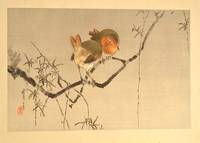
1916898711916. Seitei KachÅ çœäºèŠ±é³¥ Prints Bird and Flower<br /> <br /> Watanabe Seitei 渡辺çœäº also ShÅtei artist <br /> <br /> Tokyo: Okura Shoten Okura Yasugoro<br /> <br /> Taisho 5 1916<br /> <br /> Brown cloth clasped portfolio 28.2 x 38 cm. A complete collection of the 22 color prints the preface and table of contents page 24 sheets in all with a colophon label on the inside of the rear cover. <br /> <br /> A wonderful production in color woodblock of the work of the important artist Watanabe Seitei 渡辺çœäº 1851-1918. Okura Shoten was also the publisher of Seitei's other two books the 3 volume Seitei KachÅ Gafu çœäºèŠ±é³¥ç”»èœ of 1890-1 and the KachÅ Gafu èŠ±é³¥ç”»èœ of 1903 but this portfolio is by far the rarest of all his works. Prints from the series are seldom seen and much prized complete sets like this one are vanishingly rare. <br /> <br /> After studying under Kikuchi YÅsai èŠæ± 容斎 1788-1878 also known as Kikuchi Takeyasu and Kawahara RyÅhei and established artist Shibata Zeshin 柴田是真 1807-1891 in his youth he traveled to Europe in 1878. One of the early practitioners of the Nihonga 日本画 style of Western-influenced traditional painting he is primarily known for his work with bird and flower subjects which he revolutionized with his delicate and playful ability to capture the reality of color plumage and other details. <br /> <br /> Overall the condition of the covers is quite good and the prints are well printed. The heavy paper on which the prints are mounted are a bit toned but the prints themselves are quite good and clean with wonderful colors and impressions. A cornerstone of any Japanese bird and flower collection. Enclosed in a custom clasped cloth box. unknown
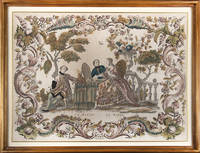
112186n.p. n.d. eighteenth century circa 1750. . A suite of four original hand coloured engravings titled in Spanish and French La Manna Le Matin; El Mediodia Le Midi; Eldespues de Comer L'Apres Diner and Le Soir La Tarde each approx. 50 x 68 cm modern gilt frames.<br /> An exquisite suite of four eighteenth century conversation piece engravings in the rococo style showing the nobility at leisure dining and dancing outdoors in a bucolic setting. Each image is beautifully set within delicately coloured scrolled borders featuring flowers foliage leafy tendrils and fruit. These prints capture the privilege and lifestyle of the aristocracy and are typical of French decorative art in the early to mid eighteenth century.<br /> n.p., n.d. [eighteenth century, circa 1750]. unknown
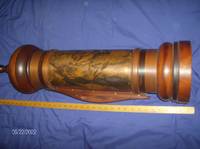
1992DEMO006065IStatesboro GA: The Boxwood Press 1992. First Limited edition. Hardcover. Fine. In a mahogany and copper scroll case with vertical slot and hidden crank handle; with a protective velvet cloth <br/><br/>Only 16cc.Remarkable bilingual presentation / re-interpretation of this Biblical work placing it in the the Reagan / Bush era. Illustrated with 16 color etchings by Bernard Solomon the translator and etcher. He realized there were remarkable parallels between the Biblical story of Esther and that of Anita Hill Clarence Thomas and the U.S. Senate Judiciary Committee. This interpretation unfolds sequentially as each leaf is unrolled from the 33 in. high scroll holder. The body of the scroll holder is one of the original copper plates used for the etchings which is why it is limited to an edition of only 16. The top and bottom of the handcrafted minaret-style case is finely shaped and polished mahogany by Anthony V. Mann. Designed with a hidden crank to rewind the scroll into the case. Altogether remarkable! The Boxwood Press hardcover
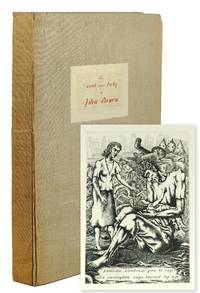
19401262991940. New York: Lee A. Ault & R. C. von Ripper 1940. <br /> <br /> Huge folio 50 pp. text and illustration engraved throughout on folded leaves separated with tissue guards in stiffened wrappers with an additional suite of 22 plates lacking some together in the original cloth portfolio and card slipcase. Together with seven sheets of proof plates and a folder of five related press clippings bearing the printed label of Monica McCall Inc. Wrappers lightly toned portfolio worn and splitting slipcase considerably worn and stained and lacking spine panel plates themselves are very good throughout with only a hint of age-toning to the outer margins.<br /> <br /> § Copy V signed by Von Ripper and Muriel Rukeyser one of three Rives paper with a suite of etchings on Velin de Normandie from a total edition of 67 copies. This copy belonged to Muriel Rukeyser who has extracted some of the suite of prints they now number 22 and added seven proof sheets some showing and annotating alternate inking options as well as a small collection of related press clippings gathered for her by Monica McCall her literary representative and sometime lover.<br /> <br /> An important collaboration between Rukeyser and the Austrian-born surrealist etcher Rudolph von Ripper 1905-1960 on the eve of America's entry into the Second World War. Rukeyser's poem looks to the legacy of John Brown the militant abolitionist of the 1850s and celebrates the possibility of spiritual renewal through resistance to injustice. It first appeared in the June 1940 edition of Poetry Magazine. Here the poem is fully engraved and illustrated with original etchings by von Ripper and interleaved with the etched verses of the old Civil War marching song. By the time Von Ripper was engaged on this project he was only 35 but had already fought for the French Foreign Legion been imprisoned and tortured by the Gestapo and been wounded while fighting on the Republican side in the Spanish Civil War. His direct physical experience of the rise of fascism is evident in his visceral Goya-like etchings. The series was exhibited in the Bignou Gallery in New York in 1941. A contemporary review described it is "an unusal undertaking brilliantly executed the drawings forming not so much illustrations or decorations as actual parts of the poem. Realism symbolism powerful design and dramatic presentment mark these plates which form a distinguished piece of bookmaking. unknown
1733140941304London: Aeneis Tabulis Incidit Iohannes Pine 1733. First Edition. Near Fine. 1733 1737. Two volumes. First edition first issue with "post est" error in the Caesar medallion on page 108 of Volume II. In a lavish full brown morocco binding with five raised bands and ornate gilt stamping to spine borders on covers wide turn-ins and beautifully patterned endsheets; all edges gilt. Near Fine with a light amount of rubbing to joints spines lightly faded a scuff to the front cover of Volume II and small former owner bookplates of noted collector Abel E. Berland to the front pastedowns. Pine's Latin text was based on Talbot's 1699 edition and is remarkable for being entirely illustrated with engraved copper plates throughout the text. Aeneis Tabulis Incidit, Iohannes Pine unknown
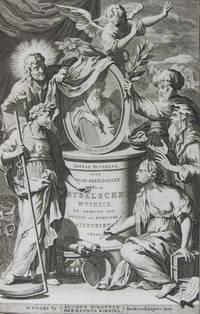
170018867Utrecht: Anthony Schouten; Hermannus Ribbius 1700. Second edition. Hardcover. g to vg. Folio 15 6/8 x 10 2/8". 42 844 36pp Index 4 845-1716 36pp Index. Text in Dutch. Contemporary blind-stamped vellum with gold lettering and tooling to spines. Raised bands. Additional engraved allegorical titles by Gilliam van der Gouwen after Wilhelmus Goeree and Philip Tideman. Title pages in red and black lettering. Decorative initials. Originally published in 1690 this work is an extensive encyclopedical study of Jewish Biblical life and times and of the Ancient Near East incl. Egypt. This complete two-volume set is embellished throughout with no less than 87 engraved plates including 29 folding and 36 in-text engravings. The magnificent engravings depict numerous Biblical scenes as well as the ancient coins of the period; the Enoch Hebrew Assyrian Phoenician Egyptian Copte Armenian and Chinese alphabets; astronomical observations; views of Jerusalem; scrolls and writing instruments; the first 13 Assyrian kings; footwear in Antiquity; mosaic floor tiles; Solomon's Temple etc. Moderate and sporadic rubbing along edges. Gold partly and slightly faded on spines. Light and minor water-staining along margin of very first leaves in first volume. Title page remargined not affecting text. Front free endpaper fly-leaf additional engraved title and title of second volume slightly and partly chipped along edges not affecting text or illustration. Very minor and sporadic foxing/age-toning throughout. A nearly fine amply-magined copy with clean plates throughout. Anthony Schouten; Hermannus Ribbius hardcover
009237Los Angeles: Zeitlin & Ver Brugge Booksellers 1974. Book. Fine. Hardcover. SIGNED AND INSCRIBED BY PUBLISHER. Limited and Numbered First Edition. 8vo - over 7¾" - 9¾" tall. #105 of 120 copies printed by Saul & Lillian Marks at The Plantin Press Los Angeles completed April 1974. "The entire edition subscribed for by Jacob Israel Zeitlin & Josephine ver Brugge Zeitlin." Association Copy SIGNED AND INSCRIBED BY PUBLISHER at colophon page "for Gary Jake". From the collection of Gary Steigerwald at the time of publication a young bookseller working for Jake Zeitlin. In lovely Max J. Adjarian binding his small label to upper left corner of front pastedown of quarter brown morocco over patterned paper boards.and complementary custom clamshell case of quarter brown morocco over grey buckram boards with beige felt lining stamp-signed "Frank Burton". Both are Fine. SCARCE Association Copy. Zeitlin & Ver Brugge Booksellers, Hardcover
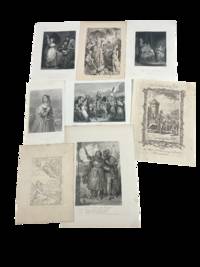
1700229131700. Cross-DressingWomen Military Joan of Arc engraving archive depicting the French military leader and martyr Jeanne d'Arc in iconic images of battle persecution and faith ca. 1770-1850s. The prints focus on Joan's leadership during the Hundred Years' War and on the gender-bending aspects of her identity and dress that contributed to her 1431 trial for heresy. Particular attention is given to her appearance in armor while directing troops or appearing before political authorities. These visual depictions emphasize Joan's adoption of male military clothing an attribute which has lead modern scholars of LGBTQ history to celebrate the saint as a queer and proto-transgender figure.<br /> <br /> Archive of eight engravings and proof impressions executed primarily in copperplate and steel engraving processes during the eighteenth and nineteenth centuries. The images depict several key episodes associated with Joan of Arc's historical narrative including portraits showing her wearing armor and holding a sword scenes of military command in which she appears mounted or directing troops and representations of her recognition by Charles VII and entry into the city of Orléans. A prison scene portrays Joan during captivity prior to her execution in 1431 emphasizing the moment when her continued cross-dressing became a major point of contention during her heresy trial. Several engravings were produced for historical publications and illustrated histories circulating in the eighteenth and nineteenth centuries including editions associated with François Guizot's History of France reflecting the renewed interest in Joan of Arc as a figure of national history. Archives includes:<br /> <br /> 1 Engraved for J. Sydney's History of England. The Maid of Orleans Receiving the Sword of St. Catherine. England c.1770-1820. A fine copper engraving framed within an elaborate Rococo border showing Joan receiving the sacred sword of St. Catherine an episode derived from medieval hagiography rather than strict historical documentation. Joan is mounted on horseback surrounded by armed men and clergy with a fortified tower rising behind her. The ornamental border and English publication context reveal the 18th-century Protestant fascination with Joan as a paradoxical figure: a warrior-prophetess both admired and viewed with suspicion.<br /> <br /> 2 Anonymous Artist. Va va fille de Dieu; délivre la France! Vision Scene. France c.1820-1850. A preparatory hand panciled engraving proof depicting Joan of Arc's divine revelation framed within penciled border guidelines. An angel descends from the clouds carrying a banner while pointing downward toward Joan who kneels in astonishment as cherubs hover above. The inscription "VA VA / FILLE DE DIEU / DELIVRE LA FRANCE!" anchors the scene as an allegory of Joan's heavenly mandate.<br /> <br /> 3 Henry Richter after. Joan of Arc Recognizes the King. London: The London Printing and Publishing Co. mid-19th century. A steel engraving portraying Joan's revelation of Charles VII at Chinon the pivotal moment when she identifies him despite his attempt at disguise. The richly detailed crowd scene and Gothic architectural setting emphasize both spectacle and legitimacy visualizing Joan as divinely guided rather than politically manipulated. <br /> <br /> 4 G. Greatbach engraver; after a painting by J. Opie R.A. Joan of Arc Declaring Her Mission. London: The London Printing and Publishing Co. Ltd. mid-19th century. Joan is shown making a dramatic gesture as she proclaims her mission before astounded soldiers and clergy. The engraving captures the tension between gender expectations and prophetic authority: Joan's outstretched arm determined expression and illuminated figure contrast with the skeptical figures behind her. <br /> <br /> 5 E. Scriven engraver. Joan D'Arc. London: H. Moore Sons & Co. mid-19th century.An engraving presenting a romanticized half-length portrait of Joan of Arc in armor holding a sword upright while gazing serenely into the distance. Behind her appear faint bystanders rendering her both an individual and an emblem of national deliverance. <br /> <br /> 6 Entry of Joan of Arc into Orléans. From Guizot's History of France. Paris/London c.1840s. A sweeping steel engraving of Joan riding triumphantly into Orléans accompanied by monks soldiers and citizens. The composition foregrounds her as a mounted military leader sword raised while crowds kneel and look upward in awe. Johannot's design visualizes Joan as a unifying national leader.<br /> <br /> 7 G. Stodart engraver; after H. E. Selous. Joan of Arc and Charles. London: Virtue & Co. mid-19th century.A dramatic steel engraving showing Joan standing beside Charles VII directing his attention toward the field of battle. The caption references their military collaboration. The interplay of armor banners and a stormy sky underscores Joan'smilitary might. <br /> <br /> 8 T. Brown engraver; after E. Corbould. Joan of Arc in Prison. London: The London Printing and Publishing Co. mid-19th century. A somber interior scene depicting Joan in captivity clasping her hands as guards and clergy surround her. Corbould emphasizes her steadfastness and the emotional gravity of her final days. Produced for an illustrated royal history King Henry the Sixth the image cast Joan as a martyr of conscience.<br /> <br /> In recent decades scholars in LGBTQ history and gender studies have increasingly examined Joan of Arc as a proto-queer icon who challenged traditional ideas of gender identity and expression. Medieval trial records document that Joan consistently wore male military clothing during her campaigns and continued to wear such clothing during imprisonment a choice that became a central accusation in the charges brought against her in 1431. Some historians and queer theorists have interpreted Joan's refusal to abandon male dress even under threat of execution as evidence of a personal gender identity that did not conform to contemporary expectations for women. Joan of Arc has been cited as an example in Medieval history of an individual navigating queer identity long before the modern understanding of terms like trans non-binary or genderfluid. <br /> <br /> Light toning and mild foxing to some edgewear and staining present to some margins. Prints are clear and paper crisp. Overall very good condition. A compelling and diverse archive of eight Joan of Arc engravings and artistic proofs representing two centuries of European historical illustration and devotional imagery. The collection captures Joan's transformation from medieval visionary to modern nationalist and feminist icon. unknown
1786376505Venezia 1786. Ora la prima volta con le stampe pubblicate. Engraved title page with vignette. Engraved Title portrait and 24 leaves of plates XIII page of text. Frontispiece & 15 engraved plates. 1 vols. Folio. Quarter morocco and green boards. Binding showing signs of wear. Interior with light foxing but overall Near Fine. Bookplate of C. W. H. Sotheby. Ora la prima volta con le stampe pubblicate" Engraved title page with vignette. Engraved Title portrait and 24 leaves of plates XIII page of text. Frontispiece & 15 engraved plates. 1 vols. Folio. Including engravings after the works of great Venetian Renaissance painters Giorgione Titian Tintoretto Zelotti and Veronese. With Titian's frescoes for the exterior of the Fondaco dei Tedeschi in Venice which have since perished. Also with engravings after the great draftsman Parmigianino.<br /> <br /> Antonio Maria Zanetti is known as a printmaker for his contributions to the style of chiaroscuro woodcuts as well as for his career as an art dealer and collector. Girolamo Francesco Zanetti was a historian and philologist known for being the first to publish one of the oldest Venetian chronicles the Chronicon Altinate. OCLC 272605179. Provenance: Bookplate of C. W. H. Sotheby d.1887 of Ecton Hall Northampton England unknown
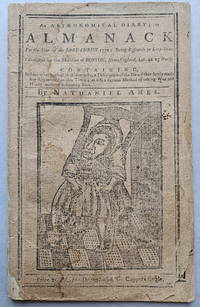
17713835<p>Three engravings by Paul Revere are certainly the most distinctive feature of this Boston almanac for 1772 namely:</p><p>Miss Emma Leach a dwarf born in Beverley Massachusetts on front cover.</p><p>The Patriotic American Farmer John Dickinson.</p><p>Mrs. Catharine M'Caulay.</p><p>Almanac making in colonial America was a rather unscrupulous affair at times. The notion of copyright was unknown among publishers. Indeed almanac piracy or perhaps liberal borrowing was the accepted industry practice.</p><p>The present almanac offers an excellent example of heavy borrowing. The Boston Ames <em>Almanack </em>for 1772 was published in two versions: one by Ezekiel Russell and the other a pirated version by an unnamed printer/publisher. The text and images of the two are very similar although the cuts of the three subjects differ very slightly between the two almanacs. Paul Revere's daybook for December 1771 identifies <strong>two</strong> purchasers of plates for a 1772 Ames almanac Ezekiel Russell and Edes & Gill. Within a matter of a week it's apparent that Revere produced two sets of plates of the same subjects for competing almanacs.</p><p>In an advertisement for Russell's version of the Ames almanac he "hopes that the publick with their usual impartiality will give him preference in buying of his Ames' genuine almanac before any pirated edition." Revere's contributions were in both the original and this pirated edition of the almanac.</p><p><strong>References: </strong> Evans: 11961; Drake <em>Almanacs of the U.S</em>.: 3205; Brigham <em>Paul Revere's Engravings</em>: pp. 202-203; Hamilton <em>Early American Book Illustrators and Wood Engravers</em>: 56; O'Neal <em>Early American Almanacs</em>: 115 mistakenly citing Russell as publisher.</p><p><strong>Condition:</strong> Disbound; leaves are separated with a later paper reinforcement in the gutter of two leaves. Chipping to lower corners of two leaves. Scattered mostly light staining and a few spots of foxing. Good.</p><p>ICN 7815.</p> [Printed by T. & J. Fleet and Edes & Gill. Price 2s. 8d. per dozen, and six coppers single. ]
1691D4443Amsterdam: Carel Allard 1691. Hardcover. Very Good. Oblong broadsheets 295 x 380. Lacking title-page and without the 22 pp. accompanying text. 20 large unnumbered engraved plates one with 4 separate scenes etched plates by HUGO ALLARD 4 signed I. VANDEN AVELE 2 signed and JAN LUYKENone signedone with 2-inch tear repaired some minor marginal wear. Original marbled wrappers old paper cover label; cloth folding case. VERY RARE print series illustrating the history of the ascension to the throne of WILLIAM III 1650-1702 and MARY II 1662-1694. The series begins with the Seven Bishops being brought to the Tower of London with a view up the Thames followed by the birth of the Prince of Wales on 10 June 1688 through the entrance of William and Mary into The Hague on 5 February 1691. The series contains several scenes devoted to the festivities surrounding their coronation in London on 11 April 1689. This set of the engravings correspond to Landwehr and appear to have been issued in its original binding without the text; the title-page may have been removed or was not included. Muller considered the 20 plates as a series although he had not seen a bound set with title and the text. Landwehr Splendid Ceremonies 143; Muller 2692. <br/><br/> Carel Allard hardcover
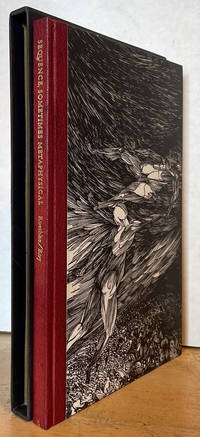
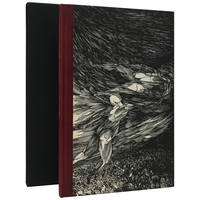
196333200Iowa City: Stone Wall Press 1963 Limited Edition in slipcase beautifully printed on Rives Heavy with interleaved illustrations on Mulberry paper one of 60 deluxe copies of a total print run of 330 bound in quarter leather and illustrated boards signed by both Roethke and engraver Roy this copy number X one tiny nick to leather at spine tail a beautiful copy of this justly-celebrated production printed by Kim Merker at the Stone Wall Press; from collection of Jenijoy La Belle who studied with Roethke at the University of Washington along with her close friend Tess Gallagher and the author of the influential book The Echoing Wood of Theodore Roethke; tall 8vo; 31 unnumbered pages and 12 engravings each on folded leaf; additional unnumbered engravings preceding title page & colophon. Signed by Author. First Edition. Hard Cover. Fine. Stone Wall Press hardcover
1963307320Iowa City: Stone Wall Press 1963. First Edition. Leather bound. Fine. A beautiful collection of poems printed by Kim Merker with illustrations printed on delicate mulberry paper bound in between. This book is generally regarded as one of the finest from the press which is known for the excellence of its letterpress printing and book design.<br /> <br /> The edition size was 270 copies of which this is one of 60 deluxe copies bound in quarter-leather and paper printed with an engraved design by Roy. These copies numbered with Roman numerals are signed by both Roy and Roethke who died soon after the printing was completed. Roethke won both the Pulitzer Prize and the National Book Award for poetry. First edition first printing deluxe issue. A fine copy no. XXX of 60 signed by Roethke and Roy. The publisher's paper-covered slipcase is beginning to split along the bottom edge. Stone Wall Press unknown