10 867 résultats
1962015771Paris Les Editions de Minuit 1962 In-8 Broché
Folio (c. 485 x 335 mm) XVI ff. and printed dedication (to Carlo Emanuele III) with engr. initial. Fine series of decorations with elaborate cartouches and emblems, some including architectural or marine designs. The Bologna painter Gaetano Bernardino Ottani (1736-1827), long active in Turin, created the stage decorations of his native city's Teatro Formagliari in 1742. - Plates mostly engraved by Dionisio Valesi, others by Pietro Peiroleri and Angelo Ghizzardi. Margins occasionally wrinkled and fingerstained (especially t. p. and dedication). Wants the two portraits engraved by Ghizzardi. Rare; the San Francisco State Univ. Library copy wants the dedication; the OCLC record linked by Princeton and Harvard states one portrait and two plates as missing. Ornamentstichkat. Berlin 592. Guilmard, Les maitres ornemanistes (Paris 1880), S. 334. OCLC 34976429 u. 27192168. Cf. N. Aprà, Dizionario enciclopedico dell'antiquariato (Milano 1969), s. v. Thieme/Becker XXVI, 86.
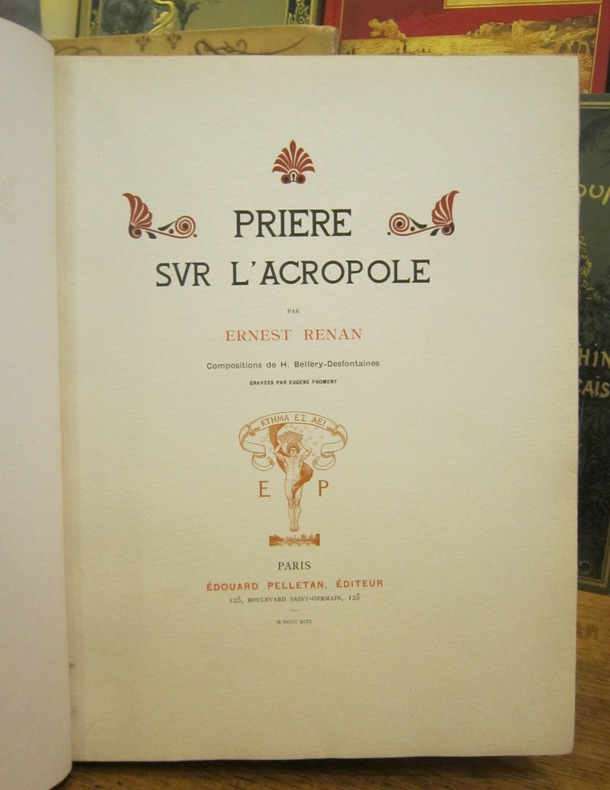
1899002740Paris, Edouard Pelletan, 1899
194466608Londres 1944 | - | une feuille
19774780DBLuzern, Faksimile-Verlag, 1977-1981. Folio. (682) S. davon 443 Seiten mit farb. Miniaturen; 724 S. (Kommentarband), 10 Bl. (Begleitheft). Schweinslederband mit Blindprägung, 2 Schliessen u. 10 Beschläge, in Holzkiste. + Wichtig: Für unsere Kunden in der EU erfolgt der Versand alle 14 Tage verzollt ab Deutschland / Postbank-Konto in Deutschland vorhanden +, 4780DB|4780DB_2|4780DB_3 2 Bände, 1 Heft. [3 Warenabbildungen] Faksimile-Ausgabe.
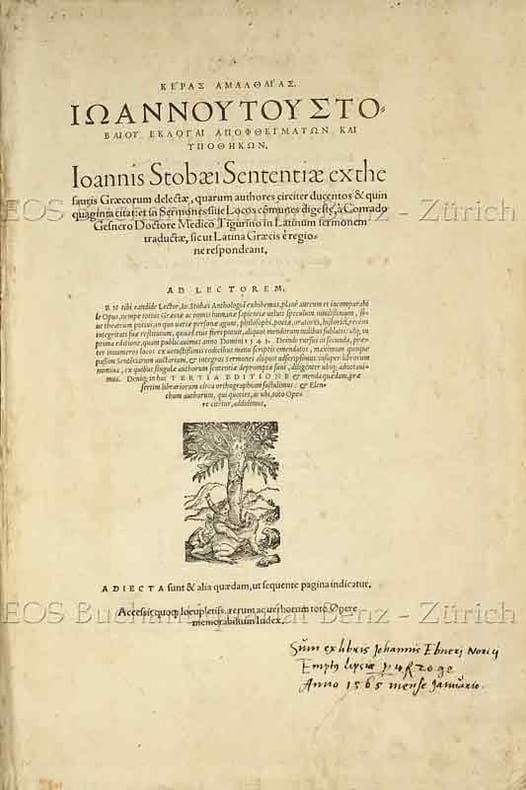
15593332DB(Am Schluss:) Tiguri, apud Christophorum Frosch., anno 1559. Mense Augusto. Folio. (12) Bl., 632 S., (15) Bl. (letztes leeres Bl. fehlt). Mit zahlreichen figürlichen Holzschnitt-Initialen, Holzschnitt-Druckermarke. Blindgeprägter Schweinslederband der Zeit mit 2 Metallschliessen, Papierrückenschild, maschinengeschrieben. + Wichtig: Für unsere Kunden in der EU erfolgt der Versand alle 14 Tage verzollt ab Deutschland / Postbank-Konto in Deutschland vorhanden +, Titelblatt
- s.d. (1924), 93x78mm, autre. - Diane et Actéon aux Marquises. Noa Noa. Unique proof of the woodcut drawn and engraved after Paul Gauguin by George-Daniel de Monfreid [between 1904 & 1924] | 9,3 x 7,8 mm | one sheet Original proof, likely unique, of this intermediate state of a woodcut drawn and engraved by George-Daniel de Monfreid after two works by Paul Gauguin. Print on Japan silk, annotation by the artist in the left-hand margin. Woodcut drawn and engraved after two works, the man holding a branch being a reproduction of a watercolor on page 37 of the Noa Noa manuscript, while the full-length woman originally observed by this browser, is presented here in bust with her hand to her face, model reproduced on a woodcut engraved by Gauguin on page 4 of the manuscript (and his original sketch pasted on page 51), evoking a similar scene. The final woodcut will serve as the head of chapter IV of the first true illustrated edition of Noa Noa, published by Crès in 1924, the first illustrated work after Paul Gauguin and a majestic tribute to one of the precursors of modern art. Superb engraving synthesizing a watercolor from the original Noa Noa manuscript, inspired by the myth of Diana and Actaeon, engraved by Gauguin's closest friend and executor, the artist George-Daniel de Monfreid, heir to the album he would offer to the French State in 1927. A likely unique proof, part of 17 known test woodcuts from the early project to publish Noa Noa, all made on various fine papers and annotated by the artist. Woodcut engraved after a watercolor reinterpreting the myth of Diana, surprised in the bath by Actaeon. In the engraving, Monfreid took care to preserve the typical of deer antler shape of the branch seized by the indiscreet, which evokes its metamorphosis by the goddess. A very rare work by Gauguin mixing ancient mythology and island exoticism, whose subversive power seems entirely carried by the vahine Diana's expression of feint surprise. It is from the original illustrated manuscript of Noa Noa, brought back from Tahiti by Segalen on the artist's death in 1903, that Monfreid began producing this fundamental work from as early as 1904. This is the second version of this "to read and look at" notebook. The first manuscript, written on the return of his first voyage and entrusted by Gauguin to Charles Morice in 1893, responded to a different project. Gauguin had composed only the text, interspersed with blank pages for Morice's poems. But after several years without news, Morice preferred to publish a version entirely rewritten by himself in 1901. Gauguin, therefore, copied his manuscript and illustrated it during his second stay in Polynesia, with sketches, watercolors and collages. This album, that the artist enriched and safely preserved until his death, is preserved today at the Musée d'Orsay. It is, therefore, from this manuscript, the only one illustrated, that Monfreid composed the edition of Gauguin's Noa Noa. However, although Monfreid's publication was forward, it took more than twenty years to complete, in part due to a copyright dispute with Charles Morice who wanted to be co-author of the forthcoming edition and whose poems would eventually be preserved. The result of several years of reflection and work, the 1924 edition is both faithful to the watercolors and woodcut engravings illustrating the precious manuscript, and to the whole of Gauguin's Tahitian work, who died in indifference. Monfreid thus engraves several drawings from the original notebook and enriches it with woodcuts made from other works of which he is the custodian. Some of these compositions combine several paintings, while scrupulously respecting the artist's line, transforming the work into a true journey through the painter's works. The very choice of using wood engraving is a tribute to this technique prized by Gauguin, who, in Pont-Aven, produced 10 woodcuts to illustrate his manuscript between his two Polynesian stays. The interm
- s.d. (1924), 93x78mm, autre. - La Mémoire et l'Imagination. Noa Noa. Unique proof of the woodcut drawn and engraved after Paul Gauguin by George-Daniel de Monfreid [between 1904 & 1924] | 9,3 x 7,8 cm | one sheet Original proof, likely unique, of this intermediate state of a woodcut drawn and engraved by George-Daniel de Monfreid after a watercolor by Paul Gauguin. Print on fine cream laid paper, annotation by the artist in the left-hand margin. Woodcut drawn and engraved after a watercolor from the Noa Noa manuscript, pasted on a page of text of the famous album. The final woodcut will serve as the head of the first illustrated edition of Noa Noa, published by Crès in 1924, the first illustrated work after Paul Gauguin and a majestic tribute to one of the precursors of modern art. Superb and significant engraving after a very specific watercolor from Paul Gauguin's manuscript, a real breakthrough in text, engraved by his closest friend and executor, the artist George-Daniel de Monfreid, heir to the album he would offer to the French State in 1927. The initial watercolor was cut out in waves around the female figure and pasted on the last chapter to prevent it from being read and thus get the story back on track. Gauguin had also added winding lines starting from the watercolor on the text page, thus giving the impression of a cave breaking through the page, by the psychic power of the sitting woman whose head diffuses the undulating rays. Monfreid decided to place it at the head of the work accompanied by two birds taken from other works, to illustrate the power of the artist and his imagination. A likely unique proof, part of 17 known test woodcuts from the early project to publish Noa Noa, all made on various fine papers and annotated by the artist. Unique proof of a woodcut engraved after the mystical watercolor erasing the first ending of the story to allow the reader to graphically enter the painted album, repeated in the printed version as the initiatory opening of the engraved story. It is from the original illustrated manuscript of Noa Noa, brought back from Tahiti by Segalen on the artist's death in 1903, that Monfreid began producing this fundamental work from as early as 1904. This is the second version of this "to read and look at" notebook. The first manuscript, written on the return of his first voyage and entrusted by Gauguin to Charles Morice in 1893, responded to a different project. Gauguin had composed only the text, interspersed with blank pages for Morice's poems. But after several years without news, Morice preferred to publish a version entirely rewritten by himself in 1901. Gauguin, therefore, copied his manuscript and illustrated it during his second stay in Polynesia, with sketches, watercolors and collages. This album, that the artist enriched and safely preserved until his death, is preserved today at the Musée d'Orsay. It is, therefore, from this manuscript, the only one illustrated, that Monfreid composed the edition of Gauguin's Noa Noa. However, although Monfreid's publication was forward, it took more than twenty years to complete, in part due to a copyright dispute with Charles Morice who wanted to be co-author of the forthcoming edition and whose poems would eventually be preserved. The result of several years of reflection and work, the 1924 edition is both faithful to the watercolors and woodcut engravings illustrating the precious manuscript, and to the whole of Gauguin's Tahitian work, who died in indifference. Monfreid thus engraves several drawings from the original notebook and enriches it with woodcuts made from other works of which he is the custodian. Some of these compositions combine several paintings, while scrupulously respecting the artist's line, transforming the work into a true journey through the painter's works. The very choice of using wood engraving is a tribute to this technique prized by Gauguin, who, in Pont-Aven, produced 10 woodcuts to illu
- s.d. (1924), 93x78mm, autre. - Les Odalisques aux mangues. Noa Noa. Unique proof of the woodcut drawn and engraved after Paul Gauguin by George-Daniel de Monfreid [between 1904 & 1924] | 9,3 x 7,8 cm | one sheet Original proof, likely unique, of this intermediate state of a woodcut drawn and engraved by George-Daniel de Monfreid after Paul Gauguin. Print on fine cream laid paper, annotation by the artist in the left-hand margin. Woodcut drawn and engraved after two different works. The back of the woman is an exact reproduction of an ink from page 92 of the Noa Noa manuscript, while the woman lying down takes up the well-known theme of the woman with mangos, Te Arii Vahine-Opoi, that Gauguin represented in paint as well as with an engraving in 1898. The final woodcut will serve as the head of chapter V of the first true illustrated edition of Noa Noa, published by Crès in 1924, the first illustrated work from Paul Gauguin and a majestic tribute to one of the precursors of modern art. Superb and significant engraving uniting two major themes of the Tahitian work, including the central drawing of the Noa Noa manuscript, faithfully engraved by Gauguin's closest friend and executor, the artist George-Daniel de Monfreid. A likely unique proof, part of 17 known test woodcuts from the project to prematurely publish Noa Noa, all made on various fine papers and annotated by the artist. Woodcut engraved from two major original works. By uniting these two vahines with sensual postures, Monfreid brings about a true synthesis of Gauguin's work, all while using the traditional double figure of the artist's paintings. It is from the original illustrated manuscript of Noa Noa, brought back from Tahiti by Segalen on the artist's death in 1903, that Monfreid began producing this fundamental work from as early as 1904. This is the second version of this "to read and look at" notebook. The first manuscript, written on the return of his first voyage and entrusted by Gauguin to Charles Morice in 1893, responded to a different project. Gauguin had composed only the text, interspersed with blank pages for Morice's poems. But after several years without news, Morice preferred to publish a version entirely rewritten by himself in 1901. Gauguin, therefore, copied his manuscript and illustrated it during his second stay in Polynesia, with sketches, watercolors and collages. This album, that the artist enriched and safely preserved until his death, is preserved today at the Musée d'Orsay. It is, therefore, from this manuscript, the only one illustrated, that Monfreid composed the edition of Gauguin's Noa Noa. However, although Monfreid's publication was forward, it took more than twenty years to complete, in part due to a copyright dispute with Charles Morice who wanted to be co-author of the forthcoming edition and whose poems would eventually be preserved. The result of several years of reflection and work, the 1924 edition is both faithful to the watercolors and woodcut engravings illustrating the precious manuscript, and to the whole of Gauguin's Tahitian work, who died in indifference. Monfreid thus engraves several drawings from the original notebook and enriches it with woodcuts made from other works of which he is the custodian. Some of these compositions combine several paintings, while scrupulously respecting the artist's line, transforming the work into a true journey through the painter's works. The very choice of using wood engraving is a tribute to this technique prized by Gauguin, who, in Pont-Aven, produced 10 woodcuts to illustrate his manuscript between his two Polynesian stays. The intermediate woodcuts, until then unknown, testify to the slow work of composition to restore the artistic richness of Gauguin's work by his most faithful artistic companion and first champion: "When I saw Gauguin for the first time, I was greatly disconcerted by the details of art that radiated from his works as well as from the conversations
- s.d. (1924), 93x78mm, autre. - Retour de pêche aux thons et bonites. Noa Noa. Unique proof of the woodcut drawn and engraved after Paul Gauguin by George-Daniel de Monfreid [between 1904 & 1924] | 9,3 x 7,8 cm | one sheet Original proof, likely unique, of this intermediate state of a woodcut drawn and engraved by George-Daniel de Monfreid after a watercolor by Paul Gauguin. Print on fine cream laid paper, annotation by the artist in the left-hand margin. Woodcut drawn and engraved from the first watercolor of the Noa Noa manuscript, pasted on a page of text of the famous album. The final woodcut will serve as the head of chapter X of the first true illustrated edition of Noa Noa, published by Crès in 1924, the first illustrated work from Paul Gauguin and a majestic tribute to this precursor of modern art. Superb and significant engraving of the work opening Paul Gauguin's manuscript, engraved by his closest friend and executor, the artist George-Daniel de Monfreid, heir to the album he would offer to the French State in 1927. This likely unique proof, part of 17 known test woodcuts from the project to prematurely publish Noa Noa, all made on various fine papers and annotated by the artist. Woodcut engraved from the watercolor inaugurating one of the painter's most beautiful albums, symbolizing the Tahitian art of living, between the nourishing sea and earthly pleasures. It is from the original illustrated manuscript of Noa Noa, brought back from Tahiti by Segalen on the artist's death in 1903, that Monfreid began producing this fundamental work from as early as 1904. This is the second version of this "to read and look at" notebook. The first manuscript, written on the return of his first voyage and entrusted by Gauguin to Charles Morice in 1893, responded to a different project. Gauguin had composed only the text, interspersed with blank pages for Morice's poems. But after several years without news, Morice preferred to publish a version entirely rewritten by himself in 1901. Gauguin, therefore, copied his manuscript and illustrated it during his second stay in Polynesia, with sketches, watercolors and collages. This album, that the artist enriched and safely preserved until his death, is preserved today at the Musée d'Orsay. It is, therefore, from this manuscript, the only one illustrated, that Monfreid composed the edition of Gauguin's Noa Noa. However, although Monfreid's publication was forward, it took more than twenty years to complete, in part due to a copyright dispute with Charles Morice who wanted to be co-author of the forthcoming edition and whose poems would eventually be preserved. The result of several years of reflection and work, the 1924 edition is both faithful to the watercolors and woodcut engravings illustrating the precious manuscript, and to the whole of Gauguin's Tahitian work, who died in indifference. Monfreid thus engraves several drawings from the original notebook and enriches it with woodcuts made from other works of which he is the custodian. Some of these compositions combine several paintings, while scrupulously respecting the artist's line, transforming the work into a true journey through the painter's works. The very choice of using wood engraving is a tribute to this technique prized by Gauguin, who, in Pont-Aven, produced 10 woodcuts to illustrate his manuscript between his two Polynesian stays. The intermediate woodcuts, until then unknown, testify to the slow work of composition to restore the artistic richness of Gauguin's work by his most faithful artistic companion and first champion: "When I saw Gauguin for the first time, I was greatly disconcerted by the details of art that radiated from his works as well as from the conversations of this extraordinary man... You immediately felt that he was the Master" (in L'Hermitage, 1903). [FRENCH VERSION FOLLOWS] Epreuve originale probablement unique de cet état intermédiaire d'un bois dessiné et gravé d'après une aquarel
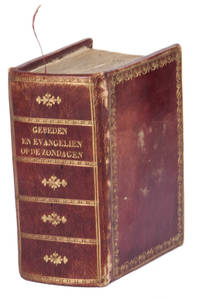
1800ABC_49334Antwerp 1800. 16mo ca. 13 x 9.5 cm. Johannes Carolus Craen or his son-in-law Hendrik Leys Early 19th-century gold-tooled red sheepskin with a general title in Dutch lettered in gold on the spine gold-tooled board edges marbled endpapers gilt edges. 351 devotional engravings including 8 repeats printed on wove paper engraved by several 17th-century engravers printed from the original copper plates at the end of the 18th- or beginning of the 19th century. 351 ll. Intriguing and extensive collection of 351 devotional prints comprising ca. 16 print series and several separate engraved title pages of print series and some separate devotional prints. Each print shows a small engraving depicting a religious theme for almost every occasion and especially for the important days of the liturgical year. These prints were engraved and published in Antwerp which is considered to be the centre of production and publishing of devotional prints in the 17th- and 18th centuries. The majority of these praying cards were originally published by Franciscus Huberti or Frans Huybrechts 1630-1687 who seems to have been the first engraver and publisher to produce these types of works in Antwerp. He was mostly known for publishing so-called "gerijmde gebedsprentjes" rhymed devotional prints/prayer cards. After his death his plates were sold and used by others to republish the prints for example by Michiel Bunel 1670-1739 and later by Carolus Craen 1733-1799. Craen's plates were next used by Hendrik Leys d. 1853 not to be confused with the Antwerp painter Henri Leys. In 1805 Leys had married Craen's daughter and took over the publishing and printing business of his mother-in-law immediately after. He mostly continued publishing prints using older copperplates that were already part of the business since his father-in-law ran it and was one of the last printer-publishers to use copperplates in a time when lithography became more and more popular. At the end of his life Leys owned approximately 12000 usable copperplates made or sold by a whole host of 17th- and 18th-century engravers and/or publishers of devotional prints such as the Wierix-Barbé family Huberti Galle Van der Sande Bunel and the Van Merlen family. Cornelis van Merlen 1654-1723 was a publisher and engraver active in Antwerp. The Van Merlen family were important engravers and publishers of devotional engravings in Antwerp during the 17th- and 18th centuries. In 1687 he married Sara Maria Huybrechts who was the daughter of publisher and engraver Gaspar Huberti and Sara Voet and niece of the Antwerp engraver Franciscus Huberti 1630-1687 whose engravings make up the majority of the present work. The majority of the present work is most likely made up of Craen's or Leys' prints of the plates by Huberti Jacobus de Man Anton Wierix the Van Merlen family of engravers and others.A complete list of contents is available upon request.With a manuscript owner's inscription on the verso of the first flyleaf "Mimi Josephine Cogels 1822" a manuscript inscription on the recto of the second flyleaf "le 1er Avril 1822 1831" and some faint pencil annotations on the verso of the second to last flyleaf and the recto of the final flyleaf. The binding shows some slight rubbing the front joint is slightly weakened without any loss lacking the fore edge margin of the engraving of S. Gregorius no. 351 not affecting the engraving possibly lacking the 352nd engraving only a stub of paper remains possibly lacking the engraving of S. Ioannes Neponucenus by C. van Merlen a few leaves show minor marginal tears not affecting the engravings and with a brown stain on the final two flyleaves. Otherwise in very good condition.l Thijs A.K.L. Antwerpen: internationaal uitgeverscentrum van devotieprenten 17e - 18e eeuw Leuven 1993; Miscellanea Neerlandica 7 passim; cf. for the publishers see: https://archief.museumplantinmoretus.be/doc/au::108950 Huberti; https://archief.museumplantinmoretus.be/doc/au::109845:1 Craen; https://archief.museumplantinmoretus.be/doc/au::109887 Leys. unknown
An original signed woodcut by Arthur C. Danto, executed in 1947 while he was an undergraduate at Wayne State University (he graduated in 1948). In this Expressionist image we see Joseph looking downcast in a dark cell, sitting on a bench with his ankle chained to the floor. 11 1/2" x 8 1/2" (block), 18" x 13" (sheet). Signed (A. Danto), dated ('47), titled (Joseph in Prison), and justified (3/25) in pencil. Only SIX IMPRESSIONS WERE ACTUALLY PRINTED, as indicated by the "6" at lower right (and confirmed by Danto). Monogrammed in the block. This is an extremely fine and rich impression, printed by the artist himself, on fine, thick, brownish-gray laid paper. A few marginal restorations, otherwise in excellent condition. Danto went on to have a successful career as an printmaker during the 1950s. In the early 1960s he turned to the philosophy and criticism of art, the field in which he achieved great acclaim. His early prints, dating from the 1940s, are of the greatest rarity. Possibly a unique survival.
SECOND AND LAST EDITION of the "Mascara Real", the greatest Spanish fete-book of the 18th century and the apex of Spanish etching of the period. Originally printed in 1764 (Palau 156971, "Magnifica publicacion....") in a very small edition, this is the second edition, with ALL TWELVE OF THE FULL-PAGE ETCHINGS (by Defehrt after Tramullas) PRINTED FROM THE ORIGINAL PLATES. Since the original edition was so small, the plates were in a perfect state of conservation when this second edition was printed, and ALL OF THE ETCHINGS ARE ABSOLUTELY BRIGHT AND SHARP. Edition limited to 150 numbered copies, all printed on extremely fine handmade Guarro wove paper. Oblong large folio (22 x 26 inches). Loose as issued in the original portfolio case with ties. BRIGHT AND FINE, WITH NO DEFECTS. Spectacular.
18615688Eau-forte et pointe-sèche. Très rare épreuve signée dans le cuivre, avec un sonnet de la belle Louise. Salissures. Tirage sur Chine appliqué. Wentworth n° 3. Le poème est de André Lemoyne dont on peut voir le nom effacé en bas de la planche à droite. Peut-être s'agit-il du portrait de Louise Colet. Cette estampe n'est pas référencée par Béraldi, et n'apparaît pas au catalogue Tissot, ni à sa vente, mais est décrit au catalogue de l'exposition de Paris (Petit Palais, 1985), comme étant connu à 4 exemplaires seulement. En feuille moyen 1861 19,5 x 14
1886BIBLIO-31166Trustees of the British Museum London first edition 1886 - 1906. 15 fascicules each in its own portfolio 52 cm parts I-IV and 66 cm parts V-XV. introductions of a few pages each and a total of 233 plates on stiff card. . Uncommon. A complete set of this series which comprises 15 portfolios each with a short introduction list of plates and between 11 and 22 finely-printed plates as follows: Part I. Early Italian. 20 plates; Part II. Early German and Flemish 22 plates; Part III. German Dutch and Italian. 18 plates; Part IV. Italian 16th century. 18 plates; Part V. Specimens of early mezzotint engraving. 16 plates; Part VI. Specimens of line-engraving by Masters of Germany and the Low Countries 1530-1620. 15 plates; Part VII. Specimens of line-engraving by Masters of the Netherlands Schools under the influence of Rubens and Vandyck about 1620-1660. 12 plates; Part VIII. Specimens of line-engraving by Masters of the French School about 1580-1680. 14 plates; Part IX. Specimens of line-engraving by the earliest Masters practising in England about 1545-1695. 18 plates; New Series Part X. Additional specimens of line-engraving by the earliest Masters working in England about 1580-1670. 21 plates; Part XI. Specimens of line-engraving by French Masters of the Eighteenth Century. 14 plates; Part XII. Specimens of line-engraving by French Masters of the Eighteenth Century continued. 12 plates; Part XIII. Specimens of line-engraving by English Masters of the Eighteenth Century. 11 plates; Part XIV. Specimens of line-engraving by Italian Masters of the Eighteenth Century. 11 plates. Part XV. Specimens of line-engraving by German Masters of the Eighteenth Century. 11 plates. The plates are generally Very Good clean copies: the versos of the final plate in each potrtfolio and the title-page rectos are in most cases tanned from contact with the portfolios. Some plates have small 'British Museum facsimile' stamps on the versos and there is sometimes a small library blindstamp in the lower margin well away from the image. The portfolio boards are generally rather duststained and a little rubbed the portfolio for Part VI has bumping and tearing to its top edges and that for Part XV is torn at the head of spine with trifling edgewear to a few plates a few other portfolio corners have minor edgewear. The porfolio flaps are generally in very good condition and seem to have been renewed in most cases; a few others are broken. A few portfoilios have library bookplates on their front inner boards. Overall a well-preserved set of a series rarely found complete. Trustees of the British Museum, London, first edition, 1886 - 1906 hardcover
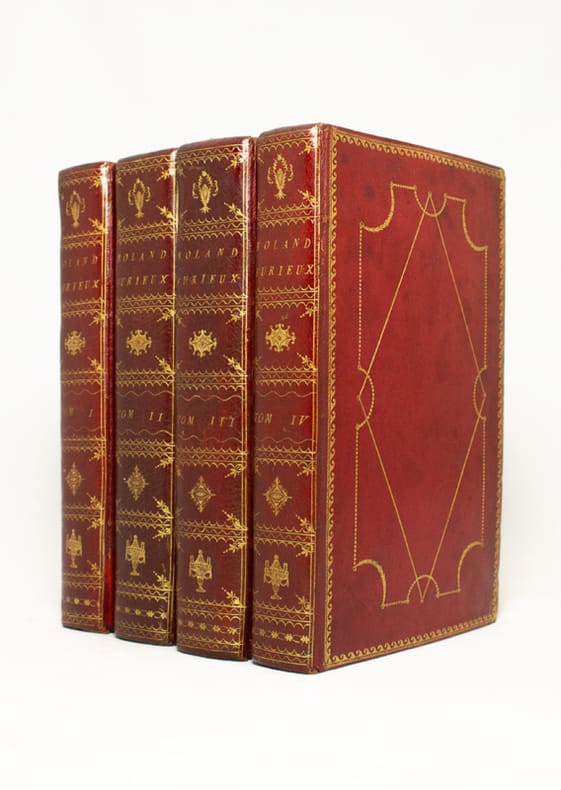
16605Paris, chez Brunet, 1775 - 1783. 4 volumes in-8 de [6]-321; [2]-391; [2]-407; 410 pages, plein maroquin rouge grenat, dos lisse orné de fleurons et dentelle dorée, plats au triple encadrement stylisé de roulettes dorées, roulettes dorées aux coupes et aux chasses, tranches dorées.
1697770DGZürich, 1697. 4 Kupferstiche, 2 davon mit Mittelfalz. Bildformate: 33,4 x 27,7 und 36,2 x 47,5 cm.
17255282DBFranckfurt a. M., Joh. B. Andreä und H. Hort, 1725. 4°. 198 S. Mit gest. Titel (aufgezogen), 42 Textkupfer (Totentanz) und 1 gest. Vexierbild (Memento mori). Späterer Halblederband mit Rückenvergoldung.
15593332DB(Am Schluss:) Tiguri, apud Christophorum Frosch., anno 1559. Mense Augusto. Folio. (12) Bl., 632 S., (15) Bl. (letztes leeres Bl. fehlt). Mit zahlreichen figürlichen Holzschnitt-Initialen, Holzschnitt-Druckermarke. Blindgeprägter Schweinslederband der Zeit mit 2 Metallschliessen, Papierrückenschild, maschinengeschrieben.
19922502090109xbvkKyoto, Gakken, 1991/1992. 2 japanese- and english-titled matted cardboard-boxes, each containing a heavy gently illustrated colour-cloth box, which again contain 4 cardboard folders with a total of 99 tipped-in colour-plates and an illustrated clothbound textbook of 70 unnumbered pages each; large-Folio (ca. 48 x 36 x 14 cm; ca. 12,7 kg.).
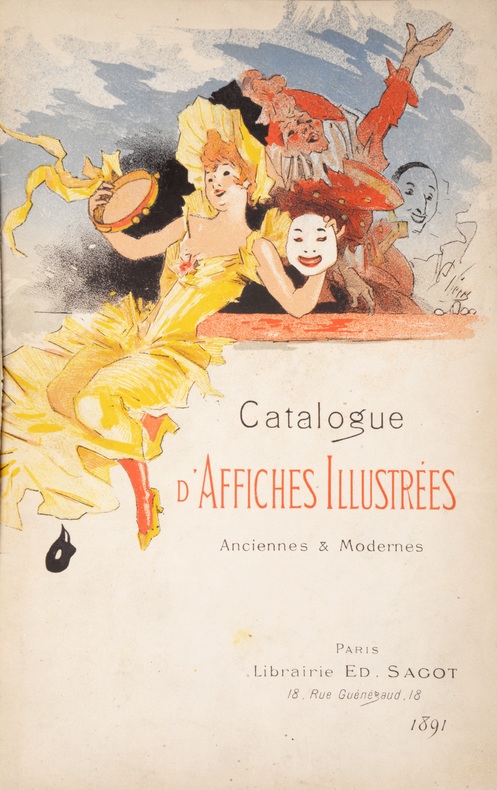
189115433Paris, Librairie Ed. Sagot, 1891. In-8 de 112 pp., 15 planches hors-texte, demi-maroquin brun, dos à nerfs, couverture illustrée conservée (reliure de l'époque).
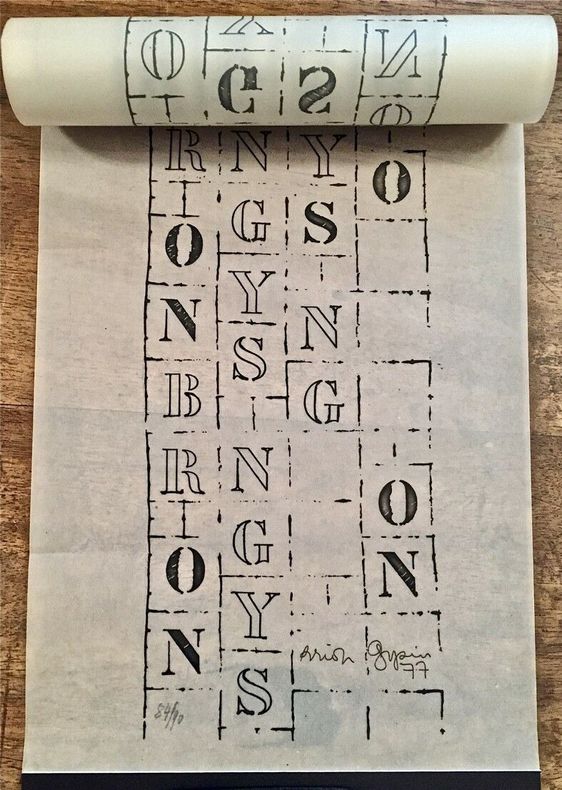
awd-0Anvers, Guy Schraenen éditeur, 1977. Feuillet enroulé (22/120 cm), imprimé sur papier calque et présenté à l’intérieur d’un tube rhodoïd. Poème graphique tiré à 90 ex. datés, numérotés et signés. Rouleau en très bon état (rhodoïd à peine abimé).
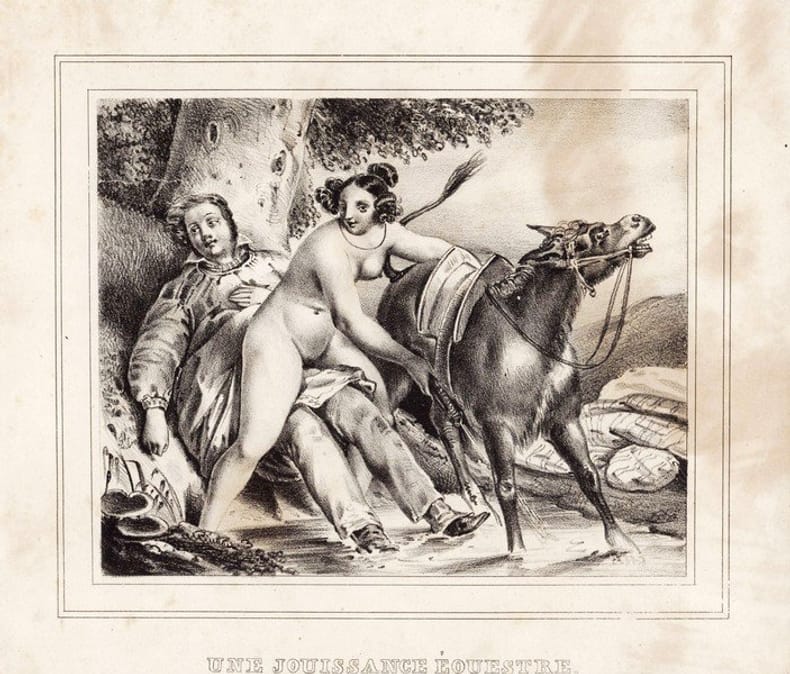
18501355S. l. : s. d. (vers 1830-1850). ENSEMBLE REPRÉSENTATIF DE L'ART DE LA LITHOGRAPHIE ÉROTIQUE À L'ÉPOQUE ROMANTIQUE
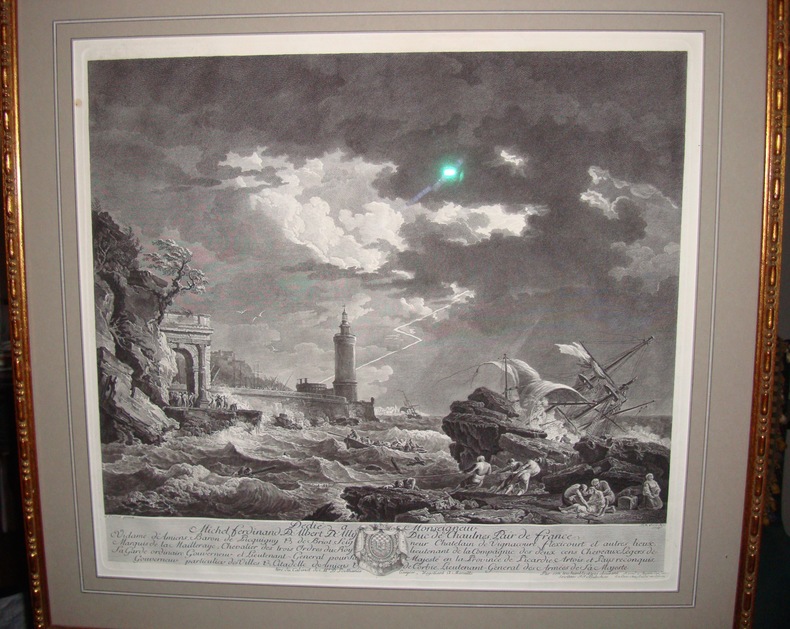
6011Deux parmi les plus belles estampes gravées par Balechou d'après Joseph Vernet. Nos épreuves sont en bon état et à grandes marges. Bon Paris XVIIIè
23423Paris, H. Floury, 1906. In-4, 208 pp. 26 pl., demi-basane brune, dos à nerfs orné de filets à froid, tête mouchetée, couverture conservée (épidermures et frottements, rousseur marginale notamment en début et fin de volume).