Daumier, Honoré - 1808 Marseille ? Valmondais 1879Antiquariat.de

10 867 résultats
HD-048o.J. (EIN BEISPIEL dessen, was man als Die Schönen von Paris bezeichnet). Lithographie, auf chamoisfarbenem Velin, mit den Adressen: Chez Bauger R du Croissant, 16, sowie: Imp. D?Aubert & Cie. Blattgröße 25,7:34,5 cm. ? Braunfleckig. Literatur: Daumier-Register 584; Delteil 584. Blatt 28 der Folge ?Types Parisiens?. ? Sur blanc!
HD-049o.J. (EIN BEISPIEL dessen, was man als Die Schönen von Paris bezeichnet). Lithographie, auf chamoisfarbenem Velin, mit den Adressen: Chez Bauger R du Croissant, 16, sowie: Imp. D?Aubert & Cie. Blattgröße 25,7:34,5 cm. ? Braunfleckig. Literatur: Daumier-Register 584; Delteil 584. Blatt 28 der Folge ?Types Parisiens?. ? Sur blanc!
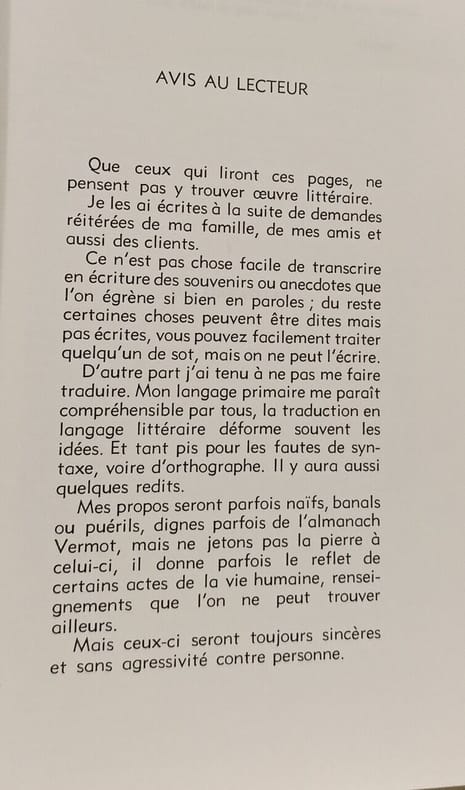
1980100144923Aux dépens de l'auteur 1980 in8. 1980. Broché. Mémoires de Paul Prouté marchand d'estampes parisien publiés à compte d'auteur en 1980. L'ouvrage de 137 pages illustré relate ses expériences et anecdotes professionnelles dans le commerce des gravures
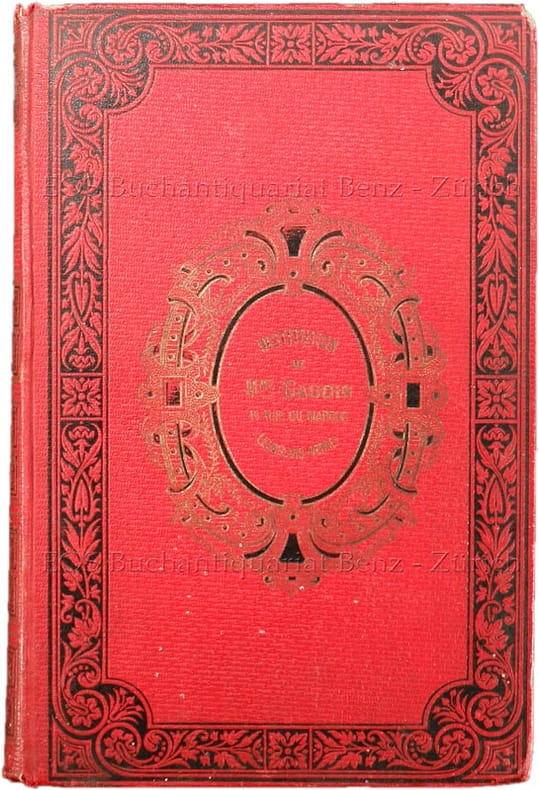
188329670ABTours, Alfred Mame, 1883. Lex.-8°. 368 S. Mit 1 Frontisp. mit zahlr. z.T. ganzs. Textholzstichen von Karl Girardet. Gepr. Orig.-Leinenband. + Wichtig: Für unsere Kunden in der EU erfolgt der Versand alle 14 Tage verzollt ab Deutschland / Postbank-Konto in Deutschland vorhanden +, bild
188329670ABTours, Alfred Mame, 1883. Lex.-8°. 368 S. Mit 1 Frontisp. mit zahlr. z.T. ganzs. Textholzstichen von Karl Girardet. Gepr. Orig.-Leinenband.
4798P., Bibliothèque Nationale, 1967 ; in-4, broché, VI-454pp. Bon état.
HD-230o.J. Ein Republikanischer Abgeordneter in den Ferien. Lithographie, auf chamoisfarbenem Velin, mit den Adressen: Chez Aubert & Cie. Pl. de la Bourse,29 Paris., sowie: Imp. de Ch.Trinocq, Cour des Miracles 9. Paris. Darstellungsgröße 26,5:22,8 cm, Blattgröße 35:24,6 cm. Literatur: Daumier-Register 2160 II (von 3); Delteil 2160 II (von 3), Blatt Nr. 237 der Serie ?ACTUALITÉS.?, erschienen 25.10.1851 (?) in ?LE CHARIVARI?. ? Sur blanc!
1834251141834 Planche 423 de La Caricature N° 202.La Caricature, 18 septembre 1834. Lithographie originale sur Velin blanc. . Delteil 87. épreuve en noir ; lithographie en noir sur velin blanc pli médian vertical,bon tirage bien noir,petite tache brune en marge - Delteil 87 ,
500297408Sans date.
HD-175o.J. EIN GLÜCKLICHER VATER. Endlich, mein Kind ist geimpft .... ich bin sicher, dass er von nun an seine ganze Schönheit für immer behalten wird. Lithographie, auf chamoisfarbenem Velin, mit den Adressen: Chez Aubert & Cie. Pl. de la Bourse,29., sowie: Imp. d'Aubert & Cie. Darstellungsgröße 25:22 cm, Blattgröße 33,3:24,7 cm. Literatur: Daumier-Register 1173 II (von 2); Delteil 1173 II (von 2), Blatt 85 der Folge ?LES BEAUX JOURS DE LA VIE.?, erschienen 22.03.1846 in ?LE CHARIVARI?. ? Sur blanc!
Litografia originale a colori Non firmata dall'artista. Timbro a secco dell'Editore Giorgio Upiglio. Stampata su carta Magnani. Cm 60x80. . . . . . .
- Lucien Vogel éditeur, Paris Juin 1913, 19x24,5cm, une feuille. - Original color print, printed on vergé paper, signed in the plate. An original print used to illustrate the Gazette du bon ton, one of the most attractive and influential 20th century fashion magazines, featuring the talents of French artists and other contributors from the burgeoning Art Deco movement. A celebrated fashion magazine established in 1912 by Lucien Vogel, La Gazette du bon ton appeared until 1925, with a hiatus from 1915 to 1920 due to the war (the editor-in-chief having been called up for service). It consisted of 69 issues printed in only 2,000 copies each and notably illustrated with 573 color plates and 148 sketches of the models of the great designers. Right from the start, this sumptuous publication "was aimed at bibliophiles and fashionable society," (Françoise Tétart-Vittu, "La Gazette du bon ton", in Dictionnaire de la mode, 2016) and was printed on fine vergé paper using a type cut specially for the magazine by Georges Peignot, known as Cochin, later used (in 1946) by Christian Dior. The prints were made using stencils, heightened in colors, some highlighted in gold or palladium. The story began in 1912, when Lucien Vogel, a man of the world involved in fashion (he had already been part of the fashion magazine Femina) decided, with his wife Cosette de Brunhoff - the sister of Jean, creator of Babar - to set up the Gazette du bon ton, subtitled at the time: "Art, fashion, frivolities." Georges Charensol noted the reasoning of the editor-in-chief: "'In 1910,' he observed, 'there was no really artistic fashion magazine, nothing representative of the spirit of the time. My dream was therefore to make a luxury magazine with truly modern artists...I was assured of success, because when it comes to fashion, no country on earth can compete with France.'" ("Un grand éditeur d'art. Lucien Vogel" in Les Nouvelles littéraires, no. 133, May 1925). The magazine was immediately successful, not only in France but also in the United States and Latin America. At first, Vogel put together a team of seven artists: André-Édouard Marty and Pierre Brissaud, followed by Georges Lepape and Dammicourt, as well as eventually his friends from school and the School of Fine Arts, like George Barbier, Bernard Boutet de Monvel and Charles Martin. Other talented people soon came flocking to join the team: Guy Arnoux, Léon Bakst, Benito, Boutet de Monvel, Umberto Brunelleschi, Chas Laborde, Jean-Gabriel Domergue, Raoul Dufy, Édouard Halouze, Alexandre Iacovleff, Jean Émile Laboureur, Charles Loupot, Chalres Martin, Maggie Salcedo. These artist, mostly unknown when Lucien Vogel sought them out, later became emblematic and sought-after artistic figures. It was also they who worked on the advertising drawings for the Gazette. The plates put the spotlight on, and celebrate, dresses by seven designers of the age: Lanvin, Doeuillet, Paquin, Poiret, Worth, Vionnet and Doucet. The designers provided exclusive models for each issue. Nonetheless, some of the illustrations are not based on real models, but simply on the illustrator's conception of the fashion of the day. The Gazette du bon ton was an important step in the history of fashion. Combining aesthetic demands with the physical whole, it brought together - for the first time - the great talents of the artistic, literary, and fashion worlds; and imposed, through this alchemy, a completely new image of women: slender, independent and daring, which was shared by the new generation of designers, including Coco Chanel, Jean Patou, Marcel Rochas, and so on... Taken over in 1920 by Condé Montrose Nast, the Gazette du bon ton was an important influence on the new layout and aesthetics of that "little dying paper" that Nast had bought a few years earlier: Vogue. [FRENCH VERSION FOLLOWS] Estampe originale en couleur, tirée sur papier vergé, signée en bas à droite dans la planche. L'une des plus belles et des plus
191354543Lucien Vogel éditeur | Paris Juin 1913 | 19 x 24.50 cm | une feuille
- Lucien Vogel éditeur, Paris 1921, 18x24cm, une feuille. - Estampe originale en couleur, tirée sur papier vergé, signée en bas à droite de la planche. Gravure originale réalisée pour l'illustration de La Gazette du bon ton, l'une des plus belles et des plus influentes revues de mode du XXème siècle, célébrant le talent des créateurs et des artistes français en plein essor de l'art déco. Célèbre revue de mode fondée en 1912 par Lucien Vogel, La Gazette du bon ton a paru jusqu'en 1925 avec une interruption durant la Guerre de 1915 à 1920, pour cause de mobilisation de son rédacteur en chef. Elle se constitue de 69 livraisons tirées à seulement 2000 exemplaires et est illustrée notamment de 573 planches en couleurs et de 148 croquis représentant des modèles de grands couturiers. Dès leur parution, ces luxueuses publications « s'adressent aux bibliophiles et aux mondains esthètes » (Françoise Tétart-Vittu « La Gazette du bon ton » in Dictionnaire de la mode, 2016). Imprimées sur beau papier vergé, elles utilisent une police typographique spécialement créée pour la revue par Georges Peignot, le caractère Cochin, repris en 1946 par Christian Dior. Les estampes sont réalisées grâce à la technique du pochoir métallique, rehaussées en couleurs et pour certaines soulignées à l'or ou au palladium. L'aventure commence en 1912 lorsque Lucien Vogel, homme du monde et de la mode - il a déjà participé à la revue Femina - décide de fonder avec sa femme Cosette de Brunhoff (sur de Jean, le père de Babar) la Gazette du bon ton dont le sous-titre est alors « Art, modes et frivolités ». Georges Charensol rapporte les propos du rédacteur en chef : « En 1910, observe-t-il, il n'existait aucun journal de mode véritablement artistique et représentatif de l'esprit de son époque. Je songeais donc à faire un magazine de luxe avec des artistes véritablement modernes [...] J'étais certain du succès car pour la mode aucun pays ne peut rivaliser avec la France. » (« Un grand éditeur d'art. Lucien Vogel » in Les Nouvelles littéraires, n°133, mai 1925). Le succès de la revue est immédiat, non seulement en France, mais aussi aux Etats-Unis et en Amérique du Sud. À l'origine, Vogel réunit donc un groupe de sept artistes : André-Édouard Marty et Pierre Brissaud, suivis de Georges Lepape et Dammicourt ; et enfin ses amis de l'École des beaux-arts que sont George Barbier, Bernard Boutet de Monvel, ou Charles Martin. D'autres talents viennent rapidement rejoindre l'équipée : Guy Arnoux, Léon Bakst, Benito, Boutet de Monvel, Umberto Brunelleschi, Chas Laborde, Jean-Gabriel Domergue, Raoul Dufy, Édouard Halouze, Alexandre Iacovleff, Jean Émile Laboureur, Charles Loupot, Charles Martin, Maggie Salcedo. Ces artistes, inconnus pour la plupart lorsque Lucien Vogel fait appel à eux, deviendront par la suite des figures artistiques emblématiques et recherchées. Ce sont ces mêmes illustrateurs qui réalisent les dessins des publicités de la Gazette. Les planches mettent en lumière et subliment les robes de sept créateurs de l'époque : Lanvin, Doeuillet, Paquin, Poiret, Worth, Vionnet et Doucet. Les couturiers fournissent pour chaque numéro des modèles exclusifs. Néanmoins, certaines des illustrations ne figurent aucun modèle réel, mais seulement l'idée que l'illustrateur se fait de la mode du jour. La Gazette du bon ton est une étape décisive dans l'histoire de la mode. Alliant l'exigence esthétique et l'unité plastique, elle réunit pour la première fois les grands talents du monde des arts, des lettres et de la mode et impose, par cette alchimie, une toute nouvelle image de la femme, élancée, indépendante et audacieuse, également portée par la nouvelle génération de couturiers Coco Chanel, Jean Patou, Marcel Rochas... Reprise en 1920 par Condé Montrose Nast, la Gazette du bon ton inspirera largement la nouvelle composition et les choix esthétiques du « petit journal mourant » que Nast avait racheté quelques années auparavant : le magazine Vogue. [ENGLISH DESCRIPTION
192039039Lucien Vogel éditeur | Paris 1920 | 19.50 x 25 cm | une feuille
- Lucien Vogel éditeur, Paris 1920, 19,5x25cm, une feuille. - Original color print, printed on vergé paper, signed in the plate. An original print used to illustrate the Gazette du bon ton, one of the most attractive and influential 20th century fashion magazines, featuring the talents of French artists and other contributors from the burgeoning Art Deco movement. A celebrated fashion magazine established in 1912 by Lucien Vogel, La Gazette du bon ton appeared until 1925, with a hiatus from 1915 to 1920 due to the war (the editor-in-chief having been called up for service). It consisted of 69 issues printed in only 2,000 copies each and notably illustrated with 573 color plates and 148 sketches of the models of the great designers. Right from the start, this sumptuous publication "was aimed at bibliophiles and fashionable society," (Françoise Tétart-Vittu, "La Gazette du bon ton", in Dictionnaire de la mode, 2016) and was printed on fine vergé paper using a type cut specially for the magazine by Georges Peignot, known as Cochin, later used (in 1946) by Christian Dior. The prints were made using stencils, heightened in colors, some highlighted in gold or palladium. The story began in 1912, when Lucien Vogel, a man of the world involved in fashion (he had already been part of the fashion magazine Femina) decided, with his wife Cosette de Brunhoff - the sister of Jean, creator of Babar - to set up the Gazette du bon ton, subtitled at the time: "Art, fashion, frivolities." Georges Charensol noted the reasoning of the editor-in-chief: "'In 1910,' he observed, 'there was no really artistic fashion magazine, nothing representative of the spirit of the time. My dream was therefore to make a luxury magazine with truly modern artists...I was assured of success, because when it comes to fashion, no country on earth can compete with France.'" ("Un grand éditeur d'art. Lucien Vogel" in Les Nouvelles littéraires, no. 133, May 1925). The magazine was immediately successful, not only in France but also in the United States and Latin America. At first, Vogel put together a team of seven artists: André-Édouard Marty and Pierre Brissaud, followed by Georges Lepape and Dammicourt, as well as eventually his friends from school and the School of Fine Arts, like George Barbier, Bernard Boutet de Monvel and Charles Martin. Other talented people soon came flocking to join the team: Guy Arnoux, Léon Bakst, Benito, Boutet de Monvel, Umberto Brunelleschi, Chas Laborde, Jean-Gabriel Domergue, Raoul Dufy, Édouard Halouze, Alexandre Iacovleff, Jean Émile Laboureur, Charles Loupot, Chalres Martin, Maggie Salcedo. These artist, mostly unknown when Lucien Vogel sought them out, later became emblematic and sought-after artistic figures. It was also they who worked on the advertising drawings for the Gazette. The plates put the spotlight on, and celebrate, dresses by seven designers of the age: Lanvin, Doeuillet, Paquin, Poiret, Worth, Vionnet and Doucet. The designers provided exclusive models for each issue. Nonetheless, some of the illustrations are not based on real models, but simply on the illustrator's conception of the fashion of the day. The Gazette du bon ton was an important step in the history of fashion. Combining aesthetic demands with the physical whole, it brought together - for the first time - the great talents of the artistic, literary, and fashion worlds; and imposed, through this alchemy, a completely new image of women: slender, independent and daring, which was shared by the new generation of designers, including Coco Chanel, Jean Patou, Marcel Rochas, and so on... Taken over in 1920 by Condé Montrose Nast, the Gazette du bon ton was an important influence on the new layout and aesthetics of that "little dying paper" that Nast had bought a few years earlier: Vogue. [FRENCH VERSION FOLLOWS] Estampe originale en couleur tirée sur papier vergé, signée en bas au centre dans la planche. Gravure originale réalisée pour l'illu
192054773Lucien Vogel éditeur | Paris Juin 1920 | 18 x 24 cm | une feuille
- Lucien Vogel éditeur, Paris Juin 1920, 18x24cm, une feuille. - Original color print, printed on vergé paper, non signed. An original print used to illustrate the Gazette du bon ton, one of the most attractive and influential 20th century fashion magazines, featuring the talents of French artists and other contributors from the burgeoning Art Deco movement. A celebrated fashion magazine established in 1912 by Lucien Vogel, La Gazette du bon ton appeared until 1925, with a hiatus from 1915 to 1920 due to the war (the editor-in-chief having been called up for service). It consisted of 69 issues printed in only 2,000 copies each and notably illustrated with 573 color plates and 148 sketches of the models of the great designers. Right from the start, this sumptuous publication "was aimed at bibliophiles and fashionable society," (Françoise Tétart-Vittu, "La Gazette du bon ton", in Dictionnaire de la mode, 2016) and was printed on fine vergé paper using a type cut specially for the magazine by Georges Peignot, known as Cochin, later used (in 1946) by Christian Dior. The prints were made using stencils, heightened in colors, some highlighted in gold or palladium. The story began in 1912, when Lucien Vogel, a man of the world involved in fashion (he had already been part of the fashion magazine Femina) decided, with his wife Cosette de Brunhoff - the sister of Jean, creator of Babar - to set up the Gazette du bon ton, subtitled at the time: "Art, fashion, frivolities." Georges Charensol noted the reasoning of the editor-in-chief: "'In 1910,' he observed, 'there was no really artistic fashion magazine, nothing representative of the spirit of the time. My dream was therefore to make a luxury magazine with truly modern artists...I was assured of success, because when it comes to fashion, no country on earth can compete with France.'" ("Un grand éditeur d'art. Lucien Vogel" in Les Nouvelles littéraires, no. 133, May 1925). The magazine was immediately successful, not only in France but also in the United States and Latin America. At first, Vogel put together a team of seven artists: André-Édouard Marty and Pierre Brissaud, followed by Georges Lepape and Dammicourt, as well as eventually his friends from school and the School of Fine Arts, like George Barbier, Bernard Boutet de Monvel and Charles Martin. Other talented people soon came flocking to join the team: Guy Arnoux, Léon Bakst, Benito, Boutet de Monvel, Umberto Brunelleschi, Chas Laborde, Jean-Gabriel Domergue, Raoul Dufy, Édouard Halouze, Alexandre Iacovleff, Jean Émile Laboureur, Charles Loupot, Chalres Martin, Maggie Salcedo. These artist, mostly unknown when Lucien Vogel sought them out, later became emblematic and sought-after artistic figures. It was also they who worked on the advertising drawings for the Gazette. The plates put the spotlight on, and celebrate, dresses by seven designers of the age: Lanvin, Doeuillet, Paquin, Poiret, Worth, Vionnet and Doucet. The designers provided exclusive models for each issue. Nonetheless, some of the illustrations are not based on real models, but simply on the illustrator's conception of the fashion of the day. The Gazette du bon ton was an important step in the history of fashion. Combining aesthetic demands with the physical whole, it brought together - for the first time - the great talents of the artistic, literary, and fashion worlds; and imposed, through this alchemy, a completely new image of women: slender, independent and daring, which was shared by the new generation of designers, including Coco Chanel, Jean Patou, Marcel Rochas, and so on... Taken over in 1920 by Condé Montrose Nast, the Gazette du bon ton was an important influence on the new layout and aesthetics of that "little dying paper" that Nast had bought a few years earlier: Vogue. [FRENCH VERSION FOLLOWS] Estampe originale en couleur, tirée sur papier vergé, non-signée. Gravure originale réalisée pour l'illustration de La Gazette du bon ton
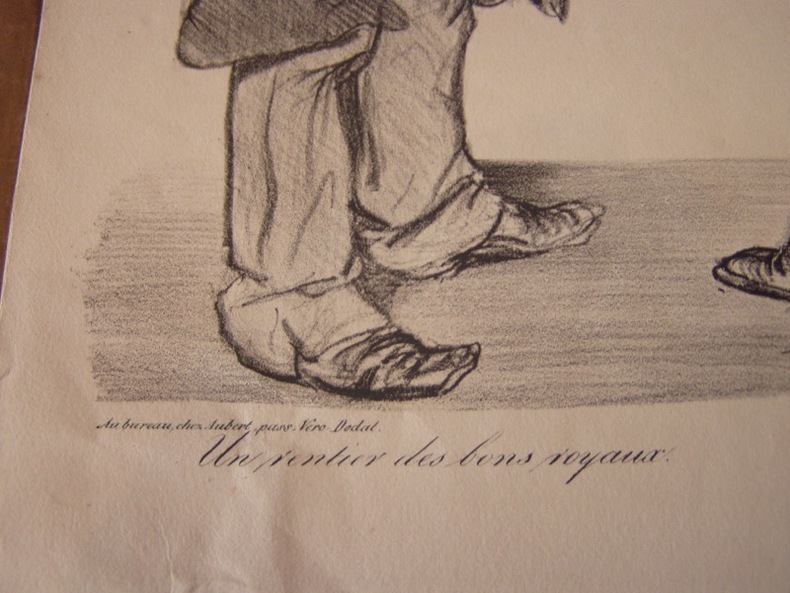
1832252511832 Lithographie Planche HT parue dans La Caricature politique, morale, littéraire et scénique, volume 4, 4 octobre1832 (Planche n°204),pli central ,tache en marge - Œuvre : Hauteur: 35.6cmx Largeur: 27cm - Image : Hauteur: 19.3cmx Largeur: 16cm- indications, en ht au centre : « La Caricature (Journal) // N°100. », en ht à dte : « Pl. 204. » - Dans la lettre : « Lith. de Becquet, rue Childebert, N°9 » [imprimeur], « On s’abonne chez Aubert, galerie Véro-Dodat. » [éditeur]
500297357Sans date.
HD-223o.J. Lithographie, auf chamoisfarbenem Velin, mit den Adressen: Chez Aubert & Cie. Pl. de la Bourse,29 Paris., sowie: Imp. de Me.Ve.Aubert, 5, rue de l'Abbaye,Paris. Darstellungsgröße 21,5:26,7 cm, Blattgröße 27,7:36 cm. Literatur: Daumier-Register 2107 I (von 1); Delteil 2107 I (von 1), Blatt Nr. 128 der Serie ?ACTUALITÉS.?, erschienen 08.05.1851 in ?LE CHARIVARI?. ? Sur blanc!
HD-239o.J. Ein Herr, der Trüffeln aussäte. Lithographie, auf chamoisfarbenem Velin, mit den Adressen: Maison Martinet r.Vivienne 41 et 11 r.du Coq, sowie: Imp. Ch.Trinocq, Cour des Miracles, 9, Paris. Darstellungsgröße 25,6:21,8 cm, Blattgröße 34:25,2 cm. Literatur: Daumier-Register 2434 II (von 2); Delteil 2434 II (von 2), Blatt 2 der Serie ?SCÈNES PARISIENNES?, erschienen 02.12.1853 in ?LE CHARIVARI?. ? Sur blanc!
500297345Sans date.
HD-191o.J. Lithographie, auf chamoisfarbenem Velin, mit den Adressen: Chez Aubert, Pl. de la Bourse, 29., sowie: Imp. d'Aubert & Cie. Darstellungsgröße 25:20,3 cm, Blattgröße 35,7:28 cm. Literatur: Daumier-Register 1534 II (von 2); Delteil 1534 II (von 2), Blatt 58 der Folge ?LES BONS BOURGEOIS.?, erschienen 1847 in ?LE CHARIVARI?. ? Sur blanc! Rechte untere Ecke fehlt.
191389477Paris Février 1913 | 19 x 24.50 cm | une feuille