Zschokke, Heinrich, HrsgAntiquariat.de

10 867 résultats
18202380CBAarau, Heinrich Remigius Sauerländer, 1820. Gross-4°. 585 S., (1) Bl. Marmor. Ppbd. d. Zt. + Wichtig: Für unsere Kunden in der EU erfolgt der Versand alle 14 Tage verzollt ab Deutschland / Postbank-Konto in Deutschland vorhanden +, Einband und Titelblatt
18172322CBAarau, Heinrich Remigius Sauerländer, 1817. Gross-4°. 648 S., (4) Bl. Mit 1 lith. Tafel (Leuchtturm auf dem Bellrock in Schottland). Marmor. Ppbd. d. Zt. + Wichtig: Für unsere Kunden in der EU erfolgt der Versand alle 14 Tage verzollt ab Deutschland / Postbank-Konto in Deutschland vorhanden +, Einband und Titelbaltt
18172322CBAarau, Heinrich Remigius Sauerländer, 1817. Gross-4°. 648 S., (4) Bl. Mit 1 lith. Tafel (Leuchtturm auf dem Bellrock in Schottland). Marmor. Ppbd. d. Zt.
18192329CBAarau, Heinrich Remigius Sauerländer, 1819. Gross-4°. 604 S., (3) Bl.
18202380CBAarau, Heinrich Remigius Sauerländer, 1820. Gross-4°. 585 S., (1) Bl. Marmor. Ppbd. d. Zt.
18212411CBAarau, Heinrich Remigius Sauerländer, 1821. Gross-4°. 560 S., (2) Bl. Marmor. Pappbd. d. Zt.
18222413CBAarau, Heinrich Remigius Sauerländer, 1822. Gross-4°. 584 S., (2) Bl. Marmor. Pappbd. d. Zt.
18232345CBHefte 1-24 in 1 Bd. Aarau, Heinrich Remigius Sauerländer, 1823. Gross-4°. 572 S., (1) Bl. Marmor. Ppbd. d. Zt.
18016FBZürich und Leipzig., Ziegler und Söhne., 1801. 8°. XII, 219 (1) S. Halblederband mit Pappdeckeln. + Wichtig: Für unsere Kunden in der EU erfolgt der Versand alle 14 Tage verzollt ab Deutschland / Postbank-Konto in Deutschland vorhanden +, A
18016FBZürich und Leipzig. Ziegler und Söhne. 1801. 8°. XII, 219 (1) S. Halblederband mit Pappdeckeln.
1912203DBZürich, Beer, 1912. 8°. S. 415-478. Orig.-Brosch. (ungeöffnet). + Wichtig: Für unsere Kunden in der EU erfolgt der Versand alle 14 Tage verzollt ab Deutschland / Postbank-Konto in Deutschland vorhanden + Enthalten in: "Vierteljahresschrift Naturf. Gesellschaft Zürich", Bd.56/4.
1912203DBZürich, Beer, 1912. 8°. S. 415-478. Orig.-Brosch. (ungeöffnet). Enthalten in: "Vierteljahresschrift Naturf. Gesellschaft Zürich", Bd.56/4.
186722500ABBasel, Schweighauserische Verlagsbuchhandlung, 1867. 8°. 97 S. Mit 9 Falttabellen. Pappband der Zeit (Rücken mit kleinen Rissen u. Materialverlust, berieben u. bestossen). + Wichtig: Für unsere Kunden in der EU erfolgt der Versand alle 14 Tage verzollt ab Deutschland / Postbank-Konto in Deutschland vorhanden +
186722500ABBasel, Schweighauserische Verlagsbuchhandlung, 1867. 8°. 97 S. Mit 9 Falttabellen. Pappband der Zeit (Rücken mit kleinen Rissen u. Materialverlust, berieben u. bestossen).
187227091ABZürich, Zürcher und Furrer, 1872. Gr.-8°. 1 Bl., 26 (1) S. Mit 1 gef. lithogr. Tafel. Orig.-Broschur. + Wichtig: Für unsere Kunden in der EU erfolgt der Versand alle 14 Tage verzollt ab Deutschland / Postbank-Konto in Deutschland vorhanden + = "An die Zürcherische Jugend auf das Jahr 1872. Von der Naturforschenden Gesellschaft", LXXIV. Stück.
187227091ABZürich, Zürcher und Furrer, 1872. Gr.-8°. 1 Bl., 26 (1) S. Mit 1 gef. lithogr. Tafel. Orig.-Broschur. = "An die Zürcherische Jugend auf das Jahr 1872. Von der Naturforschenden Gesellschaft", LXXIV. Stück.
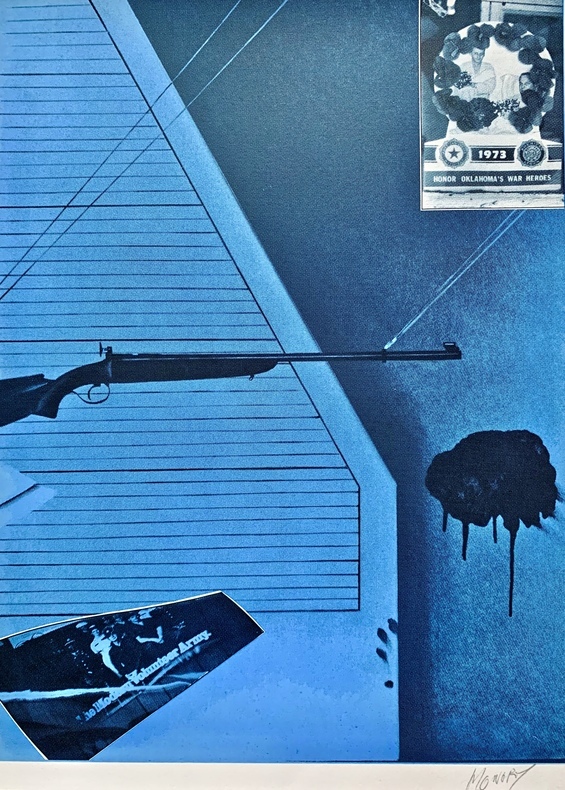
awd-973Sérigraphie signée sur vélin de Rives. Tirée du livre-objet USA 1976 Bicentenaire Kit, co-réalisé avec Michel Butor et publié par Le Club du Livre, Philippe Lebaud éditeur en 1975. Dimensions : 28/38 cm. Bon état
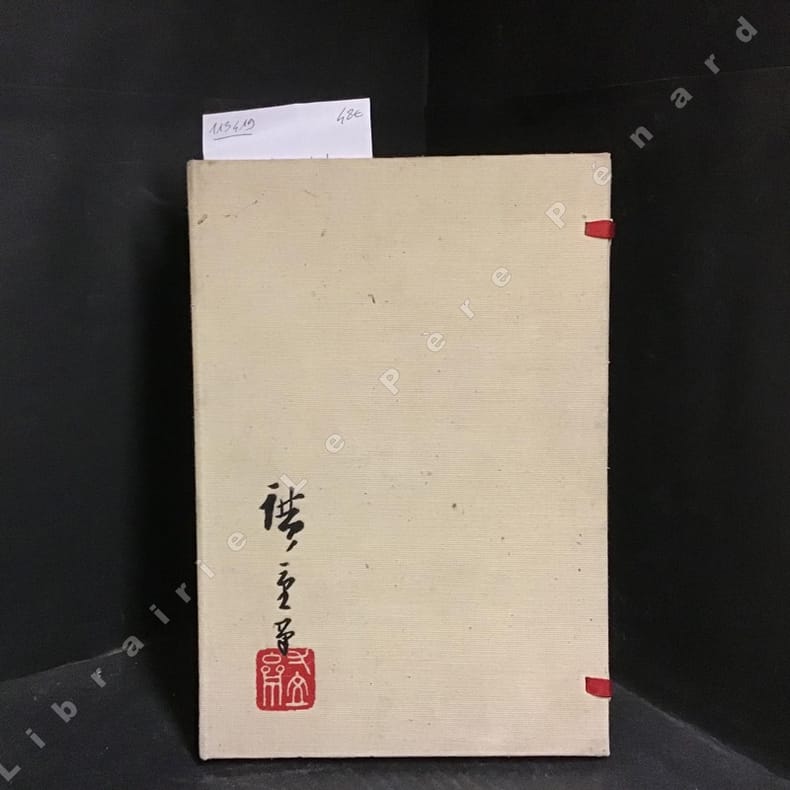
19601134191960 Editions du Crédit Lyonnais - 1960 - In-4, papier vélin Alfa supérieur des papeteries Prioux, feuillets non reliés dans leur chemise rouge, sous chemise cartonnée beige avec fermoirs en ivoire de l'éditeur, avec titre en idéogrammes sur les deux chemises - 15 p. + complet de ses 55 planches hors texte en couleurs + carte hors texte du Tôkaidô en N&B
- Lucien Vogel éditeur, Paris 1922, 18x24cm, une feuille. - Original color print, printed on vergé paper, signed in the plate. An original print used to illustrate the Gazette du bon ton, one of the most attractive and influential 20th century fashion magazines, featuring the talents of French artists and other contributors from the burgeoning Art Deco movement. A celebrated fashion magazine established in 1912 by Lucien Vogel, La Gazette du bon ton appeared until 1925, with a hiatus from 1915 to 1920 due to the war (the editor-in-chief having been called up for service). It consisted of 69 issues printed in only 2,000 copies each and notably illustrated with 573 color plates and 148 sketches of the models of the great designers. Right from the start, this sumptuous publication "was aimed at bibliophiles and fashionable society," (Françoise Tétart-Vittu, "La Gazette du bon ton", in Dictionnaire de la mode, 2016) and was printed on fine vergé paper using a type cut specially for the magazine by Georges Peignot, known as Cochin, later used (in 1946) by Christian Dior. The prints were made using stencils, heightened in colors, some highlighted in gold or palladium. The story began in 1912, when Lucien Vogel, a man of the world involved in fashion (he had already been part of the fashion magazine Femina) decided, with his wife Cosette de Brunhoff - the sister of Jean, creator of Babar - to set up the Gazette du bon ton, subtitled at the time: "Art, fashion, frivolities." Georges Charensol noted the reasoning of the editor-in-chief: "'In 1910,' he observed, 'there was no really artistic fashion magazine, nothing representative of the spirit of the time. My dream was therefore to make a luxury magazine with truly modern artists...I was assured of success, because when it comes to fashion, no country on earth can compete with France.'" ("Un grand éditeur d'art. Lucien Vogel" in Les Nouvelles littéraires, no. 133, May 1925). The magazine was immediately successful, not only in France but also in the United States and Latin America. At first, Vogel put together a team of seven artists: André-Édouard Marty and Pierre Brissaud, followed by Georges Lepape and Dammicourt, as well as eventually his friends from school and the School of Fine Arts, like George Barbier, Bernard Boutet de Monvel and Charles Martin. Other talented people soon came flocking to join the team: Guy Arnoux, Léon Bakst, Benito, Boutet de Monvel, Umberto Brunelleschi, Chas Laborde, Jean-Gabriel Domergue, Raoul Dufy, Édouard Halouze, Alexandre Iacovleff, Jean Émile Laboureur, Charles Loupot, Chalres Martin, Maggie Salcedo. These artist, mostly unknown when Lucien Vogel sought them out, later became emblematic and sought-after artistic figures. It was also they who worked on the advertising drawings for the Gazette. The plates put the spotlight on, and celebrate, dresses by seven designers of the age: Lanvin, Doeuillet, Paquin, Poiret, Worth, Vionnet and Doucet. The designers provided exclusive models for each issue. Nonetheless, some of the illustrations are not based on real models, but simply on the illustrator's conception of the fashion of the day. The Gazette du bon ton was an important step in the history of fashion. Combining aesthetic demands with the physical whole, it brought together - for the first time - the great talents of the artistic, literary, and fashion worlds; and imposed, through this alchemy, a completely new image of women: slender, independent and daring, which was shared by the new generation of designers, including Coco Chanel, Jean Patou, Marcel Rochas, and so on... Taken over in 1920 by Condé Montrose Nast, the Gazette du bon ton was an important influence on the new layout and aesthetics of that "little dying paper" that Nast had bought a few years earlier: Vogue. [FRENCH VERSION FOLLOWS] Estampe originale en couleur, tirée sur papier vergé, signée en bas à droite de la planche. Gravure originale réalisée pour l'illustrat
HD-135o.J. TELEMACH WIRD WIEDER VERNÜNFTIG. In der alten Übersetzung aus dem Jahre 1902 von Polstorff - Fuchs: "Die ollen Griechen": Das Schmachten und die Löffelei/Mit Eucharis, gottlob, das ist vorbei./Es spricht der Jüngling stark und schön und weise:/"Ich melde wieder fertig mich zur Reise!" (Fénélon, Buch XII). Zeitgenöss. aquarellierte Lithographie, auf chamoisfarbenem Velin, mit der Adresse: Chez Bauger R. du Croissant 16, sowie: Imp. d?Aubert & Cie. Blattgröße 33,6:24,8 cm. ? Reste alter Verklebung am linken Rand verso, rechte untere Ecke schräg geschnitten. Literatur: Daumier-Register 956, III (von 4); Delteil 956, II I (von 4), Blatt 32 der Serie ?Histoire Ancienne?. ? Sur blanc.
19248827EBLeipzig, Verleger und Drucker Julius Mäser, [1924]. 4°. 27 x 19 cm. IV Seiten, [5] Blatt, Seite 291-508. Halbleinenband mit Buntpapierbezug. [3 Warenabbildungen]
1841009216PARIS DELLOYE , LIBRAIRE-EDITEUR 1841 Un volume petit in-folio de 86 pages , dans une reliure romantique d' époque demi chagrin noir à coins , dos plat richement orné , tranches mouchetées , bien complet des 20 lithographies sous serpentes , rousseurs plus ou moins importantes sur certaines lithographies , autrement bon exemplaire . Assez bon Couverture rigide
Serigrafia a 6 colori Firma e numerazione a matita. La serigrafia è stata stampata dall'Atelier Arcay a Parigi. Esemplare 77/99. Cm 62,5 x 47 (Foglio 70x50). . . Ottimo (Fine). . Tiratura 99 + 10 + 6. .
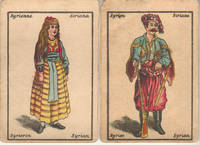
178023Mid 19th Century. 12 hand-coloured engravings laid onto card rounded corners each approx 11.3 x 7.8cm title text in English Italian French and German slight toning and edgewear one with a chipped corner but overall in good condition. Single figure costume engravings likely prepared for an educational work for children these a larger format than those by Bauer the German family of globe makers. Ten of the cards are paired male and female examples: Spanish Russians "Black Peter" Gipsies a pair from Syria and two of female figures from the Tyrol and Greenland. <br> <br>This item is held off-site. Please note there may be a few days delay while it is brought into our shop for viewing or mailing to you. Thank you for your understanding. . unknown