151 761 résultats
19413477Madrid 1941-1970.- Tamaño 4º.- En el año 1945 se publica también un "Congreso de cuatro estudios sociales". La revista es mensual salvo alguna excepción pero la numeración cambia a partir de 1944 y vuelve a cambiar en 1970. TRABAJO DERECHO LABORAL SOCIAL Y RELACIONES CON LA EMPRESA Libro en español Sin editorial paperback
- Richard Lesclide, Paris 1876, 24,5x16cm, 22 fascicules reliés en un volume.. - Edition originale. Reliure en demi chagrin brun, dos à 5 nerfs frottés, coiffes frottées, plats de papier marbré, gardes et contreplats de papier à la cuve. L'Assommoir paraît en feuilletons dans la République des Lettres d'avril 1876 à janvier 1877. Nombreuses collaborations de J.-K. Huysmans, José Maria de Heredia, Catulle Mendès, Anatole France, Théodore de Banville, Edgard Poe, Jean Prouvaire, François Coppée, Albert Glatigny, Léon Dierx, Leconte de Lisle, Victor Hugo, Léon Cladel, Jean Richepin, Stéphane Mallarmé, Maurice Rollinat, Richard Wagner, Maurice Bouchor, Villiers de Lisle Adam etc... Emile Zola avec L'assommoir, en grande partie complet dans notre exemplaire, paraît en feuilletons dans la République des Lettres d'avril 1876 à janvier 1877. Exemplaire quasi exempt de rousseurs. Très rare revue regroupant les plus grandes plumes du parnasse. [ENGLISH DESCRIPTION ON DEMAND]
- La plume, Paris 1892, 17x25,5cm, broché. - Edition originale. Contributions littéraires de L. Bloy, L.Cladel, I. Rimbaud, C. Saint-Saëns, L. Descaves, R. de Gourmont, Willy A. Retté, Rachilde, J. Moréas, M. Barrès, S. Merrill, E. Zola, Papus, C. Maurras, P. Verlaine, J. Bois, S. de Guaita, E. Zola, S. Mallarmé, Leconte de Lisle, F. Champsaur, H. Rebell, M. du Plessys, ... Contributions picturales H. Boutet, G. Fraipont, A.-F. Cazals, A. des Gachons, A. Brière, M. Luce, A. Séon, J. Chéret, Caran d'Ache... Cette année, La Plume consacra des numéros spéciaux aux Parisiens de Paris, au jargon de Maistre François Villon, aux soirées de La Plume, à la Magie sous la direction de Papus, à Léon Cladel, à la Pantomime, au théâtre de l'Odéon, Dos fendu comportant des manques en tête et en pied, trois déchirures avec légers manques angulaires sur le deuxième plat. Rare. [ENGLISH DESCRIPTION ON DEMAND]
- La plume, Paris 1891, 17x25,5cm, broché. - Edition originale. Contributions littéraires de A. France, M. Barrès, J. Moréas, A. Bruant, O. Méténier, L. Bloy, L. Trézénik, J. Péladan, P. Vérola, Willy, S. Merrill, L. Cladel, P.N. Roinard, E. Pottier, J. Guesde, L. Michel, J.B. Clément, P. Verlaine, A. Fontainas, E. Demolder, G. Eekhoud, J. Roumanille, F. Mistral, P. Arène, T. Corbière, G. Darien, F. Fénéon, J.-K. Huysmans, R. Darzens, C. Baudelaire avec des pages retrouvées, A. Le Braz, G. Ropartz ... Contributions picturales P. Gauguin, H. de Toulouse-Lautrec avec des dessins inédits, Steinlen, F.A. Cazals, Duclos, F. Fau, M. Denis, P. Signac, G. Seurat, E. Bernard, P. Bonnard, V. van Gogh, P. Sérusier, P. Cézanne, C. Pissarro, G. Anquetin, C. Lhuilier... Cette année, La Plume consacra des numéros spéciaux au Symbolisme de Jean Moréas, à Aristide Bruant et au Mirliton, à l'éthique de Maurice Barrès, à la littérature socialiste, aux "Jeune-Belgique", aux Félibres, aux Peintres novateurs, au livre moderne et à la curiosité littéraire, à la chanson moderne, aux Bretons de France. Bel exemplaire. Rare. [ENGLISH DESCRIPTION ON DEMAND]
- Paris 15 octobre 1896, 16x24,8cm, une feuille rempliée. - Rare édition originale du premier numéro de la revue artistique L'omnibus de Corinthe, un des rares exemplaires de luxe imprimés sur papier japon. Agréable exemplaire en dépit de quelques salissures marginales. La couverture est réalisée par Edouard Couturier. L'Omnibus de Corinthe (sous-titré "véhicule illustré des idées générales") est un supplément illustré à la revue La Critique créé par le peintre Nabi Marc Mouclier. Au total, douze fascicules réalisés au crayon lithographique et imprimé en zincographie par Eugène de Solenière furent publiés tous les trois mois à partir d'octobre 1896. Ils sont aujourd'hui rarissimes et la Bibliothèque Nationale de France - qui possède une collection complète sur japon - n'en a numérisé que la moitié en très mauvaise résolution. L'énigmatique titre de cette publication reprend un proverbe gréco-latin « Non licet omnibus adire Corinthum » (Il n'est pas permis à tout le monde d'entrer à Corinthe) et chaque numéro est un "voyage" invitant le lecteur à monter à bord de cet excentrique véhicule. Les illustrations sont principalement d'Edmond Couturier, Ibels, Henri Gustave Jossot, Marc Mouclier et Louis Valtat - les textes sont l'oeuvre de Willy, de Georges Bans, d'Alcanter de Brahm, de Charles Fuinel, d'Émile Straus ( sous les pseudonymes de Papyrus et Martine), de Jean de Caldain et de Marc Mouclier. [ENGLISH DESCRIPTION ON DEMAND]
- 15 janvier 1897, 16x24,8cm, une feuille rempliée. - Rare édition originale du deuxième numéro de la revue artistique L'omnibus de Corinthe, un des rares exemplaires de luxe imprimés sur papier japon. Agréable exemplaire en dépit de quelques salissures marginales. La couverture est réalisée par Henri Gustave Jossot. L'Omnibus de Corinthe (sous-titré "véhicule illustré des idées générales") est un supplément illustré à la revue La Critique créé par le peintre Nabi Marc Mouclier. Au total, douze fascicules réalisés au crayon lithographique et imprimé en zincographie par Eugène de Solenière furent publiés tous les trois mois à partir d'octobre 1896. Ils sont aujourd'hui rarissimes et la Bibliothèque Nationale de France - qui possède une collection complète sur japon - n'en a numérisé que la moitié en très mauvaise résolution. L'énigmatique titre de cette publication reprend un proverbe gréco-latin « Non licet omnibus adire Corinthum » (Il n'est pas permis à tout le monde d'entrer à Corinthe) et chaque numéro est un "voyage" invitant le lecteur à monter à bord de cet excentrique véhicule. Les illustrations sont principalement d'Edmond Couturier, Ibels, Henri Gustave Jossot, Marc Mouclier et Louis Valtat - les textes sont l'oeuvre de Willy, de Georges Bans, d'Alcanter de Brahm, de Charles Fuinel, d'Émile Straus (sous les pseudonymes de Papyrus et Martine), de Jean de Caldain et de Marc Mouclier. [ENGLISH DESCRIPTION ON DEMAND]
- 15 avril 1897, 16x24,8cm, une feuille rempliée. - Rare édition originale du troisième numéro de la revue artistique L'omnibus de Corinthe, pun des rares exemplaires de luxe imprimés sur papier japon. Notre exemplaire est complet de sa lithographie originale de Valtat offerte en prime avec les exemplaires sur japon. Agréable exemplaire en dépit de quelques salissures marginales. La couverture est réalisée par Edouard Couturier. L'Omnibus de Corinthe (sous-titré "véhicule illustré des idées générales") est un supplément illustré à la revue La Critique créé par le peintre Nabi Marc Mouclier. Au total, douze fascicules réalisés au crayon lithographique et imprimé en zincographie par Eugène de Solenière furent publiés tous les trois mois à partir d'octobre 1896. Ils sont aujourd'hui rarissimes et la Bibliothèque Nationale de France - qui possède une collection complète sur japon - n'en a numérisé que la moitié en très mauvaise résolution. L'énigmatique titre de cette publication reprend un proverbe gréco-latin « Non licet omnibus adire Corinthum » (Il n'est pas permis à tout le monde d'entrer à Corinthe) et chaque numéro est un "voyage" invitant le lecteur à monter à bord de cet excentrique véhicule. Les illustrations sont principalement d'Edmond Couturier, Ibels, Henri Gustave Jossot, Marc Mouclier et Louis Valtat - les textes sont l'oeuvre de Willy, de Georges Bans, d'Alcanter de Brahm, de Charles Fuinel, d'Émile Straus (sous les pseudonymes de Papyrus et Martine), de Jean deCaldain et de Marc Mouclier. [ENGLISH DESCRIPTION ON DEMAND]
- Paris 15 juillet 1897, 16x24,8cm, une feuille rempliée. - Rare édition originale du quatrième numéro de la revue artistique L'omnibus de Corinthe, un des rares exemplaires de luxe imprimés sur papier japon. Agréable exemplaire en dépit de quelques salissures marginales et de très infimes manques angulaires. La couverture est réalisée par Marc Mouclier. Tampon de L'Omnibus de Corinthe en haut à gauche du premier plat de couverture. L'Omnibus de Corinthe (sous-titré "véhicule illustré des idées générales") est un supplément illustré à la revue La Critique créé par le peintre Nabi Marc Mouclier. Au total, douze fascicules réalisés au crayon lithographique et imprimé en zincographie par Eugène de Solenière furent publiés tous les trois mois à partir d'octobre 1896. Ils sont aujourd'hui rarissimes et la Bibliothèque Nationale de France - qui possède une collection complète sur japon - n'en a numérisé que la moitié en très mauvaise résolution. L'énigmatique titre de cette publication reprend un proverbe gréco-latin « Non licet omnibus adire Corinthum » (Il n'est pas permis à tout le monde d'entrer à Corinthe) et chaque numéro est un "voyage" invitant le lecteur à monter à bord de cet excentrique véhicule. Les illustrations sont principalement d'Edmond Couturier, Ibels, Henri Gustave Jossot, Marc Mouclier et Louis Valtat - les textes sont l'oeuvre de Willy, de Georges Bans, d'Alcanter de Brahm, de Charles Fuinel, d'Émile Straus ( sous les pseudonymes de Papyrus et Martine), de Jean de Caldain et de Marc Mouclier. [ENGLISH DESCRIPTION ON DEMAND]
- Paris 15 janvier 1898, 16x24,8cm, une feuille rempliée. - Rare édition originale du sixième numéro de la revue artistique L'omnibus de Corinthe, un des rares exemplaires de luxe imprimés sur papier japon. Agréable exemplaire en dépit de quelques salissures marginales. La couverture est réalisée par Marc Mouclier. L'Omnibus de Corinthe (sous-titré "véhicule illustré des idées générales") est un supplément illustré à la revue La Critique créé par le peintre Nabi Marc Mouclier. Au total, douze fascicules réalisés au crayon lithographique et imprimé en zincographie par Eugène de Solenière furent publiés tous les trois mois à partir d'octobre 1896. Ils sont aujourd'hui rarissimes et la Bibliothèque Nationale de France - qui possède une collection complète sur japon - n'en a numérisé que la moitié en très mauvaise résolution. L'énigmatique titre de cette publication reprend un proverbe gréco-latin « Non licet omnibus adire Corinthum » (Il n'est pas permis à tout le monde d'entrer à Corinthe) et chaque numéro est un "voyage" invitant le lecteur à monter à bord de cet excentrique véhicule. Les illustrations sont principalement d'Edmond Couturier, Ibels, Henri Gustave Jossot, Marc Mouclier et Louis Valtat - les textes sont l'oeuvre de Willy, de Georges Bans, d'Alcanter de Brahm, de Charles Fuinel, d'Émile Straus ( sous les pseudonymes de Papyrus et Martine), de Jean de Caldain et de Marc Mouclier. [ENGLISH DESCRIPTION ON DEMAND]
- Paris 15 avril 1898, 16x24,8cm, une feuille rempliée. - Rare édition originale du septième numéro de la revue artistique L'omnibus de Corinthe, un des rares exemplaires de luxe imprimés sur papier japon. Une longue tache en marge intérieure de la couverture ayant porté atteinte marginalement aux pages intérieures. La couverture est réalisée par Marc Mouclier ainsi que toutes les illustrations de ce voyage. L'Omnibus de Corinthe (sous-titré "véhicule illustré des idées générales") est un supplément illustré à la revue La Critique créé par le peintre Nabi Marc Mouclier. Au total, douze fascicules réalisés au crayon lithographique et imprimé en zincographie par Eugène de Solenière furent publiés tous les trois mois à partir d'octobre 1896. Ils sont aujourd'hui rarissimes et la Bibliothèque Nationale de France - qui possède une collection complète sur japon - n'en a numérisé que la moitié en très mauvaise résolution. L'énigmatique titre de cette publication reprend un proverbe gréco-latin « Non licet omnibus adire Corinthum » (Il n'est pas permis à tout le monde d'entrer à Corinthe) et chaque numéro est un "voyage" invitant le lecteur à monter à bord de cet excentrique véhicule. Les illustrations sont principalement d'Edmond Couturier, Ibels, Henri Gustave Jossot, Marc Mouclier et Louis Valtat - les textes sont l'oeuvre de Willy, de Georges Bans, d'Alcanter de Brahm, de Charles Fuinel, d'Émile Straus ( sous les pseudonymes de Papyrus et Martine), de Jean de Caldain et de Marc Mouclier. [ENGLISH DESCRIPTION ON DEMAND]
19329645ABonn, Marcus & Weber, 1914 - 1932. 18 Bände (= alles). Gr.8°. Gebunden in OLeinen mit gold RTitel (1,2,4-6,9), HL mit RTitel (3), HLwd. mit RTitel (7,8,10-18). Etwas berieben, leichte Gebrauchsspuren.
19407995EBParis, Editions de la Revue Verve, [1940]. Groß-4°. 36,5 x 28 cm. Nicht durchgehend paginiert. 151 Blatt. Gebundener Original-Pappband. [5 Warenabbildungen]
17963685FBLeipzig/Zürich/Lucern, Büreau der Einheimischen und Auswärtigen Literatur/Gessner/Wolf/Usteri, 1796/97-1802/03. 8°. 21 x 14 cm. XI, 152 Seiten, [1] Blatt, Seite [153]-358, [1] Blatt, 175 Seiten; XXXII, 144 Seiten, [1] Blatt, 174 Seiten, [1] Blatt, 180 Seiten, [1] Blatt; 168 Seiten, Seite [179]-336, Seite [3367]-496, XVI Seiten; XXVIII, 148, 14 Seiten (Register), [3] Blatt, XXII, 166 Seiten, [1] Blatt. Pappbände der Zeit mit marmoriertem Deckelbezug, goldgeprägtem Titel auf farbigen Rückenschildchen und Rundum-Rotschnitt. [4 Warenabbildungen]
19757697Madrid: Inst. de Estudios PolÃticos 1941-1975.- Tamaño 4º.- Contiene 2 Indices Generales del número 1 al 84 y del 85 al 114 más un suplemento de Información Económica del año 1943 y los números 1 al 6 del Suplemento de PolÃtica Social. REVISTA CON AMPLIO CONTENIDO EN DERECHO POLITICO. SOCIOLOGÃA Y POLÃTICA ESPAÑOLA EN GENERAL GIBRALTAR Libro en español Inst. de Estudios Políticos paperback
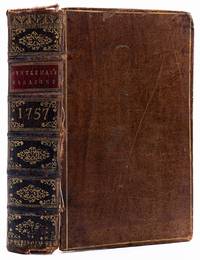
62651London: Printed for D. Henry and R. Cave 1757. Original copper engraved map of North America 24 x 24.5 cm. overall bound as issued in the Gentleman's Magazine. 8vo. 20.5 x 12.5 cm. Contemporary full calf sides ruled in gilt spine with raised bands and richly gilt-decorated compartments red morocco label. 21 of 22 plates the 'supplement' map of England not issued 10 of which maps and plans including one of Corsica a Physical Planisphere from the North Pole a map of the French coast about Rochefort and one of the mouth of the Ganges showing English and French settlements. Old ownership inscription of J. Hogkins dated 1757 to flyleaf. Binding rubbed along extremities with minor loss to head and foot of spine upper joint cracked but holding strong binding is sewn some very light occasional foxing contents generally very good. An interesting French & Indian War map extending from Lake Ontario and Fort Ontario to western Nova Scotia centred on Lake Champlain and the Iriquois Country. The map includes notes on the Treaty of Utrect and other boundaries along with the various forts southeast of the St. Laurence River including Presentation Fort Ft. Oswego Ft. Ontario Ft. St. John Ft. Lewis Ft. Chambli Ft. Fredrick at Crown Point Ft. William Henry Ft. Hunless Shirley Ft. Sheldon's Fort Shank's Fort Ft. Dummer No. 4 or Stephen's Fort Ft. Halifax Frank Ft. Ft. Western etc. Boston Harbor is shown. One of the first seat of the war maps to report on the battles in North America. The Gentleman's Magazine was a British publication that helped to normalise the use of maps in support of articles and features. It was founded in 1731 by the prominent London publisher Edward Cave a pioneer in periodical journalism. The magazine continued in print for nearly two centuries shuttering production in 1922. This volume with much on America. This was the publication which first used the word "magazine" from the French for storehouse. Cave wanted to create a storehouse of knowledge and he employed some of London's best writers to fill his pages: Samuel Johnson gained his first regular employment by writing for the Gentleman's Magazine. Other famous contributors included Jonathan Swift. The publication covered a broad range of topics from literature to politics and from 1739 frequently used maps as illustrations. The first map they printed was a woodcut of Crimea; the second was a fold-out map of Ukraine by Emanuel Bowen. Maps were used to show battle lines to chronicle voyages and to educate about areas with which Britain traded. Certain geographers like Thomas Jefferys contributed several maps to the publication. London: Printed for D. Henry, and R. Cave, 1757. hardcover
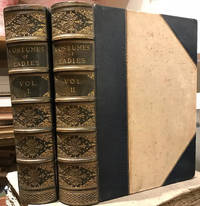
180458020N.p.: The Lady's Magazine and Modes de Paris 1804 - 1860. 4to.Ex-Library. In 2 volumes. Unpaginated. Bound in contemporary half morocco over boards. Raised bands to spines with gilt panels & lettering. Top edge gilt. Marbled endpapers. Boards marked. Internally very clean. No foxing. Ex-library with library stamp to each plate but with no other markings. Consists of two uniformly bound volumes containing 480 full-page plates with captions mostly hand-coloured and taken from various 19th century fashion journals/magazines. Volume I has 230 plates Vol. II with 250 plates. No text. The dates range from 1804 to the 1860's and have been arranged in chronological order. Many have been carefully mounted onto card while others are full-page. A splendid resource for costume designers. . Very Good. Half Morocco. 1804. The Lady's Magazine and Modes de Paris 1804 - 1860 unknown
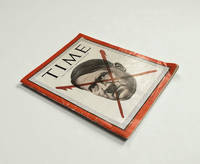
194522247USA: Time Magazine 1945. Volume XLV - Number 19 - May 7 1945. Hitler with the red cross to the front panel. Iconic issue. Having been named as one of their 'Men of the Year' Time Magazine issued this the Hitler is cancelled' issue - a good copy and exceptionally scarce. With small hole to the top of the front panel and some wear to the spine and corners. The usual 'cigarettes are good for you' adverts within. Time Magazine unknown
Telephone Talk was the glossy bimonthly publication of the British Columbia Telephone Company. It was written by employees for employees to present information of interest to those engaged in the plant, traffic, commercial, operating, accounting and other departments of the service. Each issue is replete with black and white photos and information on topics such as: company, industry and technological news, traffic levels, expansion plans, personnel announcements, publicity and social events, deaths, weddings, lists of exchanges, and more. As such, these issues serve as a vital preserve of rare and fascinating British Columbia history. This volume covers topics including: Photo of new office in Victoria; Advances in rates; Increased Rates in Manitoba; Telephoning across the Atlantic; Exchanges ranked in order of per cent good toll calls, November 1911; Statement of development - number of phones operating in each exchange as of 1 December 1911; Cover photo of Grand Forks Switchboard; Photo montage of underground work at Victoria; Birth of the Telephone - 3 page article; Mr. F.J. MacGougan; Photo of types of protected terminals; Vancouver Switchboard photos from 1908 and 1898; Great 2-page photo of the huge 'A' switchboard at Seymour; Load Curve Graph of Seymour Office; Cut-over of Victoria Plant - new epoch in phone history of B.C.'s capital; Vancouver Island Toll Rates; Special Victoria Issue - photo montage of city and district officials; Photo of New B.C. Office; Table showing # of phones in Victoria since 1880; Photos of underground work in Victoria; May 1880 list of Victoria subscribers; 1890 list of subscribers; cable-laying scenes from last September; Nanaimo and Sidny facilities; New Gulf Cable Ordered by William Farrell in England; Miss Mina Kerr; Record work at Highland; New Plant Department Building; How a Directory is Produced; Jolly moonlight excursion to Nanaimo aboard the steamer Princess Patricia; Great photo of 5 new auto wagons of the construction department in front of the Seymour Office (horses having been recently displaced); Some Victoria cable troubles; Photo montage of the Royal visitors, the Duke of Connaught, the Duchess of Connaught, and Princess Patricia; Training school for operators; interior and exterior views of the Royal trolley coach; 3-page Kamloops feature with photos; Functionalization of Plant - reorganization of the department; laying North Vancouver Cable; Photos of large buildings under construction in the Fairmont exchange - the Lee Building, the hospital buildintgs, Steel plant in G.N.R. yards; Fairmont feature - 4 pages with photos; Instructions for Operators; North Vancouver Cable Ready; Importance of Transmission; and more. Half-leather binding. Hinges tender but intact. Backstrip very rough. Ink stamp of company executive E.P. LaBelle upon top edge. Mr. LaBelle's signature upon front free endpaper and his initials are penned to top edge. He is mentioned on page 8 of the July issue as being the new Plant Engineer. Binding intact. Please note: small article clipped from page 18 of the December issue. Book
Pages 562-676. Features: In the Khalifa's Clutches - part IV of Charles Neufeld's ordeal; Impressions of Pekin - sensational photo-illustrated article; Two Loves Affairs, and How They Ended - Colonel Hervey Tryon falls headlong into a deep well of garbag; The Hook-Swinging Ceremony as I Saw It - Rev. Joshua Knowles describes a South Indian pagan festival in which devotees have hook placed in their flesh before they are swung into the air at the end of long poles - with photos; A Desperate Plight - travails of Captain H.V. Barclay in the arid Australian interior; The Great Grottos of Han - photo-illustrated article on the marvelous caverns near Han-sur-Lesse in the Belgian Ardennes; Held by An Octopus - Herbert Perkins explains how he was grabbed from out of the water; Shooting the Reversible Falls - photo-illustrated story from St. John, New Brunswick involving Xavier Francis and Louis Mitchell; Life in an Italian Village (near Pallanza); On the War-Path with Redskins - a retaliatory raid of natives is recounted by J.W. Schultz, a Rocky Mountain guide who was married to a Blackfoot and lived among them in Montana; The Fantastic Carnival at Pangau in a remote part of the Austrian Tyrol; Twenty-Seven Days in an Open Boat - Part II - the castaways are finally rescued, but in ghastly condition; Naia, The Witch of Rochefort-en-Terre, in Brittany - photo-illustrated article; Through Italy in Bedouin Dress - photo-illustrated account; One Thousand Miles on Mule-Back - Part I of this photo-illustrated article of the amazing journey of Mabel Penniman from New York to London via Central and South Amerca; The Bogus "Rush" at Coolgardie - photo-illustrated of a fake gold rush in Australia as told by John Marshalll of Kalgoorlie; Photo of women coal heavers in Dresden; Full-page photo from Kelsey Creek, California showing a river of fish three feet deep - with no water!; Photo of Tunisian camel fight; and more. Average external wear and soiling. Few pencil markings. Binding intact. A sound vintage copy of this excellent issue. Book
Fondata nel 1959 dalla ''Domus Galileana'' di Pisa (1959-1976), dall'''Istituto e Museo di Storia della Scienza'' di Firenze, dal ''Museo Nazionale della Scienza e della Tecnica'' di Milano, dal ''Gruppo Italiano di storia della Scienza'' e dalla Casa Editrice Leo S. Olschki. Diretta da V. Cappelletti, L. Cavini, F. Ogliari e V. Ronchi. Annate complete dall'anno I (1959) all'anno XVIII (1976), ad eccezione di 2 fascicoli mancanti, il n. 3 del 1964 e il n. 2 del 1972, per un totale di 63 volumi . 8vo. pp. circa 120/volume. . Ottimo (Fine). . . . Prestigiosa rivista di storia della scienza che ha fra i suoi collaboratori G. Abetti, G. Arrighi, I. Bernard Cohen, Alistair C. Crombie, L. Geymonat, V. Somenzi, Dereck John de Solla Price, L. Belloni e tanti altri importanti scienziati italiani e mondiali.
Generously illustrated with black and white photos and illustrations. Features: Bill Carlisle, Train Robber - An account of the amazing exploits of a man described as "the last of the train-robbers", who would notify officials when he was about to rob a train!; In Quest of the Dragon Lizards - Part I - A thrilling account of adventures on a remote Dutch East Indies island in pursuit of prehistoric flesh-eating lizards (the Komodo dragon) - with photos; The City of Golden Geese - A lively photo-illustrated account of the foie gras industry in the old city of Strasburg in Alsace; Mungoro Meets His Match - A Rhodesian tale; The End of the Chase - A hunt for a monstrous elephant near Lake Nyasa; Photo of a Kentish stilt-walker in field of hops; The Man in No. 35 - How a British officer discovered, in a Russian prison, Julius Weinberg, a Jewish banker who had actually handed Lenin and his accomplices ten million marks from the German Government in order to finance the Bolshevik revolution that destroyed Russia as a fighting force - the little man knew too much, and paid with his life for his refusal to surrender the incriminating receipts; Cycling Round the World - Part II - Kai Thorenfeldt spent over two years riding over 20,00 miles! - with photos; The bachelor Homesteaders of British Columbia - A breezy photo-illustrated account of the adventures and hardships of this cheery, happy-go-lucky class of men; The Girl Stowaway of the Cecilie - Part II - Jeanne Day snuck aboard the Herzogin Cecilie before it departed Australia for Falmouth - with photos; A Ride in the Night - An officer of the King's African Rifles falls ill on the Abyssinian frontier of Kenya Colony; The Chief's Gift - A tale from a New Zealand sheep farmer; Teddy Murphy's Close Call - A child disappears into a well in Moose Jaw, Saskatchewan. 84 pages plus 12 pages of nice vintage ads. Unmarked with average wear. A sound copy of this nice vintage issue. Book
1997mon0000051716Prevention Magazine 1997-01-01. Hardcover. Acceptable. in x in x in. Prevention Magazine hardcover
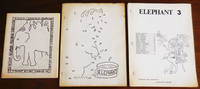
196630688New York: Elephant 1966. First edition. Paperback. Very Good . Complete three volume set of John Perreault's small press mimeo revolution era poetry magazine. All three issues in very good or better condition. Issue No. Two is especially uncommon. Dimensions and quality of printing vary with each issue. All in stapled wrappers printed on rectos only. Anne Waldman James Brody Thomas Clark Ted Berrigan and much more. Warhol provides the cover artwork for the first issue. Elephant paperback books
60043PENNSYLVANIA MAGAZINE OF HISTORY AND BIOGRAPHY. Volume 1 through Volume 50. Phila.: 1877-1927. Vols. 1-35 bound in 3/4-leather vols. 36-50 uniform in cloth except for vol. 40. Ex-library else a very good set. A long run of this collection of local history especially strong on the colonial and revolutionary periods. unknown
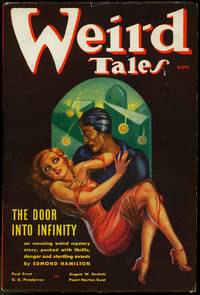
193620432<p>Volume 28 Number 2. Door Into Infinity - Edmond Hamilton. Lycanthropus - C. Edgar Bolen. Mask of Death - Paul Ernst. Werewolf of the Sahara - G. G. Pendarves. Medici Boots - Pearl Norton Swet. Red Nails Part 2 - Robert E. Howard. Swamp Demons - C. A. Butz. Death Holds the Post - August Derleth and Mark Schorer. Diary of Philip Westerly - Paul Compton. In the Dark - Ronal Kayser. Four Wooden Stakes - Victor Rowan. Cover by Margaret Brundage. K6</p> Popular Fiction Publishing