Life MagazineABAA
151 761 résultats
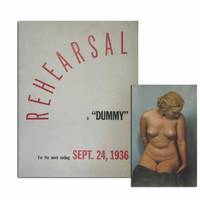
1936235319New York 1936. Illustrated with photos. 1 vols. Folio. Orig. wrappers; occasionally creased slightly dusty spine occasionally chipped or abraded. Internally clean. Illustrated with photos. 1 vols. Folio. This mock-up of LIFE magazine appeared one month before the first published issue of November 23 1936. It was circulated to potential advertisers to provide a model for the general form and content of the magazine. LIFE is referred to as "Time's Picture Magazine" as the title had not been decided upon yet.<br/><br/><br/>Incidentally this "dummy" is also notable for containing the first printed reproductions of Paul Outerbridge's color photography appearing four years before his groundbreaking Photographing in Color with two full page color photographs including one nude. unknown books
195024035New York: The New Yorker Magazine 1950. 1 vols. Image 12 x 8-1/2 inches matted to 20 x 16 inches overall. 1 vols. Image 12 x 8-1/2 inches matted to 20 x 16 inches overall. Original Chon Day New Yorker Cartoon Drawing. From the collection of James H. Heineman. The New Yorker Magazine unknown books
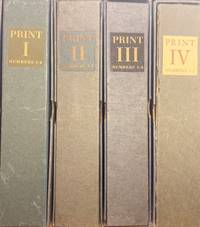
19402156New York N.Y. William Edwin Rudge 1940-1948. 4to. Vol.I-Vol. V. Number 1-4 of each year plus Vol. V Number 4. 1940-1948. Printed wrappers for each volume. 1st Edition. All in fine condition each year encased in a blue paper covered sleeve. Vol. I: 1940 Vol 1-4 A mutitude of articles on prints and books as well as numerous illustrations. Vol. II: 1942 #1-4 "Aristocracy in Prints" American engraver Vol. III: #1-4 1943 t. Vol. IV: 1946 #1-4Vol. V:1948 #4 only. On request I will provide a detailed list of articles included.<br />The journal was founded by William Edwin Rudge to demonstrate "the far reaching importance of the graphic arts" including art prints commercial printing wallpaper etc. Contents were eclectic covering typography book making book printing fine prints as well as the trade journal aspects of printing candy bar wrappers.8<p>Initially the publication included original prints such as the frontispiece for Vol 1 #1 Jun 1940 a two color woodcut by Hans Alexander Mueller and Vol 1 #3 December 1940 a black and white wood engraving by Paul Landacre.</p><p>By Volume 8 1953 the focus of the periodical had shifted to a trade journal.</p> William Edwin Rudge
BRG-30_2_658Workman Publishing Company 2017-10-03. hardcover. Very Good. 7x1x9. Very Good condition.Crisp pages. Clean cover and pages. Book shows minimal shelf wear. No highlighting/marking. Not Satisfied Contact us to get a refund. Workman Publishing Company hardcover
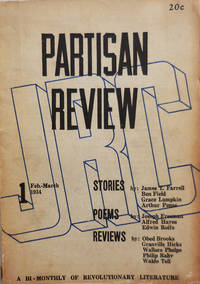
193423242New York: John Reed Club of New York 1934. First edition. Paperback. Very Good. Scarce first issue of this periodical of revolutionary thought and literature. Edited by Dahlberg Edwin Rolfe and others. Includes stories by James T. Farrell Ben Field Grace Lumpkin and Arthur Pense plus poems by Joseph Freeman Alfred Hayes and Edwin Rolfe with reviews by Obed Brooks Granville Hicks Wallace Phelps Philip Rahv and Waldo Tell. Soiling to covers. A good to very good example in stapled printed wrappers. A magazine first launched by the Communist Party in America which would later change its focus in a more mainstream direction with different editorial staffing but the first few years of this periodical were marked by a serious socialist-leaning bent. Scarce. John Reed Club of New York paperback books
63-6481Los Angeles CA: Carthay Circle Theatre 1937. Programme. 11.5" x 5.5" Single Leaf Illustrations Good with toning marginal tears. Scarce. Los Angeles, CA: Carthay Circle Theatre, 1937. unknown
id3-009025Gottingische Policey, Amts Nachrichten, publisher: Johann Friedrich Hager, Gottingen, In German, 1755, 1756. The listing price of $499 is for a single issue of the periodical. Several issues are available during the period indicated in the listing title. Please inquire about availability of specific issues, id3-009025
1832701338New York: John S. Bartlett MD 1832. This antique bound collection of "The Albion" spans from Volume 10 No. 1 June 11 1831 to Volume 10 No. 52 June 2 1832. The magazine was founded by James S. Buckingham a British journalist and travel writer. The magazine was established in New York City with the primary aim of serving the British expatriate community in the United States. It also catered to American readers who had an interest in British literature politics and culture. The copy features large marbled boards with a leather spine with titles in gilt. Leather shows wear heaviest at top and bottom of spine with some loss chipping and wear along hinges. Marbled boards show chipping rubbing and wear heaviest at corners where leather has worn down. Text block shows foxing and some stain but paper is generally intact and crisp - heaviest damage between pages 40 and 46 where there are stains and loss previously repaired with cello tape. Included index shows a wide variety of literature news and other articles of interest: Audubon's publications Napoleon the origins of "Frankenstein" poetry by Mrs. Hemans Thomas Moore Thomas Campbell etc Parisian fashions news of cholera and riots. 12 x 17 inches with 416 pages index at front of the volume despite the wishes of the publisher. Hardcover. Fair. John S. Bartlett MD
Le prime quattro annate complete. Scritti e poesie di Rafael Alberti, André Breton, Julio Cortazar, Angelo Maria Ripellino, Umberto Saba, Giovanni Comisso, Samuel Beckett, Lawrence Ferlinghetti, Fernando Arrabal, Mark Twain, Joao Guimaraes Rosa e moltissimi altri. Numerose illustrazioni in nero. 14 fascicoli . 8vo. pp. ca. 250/fasc. . Ottimo (Fine). . . .
195058167Los Angeles CA: Motor Trend Publications Robert E. Petersen Robert R. Lindsay Jan. - Dec. 1950. Twelve vols. 4to. Approx. 432 pp issues separately paginated. With 100’s of text & photo illustrations. Self-printed softcovers brown blue red black & white photo cover art illustrated ads on back covers couple minor tears light uniform interior toning as usual still NF set. First editions of the complete second year run of this groundbreaking automotive magazine. Based on their success with Hot Rod magazine launched only 2 years beforehand Petersen & Lindsay tapped into the post-World War II car enthusiast trend and passion. They launched the yearly car of the year award skipping 1950 models but awarded to the 1951 Chrysler line-up focused on the fast growing custom car industry and manufacturers in Southern California and included several articles on the sports car and open wheel racing scene in California. Motor Trend Publications, Robert E. Petersen, Robert R. Lindsay, paperback
19892091502135707408Rinsen Bookstore 1989. Soft Cover. Fine. The book is in fine condition. Rinsen Bookstore paperback
19892091502135700174Mitsuhito-sha 1989. Soft Cover. Fine. The book is in fine condition. Mitsuhito-sha paperback
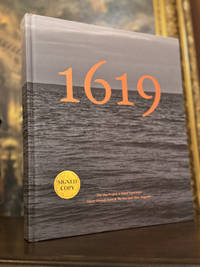
20241459<p><em><strong>UNBELIEVABLY RARE SIGNED! FIRST EDITION</strong></em> first printing of this incredible coffee table book sized exploration into the 1619 Project. Full number line present. Book is brand new and unread. Personally hand signed by the author Ms. Hannah-Jones directly to interior page. NOT inscribed to anyone. NOT a bookplate. A large and oversized book which will require additional shipping.</p><p>An illustrated edition of The 1619 Project with newly commissioned artwork and archival images The New York Times Magazine's award-winning reframing of the American founding and its contemporary echoes placing slavery and resistance at the center of the American story.</p><p>Here in these pages Black art provides refuge. The marriage of beautiful haunting and profound words and imagery creates an experience for the reader a wanting to reflect to sit in both the discomfort and the joy to contemplate what a nation owes a people who have contributed so much and yet received so little and maybe even to act.—Nikole Hannah-Jones from the Preface</p><p>Curated by the editors of The New York Times Magazine led by Pulitzer Prize–winning journalist Nikole Hannah-Jones this illustrated edition of The 1619 Project features seven chapters from the original book that lend themselves to beautiful engaging visuals deepening the experience of the content. The 1619 Project: A Visual Experience offers the same revolutionary idea as the original book an argument for a new national origin story that begins in late August of 1619 when a cargo ship of people stolen from Africa arrived on the shores of Point Comfort Virginia. Only by reckoning with this difficult history and understanding its powerful influence on our present can we prepare ourselves for a more just future.</p><p>Filled with original art by thirteen Black artists like Carrie Mae Weems Calida Rawles Vitus Shell Xaviera Simmons on the themes of resistance and freedom a brand-new photo essay about slave auction sites vivid photos of Black Americans celebrating their own forms of patriotism and a collection of archival images of Black families by Black photographers this gorgeous volume offers readers a dynamic new way of experiencing the impact of The 1619 Project.</p><p>Complete with many of the powerful essays and vignettes from the original edition written by some of the most brilliant journalists scholars and thinkers of our time The 1619 Project: A Visual Experience brings to life a fuller more comprehensive understanding of American history and culture.</p> Clarkson Potter hardcover
1981153c8860Japan: Kodansha International Ltd. 1981. Book. Fair. Hardcover. First Edition. 4to - over 9¾" - 12" tall. 221 pages. Glossary. Bibliography. Colour photography and black and white illustrations. The author "Writes movingly about the grandeur of ancient trees and stunning figured woods and explains how he selects and prepares his materials. Above all he impresses us with his devotion to discovering the inherent beauty of wood so that noble trees might have a second life as furniture. Looks at the world through the eyes of an artist and evokes the joy of living in harmony with nature." - from dust jacket. Heavily worn former library copy with the usual library markings. Back hinge open. Front hinge starting. Dust jacket now preserved in glossy new archival-grade Brodart cover. A worthy reading copy of this esteemed work. Kodansha International Ltd. Hardcover
1986128H4260Ottawa Canada: Booklore Publishers Ltd. Fine in Very Good dust jacket. 1986. First Printing. Hardcover. 0969258607 . Signed by author atop front free endpaper. Affixed to front free endpaper is a signed letter from author to the prior owner of this copy. viii 421 pages printed upon glossy stock. Glossary. Bibliography. Figure Index. General Index. Profusely illustrated with over one thousand photos most in black and white plus some in colour. Covers Inuit Indian Settlers Ethnic Celebrity Eaton's Beauty the Working doll Artist's dolls and dolls made by the commercial doll industry in Canada in the twentieth century. The comprehensive chapter on the Eaton's Beauty is by Judy Tomlinson Ross. With this book you will be able to accurately name date and dress your dolls. Book clean bright and unmarked with only a trace of wear. Light wear to colour-photo-illustrated dust jacket which is now preserved in glossy new archival-grade Brodart. A lovely copy of this the bible of Canadian dolls.; 4to - over 9¾" - 12" tall; Dolls - Collectors and Collecting - Canada Doll Industry - Canada - History - 20th Century Dollmakers - Canada Eaton's - Dolls; Signed by Authors . Booklore Publishers Ltd. hardcover
1774179641774. The London Magazine December 1774 records British reporting on the developing conflict between Great Britain and the American colonies in the months after the Intolerable Acts and the First Continental Congress. The issue captures the political language of grievance liberty parliamentary authority colonial coordination and imperial anxiety before the outbreak of war. Its contents support research into Revolutionary-era public opinion transatlantic news circulation colonial resistance and British interpretations of American political organization.<br /> <br /> The London Magazine: Or Gentleman's Monthly Intelligencer. London: Printed for R. Baldwin December 1774. Octavo. Pages 567-616. 5.25 x 8.25 inches. Contents include "Plan of A Union Between Great Britain and the Colonies" "The King's Speech to the New Parliament" "Protest against the Lord's Address" "Letters From the Massachusetts Assembly to Lord Dartmouth" "Proceedings in the Province of Pennsylvania relative to the General Congress" "Instructions to the Pennsylvania Deputies" "American Affairs" and reporting on the Six Nations. One letter states that "the interesting controversy between administration and America daily grows more and more serious" and argues that a people whose property is controlled "by another people at an immense distance" cannot believe themselves free.<br /> <br /> The issue gives contemporary printed evidence of how London readers encountered colonial resistance as it moved from local protest toward intercolonial congress and coordinated political action. Its reporting on Pennsylvania proceedings Massachusetts correspondence the King's speech and Indigenous diplomacy places the imperial crisis within a wider Atlantic and frontier context rather than a single Boston-centered narrative. Disbound toned and bumped at outer top corner; good. A substantive Revolutionary-era magazine issue preserving British coverage of American resistance immediately before armed conflict. unknown
199018783Colorado: Sheet Music Magazine. Very Good with no dust jacket. c1990's. First Edition. Magazine. 100 x copies of the Sheet Music Magazine with numerous contemporary music scores in each magazine. Please confirm shipping costs before purchase; 11" x 8.5" . Sheet Music Magazine unknown
19212111902160200394Susumu Shinoda Saitama Friends Club 1921. Soft Cover. Fine. Number of pages: 367 pages Size: 22cmx15cm 367p Number of books: 1 Susumu Shinoda, Saitama Friends Club paperback
1805822291805. THE BOSTON WEEKLY MAGAZINE; Devoted to Morality Literature Biography History the Fine Arts Agriculture &c. &c. Volume II -- 1803-4 & III -- 1804-5. Boston: Published by Gilbert and Dean at their Printing-Office No. 78 State-Street 1805. Two complete years of this weekly from 29 October 1803 through 19 October 1805 bound together: Volume II no. 1-52; Volume III no. 1-52. Folio. Pp. vi208;vi208. Text is printed in triple columns. Each volume is preceded by an index arranged according to the style of the piece essay history useful poetry etc. There are two title-pages for Volume III; one is bound at the beginning of Volume II and the other is in its proper place. The title-page for Volume II is lacking. Paper quality varies throughout. Text leaves are age-browned and occasionally lightly soiled and/or foxed mostly light to moderate but in a few instances it is heavy with a few dog-eared corners and occasional edgewear. Volume II no. 41 p. 163-4 has some loss at the bottom fore-corner resulting in a loss of text to the last few lines in one column. Bookblock is splitting with remnants of the backstrip; but the boards are missing. The June 16 1804 issue third page p.135 second column. "Domestick" mentions that Captain Lewis was in Pittsburg "accompanied by twenty Indian chiefs." There are a couple of tohter references to the L&C expedition. unknown
1805822291805. THE BOSTON WEEKLY MAGAZINE; Devoted to Morality Literature Biography History the Fine Arts Agriculture &c. &c. Volume II -- 1803-4 & III -- 1804-5. Boston: Published by Gilbert and Dean at their Printing-Office No. 78 State-Street 1805. Two complete years of this weekly from 29 October 1803 through 19 October 1805 bound together: Volume II no. 1-52; Volume III no. 1-52. Folio. Pp. vi208;vi208. Text is printed in triple columns. Each volume is preceded by an index arranged according to the style of the piece essay history useful poetry etc. There are two title-pages for Volume III; one is bound at the beginning of Volume II and the other is in its proper place. The title-page for Volume II is lacking. Paper quality varies throughout. Text leaves are age-browned and occasionally lightly soiled and/or foxed mostly light to moderate but in a few instances it is heavy with a few dog-eared corners and occasional edgewear. Volume II no. 41 p. 163-4 has some loss at the bottom fore-corner resulting in a loss of text to the last few lines in one column. Bookblock is splitting with remnants of the backstrip; but the boards are missing. The June 16 1804 issue third page p.135 second column. "Domestick" mentions that Captain Lewis was in Pittsburg "accompanied by twenty Indian chiefs." There are a couple of tohter references to the L&C expedition. unknown books
19572081402109801813Benri-do 1957. Soft Cover. Fine. Number of books: 1 Benri-do paperback
- Cahiers de poésie, Paris Août 1943, 15x19,5cm, broché. - Edition originale sur papier courant. Contributions littéraires de A. Breton, M. Marien, B. Péret, L. Malet, C. Dotremont, N. Arnaud... Contributions picturales de V. Brauner, A. Breton, S. Dali, M. Ernst, J. Miro, Y. Tanguy, P. Picasso... Un mors légèrement fendu en pied, sinon agréable exemplaire. Rare. [ENGLISH DESCRIPTION ON DEMAND]
- Essais d'art libre, Paris Août 1892-Janvier 1893, 14x19cm, broché. - Edition originale sur papier courant. Contributions de R. de Gourmont, C.H. Hirsch, G.A. Aurier, P.N. Roinard, C. Mauclair, Y. Rambosson... Deux manques en tête et en pied du dos passé, agréable état intérieur. [ENGLISH DESCRIPTION ON DEMAND]
- Gil Blas, Paris 1893-1894, 27,5x41cm. - Edition originale. Reliure en demi percaline olive, plats de papier à la cuve, coins émoussés, coupes éraflées. Reliure de l'époque. Chaque numéro contient bien ses quatre pages, quelques légères déchirures marginales sans atteinte au texte, ainsi que des pliures. Un numéro supplémentaire à destination des abonnés en fin de volume. Contributions de Guy de Maupassant ("La Patronne", "Le Verrou", "Le Pain maudit", "Boitelle", "Le Père", "Clair de lune", "Fin d'amour" (poème), "La Parure", "Ce cochon de Morin", "Au bord de l'eau", "A Tunis"), Stéphane Mallarmé ("Apparition"), Maurice Leblanc ("La Fortune de M. Fouque"), Marcel Schwob ("Le Roi au Masque d'Or", "Les Milésiennes"), Aristide Bruant ("Grelotteux", "Pus d'patrons", "Respec'aux abattis"), Charles Baudelaire ( publication posthume de "Sed non Satiata", "Réversibilité", "Le Balcon", "Ciel brouillé", "L'amour du mensonge", "Le Jet d'eau", "Causerie", "Le Jour des morts", "Don Juan aux Enfers"), Jean Richepin ("Les Caresses", "Achetez mes belles violettes", "Premier départ", "Floréal", "Idylle de pauvres", "Bonnes filles", "Dans les fleurs", "Ch'tiote", "Ballade du rodeur des champs", "La Casquette", "Le Mort maudit", "La Dette", "Adieu", "Les Petiots", "Partance", "Noël misérable"), Paul Verlaine ("Les Coquillages", "En sourdine", "Romance sans parole", "Sagesse", "Sur l'herbe", "A la promenade"), José Maria de Heredia ("Le lit"), Edgar Poe ("La Barrique d'Amontillado" traduction de Charles Baudelaire), Alphonse Allais ("Réversibilité", "L'arroseur"), Georges Courteline ("Lidoire", "Margot", "26", "Boubouroche", "La Pendule", "Exempt de cravate", "Je m'en fous", "Belle petite", "Un mal de gorge"), Edmond et Jules de Goncourt ("L'amour au XVIIIe siècle"), Marcel Prévost ("Cousine Laura"), Victor Hugo ("Ave, dea, moriturus te salutat!"), Théophile Gautier (publication posthume "A une robe rose"), Alphonse Daudet ("La Moisson au bord de la mer", "La Musique aux Champs"), François Coppée ("Rousse", "Brune"), Villiers de l'Isle-Adam ("La Torture par l'espérance") ; dessins de , Steinlen, Marcel Capy, Guillaume, Guydo et Belon parmi d'autres. Journal illustré de nombreux dessins en couleurs et en noir et blanc, parfois en pleine page voire en double page, ainsi que de partitions musicales. Gil Blas est un ancien hebdomadaire de presse écrite français, fondé par Auguste Dumont, qui a paru du 19 novembre 1879 au 4 août 1914, puis très épisodiquement du 20 janvier 1921 à mars 1940. Pendant une période, à partir du 17 novembre 1909, il fut dirigé par Henri de Noussanne et Pierre de Maroussein. Le Gil Blas se voulut d'abord littéraire. De grandes plumes s'y exprimèrent dans des chroniques qui connurent un vif succès : Guy de Maupassant (ou Maufrigneuse) dont la collaboration fut la plus longue (1881-1888), Paul Arène, Émile Bergerat, Clovis Hugues, René Maizeroy, Jean Richepin, etc. Tout aussi importants étaient les feuilletons, signés par Émile Zola, Hector Malot, Théodore de Banville, et Octave Mirbeau notamment. De son côté, Maupassant y publia « Une vie » (février-avril 1883), « Bel Ami » (avril-mai 1885), « Mont-Oriol » (décembre 1886-jévrier 1887), etc. Outre ces chroniques et ces feuilletons, Zola défendit certaines de ses uvres dans le journal, par le biais des « Lettres au Directeur » (sur « le Rêve », 8 novembre 1888 ; sur « la Bête humaine », 13 novembre 1889). [ENGLISH DESCRIPTION ON DEMAND]
- Gil Blas, Paris 1893-1895, 28x40cm. - Edition originale. Reliure en demi percaline brune, plats de papier à la cuve, coins émoussés, coupes éraflées, coiffe supérieure arrachée. Reliure de l'époque. Chaque numéro contient bien ses quatre pages, quelques légères déchirures marginales sans atteinte au texte, ainsi que des pliures. Contributions de Marcel Prévost ("Cousine Laura", "Grace!", "Au cabaret", "L'Abbé Pantalon", "Maxime"), Aristide Bruant (nombreuses chansons), Georges Courteline ("Margot", "26", "Boubouroche", "La Pendule", "Exempt de cravate", "Je m'en fous", "Un mal de gorge", "Ferme ta malle !", "Premières armes", "L'Honneur des Brossarbourg", "Le Mauvais cocher", "Suggestion"), Jean Richepin (nombreux poèmes, ainsi que des textes en prose : "Ch'tiote", "La Casquette", "Mimile"), Alphonse Daudet ("La Moisson au bord de la mer", "La Musique aux Champs"), Charles Baudelaire (publication posthume de "Ciel Brouillé", "Moesta et Errabunda", "Le Jet d'eau", "Causerie", "Le Jour des Morts", "Don Juan aux Enfers", "Les Aveugles", "A une mendiante rousse", "Bohémiens en voyage", "L'Aube spirituelle", "Le Jeu", "A une passante"), Paul Verlaine ("Sagesse", "Sur l'herbe", "A la promenade", "La Chanson des Ingénues", "Mandoline", "Le Faune" "Cythère", "En sourdine", "Colombine"), François Coppée ("Rousse", "Brune"), Guy de Maupassant ("La Parure", "Le Champ d'oliviers", "Le Crime au Père Boniface", "Histoire d'une fille de ferme", "Littérature du gendarme", "La Dot"), Willy ("Francisque"), Barbey d'Aurevilly ("La Vengeance d'une femme", "Le Rideau cramoisi"), Alphonse Allais ("Le Langage des fleurs", "L'Absence profitable", "La Télégraphiste", "Bébert"), Emile Zola ("Pour une nuit d'amour", "Lourdes"), Jules Renard ("Oeuf de poule", "Poil de Carotte"), Maurice Leblanc ("Roméo et Juliette", "L'Elevage", "La Vierge"), Gyp ("Le Débutant"), Catulle Mendès ("Le Passe-pied"), Jean Lorrain ("Les Yeux du mort"), J.-H. Rosny ("Lacération", "Cabinets particuliers", "L'Immolation", "Le Funéraliste"), Mark Twain ("Concernant les femmes de chambre"), Théophile Gautier ("A une robe rose"), Sully-Prud'homme ("Les Vénus"), Anatole France ("Chronique napolitaine"), Edmond et Jules de Goncourt ("Le Passeur de Maguelone", "Le Père Thibaut"), Tristan Corbière ("Sainte Anne") entre autres ; dessins de Steinlen, A. Guillaume, Paul Balluriau, Lourdey, Carl-Hap et Maurice Marais notamment. Journal illustré de nombreux dessins en couleurs et en noir et blanc, parfois en pleine page voire en double page, ainsi que de partitions musicales. Gil Blas est un ancien hebdomadaire de presse écrite français, fondé par Auguste Dumont, qui a paru du 19 novembre 1879 au 4 août 1914, puis très épisodiquement du 20 janvier 1921 à mars 1940. Pendant une période, à partir du 17 novembre 1909, il fut dirigé par Henri de Noussanne et Pierre de Maroussein. Le Gil Blas se voulut d'abord littéraire. De grandes plumes s'y exprimèrent dans des chroniques qui connurent un vif succès : Guy de Maupassant (ou Maufrigneuse) dont la collaboration fut la plus longue (1881-1888), Paul Arène, Émile Bergerat, Clovis Hugues, René Maizeroy, Jean Richepin, etc. Tout aussi importants étaient les feuilletons, signés par Émile Zola, Hector Malot, Théodore de Banville, et Octave Mirbeau notamment. De son côté, Maupassant y publia « Une vie » (février-avril 1883), « Bel Ami » (avril-mai 1885), « Mont-Oriol » (décembre 1886-jévrier 1887), etc. Outre ces chroniques et ces feuilletons, Zola défendit certaines de ses uvres dans le journal, par le biais des « Lettres au Directeur » (sur « le Rêve », 8 novembre 1888 ; sur « la Bête humaine », 13 novembre 1889). [ENGLISH DESCRIPTION ON DEMAND]