47 063 résultats
35784In-12, plein veau brun de l'époque, dos à nerfs ornés de caissons fleuronnés, roulette sur les coupes, tranches mouchetées, (16), 454, (6) p. table et errata, (44) p. catalogue. Amsterdam, Herman Uytwerf, 1727.
197855255BBHildesheim, Georg Olms Verlag, 1978. Groß-8°. 24 cm. XX, [832], 836, 832, 836 und 688 Seiten. Original-Pappbände mit goldgeprägtem Rücken- und Deckeltitel auf Lederschildchen.
ORD-200802àme Année. N° 24. 90 Décembre 1899. Fascicule in-4°(252 x 325mm), couverture illustrée en noir par MUCHA, pages 257 à 269 illustrée en noir de plusieurs illustrations des artstes du temps. Bel exemplaire.
1857288151857-1874, Auguste Aubry, revue in-8 broché d'une quinzaine de pages, paraissant le 1er et le 15 de chaque mois, avec la collaboration de bibliophiles et d'érudits, voici la liste des années que comporte le lot: 1857: manque n°23 (1er décembre) 1858: complet 1859: manquent 15 mars, 1er avril, 15 mai, 1er juin, 15 juin, 1er sept, 15 sept, 1er oct, 15 oct 1860: manque 2eme semestre 1861: complet 1862: manque 15 février 1863: complet 1864: complet 1865: complet 1866: complet 1867-1873 manquant 1874: manquent 15 mars, 1er avril, 15 avril, 1er juin, 15 juin, 1er aout, 15 aout, 1er sept, 15 [...] | Etat : Etat moyen dans l'ensemble, plutôt bien conservé pour des revues de cette époque, tranches et coins légèrement frottés, couvertures légèrement défraichies, quelques rousseurs (Ref.: ref80579)
ORD-3791Paris. Fantasio. du 1°janvier au 15 décembre 1916. (Année complète). N°215-238, soit 24 numéros en 2 volumes grand in-8 (220 x 298mm) dos chagrin violet à 5 nerfs, filets et fleurons or, plats toile chagrinée, gardes marbrés, complet des 24 N°, couvertures conservées. Nombreuses illustrations en noir et en couleurs dans et hors texte par les meilleurs artistes de l'époque. On note la présence dans chaque numéro d'une feuille intitulée Tadeblag Zeitung quotidien bi-mensuel illustré, publié par l'Agence Wolff, Bureaux Kolossalkanardstrasse, Berlin qui marque bien que le ton de la revue se modifie légèrement avec le début de la guerre, même si elle reste par vocation assez légère. Très bel exemplaire.
1st edition. Original paper wrappers with modernist 1930s typeface design. 8vo. 28 pages, 20 cm. In Yiddish. Title translates to Nucleus. A lesser known Yiddish monthly featuring some popular Yiddish writers of the period like Jacob Stodolsky and Jacob Glatstein. First published in June of 1930. It appears to have run only 3 issues: June, July (this issue), and November 1930. SUBJECTS: Yiddish literature - Periodicals. OCLC 35215860. OCLC lists 5 holdings worldwide for any issues (NYPL, YIVO, Brandeis, Harvard, NLI), though those holdings may be incomplete. Very Good Condition, a beautiful copy. Scarce. (YID-33-49-elx) xx
1st edition. Original paper wrappers with modernist 1930s typeface design. 8vo. 29 pages, 20 cm. In Yiddish. Title translates to Nucleus. A lesser known Yiddish monthly. Features poetry and prose by Casia Koperman, Michael Licht, and more, It appears to have run only 3 issues: June, July, and November 1930 (this issue) SUBJECTS: Yiddish literature - Periodicals. Very good condition. OCLC 35215860. OCLC lists 5 holdings worldwide for any issues (NYPL, YIVO, Brandeis, Harvard, NLI), though those holdings may be incomplete. Very Good Condition, a beautiful copy. Scarce. (YID-33-49-'elx)
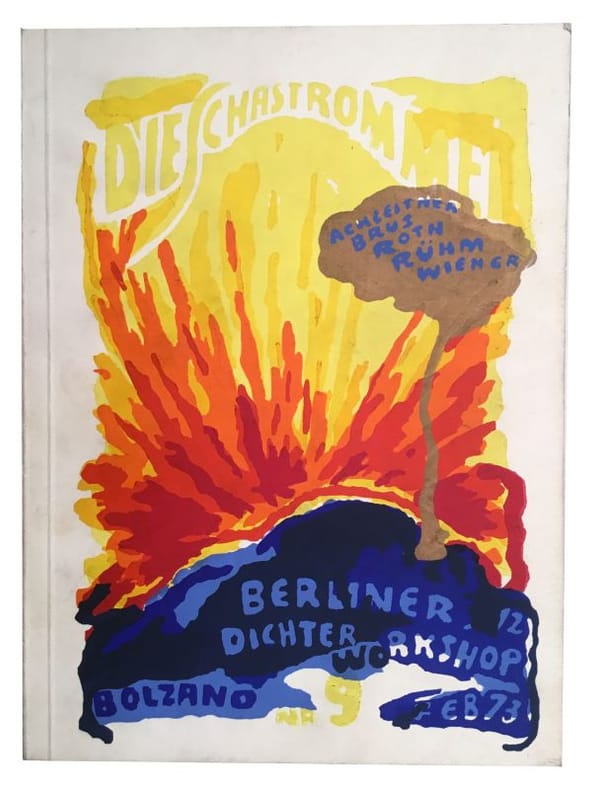
19721044951972 1 Bolzano, 1972 ,230x173mm, broché sous couverture en sérigraphie de Gunter Brus. Deux feuilles pliées formant 8p. insérées en fin d'ouvrage. Tirage de 500 ex. Édition originale.(104495)
ORD-4447Directeur René MAIZEROY. Du 1er janvier au 31 décembre 1897. Soit 52 numéros sur 53 (il manque le n°50). Paris. 1897. In-f°(280 x 395mm) dos lisse basane noire, 52 n° de 8 pages chacun, premières et dernières pages illustrées en couleurs par STEINLEN (la plupart des couvertures) et BALLURIAU (les dernières pages de chansons souvent avec partitions), nombreuses illustrations monochromes (couleurs très diverses) dans le texte par BALLURIAU. Textes des écrivains de l'époque, René Maizeroy, Fernand Gregh, Paul Arène, Maurice Donnay, Yann Nibor, Alphonse Allais, etc. Reliure un peu usée, menus défauts inhérents au papier fragile de l'ouvrage, 4 pages du n°15 placées à l'envers, n°46 placé avant le n°45. Bon exemplaire collationné feuille à feuille.
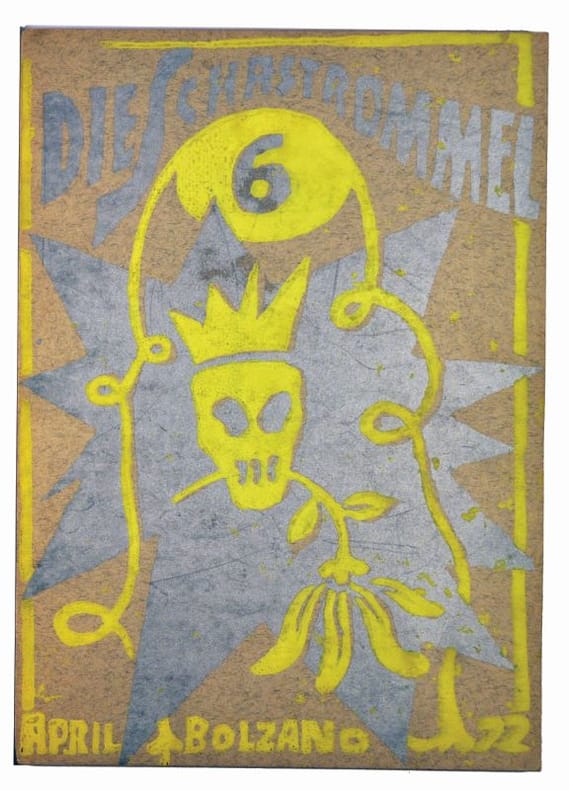
19721044911972 1 Bolzano, avril 1972, 297x210mm. Broché sous couverture en sérigraphie. Tirage de 500 ex. Édition originale.(104491)
189964124Paris, Plon-Nourrit et Cie, 1899, in-4, demi-bradel, pièce de titre, VII, 160 pages. Edition du Figaro. 10 livraisons reliées en un volume. Seule la couverture de la première livraison est conservée. Abondamment illustré de vignettes & de planches en noir et en couleurs. 1: Albert Wolff (préface), Tournées de Province - Delaunay à vingt ans par Alphonse Daudet. Les petites marchandes des rues par Henry Gréville. 2: Bohèmes en villégiature par Émile Zola. La rue qui chante par Gustave Geffroy. 3: Servantes, rubans et tabliers par Guy de Maupassant. Paris et les étrangers par Antonin Proust. 4: Une promenade au Boulevard Beaumarchais par Edmond de Goncourt. Les enfants par Paul Bonnetain. 5: Types des Fêtes Foraines par Jean Richepin. Les comédiens par Henry Céard. 6: Cocher de Maître par Octave Mirbeau. Dimanches de Paris par Roger Marx. 7: Professeur libres par Paul Bourget. Types de la rue par Stéphane Mallarmé. 8: Vieux cochers par Robert de Bonnières. Les ouvriers par J.H. Rosny. Les terrassiers par Jean Ajalbert. 9: Belles filles par L. de Fourcaud. Les chiffoniers par Félicien Champsaur. 10: Les habitués de café par J.K . Huysman. Le petit peuple des maisons de retraite par Louis Mullen.
1808365947Ohne Ort u. Verlag, 1808-10. Pappbände d. Zeit in moderner Kassette, ab Jahrgang 2 mit beigebundenen Originalumschlägen (Pappbände stark bestoßen u. beschabt, Rückenschilder teils mit Fehlstellen). [4 Warenabbildungen]
ORD-5724Nous proposons 1°: du n°4, (4°trimestre 1960) au n°48 (avril-juin 1969), sans les numéros 5, 6, 16, 20, 22, 23, 30, 38. 2°. du n°48 (octobre décembre 1971 au n°64-65 (4e trimestre 1975 et 1er trimestre 1976) sans manque. Ensemble de 49 fascicules in-12 (ca 135 x 182mm) brochés couvertures imprimées, 50 pages et plus par fascicules. Bon état de l'ensemble.
ORD-6138Année complète, du n°111 (7 janvier 1893) au n°162 (30 décembre 1893). Gd in-f°(315 x 446mm) dos chagrin rouge à 5 nerfs, titre, date et filets or, plats mouchetés, gardes marbrées. Très bel exemplaire, rarement en aussi bon état et bien relié. Ex-libris Premorel Higgongs.
ORD-6139Année complète, du n°320 (3 janvier 1897) au n°371 (26 décembre 1897). Gd in-f°(315 x 446mm) dos chagrin rouge à 5 nerfs, titre, date et filets or, plats mouchetés, gardes marbrées. Très bel exemplaire, rarement en aussi bon état et bien relié. Ex-libris Premorel Higgongs.
ORD-12535Du n°477 (7 janvier 1900) au n°528 (30 décembre 1900). Complet. Gd in-f°(315 x 446mm) dos chagrin rouge à 5 nerfs, titre, date et filets or, plats mouchetés, gardes marbrées. Très bel exemplaire, rarement en aussi bon état et bien relié. Ex-libris Premorel Higgongs. Contient essentiellement l'Exposition de 1900 et les Evénements de Chine.
ORD-6140Du n°842 (6 janvier 1907) au n°893 (29 décembre 1907). Sans le n°865 du 16 juin. Gd in-f°(315 x 446mm) dos chagrin rouge à 5 nerfs, titre, date et filets or, plats mouchetés, gardes marbrées. Très bel exemplaire, rarement en aussi bon état et bien relié. Ex-libris Premorel Higgongs.
Numéro Spécial de XX Siècle. Testi di D. H. Kahnweiler (Un grand normand roux), Guy Habasque (L'equilibre Absolu), Jean Cassou (Le moment de Léger), Gilbert Lascault (Le parti pris des choses), Patrick Waldberg (Girandole pour Léger), Raymond Cogniat (Fernand Léger au theatre), Pierre Descargues (Avez-vous vu Mestre? - Léger in URSS), André Verdet (Fernand Léger monumental), Maurice Jardot (Rigueur et poesie du dessin), etc. Una litografia originale appositamente eseguita dall'Artista nel 1952 per XX Siècle e stampata da Mourlot. Con 26 tavole a colori e 150 riproduzioni in nero . 4to. pp. 128. . Ottimo (Fine). . . .
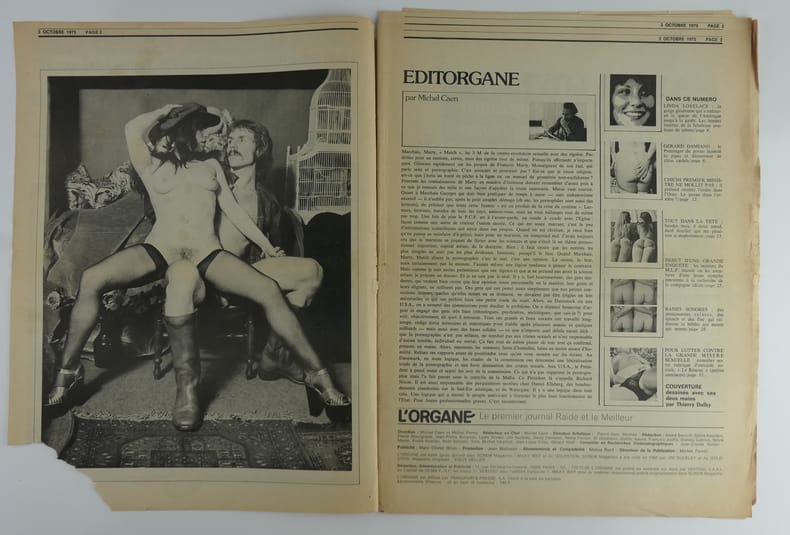
77553Paris, Michel Caen ancien directeur de ZOOM définit ce journal bimensuel, publié en accord avec la revue américaine SCREW, comme le 'Charlie-Hebdo du sexe'. Couverture du n° 1 par Mick Haggerty et du n°2 par Thierry Dalby. Direction artistique de Pierre-Jean Montax. Les deux couvertures présentent des manques de papier au dos, dans le coin inférieur du n°2 (voir photos) et divers défauts liés à la fragilité du papier journal. Bon état général.
1st edition. Original paper wrappers. 8vo. 142 pages, 23 cm. In Yiddish with some advertisements in English and alternate title page in English. Title translates to The New World. A quarterly journal started by Yankev Milkh for the study of American society, politics, and institutions ran only 2 issues, ending with Issue Nr 2 in January 1910. His desire was to build a journal "for the most intelligent readers, " namely Yiddish cultural nationalists (Michel, 2009). "Gevidmet dem studyum fun amerikaner leben in institutsyes. " Also listed as Neie welt; Naye Welt. Not to be confused with a like-named periodical published in Warsaw in 1910. SUBJECT(S) : Jews -- Periodicals. Manners and customs. Politics and government. Social conditions. United States -- Social life and customs -- 1865-1918 -- Periodicals.(OCLC: 36666770). Light wear, lacks bottom of spine, heavy rag paper very strong and bright, about Very Good Condition. (YID-33-51-'elx)
19961044891996 1 Eigenverlag, 1996, 297x210mm, 8p., agrafé. Fac similé de la première édition.(104489)
ORD-17292Paris. Aubert. 1848 - 1849. Grand journal in-plano ca 44 x 61 cm, avec des illustrations de Bertall, Gustave Doré, Nadard, etc. Nous proposons les numéros du 9 décembre 1848, ceux des 10 février, 24 mars, 21 avril, 28 avril, 26 mai, 2 juin, 30 juin, 18 août et 15 décembre 1849. Soit 10 numéros un peu abîmés mais en assez bon état, pliure horizontale.
Biweekly Serial. 8vo. 762 pages. 25 cm. First edition. In German. Full set bound in half cloth and decorative paper for the year 1844. Full title of the publication: Allgemeine Zeitung des Judenthums: ein unpartheiisches Organ für alles jüdische Interesse in Betreff von Politik, Religion, Literatur, Geschichte, Sprachkunde und Belletristik (General Newspaper of Judaism: Impartial Organ for All Matters of Jewish Interest Pertaining to Politics, Religion, Literature, History, Philology, and Belles-lettres) . The Allgemeine Zeitung des Judenthums was a German journal devoted to Jewish interests; founded in 1837 by Dr. Ludwig Philippson(1811-89) ; published first in Leipsic and later in Berlin. At the time of its foundation there had been several Jewish journals in existence: "Sulamith, " "Jedidja, " Geiger's "Wissenschaftliche Zeitschrift für Jüdische Theologie, " and Dr. Höninghaus' "Universal-Kirchenzeitung, " which admitted Jewish contributors. Philippson felt that these did not satisfy the needs of the times. He determined to found a journal for the intelligent laityone that should not only advance the knowledge of the Jews' past history, but should also plead the cause of the Jews of his day. The first number of his paper appeared May 2, 1837, and was published by Baumgärtner in Leipsic. During the first two years three numbers a week appeared; and for a year and a half a supplement was published three times a month, devoted to literature and homiletics. In 1839 the journal became a weekly. The "Allgemeine Zeitung" has never received a subsidy from any Jewish body. In 1848, when the publication of nearly all other Jewish journals was interrupted, the "Allgemeine Zeitung" braved the storm and spoke out plainly in the political turmoil. After 1853 a supplement was published regularly, entitled "Jüdisches Volksblatt zur Belehrung und Unterhaltung auf Jüdischem Gebiete" (A Popular Jewish Journal for Instruction and Entertainment on Jewish Subjects) . On the death of Philippson, Gustav Karpeles became editor. From the outset the "Allgemeine Zeitung" met with success. A few weeks after the issue of its first number a society of students in Leyden (Holland) was formed to aid its circulation. Even in Poland it obtained several hundred subscribers; and within three months after the appearance of the first number Philippson felt justly confident of its material success. The journal aroused great enthusiasm in the cultured Jewish circles of Germany, Austria, and Holland, and exercised considerable influence on Judaism in generalmore especially in Germany, where it became a distinct factor in the evolution of Judaism. To its influence is due in a large measure the establishment of a rabbinical seminary (Lehranstalt für die Wissenschaft des Judenthums in Berlin) and of a Jewish Publication Society (Institut zur Förderung der Israelitischen Literatur) , as well as the calling together of a Jewish synod (Leipsic, 1869) . Philippson's chief aim was the civil emancipation of the Jews. But the paper gained further importance in connection with the inner communal and religious life of the Jews, since it devoted attention to the organization of religious instruction, to the form of worship in the synagogue, and to the cultivation of Jewish learning in all its branches. Jost, who in his "Neuere Geschichte der Israeliten" (iii. 149-156) , devoted a whole chapter to the "Allgemeine Zeitung, " said "that it became epoch-making in Jewish history by attempting for the first time to give a general view of the life and conditions of the Jews. " During the first years of its existence the paper had among its collaborators a number of the most distinguished scholars, some of whom were Gabriel Riesser, E. Carmoly, J. L. Saalschütz, S. D. Luzzatto, Leopold Zunz, Leopold Dukes, Julius Fürst, Leopold Löw, Franz Delitzsch, Adolph Jellinek, Abraham Geiger, and I. M. Jost. It is interesting to note that Phoebus Philippson, brother of Ludwig, contributed in the first year a series of eleven articles under the title "Ideas for an Encyclopedia and a Methodology of Jewish Theology. " (1906 Jewish Encyclopedia) Subjects: Jews -- Periodicals. Judaism -- Periodicals. Jews -- Germany -- Periodicals. Includes laid in portion of a copy from the last issue, number 52, of 1843. Very worn copy, with bumped and chipped edges. Signatures startled. Pages aged and soiled, but clean. Fair condition. (GER-38-12)
Clothbound. 4to. 766 [4] pages. 26 cm. In German. Title translates as: General Newspaper of Judaism. Impartial Organ for All Matters of Jewish Interest Pertaining to Politics, Religion, Literature, History, Philology, and Belles-lettres. This is a consecutively numbered compilation of all 52 weekly issues for year VI, 1842, of the publication. Contains index and title page. A German journal devoted to Jewish interests; founded in 1837 by Dr. Ludwig Philippson (1811-89) ; published first in Leipsic and later in Berlin. At the time of its foundation there had been several Jewish journals in existence: "Sulamith, " "Jedidja, " Geiger's "Wissenschaftliche Zeitschrift für Jüdische Theologie, " and Dr. Höninghaus' "Universal-Kirchenzeitung, " which admitted Jewish contributors. Philippson felt that these did not satisfy the needs of the times. He determined to found a journal for the intelligent laityone that should not only advance the knowledge of the Jews' past history, but should also plead the cause of the Jews of his day. The first number of his paper appeared May 2, 1837, and was published by Baumgärtner in Leipsic with the subtitle "Unparteiisches Organ für Alles Jüdische Interesse in Betreff von Politik, Religion, Literatur, Geschichte, Sprachkunde, und Belletristik" During the first two years three numbers a week appeared; and for a year and a half a supplement was published three times a month, devoted to literature and homiletics. In 1839 the journal became a weekly. The "Allgemeine Zeitung" has never received a subsidy from any Jewish body. In 1848, when the publication of nearly all other Jewish journals was interrupted, the "Allgemeine Zeitung" braved the storm and spoke out plainly in the political turmoil. From the outset the "Allgemeine Zeitung" met with success. A few weeks after the issue of its first number a society of students in Leyden (Holland) was formed to aid its circulation. Even in Poland it obtained several hundred subscribers; and within three months after the appearance of the first number Philippson felt justly confident of its material success. The journal aroused great enthusiasm in the cultured Jewish circles of Germany, Austria, and Holland, and exercised considerable influence on Judaism in generalmore especially in Germany, where it became a distinct factor in the evolution of Judaism. To its influence is due in a large measure the establishment of a rabbinical seminary (Lehranstalt für die Wissenschaft des Judenthums in Berlin) and of a Jewish Publication Society (Institut zur Förderung der Israelitischen Literatur) , as well as the calling together of a Jewish synod (Leipsic, 1869) . Philippson's chief aim was the civil emancipation of the Jews. He carried on the fight for that cause begun by Gabriel Riesser and others. But the paper gained further importance in connection with the inner communal and religious life of the Jews, since it devoted attention to the organization of religious instruction, to the form of worship in the synagogue, and to the cultivation of Jewish learning in all its branches. Jost, who in his "Neuere Geschichte der Israeliten" (iii. 149-156) , devoted a whole chapter to the "Allgemeine Zeitung, " said "that it became epoch-making in Jewish history by attempting for the first time to give a general view of the life and conditions of the Jews. " (From the Encyclopedia Judaica 1906 entry) . The newspaper ceased in 1922. Subjects: Jews - Periodicals. Judaism - Periodicals. Jews - Germany - Periodicals. Backstrip worn, with torn edges, back board starting. Pages lightly aged, foxed, browned, and wavy; but very clean and fresh. Very good + condition. (GER-36-7)
First edition. Original wrappers. 4to. 48 + [4] pages. 32cm. In Yiddish. Milgroym was published bi-monthly in separate Hebrew and Yiddish editions (The Hebrew editions were titled Rimon) from 1922-1924 for a total of 6 issues and "embraced the study, both retrospective and contemporary, of art in all its manifestations painting, sculpture, music, theatre. " In Geveb called Milgroym "arguably the most visually stunning of the interwar Yiddish journals." Each issue contains illustrations and literary works from a wide array of Jewish artists. Milgroym also published works by the likes of Chaim Nachman Bialik, Jacob Klatzkin, Marc Chagall, El Lissitzky, and A. Z. Idelson. The present issue features an essay on the Synaoguge of Mohilev, with illustrations, by El Lissitzky; and essay on Jewish Artists in Russia by Henryk Berlewi, an essay on the Magen David by Moses Gaster; an essay on the Posthumous Work of Israel Wachser by Chaim Bialik, as well as other articles and illustrations, many in color. For a detailed analysis of the importance and cultural context of Milgroym, see Naomi Brenner's excellent essay, "Milgroyms Cultural Context (https://ingeveb.org/blog/milgroym-s-cultural-context), part of In Geveb's series on Milgroym and other interwar Yiddish journals. For more on Milgroym, see the In Geveb special issue dedicated to this wonderful periodical (https://ingeveb.org/issues/the-milgroym-project). SUBJECT(S):Jews -- Periodicals. Yiddish literature Jewish arts -- Periodicals. Art, Modern -- 20th century -- Periodicals -- Yiddish. Germany. Jüdische Kunst. OCLC: 1200783324. Wrappers are very lightly soiled and browning. Spine is worn. Internally Very Good. (ART-27-6A)