Spriggs, Reverend SamuelBiblio.com
4 408 résultats
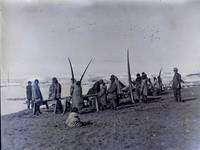
19082638Point Barrow Nuvuk Alaska 1908. Archive of Pt. Barrow Nuvuk Alaska Glass Plate Negatives--217 Plates 4 x 5 inches 1899-1908<br /> <br /> Amazing and enlightening collection of mostly unrecorded original 4 x 5-inch glass plate negatives believed to have been photographed by Presbyterian missionary Reverand Samuel Spriggs. The Alaska State Library holds a collection of 63 Samuel Spriggs lantern slides of which we found 25 matches from our collection to the known Spriggs slides at the State Library. This collection represents original Spriggs photos. We find no other collections or archives of Spriggs plates or prints making this a remarkable first-person documentation of life of the Inupiat people at the turn of the 20th century.<br /> <br /> Samuel R. Spriggs along with his wife and young son served at the Pt. Barrow Presbyterian Mission from 1899-1908. When Rev. Spriggs first came to Barrow he taught school with M. Leander Stevenson the first missionary in Barrow. He learned Inupiat quickly and was soon preaching in their language. He is fondly remembered among the locals for his ability to squat on the floor eat and converse with Inupiaq men. The mission located at the juncture of the Beaufort and Chukchi Sea was an important one for the Presbyterian Church. During the time of Spriggs' tenure Inupiat Eskimos lived a subsistence lifestyle and reindeer had only recently been introduced.<br /> <br /> This collection reflects the unique subsistence lifestyle of the people of Barrow Utqiagvik and Pt. Barrow Nuvuk and the change introduced by Presbyterian mission activities. Many of the photographs relate to Inupiaq traditional activities such as whaling preparation for hunting butchering and celebration. Several views show the building of an umiaq or traditional boat.<br /> <br /> In addition to whale butchering we have photos of successful Polar Bear hunts and seal hunts along with drying racks for hides and meat. <br /> <br /> Some of the most striking images are portraits of families and students. The interior images reflect an ease or comfort between the Inupiat and Reverand Spriggs with several photographs showing smiles or hints of smiles from the subjects. The Inupiat were mostly wearing their native clothing in these portraits but several photos show young women wearing imported calico and stripped dresses.<br /> <br /> One particularly striking portrait shows 18 Inupiat standing or kneeling surrounding the seated and proud matriarch.<br /> <br /> Interestingly there are a couple photos of apparent aerial views of large groups of natives likely photographed from the mast of a ship. There are also images of masted ships offshore. United States Revenue Cutters made frequent visits to Barrow as did whaling vessels. <br /> <br /> The Presbyterian Mission at Point Barrow was founded in 1890 by Sheldon Jackson. One interior photo lists Jackson's name on a plaque. Jackson would play a major role in the early 1890's with the introduction of reindeer to the Northern Slope. There are two reindeer photos; one with a halter and a second of a native milking the reindeer.<br /> <br /> The introduction of domestic reindeer to Point Barrow was part of a broader effort to establish reindeer husbandry in Alaska. Dr. Sheldon Jackson played a significant role in this initiative promoting the importation of reindeer from Russia to help the Inupiaq people who were facing food shortages due to over-hunting. Jackson raised funds to purchase the first reindeer and established the Teller Reindeer Station where skilled reindeer herders were brought to teach the local population about reindeer herding. This program aimed to provide a sustainable food source and improve the livelihoods of the indigenous people in the region. U.S. Department of Education paper<br /> <br /> We see images of native dwellings and caches plus stick built missionary buildings along with a view of the Mission Church. Includes a striking image of three men and young child working on the frame of a boat enclosed within a structure with ice walls and canvas ceiling. <br /> <br /> The Spriggs family is well represented in images with their son featured in at least 10 images along with a few photographs of the Reverand and Mrs. Spriggs eating or relaxing in their home or posing outside a house. <br /> <br /> Collection of plates varies from fair to very good condition. One plate is cracked. Most have emulsion deterioration along edges but none have flaking or peeling emulsion. Some surface soiling and minor scratching. All are in modern sleeves. <br /> <br /> The photography is generally good. The indoor portraits are well composed of proper exposure. Some of the exterior images are remarkably sharp and detailed but as one would presume the harsh conditions limited quality. A small handful are unusable but they are the exception. We have scanned about 150 of the 217 images. Those not scanned were either similar portrait images although not duplicates but valuable to the collection while others were vastly overexposed or simply poor quality. See scans. A note on the scans. Plates were photographed on a light table and converted digitally into positives. This process on a number of scans shows reflections and unnatural lighting artifacts which are not on the actual plates. <br /> <br /> Much of the information above is from the Alaska State Library.<br /> <br /> Provenance: Acquired through a New England based auction house via a colleague in New York. We have no further information regarding provenance.<br /> <br /> Link to the photo collection: https://andy-nettell.smugmug.com/Gallery-42826-101-PM<br /> <br /> Due to fragile nature and weight of collection a $75 shipping surcharge will be added to the cost of collection. Free delivery within a day's drive. unknown
17700012203England: 18th Century Religious Sermons Early Typography Manuscript Christian. Very Good with no dust jacket. 1770. Hardcover. On offer is a beautiful hard-bound collection of sermons written by many prominent religious scholars of the time dating from late 18th century England and curated by the Reverend Dr. John Trusler 1735-1820. The book is a collection of sermons and homilies. They include homilies with such titles as On domestic Happiness The notice of the World a motive to virtue The Advantage of Public or Private Calamities On partaking of other men's Sins and more. The collection belonged to William Armstrong whose name appears on the front flyleaf. However our informal research has not found any additional information about him. From some notes made in the book this volume was used in 1770-1771. Curated by Rev John Trusler the sermons are printed with beautiful early typography intended to mimic manuscript font. This was a part of Truslers lucrative scheme in which he proposed printing sermons in script type to imitate handwriting and then sell them to clergymen who did not want to write their own sermons. Each sermon is credited to their original author at the end. Included sermons are credited to Baptist minister James Foster 1697-1753 British Unitarian minister William Enfield 1741-1797 Anglican clergyman Laurence Sterne Archbisop of Canterbury William Wake 1657-1737 and Bishop of Chichester Thomas Manningham 1651 -1722. A few sermons are listed as compiled and some are not credited but include additional notes and annotations from the collections curator Rev John Trusler. Trusler has signed his name in ink at the end of many of the sermons. This book is an example of Dr. Truslers early attempts at establishing a printing and bookselling business. In 1769 Trusler sent circulars to every parish in England and Ireland proposing to print in script type in imitation of handwriting about a hundred and fifty sermons at the price of one shilling each to save the clergy both study and the trouble of transcribing Wikipedia. This collection of sermons therefore seems to be an example of Truslers sermon curation peppered with his own additions and notes some in the form of small attached pages others in the form of full pages of manuscript notes. Before becoming a printer and bookseller Trusler took his holy orders and became a priest in 1759 rising through the ranks of British clergy work. He also worked as a lecturer eventually establishing an academic academy only to give it up when it was not lucrative and move on to medical school at Leyden University. While his name does not appear in their catalogue of graduates he did assume the title of doctor. In the end his most lucrative undertaking was his sermon sales and publishing business in which he published many books including his own memoir. This absolutely remarkable unique relic of 18th century British Christian history and early typography would be a sensational asset to any library and the sermons contained within provide an excellent window into the religious/moral thinking of the day as preached in Christian congregations in England Interesting to note one single annotated page of a sermon contained in this book in the same typescript sold for 1500 British pounds through Forum Auctions in September of 2021. The volume measures approximately 8.5 inches by 5.5 inches and contains 100 pages. The hard covers although stained are in good condition. The pages are all in excellent condition save for one page with some rips and tears. Both the typography and handwriting is not only clear but beautifully done. The title Sermons M. S is stamped on the spine. ; Manuscripts; 8vo 8" - 9" tall; 100 pages; Signed by Author . 18th Century Religious Sermons Early Typography Manuscript Christian hardcover
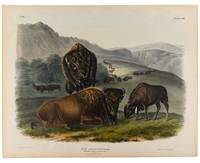
184942915New York: John James Audubon 1849. First edition hand-colored lithograph by John T. Bowen of Philadelphia after John James Audubon. An iconic image of Western Americana from the folio first edition of Audubon's "Quadrupeds of North America" the greatest work of natural history illustration produced in America during the nineteenth century: "As long as our civilization lasts America will be in debt to this genius." Peterson<br/> <br/> This fine plate is from the folio edition of Audubon's The Viviparous Quadrupeds of North America which was produced entirely in the United States. The work was Audubon's last and by 1846 he had to hand over the drawing of the final fifty plates to his sons John Woodhouse and Victor Audubon. The production of the Quadrupeds was begun by Audubon and his sons at about the same time as the commercially-successful octavo edition of The Birds of America. Unlike the double-elephant folio the Quadrupeds was produced entirely in the United States. Reese notes that "By 1843 the Audubon family business was a well-oiled machine involving John James his two sons and various in-laws and friends. The octavo Birds was still in production when Bowen began to produce the plates for the folio edition of the Quadrupeds the largest successful color-plate book project of 19th-century America. It took the family five years to publish 150 plates in thirty parts. The massive project was a commercial success thanks to the close management of Victor. There were about three hundred subscribers." Reese Like Birds of America the Viviparous Quadrupeds was intended to be a comprehensive visual catalog of North America animalia with Audubon's focus here shifting from birds to four-legged land mammals. Accompanying each image was correlating didactic text written primarily by Bachman that informed the reader of the animal's habits diet habitat and gestational period. Totaling 150 prints the project was rushed to completion as Audubon's health declined. Emerging in the shadow of its acclaimed predecessor Birds of America the Viviparous Quadrupeds has not received the adequate attention nor recognition it so richly deserves. This image is of a family of American buffalo the most iconic animal indigenous to North America whose presence was integral for Native American life and whose near-extinction spurred on the conservation movement in the US. The buffalo is today the state animal of Kansas Oklahoma and Wyoming.<br/> <br/> Bennett p.5. Peterson Birds of America passim. Reese Stamped with a National Character 36. Sabin 2367. Wood p.209. John James Audubon unknown
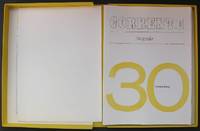
1967107890Milano: Teodorani Editore 1967. Ottimo Fine. 12 Litografie originali a colori di <strong>Arnaldo Badodi</strong> Oggi è"; una giornata grigia <strong>Renato Birolli</strong> Figura <strong>Bruno Cassinari</strong> Figure <strong>Sandro Cherchi</strong> Figure <strong>Lucio Fontana</strong> Concetto spaziale <strong>Renato Guttuso</strong> Pensando al futuro <strong>Giuseppe Migneco</strong> La sposa <strong>Ennio Morlotti</strong> Corrente controcorrente<strong> Aligi Sassu</strong> La terre est bleu comme une orange <strong>Ernesto Treccani</strong> Autoritratto <strong>Italo Valenti</strong> Oleggio <strong>Emilio Vedova</strong> Scontro di situazioni ciascuna contenuta in quartino riproducente in litografia testi autografi e disegni degli Artisti cm 48x35; 48x70. Testo autografo di Raffaele De Grada riprodotto in litografia Milano novembre 1967. Alle sguardie della custodia sono applicate due riproduzioni anastatiche di un fascicolo di ''Corrente'' del 31 Maggio 1940. Folio cm 50x38. . Ottimo Fine. Edizione originale di 150 es. numerati. <em>L'opera intendeva celebrare i maggiori artefici di Corrente a distanza di 30 anni. Per Badodi non essendosi rinvenute matrici originali si è litografato a mano un disegno di proprietà di De Grada. Lo scritto è tratto da una lettera alla madre dal fronte russo dove Badodi morì l'11 dicembre del 1942. La lito è firmata dalla signora Gardenia Badodi. Per Renato Birolli è stata doperata una delle matrici originali su carta lucida da riporto messa a disposizione dalla famiglia. La lito è stata firmata da Zeno Birolli. Lo scritto è" tratto dal taccuino autografo del 16 aprile 1945.</em> Teodorani Editore, unknown
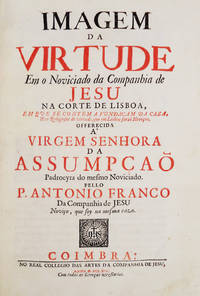
1511NM011<p>EM QUE SE CONTEM A FUNDACAM DA CAZA & os Religiosos de virtude que em Lisboa foraõ noviços OFFERECIDA à VIRGEM SENHORA DA ASSUMPÇAÕ Padroeyra do mesmo Noviciado. PELLO P. ANTONIO FRANCO Da Companhia de JESU Noviço que foy na mesma caza. COIMBRA: NO REAL COLLEGIO DAS ARTES DA COMPANHIA DE JESU ANNO M. DCC. XVII. 1717.</p>_x000d_<p>In 4º gr. de 29x21 cm com 16 979 págs.</p>_x000d_<p>Encadernação da época inteira de pele com ferros a ouro na lombada e rolados em esquadria nas pastas. Corte de folhas carminado.</p>_x000d_<p>Exemplar com ex-libris do século XX de António Sousa Falcão.</p>_x000d_<p>Livro muito raro.</p>_x000d_<p>O Padre António Franco empenhado na transmissão da memória da sua Ordem descreve nesta obra as biografias retiradas das cartas anuais ou registos anuais da Companhia de Jesus dos padres jesuÃtas formados nos diversos Noviciados de Lisboa e que se distinguiram nas suas diversas missões pelo mundo.</p>_x000d_<p>Esta obra está dividida em 4 livros com diversos capÃtulos cada:</p>_x000d_<p>Livro I: Descrição do noviciado da Companhia de Jesus e dos seus diversos domicÃlios em Lisboa. Biografia do Padre M. Simão Rodrigues terceiro companheiro de Santo Inácio de Loyola e primeiro provincial da Companhia Jesus em Portugal. Biografias dos “servos de Deus” da Casa de Santo Antão o Velho. Entre estes jesuÃtas encontram-se o Padre Vilela que contactou com o Padre Francisco Xavier e desempenhou um papel importante na conversão ao Cristianismo do povo de Nagasaki; o grande historiador Padre Fróis e a sua ida para o Japão bem como as suas dificuldades advindas das perseguições de que foi alvo e da guerra que então decorria entre os senhores feudais japoneses.</p>_x000d_<p>Livro II: Biografias dos Noviços da Casa de São Roque e da de Campolide. Entre estes noviços encontra-se o Padre António de Andrade que descobriu o Tibete. O Padre António Franco descreve este paÃs e o lamaÃsmo apontando a falta de comunicação como a razão pela qual se extinguiu a missão no Tibete após a morte do Padre Andrade. Na biografia do Padre Francisco Pimentel relata a sua missão em Tonquim e a vida dos missionários na China.</p>_x000d_<p>Livro III: Biografias dos Noviços da Casa do Monte Olivete. Entre estes jesuÃtas está o Padre André Fernandes eleito Bispo de Japão e outros padres envolvidos nas missões em Angola Cuanza e na Ãndia Maduré.</p>_x000d_<p>Livro IV: Continuação das biografias dos Noviços da Casa do Monte Olivete. Trata da missão dos jesuÃtas na Suécia e a conversão da Rainha Cristina. É também referida a ida para Angola do padre João Tavares e a reitoria do Colégio de Luanda bem como as missões no Dande no Bengo no Congo no Dongo e em Massangano. São João de Brito é também biografado neste livro. É um dos mais importantes santos da Igreja Católica tendo sido dos primeiros a adaptar-se aos povos que ia evangelizar. Morreu como mártir na Ãndia e era já considerado santo no seu tempo apesar de apenas ter sido canonizado em 1947 pelo Papa Pio XII. </p>_x000d_<p>EN <strong>FRANCO Padre António. IMAGE OF VIRTUE in the Novitiate of the Company of JESUS IN THE COURT OF LISBON</strong> Free translation of the title page IN WHICH IT IS INCLUDED THE FOUDATION OF THE HOUSE & the religious of virtue who were novices in Lisbon OFFERED TO OUR LADY OF ASSUMPTION patroness of that novitiate. BY FATHER ANTONIO FRANCO Of the Company of Jesus who has also been a novice in that same house. COIMBRA: AT THE ROYAL COLLEGE OF THE ARTS OF THE COMPANY OF JESUS YEAR M. DCC. XVII. 1717.</p>_x000d_<p>In 4º large 29 x 21 cm with xvi 979 pp.</p>_x000d_<p>Binding: Contemporary full calf with gilt tools on spine and boards. Red edges.</p>_x000d_<p>Copy presents an ex-libris of the 20th century António Sousa Falcão.</p>_x000d_<p>Very rare book.</p>_x000d_<p>Father António Franco committed to transmit the memory of his Order describes in this work the biographies taken from the yearly registries of the Company of Jesus of the Jesuit priests from the several Novitiates in Lisbon and who stood out in their several missions across the world.</p>_x000d_<p>This work is divided in 4 books with several chapters each:</p>_x000d_<p>Book I: Description of the Novitiate of the Company of Jesus and its several colleges in Lisbon. Biography of Father M. Simão Rodrigues third company of St. Ignatius of Loyola and first Provincial Superior of the Company of Jesus in Portugal. Biographies of the “servers of God” from the House of Santo Antão o Velho. Among them there is Father Vilalela who worked with Francis Xavier and had an important role in converting the population of Nagasaki; the great historian Father Fróis and his travel to Japan and his difficult life there resulting from persecutions and also from the wars going on between the Japanese lieges.</p>_x000d_<p>Book II: Biographies of the novices of the House of São Roque and of the House of Campolide. Among these novices Father António de Andrade who discovered Tibet which is described in detail as well as the Lamaism. It is pointed out that the reason for the mission in Tibet to be extincted was the lack of communication after the death of Father Andrade. The biography of Father Francisco Pimentel describes his mission in Tonquim and the life of missionaries in China.</p>_x000d_<p>Book III: Biographies of the Novices of the House of Monte Olivete. Among these there is Father André Fernandes elected Bishop of Japan and other priests involved in the missions of Angola Kuanza and India Maduré.</p>_x000d_<p>Book IV: More biographies of the Novices of the House of Monte Olivete. Includes the missions of Jesuits in Sweden and the conversion of Queen Christine. It is also described the voyage of Father João Tavares to Angola and the Rectorate of LuandaÂ’s College as well as the missions to Dande Bengo Congo Dongo and Massangano. The biography of São João de Brito is also included here. He is one of the most important saints of the Catholic Church being one of the first priests to adapt to the customs of the people he wanted to evangelise. He died as a martyr in India and was already considered a saint in his time although he was only canonised in 1947 by Pope Pio XII.</p>_x000d_<p>Inocêncio I 145: «P. António Franco Jesuita insigne Mestre de humanidades e Reitor no Collegio de Setubal afora outros cargos que exerceu em Evora Lisboa Coimbra e na ilha de S. Miguel como pode ver se em Barbosa. N. na villa de Montalvão bispado de Portalegre em 1662 e m. em Evora a 3 de Maio de 1732 com 70 annos d"edade e 55 de Companhia. - E. 706 C Imagem da virtude em o Noviciado da Companhia de Jesus no Real Collegio do Espirito Sancto de Evora. Lisboa na Off. Deslandesiana 1714. fol. de XX 886 pag. - Pouco vulgar. Preço 1:200 a 1:600 réis. 707 C Imagem da virtude em o Noviciado da Companhia de Jesus na Corte de Lisboa. Coimbra na Off. do Real Collegio das Artes 1717. fol. de XVI 976 pag. - Tambem pouco vulgar e preços os mesmos do antecedente. 708 C Imagem da virtude em o Noviciado da Companhia de Jesus uo Real Collegio de Coimbra. Tomo I. Evora na Off. da Universidade 1719 o pseudo Catalogo da Academia diz erradamente Coimbra 1718 fol. de XVI 856 pag. - Tomo II. Coimbra no Real Collegio das Artes 1719. fol. de XVI 785 pag. - Como os antecedentes. Preço de 2:400 a 3:200 réis. Estas três obras do P. Franco são estimadas e equivalem no seu todo á crónica da Companhia de Jesus n"este Reino contendo muitas notÃcias históricas de grande valor e alguns documentos interessantes».</p> M-9-D-26 hardcover
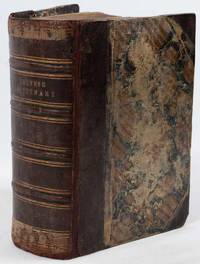
1865219705Shanghae sic & London.: London Mission Press and Trubner & Co. 1865. Two volumes in one: <br>Volume I. ii Title i-x Advertisement Preface 762 pp including Index of Chinese characters pp 1-99 pagination duplicated for pp 224 & 239. <br>Volume II. ii Title 724pp iv List of the Radicals of the Chinese Language. <br> <br>22 x 15 cms contemporary half calf spine gilt between raised bands expertly rebacked mounting the original spine numerous annotations and underlinings in pencil a handful in ink at the head the final blanks with notes and translation age-toned and worn boards rubbed but a good complete copy of the scarce reprint. <br> <br>Provenance: <br>With the early inked signature of "Hugh Wadell Newchwang 1869" the pioneering missionary whose work laid the foundation for the Irish Presbyterian Church's long-term presence in East Asia. In 1869 Waddell 1839–1901 landed at Newchwang now Yingkou where he established a mission station that included a church school and dispensary. His daughter was Helen Waddell poet scholar and theological novelist. <br> <br>Recent signature of A. Allan Shearer Wellington. Scarce reprint of the second part of Morrison's Dictionary first published between 1815 and 1823 with a notable provenance. The 1865 reprint was issued as a single volume combining the second part of the dictionary with an index of characters arranged according to the Kangxi radicals. <br> <br>"The Second Part of Morrison's Dictionary has been generally commended by experienced Sinologues as the most perfect and useful of the whole. The present is merely a reprint of it with such slight modifications as are mentioned at the close of the original preface." Preface <br>Löwendahl 1334 . London Mission Press [and] Trubner & Co. hardcover
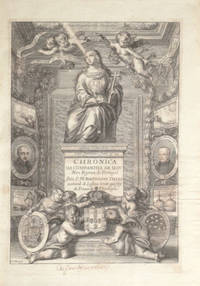
2307PG008<p>E do Que Fizeram nas Conquistas dÂ’este Reyno os Religiosos que na mesma Provincia entrà ram nos anos em que viveo S. IGNACIO DE LOYOLA nosso Fundador. PELO P. M. BALTHAZAR TELLEZ da mesma Companhia natural da cidade de Lisboa & nella Lente de Prima de Theologia. PRIMEIRA PARTE. Na Qval Se Contem Os principios dÂ’esta Provincia No tempo em que a fundou & governou O P. M. SIMAM RODRIGVES Com sua sancta vida & morte. EM LISBOA. Com todas as licenças necessarias. Por Paulo Craesbeeck. Anno do Senhor M.DC.XXXXV. 1645</p>_x000d_<p>SEGVNDA PARTE Na Qval Se Contem As Vidas de algûs Religiosos mais assinalados que na na mesma Provincia entrà ram nos anos em que viveo S. IGNACIO DE LOYOLA nosso Fundador. Com o Svmmario Das Vidas Dos Serenissimos Reys Dom Ioà m Terceyro & Dom Henrique Fundadores & insignes bemfeytores desta Provincia. Composta PELO P. M. BALTHAZAR TELLEZ da mesma Companhia natural da Cidade de Lisboa. EM LISBOA. Com todas as licenças necessarias. Por Pavlo Craesbeeck. Anno M.DC.XLVII. 1647</p>_x000d_<p>2 Volumes de 30x217 cm. Com xxiv 709 i. é 711; xvi 904 págs. Encadernações do século XIX inteiras de pele com rótulos vermelhos nervos ferros a ouro nas lombadas e ferros a seco nas pastas onde formam uma esquadria com motivos florais com um losango dentro da esquadria que por sua vez tem um rectângulo ao centro tudo formado por uns filetes simples com motivos florais além de outros nos quatro cantos.</p>_x000d_<p>Ilustrado com belos frontispÃcios iguais gravados a buril sobre chapa de metal por Grégoire Huret. São em forma de moldura com uma figura feminina que representa a Companhia de Jesus ao centro sobre um alto pedestal onde estão escritos o tÃtulo e o autor da obra escrevendo num livro e recebendo do alto um raio luminoso sÃmbolo da inspiração divina. Nos dois lados estão seis quadros quatro com os atributos da Companhia de Jesus e os outros dois com os retratos de Santo Inácio de Loyola e do Padre Simão Rodrigues. Na base do pedestal está o escudo das armas reais de Portugal sustentado por várias figurinhas aladas que seguram também dois quadros ovais com temas alegóricos dos empreendimentos da Companhia. Tem numerosas citações bÃblicas nos quadros no pedestal e em tarjas.</p>_x000d_<p>Folhas de rosto a vermelho e preto emolduradas por esquadrias com dois filetes. No segundo volume o espaço entre os filetes está decorado com ornamentações a vermelho. Impressão nÃtida em caracteres redondos e alguns itálicos no prólogo nos tÃtulos dos capÃtulos nas citações e no Ãndice de citações bÃblicas. Texto a duas colunas separadas por dois filetes e enquadradas por dois filetes que têm no espaço entre eles chamadas sobre os assuntos e os tÃtulos das obras que são citadas. Ornamentado com cabeções decorados com motivos vegetalistas e com o trigrama sagrado caracterÃstico da Companhia de Jesus iniciais ornamentadas e belos florões de remate no fim de cada livro da obra e de cada um dos três Ãndices de cada volume.</p>_x000d_<p>Exemplar com desgastes nas encadernações e pequenos furos de traça em especial nas lombadas com ex-libris impressos da Biblioteca de Bernardino Ribeiro de Carvalho com assinatura de posse coeva no pé dos frontispÃcios de LuÃs de Sousa Seixas e com os seguintes defeitos: no primeiro volume manchas e rasgões restaurados nas folhas preliminares nas páginas 1 e 2 com pequenos rasgões marginais nas páginas 3 a 90 e mancha no canto inferior de todas as folhas até ao fim. Dois pequenos furos de traça no pé de todas as folhas e pico de traça à cabeça das folhas desde o princÃpio até página 246 e desde a página 517 ao fim. No segundo volume com picos de traça - à cabeça das primeiras folhas até à página 12; na margem das folhas desde o inÃcio até à página 316; Na margem mas mais acima do anterior da página 77 a 150; no pé das folhas de página 127 a 312; à cabeça das páginas 469 ao fim do volume.</p>_x000d_<p>Como é comum nos livros desta época tem erros de numeração das assinaturas e das páginas sem afectar a integridade do texto e da obra. Assim tem a numeração das páginas 663 e 664 repetida página 673 com o número 674 a assinatura K3 com a numeração A3 N2 com a numeração N3 e KKK2 em vez de KKK3.</p>_x000d_<p>Rara 1.ª Edição e única publicada. Variante sem a ornamentação colocada entre os duplos filetes da folha de rosto do primeiro volume e com o mesmo frontispÃcio nos dois volumes gravado por Huret.</p>_x000d_<p>Obra-prima da prosa portuguesa e fonte muito importante para a história do século XVI em Portugal e nos seus domÃnios incluindo a Ãsia e o Brasil. Tem também importância para a história dos primórdios da Companhia de Jesus e para a história e sociologia do sentimento religioso. Inclui um grande conjunto de biografias dos mais notáveis membros da Companhia de Jesus e transcreve cartas e outros documentos de muitos deles assim como um conjunto de Bulas Apostólicas relativas à Companhia de Jesus.</p>_x000d_<p>As folhas preliminares do primeiro volume contêm a dedicatória a D. João IV as licenças datadas de 10 de Agosto de 1642 a 27 de Setembro de 1645 com aprovações do Padre Provincial António de Sousa do Padre André Gomes Padre Paulo Gomes do padre António Botado do Doutor Frei Adrião Pedro. Segue-se o Prólogo e advertências necessárias ao leitor. A primeira parte três livros ocupas as primeiras 623 páginas com a 624 em branco. De páginas 625 a 634 o Ãndice dos capÃtulos de 635 a 653 o Ãndice das citações bÃblicas e de 654 a 708 o Ãndice de assuntos.</p>_x000d_<p>As folhas preliminares do segundo volume incluem a dedicatória à Rainha D. LuÃsa de Gusmão o Prólogo a advertências ao leitor e as licenças datadas de 10 de Agosto de 1642 a 18 de Agosto de 1647. As aprovações são iguais à s do primeiro volume que se referem a toda a obra acresce uma aprovação especÃfica para este segundo volume de Frei Gaspar dos Reis e outra relativa ao livro sexto e último por Frei Inácio Galvão. Os livros quarto a sexto ocupam as páginas 1 a 787 a 788 está em branco. De páginas 789 a 802 o Ãndice dos capÃtulos de 803 a 815 o Ãndice das citações bÃblicas a 816 em branco de 817 a 879 o Ãndice de assuntos a 880 em branco de 881 a 903 a transcrição das bulas apostólicas e na 904 as erratas das duas partes.</p>_x000d_<p>Baltazar Teles Lisboa 1596 - Lisboa 1675 jesuÃta português. Ingressou na Companhia em 24 de Março de 1610. Foi professor nos colégios de Évora Coimbra Braga e Lisboa onde leccionou Retórica e Teologia Especulativa e Moral. Desempenhou as funções de reitor do Colégio de Santo Antão do Colégio de São PatrÃcio e foi prepósito da Casa de S. Roque. Em 1642 tinha publicado: <em>Summa Universae Philosophie cum quaestionibus theologicis</em> Lisboa 1642 que foi muito lida nos colégios da Companhia e posteriormente publicou a <em>História Geral da Etiópia a Alta</em> Lisboa 1660.</p>_x000d_<p>Grégoire Huret Lyon 1610 - Paris 1670 Trabalhou sempre pelo processo do buril em que foi exÃmio. Exerceu a profissão em Paris e entrou em 1663 para a Academia Real de Pintura e Escultura. São conhecidas pelo menos cerca de 83 gravuras da sua autoria uma delas sobre a conversão de S. Paulo existe no Museu Nacional de Arte Antiga em Lisboa.</p>_x000d_<p>EN 2 Volumes. 30x21.7 cm. xxiv 709 i. e. 711; xvi 904 pp. 19th-century full leather bindings with red labels raised bands gilt tools on the spines and blind tools on the boards where they form a frame with floral motifs with a lozenge inside which in turn has a rectangle in the centre all formed by simple fillets with floral motifs as well as others in the four corners.</p>_x000d_<p>Illustrated with beautiful burin-etched engraved frontispieces by Grégoire Huret. They depict a framed female figure representing the Society of Jesus in the centre on a high pedestal where the title and author of the work are engraved writing in a book and receiving a ray of light from above a symbol of divine inspiration. On either side are six paintings four with the attributes of the Society of Jesus and the other two with the portraits of St Ignatius of Loyola and Father Simon Rodrigues. At the base of the pedestal is the shield of the royal arms of Portugal supported by several winged figures who also hold two oval pictures with allegorical themes of the Company's endeavours. There are numerous biblical quotations in the paintings on the pedestal and on the cartouches.</p>_x000d_<p>Title pages in red and black framed with two fillets. In the second volume the space between the fillets is decorated with red ornaments. Clear printing in round characters and some italics in the prologue chapter headings quotations and the index of biblical quotations. Text in two columns separated by two fillets and framed also by two fillets with headings on the subjects and the titles of the works cited in the space between them. Ornamented with headpieces decorated with plant motifs and the sacred trigram characteristic of the Society of Jesus decorated initials and beautiful finishing <em>fleurons</em> at the end of each book of the work and each of the three indexes of each volume.</p>_x000d_<p>Copy showing signs of wear on the bindings and small moth holes especially on the spines with printed ex-libris from the Library of Bernardino Ribeiro de Carvalho with a coeval handwritten ownership title at the foot of the frontispieces by LuÃs de Sousa Seixas and with the following defects: in the first volume restored stains and tears on the preliminary leaves on pages 1 and 2 with small marginal tears on pages 3 to 90 and a stain on the bottom corner of all the leaves until the end. Two small moth holes at the foot of all the leaves and moth spots at the head of the leaves from the beginning to page 246 and from page 517 to the end. In the second volume with moth holes - at the head of the first leaves up to page 12; at the margin of the leaves from the beginning to page 316; at the margin but higher than the previous one from page 77 to 150; at the foot of the leaves from page 127 to 312; at the head from page 469 to the end of the volume.</p>_x000d_<p>As is common in books from this period there are errors in the numbering signatures and pages without affecting the integrity of the text and the work. For example the numbering of pages 663 and 664 is repeated page 673 has the number 674 the signature K3 has the number A3 N2 has the number N3 and KKK2 instead of KKK3.</p>_x000d_<p>Rare 1st Edition and the only one published. Variant without the ornamentation placed between the double fillets on the title page of the first volume and with the same frontispiece on both volumes engraved by Huret.</p>_x000d_<p>A masterpiece of Portuguese prose and a very important source for the history of the 16th century in Portugal and its domains including Asia and Brazil. It is also important for the history of the beginnings of the Society of Jesus and for the history and sociology of religious belief. Includes a large number of biographies of the most notable members of the Society of Jesus and transcribes letters and other documents from many of them as well as a number of Apostolic Bulls relating to the Society of Jesus.</p>_x000d_<p>The preliminary pages of the first volume contain the dedication to King João IV the licences dated from 10 August 1642 to 27 September 1645 with approvals from the Provincial Father António de Sousa Father André Gomes Father Paulo Gomes Father António Botado and Doctor Friar Adrião Pedro. This is followed by the Prologue and the necessary warnings to the reader. The first part of the three books takes up the first 623 pages with 624 blank. From pages 625 to 634 there is an index of chapters from 635 to 653 there is an index of biblical quotations and from 654 to 708 there is an index of subjects.</p>_x000d_<p>The preliminary pages of the second volume include the dedication to Queen LuÃsa de Gusmão the Prologue with warnings to the reader and the licences dated from 10 August 1642 to 18 August 1647. The approvals are the same as those for the first volume which refer to the entire work plus a specific approval for this second volume by Friar Gaspar dos Reis and another for the sixth and final book by Friar Inácio Galvão. Books four to six occupy pages 1 to 787 while 788 is blank. Pages 789 to 802 contain the index of chapters pages 803 to 815 the index of biblical quotations page 816 is blank pages 817 to 879 the index of subjects page 880 is blank pages 881 to 903 the transcription of apostolic bulls and page 904 the errata of the two parts.</p>_x000d_<p>Baltazar Teles Lisboa 1596 - Lisboa 1675 Portuguese Jesuit. He joined the Society on 24 March 1610. He was a professor at the colleges of Évora Coimbra Braga and Lisbon where he taught Rhetoric and Speculative and Moral Theology. He served as rector of the Colégio de Santo Antão the Colégio de São PatrÃcio and was prepriest of the Casa de São Roque. In 1642 he had published: <em>Summa Universae Philosophie cum quaestionibus theologicis</em> Lisboa 1642 which was widely read in the Company's colleges and later published the <em>História Geral da Etiópia a Alta</em> Lisboa 1660.</p>_x000d_<p>Grégoire Huret Lyon 1610 - Paris 1670. Always worked with a burin which he excelled at. He practised his profession in Paris and joined the Royal Academy of Painting and Sculpture in 1663. At least 83 engravings by him are known one of which on the conversion of St Paul is in the MNAA National Museum of Ancient Art in Lisbon.</p>_x000d_<p>Referências/References:</p>_x000d_<p>Iberian Books B29718 61603</p>_x000d_<p>Borba de Morais II 852.</p>_x000d_<p>Ernesto Soares Hist. Grav I 340-341 n.º 1202.</p>_x000d_<p>Ameal 2377.</p>_x000d_<p>Azevedo e Samodães II 3337.</p>_x000d_<p>Monteverde 5345.</p>_x000d_<p>Condessa de Azambuja 2557.</p>_x000d_<p>Nepomuceno 1826.</p>_x000d_<p>Palha III 2516.</p>_x000d_<p>Pinto de Matos 599-600.</p>_x000d_<p>Inocêncio I 328-329.</p>_x000d_<p>Barbosa Machado. I 458.</p> M-10-C-61 hardcover
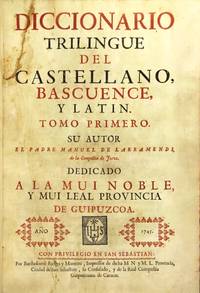
174542910San Sebastian: por Bartholome Riesgo y Montero impressor de dicha M N y M.L. Provincia 1745. First edition 2 volumes folio pp. 18 ccxxix 1 436; 2 392 12; titles printed in red and black lexicon in double column engraved amorial headpiece errata leaf at the back of vol. II; full 19th-century speckled calf red edges double gilt-ruled borders on covers gilt-decorated spine in 6 compartments red and black morocco labels in 2; a few minor imperfections hinges tender else a very good sound set. Bookplate of "Milton / Peterborough." This is the first dictionary of Basque preceded only by Oihenartus' Notitia utriusque Vasconiae tum Ibericae tum Aquitanicae Paris 1638 to which was appended a Basque word list. Larramendi also compiled a Basque grammar 1729. Entry words are in Castilian with Basque and Latin equivalents. The 230-page introduction is an extensive history and grammar of the Basque language the only non-Aryan language of western Europe and a language unaffilliated with any other. Not in NUC. Not in Collison Dictionaries of Foreign Languages; Trübner's Catalogue of Dictionaries and Grammars cites only the 1853 revision. Palau 132048; Zaunmuller col. 28. por Bartholome Riesgo y Montero, impressor de dicha M N y M.L. Provincia unknown
1809120049NY: E. Sargeant Printed by Opposite Trinity Church.by D&G.Bruce. Good. 1809. First Edition. Hardcover. 5x8". GOOD CONDITION. Front endpapers gone missing.Opens to title page.Otherwise quite nice.lite foxing to pages. Name in pencil inner back cover "Arthur Smith" ; .bright fully readable Gold spine titles on smooth brown leather spine strip. Marbled brown paper covered hard boards. smooth brown leather tips.showing minor rubs to oints & spine ends. not worn. Hinges showing at inner gutters. Text block is solidly bound.Text paper has pliable feel cleanly inked type and not at all brittle. Clean foredges. ; 387xvi pages pages; This might make a nice gift for a member of the CHARLESTON SOUTH CAROLINA FIRST SCOTS PRESBYTERIAN CHURCH IN THE LOW COUNTRY .WHICH STILL IS A THRIVING INSTITUTION.; Signed by Author . E. Sargeant Printed by Opposite Trinity Church.by D&G.Bruce hardcover
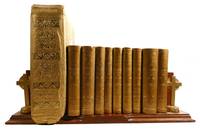
1961318475Chicago: Catholic Press 1961. Hardcover. All 10 volumes Very Good in boards on wooden display stand. Light foxing on gilded text block edges of all 10 volumes. Light fraying at end of silk ribbon page markers on volumes 2-10. Owner name inked throughout some pages of Bible. Small open tears on spine crown of Bible and "Christ and the Church". Small closed tear on spine of Bible. Crack on front gutter of "The Life of Christ". Shelfwear on front gutter of "Christ and the Church". Front hinge starting on "The Lives of Saints" volume 3. Catholic Press hardcover
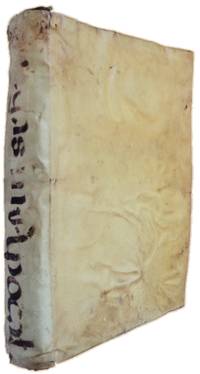
48557Rome : F. Corbelletti 1627. Duodecimo early vellum lettered in manuscript on spine ex libris label of H. P. Kraus to from pastedown pp. 40 a fine copy. Antonio de Andrade Portuguese member of the Society of Jesus was dispatched to India in 1600 where he would spend over twenty years in sevice including as head of the Jesuit Mission in Agra. In 1624 along with brother Manuel Marques he disguised himself as a Hindu and joined a group of pilgrims to travel to Srinigar and cross the Mana Pass into Tibet. Andrade and Marques were the first Europeans to set foot in the Himalayan kingdom. Andrade returned to Tibet in 1625 to establish a Jesuit mission at Tsaparang in the kingdom of Guge. He succeeded in building a church but the mission was short-lived: a Ladakhi invasion toppled the Jesuit-friendly king and by 1640 the mission was abandoned. The first edition of Nvevo descvbrimiento was published in Portuguese in Lisbon in 1626; later the same year an edition in Spanish also appeared in Lisbon. The edition we offer here is the first Italian edition of Andrade's relation of his first journey into Tibet. Andrade's letter would go on to be translated into many European languages and become a lasting and influential work in the field of Tibetan studies. Provenance : H.P. Kraus New York acquired circa 1980s. The last copy recorded at auction was Sotheby's 1992 GBP 2000.  hardcover
19080001530CINCINNATI OHIO OH. Good. 1908. On offer is an interesting very detailed archive of 18 original manuscript diaries handwritten by Cincinnati Ohio Reverend Charles G. Reade a man who is consumed by his visits with the poor the grieving the orphaned and needy. Educated prolific and meticulous he rarely misses a day right up until the end of his life. The 18 volumes are dated between 1908 and 1940 with 1915-1918 conspicuously absent and perhaps due to chaplain service in the military. Very detailed there are accounts of visits to the homes of those who've died from influenza and scarlet fever every visit records names and addresses and every restaurant visited. There are also travels recorded including Toronto and Detroit. The Reverend also records weather for every day but most importantly we learn of this pious dedicated man's every good deed every sermon and collector's and historians of the Cincinnati area is a detailed picture of Depression era and pre-World War II Ohio. It is apparent right from the early years that this man is unbelievably tireless in his devotion to the church and community. After the first years there is scarcely a day that passes in which he does not record going out into the community to lead sermons and teachings attend or preside at funerals marriages births and baptisms. When he writes "in office" or "at desk" one almost gets the feeling that there's a lot of guilt in it. Here are some snippets: January 31 1910: "Read Morning Prayer at 9. Taught 4th & 5th grades. Gave help to __ __. He has a job. Unpacked 100p. books & 100 hymnals belonging to city Mission Society. After lunch had funeral of Mrs Clara Hall at Central & 7th & Wesleyan Cemetery. She was probably murdered. Called on Kountz a patient from City Hospital at 3563 Colerain Ave. Paralyzed. Has wife &2 children." Excerpt from Tuesday October 22 1929: "President Hoover's visit to city. At desk in a.m. Wrote several letters. had burial services for Augeust Miller aged 53 died Sunday oct 20. Had been in Longview Hospital a long time." Finally on December 23 1940 Reverend Reade wrote his last entry: "Went to Dr Stewart Hagan's in taxi with Mrs Schreiber. Mr Henry G Mather took me -- taxi $15. Mr & Mrs Gentry & Robert called on us. They are going to Atlanta Ga. Gave $1 to colored clergyman. Talked to Lewis at Marietta O." Then on December 24 1940 Christmas Eve there is a single entry noting Eternal Rest and signed by his son Lewis Reade. Each book is a standard dated yearbook and were in different formats by years; the smallest format is about 3.5 by 6 inches and the largest is about 4.25 by 7 inches. Overall G. BIOGRAPHICAL NOTES: One learns from one annual: "Rev. Chas. G. Reade" he was born September 18 1865 and he "took charge" of St. Stephen's Episcopal Church in Cincinnati in 1921. His family originated from the UK he was married to a woman named Nora who returned to England in her last years and had at least two younger brothers who were also reverends in England. He lived to the ripe old age of 75 and kept his journals faithfully right up to the day he passed away. EDITOR'S NOTE: We have an earlier group of four diaries of Reade's time in Dayton listed seperately Seller Id# 0001304.; 16mo - over 5¾" - 6¾" tall; KEYWORDS: CINCINNATI OHIO EPISCOPAL CHURCH LEWIS READE CHRISTIANITY CHRISTIAN OUTREACH COMMUNITY SERVICE SOCIAL STUDIES DEPRESSION ERA MIDWEST PRE WORLD WAR II WORLD WAR 2 WWII WW2 RELIGION ECCLESIASTICAL ECUMENICAL EPISCOPALIAN WORLD WAR I WWI BAPTIST EPHEMERA HANDWRITTEN MANUSCRIPT DOCUMENT LETTER AUTOGRAPH DIARY JOURNAL LOG KEEPSAKE WRITER HAND WRITTEN DOCUMENTS SIGNED LETTERS MANUSCRIPTS HISTORICAL HOLOGRAPH WRITERS DIARIES JOURNALS LOGS AUTOGRAPHS PERSONAL MEMOIR MEMORIAL PERSONAL HISTORY TRAVEL antiquité contrat vélin document manuscrit papier Antike Brief Pergament Dokument Manuskript Papier oggetto d'antiquariato atto velina documento manoscritto carta antigüedad hecho vitela documento manuscrito Papel . unknown
1711JC045<p>AVTORE Blasio Viegas Lusitano Eborensi Societatis IESV Doctore Theologo & publico sacrarum literarum in Eborensi eiusdem Societatis Academia professore. EBORAE Apud Emmanuelem de Lyra. 1601.</p>_x000d_<p>In fólio de 295x205 cm. Com 72 856 págs. Encadernação da época em pergaminho flexível com título caligráfico na lombada. Folhas de guarda renovadas. Corte de folhas carminado da época.</p>_x000d_<p>Impressão a duas colunas adornada na folha de rosto com uma vinheta xilográfica contendo um emblema de grandes dimensões da Companhia de Jesus e centenas de capitulares xilográficas ilustradas ao longo do texto enquadrado por esquadria de filete duplo em todas as páginas.</p>_x000d_<p>Exemplar com leves manchas de humidade sem afectar a leitura do texto. Apresenta dois ex-libris manuscritos sobre a página de rosto muito leves e sem afectar a apresentação gráfica da página: o 1º ex-libris parcialmente ilegível e rasurado "Pertence a la libreria de los de los Augustinhos Descalços de Vall."; o 2º ex-libris "Fr. Manuel de . es de los Aug.º Descalcos de Madrid1610".</p>_x000d_<p>1ª edição de uma obra muito rara impressa por Manuel Lyra na cidade de Évora muito provavelmente na própria Universidade de Évora fundada pelos jesuítas no século XVI. Lyra imprimiu também a famosa edição dos Lusíadas conhecida como edição dos Piscos.</p>_x000d_<p>Obra com dedicatória do autor ao cardeal Odoardo Farnesio bisneto do rei D. Manuel I de Portugal contém também o elogio fúnebre do autor por Fernando Rebelo S.J. Chanceler da Universidade de Évora no qual se refere que o autor faleceu durante a impressão da obra e ainda um poema em louvor do autor de Manuel Pimenta S.J. famoso Poeta. As licenças da Inquisição foram assinadas por Fr. Manuel Coelho a licença do Arcebispo de Évora D. Teotónio de Bragança a licença do desembargo do Paço dada por Damião de Aguiar entre outros e a licença do Provincial da Companhia de Jesus por Cristóvão de Gouveia. </p>_x000d_<p>Dissertação ou comentário exegético sobre a interpretação da Bíblia e em particular da sua parte mais mística e simbólica: o Apocalipse. É uma extensíssima obra com interpretações do Apocalipse de São João Evangelista e o estudo das palavras e das frases hebraicas apresentando capítulos sobre o Anticristo. A obra também faz referência à História da Europa da sua época.</p>_x000d_<p>O Padre Braz Viegas foi um jesuíta português nascido em Évora em 1554 e a sua obra ainda hoje é reconhecida como uma leitura válida. Segundo Palau esta obra teve mais 10 edições até 1617.</p>_x000d_<p>EN In folio. 29.5x20.5 cm. 72 856 pp.</p>_x000d_<p>Contemporary limp parchment binding with handwritten title on spine. Renewed endpapers. Contemporary red edges.</p>_x000d_<p>Text printed in two columns. Illustrated with a large woodcut engraved vignette on title page representing the insignia of the Society of Jesus and hundreds of woodcut decorated capital letters throughout the text. All pages have a double frame around the text.</p>_x000d_<p>Copy with slight foxing not affecting text reading. It has to handwritten ex-libris on title page faded and not affecting the graphics of the page: one partially unreadable and erased "Pertence a la libreria de los de los Augustinhos Descalços de Vall."; the other "Fr. Manuel de . es de los Aug.º Descalcos de Madrid1610".</p>_x000d_<p>First edition of a very rare work printed by Manuel Lyra in Évora probably at the University founded by the Jesuits in the 16th century. Lyra also printed the famous edition of the Lusiades known as Piscos edition.</p>_x000d_<p>It contains a dedication to Cardinal Odoardo Farnesio grandson of King D. Manuel I of Portugal; the eulogies of the author by Fernando Rebelo S. J. Chancelor of the University of Évora where it is referred that the author died during the printing of the work; and a poem praising the author Manuel Pimenta S. J. famous Poet. It also contains the Inquisition licences signed by Fr. Manuel Coelho; the licence of Évoras Archbishop D. Teotónio de Bragança; the release licence by Damião de Aguiar et al.; and the licence of the Provincial of the Society of Jesus by Cristovão de Gouveia. </p>_x000d_<p>This is an essay on the interpretation of the Bible mainly on its most mystical and symbolic part: the Apocalypse. It is a rather extensive work with interpretations of this part of the bible as well as the study of the Hebrew words and sentences presenting some chapters on the Antichrist. It also refers the history of Europe at the time.</p>_x000d_<p>Father Braz Viegas was a Portuguese Jesuit born in Évora in 1554 and his work is until today recognised as valuable Reading. According to Palau this work had over ten editions until 1617.</p>_x000d_<p>Referências/References:<br />Palau Tomo XXVI pag. 464 ent. 364245.<br />Inocêncio Vol I 398. <br />Barbosa Machado 1 548-550. <br />109 BM STC Span. and Port. 1601-1700 B 225.<br />Arouca V 167. <br />Sommervogel 8. <br />Catálogo da Exposição bibliográfica do IV centenário Universidade de Évora 1369.<br />Monte Gil do. História da Tipografia em Évora séc. XVI a XVIII 1968.</p>_x000d_<p> </p> M-6-C-1 unknown
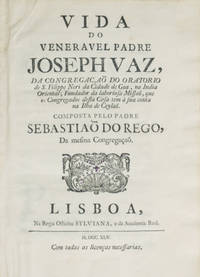
2305PG008<p>Da Congregação do Oratorio de S. Filippe Neri da Cidade de Goa na India Oriental; Fundador da laboriosa Missão que os Congregados desta Casa tem à sua conta na Ilha de Ceylaõ. Composta pelo Padre SEBASTIAÕ DO REGO Da mesma Congregaçaõ. LISBOA Na Regia Officina Sylviana e da Academia Real M. DCC. XLV. 1745. Com todas as licenças necessarias.</p>_x000d_<p>In 4.º de 20x cm. Com xxviii 354 ii em br. págs. Encadernação da época inteira de pele com rótulo vermelho nervos e ferros a ouro. Cortes das folhas levemente carminados. Folha de rosto decorada com pequeno florão.</p>_x000d_<p>Exemplar com desgastes superficiais na encadernação com pequena falta de pele na lombada com pequenos defeito e manchas nas folhas de guarda com carimbo oleográfico e assinatura manuscrita do Colégio de S. Fiel na folha de anterrosto.</p>_x000d_<p>As folhas preliminares contêm dedicatória ao Padre José Vaz Prólogo licenças com aprovações do Padre António Pereira de Frei João Franco Frei Tomás de S. José Frei José Pereira de Santa Ana e Ãndice dos capÃtulos. A obra está dividida em dois livros. O primeiro com 14 capÃtulos descreve a vida de Santo José Vaz incluindo o estabelecimento e progresso da Missão do Canará na Ãndia. O segundo livro com 18 capÃtulos descreve as suas virtudes os milagres que realizou a sua morte e os milagres que sucederam depois dela. Da página 325 até ao fim página 354 inclui um Ãndice de assuntos.</p>_x000d_<p>Primeira edição muito rara. Foi reeditada em Margão em 1867 e em Goa em 1962. Foi traduzida para italiano Veneza 1753. A primeira tradução para inglês foi publicada na cidade de Colombo Sri Lanka 1848 seguiu-se a de Calcutá em 1897; outras na SuÃça em 1910 e em Londres resumida no ano de 1913. Foi traduzida para francês Mangalore 1897 a partir da tradução italiana.</p>_x000d_<p>Obra muito importante para o estudo da cultura da Ãndia e do Sri Lanka da religião católica e das relações dela com outras religiões e as culturas locais e para o conhecimento do mais importante missionário católico de origem goesa na Ãndia Portuguesa e em Ceilão.</p>_x000d_<p>Santo José Vaz Benaulim Goa 21 de Abril de 1651 - Cândia Ceilão 16 de Janeiro de 1711 pertencia ao grupo étnico e linguÃstico concanim e era da casta brâmane. Estudou humanidades filosofia e teologia com os JesuÃtas em Goa. Foi ordenado sacerdote em 1676 distinguiu-se como director espiritual chegando a ser confessor de D. Rodrigo da Costa Governador da Ãndia. Em 1681 foi nomeado superior das Missões de Canará onde desenvolveu uma intensa actividade tendo restaurado a igreja de Mangalor e construÃdo as igrejas de Barcelor Gangalim e Calianapor todas em homenagem à Virgem Maria. No ano de 1686 entrou para a Congregação do Oratório de S. Filipe de Nery formada exclusivamente por clérigos nativos.</p>_x000d_<p>Em 1687 viajou para a ilha de Ceilão onde desembarcou disfarçado na cidade de Jaffna começando a dar assistência espiritual clandestinamente aos católicos perseguidos pelos holandeses da VOC <em>Vereenigde Oost-Indische Compagnie / Companhia Holandesa das Indias Orientais</em> que tinham expulsado os portugueses da ilha em 1658. Esteve preso acusado de ser um espião português mas acabou por conseguir a liberdade por influência do Rei de Cândia Vimaladharmasuriya II que apesar de budista se tornou seu amigo. Durante a epidemia de varÃola de 1697 realizou um excepcional trabalho de assistência aos enfermos e de melhoria das condições sanitárias. Aprendeu a falar cingalês e tamil que falava com muita elegância e energia. Como eram as lÃnguas dos dois grupos étnicos rivais da ilha essa capacidade tornou-o um sÃmbolo de tolerância. A sua obra de evangelização afirmou definitivamente o catolicismo no Sri Lanka e deixou marcas no panorama linguÃstico da ilha onde ainda hoje existem crioulos de origem portuguesa.</p>_x000d_<p>Foi beatificado pelo Papa João Paulo II em 21 de Janeiro de 1995 e canonizado pelo Papa Francisco em 14 de Janeiro de 2015. As duas cerimónias decorreram na cidade de Colombo no Ceilão actual Sri Lanka.</p>_x000d_<p>Sebastião do Rego Ncura Goa 1699 - 1763 Era brâmane foi primeiramente Clérigo secular e Pároco de igrejas da diocese de Goa depois entrou na Congregação de S. Filippe Nery na casa do Oratório de Goa em 20 de Janeiro de 1730. É autor de sermões publicados em 1749 e 1759 e deixou manuscritas várias obras entre elas uma Crónica da Congregação do Oratório de Goa editada em 2009 pelo CHAM Centro de Humanidades da FCSH da Universidade Nova de Lisboa.</p>_x000d_<p>EN In quarto. 20x cm. xxviii 354 ii in br. pp. Contemporary full leather binding. with red label raised bands and gilt tools on spine. Slightly mottled red edges. Title page decorated with small <em>fleuron</em>.</p>_x000d_<p>Copy with superficial signs of wear on the binding with small flaw of skin on the spine with small defect and stains on the endpapers with oleographic stamp and handwritten ownership title from the College of S. Fiel on the half title page.</p>_x000d_<p>The preliminary leaves contain a dedication to Father José Vaz a Prologue licences with approvals from Father António Pereira Friar João Franco Friar Tomás de S. José Friar José Pereira de Santa Ana and an index of the chapters. The work is divided into two books. The first with 14 chapters describes the life of Father Joseph Vaz including the establishment and progress of the Mission of Canará in India. The second book with 18 chapters describes his virtues the miracles he performed his death and the miracles that followed. From page 325 to the end page 354 includes an index of subjects.</p>_x000d_<p>Very rare first edition. It was reprinted in Margao in 1867 and in Goa in 1962. It was translated into Italian Venice 1753. The first English translation was published in Colombo Sri Lanka 1848 followed by Calcutta 1897; others in Switzerland 1910 and in London abridged 1913. It was translated into French Mangalore 1897 from the Italian translation.</p>_x000d_<p>Very important work for the study of the culture of India and Sri Lanka of the Catholic religion and its relations with other religions and local cultures and for the knowledge of the most important Catholic missionary of Goan origin in Portuguese India and Ceylon.</p>_x000d_<p>Saint Joseph Vaz Benaulim Goa 21 April 1651 - Candia Ceylon 16 January 1711 belonged to the Concanim ethnic and linguistic group and was of the Brahmin caste. He studied humanities philosophy and theology with the Jesuits in Goa. He was ordained a priest in 1676 and distinguished himself as a spiritual director becoming confessor to D. Rodrigo da Costa Governor of India. In 1681 he was appointed superior of the Canará Missions where he was very active restoring the church of Mangalor and building the churches of Barcelor Gangalim and Calianapor all in honour of the Virgin Mary. In 1686 he joined the Congregation of the Oratory of St Philip of Nery formed exclusively of native clerics.</p>_x000d_<p>In 1687 he travelled to the island of Ceylon where he landed in disguise in the city of Jaffna and began to provide spiritual assistance clandestinely to Catholics persecuted by the VOC <em>Vereenigde Oost-Indische Compagnie / Dutch East India Company</em> which had expelled the Portuguese from the island in 1658. He was imprisoned on charges of being a Portuguese spy but was eventually released through the influence of the King of Candia Vimaladharmasuriya II who although a Buddhist became his friend. During the smallpox epidemic of 1697 he did an exceptional job of caring for the sick and improving sanitary conditions. He learnt to speak Sinhalese and Tamil which he spoke with great elegance and energy. As they were the languages of the two rival ethnic groups on the island this ability made him a symbol of tolerance. His work of evangelisation definitively affirmed Catholicism in Sri Lanka and left its mark on the linguistic landscape of the island where Creoles of Portuguese origin still exist today.</p>_x000d_<p>He was beatified by Pope John Paul II on 21 January 1995 and canonised by Pope Francis on 14 January 2015. Both ceremonies took place in the city of Colombo in Ceylon now Sri Lanka.</p>_x000d_<p>Sebastião do Rego Ncura Goa 1699 - 1763 He was a Brahmin was first a secular cleric and parish priest of churches in the diocese of Goa then entered the Congregation of St. Philip Nery in the house of the Oratory of Goa on 20 January 1730. He was the author of sermons published in 1749 and 1759 and left several manuscript works including a Chronicle of the Congregation of the Oratory of Goa published in 2009 by CHAM Centro de Humanidades da FCSH da Universidade Nova de Lisboa.</p>_x000d_<p>Referências/References:</p>_x000d_<p>Ana Paula Sena Gomide - Um santo brâmane: a vida e santidade do oratoriano José Vaz na obra de Sebastião do Rego. Revista Maracanan Rio de Janeiro n. 20 jan./jun. 2019 p. 12-29.</p>_x000d_<p>Avila Perez 6265.</p>_x000d_<p>Azevedo-Samodaes 2653.</p>_x000d_<p>Fernandes Tomás 4207.</p>_x000d_<p>Monteverde 4400.</p>_x000d_<p>Nepomuceno 1414.</p>_x000d_<p>Figaniere 1609.</p>_x000d_<p>Inocêncio VII p. 222 e XIX p. 190</p> M-6-E-09 hardcover
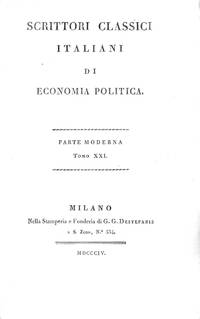
180323804Milano: De Stefanis 1803-1805. In-8 p. mm. 221x146 brossura originale 50 volumi. Importante collana di economia curata da Pietro Custodi e composta di due serie: "Parte Antica" tomi I-VII - "Parte Moderna" tomi I-XLI 1 volume di Supplimento n. IL 1 volume di Indici generali n. L. E' questa la prima raccolta completa di notizie e studi sull'economia l'agricoltura i tributi e la moneta nonchè appendici legislative del Sette e Ottocento.La "Parte antica" raccoglie i seguenti autori: Serra Turbolo 1 volume - Davanzati Scaruffi 1 volume - Montanari 1 volume - Broggia 2 volumi - Neri 2 volumi.La "Parte moderna": Bandini Algarotti 1 volume - Belloni Pagnini 1 volume - Galiani 4 volumi - Genovesi 4 volumi - Beccaria 2 volumi - Carli 2 volumi - Verri 3 volumi - Zanon 2 volumi - Paoletti 1 volume - Ortes 7 volumi - Briganti 2 volumi - D'Arco 2 volumi - Filangeri 1 volume - Vasco 3 volumi - Mengotti 1 volume - Palmieri 2 volumi - Delfico Coriani Solera 1 volume - Cantalupo Caracciolo Scrofani 1 volume - Ricci 1 volume.Cfr. "Catalogo della Biblioteca Einaudi"5193.Nel ns. esemplare una ventina di brossure con piccoli strappi o piccole mancanze un volume ingiallito e con aloni sulle ultime 18 carte altrimenti tutti i testi con barbe sono ben conservati. De Stefanis, unknown
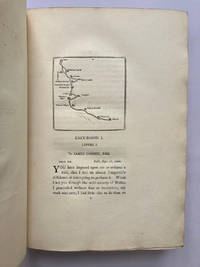
18240009038MANCHESTER UK ROTTERDAM HAGUE NETHERLANDS HOLLAND. Good. 1824. On offer is a short but fascinating travel book of one wealthy young Englishmans journey to Rotterdam and The Hague Holland in 1824. It is a unique and rare look at the travel of English aristocracy in the first half of the 19th century the last great age of the English landed gentry. The book is 30 pages in length of which writing is on every single page. Every page is filled with excursions observations and examples of lavish living for William Money his father and his cousin as they travel first to Rotterdam and then spend over a month in The Hague living at quite a fancy hotel exploring the city itself and taking day trips to landmarks around the country. The little book also includes descriptions of lavish dinners and days being waited on driven and doted on by servants and friends. It begins in the Summer 1824: June 25 1824. To commence my narrative I will give a short account of the two last days before our embarkation to Holland. I went to bed rather late on Sunday and was very tired. I had been running about Town the whole day had my teeth filed By the abominable dentist which is one of the Miserries of human life. My head was distracted in short I was a picture of misery.; June 26. The servants awoke me rather early this morning about five OClock however I was much refreshed and went to work like one who had done nothing but I forgot to state that I went to dine at a Gentlemans house on Friday and after all when I came home I had to prepare my things for Holland. Well to go on with my story we get off from No. 9 Manchester Street Manchester Square at 6 oclock this was Saturday morning June 26th 1824 our Party consisted of three my precious Father my cousin and myself. We had a gentleman's carriage to take us about town and a hackney coach to carry our luggage to the Tower that place which has executed French of the greatest and has been destroyed with Royal blood by the hoards of unnatural rebellion. The next day they are on a sailboat going from the East Coast of England and then landing in the Netherlands the next day: June 27th. Went on deck. I was expecting to see nothing but blue skies and the watery ocean but was pleasantly astonished at seeing land all around. This was lacey land I Know it by that name because the Dutch gobble so. We soon got into the river Maas after a fine voyage. We then eat our hearty breakfast.We here took up a pistol and tacked along at a fine rate saw plenty of Tony-legged bison which they called Storks. We got to Rotterdam at 12. From the instant of arrival Money is taken aback by how clean and orderly the Dutch cities are and how kind and lovely the Dutch people are as well. The layout of the cities with the canals and bridges also is commented on quite frequently. June 28th1824. We took Breakfast at Home. we went out with with and enjoyed the town. It is an elegant clean looking place. Trees shaded the walk from the burning sun and canals divide the Principal Streets. However we saw nothing no hous as they call it but came home to dinner at 4. Here we had a bottle of Mousel for dinner we went out again so that I was very tired we then came home and had tea at Mr. Mackplats where we had another Prayer and a delightful conversation. He accompanied us home where I soon got to bed and fast asleep.; After two days in Rotterdam it is off to the Hague where Money and his father and cousin will spend the rest of their time in Holland. Drove off to the Hague with which Place we are most highly delighted. I the beauty of it. It far surpassed my places that I have seen. We walked everywhere the People the PLace and all are so clean. We came to the Hotel de Belle where we have so very nice rooms that had attendance the man who drove us here cheated as that. We were not long here before . Of the gentleman who got these rooms for Papa he took us out to Table d`ote d`hotewhere we dined . This was 4 oclock and had an excellent dinner and a bottle of vin ordinaire called Bordeau.after dinner we went to Mr. Ls house to get him to show us the Place. He showed us everything in the wood.` The `wood` is most probably the Haagse Bos a rectangular neighbourhood and forest in the Haagse Hout district of The Hague Netherlands. This was simply called Die Hout The Woods Mr. L.made a capital bargain with the man only one Golden to go to that sweet Ducking Place the old man of the Place has fishing boats to go over to England for something or other. We came back after a good bathe.We then came home and prepared for dinner and went to Table Doht d`hote and after that we came back and then went to the Wood where we had tea.; After early June there are no entries until late July. July 23 1824. We got up at seven and had breakfast. We set off at 8 in a caravan with Mr. London and Mr. Tosc. We reached Leyden at 9 very much interested.We first went to the University where we saw all of plenty Indians what from all parts of the globe. We saw there a tree which was brought from Egypt in 1573 just about the time when Leyden was besieged. It was made a present by William the first and planted there We then went to the museum and saw curious specimens of all types. Mr. London went to the Anatomy Hall to gut us to see a Head. He came back saying we could only see one which was most beautiful all the views of the Head Neck and parts of the body it was very interesting.; Money also has a deep regard for the engineering works of the day and has a special fascination for the canals and waterways of Holland. We had dinner and then went to to see the sluis the most Beautiful work I ever saw. It was begun in 1784 and finished in 1787. The whole country was inundated by the overflowing of the Bacchus of the Nile. It was like a sea but now these are houses where there was formerly nothing but water. This formed so when the sea is very boisterous there's a good deal of sand connected to the side of the gate so that it is had to clear away as it is on the sea side. The way they do it is the precipe overflows then they lift the gates all of a sudden which goes with such force that it forces the sand away.`` This is accompanied by a page-length drawing of the canal with it`s locks and steps and houses on each sides. The drawing is amateur but well done. The book is in very good shape structurally. The writing is clear and concise script done in black ink. A few pages have some smudging and one page in particular has a good bit of ink fading but which impedes legibility but does not make it impossible. The front cover of the journal states: `Short account of a holiday spent in The Hague by William Money later Rev. William in the summer of 1824 when he was 22 years old.` This is not in Money`s handwriting and was added later by an unknown person.; Manuscript; 8vo - over 7¾" - 9¾" tall; KEYWORDS: HISTORY OF REVEREND WILLIAM MONEY ENGLISH GENTLEMAN LANDED GENTRY 19TH CENTURY ROTTERDAM MANCHESTER ENGLAND UNITED KINGDOM THE HAGUE DEN HAAG DIE HOUT LEYDEN LEIDEN THE NETHERLANDS HOLLAND CANALS IN THE NETHERLANDS FLOOD CONTROL EXTRAVAGANT TRAVEL TABLE DHOTE SLUICE GATE AGE OF BRITISH NOBILITY COLONIAL ERA ENGLAND BRITANNICA HANDWRITTEN MANUSCRIPT DOCUMENT LETTER AUTOGRAPH WRITER HAND WRITTEN DOCUMENTS SIGNED LETTERS MANUSCRIPTS HISTORICAL HOLOGRAPH WRITERS AUTOGRAPHS PERSONAL MEMOIR MEMORIAL ANTIQUITÉ CONTRAT VÉLIN DOCUMENT MANUSCRIT PAPIER ANTIKE BRIEF PERGAMENT DOKUMENT MANUSKRIPT PAPIER OGGETTO DANTIQUARIATO ATTO VELINA DOCUMENTO MANOSCRITTO CARTA ANTIGÜEDAD HECHO VITELA DOCUMENTO MANUSCRITO PAPEL . unknown
191945031N. P. Most Likely Cleveland: Written by Reverend Orville Ernest Watson 1919-1941. 1919-1941. First & only edition. 8vo. Decorated cloth with leather corners two leather spine labels and raised bands 300 pp. with every entry dated and printed in ink. All 300 pages are full to completion as Reverend Watson recounts his dreams. The 300 page diary covers the years 1919 to 1941 and provides a unique and sometimes disturbing glimpse into his thoughts and mind. The dreams as described range from typical dreams that any person may have although a number are about his brother and others are horrific nightmares and the surrealistic. On July 4 1919 he vividly describes a nightmare; on July 23 1919 he recounts a horrible dream about a jealous husband; on March 29 1921 a political dream; on March 21 1923 a sea dream; on Feb. 4 1924 he visits his old home town in his dream; on January 22 1927 a dream that with his brother they visit a cemetery in Cincinnati; and much much more. Orville Ernest Watson was born in Westfield Center Ohio on December 1 1857 the son of Joseph Watson a physician and his wife Eliza or Ella Jane Mills. Orville's three siblings were Clarence Minnie and Jessie. The Watson family moved to Cardington Ohio before 1870 and Orville Watson graduated from Ohio Wesleyan University in 1882. After working as a businessman in Cardington he entered Kenyon College in Gambier Ohio as a theology student in 1889. Following his graduation in 1892 he moved to Cleveland Ohio where he was assistant rector for Trinity Episcopal Church. He eventually returned to Gambier Ohio where he died on May 17 1951. Bookplate of Orville Ernest Watson on front pastedown sheet leather corners lightly rubbed and covers lightly soiled else interior clean neat and solid. Overall a very good tight copy. Written by Reverend Orville Ernest Watson, 1919-1941. hardcover
17754402888London: F. Newberry 1775. Twelve duodecimo volumes with 117 engraved plates of 118 lacking plate XXVII 'Black tiger male panther and lynx'; preliminaries thumbed title of one volume perforated and another significantly browned one leaf of text ink-stained general foxing and offsetting; original sheep leather binding scuffed with split hinges; worn as is often the case with juvenile literature of this period but a charming set. <p><p>A comprehensive natural history encyclopaedia for young people based on Pennant's system of classification. Animals are arranged according to quadrupeds fish birds and insects and each of these classifications is separately indexed. Besides the more usual natural history descriptions of animals vegetables and minerals this work is the first to describe for children Australia's most famous marsupial -- the kangaroo. The entry under the Jerboa vol. III p. 172 reads "Mr. Banks brought home the skin of an animal which he calls the kanguroo sic which from its general outline and the most striking peculiarity of its figure greatly remembers the jerboa yet it entirely differs in size and in many of those minute distinctions which point out the general ranks of nature. The kanguroo is often known to weigh above fifty pounds."</p> <p>The kangaroo was first seen by both Banks and Cook on 24 June 1770 and the first description of it appeared in Hawkesworth's Account of the Voyages published in 1773: "I should have taken it for a wild dog if instead of running it had not leapt like a hare or a deer. Mr. Banks also had an imperfect view of this animal and was of opinion that its species was hitherto unknown." During the remainder of the exploration of the east coast of Australia Cook records that both he and Banks shot and ate kangaroo on several occasions. He records two in particular that weighed eighty pounds and fifty-four pounds the skins of which Joseph Banks took back to England with him.</p> <p>Illustrations of over four hundred animals finely engraved in copper complete this charming eighteenth-century work intended solely to be used by children.</p> </p> . F. Newberry unknown
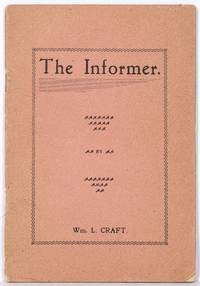
1900592001Savannah 1900. Softcover. Very Good/Near Fine. First edition. Frontispiece portrait of Craft. 16mo. 24pp. With five illustrations. Stapled in rose-colored printed wrappers. Loose chip from one rear corner laid in light wear at the edges including a few shallow chips and light creases. A pamphlet published by Rev. William L. Craft field secretary of The National Baptist Young Peoples Union Board used for recruitment efforts in the early 1910s. It provides a brief history of the church from its foundation as the Negro Baptist Church by George Leile in 1777 to the then present day under the leadership of Rev. Richard Henry Boyd; lists the organization's various presidents board members and officers; provides an overview of domestic and international missionary work; and prints a selection of various "don'ts" from spreading gossip and chewing tobacco to casting judgment and harming others. Also of interest is a small section on the importance of the number seven "a mystical and symbolic number in the Bible" likely to attract the attention of fellow African descendants who still retained spiritual belief in numerology. A rare pamphlet that we've not seen before. OCLC locates no copies. unknown
17753730London: Printed for T.Lowndes 1775 1775. First edition. 4to. 265x210mm. pp. iv 764 10 index. Ten engraved plates frontispiece portrait of the author and a further nine. The verso of the second leaf of preliminaries is numbered vi. Some foxing in places but otherwise internally very good with the plates in excellent condition. Handsomely bound in slightly later red straight-grained morocco upper and lower covers decorated with two double fillet borders in gilt enclosing a continuous "drawer-handle" design in blind and framing a continuous swag and drop border in blind. Spine with five double raised bands decorated in gilt and blind and lettered in gilt to the second and fifth compartment. Edges of the boards decorated in gilt. Turn-ins decorated in gilt with a wavy dotted line and ears of wheat with a flower motif in the corners. All edges gilt. The binding is of a very high standard. It is unsigned but the tooling and overall design conforms to the work of the German emigré binders and we would tentatively attribute the binding to either Christian Kalthoeber or John Bohn and date it to the 1790s or the very early years of the 1800s. A previous owner has inscribed the verso of the front free endpaper "Bound by Edwards of Halifax ". This seems unlikely but it is possible given the subject matter of the book and the links between Edwards and the German emigré binders that this copy did pass through Edwards's hands. John Watson 1723-1783 was that perfect eighteenth-century combination of clergyman and antiquary. He was the curate of Halifax between 1750 and 1754 and retained links with the town throughout his life. Starting with Druidical remains and moving through Roman affairs Watson brings the reader up to the eighteenth century. He covers the history of Halifax and provides details of the main buildings in the town as well as exploring fascinating byways such as "Remarks on the Dialect of Halifax""Vocabulary of Uncommon Words used in Halifax" and "A Catalogue of Plants Growing in the Parish of Halifax". London: Printed for T.Lowndes 1775 hardcover
18013865<p>A scarce book of country excursions taking in some of the most striking landscapes and great houses within a day's journey of Bath. Three excursions are presented in the course of four letters with each excursion illustrated with a small part-page engraved map. The author describes in detail the landscapes cities and great houses along the way with plentiful information about the history of the towns gardens and architecture visited. Of particular note are Longleat Stourhead Fonthill and Wardour Castle. 'I am now to introduce you to one of the most splendid mansions in the kingdom Fonthill the seat of Mr. Beckford; where expence has reached its utmost limits in furniture and ornaments; where every room is a gold mine and every apartment a picture-gallery' p. 119. The description of Beckford's library is alas rather brief: 'The library is a large room filled with choice and expensive books; and decorated with appropriate paintings on the ceiling' p. 126.</p><p>Warner also visits 'new' Wardour Castle - it was built in the 1770s - and gives a room by room commentary of the architecture furniture and paintings. Or particular interest is his description of the chapel: 'From this apartment we are carried into the western gallery of the <em>chapel</em>; a structure that displays superlative taste and magnificence. Crimson furniture and gilded ornaments produce an immediate striking <em>coup d' œil; </em>but when the decorations are examined individually the splendour and expence become more perceptible. Three immense pictures by Rubens cover the southern wall of the chapel; and one by this artist and another by Guido of the same majestic size are their opposite companions. The altar-piece is a Dead Christ by Cades. A large gallery is constructed at the western end superbly fitted up for Lord Arundel and his party; a second at the east end of the north side for the choir; and a third at the east end of the north side for the accommodation of visiters sic. Benches occupy the middle of the chapel for the reception of the domestics and such of the villagers as profess the Romish faith; for there is a Catholic seminary here the pupils of which punctually attend at morning and evening prayers. The eastern end of the chapel recedes into a semi-circular form through the windows of which light is admitted; but as these are placed high and consist of coloured glass the effect is extremely striking and solemn. The central window exhibits Angels and the awful Tetragrammaton from which is an emanation of glory. Brought forward from the eastern end sufficiently to allow the processions around it stands the Altar a most costly piece of workmanship fixed on a splendid sarcophagus of ebony; and constructed of porphyry agate and amber. A magnificent crucifix of silver surmounts the altar; and two censers of solid gold embossed with silver suspended over it pour through the chapel odiferous clouds of ever-burning frankincense. Every thing around indeed evinces that the Romish ritual is observed here with the utmost vigour and magnificence; and doubtless the celebration of its higher offices amid such seducing objects must act with infinite force upon the imagination. The effect produced by the <em>externals</em> of worship every man experiences who attends our Cathedral service which has not been stripped of so much of its <em>lace</em> as the common parochial ritual; how much then must this be increased when aided by exquisite examples of sculpture and painting; amid the strains of angelical music the glare of unnumbered lights and the Hallelujahs of numerous multitudes! The tamest fancy must be roused by such a scene and the coldest heart warmed into transport … It is but proper to add that the attendance of strangers at the service in Wardour chapel is considered as a compliment and every convenience provided for their accommodation' pp. 137-141.</p><p>Richard Warner was an antiquary and an Anglican clergyman originally from the coastal town of Lymington in Hampshire. He became curate to Wililam Gilpin whose influence can be clearly seen in the present work dedicated to walking and the natural beauties of the west country. Warner obtained his first position in Bath in 1794 and remained there for some years writing a number of topographical works and a gothic novel <em>Netley Abbey</em> 1795 inspired by local ruins. He was a friend of Wordsworth who collected Warner's picturesque writings alongside those of Gilpin and who is known to have dined with him in Bath. In his lifetime Warner was mostly known for his controversial pacifist sermons and writings: it is thought that Blake was referring to Warner in the lines 'ask him if he is Bath or if he is Canterbury' in Jerusalem as claimed by David Erdman.</p><p>Although this copy is in a later nineteenth century binding and was bound without the half-title a previous owner - possibly from the 1840s or 1850s perhaps contemporaneous with the binding and the newspaper cutting - has added an engraved portrait a Latin celebration of Bath an engraving of Farleigh Castle and a newspaper cutting referring to Paul Methuen of Corsham.</p><p>OCLC lists BL University of Edinburgh the Natural History Museum and the Rubenianum in Antwerp only.</p> Crutwell & G.G. and J. Robinson
19290001398CHAMBERSBURG PENNSYLVANIA PENN PA. Good. 1929. On offer is an original grouping of four 4 manuscript diaries dated 1929 through 1931 handwritten by Reverend John C Stuff and Isabelle Gish later Stuff written during a period when John was in seminary and Isabelle was working in Chambersburg PA. Historians and researchers interested in the development and growth of a young man seeking a life in Christian outreach with all the passions doubts and difficulties that occur with youth and young love will find a unique treasure trove having a pair of diaries from both sides of the relationship. With great charm we initially read a card at the front of one diary: "Each time you record life's happenings here will you think of someone else who is recording her events Let us strive to make each day better. Your devoted fiancee Isabelle". John has written that they were engaged on April 6 1928 formally announced the engagement at Thanksgiving and spent their first Christmas together in spirit and truth as an engaged couple. While the diaries are interesting on a number of levels the story of their increasing love and subsequent marriage are really the stars here. John writes: "I took Isabelle to the Chb'g train this PM. It is hard to watch the train pull out but thro the lingering last smile and the sparkle of the eye is the hope that cannot be lost but lives til the train brings her again to me. I resolve to read more and take Sem. life more conscientiously. I resolve to stand on my own feet self confident and courage equal to all others. To try to be more helpful and make my dearest happier." John's diary is fascinating reading as he considers his religious training in light of the real world around him and expresses his interest in some of the new religious developments such as the writings of Rutherford and Russel Jehovah's Witnesses and "this interesting age and life of Industrialism and Science." John's diaries unlike many more mundane diaries of clerical types are a study of real humanity as he struggles with the balance between his calling and his culture and the difficulties of life in modern times. Here is a snippet: "Mother William and I left for State College this AM at 7:00. Car wasn't working. Arrived 11:00 AM Will was registered and boarding at Criterion Club. I'm sure he will like it and get much from it. We came back thru Dry Run stopped at Esther's for 6:30 dinner. I was hungry and tired. Home about 10 pm. Esther and Jacob seem to be very happy. Probably a good thing that she was tired of teaching before marriage. That valley surely has its moral problems." "Tried to sleep this AM but couldn't. Got an interesting reaction from Isabelle. Today I don't see why she read the meaning into it that she did. We are both too sensitive and too easily upset by things which don't apply to us. Saw "Hallelujah" this pm I was a bit disappointed with the picture of negro life. Worked tonight again. Good radioing but getting very cold." "Left at 8:30 for Sem again. Arrived here. Went to 11:00 am class. Many boys not back yet. Several sick. Hill not back yet. I wish M Tozer were here this year. I think he would be a good companion. Miller and I saw "Gold Diggers" tonight. Very good show. Thank the Lord Isabelle isn't a gold digger; for ministers don't have - gold." "Rev Honch asked me to assist him in communion service this AM. I read scripture. Mk 10:12-26 and administered sacrament of wine. Little nervous at first but very good experience." "Cold coming up from Hotel. Slept from 10-1 pm today. Dinner with waiters. Slept this PM. Worked at hotel tonight. didn't eat till about 10 pm. Read NT and Listing to Dr Smith of Illinois. Preacher. My dear called from Ardmore tonight. I am so glad she called for it made me feel so much better in every way. Put new life into my work and thinking. Perfect understanding is a much desired thing." "Letter from Sem today. I'm ready to go back and wasn't to room alone. Began fixing the bed springs. Helped JN to refill silo this pm. Hard work and hot. Went to Mill. Has been reading Judge Rutherford - Russelism -he thinks more than the average man." Judge Rutherford was a leader of the Jehovah's Witness movement and Russelism was an early name for the tenets of the Watchtower Society. "Read H Spirit book went downtown and bought 3 bottles of ginger ale. The idea of bringing them up to Sem. was amusing." "Tonight we played cards til 8:30 then I read HS book and went to bed at 10:30 pm. Just a week ago I was relaxing with ease and comfort in Isabelles room and we were having a splendid visit. I wish I were there this weekend for I surely enjoy going down to see her and be with her if only the cost wasn't so great." "Wrote Isabelle felt like quitting and going down to her. Heartache for her. Studied Greek felt better after Chapel worked late." Here are snippets from Isabelle's diaries: Jan 1: "My first diary. Had the last vacation date with John tonight. It seems hard to part but time will pass and soon we will be together always. Dad sick in bed with the flu. Came back to Ardmore. What a thrill after such a nice vacation. John took me to Chambersburg for the train. 4:22 was almost starred and nothing in the apartment to eat. Chatted a while and went to bed. First day teaching. Taught three music classes for Miss Metzger. Unpacked fruit that came from home. Guess I'll do no more tonight. Too much talking. How glad I am its Friday. Made out some final tests today and wrote 3 letters. Sort of have the blues reaction setting in from vacation. Must iron some hankies then retire for a much needed sleep.Got weighed lost 3 lbs weigh 137. Henrietta gained 1 lb. Taught 2 B Art for Miss Rodgers. Held one of the pupils on my lap coming in on the bus route. Mrs Arterburn looked at me and said they had bugs. Makes me feel itchy. Mr Goos told Henrietta to take Ep. Salts for cold. Washed my hair. Taught two art classes today again. Was put on hall duty today. Another new job. Adeline Crouse invited me to a bridge party Feb 8th. Have a boil on my face. Kelly called Helen again. Gave Frank Cappella a taste of the ruler. Another boil on my face. Went up to Metzgers to see Henrietta's sister and Ismine. Insurance agent came. Helen met her at the door Judge jumped behind screen and I leaped to the bedroom. No time for such folks. Ma said we should take our paper downstairs everyday. She is afraid of fire. Judge shed some tears. Washed and ironed as usual. Carrie Miller was out in the afternoon. Rest went to Chambersburg. John and I practiced some music then went to see Will Rogers in "Lightning" Good light comedy. Had a long epistle from Henrietta. Made out marks. Had a letter from John. He made an appointment for vocal on Friday night. Someone took his hat on Sunday night. Went up to have Pauline Hege give me some q's on vocal but she wasn't home." Here is a specific breakdown of each book: Diary 1 is a Wanamaker diary for 1929 red binding used by Isabelle. The pages are firmly attached but the front cover and spine are starting to separate from the binding. However the book is in very good condition for its age and is solid. The diary is very full of writing and extra things are glued in on some pages. Diary 2 is a small National diary for 1929 used by John. It is very full and the writing is very easy to read. Diary 3 is a personalized Day by Day diary used by John with a lock on the strap that holds the diary closed. It is very full and is in excellent condition. John's name is embossed on the cover. Diary 4 is a Wanamaker diary for 1931 used by Isabelle. It is not as full as the other diaries. It was used almost daily until mid May after which it is blank. Overall they are G.; Manuscript; 12mo - over 6¾" - 7¾" tall; KEYWORDS: CHRISTIAN OUTREACH CHAMBERSBURG PENNSYLVANIA REVEREND EDUCATION BACKSLIDING STUFF GISH DEPRESSION DEPRESSION ERA RUSSELLISM JEHOVAHS WITNESS CULTS RUTHERFORD AND RUSSELL POST SUFFRAGE WOME'S STUDIES GENDER STUDIES SOCIOLOGY SOCIAL STUDIES SEMINARY LIFE SEMINARIANS HANDWRITTEN MANUSCRIPT DOCUMENT LETTER AUTOGRAPH DIARY JOURNAL LOG KEEPSAKE WRITER HAND WRITTEN DOCUMENTS SIGNED LETTERS MANUSCRIPTS HISTORICAL HOLOGRAPH WRITERS DIARIES JOURNALS LOGS AUTOGRAPHS PERSONAL MEMOIR MEMORIAL PERSONAL HISTORY antiquité contrat vélin document manuscrit papier Antike Brief Pergament Dokument Manuskript Papier oggetto d'antiquariato atto velina documento manoscritto carta antigüedad hecho vitela documento manuscrito Papel . unknown
1731048653Lisboa: Officina Herreriana 1731. Second Edition. Hardcover Full Leather. Very Good Condition. Attractively bound in later but old acid calf with gilt spine. Light wear remains of old paper label to spine inner joint slightly cracked but binding quite firm; marbled endpapers later blank endpapers. Small section with a bit of worming in the lower margin not really touching any text slight creasing to text. A bright attractive copy of the second Spanish language edition. 18 252pp<br /> <br /> Related to Portuguese poet and historian de Faria y Sousa's planned history of the Portuguese in all the parts of the world of which Asia Portuguesa Europa Portuguesa and Africa Portuguesa appeared posthumously . The first edition of this work appeared in 1642 but without de Faria y Sousa listed as the author. Palau 86689 Brunet V 272 1642 ed<br /> <br /> Provenance: Jose da Silva Santos Porto bookplate or bookshop ticket; Dorothy Willard Straight bookplate Size: Folio. Quantity Available: 1. Shipped Weight: Under 1 kilo. Inventory No: 048653. Officina Herreriana hardcover
1892376201New York: Feast of Saint John the Evangelist 1892. Printed on pure vellum. Title page with seal printed in red. Vignette of eagle at head of first page of service. Artist's rendering of the cathedral on last page. 6 pp. Printed by the DeVinne Press. 1 vols. 4to. Blue cloth upper cover titled in gilt with paper label for J. Roosevelt Roosevelt lower cover with eagle in blind a.e.g. Fine. Bookplate of General Theological Seminary. Printed on pure vellum. Title page with seal printed in red. Vignette of eagle at head of first page of service. Artist's rendering of the cathedral on last page. 6 pp. Printed by the DeVinne Press. 1 vols. 4to. Order of service for the start of the construction of the New York City landmark. <br /> Just a few copies were printed on vellum.<br /> With a presentation inscription from the original owner "To the Rev. Howard C. Robbins Dean of the Cathedral of St. John the Divine J. Roosevelt Roosevelt May 16 1922"<br /> James Roosevelt Roosevelt 1854-1927 was half brother of Franklin Delano Roosevelt.<br /> Uncommon and beautiful. Feast of Saint John the Evangelist unknown
19681375<p>Baruchello Gianfranco. <strong>La Quindicesima Riga.</strong> marcalibri / 1</p><p>Pignotti Lamberto. <strong>Istruzioni per l'uso degli ultimi modelli di poesia.</strong> marcalibri / 2</p><p>Torricelli Gian Pio. <strong>Coazione A Contare.</strong> marcalibri / 3</p><p>Bonito Oliva Achille. – Maurizio Calvesi. <strong>Teatro delle mostre.</strong> marcalibri / 4</p><p>Zannino Adriano. <strong>Superegg.</strong> marcalibri / 5</p><p>Mussio <strong>Magdalo. In Pratica.</strong> marcalibri / 6</p><p>Buonfino Giancarlo. <strong>L'alibi di scorta.</strong> marcalibri / 7</p><p>Buckminster Fuller <strong>R. Education Automation.</strong> marcalibri / 8</p><p>Bartolucci Giuseppe. <strong>La scrittura scenica. </strong>marcalibri / 9</p><p>Sandri Giovanna. <strong>Capitolo Zero.</strong> marcalibri / 10</p><p>Accame F. <strong>Parta Labore.</strong> marcalibri / 11</p><p>Chiari Giuseppe. <strong>Musica Senza Contrappunto.</strong> marcalibri / 12</p><p>Giorgi Rubina. <strong>La Riflessione Simbologica.</strong> marcalibri / 13</p><p>Saffaro Lucio. <strong>Teoria de l'Est.</strong> marcalibri / 14</p><p>Bory Jean-François. <strong>Logorinthe. - post-romanzo.</strong> marcalibri / 15</p><p>Caruso Luciano - Giovanna Polara. <strong>Iuvenilia Loeti.</strong> marcalibri / 16</p><p>Verdone Mario. <strong>Teatro del tempo Futurista. </strong>marcalibri / 17</p><p>Mussio Gianmaria. <strong>Mare Verde Mare Rosso.</strong> marcalibri / 18</p><p>Carrega Ugo. <strong>Poemi per Azione.</strong> marcalibri / 19</p><p>Mussio Magdalo. <strong>Praticabile per memoria concreta.</strong> marcalibri / 20</p> Lerici editore paperback