Brock, Reverend Helen LeonaBiblio.com
"Do You Hear His Sound""
1662867190.Gpaperback. Good. Access codes and supplements are not guaranteed with used items. May be an ex-library book. paperback
Bonita · États-Unis60,01 $US≈ 50,77 €
4 408 résultats
201135807Catania: Ediarch Editore. 2011. Softcover. Very Good. Minor Bump to base of spine. Light edgewear with faint creasing.; Volume 2; 2; 4to 11" - 13" tall; 195 pages . 889680003X . Ediarch Editore paperback
201035788Catania: Ediarch Editore. 2010. Softcover. Very Good. Bump to base of spine. Light edgewear with faint creasing.; Volume 1; 1; 4to 11" - 13" tall; 255 pages . 8896800005 . Ediarch Editore paperback
1662867190.Gpaperback. Good. Access codes and supplements are not guaranteed with used items. May be an ex-library book. paperback
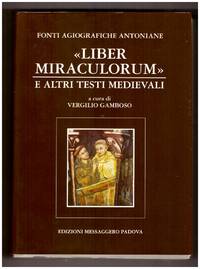
1997032899<p>Padova: Edizioni Messaggero Padova 1997. Collana ""Fonti agiografiche antoniane"" 5. Un volume di 810 pagine brossura editoriale con sovracoperta illustrata. Dimensioni: 165x22 cm. A fogli chiusi. Timbro di possesso alla pagina bianca minime tracce di scaffale alla sovracoperta. 12 tavole in b/n fuori testo. Introduzione testo critico versione italiana e note a cura di Vergilio Gamboso. Peso: 1300 gr.</p> Edizioni Messaggero Padova
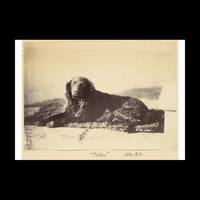
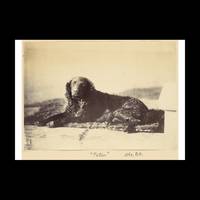
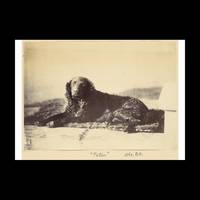
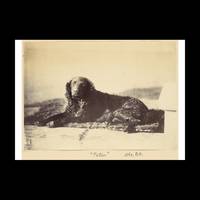
280430Contentum Ltd. Loose sheet. New. High-quality art print based on an original work from the Met. Created in the 19th century 1860. Professionally printed on premium fine-art paper Museum Etching museum quality in size A3. The artwork is printed with a white border museum-style presentation. Contentum Ltd. unknown
280433Contentum Ltd. Loose sheet. New. High-quality art print based on an original work from the Met. Created in the 19th century 1860. Professionally printed on premium fine-art paper Museum Etching museum quality in size A2. The artwork is printed with a white border museum-style presentation. Contentum Ltd. unknown
280432Contentum Ltd. Loose sheet. New. High-quality art print based on an original work from the Met. Created in the 19th century 1860. Professionally printed on premium fine-art paper Photo Rag Bright White premium quality in size A2. The artwork is printed with a white border museum-style presentation. Contentum Ltd. unknown
280431Contentum Ltd. Loose sheet. New. High-quality art print based on an original work from the Met. Created in the 19th century 1860. Professionally printed on premium fine-art paper Photo Matt Fibre in size A2. The artwork is printed with a white border museum-style presentation. Contentum Ltd. unknown
1452883580.Gpaperback. Good. Access codes and supplements are not guaranteed with used items. May be an ex-library book. paperback
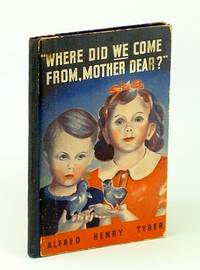
1939254H1058Toronto: Marriage Welfare Bureau 1939. Book. Good. Hardcover. First Edition. 8vo - over 7¾" - 9¾" tall. 46 pages. Illustrated with black and white photos and illustrations. Charming 1930s explanation of the 'birds and the bees". "This little book is the answer to this most important question which all children ask sooner or later. A child's welfare and happiness throughout life may depend on the way in which its questions are answered. Most parents find difficulty in presenting the true answer. This little book is to help them in their great responsibility." - from title page. Chapters include: Fathers and Mothers Babies and Love Love Among Flowers How Baby Fish Come Into the World About Eggs How Baby Birds Come How Kittens and Puppies and other Babies Come About Human Babies. Pencil gift greetings atop front free endpaper. Average wear. Binding intact. A sound vintage copy. Marriage Welfare Bureau Hardcover
1994110935Roma: Istituto Poligrafico e Zecca dello Stato 1994. Rilegato tela cloth. Molto buono Very Good. Tomo I: Relazione generale ed analisi tecnica. Tomo II: Provincia di Avellino. Tomo III: Province di Benevento Caserta Napoli. Tomo V: Province di Matera Potenza. Numerosissime illustrazioni e tavole in bianco e nero e a colori nel testo e numerose tabelle e tavole ripiegate intercalate nel testo. 4 volumi. 4to. pp. 838 1278 848 980. Molto buono Very Good. Manca il IV volume. . Istituto Poligrafico e Zecca dello Stato, hardcover
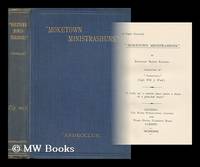
192321709Ward Publications London 1923. First Edition. Hardback. Very good copy in the original gilt-blocked blue cloth. Slightest suggestion only of dust-dulling to the spine bands and panel edges. Remains particularly and uncommonly well-preserved; tight bright clean and sharp-cornered. ; 245 pages; Physical desc. : pp. 245. 8vo Ward Publications, London hardcover
8500026537.Gpaperback. Good. Access codes and supplements are not guaranteed with used items. May be an ex-library book. paperback
19712000040935Springville Baptist Church Coushatta LA 1971. Springville Baptist Church Coushatta LA 1971 Good/ Light soil and age toning to cover with pencil marks on back 28 pages. Illustrated with photos. Contains advertsing. Two pages on the History of the Church etc. . Pamphlet. Good. Springville Baptist Church, Coushatta, LA Paperback
1964482739.Ghardcover. Good. Access codes and supplements are not guaranteed with used items. May be an ex-library book. hardcover
1964482704.Ghardcover. Good. Access codes and supplements are not guaranteed with used items. May be an ex-library book. hardcover
194300009028First Unitarian Church Philadelphia 1943 Annual report of the minister Frederick R. Griffin December 1942 Moral Solitude and Moral Comradeship October 1943 Annual Report of the Minister Frederick R. Griffin november 1944 The Church's One Foundation November 1944 The Church of the Living God The Incarnation December 1945 Reconversion the romance of an Abbey The Religion of the United Nation 1946 The Lord is God of the Hills but he is not God of the valleys February 1946 Liberal- Conservative A sermon on the occasion of the dedication of a memorial to Arthur H. Lea act. 1946 Between Two Ages A sermon preached at King's chapel Boston Jan. 1944 A bit musty. First Unitarian Church Philadelphia hardcover
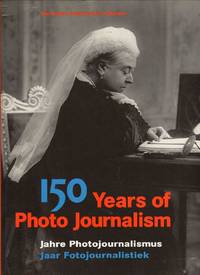
1995219460Koln: Konemann 1995. Brossura wrappers. Molto buono Very Good. The Hulton Getty Picture Collection. Testo: <strong>I parte</strong> - Nick Yapp; <strong>II parte</strong> - Amanda Hopkinson. Fotografie in bianco e nero e a colori. Edizione in inglese tedesco olandese. 4to cm 30 x 225. pp. 896. Molto buono Very Good. . Konemann, unknown
165600JT33NEWNEVERS FRANCE 1656. On offer is an original handwritten ancient document signed by five individuals most notably Monsieur le curé François Adam curé de l'église de Magny" or "Mr François Adam pastor of the church of Magny'. The document concerns among other things the payment of a number of Masses to be said and specifies Nevers and Roux. VG. Autograph. Manuscript. Very Good. 4to - over 9¾" - 12" tall. French. Paperback
17700012203England: 18th Century Religious Sermons Early Typography Manuscript Christian. Very Good with no dust jacket. 1770. Hardcover. On offer is a beautiful hard-bound collection of sermons written by many prominent religious scholars of the time dating from late 18th century England and curated by the Reverend Dr. John Trusler 1735-1820. The book is a collection of sermons and homilies. They include homilies with such titles as On domestic Happiness The notice of the World a motive to virtue The Advantage of Public or Private Calamities On partaking of other men's Sins and more. The collection belonged to William Armstrong whose name appears on the front flyleaf. However our informal research has not found any additional information about him. From some notes made in the book this volume was used in 1770-1771. Curated by Rev John Trusler the sermons are printed with beautiful early typography intended to mimic manuscript font. This was a part of Truslers lucrative scheme in which he proposed printing sermons in script type to imitate handwriting and then sell them to clergymen who did not want to write their own sermons. Each sermon is credited to their original author at the end. Included sermons are credited to Baptist minister James Foster 1697-1753 British Unitarian minister William Enfield 1741-1797 Anglican clergyman Laurence Sterne Archbisop of Canterbury William Wake 1657-1737 and Bishop of Chichester Thomas Manningham 1651 -1722. A few sermons are listed as compiled and some are not credited but include additional notes and annotations from the collections curator Rev John Trusler. Trusler has signed his name in ink at the end of many of the sermons. This book is an example of Dr. Truslers early attempts at establishing a printing and bookselling business. In 1769 Trusler sent circulars to every parish in England and Ireland proposing to print in script type in imitation of handwriting about a hundred and fifty sermons at the price of one shilling each to save the clergy both study and the trouble of transcribing Wikipedia. This collection of sermons therefore seems to be an example of Truslers sermon curation peppered with his own additions and notes some in the form of small attached pages others in the form of full pages of manuscript notes. Before becoming a printer and bookseller Trusler took his holy orders and became a priest in 1759 rising through the ranks of British clergy work. He also worked as a lecturer eventually establishing an academic academy only to give it up when it was not lucrative and move on to medical school at Leyden University. While his name does not appear in their catalogue of graduates he did assume the title of doctor. In the end his most lucrative undertaking was his sermon sales and publishing business in which he published many books including his own memoir. This absolutely remarkable unique relic of 18th century British Christian history and early typography would be a sensational asset to any library and the sermons contained within provide an excellent window into the religious/moral thinking of the day as preached in Christian congregations in England Interesting to note one single annotated page of a sermon contained in this book in the same typescript sold for 1500 British pounds through Forum Auctions in September of 2021. The volume measures approximately 8.5 inches by 5.5 inches and contains 100 pages. The hard covers although stained are in good condition. The pages are all in excellent condition save for one page with some rips and tears. Both the typography and handwriting is not only clear but beautifully done. The title Sermons M. S is stamped on the spine. ; Manuscripts; 8vo 8" - 9" tall; 100 pages; Signed by Author . 18th Century Religious Sermons Early Typography Manuscript Christian hardcover
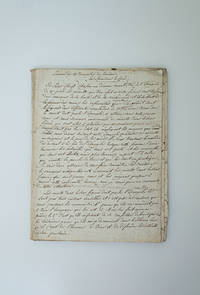
18500010080France. Good with no dust jacket. 1850. Ephemera. On offer is an outstanding example of the Catholic Churchs teachings at a grass-roots level in 19th century France. This beautiful handwritten sermon is titled Sermon de III Dimanche de Careme Sermon for the 3rd Sunday of Lent and notes that it is given by Monsieur le Cure the Parish Priest. The handwriting is small and clear and an excellent example of the penmanship of the time. The source of the sermon is unknown. There is no specific reference to a parish community or author. We do know from its title that it was written to be given at a mass on the 3rd Sunday of Lent. The Easter Season of Lent and Easter Sunday is the most important in the Catholic church more so than Christmas. An excerpt from the sermon: Les miracles que Dieu fait en notre faveire sont toujours des marques de la bonte et de la misericordie et les infirmites que JC aurit sont la figures des differentes maladies de notre ame .Translation: The miracles that God does in our favor are always marks of goodness and mercy and the infirmities that JC would have are the images of the different diseases of our soul.Throughout his text you can see where he has crossed out words and edited expressions. This was very much a living manuscript in his hands. For a social historian this is an excellent look into the world of the average French person and into the thought processes of the clergy who so dominated life in the small towns and villages of France in the 19th century. This manuscript measures 6.0 inches by 6.25 inches and contains 34 carefully handwritten pages. It is 100% complete. The manuscript is simply folded along a centre line. There is no cover but the pages are in fine condition. ; 16mo 6" - 7" tall; 34 pages . unknown
18240009038MANCHESTER UK ROTTERDAM HAGUE NETHERLANDS HOLLAND. Good. 1824. On offer is a short but fascinating travel book of one wealthy young Englishmans journey to Rotterdam and The Hague Holland in 1824. It is a unique and rare look at the travel of English aristocracy in the first half of the 19th century the last great age of the English landed gentry. The book is 30 pages in length of which writing is on every single page. Every page is filled with excursions observations and examples of lavish living for William Money his father and his cousin as they travel first to Rotterdam and then spend over a month in The Hague living at quite a fancy hotel exploring the city itself and taking day trips to landmarks around the country. The little book also includes descriptions of lavish dinners and days being waited on driven and doted on by servants and friends. It begins in the Summer 1824: June 25 1824. To commence my narrative I will give a short account of the two last days before our embarkation to Holland. I went to bed rather late on Sunday and was very tired. I had been running about Town the whole day had my teeth filed By the abominable dentist which is one of the Miserries of human life. My head was distracted in short I was a picture of misery.; June 26. The servants awoke me rather early this morning about five OClock however I was much refreshed and went to work like one who had done nothing but I forgot to state that I went to dine at a Gentlemans house on Friday and after all when I came home I had to prepare my things for Holland. Well to go on with my story we get off from No. 9 Manchester Street Manchester Square at 6 oclock this was Saturday morning June 26th 1824 our Party consisted of three my precious Father my cousin and myself. We had a gentleman's carriage to take us about town and a hackney coach to carry our luggage to the Tower that place which has executed French of the greatest and has been destroyed with Royal blood by the hoards of unnatural rebellion. The next day they are on a sailboat going from the East Coast of England and then landing in the Netherlands the next day: June 27th. Went on deck. I was expecting to see nothing but blue skies and the watery ocean but was pleasantly astonished at seeing land all around. This was lacey land I Know it by that name because the Dutch gobble so. We soon got into the river Maas after a fine voyage. We then eat our hearty breakfast.We here took up a pistol and tacked along at a fine rate saw plenty of Tony-legged bison which they called Storks. We got to Rotterdam at 12. From the instant of arrival Money is taken aback by how clean and orderly the Dutch cities are and how kind and lovely the Dutch people are as well. The layout of the cities with the canals and bridges also is commented on quite frequently. June 28th1824. We took Breakfast at Home. we went out with with and enjoyed the town. It is an elegant clean looking place. Trees shaded the walk from the burning sun and canals divide the Principal Streets. However we saw nothing no hous as they call it but came home to dinner at 4. Here we had a bottle of Mousel for dinner we went out again so that I was very tired we then came home and had tea at Mr. Mackplats where we had another Prayer and a delightful conversation. He accompanied us home where I soon got to bed and fast asleep.; After two days in Rotterdam it is off to the Hague where Money and his father and cousin will spend the rest of their time in Holland. Drove off to the Hague with which Place we are most highly delighted. I the beauty of it. It far surpassed my places that I have seen. We walked everywhere the People the PLace and all are so clean. We came to the Hotel de Belle where we have so very nice rooms that had attendance the man who drove us here cheated as that. We were not long here before . Of the gentleman who got these rooms for Papa he took us out to Table d`ote d`hotewhere we dined . This was 4 oclock and had an excellent dinner and a bottle of vin ordinaire called Bordeau.after dinner we went to Mr. Ls house to get him to show us the Place. He showed us everything in the wood.` The `wood` is most probably the Haagse Bos a rectangular neighbourhood and forest in the Haagse Hout district of The Hague Netherlands. This was simply called Die Hout The Woods Mr. L.made a capital bargain with the man only one Golden to go to that sweet Ducking Place the old man of the Place has fishing boats to go over to England for something or other. We came back after a good bathe.We then came home and prepared for dinner and went to Table Doht d`hote and after that we came back and then went to the Wood where we had tea.; After early June there are no entries until late July. July 23 1824. We got up at seven and had breakfast. We set off at 8 in a caravan with Mr. London and Mr. Tosc. We reached Leyden at 9 very much interested.We first went to the University where we saw all of plenty Indians what from all parts of the globe. We saw there a tree which was brought from Egypt in 1573 just about the time when Leyden was besieged. It was made a present by William the first and planted there We then went to the museum and saw curious specimens of all types. Mr. London went to the Anatomy Hall to gut us to see a Head. He came back saying we could only see one which was most beautiful all the views of the Head Neck and parts of the body it was very interesting.; Money also has a deep regard for the engineering works of the day and has a special fascination for the canals and waterways of Holland. We had dinner and then went to to see the sluis the most Beautiful work I ever saw. It was begun in 1784 and finished in 1787. The whole country was inundated by the overflowing of the Bacchus of the Nile. It was like a sea but now these are houses where there was formerly nothing but water. This formed so when the sea is very boisterous there's a good deal of sand connected to the side of the gate so that it is had to clear away as it is on the sea side. The way they do it is the precipe overflows then they lift the gates all of a sudden which goes with such force that it forces the sand away.`` This is accompanied by a page-length drawing of the canal with it`s locks and steps and houses on each sides. The drawing is amateur but well done. The book is in very good shape structurally. The writing is clear and concise script done in black ink. A few pages have some smudging and one page in particular has a good bit of ink fading but which impedes legibility but does not make it impossible. The front cover of the journal states: `Short account of a holiday spent in The Hague by William Money later Rev. William in the summer of 1824 when he was 22 years old.` This is not in Money`s handwriting and was added later by an unknown person.; Manuscript; 8vo - over 7¾" - 9¾" tall; KEYWORDS: HISTORY OF REVEREND WILLIAM MONEY ENGLISH GENTLEMAN LANDED GENTRY 19TH CENTURY ROTTERDAM MANCHESTER ENGLAND UNITED KINGDOM THE HAGUE DEN HAAG DIE HOUT LEYDEN LEIDEN THE NETHERLANDS HOLLAND CANALS IN THE NETHERLANDS FLOOD CONTROL EXTRAVAGANT TRAVEL TABLE DHOTE SLUICE GATE AGE OF BRITISH NOBILITY COLONIAL ERA ENGLAND BRITANNICA HANDWRITTEN MANUSCRIPT DOCUMENT LETTER AUTOGRAPH WRITER HAND WRITTEN DOCUMENTS SIGNED LETTERS MANUSCRIPTS HISTORICAL HOLOGRAPH WRITERS AUTOGRAPHS PERSONAL MEMOIR MEMORIAL ANTIQUITÉ CONTRAT VÉLIN DOCUMENT MANUSCRIT PAPIER ANTIKE BRIEF PERGAMENT DOKUMENT MANUSKRIPT PAPIER OGGETTO DANTIQUARIATO ATTO VELINA DOCUMENTO MANOSCRITTO CARTA ANTIGÜEDAD HECHO VITELA DOCUMENTO MANUSCRITO PAPEL . unknown
18330012303England. Very Good with no dust jacket. 1833. Non-Book. On offer is an autographed letter signed by a Rob Porter likely Reverend Robert Ker Porter 1777-1842. The letter measures 9 x 7-1/4 inches two pages. Autograph letter signed dated Draycot September 26th 1833. A couple of letters ink smudged otherwise very good condition. Letter to unnamed correspondent. Extending an invitation to visit and noting that the "picture framer at Newcastle . Had seen a proof of Sir Walter before the letters some time ago." The author of this letter is possibly Rev. Robert Ker Porter of Draycott-in-the-Moors in Staffordshire. The Heath House mentioned in this letter is also located in Staffordshire. Rev. Robert Ker Porter was born in Haigh Wigan Lancs. 1774 ; son of William Porter ; educated Man. Gr. Sch. 12th June 1787 ; Mat. Brasenose Coll. Ox. 23rd May 1792 ; Exhibitioner 1792 ; Hulme Exhibitioner 1796 ; B. A. 14th Jan. 1796 ; M. A. 24th Oct. 1796 ; Curate of Buiy 17991806 ; Rector of Draycott-le-Moors 1806 to death ; married Mary daughter of Rev. H. Thomas Curate of Leigh ; died. 25th March 1838 ; buried. Draycott. ; Manuscripts; 8vo 8" - 9" tall; Signed by Author . unknown
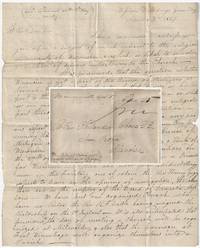
1837010705Menomoneville Wiconsin Territory 1837. Envelope or Cover. Very good. This two-page stampless letter sent from the Reverend Daniel E. Brown at Menomoneville to the Reverend Philander Chase "near Peoria / Illinoise" measures 16" x 9.75" unfolded. It is datelined "Mission Buildings Green Bay / April 3rd 1837" and bears an especially scarce manuscript postmark "Menomoneville Apr 5" of which only one other example is recorded by the Wisconsin Postal History Society. In nice shape</p> <br /> <br /> <p>In this letter Brown requests clarification as to whether the few churches that had been established in Wisconsin would remain part of the newly formed Diocese of Michigan or form into a separated organization. It reads in part</p> <br /> <br /> <p style="margin-left:5%; margin-right:10%;">"I have presumed to address you upon a subject of much interest to the religious community of Wisconsin which . . . is of serious importance to the Church. It is presumed that the question whether Wisconsin is yet a part of the Diocese of Michigan as claimed by the worthy Prelate of that Diocese . . . or are we separated & no longer for and integral part thereof. . . This question is now assuming a very serious aspect for the Vestry of Christ's Church Green Bay. . . There are now four resident Clergymen in this Territory . . . three in the employ of the Board of Domestic Missions. We have but one organized Church who has no Rector the Rev R. F. Cadle having resigned. . . It is also anticipated that . . . a church will be organized at Milwaukee & also that the Garrison at Fort Winnebago will organize themselves into a Parish. I have felt . . . as if it was unwise to agitate the question in our present situation & particularly as it regards questions of jurisdictions with Michigan but I would wish your advice. For if we are fully separated from Michigan & have the right to form a new Diocese . . . it would be prudent to do so. . . Will you be kind enough my Dear Father to give me your views upon the claim set forth by the Rt Rev Prelate of Michigan & whether . . . it is right now expedient to organize at this time. . ."</p> . When Wisconsin was part of the Michigan Territory from 1818 until 1836 Episcopalian fell under the purview of Missionary Bishop of the Northwest. Its first mission the Oneida Duck Creek Mission originally under the Diocese of New York at Green Bay was the beginning of Church work in the MIdwest. After the Diocese of Michigan was formed in 1834 Wisconsin activities were place under the temporary supervision of the Bishop of Ohio and did not come under the oversight of the Bishop of Michigan until 1836 after which he maintained that the establishment of the Wisconsin Territory had should not divide his diocese successfully thwarting the establishment of a Diocese of Wisconsin until 1847.</p> <br /> <br /> <p>For more information see Ford's A Brief History of the Diocese of Michigan and "Oneida History" at the Milwaukee Public Museum website.</p> <br /> <br /> <p>A first-hand document attesting to the religious competition that sprang into being with the establishment of the Wisconsin Territory. At the time of listing nothing similar is for sale in the trade nor has appeared at auction per the Rare Book Hub. OCLC shows no similar items held in institutional collections. We have another lot for sale regarding the Oneida Duck Creek Mission.</p> . unknown
18430001770Baltimore Maryland MD - at Sea Aboard the Charles 1843. On offer are two 2 super original manuscript relics of Christian outreach and missionary work handwritten by Reverend Walter Gunn one of the first missionaries to India addressed to Frederick Schott of Waterloo New York. Bio notes follow. The first is a one 1 page letter written by Gunn dated 1843 while in Baltimore. The second letter is written by Rev. Gunn while on the boat "The Charles" heading to India in 1844. He has been at sea for 138 days. This is a 3¼ page letter. Here are snippets: 1 "Baltimore May 24 1843 Dear Brother in the Lord I should like to write a long letter to you and enter into many particulars but I have but only a few moments to spare as Bro Selmser is soon to leave B. and I have a press of business on hand. Well how do you do. How is your family and how do your souls prosper. Is Christ precious are you actively engaged in his service. O my brother watch your heart your words and your actions and strive to live so that the flame of love may burn brightly in your heart to God. How pleasant it would be for me to enjoy the hospitalities of your table again to bow with you again around the family altar to walk to the house of God in company but instead of walking the street of Waterloo I shall soon be walking the deck of the vessel that bears me to the heathen land. But shall I ever forget you and the beloved brethren of W. No. Even now while going from house to house among the brethren in imagination the tears fall upon the paper and bedew these lines I write .Your brother in Christ Walter Gunn." 2 "Ship Charles Indian Ocean March 25th 1844 Dear Brother Shutt While penning these lines I am sailing up the Indian Ocean towards the shores of Hindustan. I have crossed the equator twice doubled the Cape of Good Hope and shall in a few weeks I trust reach my field of labor. But though I am separated from you by a distance of so many thousand miles I have not forgotten you no in imagination I often walk the streets of Waterloo visit the houses of the brethren and join in your acts of worship in the congregation. The different articles of apparel that I wear at this moment remind me of you and many others in W. While contemplating the interesting scenes that transpire in your place one year ago my eyes often fill with tears. Were not those precious and heavenly seasons when you and so many of your associates and friends took a stand on the Lord's side. Though I am now denied the privilege of witnessing such glorious displays of the power and grace of God in the conviction and conversion of sinners I do not on that account conclude that I am out of the path of duty. True it would be a pleasing task for the minister of Christ to be engaged daily in the work of directing the inquiring to the Savior and strengthening those who had just commenced running the Christian course. But that privilege at present is denied me. From no one for the last few months have I heard the inquiry "What must I do to be saved." Except the missionaries who are going with me to the heathen. I am surrounded by those who seem to think but little of their undying souls .You will undoubtedly wish to know how I feel now that I am so far away from kindred friends and natives land with but little prospect of ever seeing them again. To answer for the most part I feel cheerful contented and happy. Often have I seen the ocean all lashed into commotion the vessel at one moment raised upon the top of a mighty billow and the next plunged into the fearful chasm below; at such a moment it seemed as though we must all be engulfed beneath the troubled ocean but even then my mind has been calm and unruffled .Tell your sister Mrs. Bean that the pantaloons she made me became very spotted by the damp weather around the Cape of Good Hope but that the spots did not make them any the less comfortable. Tell Jackson that I hope and pray that he may become a minister. Tell Mrs. Mayer that my wife often speaks of her and the pleasant time that they spent together in Johnstown and Whitesboro. Tomorrow or next day we expect that our vessel will anchor in the harbor of Amherst in Burmah. One hundred and thirty eight days I have been tossed upon the billows of the ocean without setting my feet on land and many more anxious days will pass before I reach Guntur the field of my labor. Pray for me and my companion that we may be preserved from the temptations to which we are exposed and that we may be the faithful servants of Christ among the heathen. Yours in the bonds of Christian love Walter Gunn. Near the shores of Burmah April 3rd 1844." BIO NOTES: "The Rev. W. Gunn. The Missionary was a graduate of Union College N.Y. in 1841; studied theology at Gettysburg; was ordained by the Hartwick Synod in 1843 at Johnstown; appointed missionary to India in the same year; arrived at Guntur on June 18th 1844 and was a faithful and an indefatigable colleague of the Rev. Mr. Heyer until 1851 when after a period of seven years service in the cause of Jesus he departed this life at Guntur esteemed and loved by all who knew him. He is spoken of as a good man full of zeal for the Lord so much so that on one occasion in the Guntur bazaar he became so indignant at some idolatrous performances of the heathen that he lifted up his voice in great earnest against the idolaters who became exasperated at him and consequently proceeded to pelt him with stones. But he prudently withdrew from the enraged rabble only to return on subsequent occasions to continue publishing the message of salvation to them. His remains rest in the Guntur Cemetery until the day of the resurrection. He died while in Guntur in 1851 from Tuberculosis." "Reverend Adam Long went to India almost immediately after being ordained. The Lutheran mission to India was still in its early phases when Long arrived it have been started in the Andhra region by Rev. John Christian Frederick Heyer in 1842 who at 48 and widowed was an anomaly compared to other missionaries. He was joined by the Rev. and Mrs. Water Gunn another Gettysburg College and Seminary graduate in 1844 and by Rev. George Martz in 1849. There these men and Gunn's wife Lorena began the task of educating and converting Indians. In a country that is dominated by the polytheistic Hinduism and Mohammedanism this was not an easy task. Traveling from village to village these men and women counted their accomplishments by the individuals that they could convert and the schools and churches that they built. . Good. 8vo - over 7¾" - 9¾" tall. Manuscript. unknown