[Geneva Bible]Biblio.com
319 résultats
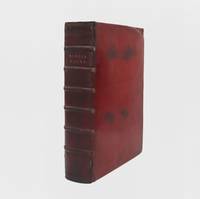
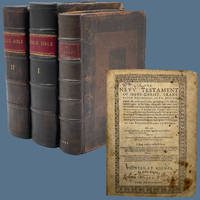
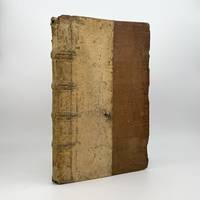
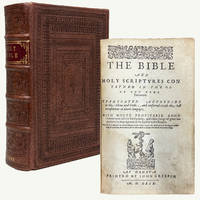
1569Q42<p>Geneva: John Crispin 1569. 4to 8.125 x 5.75 in. The scarce <em>second edition</em> of the Geneva Bible in quarto. Printed in Geneva in Roman font with illustrations double-page maps and provenance of a famous paper maker.</p><p><strong>Description</strong></p><p>Lacks the first preliminary leaf <em>Calendar Historical</em> and begins with <em>To The Reader </em>1 p. <em>Of the Golden Nombre</em>… etc.3 pp. <em>A Supputation of the years </em>1 p. <em>A Table of the Cycle of the Sunne </em>1 p. <em>Kalendar </em>with a small woodcut at the beginning of each month 6 pp. <em>Fairies in France and elsewhere </em>1 p. The printed title page 1569 with decorative headpiece and Crispin's device. Text in two column Roman type with the complete set of illustrations and maps in the text. Bound with four of the additional double-page maps including the Wanderings of the Israelites Nu 33 Ezekiel's Temple Ez 48 Description of the Holie Land before NT title and the Description of the Countreis and Places before Acts. Also bound with the Degrees of Consanguinitie Lev 18 and the map at Joshua provided in facsimile. Printed New Testament title page 1568 with printer's device. Ends with the <em>Table</em> and the <em>Order of the Years</em> 1 p. First chapter woodcut initials head and tailpieces.</p><p><strong>Collation</strong></p><p>par.8 -par1 4 a-c4 d-z8 A-Z8 Aa-Gg8 Old Testament n3-8 Table of Names Aa-Bb4 Cc-Ss8 Tt3 New Testament. <em>Lacks</em> Apocrypha Psalter and first preliminary leaf.</p><p><strong>Binding</strong></p><p>Newly rebound in speckled brown calf. Elaborate blind tooling and rolls to boards within concentric frames. Spine with four raised bands and extensive blind tooling to compartments. One red morocco label with gilt-rules and the words "Holy Bible" letter in gilt and a date of 1569 letter in gilt to foot. New plain endpapers.</p><p><strong>Condition</strong></p><p>Overall a clean text; trimmed close with infrequent loss to first letter of the marginal notes; a-c small stain to lower gutter; Q7-R1 old tape repair with a couple of lines of text replaced in manuscript; T2-3 upper dark marginal stain impacting three lines of text; final map with a tear along fold; Tt1-3 last few leaves of tables with tape repairs to margins.</p><p><strong>Provenance</strong></p><p>Bookplate of James Whatman 1702-1759 on front pastedown with his signature on first blank leaf. On the next four blank pp. at the front Whatman described the history of the Geneva version in a neat hand likely on his own wove paper. Whatman produced high-quality white paper in the 1740s that was used by state papers and also used in printed books. He was the first paper maker in Europe to make wove paper.</p><p><strong>Note</strong></p><p>The second edition of the Geneva version printed in Geneva. The second edition is a smaller book than the 1560 first edition. The Apocrypha was removed from this copy likely by a zealous Puritan. The Psalter was an integral part of this edition and is lacking from this copy but four of the five maps are present.</p><p><strong>Scarcity</strong></p><p>RBH records only three copies at auction since 1910. OCLC shows only six copies in institutions.</p><p><strong>References</strong></p><p>Herbert 130; ODNB 40776; STC 2106; not in USTC.</p> John Crispin hardcover
1590372093Rome: Ex Typographia Apostolica Vaticana 1590. First edition of the Sixtine Vulgate Bible. Engraved illustrated title-page. Title in red and black text in double columns. 8 479 1; 5 482-899; 5 902-1141pp. Lacks the 4ff preface i.e. the papal bull of Sixtus V beginning "Aeternus ille caelestium terrestriumq. rerum omnium conditr ac moderator Deus ." as often. Folio 13-1/2 x 9-1/2 inches. Later red morocco spine darkened corners bumped some repairs at head and tail of spine marbled endpapers gilt edges. Engraved title and title page paper-backed. Red quarter morocco clamshell box. First edition of the Sixtine Vulgate Bible. Engraved illustrated title-page. Title in red and black text in double columns. 8 479 1; 5 482-899; 5 902-1141pp. Lacks the 4ff preface i.e. the papal bull of Sixtus V beginning "Aeternus ille caelestium terrestriumq. rerum omnium conditr ac moderator Deus ." as often. Folio 13-1/2 x 9-1/2 inches. The Sixtine Bible containing the Vulgate text as edited by Pope Sixtus V intended as the first ecclesiastically authorized text to be used throughout Christendom. "In its text it comes closer to R. Stephanus' Bible of 1538-40 than to the Louvain editions" Darlow & Moule who discuss the textual variations. <br /> <br /> The association with Aldus II suggested by Renouard and lasting long thereafter is spurious.<br /> Pope Sixtus V died soon after the book was printed and was followed by three short-lived popes. The Sixtine Bible had "aroused antagonism among both clergy and laity" and was swiftly condemned; the edition was withdrawn by Pope Clement VIII soon after his elevation to the papal throne in 1592 and many copies were destroyed. Preparations began in 1591 for a new edition of the Vulgate printed in 1592 and known as the Clementine Bible which long remained the standard Vulgate text.<br /> <br /> As often e.g. the Brooker copy this copy without the preface the Bull of Sixtus declaring the text to be immutable and forbidding any reprint without papal permission. Copinger 521; Darlow & Moule 6181; Adams B1098; BM STC Italian 1465-1600 p. 93; EDIT16 CNCE 5805. Provenance: Henry John Farmer Atkinson his sale Sotheby Wilkinson & Hodge March 1896 lot 2752 sold for £18.15s to; Bernard Quaritch; General Theological Seminary bookplate Ex Typographia Apostolica Vaticana unknown
158234482Rheims: John Fogny 1582. 4to. 8 3/4 x 6 1/4 inches. Collation: a-c4 d2 A-5D4 5E2; 28 745 27 pp. With woodcut initials head and tail pieces throughout. Bound in full late 19th century crushed dark blue morocco gilt extra a.e.g.; ex library with a stamp on the title and a few in the text generally a large clean copy.<br/> <br/>The first Roman Catholic New Testament in English.<br/> <br/>Very scarce first edition of the important Rheims New Testament the first Roman Catholic version in English translated from the Vulgate. Like the Geneva Bible the Rheims New Testament was "produced by religious refugees who carried their faith and work abroad. Since the English Protestants used their vernacular translations not only as the foundation of their own faith but as siege artillery in the assault on Rome a Catholic translation became more and more necessary in order that the faithful could answer text for text against the 'intolerable ignorance and importunity of the heretics of this time.' The chief translator was Gregory Martinc. 1542-1582 . Technical words were transliterated rather than translated. Thus many new words came to birth. Not only was Martin steeped in the Vulgate he was every day involved in the immortal liturgical Latin of his church. The resulting Latinisms added a majesty to his English prose and many a dignified or felicitous phrase was silently lifted by the editors of the King James's Version and thus passed into the language" Great Books and Book Collectors 108. While Martin was responsible for the translation the controversial textual annotations in defense of Catholic doctrine are attributed to Richard Bristow one of the supervisors of the project; most copies of this edition were purportedly suppressed and destroyed because of these notes some of which were removed from later editions. The New Testament was issued separately and first in the hope that its successful sale would finance prompt production of the Old Testament; the two-volume Old Testament did not however appear until 1609-10 due to insufficient funds.<br/> <br/>ESTC S102491; STC 2884; Darlow & Moule 134; The Bible 100 Landmarks 66; The Bible in the Lilly Library 39 40; Dore 291-98; Herbert 177 300; Pierpont Morgan Library The Bible 112115. Rumball-Petre 15. Rylands 95 96; Herbert 300; Pforzheimer 68. John Fogny unknown books
1582308536Rheims: John Fogny 1582. First Catholic Bible New Testament in English. Collation: a-c4 d2 A-5D4 5E2; 28 745 27 pp. With woodcut initials head and tail pieces throughout. 1 vols. 4to 8-3/4 x 6-1/4 inches. Bound in full late 19th century crushed dark blue morocco gilt extra a.e.g. Surface scuffs and light wear to extremities ex-library with a stamp on the title and colophon call number inked to lower margin of title upper outer corner of title repaired generally a large clean copy. Donor presentation inscription dated 1891 on flyleaf. First Catholic Bible New Testament in English. Collation: a-c4 d2 A-5D4 5E2; 28 745 27 pp. With woodcut initials head and tail pieces throughout. 1 vols. 4to 8-3/4 x 6-1/4 inches. THE FIRST ROMAN CATHOLIC NEW TESTAMENT IN ENGLISH. Very scarce first edition of the important Rheims New Testament the first Roman Catholic version in English translated from the Vulgate.<br/>Like the Geneva Bible the Rheims New Testament was "produced by religious refugees who carried their faith and work abroad. Since the English Protestants used their vernacular translations not only as the foundation of their own faith but as siege artillery in the assault on Rome a Catholic translation became more and more necessary in order that the faithful could answer text for text against the 'intolerable ignorance and importunity of the heretics of this time.' The chief translator was Gregory Martinc. 1542-1582 . Technical words were transliterated rather than translated. Thus many new words came to birth. Not only was Martin steeped in the Vulgate he was every day involved in the immortal liturgical Latin of his church. The resulting Latinisms added a majesty to his English prose and many a dignified or felicitous phrase was silently lifted by the editors of the King James's Version and thus passed into the language" Great Books and Book Collectors 108. While Martin was responsible for the translation the controversial textual annotations in defense of Catholic doctrine are attributed to Richard Bristow one of the supervisors of the project; most copies of this edition were purportedly suppressed and destroyed because of these notes some of which were removed from later editions. The New Testament was issued separately and first in the hope that its successful sale would finance prompt production of the Old Testament; the two-volume Old Testament did not however appear until 1609-10 due to insufficient funds. ESTC S102491; STC 2884; Darlow & Moule 134; The Bible 100 Landmarks 66; The Bible in the Lilly Library 39 40; Dore 291-98; Herbert 177 300; Pierpont Morgan Library The Bible 112 115. Rumball-Petre 15. Rylands 95 96; Herbert 300; Pforzheimer 68 John Fogny unknown books
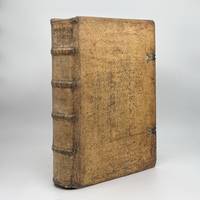
1527372109Coloniae: Petrus Quentel excudebat 1527. First Protestant Bible printed in Latin. Title-page with large woodcut vignette of arms of Cologne lion and gryphon rampant with and three crowns; numerous illustrations by Anton Woensam and ornamental initials throughout. Ff. 8 CCCXXV 1 LXXXVII i.e. 85 5. Manuscript marginal glosses in red chiefly calling out names names in Kings. 1 vols. Folio. Contemporary blindstamped pigskin over bevelled wooden boards clasps perished. Some soiling repairs to hinges painted fore-edge tabs. Very good. First Protestant Bible printed in Latin. Title-page with large woodcut vignette of arms of Cologne lion and gryphon rampant with and three crowns; numerous illustrations by Anton Woensam and ornamental initials throughout. Ff. 8 CCCXXV 1 LXXXVII i.e. 85 5. Manuscript marginal glosses in red chiefly calling out names names in Kings. 1 vols. Folio. The first Protestant Bible in Latin edited by Johan Rüdel Rudelius printed in Cologne by Peter Quentel or Quentell and notable for the wood engraved illustrations by Anton Woensam Anton von Worms particularly those at the head of each of the four gospels. Matthew faces an angle who is touching his stylus; a lion is seated beside Mark; a bull with Luke; and an eagle stands beside John.<br /> <br /> Quentel was the printer of Tyndale's quarto Cologne English New Testament known from a single surviving fragment in the Grenville Collection where this same illustration to Matthew appears. It is a reasonable inference that each of the four gospels would have carried an illustration. The project which had "'got as far as the letter K' the signature that would have taken the work well into Mark" ODNB was unfinished at the time of Tyndale's flight from Cologne in 1525. Quentel's print shop was raided but sheets of the first gospel translated from the original Greek and printed in English soon began to circulate in England. Tyndale settled in Worms where Schöffer completed an octavo printing of the first complete English New Testament in 1526 a facsimile of the Grenville fragment and its illustration were published in 1871.<br /> <br /> The blocks for the illustrations evidently survived the raid on the Quentel's shop and are used here at the head of each of the four gospels.<br /> <br /> A notable edition in the history of the printing of the Bible. Adams B1007; Darlow & Moule 6107 note; VD16 B2589; Copinger 210. Provenance: Cartusiae Buxiana Buxheim inscription on title; Thomas Raffle early signature on title; General Theological Seminary blindstamps bookplate Petrus Quentel excudebat unknown
15668596At Rouen. By C. Hamillon at the coste and charges of Richd Carmarden. Cum priuilegio 1566. 1566 Folio. Collation is Aa12 Bb10 A-l8A-Q8 R8 AA-SS8 TT6. Page size is 395x252 mm. A tall well margined copy bound in plain dark calf over bevelled oak boards. Rebacked at some time with heavy raised bands and two contrasting labels. The endpapers are uniformly toned and brittle due to the acidity of the boards. The general title page is printed in red and black and may have been washed. The Prologue leaves have old marginal repairs and are soiled. This copy lacks all but 3 leaves of sigs Aa and Bb having only the title and the two leaves of the Prologue. Ai has a fore edge repair with slight loss of text. Ai and Aii have slight worming at the lower corner. A iii has a repair to the lower margin. Qi Qviii and Sig. R have lower margins extended. AAi the title to The Thirde Parte is defective with loss at the foot. EEi and sigs.FF and GG have the lower margins extended. HHiv and HHv have repairs to the fore edge. MMvii and MMviii have repairs to a small burn affecting a few words. Apocrypha title and Aaa viii are repaired at the foot. The NT title page is laid down. Aaa viii is remargined on the fore edge. At the end it lacks all after Ooviii i.e. the final leaf of Revelations the Psalter and the Table to Find the Epistles. An attractive copy of Elizabeth I's Great Bible with the text almost complete. The text itself is substantially Coverdale's translation. PROVENANCE: Inscription Robert Walshaw was born at Flockton Mill in the parish of Thornil Thornhill and in the year of Our Lord 1693. Several signatures of Nathaniel Shirt and Nathaniel Shirt Jun. from 1758 onwards. Nathaniel Shirt married Ann Walshaw at Penistone 21 February 1758 and a Nathaniel Shirt was vicar of Kirkburton in the 1650s. All these locations are close to Huddersfield West Yorks. Herbert 119. STC 2nd ed. 2098. ESTC S121985. At Rouen. [By C. Hamillon] at the coste and charges of Richd Carmarden. Cum priuilegio, hardcover
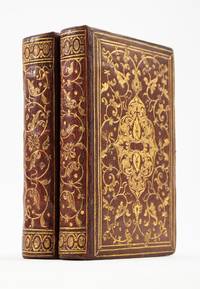
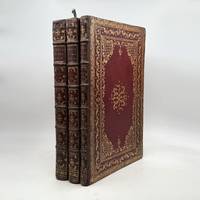
1568ST20921Lutetia Paris: Robert Estienne II 1568. 128 x 87 mm. 5 x 3 1/2". Two volumes. <br/> LOVELY CONTEMPORARY RED MOROCCO GILT covers with large central azured arabesque surrounded by curling vines with azured leaves smooth spines with similar vines head and foot of spines with egg-and-dart roll similar to one used by Claude de Picques second volume with faint blind lettering to spine all edges gilt perhaps with some minor early restorations but if so then done with such care as to preclude certainty. Housed in modern suede-lined calf-backed clamshell boxes with magnetic closures. Printer's device on titles and final page decorative initials and headpieces. Front pastedown of volume I with ex-libris of Georgios Arvanitidis. Renouard 171:1; Schreiber 239; Darlow & Moule 4633; Adams B-1670. See: Verron "Les Reliures de l'Entrée de Charles IX à Paris 1572 . . . réalisées par Claude Picques" in Bulletin du Bibliophile 2014 no. 2 pp. 282-98. Just a touch of rubbing to extremities front hinge of second volume open but everything quite tight text with occasional mild browning small spots trivial smudges or tiny worm trails but A BEAUTIFUL COPY clean and fresh internally and the bindings tight and lustrous with very bright gilt<br/> <br/> With exceptional visual appeal these two precious volumes shining with gilt and containing the Greek New Testament from the renowned Estienne family of printers are of special interest because of their typography their bindings and their provenance. With the expressed goal of printing Greek texts from manuscripts in the royal library at Fontainebleau François I established the post of royal printer in Greek in 1539 appointed Robert Estienne I 1503-59 to the position in 1542 and commissioned the renowned Claude Garamond to cut a new Greek font for this project. To design the type the King called on his own celebrated calligrapher Angelo Vergecio who produced in collaboration with Garamond three different sizes of what came to be called the Royal Types or "grecs du roi." According to Schreiber "These cursive Greek types are universally acknowledged as the finest ever cut." In 1548 and 1549 Robert Estienne issued the press' first Greek Testament known as the "O mirificam" edition for the opening of the dedication to the king in 16mo or "pocket" format using the smaller font of Garamond's "grecs du roi." In 1550 Robert a Protestant moved to Geneva while his son Robert II 1533-70 a Catholic remained in Paris and took over as the royal printer in Greek. Our 1568 Testament--the only one issued by the son--is a reprinting of the "O mirificam" edition but expanded with the critical apparatus from the 1550 folio edition issued by the father. Schreiber notes that our edition is interesting from a typographical point of view as it contains an even more minute version of the already small grecs du roi type for the Table of Chapters. The exceptionally pretty volumes are done in the style of royal binder Claude Picques fl. 1539-78 and employ a decorative roll very similar to one that appears on the spine of the vellum bindings Picques did for "L'Entrée de Charles IX à Paris" 1572. Our volumes once graced the library of Constantinople collector Georgios Arvanitidis 1876-1953 whose library included a number of Estienne Greek editions. They were later in the distinguished library of Frederick B. Adams 1910-2001 director of the Pierpont Morgan Library from 1948-69 and then president of the prestigious Association Internationale de Bibliophilie from 1974-83. And they were featured in the celebrated 1929 Gumuchian catalogue of 398 historically exceptional bindings as item #71. Robert Estienne II unknown
1592371810Rome: Ex Typographia Apostolica Vaticana 1592. First edition of the Clementine Bible. Edition of 500 copies. Engraved title page reading: Biblia sacra vulgatae editionis. Sixti Quinti Pont. Max. iussu recognita atque edita. Letterpress title page printed in red and black. Text in double columns. 12 1131 1 blank 23 1 blank pp. 1 vols. Folio 349 x 250 mm. Full reddish-orange levant morocco spine titled in gilt raised bands highlighted in black boards with single rule in black dated 1957 on turn-in. Fine. Leather-tipped slipcase. First edition of the Clementine Bible. Edition of 500 copies. Engraved title page reading: Biblia sacra vulgatae editionis. Sixti Quinti Pont. Max. iussu recognita atque edita. Letterpress title page printed in red and black. Text in double columns. 12 1131 1 blank 23 1 blank pp. 1 vols. Folio 349 x 250 mm. First edition of the official text of the Catholic Bible issued under sanction of Clement VIII and therefore known as the "Clementine Bible" and superseding the controversial and suppressed edition of Sixtus V of 1590. The text is preceded by Cardinal Bellarmino's preface the Decree of the Council of Trent on the canonical Scriptures and a brief by Clement VIII.<br /> <br /> "It is generally admitted that on the whole the Clementine text . is critically an improvement upon the Sixtine. . The Clementine Bible of 1592 remains to the present day the standard edition of the Roman Church" Darlow & Moule. <br /> <br /> Nice wide-margined copy of this notable edition. Brunet I 878; Darlow and Moule 6184; Adams B1101; P.M. Baumgarten Neue Kunde von alten Bibeln pp. 316-322. Provenance: W. A. Copinger bookplate; General Theological Seminary gift of Cornelius Vanderbilt and Dean Augustus Hoffman bookplates Ex Typographia Apostolica Vaticana unknown
158268152First Edition of the Roman Catholic Version of the Bible in English New Testament. BIBLE IN ENGLISH. New Testament. The New Testament of Jesus Christ Translated Faithfully into English out of the authentical Latin according to the best corrected copies of the same diligently conferred with the Greeke and other editions in divers languages: With Arguments of bookes and chapters Annotations. and other necessarie helpes for the better understanding of the text and specially for the discoverie of the Corruptions of divers late translations and for cleering the Controversies in religion of these daies: In the English College of Rhemes. Rheims: Printed.by John Fogny 1582. First edition of the Roman Catholic version of the New Testament in English. Small quarto 8 5/16 x 6 inches; 210 x 154 mm. 28 745 27 pp. Title within border of type ornaments decorative and historiated woodcut initials. Bound in 19th-century brown calf. Boards and spine ruled and stamped in blind. Spine with red morocco spine label lettered in gilt. Board edges and dentelles stamped in blind. All edges red. Marbled endpapers. Boards slightly rubbed. Four previous owner's bookplates on front pastedown. Front free endpaper with old ink notations quotation from Saint Augustine and small purple library stamp from the "Society of Jesus" in Milltown Park Ireland. The "Society of Jesus" is the Catholic group of which its members are the Jesuits. Title-page with cropped early annotation at top margin and same small "Society of Jesus" library stamp to lower corner. Some dampstaining and toning particularly to beginning. Some slight worming to fore-edge margin occasionally barely affecting text. Overall an excellent copy of the Rheims Bible. ìThe long title of The New Testament indicates at least in part the purpose which motivated William Allen and his small band of associates in the seminary of English Catholic refugees at Rheims. It was a losing battle for English Catholics merely to condemn the errors they claimed existed in other translations while declining to exhibit a translation which reflected their own critical principles.If the slow erosion of the Catholic faith in England was to be checked loyal Catholics would better withstand the taunts of Protestant Bible readers with the comfort and consolation drawn from a version of their own. As the title announces the translation was faithful to the Latin Vulgate but it also acknowledges careful comparison with the Greek. What the title does not specifically advertise is that Gregory Martin the chief translator borrowed freely from existing English versions. Close textual analysis has revealed many striking resemblances between the Rheims New Testament and CoverdaleÃs diglot of 1538. One new principle.was followed consistentlyótechnical words were transliterated in the text rather than translated the notes providing a clarification. Many of these words subsequently passed into the English language largely through the continuation of this practice by the revisers of the Authorized Version of 1611 who not only used these technical terms but also borrowed from Rheims many of its most felicitous and distinctive phrasesî In Remembrance of Creation 206. ìGregory Martin had originally translated the whole Bible into English but lack of funds permitted publication only of the New Testament in 1582. The long delay of twenty-seven years in completing the publication is underscored in the Preface of the Old Testament by reference to ëour poor estate in banishmentà In Remembrance of Creation 208. The annotations in the Old Testament are ascribed to Thomas Worthington who became President of the College at Douay in 1599. The ìApprobatioî is signed by three Professors at Douai. Darlow & Moule 231. Herbert 177. . In Remembrance of Creation 206. STC 2284. STC 2207. HBS 68152. $22500 Printed...by John Fogny hardcover books
1582P02<p><strong>Summary:</strong> Rhemes and Doway: John Fogny and Laurence Kellam 1582 and 1610. 4to 8.25 x 6.25 in. A complete Douai Old Testament and Rheims New Testament Bible in contemporary calf. The first edition of the Roman Catholic Bible in English in near-matching bindings with arguments and annotations.</p><p><strong>Description:</strong> Text in single column Roman font with 41 lines to the column. Annotations follow each chapter of Bible text. NT: Fifteen preliminary leaves with title within narrow frame 1582. OT Volume 1: Ten preliminary leaves with title within narrow frame 1609. OT Volume 2: Title within narrow frame 1610 followed by <em>Approbatio </em>on verso. Ends with <em>An historical table of the times… of the Old Testament</em> 24 pp. <em>A particular table of the most principal thinges… </em>27 pp. <em>Censura</em> <em>Errata</em>.</p><p><strong>Collation:</strong> a-c4 d2 A-Z4 2A-2Z4 3A-3Z4 4A-4Z4 5A-5D4 5E2 NT; cross6 crosscross4 A-Z4 2A-2Z4 3A-3Z4 4A-4Z4 5A-5Z4 6A-6S4 6T6 OT Volume 1; A-Z4 2A-2Z4 3A-3Z4 4A-4Z4 5A-5Z4 6A-6W4 OT Volume 2. Bible text complete. Doway volume 1 <u>lacks</u> title page and volume 2 <u>lacks</u> six final leaves of <em>A Particular Table</em>.</p><p><strong>Binding:</strong> Rhemes New Testament bound in Cambridge paneled boards rebacked somewhat rubbed with corners worn. Spine with five raised blind-lined bands and a gilt-lined morocco label with the words "New Testament" in gilt and a date of "1582" to foot of spine. The Old Testament volumes bound in brown calf rebacked with matching spines corners worn. Spines with four blind-lined raised bands and red morocco labels with "Holie Bible" in gilt and "I" and "II" in compartment below in gilt. Plain endpapers.</p><p><strong>Condition:</strong> Rhemes New Testament: Title page 1582 with "Richard Gibson his book 1650" next to imprinted date; occasional staining some thumbsoiling heavier soiling to the first few leaves of <em>Tables</em>; f2-3 marginal loss to fore-edge; Nnn-Ooo marginal fore-edge stain impacting side notes and a few words of text on Ooo2-3. Doway volume 1: <u>lacks</u> title page; A1-3 stain to gutter; some underlining a few words on every other page; B-Kk light stain to upper margin; Iiii-Kkkk and Oooo-Pppp light stain to bottom fifth of page; Xxxxx-Zzzzz and Hhhhhh-Rrrrrr stain to upper fourth of page; Tttttt4 final leaf loss of bottom fifth of page no text loss. Doway volume 2: A1 title page triangular piece torn from foot reducing border and loss of printed date; title also with ex-libris stamp and taped tear; Aa-Cc stain to bottom margin and fore-edge occasionally entering a few words of text; Oo-Qq light minimal lower marginal stain; Rr1-4 remargined without loss; Tt3-Uu4 stain to 25 percent of page; Yy1-4 reinforced without loss; 10 percent loss to final extant leaf with ex-libris stamp; <u>lacks </u>6U3-6W4 final six leaves of Tables.</p><p><strong>Note:</strong> The <em>editio princeps</em> of the Catholic Bible in English translated primarily by Gregory Martin from the Vulgate. A great number of English Bibles and English versions were available by the end of the sixteenth century yet none were acceptable to Catholics. With priests hard to come by and many fellow Englishmen who knew their Bible well a need arose for an English Bible that would be acceptable to Rome and allow adherents to refute the errors around them. Gregory Martin an Oxford scholar began the work in 1578 and it would take him four years. He translated about two chapters per day from Latin into English leaving a heavily Latinized translation. His work was submitted for review to William Allen the first president of the college at Douai. The New Testament was printed in 1582 with the Old Testament delayed by financial reasons until 1609-10. The work was used by the translators of the King James Bible who borrowed quite freely from the Rheims New Testament.</p><p><strong>References:</strong> Herbert 177; STC 2884; ESTC S102419 Rhemes Herbert 300; STC 2207; ESTC S101944 Doway; PMM 114; Daniell David. "The Rheims New Testament 1582." <em>The Bible in English: Its History and Influence</em> Yale University Press New Haven CT 2005.</p> John Fogny, Rhemes [and] Laurence Kellam, Doway hardcover
1510371469Leipzig: Wolfgang Stockel 1510. Title in red and black. A-DⶠEâ´ F-JⶠKâ´ L-Mâ¶. 68 leaves. Extensive annotations throughout in Latin in a contemporary Germanic cursive comprising both interlinear notes and marginal gloss. 1 vols. Folio 12x8-1/2 inches. Early pigskin and oaken boards a remboitage from a thicker volume worn front hinge split between A2 and A3. Housed in a blue cloth slipcase. Provenance: Duplum Bibliothecae Regiae Monacensis pencil annotation; John Pintard inscription presenting the book to; General Theological Seminary bookplate and inked stamps. Title in red and black. A-DⶠEâ´ F-JⶠKâ´ L-Mâ¶. 68 leaves. Extensive annotations throughout in Latin in a contemporary Germanic cursive comprising both interlinear notes and marginal gloss. 1 vols. Folio 12x8-1/2 inches. Edited by Johann Kusthuert this printing of the Epistles of Paul was intended for the student market with the introduction addressed to studiosis sacarum litterarum tyronibus. In addition the colophon reads: Impressum ad altissimi Dei laudem ac studiosorum Sacre Scripture tyronum perfectum in officina libraria prouidi viri Vuolffgangi Stockel ciuis Liptzensis anno Domini 1510 quarto kalendis Septembris.<br /> <br /> The annotations and marginal gloss are impressive and very similar though in a different hand to the copy described by Rosenthal now at the Beinecke suggesting they are by a student at the same institution: "The present copy comes with a vast manuscript apparatus in Latin covering the entire text from St. Jerome's general preface to the last sentence of the last epistle. The annotation . is uniformly intense throughout. The script is a very small at times microscopic Germanic cursive and there is evidence of careful layout especially in the marginal gloss." Estimating the annotations to be approximately 80000 words Rosenthal describes the interlinear notes as "frequently far more than simole reading aids." He continues: "The marginal gloss includes an argumentum for each chapter and its subdivisions . There are also occasional citations from authorities such as St. Thomas and Ambrose."<br /> <br /> It is a handsomely printed volume with the title in large red letters above an 11-line subtitle in black. The verso of the title comprises a table of contents of the Pauline epistles and is followed by an introduction by Kusthuert.<br /> <br /> On the duplicates sold by the Munich royal library including the present volume see: Wagner Bettina. "'Duplum Bibliothecae Regiae Monacensis': The Munich Court Library and Its Book Auctions in the Nineteenth Century." The Papers of the Bibliographical Society of America vol. 111 no. 3 2017 pp. 345-77. Pintard 1759-1844 was a prominent New Yorker of Huguenot origin patron of education and one of the earliest and staunchest advocates for the preservation and study of the history of New York and the United States. Pintard began to work towards the establishment of a historical society in the city in early 1804 and he was the leader in the organization of the New-York Historical Society in November 1804. He was also a patron of the old French Huguenot Church of St. Esprit and the General Theological Seminary to whom he donated this volume in 1826.<br /> <br /> Scarce. OCLC locates three copies in Germany the aforementioned copy at Yale described by Rosenthal and the present example. Rosenthal B.M. Printed books with manuscript annotations 105 for a similarly annotated copy of the same edition; Panzer vii p. 169; VD16 B 4980. Not in BM STC Germany Adams or Darlow & Moule [Wolfgang Stockel] unknown
159062507Rome, Typographia Medicea, 1590 (-1591). Folio. Completely uncut in the original blank interim wrappers (with slight offsetting to verso of front wrapper). Newer paper backstrip matching the paper of the wrappers. Some leaves browned. Occasional brownspotting. An overall excellent copy. Housed in a old vellum chemise with ties and handwritten title (EVANGELIUM) to spine. Old, amorial, vague red stamp to title-page, colophon, and p. 97, from the Bibliotheque Impériale (now Bibliotheque Nationale), with a small deaccession-stamp to title-page. Magnificently illustrated with 149 large woodcut engravings in the text. 368 pp. Arabic text within double-frame border througout. Beautifully printed on very heavy paper.
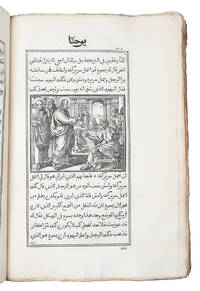
159062507Rome Typographia Medicea 1590 -1591. Folio. Completely uncut in the original blank interim wrappers with slight offsetting to verso of front wrapper. Newer paper backstrip matching the paper of the wrappers. Some leaves browned. Occasional brownspotting. An overall excellent copy. Housed in a old vellum chemise with ties and handwritten title EVANGELIUM to spine. Old amorial vague red stamp to title-page colophon and p. 97 from the Bibliotheque Impériale now Bibliotheque Nationale with a small deaccession-stamp to title-page. Magnificently illustrated with 149 large woodcut engravings in the text. 368 pp. Arabic text within double-frame border througout. Beautifully printed on very heavy paper. <br/><br/><em>The scarce editio princeps of the Arabic translation of the New Testament magnificently printed in Granjon's famous font considered the first satisfactory Arabic printing type appearing here for the first time and beautifully illustrated with 149 woodcut illustrations in the text. This work constitutes the very first printing by the Typographia Medicea-press a printing-house set up by Pope Gregor XIII and Cardinal Ferdinando de Medici in order to promote and distribute Christian scriptures to the East. This splendid work is considered the first successful printing of Arabic. Apart from the Latin part of the title-page and the colophon the book is in Arabic throughout. Two issues of the work were printed almost simultaneously the Arabic-only text which has the year 1590 on the title-page and 1591 on the colophon and the interlenear Arabic-Latin edition which has 1591 on the title-page. The Arab-only edition with 1590 on the title-page is generally considered the first. "Its first great Arabic publication was this edition of the Gospels bearing the date 1590 on the title page and 1591 at the end. Two versions appeared one solely in Arabic and one with an interlinear Latin translation." Library of Congress.The work was edited by Giovanni Battista Raimondi 1536-1614 a renowned Orientalist and professor of mathematics at the College of the Sapienza in Rome. Raimondi had travelled extensively in the Middle East and had thorough knowledge of Arabic Armenian Syrian and Hebrew. He is however most famous for being the editor at the Typographia Medicea-press; together with French engraver Robert Granjon who also created the Arabic typography of the present work "bettered all previous attempts to print in Arabic in Europe and would remain unsurpassed long after the press had closed. Boogert "Medici Oriental Press Rome 1584-1614"."Antonio Tempesta the engraver cutter: Leonardo Parasole had studied under Santi di Tito and Joannes Stradanus at the Accademia del Disegno in Florence later working with Stradanus and Vasari on the interior decoration of the Palazzo Vecchio in Florence before travelling to Rome where he executed various commissions including frescos for Pope Gregory XIII in the Vatican and decorations for the Villa Farnese. Simultaneously with his frescos and panel paintings he executed a large number of engravings. The illustrations for the present work are remarkable examples of Tempesta's work noteworthy for their clear composition and narrative of the episodes depicted. Despite the extremely high quality of the prints the press never became an economic success and it went bankrupt in 1610. Scholars have noticed that presenting a work with beautiful scriptural illustrations as the present to Arabic-speaking Muslims when Islam forbids religious illustration showed little understanding of the culture and almost certainly hindered Pope Gregory XIII's missionary efforts."The press was not only an intellectual enterprise; it was also a commercial one. Raimondi clearly hoped to sell his books in the East rather than the West because the selection of the works he produced showed little consideration with the type of material European scholars in this period needed. While the works failed to sell in the Ottoman Empire however they did significantly stimulate the study of the Middle East in Europe.Ferdinando de' Medici had ordered Raimondi to print 'all available Arabic books on permissible human sciences which had no religious content in order to introduce the art of printing to the Mohamedan community.' Only more than a century after the Medici Press in Rome had closed did it finally have the envisaged impact in the Levant; Ibrahim Müteferrika the first Muslim printer referring to it in his plea to the sultan to allow him to open his own printing house at Istanbul which happened in 1729." Boogert "Medici Oriental Press Rome 1584-1614".The copy was previously in the Bibliothèque Nationale in Paris at the time when it was entitled "Bibliothèque Imperiale" which was its name inbetween from 1849 to 1871. Thus the book entered the library in Napoleonic times and was later deaccessioned. Brunet II 1122-23Schnurrer 318Adams: B:1822 </em> hardcover
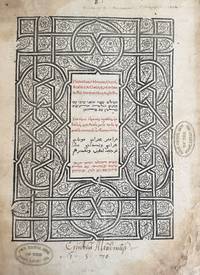
1516371021Genoa: Petrus Paulus Porrus 1516. Title printed in red and black within woodcut arabesque border printer's device on final leaf. Parallel text in Hebrew Latin Greek Arabic and Chaldaean Aramaic 4 columns to a page 41 lines. 13 woodcut floriated initials. A10 B-Z8 &8 con6; 200 leaves complete. Folio 13-1/8 x 9-3/8 inches. Contemporary blind tooled pigskin over bevelled wooden boards boards with repeated roll of hound hunter and stag spine with floral tools. Clasps perished early repairs with vellum at lower corners; spine darkened with chip at foot joint starting wormholes to the covers. Toning throughout worm holes throughout but heavier to the preliminary and terminal leaves paper loss not affecting text at the lower outer corners of the first 3 leaves minor dampstaining at the lower corners of most leaves and extending from the top inner margin. Scattered early marginalia. Title printed in red and black within woodcut arabesque border printer's device on final leaf. Parallel text in Hebrew Latin Greek Arabic and Chaldaean Aramaic 4 columns to a page 41 lines. 13 woodcut floriated initials. A10 B-Z8 &8 con6; 200 leaves complete. Folio 13-1/8 x 9-3/8 inches. The Genoa Psalter also known as the Octaplum or Quadruplex Psalter was the first polyglot psalter to be published and the first polyglot edition of any part of the Bible. Financed by the Oriental language scholar Bishop Agostino Giustiniani and printed in Genoa in 1516 it presents the psalms laid out in eight columns i.e. four per page on double-page spreads: in Hebrew a Latin paraphrase the Vulgate Latin the Septuagint Greek Arabic Chaldean Aramaic a Latin paraphrase and the editor's notes. "A monument of Renaissance typography this Psalter was linguistically the most ambitious work attempted to date and the first Polyglot work ever published. It provides the Psalms in five languages as well as a marginal scholarship based largely on rabbinic sources. The Arabic text is one of the first two texts and the first biblical text ever printed in this language. The Hebrew types used in this book were apparently never used again" B. Sabin Hill Hebraica from the Valmadonna Trust The Piermont Morgan Library 1989 no. 18.<br /> <br /> Notably within a lengthy editor's note to Psalm XIX is what is considered the first printed biography of Christopher Columbus along with a very early description of his voyage. A native son of Genoa Giustiniani presents the discovery of the new world as a fulfilment of Biblical prophecy appropriately glossing verse four of Psalm XIX to include his biography of Columbus: "Their sound is gone out through all the earth and their words to the end of the world." <br /> <br /> The text of the biography of Columbus written a decade after his death includes a brief account of his childhood and continues at length on his discovery of America. Translated from the Latin it begins: "And so their words have reached unto the ends of the earth at least in our own times in which by the marvelous daring of Christopher Columbus of Genoa almost another world was discovered and joined to the community of Christians. And since Columbus often declared that he was chosen by God so that through him this prophecy would be fulfilled I did not consider it unsuitable to include his life here. Therefore Christopher surnamed Columbus a Genoese by birth . lived in our age and through his own efforts explored more lands and seas in a few months than almost all other mortals had done throughout all previous ages . More swiftly than the Portuguese had done he approached new lands and new peoples and at last penetrated regions unknown before now. The news of this matter quickly reached the King who - both out of rivalry with the Portuguese kings and a desire for such new marvels and glory that might accrue to him and his descendants - after long discussions with Columbus finally ordered two ships to be outfitted. With these Columbus set sail from the Fortunate Islands directing his course slightly off the western line . After many days of sailing they had covered great distances. While the others having lost all hope urged a change in course Columbus persisted asserting by reason and conjecture that continuing but a little longer might lead them to discover continents or islands. Nor was he wrong. On the following dawn they sighted land. From this event immense confidence arose in human minds. Later it was learned that these were islands and observations were made of certain peoples there uncultivated and prone to raids on their neighbors even devouring human flesh like wolves. There were violent encounters yet eventually some of these islanders were brought safely to Spain astonishing and delighting all who saw them because they were at first timid unfamiliar with approach easy to persuade and marveling at everything as new."<br /> <br /> An important and desirable work from a liturgical linguistic and historical perspective. Adams B1370; BM STC Italian p. 97; Darlow & Moule 1411; Sabin 66468; European Americana 516/4; Harrisse BAV 88; JCB 3 I:64; Smitskamp 236; Roper Early Arabic Printing in Europe in Sprachen des Nahen Ostens und die Druckrevolution p. 132; Vinograd Genoa 1. Provenance: Cenobii Alois 1570 inscription below title; Bibliotheca Regia Monacensi pencil inscription on the inside front board identifying it as a duplicate; General Theological Seminary ink and blindstamps and other markings Petrus Paulus Porrus unknown
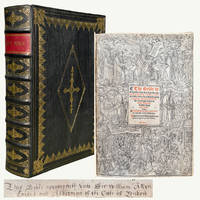
1540T75<p><strong>Summary</strong></p><p>Pulpit Folio 14.25" x 10.25". An early folio of the second edition of the Great Bible with all five title pages. A beautifully rebound copy with first ownership provenance of a famous knight merchant and mayor of the city of London.</p><p><strong>Description </strong></p><p>General title page 1541 printed in red and black featuring Henry VIII above distributing his <em>Verbum Dei</em> to Cromwell and Cranmer God barely squeezed in among the clouds at the top. Archbishop Cranmer on the left distributing the Bible to the clergy and the Cromwell on the right is distributing the Bible to the nobility. Below the people are without Bibles as the Great Bible was chained to pulpits and proclaim only <em>Vivat Rex</em> aside from the few who are imprisoned on the bottom right. Calendar also printed in red and black. Text in two column black letter with 62 lines to the full column. The beginning of each chapter features a floriated or historiated woodcut initial with occasional metal cast capitals. Title pages to the second third and fourth parts also printed in red and black bordered by the relevant woodcuts to that section. The New Testament title page n.d. in red and black like the general title except that Cromwell's arms are removed. Concludes with <em>The Table.</em></p><p><strong>Collation</strong></p><p>6 a-k8 l4 first part A-N8 O4 second part Aa-Pp8 Qq4 third part Aaa-Hhh8 Iii6 fourth part Aa-Nn8 -Nn6-8 New Testament. <strong><em>Lacks</em></strong> the final leaf of Revelation and two leaves of the Tables provided in expert facsimile. All titles are present.</p><p><strong>Binding</strong></p><p>Rebound in period appropriate back calf. Boards paneled in gilt with gilt rolls and corner fleurons around a central arabesque design. Spine with six blind-lined raised bands and elaborate gilt tooling to compartments. A red gilt-lined morocco label with the words "Holy Bible" and a date of 1540 lettered in gilt to the foot. Endpapers renewed.</p><p><strong>Condition</strong></p><p>Intermittent staining to lower gutter and head; trimmed at head with headlines cropped in Pentateuch and just touching a few sidenotes; 3 reinforced and remargined; 4 Kk1 lower corner repair without loss; h45 lower margin reinforced; l4 Rr6 laid down; Nn5 repair to lower gutter without loss; a well-preserved copy of an important early Bible.</p><p><strong>Provenance </strong></p><p>Early ownership inscription to foot of first Calendar leaf reading "This Bible apertayneth unto Sir William Allyn Knight and Alderman of the City of London." William Allyn 1515-1586 was a prominent London merchant and Lord Mayor 1555–56. The location where Cromwell's arms are removed on the NT title bears a merchant's device dated 1574.</p><p><strong>Note</strong></p><p>An impressive copy of the scarce Great Bible so called due to its imposing size. This copy like many from the first seven editions is issued in a mixed state. The general title is from April 1540 but Genesis 1 and Matthew 1 from May 1541. The New Testament title page is also from a 1541 copy as Cromwell's arms are removed. The few small flaws notwithstanding this is an attractive copy of an almost complete early Great Bible that is becoming increasingly scarce in commerce.</p><p><strong>References</strong></p><p>Herbert 53; STC 2070; Luborsky and Ingram 2070.</p> Edward Whytchurche hardcover
1566U07<p><strong>Summary</strong></p><p>Quarto 8.5" x 6.25". An attractive and profusely illustrated quarto Tyndale New Testament. This is the third edition of Jugge's revision and the final Tyndale New Testament. A scarce book in a beautifully executed period-appropriate binding with nearly one hundred woodcuts.</p><p><strong>Description </strong></p><p>General title page in expert color facsimile. Calendar printed in red and black. Eighty-three woodcuts in ninety-four occurrences including a map of Palestine and a map of St. Paul's journeys. Text in single column black letter type in paragraph format. This handsomely printed revision by Jugge is lavishly illustrated combining the woodblocks from the two previous editions with the blocks by Virgil Solis that were later used in the Bishops' Bible. The large title-page portrait features young king Edward who awarded Jugge a license to print the first edition. First chapter woodcut initials cover eleven lines of text. Divisional printed title to the Epistles of St. Paul and Revelation. Text presented with 38 lines to the full column. Jugge's revision served as an effort to bring the English translation closer to the original Greek. The last of the over forty editions of Tyndale's New Testament with the headlines in Roman type.</p><p><strong>Collation</strong></p><p>flueron8 -fleuron1-3 par10 A-Y8 -S1 Aa-Pp8 Qq4. 312 ff. <strong><em><u>Lacks</u></em></strong> 4 leaves altogether title page dedication first leaf of calendar John 21 – <strong>all provided in color facsimile</strong>.</p><p><strong>Binding</strong></p><p>Beautifully rebound in black calf. Covers with central gilt arabesque design featuring flowers and swirls surrounded by small circles within a triple paneled border with corner fleurons. Spine with five raised bands and elaborate gilt tooling to compartments. Plain endpapers.</p><p><strong>Condition</strong></p><p>par4 lower marginal repair; E5 marginal repair; M8 N1 marginal loss with a few missing letters in facsimile; trimmed and cropped to fore-edge reducing marginal notes and cross references; final leaf of Tables stained; infrequent light toning occasional staining but overall clean and crisp.</p><p><strong>Provenance </strong></p><p>par4 with "Edmund Barber" to top of page. The previous owner reports that the Bible fell out of a wall of a cottage during demolition in the 1960s somewhere in West London.</p><p><strong>Note </strong></p><p>William Tyndale's translation of the New Testament was the first to be printed in the English language. The father of the modern English language and the father of the English Reformation Tyndale was spurred on by the desire to "cause a boy that driveth the plow to know more of the Scripture" than the clergy of the day. He would be killed for this cause in 1536. The translation was bitterly opposed by Bloody Mary and many copies of Tyndale's Bibles were burned. Research has shown that at least eighty percent of the King James Version is Tyndale's.</p><p><strong>Scarcity</strong></p><p>USTC records 21 copies in holding with most copies lacking the title page. RBH records only 1 copy at auction since 1936 with that copy lacking over 200 leaves.</p><p><strong>References</strong></p><p>Herbert 121; STC 2873; ESTC S122998; USTC 506525; Luborsky 2873; PMM 58 1526 edition.</p> Richard Jugge hardcover
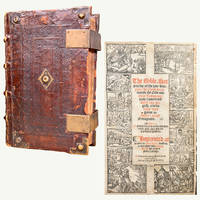
1549T61<p>London: By S. Mierdman for John Daye and William Seres 1549. Folio 11.75 x 7.75 in. </p><p><strong>Collation:</strong> Aa2 Bb6 Cc8 D-R6 S4 First Part: Gen-Deut; Aa-Tt6 Second Part: Josh-Job; Aa-Gg6 Hh8 Ii-Zz6 AAa8 Third Part: Psalms-Malachi; Aaa-Mmm6 Nnn4 Fourth Part: Apocrypha; A-T6 V8 Fifth Part: New Testament. <strong><em>Lacks</em></strong> D1 Gen 1-2 provided in good facsimile. </p><p><strong>Description: </strong>General title page 1549 surrounded by a border comprised of 14 woodcuts. Title and Almanacke printed in red and black. Two large half-page engravings before Psalms and Isaiah. Many woodcuts throughout the text. Text in black letter double columns with 65 lines to the full column. Text is ruled in red from Genesis through 2 Samuel and again throughout the New Testament. Text divided into five parts with divisional title pages to each part surrounded by two ornamental blocks and two woodcuts above and below depicting narrative scenes. This Bible contains the famous note in 1 Peter 3: "And yf she be not obedient and healpfull unto hym endevevoureth to beate the feare of God into her heae that thereby she maye be compelled to learne her duitie and do it" and is sometimes referred to as the "wife-beater Bible." The text includes Tyndale's chapter summaries and prologues including his notes in Revelation where he refers to the Pope as the antichrist.</p><p><strong>Binding:</strong> Contemporary brown calf over beveled oak boards. Covers featuring a mid-sixteenth century blind roll design within concentric frames. All metal corner- and centerpieces intact. Clasps and hasps were likely added later. Plain endpapers. Extremities lightly rubbed and scuffed but wonderfully preserved overall.</p><p><strong>Condition:</strong> Clean and bright with good margins; some of the red rules slightly faded; a few leaves with lower corner repair O4 R2 fore-margin repair Ee5-6 none of which impact the text; I45 in New Testament with small repair reducing one letter to headline; some thumbsoiling to edges; A near complete copy in a stunning contemporary binding and in far better condition than typically seen. </p><p><strong>Provenance: </strong>"David K. Parsons 2005" to front pastedown; laid down copperplate engraving depicting the final interview of John Rogers with his wife and eleven children just prior to his burning at the stake by Bloody Mary; birth records of James and Elizabeth Sage to blank leaf before Apocrypha; ex-libris stamp of David Parsons to final blank leaf. </p><p><strong>Note:</strong> The Matthew's Bible also referred to as the Matthew's-Tyndale Bible was printed in 1537 1549 two editions and 1551. Copies of the 1537 first edition are very difficult to find and rarely complete. The text was reprinted twice in 1549: one edition with the notes slightly revised by Edmund Becke and the "wife-beater" note at 1 Peter 3 this copy and the other edition being a straight reprint of the 1537 text without woodcuts and a notoriously bad printing. This edition boasts numerous woodcuts in the text especially the Pentateuch the gospels and Revelation. </p><p>John Rogers was a central figure in the history of the English Bible. Best known as the editor of the Matthew's Bible Rogers deliberately worked under the pseudonym "Thomas Matthew" to distance the volume from the condemned and dangerous name of William Tyndale. This strategic choice allowed the Bible to circulate more freely at a time when Tyndale's translations were officially banned. In reality roughly two thirds of the Matthew's Bible consists of Tyndale's work including Genesis through 2 Chronicles and the entire New Testament. Rogers helped preserve and disseminate Tyndale's translation during a period when doing so openly could invite severe punishment.</p><p>Rogers' faithfulness to Scripture ultimately cost him his life. During the reign of Queen Mary I when she sought to return England to Catholicism Rogers was arrested for heresy and became the first Protestant martyr of Mary's persecution. In 1555 he was burned at the stake at Smithfield reportedly in the presence of his wife and children bearing witness to his convictions to the end. The Matthew's Bible is considered to be the primary version of our English Bible.</p><p><strong>References:</strong> Herbert 74; Harold H. Hutson and Harold R. Willoughby "Decisive Data on Thomas Matthew Problems" <em>Journal of Bible and Religion</em> Vol. 6 No. 2 Spring 1938 77-82 121-128.</p> (S. Mierdman for) John Daye, and William Seres hardcover
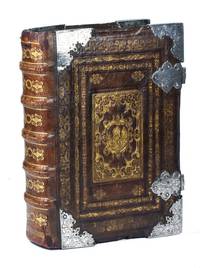
1590A27E2B01U79ODelft: Bruyn Harmansz. Schinckel colophon: printed by Aelbrecht Heyndricksz. 1590. Contemporary gold panel-stamped and gold-tooled calf over wooden boards sewn on 5 supports with spectacular finely engraved silver furnishings: 8 corner pieces 2 clasps 2 catch plates and 2 anchor plates the catch and anchor plates with four female virtues: Justice/Justitia with sword and scales Faith/Fides praying toward the light of the sun Charity or Love/Caritas with 2 children and Hope/Spes holding a cross and treading on a snake; the corner pieces engraved with winged heads that appear to represent the four compass winds Boreas Notus Euros Zephyrus each of the 8 different also with engraved decoration on their edges; and each clasp with an oval martyrdom scene flanked by birds with the feet toward the foot of the book: 2 men tied to a tree and being stoned in the upper clasp and a women being accosted by 2 men in the lower all 14 pieces of silverwork with floral and other decoration and with their edges cut to decorative shapes. Each board has the same central rectangular panel-stamp 98 x 61 mm with an oval scene of Charity or Love/Caritas with 3 children and with castle towers in the background on either side that on the viewers right on a mountain with strapwork decoration around the oval containing the makers initials B and H and inside the rectangle the two decorations linked at the sides; with 2 gold-tooled double fleurs-de-lis above the panel-stamp and 2 below the whole enclosed by three gold-tooled frames each made with a different decorated roll separated by blind-tooled multiple fillets; gilt and elaborately gauffered edges. Rebacked in gold-tooled calf each compartment with a decorated oval with a decoration on either side but with the original endpapers. 4to 23.5 x 17.5 cm. With a general title-page and three part-titles each with the same woodcut device oval Biblical emblem with a quotation from Matthew 13:44 a mirror image copy of that in the 1562 first edition in a separate elaborately decorated cartouche signed AvL the combination: Dutch printers devices 0671 p. 970; 3 engraved folding maps plate size 23.5 x 17 & 29.5 x 17 cm drawn by Petrus Plancius and executed by Baptista van Doetecum for the present Bible and the folio edition of the same year showing Eden the route of the Exodus and the Holy Land; ca. 20 woodcut illustrations in the text mostly about 4 x 5 cm but the largest 10 x 6 cm a woodcut arabesque tailpiece about 21 woodcut decorated initials 3 series plus more than 50 repeats. Printed mostly in 2 columns with shoulder notes set in textura gothic types with incidental roman and with diamond-head musical notes for the metrical Psalms and a small 3.2 mm vine-leaf ornament preceding many chapter headings not in Vervliet but similar to Vervliet 112 & 133. 4 parts in 1 volume. An unrecorded issue 1 of at least 7 of a rare and important 1590 Bible edition the corrected "deux aes" Bible based on the first edition of 1562 New Testament 1559 which remained the standard Dutch Reformed Bible until the official Dutch States translation published in 1637. It was translated from Luther's German by Godfried van Wingen the New Testament by Johannes Dyrkinus after comparison with several other versions and includes many notes some also taken from Luther and some by Augustin Marlorat as well as Petrus Danthenus's metric psalms with music notes. The Amsterdam bookseller Laurens Jacobsz. initiated the publication of the present corrected text of the "deus aes" Bible and the maps to accompany it publishing the folio edition with maps himself but sharing the quarto edition with four other publishers. Although Jacobsz.'s name does not appear in the present issue he was originally trained as a binder operated his shop at the sign of the gold-tooled Bible and Fontaine Verwey gives evidence to link him with the panel stamp on the present binding. He may therefore have bound copies or had them bound for the other publishers. Bibliasacra Typ. Batava and the STCN together record only 8 copies of all issues combined at least half of those lack leaves and some of the copies with all leaves have defective leaves or lack the maps so that they record at most 2 other complete copies with maps.With a few leaves slightly browned a water stain in the second half and the first preliminary quire of part 1 faint outside a few quires small tears in the maps and a few worm holes or other defects in the paper mostly in the margins of the last few leaves but still in good condition. The binding has been skilfully re-backed probably in the early 19th-century and is slightly rubbed with a crack along the edge of the panel-stamp on the front board and a few minor cuts and scrapes but also still in good condition and only slightly trimmed. A very rare complete copy of an important Dutch Reformed Bible in an unrecorded issue and in a stunning contemporary gold panel-stamped and gold-tooled binding with engraved silver furnishings.l Bibliasacra 1590.B.dut.BHS.c & AHa b & c; Le Long p. 748; Poortman Bijbel en prent I pp. 112-119 184-187 & 215; STCN 336510985 & 054873002 334453534; Typ. Batava 602; cf. Darlow & Moule 3293; for the panel-stamp: H. de la Fontaine Verwey "Amsterdamse uitgeversbanden van Cornelis Claes en Laurens Jacobsz" in: Uit de wereld van het boek II pp. 33-48 at pp. 41-43. Bruyn Harmansz. Schinckel (colophon: printed by Aelbrecht Heyndricksz.), hardcover
1590371036Rome: Ex Typographia Apostolica Vaticana 1590. First edition of the Sixtine Vulgate Bible large paper copy. Engraved illustrated title-page. Title in red and black text in double columns. 3 vols. Folio. Italian full red morocco binding of the seventeenth or early eighteenth century elaborately gilt with triple floral scrollwork borders stars in cornerpieces about a central motif stencilled paste paper endsheets a.e.g. Boxed. First edition of the Sixtine Vulgate Bible large paper copy. Engraved illustrated title-page. Title in red and black text in double columns. 3 vols. Folio. The engraved title reads: Biblia sacra vulgatae editionis ad concilii Tridentini praescriptum emendata et a Sixto V.P.M. recognata et approbata.<br /> With the preliminary document the Bull of Sixtus V beginning 'Aeternus ille caelestium terrestriumq. rerum omnium conditr ac moderator Deus .". This is often lacking.<br /> <br /> An extraordinary copy of the Sixtine Bible containing the Vulgate text as edited by Pope Sixtus V intended as the first ecclesiastically authorized text to be used throughout Christendom. "In its text it comes closer to R. Stephanus' Bible of 1538-40 than to the Louvain editions" Darlow & Moule who discuss the textual variations. This copy includes examples of the printed overslips required to correct hurried printing. The association with Aldus II suggested by Renouard and lasting long thereafter is spurious.<br /> Pope Sixtus V died soon after the book was printed and was followed by three short-lived popes. The Sixtine Bible had "aroused antagonism among both clergy and laity" and was swiftly condemned; the edition was withdrawn by Pope Clement VIII soon after his elevation to the papal throne in 1592 and many copies were destroyed. Preparations began in 1591 for a new edition of the Vulgate printed in 1592 and known as the Clementine Bible which long remained the standard Vulgate text.<br /> <br /> The ordinary issue of this printing measures 13-3/8 inches tall as in the Brooker copy sold 2024; the present copy measures 15-3/4.<br /> <br /> AN OUTSTANDING LARGE PAPER COPY OF A NOTABLE EDITION. Copinger 521; Darlow & Moule 6181; Adams B1098; BM STC Italian 1465-1600 p. 93; EDIT 16 CNCE 5805. Provenance: Vincenzo Maria Carafa 1739-1814 Prince of Roccella and Duke of Bruzzano engraved bookplates MS shelfmark :H 5; Douglas Maxwell Moffat bought of Quaritch in Dec. 1939; General Theological Seminary Ex Typographia Apostolica Vaticana unknown