21 006 résultats
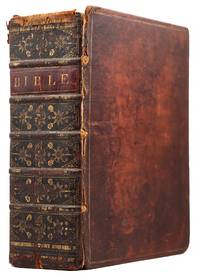
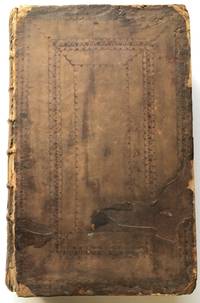
183333830New Haven: Durrie & Peck; Sold by Hezekiah Howe & Co. and by N. & J. White 1833. 8vo 23 cm; 9". xvi 907 pp. <br><br>First edition of the Bible in English Authorized Version tailored for American readers by Noah Webster 17581843. "His purpose was to remove obsolete words and those offensive to delicacy" Rumball-Petre Webster himself further stipulating "To avoid giving offense to any denomination of christian sic I have not knowingly made any alteration to the passages of the present version on which the different denominations rely for the support of their peculiar tenets" Preface p. iv. Webster further explains that the purpose of his revisions is to make the language clearer and purer so as to not "divert the mind from the matter to the language of the scriptures and thus in a degree frustrate the purpose of giving instruction" Preface p. xvi.<br>Â Â Â Â Webster considered his work on the revision of the Bible more important than that on the dictionary and was sorely disappointed at the Bible's poor reception among all levels of readers.<br>Â Â Â Â Provenance: 19th-century ownership signatures of Luther P. Hubbard undated and R.T. Hall 1894; after ca. 1954 in The Howell Bible Collection Pacific School of Religion properly released. <br>Â Â Â Â <br>Â Â Â Â Darlow & Moule 1793; Hills 826; Rumball-Petre 197. Publisher's sheep spine dry and tending to flake; front board once detached and resecured with a cloth tape repair at the hinge inside. Foxing as usual. Priced to encourage better repair to its binding this is a complete sound copy. Durrie & Peck; Sold by Hezekiah Howe & Co., and by N. & J. White hardcover books
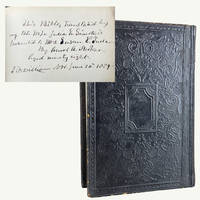
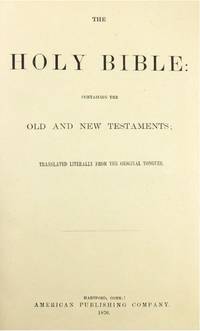
1876R69<p><strong>Description: </strong>Quarto 9.75" x 6.5". Text in two column Roman font. 3-892 Old Testament 1-276 pp. New Testament. The books of the Old Testament are arranged in Jewish order with Chronicles at the end. One of 950 copies.</p><p><strong>Binding: </strong>Rebacked in matching black calf with original spine laid down. Embossed cloth spine with "Holy Bible" and "Translated by Julia E. Smith" lettered in gilt to spine. All edges speckled red. Rubbed to edges with loss of small portions of relaid spine.</p><p><strong>Condition:</strong> Crisp clean and bright.</p><p><strong>Provenance: </strong>Note inked on front flyleaf reads "This Bible translated by my late wife Julia E. Smith is presented to Mrs. Susan E. Tullar by Amos A. Parker Aged Ninety Eight – Fitzwilliam N.H. June 20th 1889."</p><p><strong>Note: </strong>A remarkably well-preserved copy of the first and only Bible translated entirely by a woman. Julia E. Smith 1792–1886 of Glastonbury Connecticut used her knowledge of Latin Greek and Hebrew to render the entire Bible into English. A member of the Sandemanian sect which sought to restore the Apostolic church she dedicated eight years to her translation but did not publish it for another twenty-one years.</p><p>Sampson recounts Julia's deep passion for the project: "I cannot express how greatly I enjoy the work of translating and now the real meaning of different texts would thrill through my mind till I could hardly contain myself." According to one account she became so engrossed in her work that she often failed to hear the dinner bell and had to be summoned by her sisters.</p><p>Elizabeth Cady Stanton in her radical and controversial work <em>The Woman's Bible</em> remarked that Smith's translation would become a rarity in the next century "much sought after by bibliomaniacs to say nothing of scholars who will want it for its real value."</p><p><strong>References:</strong> Herbert 2202; Hills 1918; Rumball-Petre 201; Stanton Elizabeth Cady. <em>The Woman's Bible</em>. Sampson Emily. <em>With Her Own Eyes: The Story of Julia Smith.</em></p> American Publishing Company hardcover
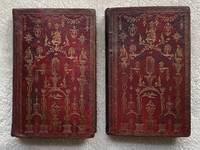
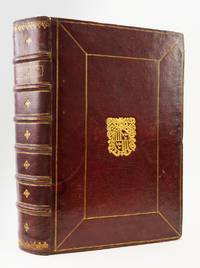
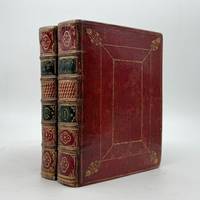
1787271Edinburgh: Assigns of Alexander Kincaid 1787. Very good. Two works in two volumes. Large Octavo 211 x 130 mm. Collation: BIBLE: A-4A8 complete. PSALMS: A-E8 complete. Contemporary Scottish bindings: red morocco elaborately tooled in gilt to a "Chippendale" motif smooth spines gilt; marbled endpapers a.e.g. in vol. 1 the front joint expertly repaired and tape removed from inner hinges. Preserved in a protective cloth case. INNOVATIVE AND HIGHLY UNUSUAL SCOTTISH CHIPPENDALE ROCOCO BINDINGS COMBINING CHINOISERIE AND NEOCLASSICAL ELEMENTS EXHIBITING THE INDEPENDENCE OF SCOTTISH WORK AT THIS TIME. <br /> <br /> The present example is a striking hybrid of late 18th-century decorative art in Britain the likes of which we have not encountered hitherto. Here "oriental" birds and peacocks are juxtaposed with patriotic depictions of Britannia uncharacteristically surmounted by a fleur-de-lis bold anchors columns sunbursts dripping garlands flowers sheaves of wheat and urns. Presented in the Chippendale style the present binder who is as yet unnamed introduces rococo ornaments while enclosing all of the above with an unmistakably neoclassical greek-key roll. <br /> <br /> EIGHTEENTH-CENTURY ROCOCO BINDINGS OF THIS QUALITY ARE RARE PARTICULARLY THOSE EXECUTED IN SCOTLAND. <br /> <br /> Rococo book arts in Scotland have been almost completely unexplored on account of the paltry number of examples with which we are able to study. Robert Adam's designs for the bindings of his "Ruins of Spalatro" 1764 is a bold statement of the neoclassical for he was justly celebrated. But we now know that Adam was not exclusively "Grecian." David Pullins' heroic archival research in Sir John Soane's Museum has shown that Adam received three previously unexamined commissions for a seemingly antithetical kind of decoration which he calls "neoclassical chinoiserie" specifically Adam's drawings for an unrealized chinoiserie looking-glass dated 1769 for Edwin Lascelles 1st Earl of Harewood. SOURCE: "Robert Adam's Neoclassical Chinoiserie" in: West 86th: A Journal of Decorative Arts Design History and Material Culture online. We would argue that the present bindings exhibit such a blend of Chippendale chinoiserie rococo and neoclassical. For a general note on English "Chippendale" and "Chinoiserie" bindings see G.D. Hobson "English Bindings of J.R. Abbey" p. 126.<br /> <br /> ¶ Our bindings may be linked to four others -- all greatly inferior -- which share the large "eagle" tool in common as noted by Mirjam Foot:<br /> <br /> 1. British Library Davis 253 Bible Edinburgh 1790 = Henry Davis Gift Vol. II No. 283; <br /> 2. National Library of Scotland F.4.e.9 Bible Psalms Edinburgh: Assigns of A. Kincaid 1789; <br /> 3. Washington Cathedral Library Bible Edinburgh 1789; <br /> 4. Glasgow University Library DXC 48-48A Bible Cambridge 1792 Psalms Glasgow 1793. <br /> <br /> PROVENANCE: red morocco bookplate of "MARION MALLOCH 1794" inside both volumes -- sold by us to a private collector in 2007 -- bought back by us in 2023. <br /> <br /> ¶ REFERENCES: ESTC 91765 Darlow & Moule 1319; ESTC 91766. Assigns of Alexander Kincaid unknown
154393041543 Tiguri excudebat C. Froschoverus (Christoph Froschauer),anno 1543 .1 volume in-folio (24 x 38 cm), [4] bl. + [35] + [1] bl. + 387 ff (en réalité 775 pp.) + [2] bl. + 98 ff (en réalité 197 pp.) + 114 ff. (en réalité 228 pp.) + [39] + [2] bl. pp. Magnifiques lettrines illustrées en tête de chaque livre, quelques-unes, au début de l'ouvrage, ont été anciennement aquarellées.Très belle reliure en plein veau marron clair moucheté, dos à 6 nerfs ornés, pièce de titre en veau brun et lettres dorées. Petit manque à la coiffe supérieure, autrement ouvrage en très très bon état. Intérieur comme neuf.
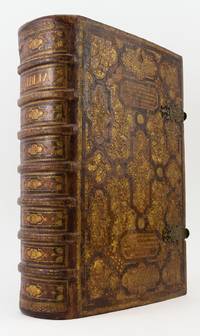
1720ST19425Nuremberg: J. A. Endter 1720. 433 x 278mm. 17 x 11". 68 p.l. first blank 1-664 1-904 pp. 8 leaves. <br/> ONCE SPECTACULAR AND STILL REMARKABLY IMPRESSIVE CONTEMPORARY GERMAN CALF ELABORATELY GILT WITH A PAINTED BROWN STRAPWORK DESIGN OVER REVERSE BEVELLED WOODEN BOARDS two cartouches on each cover with four- or five-line quotations from the Bible initials "J A B" and "D B" and the date "1726" on upper cover the strapwork forming geometric compartments filled with gilt foliate and floral sprays accented with small putti raised bands spine gilt in compartments with central strapwork lozenge containing gilt flower surrounded by foliage two brass and probably later leather clasps dramatic endpapers of green and gilt decorated paper edges gilt and gauffered in ornate lily pattern some expert restoration at spine ends and at top and bottom of joints. With woodcut initials and tailpieces additional engraved title page 11 engraved portraits of the Dukes of Saxony engraved portrait of Luther by Kilian after Sandrart missing an additional portrait of Luther and 28 engraved plates and plans seven of them double-page. ◆Paint and gilt somewhat rubbed other signs of use to the binding but the once-magnificent binding quite sound and still very very striking. Occasional minor foxing stains and thumbing N5 with five-inch curving tear into text no loss two plates with old six- to seven-inch tears into image one mended on verso with discolored cellotape a handful of other minor tears but still a pleasing copy internally generally quite clean and fresh.<br/> <br/> At 5 1/4" thick and with a lavish overall decorative design this is a memorable specimen of a German post-fanfare binding very likely produced as a wedding gift for the couple whose initials appear on the cover. Support for this supposition resides in the binding's quotations from German Scripture traditionally used at Lutheran weddings: Genesis 2:18 "And the Lord God said It is not good that the man should be alone; I will make him a helpmeet for him" and Colossians 3:14 "But above all these things clothe yourselves in love which is the bond of perfection". A perfect family Bible for a young couple of high degree this handsomely illustrated edition is known as the "Kurfürstenbibel" because of its portraits of the Electoral Princes called "Kurfürsten" in German. Such a Bible was originally prepared for Ernst I Duke of Saxe-Gotha and Altenburg as a celebration of Martin Luther's Bible translation. The Endters one of the prominent German printing families issued several printings of it beginning in 1641 and continuing to the end of the 18th century. In addition to portraits of Luther and the Protestant princes of Germany it contains the maps views and illustrated half-titles by Jacob van Sandrart and others first used in the edition of 1686. Although it bears some small signs of use the binding remains an object of imposing beauty. J. A. Endter unknown
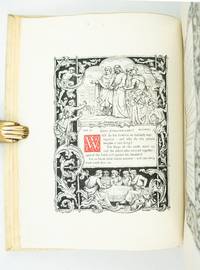
1862ST20857London: Edmund Evans for Sampson Low Son and Co 1862. ONE OF PERHAPS 10 COPIES PRINTED ON VELLUM. 260 x 195 mm. 10 1/4 x 7 3/4". vii 1 235 1 pp. <br/> Publisher's stiff vellum smooth spine with gilt lettering edges untrimmed. In a modern felt-lined blue buckram drop-back box. Decorative initials in red or blue title page and text leaves with full criblé border of vined foliation occasionally inhabited eight or 10 leaves with more extensive illustrations at head or foot all engraved by W. J. Linton after illustrations by John Franklin. Front pastedown with ex-libris of Marion Hope Rattey. A Large Paper Copy. McLean "Victorian Book Design" p. 184. Short thin cracks to head and tail of front joint spine vaguely soiled upper cover with two very small brown spots and one trivial red mark occasional mild rumpling or naturally occurring variations in the grain or thickness of the vellum as usual a couple of minor smudges but still a very agreeable copy the binding solid and without the splaying common in vellum books the interior clean fresh and bright and the margins extraordinarily wide.<br/> <br/> This is an infrequently encountered copy of a beautiful Victorian book on vellum issued by one of the era's top printers. The volume was printed by Edmund Evans 1826-1905 who is now best remembered for his illustrations and advances in color wood engravings. Relatively little is known about this book's production: Ruari McLean tells us that it was "entirely printed" by Evans but it is unknown whether he was responsible for the design as well McLean remarks that "if Evans was responsible for its design it shows his superiority in book-making". We also are unsure how many copies were printed on vellum although the general consensus is 10. Regardless as McLean tells us "it is one of the prettiest books of the 'sixties" with sharp deep impressions of the type on the rich creamy vellum jewel-like colored initials and elegant wood-engraved illustrations. These illustrations are the work of John Franklin ca.1800-68 a painter and draftsman who was highly respected in his own time. The precisely realized borders feature idealized human forms posed within a robust botanical largely acanthus context the figures posing with balletic grace their expressive faces often turned gently away from the reader. The size of the leaf here is significant: the untrimmed edges retain their tiny printing pinholes which would normally have been trimmed away with regrettable loss. And not surprisingly our vellum printing is almost never seen: we could trace just two copies at auction since 1924. Former owner Marion Hope Rattey 1922-97 was likely the daughter of bibliographer Clifford C. Rattey 1886-1970 whose impressive library featured incunabula and block prints. [Edmund Evans for] Sampson Low, Son, and Co unknown
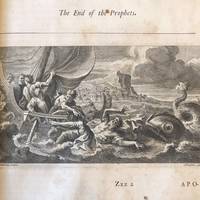
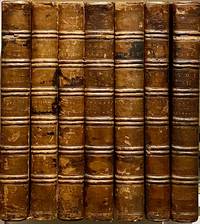
1800CJW1405London: T. Bensley for T. Macklin final volume Bensley for T. Cadell & W. Davies 1800. First Printing of this Edition. 484 x 390 mm. 19 x 15 1/4". Seven volumes. <br/> Once splendid contemporary black straight-grain morocco gilt covers framed by Greek key roll palmette roll and multiple gilt rules double raised bands spine compartments densely gilt with rows of alternating star and circlet tools gilt titling turn-ins with gilt chain roll purple endpapers all edges gilt some inexpert but not obvious repairs to joints and backstrips. With more than 100 allegorical headpieces and tailpieces and some 70 SPLENDID LARGE-FOLIO SIZE COPPER PLATES after Fuseli Reynolds West and others. Herbert 1442 and 1651. ◆Extremities rather rubbed boards a bit scuffed but the decorative contemporaneous bindings solid and not without appeal. Plates somewhat foxed mostly to margins mild to moderate offsetting from plates occasional mild offsetting in the text bed but still a fresh wide-margined copy.<br/> <br/> The most prodigious form of scripture in English ever published the Macklin Bible features very large and bold type fine Whatman paper and a series of engravings by some of the most celebrated artists of the period. Like the Boydell "Shakespeare Gallery" also printed by Bensley our Macklin Bible is a vast picture book with illustrations that are grand both in size and emotional impact. According to DNB Macklin 1752/3-1800 announced his intention to produce a lavishly illustrated luxuriously produced folio Bible in 1789 and he spent the next 11 years and £30000 making his dream a reality. His efforts paid off: "the subscription list for 703 copies at £46 1s. apiece was headed by the king the queen and the prince of Wales." Sadly Macklin died just five days after the last engraving was finished and did not live to see his masterpiece become one of the most acclaimed English Bibles. As DNB observes "The Macklin Bible endures as the most ambitious edition produced in Britain often pirated but never rivalled." Copies of the Macklin Bible were often put into ornate bindings as was the present set; despite the depradations of time the workmanship of a superior London binder remains apparent. T. Bensley for T. Macklin [final volume Bensley for T. Cadell & W. Davies] unknown
1597ST19351Frankfurt: heirs of Andreas Wechel Claude de Marne & Johann Aubry 1597. Fourth Complete Greek Bible printed in Germany. 388 x 258 mm. 15 1/8 x 10 1/8". 4 p.l. 1 blank leaf attached to backing of folio :4 1098 2 pp. <br/> VERY STATELY 17TH CENTURY RED MOROCCO covers with mitered gilt frame gilt supralibros of Baderon de Maussac Olivier 745 at center raised bands spine panels with gilt flower gilt lettering all edges gilt. Printer's Pegasus device on title and final page. Front flyleaf with ink inscription recording the purchase on 24 February 1680 at Toulouse for 24 livres. Darlow & Moule 4653; VD16 B 2578; Adams B-979. ◆Three minute dents to front board a hint of wear to bands and corners isolated faint foxing blank recto of frontispiece leaf and blank verso of final leaf with faint blue shadow from endpapers but all of these quite trivial and otherwise A BEAUTIFUL COPY--fresh clean and bright internally with very wide margins and strong impressions of the plates and in a lustrous binding showing few signs of use.<br/> <br/> This handsome and remarkably well-preserved tall folio Greek Bible from a distinguished German printing firm comes in a shiny armorial binding with aristocratic French provenance. Darlow & Moule assigns the editing of this issue to Franciscus Junius François du Jon or Friedrich Sylburg noting that the Old Testament "is based on the Basel edition of 1545 . . . with correction from the Complutensian text and useful notes." The New Testament follows the text of Robert Estienne's 1568-69 edition. The Wechel family had a long tradition of humanist printing with an emphasis on Greek texts beginning with the press of Christian Wechel fl. 1520-54 in Paris and continuing after his son Andreas d. 1581 fled to Frankfurt to escape the persecution of Protestants in France. Andreas' descendants carried on the business through the first quarter of the 17th century. Olivier's "Reliures Armoriées Françaises" 1926 pl. 745 offers three possible attributions for the supralibros here all from the Languedoc region during the first half of the 17th century: Jean de Baderson; Jacques de Baderon seigneur de Maussac a member of the Parlement of Toulouse; and Jacques de Baderon de Maussac seigneur de Montagnac et de Corneillan and commandant of the city of Collioure. The inscription on the flyleaf here indicating that the book was purchased in Toulouse perhaps supports the case for the member of the Parlement in that city. The 24 livres paid for our imposing volume in 1680 would have represented as much as two months' wages for a worker in the region of its purchase. heirs of Andreas Wechel, Claude de Marne & Johann Aubry unknown
1717062622Oxford: John Baskett Printer to the King's most Excellent Majesty 1717. Leather Bound. Folio. Measures 52 x 34 x 14 cm. Bound in leather likely late 19th century. Binding split at rear joint. Some damage to text block especially prelims; a few loose pages some chips and tears foxing some pages darkened. Three rounds of restoration are evident the most recent carefully documented a fourth round required. Herbert 942A: "A magnificent edition printed in large type. With many plates at the beginning and end of books engraved on steel from the designs of various artists. Some of the initial letters are similarly engraved. Unfortunately the book contained many misprints and earned the nickname 'A Baskett-ful of Errors'. From the misprint The Parable of the Vinegar for vineyard in the headline above Luke xx this edition is commonly known as the 'Vinegar Bible'." "John Baskett 1665–1742 attained the title of “printer to the King’s most excellent majesty†in 1709 but his publishing career turned for the worse when he issued this richly-engraved folio Bible in 1717. Quick to point out the Bible’s numerous misprints Baskett’s competitors branded it “a Baskett-ful of Errors.†The edition’s more lasting nickname has been the “Vinegar Bible†because the words “Parable of the Vinegar†appear at the top of the page containing Luke 20:9 Christ’s Parable of the Vineyard." - smu.edu Special Collections. John Baskett, Printer to the King's most Excellent Majesty unknown
1604372251London: Robert Barker 1604. Text in Roman type in two columns. Titles within woodcut borders woodcut illustrations head and tail-pieces. 4 190; 117 i.e. 127; 128-187 i.e 197 omitting 129 as issued and other errors in pagination; 121 11 leaves. Complete with the leaf signed Ai preceding the general title. Bound with preceding the Bible: The Booke of Common Prayer with the Psalter or Psalmes of Dauid. Title in red and black within woodcut border. 46 leaves complete. ESTC S93831. Bound with following the Bible: The Whole Booke of Psalmes. 10 70pp only. Lacking terminal three signatures. 4to. Early mottled calf rebacked brass corner pieces and hinges lacks clasps upper cover detached marbled endpapers gilt edges. Provenance: William James signature and inscription dated 1663 on leaf preceding the general title; Frances Garway inscription on brass plate on covers dated 1701; Thomas Bever armorial bookplate inscriptions on endpaper circa 1748; Francis Hutchinson Synge; Arthur John Snow Paget inscription dated 1851 General Theological Seminary bookplate. Text in Roman type in two columns. Titles within woodcut borders woodcut illustrations head and tail-pieces. 4 190; 117 i.e. 127; 128-187 i.e 197 omitting 129 as issued and other errors in pagination; 121 11 leaves. Complete with the leaf signed Ai preceding the general title. Bound with preceding the Bible: The Booke of Common Prayer with the Psalter or Psalmes of Dauid. Title in red and black within woodcut border. 46 leaves complete. ESTC S93831. Bound with following the Bible: The Whole Booke of Psalmes. 10 70pp only. Lacking terminal three signatures. 4to. An excellent example of the Geneva Bible with Tomson's revised New Testament and Junius' Revelation. The principal Bible of 16th-century Protestantism and the Geneva Bible was used by Shakespeare Oliver Cromwell John Knox John Donne and John Bunyan. This edition contains the famous reading "breeches" in Genesis Chapter III verse 7 which first appeared in 1579. Although Barker's imprint on title of this edition reads "Printer to the Queenes most excellent Majestie" the colophon reads "Printer to the Kings most excellent Maiestie" as James I had ascended in March 1603. Darlow & Moole 209; ESTC S159; Herbert 274; STC 2190 Robert Barker unknown
1653371930London: Roger Daniel 1653. Title in red and black. Engraved printer's device on the title state B. Text in two columns. 8 1279 1 pp. 4to 7-3/8 x 5-3/8 inches. Eighteenth century red morocco panelled in gilt spines gilt with black morocco lettering pieces marbled endpapers gilt edges. Provenance: Viscount Palmerston bookplate; General Theological Seminary bookplate. Title in red and black. Engraved printer's device on the title state B. Text in two columns. 8 1279 1 pp. 4to 7-3/8 x 5-3/8 inches. The rare first printing in England of the Septuagint the earliest translation of the Hebrew Old Testament into Greek the scarce printing in quarto format. The text is derived from the Sixtine text and edited by John Biddle 1615-1662 the Unitarian controversialist who was imprisoned by the Parliamentary Commissioners for his religious views. <br /> <br /> "Roger Daniel's version of the text of the Sixtine edition was prepared for the use of the scholars at Westminster School. This appeared in 1653 and was edited by the Socinian John Biddle. Its publication may have owed something to the interest in the Septuagint generated by Codex Alexandrinus and the frustration produced by the failure of Young's attempts to edit it" S. Mandelbrote "English Scholarship and the Greek Text of the Old Testament" p. 87.<br /> <br /> A rare issue from the same setting as the octavo edition imposed in quarto without rules separaring the columns. Wing 2nd ed. B2718A; ESTC R12599; Darlow & Moule 4692 Roger Daniel unknown
1791373037Worcester: Isaiah Thomas 1791. First Edition. 48 engraved plates complete. 1310 2 89 3pp. Separate OT and NT titles. The family register between the Apocrypha and NT unaccomplished. Royal quarto. Contemporary calf covers ruled in gilt spine gilt with raised bands red morocco lettering piece marbled endpapers joints cracked but cords holding worn at extremities spine a bit abraded with some loss at top. Foxing a few leaves with short tears or small voids. Provenance: Ebenezer Byles signature on verso of the OT title. Housed in a blue cloth clamshell box. First Edition. 48 engraved plates complete. 1310 2 89 3pp. Separate OT and NT titles. The family register between the Apocrypha and NT unaccomplished. Royal quarto. Thomas' quarto bible was published in three distinct issues: with 2 copperplates only i.e. frontispieces to the Old and New Testaments; with two copperplates and John Brown's 89-page concordance in the rear; and the rarest and most deluxe form as here with 48 copperplates and the concordance. Of this last issue according to Thomas's catalogue the work was published "in elegant binding." The explanation for the work being complete with 48 plates rather than the 50 plates of the folio Thomas bible of the same year is easily explained: the frontispieces used for the folio bible plates I and XXXIII were too large for the quarto edition and thus were omitted with plates XXIX and XLVIII used as frontispieces of the quarto bible instead.<br /> <br /> A very difficult edition to find in a contemporary unsophisticated binding. Evans 23185; Hills 30; ESTC W4496 Isaiah Thomas unknown
1855313594New York: American Bible Society 1855. Royal 8vo. Bound in full contemporary morocco a.e.g. With "S. Augusta Brown" 1825-1909 stamped in gilt on the upper cover. With two examples of embroidered Berlin wool work laid in one with initals "SAB Oct. 29 1859" and the other an alter scene. Royal 8vo. The bible of Sophia Augusta Brown 1825-1909 wife of John Carter Brown herself an active bibliophile who helped her husband build his library and oversaw its stewardship after his death. Sophia Augusta was 34 and John Carter Brown 61 when they married after a brief courtship on June 23 1859. That event is recorded in the family record between the Old and New Testaments as are the births and marriages of the couple's three children--John Nicholas Brown Harold Brown and Sophia Augusta--the marriages of the two sons and the death of John Carter Brown "dearly loved Husband & Father" on June 10 1874. The younger Sophia Augusta Brown married banker and businessman William Watts Sherman 1842-1912 whose Newport RI house is an architectural landmark.<br /> <br /> The daughter of Patrick Browne an Anglo-Irish jurist and member of Her Majesty's Council of the Bahamas and Harriet Thayer of Providence a direct descendant of Roger Williams Sophia Augusta Brown was "an indomitable force in an era when women were discovering a role for themselves in the charitable sector . For Sophia Augusta perpetuating her husband's mission through the sound management and enhancement of his collection was her way of contributing to the advancement of knowledge and understanding among peoples . From her sons' earliest age Sophia Augusta ensured they would develop an appreciation for the care condition and housing of books . John Nicholas and Harold often accompanied their mother to booksellers and private collectors. At an early age they were shown priceless works: a Columbus letter the papers of Leonardo daVinci a note by Galileo . On his trips to Europe as an adult John Nicholas was expected to report back . with his assessment of the books he encountered . When he turned 22 in 1883 Sophia Augusta entrusted him with the care of the library" Sylvia Brown Grappling with Legacy: Rhode Island's Brown Family and the American Philanthropic Impulse 2017. While her husband was still alive Sophia Augusta oversaw the construction in 1862 of the fireproof library wing in the Nightingale-Brown House which remained the site of the library until it was relocated to its current home at Brown University at the impetus of John Nicholas Brown's will. American Bible Society unknown
169718733Regensburg: C. Weigel 1697. Hardcover. Very good-. Four volumes small quarto 19.7 by 14.8 cm. Captions in Latin biblical book and chapter and German biblical book chapter and verses with quote. Copperplate engravings throughout: 1 title 175 plates; 1 title 225 plates; 1 title 288 plates; 148 plates. Total = 836 unnumbered plates 3 engraved title pages. Uniformly bound in contemporary sheep with ruled borders; spines with raised bands blindstamped ornaments and letterpress titles on heavy paper labels. Lacks fourth volume title page. Covers rubbed/lightly worn at extremities; slight loss to labels; light almost exclusively marginal foxing throughout all volumes; dampstains in first volume affecting first seven plates and top margin through first third of the volume else a very good copy with clean plates.<br /> <br /> Second printing of this pictorial Bible Bilderbibel published by the engraver and art dealer Christoph Weigel 1654-1725. The grand biblical story from the Seven Days of Creation to the Vision of a New Jerusalem here unfolds in 836 beautifully engraved plates. The designs were chiefly drawn by Johann Jacob von Sandrart 1655-1698 and Georg Christoph Eimmart the Younger 1638-1705. The engravings were made by Elias Christian Heiss J. U. Kraus L. Heckenauer and Weigel himself among others. Weigel had earlier collaborated with J. J. von Sandrart on the Passio Domini Nostri Iesu Christi Neo-coelatis Iconibus Expressa Augsburg 1693 a pictorial Gospel harmony depicted in 100 engraved plates.<br /> <br /> Christoph Weigel first trained as a goldsmith and later apprenticed to his cousin Erhart Weigel a famous instrument maker in Jena. He journeyed to Augsburg in 1693 where he learned the art of engraving from Andreas Wolfgang and later from Matthäus Küsel. His published works tended to serve didactic and edification purposes including illustrated chronicles and a compendium of notable political events of the early eighteenth century. Among his notable cartographic works is the Descriptio orbis antiqui in XLIV tabulis exhibita A Description of the Ancient World in 44 Maps - Nürnberg 1720. <br /> <br /> The Biblia Ectypa was first published in a large folio format at Augsburg in 1695 with four engraved plates appearing on each leaf. In 1697 the plates were re-issued at Regensburg in two formats: a smaller oblong folio with two plates per leaf and a quarto with a single plate per leaf. Wildly successful the Biblia Ectypa enabled Weigel to establish his own print publishing company in Nürnberg where he was soon joined by his younger brother Johann Christoph Weigel and worked closely with the prominent map publisher Johann Baptist Homann.<br /> <br /> Annotations: Plates numbered by hand in black ink at top corner though sometimes slightly out of order with occasional corrrections in the first two volumes. An old German hand has noted a correct count for each volume at the rear endleaf e.g. Enthält 288 Küpfern.<br /> <br /> A notably complete set of this uncommon edition lacking only the fourth title page. The total count of 836 engraved illustrations is confirmed via the online catalogue Das Verzeichnis der im deutschen Sprachraum erschienenen Drucke des 17. Jahrhunderts VD17. References: Paul Johannes Rée "Weigel Christoph" in: Allgemeine Deutsche Biographie 41 1896 pp. 464-465 Online-Version; Thieme-Becker XXV 227-228; VD17 23:659088P vol. 1; 23:659089W vol. 2; 23:659091S vol. 3; 23:659092Z vol. 4. C. Weigel hardcover
1790H4975Philadelphia & Berwick: Printed by and for John Taylor 1790. Hardcover. fair. Despite the general title page and the NT title page being Berwick/John Taylor extremely likely the Philadelphia printing with a cancel title page the first folio Bible and first illustrated Bible printed in the US. The bibliography on this is complex: the earliest copies were issued with a Philadelphia title page but as this came out in subscribed parts over the course of two years 1788-1790 those sent out before late May of 1790 would likely have had a Philadelphia title page and those sold after that date would have a false UK title page as does our copy; the Congressional rule called for strict oversight of the printing of any Bible in the United States to get around this the publishers of this Bible substituted a phony UK title page. This conforms to Hills no 16 The English Bible in America by Margaret Hills; see also Sabin 12929. Measuring 16.5 x 10.5 in original leather binding with red morocco spine label fair condition at best binding heavily worn boards detached and worn along edges contents good: minor institutional marks include bookplate withdawal stamps embossed stamp of institution in four places text good to very good has 28 plates including frontispiece. Toning and minor stains to pages contents generally very good. A few plates have marginal spotting and stains the plate of the Crucifixion has 3 inch repaired tear extending down into the margin but not the image and the frontispiece has two marginal tears quite reparable. Large chunk from the last plate in Acts taking away the top two inches of the upper right corner of the image. Contents generally good to very good as are the plates. We've done absolutely no repairs or restoration in order to give buyers the opportunity to bind it as they see fit. Housed in specially sized cardboard clamshell box. One of the great rarities in US Bible printing and a high point in early American printing. Printed by and for John Taylor hardcover
193028076Lausanne: Gonin & Cie 1930. First edition. Schmied François-Louis. 9-3/4 in. x 7-1/2 in.; 248 mm x 192 mm. 60 pp. Designed and illustrated by Schmied engraved and printed by Philippe Gonin. Seven full-page woodcut illustrations; twelve smaller illustrations initials and bandeaux. Original wrappers in chemise and slipcase slight tanning to the front wrapper otherwise fine. Copy 4 of 175 copies signed by Gonin printed on Arches paper. This is from the tirage de tête of 25 copies which have an additional double suite of the llustrations black and colored. Nasti B18; Ritchie 34. Gonin & Cie unknown
187642309Hartford Connecticut: American Publishing Company 1876. 4to. 9 1/2 x 6 1/4 inches. 2 892 pp. Old Testament; 276 pp. New Testament. Original publisher’s brown pebble-grain cloth blind stamped boards spine and upper cover lettered in gilt<br/> <br/> First edition of the first complete English Bible translated by a woman a touchstone of American printing feminism and religious scholarship in the original publisher's binding.<br/> <br/> Born in Glastonbury Connecticut in 1792 Julia Evelina Smith taught herself Latin Greek Hebrew and French while earning a living as a schoolteacher and later as an outspoken abolitionist and suffragist. In 1843 she began to test the English Bible against the originals and soon resolved as she writes in her preface "to put the same English word for the same Hebrew or Greek word everywhere.It may seem presumptuous for an ordinary woman with no particular advantages of education to translate and publish alone the most wonderful book that has ever appeared in the world.It took me about seven years to accomplish the five translations." Working verse by verse Smith produced five complete drafts twice from Greek twice from Hebrew once from Latin finishing in 1855. When commercial publishers declined to issue so unconventional a text she underwrote the project herself consigning it to Hartford's American Publishing Company in the nation's centennial year. The resulting volume is the first complete English Bible translated by a woman and remains the only one executed single-handedly without editorial committee or co-translator. Smith's method is uncompromisingly literal: Hebrew tense shifts and Greek word order are preserved even when the English prose becomes rugged. The translation therefore offers modern readers an unfiltered view of the underlying languages and stands in pointed contrast to the smoother interpretive revisions then underway in Britain and America. Earlier centuries had seen only partial female forays into Scripture such as Anne Locke's 1560 sonnet-cycle on Psalm 51 and the Countess of Pembroke's masterly completion of the Sidney Psalter after her brother's death but none covered the full canon. Smith's 1876 Bible stands today as both a landmark of American print culture and a quiet declaration of intellectual equality.<br/> <br/> Simms The Bible in America pp. 149-50; Stanton The Woman's Bible p. 151; Notable American Women 1607-1950: A Biographical Dictionary. Cambridge Mass.: Belknap Press of Harvard University Press 1971. American Publishing Company unknown
1855313594New York: American Bible Society 1855. Royal 8vo. Bound in full contemporary morocco a.e.g. With "S. Augusta Brown" 1825-1909 stamped in gilt on the upper cover. With two examples of embroidered Berlin wool work laid in one with initals "SAB Oct. 29 1859" and the other an alter scene. Royal 8vo. Sophia Augusta Brown's Bible Wife of John Carter Brown. The bible of Sophia Augusta Brown 1825-1909 wife of John Carter Brown herself an active bibliophile who helped her husband build his library and oversaw its stewardship after his death. Sophia Augusta was 34 and John Carter Brown 61 when they married after a brief courtship on June 23 1859. That event is recorded in the family record between the Old and New Testaments as are the births and marriages of the couple's three children--John Nicholas Brown Harold Brown and Sophia Augusta--the marriages of the two sons and the death of John Carter Brown "dearly loved Husband & Father" on June 10 1874. The younger Sophia Augusta Brown married banker and businessman William Watts Sherman 1842-1912 whose Newport RI house is an architectural landmark.<br/><br/>The daughter of Patrick Browne an Anglo-Irish jurist and member of Her Majesty's Council of the Bahamas and Harriet Thayer of Providence a direct descendant of Roger Williams Sophia Augusta Brown was "an indomitable force in an era when women were discovering a role for themselves in the charitable sector . For Sophia Augusta perpetuating her husband's mission through the sound management and enhancement of his collection was her way of contributing to the advancement of knowledge and understanding among peoples . From her sons' earliest age Sophia Augusta ensured they would develop an appreciation for the care condition and housing of books . John Nicholas and Harold often accompanied their mother to booksellers and private collectors. At an early age they were shown priceless works: a Columbus letter the papers of Leonardo daVinci a note by Galileo . On his trips to Europe as an adult John Nicholas was expected to report back . with his assessment of the books he encountered . When he turned 22 in 1883 Sophia Augusta entrusted him with the care of the library" Sylvia Brown Grappling with Legacy: Rhode Island's Brown Family and the American Philanthropic Impulse 2017. While her husband was still alive Sophia Augusta oversaw the construction in 1862 of the fireproof library wing in the Nightingale-Brown House which remained the site of the library until it was relocated to its current home at Brown University at the impetus of John Nicholas Brown's will. American Bible Society unknown books
161117388London: Robert Barker 1611. First edition. Hardcover. Very good. Folio. The First and Second Books of Kings complete in 36 leaves. The first page is the final page of the previous book 2 Samuel; on the reverse begins 'The First Booke of the Kings commonly called The third Booke of the Kings'. 36pp. followed by 'The Second Booke of the Kings commonly called The fourth Booke of the Kings' 35pp. The final page ends II Kings and begins I Chronicles. Printed in black letter woodcut initials. Recent binding of quarter calf gilt titles Cockerell marbled paper boards. Some remargining no loss and old stains else a very good copy in a fine binding The binder's notes itemize the steps in rebinding including leaf disinfectant for the stains. Darlow & Moule 240. Robert Barker hardcover
161117388London: Robert Barker 1611. First edition. Hardcover. Very good. Folio. The First and Second Books of Kings complete in 36 leaves. The first page is the final page of the previous book 2 Samuel; on the reverse begins 'The First Booke of the Kings commonly called The third Booke of the Kings'. 36pp. followed by 'The Second Booke of the Kings commonly called The fourth Booke of the Kings' 35pp. The final page ends II Kings and begins I Chronicles. Printed in black letter woodcut initials. Recent binding of quarter calf gilt titles Cockerell marbled paper boards. Some remargining no loss and old stains else a very good copy in a fine binding The binder's notes itemize the steps in rebinding including leaf disinfectant for the stains. Darlow & Moule 240. Robert Barker hardcover books
150741458Cambridge: Pr. by John Archdeacon 177576. 4to in 8s 28.8 cm 11.33". Frontis. 639 ff. <br><br>with accompanying volume The book of common prayer and administration of the sacraments and other rites and ceremonies of the Church according to the use of the Church of England: Together with the psalter or psalms of David. Cambridge: Pr. by John Archdeacon 1781. 8vo 20.7 cm 8.15". 376 ff. bound with Vickers William. A companion to the altar: Shewing the nature and necessity of a sacramental preparation in order to our worthy receiving the holy communion. London: Pr. for Thomas Beecroft 1783. Frontis. 2 v55 1 adv. pp. lacking half-title or initial blank and with Bible. Psalms. English. Sternhold and Hopkins. The whole book of psalms collected into English metre. Cambridge: Pr. by John Archdeacon 1785. 8vo. 64 ff.<br>Â Â Â Â This striking 18th-century set owned by a wealthy Englishwoman who spent much of her life in Switzerland for more on which see below pairs a handsome Cambridge Bible and BCP in => masterfully designed and executed deluxe matched bindings. The Bible opens with a frontispiece engraved by Charles Grignion after Francis Hayman; the Apocrypha are present in this copy and the New Testament has a separate title-page dated 1776. The BCP is bound with Companion to the Altar "Note This Book is bound up with the Common-Prayers of several sorts printed by the University of Cambridge" as per the title-page; Sternhold & Hopkins bring up the rear.<br>Â Â Â Â Bindings: Contemporary mottled green morocco covers framed in Greek key roll and dentelles composed of urn and flower motifs surrounding central JHS medallions with red morocco inlays and gilt-tooled flames; spines with gilt-tooled compartment decorations Bible spine with gilt-stamped red leather title-label. While the covers of the two volumes are strongly similar overall and "read" as => identical on first glance the details of the design vary slightly between the Bible and the BCP as the size disparity and possibly the time gap between the publication dates necessitated the use of different tools. The spine designs differ more notably but still most companionably with the Bible's spine decorations being built up with foliate and floral motifs and the BCP's with suns and stars. => To engage in minute comparison of these bindings' detail is an entrancing exercise.<br>Â Â Â Â Provenance: Front free endpaper of Bible used for family record: Francis James Barwell de Sandol Roy born in 1793 and died in 1813 "Quel angoisse!"; Henri Guillaume de Sandol Roy born in 1797; and a list of grandchildren: François Sophie Anna and Alfred. The title-page inscription confirms that this set was owned by Sophie Bridget Barwell de Sandol Roy 17691850 daughter of William Barwell a director of the East India Company; her brother Richard became a famously wealthy and scandalous nabob. Dubbed "la belle Anglaise" following her arrival in Neuchâtel Sophie made a great splash in Swiss society and received a proposal from Colonel François Isaac de Sandol Roy sometimes given as Sandol-Roy a proposal which she at first rejected until he subsequently saved her from the guillotine in revolutionary Paris! For more on their story please see Musée Neuchatelois 1923 ed. pp. 24 which includes a reproduction of a portrait of Sophie de Sandol-Roy done by Sir Joshua Reynolds. <br>Â Â Â Â <br>Â Â Â Â Bible: Darlow & Moule 1247; ESTC T88808. BCP: Griffiths Bibliography of the Book of Common Prayer 1781:1; ESTC T212010. Companion: ESTC T76554. Psalms: ESTC T221010. Bindings as above moderate rubbing to extremities and sides with limited scuffing only; all edges gilt marbled endpapers and original matching dark blue bookmarks present still attached. Bible with small area of waterstaining to lower inner margins of first few leaves including frontispiece; varying faint to moderate foxing; one leaf with small repair to upper outer margin. BCP with a few instances of light foxing pages mostly clean; laid in is a stitched pamphlet which seems to be a record of additional family information involving Albert Victor and Mary although written in a challenging hand. => A gorgeous lavish production altogether with a remarkable arresting provenance. Pr. by John Archdeacon hardcover books
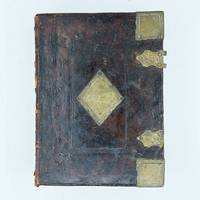
1486WB16618Nuremberg: Anton Koberger 1486. Hardcover. Very Good. 1486- 1487. Part 3 of 4. Chancery folio 305 x 205mm. Pagination: 348 leaves near contemporary foliation in red ink throughout though mispaginated at 188 with some worming towards end obscuring numbers. Collation: AA-GG10 HH12 II-MM10 NN12 OO8; PP-TT10 VV-XX6 YY10 ZZ10 AAA-FFF10 GGG8 HHH8 III-MMM10 NNN8. Contents of Part 3: Isaiah AA10-HH12 Jeremiah II10-NN12 Book of Lamentations Jeremiah OO8 Baruch PP-PP7r Ezekiel PP7v-YY4 Daniel YY5-BBB8 Hosea CCC-DDD3 Joel DDD4-DDD8 Amos DDD9-EEE6 Obadiah EEE7-EEE8r Jonah EEE8v-FFF1 Micah FFF1v-FFF6r Nahum FFF6v-FFF8r Habakkuk FFF8v-GGG3r Zephaniah GGG3v-GGG7r Haggai GGG7v-HHH2r Zechariah HHH2v-III6r Malachi III6v-III10r and the Book of Maccabees III10v-NNN8r Blank NNN8v. Double columns of 56 lines of text surrounded by 72-73-line commentary plus headlines. 16 woodcuts of which 3 full-page illustrating Ezekiels Vision full-page on PP10r of Christ enthroned above Evangelist Symbols and Heavenly Wheel diagrams of Solomons Temple and different views of gates and enclosures of the Temple as mostly column miniatures but some full-page on QQ6 TT6r TT6v TT7r TT9v-TT10r UU1v XX2r XX5r YY1 and a full-page genealogical diagram for the Kings of Syria in the Book of Daniel BBB2v and half-page diagram for kings of KKK1v. Rubricated throughout with blue and red Lombard initials mostly over printed guide letters extra flourished in red ink over the headlines foliation paragraph and signature marks. Gothic Types: 9:165G headlines and headings 7:83G text. Near contemporary blind-stamped pigskin tooled with devices of stags and roses and other floreate ornaments with original brass clasps and leather straps contemporary manuscript leaves reused <br />as binding waste visible in gutters; Front pastedown with added near contemporary manuscript index of 20 lines in Latin cursiva for contents books of prophets; small marginal tear on AA1-2 and with minor loss on HH7 occasional foxing not severe some intermittent marginal worming or browned leaves; pigskin rubbed and lacking bosses one leather strap torn but holding remnants of paper label on spine; otherwise a wonderful and solid incunable volume from an important set of glossed biblical commentaries. In the early 18th century this volume was in the collection of Gallus Winckelmann 16951757 a Benedictine monk and scholar active at Banz Abbey in Bavaria; his note on AA1: Coemit ad usum F. Gallus Winckellmann Professus Banthensis. The early-19th century signature of Daniel Kendig on front endpaper above perhaps an earlier inscription noting Lyras commentaries. Then in England the front pastedown with the mid-19th century bookplate of Joseph M. Lybrand rector of Saint Pauls Church Camden and America with the early-20th century labels of the Philadelphia Divinity School their bookplate and perforated stamp formerly collection number 4436. <br/><br/>This volume is part three of four in the second Koberger edition of the Bible printed in Nuremberg in 148687; parts one through three were undated with the fourth part dated 3 December 1487. This second edition was preceded by bible set printed by Anton Koberger in 1485. It was a monumental production incorporating the biblical commentary of medieval Franciscan scholar Nicholas de Lyra 12701349 with the <br />additions of Paul of Burgos ca. 13511435 and responses to the latter by Matthias Doering d. 1469 as well as the commentary of William the Breton ca. 11651225 on the Prologues of Jerome. Part 3 of the set contained the books of the Major and Minor Prophets along with the books of the Lamentations and Maccabees. Nicholas de Lyras biblical gloss or Postilla encouraged much scholarly discourse throughout the Middle Ages and was frequently reprinted into the 16th century. This edition includes the famous woodcut of Ezekiels Vision and the various views and implements of Solomons Temple which were first printed by Koberger in 1481 with the complete commentary. This copy in an early German binding has a monastic provenance at Banz Abbey. ISTC ib00614000. Anton Koberger hardcover
1843WRCAM33931AOahu & Honolulu: Na Na Misionari I Pai 1843. 1451pp. Large thick octavo. Contemporary ruled Hawaiian sheep. Binding rubbed minor wear at extremities of joints. Small insect track in extreme lower edge of first eight leaves. Ink stamp of the American Board of Commissioners for Foreign Missions Library on front pastedown verso of titlepage and final text page. Scattered foxing and age toning. Very good in original condition. In a half morocco box. The first joint publication of the Old and New Testaments as an entity in the Hawaiian language printed for the American Bible Society at the Mission Presses in Oahu Old Testament and Honolulu New Testament. A number of printings of various books or groups of books of the Bible were printed as early as 1827 and the first Hawaiian printing of the New Testament appeared in 1835 with the Old Testament following in 1838. These printings are frequently found bound together although issued separately. This is the first publication of the complete approved text as an entity paginated continuously and issued as one book. The New Testament has its own titlepage p.1129 and imprint. The verso of the first titlepage bears the words "Ka lua o ke pai ana" the second printing referring to the only other printing of the entire Old Testament in 1838 at the same press. A second printing of the entire Bible was made later in 1843; but curiously enough Judd et al record no other complete printing of the Bible in the Hawaiian language through 1899. <br> <br> A handsome copy of an important Hawaiian Bible in a Hawaiian binding. JUDD 265. FORBES 1416. HUNNEWELL pp.24-25. Na Na Misionari I Pai unknown books
193028076Lausanne: Gonin & Cie 1930. First edition. Schmied François-Louis. 9-3/4 in. x 7-1/2 in.; 248 mm x 192 mm. 60 pp. Designed and illustrated by Schmied engraved and printed by Philippe Gonin. Seven full-page woodcut illustrations; twelve smaller illustrations initials and bandeaux. Original wrappers in chemise and slipcase slight tanning to the front wrapper otherwise fine. Copy 4 of 175 copies signed by Gonin printed on Arches paper. This is from the tirage de tête of 25 copies which have an additional double suite of the llustrations black and colored. Nasti B18; Ritchie 34. <br/><br/> Gonin & Cie unknown books
18009693London: Thomas Bensley for Thomas Macklin 1800. 7 volume set 48 cm Contemporary calf with decorative gilt stamped borders to boards with raised and gilt bands to backstrips. All edges gilt. Marbled endsheets and pastedowns. Some minor wear to corners. Some foxing to the plates. A few small dampstains. Some wear to backstrips and boards. The Macklin Bible is the largest Bible printed on a letterpress. Published serially between 1791 and 1800 in London this project was of one several ambitious projects that commissioned paintings of literary subjects exhibited them at their premises and sold engravings and/or editions of the relevant text including the engravings after the paintings by subscription. These 'literary galleries' sought to be both commercial printselling projects for the proprietors and to foster British history painting aligning with the ambitions of the Royal Academy to encourage a native school of painting in this genre. The foremost literary gallery was Boydell's Shakespeare Gallery which operated between 1789 and 1805.<br /> <br /> In addition to its 70 full-page plates the Bible includes head and tailpieces for each biblical book - 113 in total. All but two of the vignettes were designed by Philippe-Jacques de Loutherbourg who also painted 16 pictures for the full-page plates. The full-page plates and headpiece and tailpiece vignettes were published by Macklin and the text was printed for Macklin by Thomas Bensley. The type was cut by Joseph Jackson and Vincent Figgins Jackon's apprentice. The paper was made by Whatman. The instructions to the binder recommended binding the set in six volumes but this set like many others was bound in seven. Darlow & Moule 982. ESTC T123175. Herbert 1442. Thomas Bensley for Thomas Macklin unknown