Antiquariat.de

291 résultats
1571A161-12571571. original Holzschnitt von Jost Amman auf der ganzen Buchseite mit ornamentaler Umrahmung, Darstellung ca. 5,5 x 7 cm, verso weiss / original woodcut by Jost Amman on the whole book page with ornamental framing, image ca. 5,5 x 7 cm, verso blank
1571A161-12561571. original Holzschnitt von Jost Amman auf der ganzen Buchseite mit ornamentaler Umrahmung, Darstellung ca. 5,5 x 7 cm, verso weiss / original woodcut by Jost Amman on the whole book page with ornamental framing, image ca. 5,5 x 7 cm, verso blank
1571A161-12591571. original Holzschnitt von Jost Amman auf der ganzen Buchseite mit ornamentaler Umrahmung, Darstellung ca. 5,5 x 7 cm, verso weiss / original woodcut by Jost Amman on the whole book page with ornamental framing, image ca. 5,5 x 7 cm, verso blank
1571A161-12551571. original Holzschnitt von Jost Amman auf der ganzen Buchseite mit ornamentaler Umrahmung, Darstellung ca. 5,5 x 7 cm, verso weiss / original woodcut by Jost Amman on the whole book page with ornamental framing, image ca. 5,5 x 7 cm, verso blank
153554700Lyon Seb. Gryphim 1535. 4to. Bound in a later full calf pastiche-binding in Cambridge-style with elegant 'mirrors' to boards and blindstamped borders and decorations spine with five raised bands forming six compartments. Leather title-label with title in gilt lettering to spine. Spine miscoloured and several stains to boards. Stamp to front free end-paper and title-page. Annotation in contemporary hand to title-page and last leaf with woodcut-device depicting a griffin. Waterstain to inner margin affecting lower part of first 10 and last 15 leaves. a-z8 A-Z8 AA-BB8 CC10 aa-mm8 nn10. <br/><br/><em>Rare second edition of this Latin Bible Concordance the first being from 1529 from the printer Sebastian Gryphius. The present work being one of the first to use the griffin mark. </em> hardcover
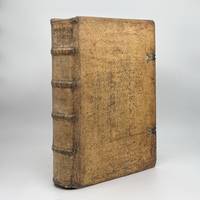
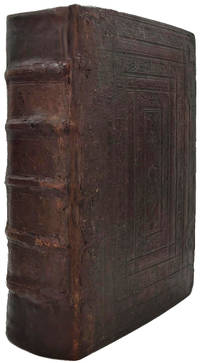
1521000461Basel: Johann Froben 1521. Hardcover. See Description. Folio. ff. 444 plus 6 extra leaves in this copy as signature G is repeated. Colophon: Basileae per Ioannem Frobeniu Mense Maio. Anno M.D.XXI. Title page contains decorative woodcut border with 10 figures including images symbolizing the four evangelists Peter Paul and four early Bishops. Printers device also on title page and on verso of final leaf. The introductions to both part I and part II contain woodcut initials. The title to the second part reads: "Concordantiae partium sive dictionum indeclinabilium totius Bibliae." The main text is in 3 columns per page. Bound in period blind tooled pigskin over wooden boards - attractively age-toned. Metal corner pieces are present; clasps are lacking. Title page contains three tiny and unobtrusive worm holes. There is also an area of abrasion next to the printed title proper which affects a tiny area on the inner edge of the woodcut border. Small holes present in upper inner corner of the title page affecting recto boarder and a couple of letters on the verso are neatly patched. Moderate water staining is visible in the upper margins of the first few gatherings including title. Pages are otherwise generally clean with periodic small areas of mild staining in upper margins; occasional minor marginal tear or chip; a few lines of marginalia written in a miniscule old hand. Outer marginal corner of leaf A3 clipped no text effected. 16th century edition of Konrad von Halberstadts Latin Biblical word concordance - Part I is attributed to Konrad and part II to Juan de Segovia. Konrad von Halberstadt fl. 1290 was a German Dominican scholar. His Biblical concordance based on the Vulgate eventually became the first printed concordance Strasburg 1470. Later Juan de Segovia d. 1458 compiled a concordance of all the indeclinable words of scripture. This work was first added as an appendix to the Halberstadt concordance in the work of Sebastian Brandt Basel 1496. See Catholic Encyc. VD16 C4900 VD16 J753; BM STC German p. 122 . <br/> <br/> Johann Froben hardcover
1544357132Paris.: Robert Estienne aka Stephanus. Circa 1544. 16mo. Publisher’s plain stiff wraps. Good a few pages dog-eared cover splitting and spine and has a piece missing text clean. 12x8x3.7 cm. Hebrew text. Titles in Hebrew and Latin. Estienne’s printer’s device with a man under an olive tree on each title page. Untrimmed and many signatures uncut. A nice example of Estienne’s typography. weight: 0.5 lb. Robert Estienne aka Stephanus. paperback
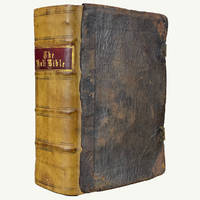
1569R53<p><strong>Description: </strong>Quarto approx. 7" x 5.5". Lacks all before Exodus 11:8. Text in two column black letter. Full-page woodcut of the Tabernacle F1 Table H3. Title before Joshua with large woodcut of Jugge's device. Full-page Map of Canaan Q1. Printed title to the Apocrypha. Map of the Holy Land before Matthew. 1 Corinthians 7 – Revelation 22 shorted and inserted from an octavo Geneva Bible.</p><p><strong>Collation:</strong> E-Z8 Aa-Kk6 A-X8 Y4 Aaa-Mmm8 Nnn6 A-K8 -A1. Begins at E1 Exodus 11:8 and ends at K8 Romans 15. <strong>Lacks</strong> title before Psalms and New Testament title. </p><p><strong>Binding:</strong> Rebacked brown calf. Boards with brown blind-paneled calf and corner fleurons. Two later working clasps. Spine with four blind-lined raised bands and a red gilt-lined morocco label with the words "The Holi Bible" and a date of 1569 lettered in gilt. </p><p><strong>Condition:</strong> Rubbed; intermittent staining; six ff. with marginal closed tears; T6 1 Sam 20 upper piece torn with six lines of text loss; Gg-Hh stain to half of text; D4 Ps 91 half of text torn away; A in NT with frayed edges; B6 lower corner loss of four lines of text. </p><p><strong>Provenance:</strong> Note to front pastedown reads "H.M. This is the 2nd edition of the Bible printed in 4to by R. Jugge the Queen's printer in 1569. This is the 2nd edition of Parker's Bible the 1st edition was a splendid folio in 1568. See Lewis' hist. of the Bible."</p><p><strong>Note:</strong> The first edition of the Bishops' Bible printed in quarto format. This smaller edition was printed just one year after the impressive first folio enabling the clergy to study from this version in their homes. The first quarto retains a few full-page woodcuts in the text. USTC records 13 copies in holdings.</p><p><strong>References:</strong> Herbert 126; STC 2105.</p> Richard Jugge hardcover
158862732Kiøbenhaffn Matz Vingaard 1588-89. Folio c. 365 × 255 mm. Recently bound in a magnificent pastiche binding of full brown calf spine with five raised bands and blind-tooled ornamentation forming triangular compartments. Covers panelled with blind-tooled geometric framing gilt floral tools at the corners and a large central diamond-shaped lozenge. Double-ruled fillets to the borders of the boards. 22 353 i.e. 354 226 159 ff. Wanting two leaves: J f. 49 in the New Testament and Cc6 f. 156 in the Book of Revelation. Leaves 157–159 of the Book of Revelation erroneously bound between Dd2 and Dd3 in the First Book of Samuel.With three woodcut title-pages printed in black and red portrait and coat of arms. Outer and upper margins closely trimmed occasionally just touching text. The Old Testament and the Prophets with a few discreet marginal repairs and closed tears. The New Testament with more substantial repairs and occasional loss of text. Book of Revelation with leaves re-margined as usual. Some occasional small stains; larger inkstain on verso of B2 and recto of B3. Despite the two lacking leaves but with the often missing portrait and title-pages a good copy of a work often found in very worn condition owing to the poor quality of the paper. <br/><br/><em>The magnificent first printing of the second Danish–Norwegian Bible in folio - the celebrated Frederik II Bible - and one of the grandest monuments of sixteenth-century Danish printing. Issued by the command of Frederik II this monumental Bible represents the second complete Danish Bible in folio format and is notably the first Danish folio Bible printed by a Dane. It stands as the magnum opus of Mads Vingaard and “and the most extensive work of printing undertaken in Denmark during the sixteenth century. The book is profusely illustrated with woodcuts copied from a german Bible issued by Sigmund Feyerabend in Frankfurt a. M. 1560. The original woodcuts were made by the artist and craftsman Virgil Solis. Wide woodcut borders together with pictures using themes from the Scriptures surround the title pages and the illustrations. On the reverse of the first title page many copies have pasted in a portrait of Frederich II engraved by the Dutch artist Hendrick Goltzius. However this portrait may also be found on a separate leaf." Thesaurus I. A monumental production both typographically and artistically the Frederik II Bible marks the consolidation of Reformation scripture in Denmark-Norway and reflects the growing technical and artistic sophistication of the Copenhagen press. Its scale and royal patronage place it among the most important achievements of Scandinavian Renaissance book culture. Lauritz Nielsen 405. - Thesaurus I 129. - Birkelund 34. </em> hardcover
158857770Kiøbenhaffn Matz Vingaard 1588-89. Folio. 39 x 27 cm. Samtidigt hellæderbind i brunt kalveskind over svært træ og med kanter i smig. Lettere ophøjede bind på ryg. Håndsyede kapitælbånd. Lille hak i skindet på nederste rygfelt. Med de 4 originale hængselsbeslag i støbt messing bevarede men den ene strop fornyet og den anden mangler. Permerne har begge blindtrykte arabesker i midterfeltet en stor arabesk og i hjørner og kanter 6 pyramideformede arabesker som alle er med en blindtrykt krone i pyramidens top. Permerne har mindre messingstifter med store hoveder til beskyttelse af bindet ved opslag. Marmoreret snit. Bindet er ganske velbevaret med kun lidt kantslid og let slid på de ophøjede rygbind. 22353i.e.354226159 blade. Komplet men uden de 3 blanke blade. Træskåret titelblad med tekst trykt i rødt i midterfeltet. Titelbladsvarianten med kongens kobberstukne portræt af Goltzius opklæbet på bagsiden en del eksemplarer udkom uden portrættet. Blad 2 med rigsvåbnet bladet er kantrepareret. 2 træskårne deltitelblade. Registerbladene med svag skjold i ydre marginer. De sidste 35 blade delvist omkantede for det meste i ydre marginer. Ganske få spredte brunpletter. Iøvrigt ganske lette brugsspor. Et udmærket velbevaret og komplet eksemplar bortset fra de 3 blanke.På forreste friblad er anført lidt af eksemplarets ejerhistorie fra 1819 - erhvervet af Mikkel Johannesson Fladebøe som her delvist klausulerer dens ejerskab til fremtidige ejere af gården Fladebøe . Senere synes den overgået til andre i slægten bosat i U.S.A. Olaf Albertsen Axel Albertsen Stanley Albertsen Sidney Albertsen. Folio. 39 x 27 cm. Contemporary brown full calf over heavy wooden boards with oblique edges. Sloghtly raised bands to spine. Hand-stitched capital bands. A small notch to the leather of bottom compartment of spine. With the four original brass clasps preserved but one strap has been renewed and the other is missing. Boards with large blindstamped centre-arabesque and six pyramid shaped arabesques to corners and edges all with a blindstamped crown on top. Large-headed bras spins to boards to protect the boards when open. Marbled edges. A bit of wear to edges and light wear to the raised bands. 22 353i.e.354 226 159 ff. Complete save for the three blank leaves. Woodcut title-page with centre-text printed in red. The title-page variant with the engraved portrait of the king by Goltzius mounted on verso. Several copies were issued without portrait and some were issued as here with the title-page mounted on verso. F. 2 with the royal arms restored at edges. Two woodcut helf-titles. The index-leaves with a vague damp stain to the outer margins. The last 35 leaves have been partly re-edged mostly at the very outer margins. A bit of light scattered brownspotting. Light signs of wear. An overall well preserved copy in- as well as externally. Front free end-paper with handwritten notes on provenance from 1819 onward – bought by Mikkel Johannesson Fladebøe who partly clauses the ownership of the copy to the future owners of the estate Fladebøe. It seems to have then passed to other generations of the same lineage located in The United States Olaf Albertsen Axel Albertsen Stanley Albertsen Sidney Albertsen. <br/><br/><em>The magnificent first printing of the second Danish-Norwegian Bible in folio. This the second Danish Bible in folio is also the first to be printed by a Dane. The scarce and famous "Frederik II-Bible" constitutes the magnum opus of the famed book printer Mads Vingaard "and the most extensive work of printing undertaken in Denmark during the sixteenth century. The book is profusely illustrated with woodcuts copied from a german Bible issued by Sigmund Feyerabend in Frankfurt a. M. 1560. The original woodcuts were made by the artist and craftsman Virgil Solis. Wide woodcut borders together with pictures using themes from the Scriptures surround the title pages and the illustrations. On the reverse of the first title page many copies have pasted in a portrait of Frederich II engraved by the Dutch artist Hendrick Goltzius. However this portrait may also be found on a separate leaf." Thesaurus I.Lauritz Nielsen 405. - Thesaurus I 129. - Birkelund 34. </em> hardcover
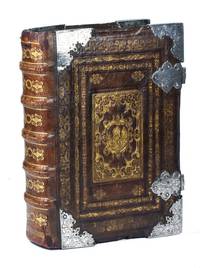
1590A27E2B01U79ODelft: Bruyn Harmansz. Schinckel colophon: printed by Aelbrecht Heyndricksz. 1590. Contemporary gold panel-stamped and gold-tooled calf over wooden boards sewn on 5 supports with spectacular finely engraved silver furnishings: 8 corner pieces 2 clasps 2 catch plates and 2 anchor plates the catch and anchor plates with four female virtues: Justice/Justitia with sword and scales Faith/Fides praying toward the light of the sun Charity or Love/Caritas with 2 children and Hope/Spes holding a cross and treading on a snake; the corner pieces engraved with winged heads that appear to represent the four compass winds Boreas Notus Euros Zephyrus each of the 8 different also with engraved decoration on their edges; and each clasp with an oval martyrdom scene flanked by birds with the feet toward the foot of the book: 2 men tied to a tree and being stoned in the upper clasp and a women being accosted by 2 men in the lower all 14 pieces of silverwork with floral and other decoration and with their edges cut to decorative shapes. Each board has the same central rectangular panel-stamp 98 x 61 mm with an oval scene of Charity or Love/Caritas with 3 children and with castle towers in the background on either side that on the viewers right on a mountain with strapwork decoration around the oval containing the makers initials B and H and inside the rectangle the two decorations linked at the sides; with 2 gold-tooled double fleurs-de-lis above the panel-stamp and 2 below the whole enclosed by three gold-tooled frames each made with a different decorated roll separated by blind-tooled multiple fillets; gilt and elaborately gauffered edges. Rebacked in gold-tooled calf each compartment with a decorated oval with a decoration on either side but with the original endpapers. 4to 23.5 x 17.5 cm. With a general title-page and three part-titles each with the same woodcut device oval Biblical emblem with a quotation from Matthew 13:44 a mirror image copy of that in the 1562 first edition in a separate elaborately decorated cartouche signed AvL the combination: Dutch printers devices 0671 p. 970; 3 engraved folding maps plate size 23.5 x 17 & 29.5 x 17 cm drawn by Petrus Plancius and executed by Baptista van Doetecum for the present Bible and the folio edition of the same year showing Eden the route of the Exodus and the Holy Land; ca. 20 woodcut illustrations in the text mostly about 4 x 5 cm but the largest 10 x 6 cm a woodcut arabesque tailpiece about 21 woodcut decorated initials 3 series plus more than 50 repeats. Printed mostly in 2 columns with shoulder notes set in textura gothic types with incidental roman and with diamond-head musical notes for the metrical Psalms and a small 3.2 mm vine-leaf ornament preceding many chapter headings not in Vervliet but similar to Vervliet 112 & 133. 4 parts in 1 volume. An unrecorded issue 1 of at least 7 of a rare and important 1590 Bible edition the corrected "deux aes" Bible based on the first edition of 1562 New Testament 1559 which remained the standard Dutch Reformed Bible until the official Dutch States translation published in 1637. It was translated from Luther's German by Godfried van Wingen the New Testament by Johannes Dyrkinus after comparison with several other versions and includes many notes some also taken from Luther and some by Augustin Marlorat as well as Petrus Danthenus's metric psalms with music notes. The Amsterdam bookseller Laurens Jacobsz. initiated the publication of the present corrected text of the "deus aes" Bible and the maps to accompany it publishing the folio edition with maps himself but sharing the quarto edition with four other publishers. Although Jacobsz.'s name does not appear in the present issue he was originally trained as a binder operated his shop at the sign of the gold-tooled Bible and Fontaine Verwey gives evidence to link him with the panel stamp on the present binding. He may therefore have bound copies or had them bound for the other publishers. Bibliasacra Typ. Batava and the STCN together record only 8 copies of all issues combined at least half of those lack leaves and some of the copies with all leaves have defective leaves or lack the maps so that they record at most 2 other complete copies with maps.With a few leaves slightly browned a water stain in the second half and the first preliminary quire of part 1 faint outside a few quires small tears in the maps and a few worm holes or other defects in the paper mostly in the margins of the last few leaves but still in good condition. The binding has been skilfully re-backed probably in the early 19th-century and is slightly rubbed with a crack along the edge of the panel-stamp on the front board and a few minor cuts and scrapes but also still in good condition and only slightly trimmed. A very rare complete copy of an important Dutch Reformed Bible in an unrecorded issue and in a stunning contemporary gold panel-stamped and gold-tooled binding with engraved silver furnishings.l Bibliasacra 1590.B.dut.BHS.c & AHa b & c; Le Long p. 748; Poortman Bijbel en prent I pp. 112-119 184-187 & 215; STCN 336510985 & 054873002 334453534; Typ. Batava 602; cf. Darlow & Moule 3293; for the panel-stamp: H. de la Fontaine Verwey "Amsterdamse uitgeversbanden van Cornelis Claes en Laurens Jacobsz" in: Uit de wereld van het boek II pp. 33-48 at pp. 41-43. Bruyn Harmansz. Schinckel (colophon: printed by Aelbrecht Heyndricksz.), hardcover
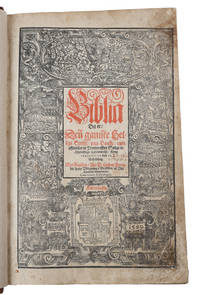
15625073DBBasilea, Nicolaum Bryling, 1562. (8) Bl., 500 (recte 503) S., (24) Bl. Mit Holzschnitt-Titelbordüre, Holzschnittanfangsvignette und Holzschnittinitialen. Schweinslederband der Zeit auf Holzdeckeln mit 2 Metalllederschliessen. + Wichtig: Für unsere Kunden in der EU erfolgt der Versand alle 14 Tage verzollt ab Deutschland / Postbank-Konto in Deutschland vorhanden +
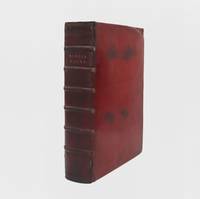
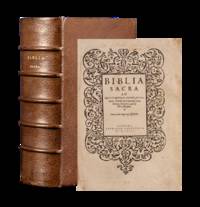
1592371810Rome: Ex Typographia Apostolica Vaticana 1592. First edition of the Clementine Bible. Edition of 500 copies. Engraved title page reading: Biblia sacra vulgatae editionis. Sixti Quinti Pont. Max. iussu recognita atque edita. Letterpress title page printed in red and black. Text in double columns. 12 1131 1 blank 23 1 blank pp. 1 vols. Folio 349 x 250 mm. Full reddish-orange levant morocco spine titled in gilt raised bands highlighted in black boards with single rule in black dated 1957 on turn-in. Fine. Leather-tipped slipcase. First edition of the Clementine Bible. Edition of 500 copies. Engraved title page reading: Biblia sacra vulgatae editionis. Sixti Quinti Pont. Max. iussu recognita atque edita. Letterpress title page printed in red and black. Text in double columns. 12 1131 1 blank 23 1 blank pp. 1 vols. Folio 349 x 250 mm. First edition of the official text of the Catholic Bible issued under sanction of Clement VIII and therefore known as the "Clementine Bible" and superseding the controversial and suppressed edition of Sixtus V of 1590. The text is preceded by Cardinal Bellarmino's preface the Decree of the Council of Trent on the canonical Scriptures and a brief by Clement VIII.<br /> <br /> "It is generally admitted that on the whole the Clementine text . is critically an improvement upon the Sixtine. . The Clementine Bible of 1592 remains to the present day the standard edition of the Roman Church" Darlow & Moule. <br /> <br /> Nice wide-margined copy of this notable edition. Brunet I 878; Darlow and Moule 6184; Adams B1101; P.M. Baumgarten Neue Kunde von alten Bibeln pp. 316-322. Provenance: W. A. Copinger bookplate; General Theological Seminary gift of Cornelius Vanderbilt and Dean Augustus Hoffman bookplates Ex Typographia Apostolica Vaticana unknown
1527372109Coloniae: Petrus Quentel excudebat 1527. First Protestant Bible printed in Latin. Title-page with large woodcut vignette of arms of Cologne lion and gryphon rampant with and three crowns; numerous illustrations by Anton Woensam and ornamental initials throughout. Ff. 8 CCCXXV 1 LXXXVII i.e. 85 5. Manuscript marginal glosses in red chiefly calling out names names in Kings. 1 vols. Folio. Contemporary blindstamped pigskin over bevelled wooden boards clasps perished. Some soiling repairs to hinges painted fore-edge tabs. Very good. First Protestant Bible printed in Latin. Title-page with large woodcut vignette of arms of Cologne lion and gryphon rampant with and three crowns; numerous illustrations by Anton Woensam and ornamental initials throughout. Ff. 8 CCCXXV 1 LXXXVII i.e. 85 5. Manuscript marginal glosses in red chiefly calling out names names in Kings. 1 vols. Folio. The first Protestant Bible in Latin edited by Johan Rüdel Rudelius printed in Cologne by Peter Quentel or Quentell and notable for the wood engraved illustrations by Anton Woensam Anton von Worms particularly those at the head of each of the four gospels. Matthew faces an angle who is touching his stylus; a lion is seated beside Mark; a bull with Luke; and an eagle stands beside John.<br /> <br /> Quentel was the printer of Tyndale's quarto Cologne English New Testament known from a single surviving fragment in the Grenville Collection where this same illustration to Matthew appears. It is a reasonable inference that each of the four gospels would have carried an illustration. The project which had "'got as far as the letter K' the signature that would have taken the work well into Mark" ODNB was unfinished at the time of Tyndale's flight from Cologne in 1525. Quentel's print shop was raided but sheets of the first gospel translated from the original Greek and printed in English soon began to circulate in England. Tyndale settled in Worms where Schöffer completed an octavo printing of the first complete English New Testament in 1526 a facsimile of the Grenville fragment and its illustration were published in 1871.<br /> <br /> The blocks for the illustrations evidently survived the raid on the Quentel's shop and are used here at the head of each of the four gospels.<br /> <br /> A notable edition in the history of the printing of the Bible. Adams B1007; Darlow & Moule 6107 note; VD16 B2589; Copinger 210. Provenance: Cartusiae Buxiana Buxheim inscription on title; Thomas Raffle early signature on title; General Theological Seminary blindstamps bookplate Petrus Quentel excudebat unknown
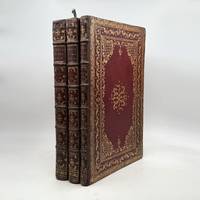
1590371036Rome: Ex Typographia Apostolica Vaticana 1590. First edition of the Sixtine Vulgate Bible large paper copy. Engraved illustrated title-page. Title in red and black text in double columns. 3 vols. Folio. Italian full red morocco binding of the seventeenth or early eighteenth century elaborately gilt with triple floral scrollwork borders stars in cornerpieces about a central motif stencilled paste paper endsheets a.e.g. Boxed. First edition of the Sixtine Vulgate Bible large paper copy. Engraved illustrated title-page. Title in red and black text in double columns. 3 vols. Folio. The engraved title reads: Biblia sacra vulgatae editionis ad concilii Tridentini praescriptum emendata et a Sixto V.P.M. recognata et approbata.<br /> With the preliminary document the Bull of Sixtus V beginning 'Aeternus ille caelestium terrestriumq. rerum omnium conditr ac moderator Deus .". This is often lacking.<br /> <br /> An extraordinary copy of the Sixtine Bible containing the Vulgate text as edited by Pope Sixtus V intended as the first ecclesiastically authorized text to be used throughout Christendom. "In its text it comes closer to R. Stephanus' Bible of 1538-40 than to the Louvain editions" Darlow & Moule who discuss the textual variations. This copy includes examples of the printed overslips required to correct hurried printing. The association with Aldus II suggested by Renouard and lasting long thereafter is spurious.<br /> Pope Sixtus V died soon after the book was printed and was followed by three short-lived popes. The Sixtine Bible had "aroused antagonism among both clergy and laity" and was swiftly condemned; the edition was withdrawn by Pope Clement VIII soon after his elevation to the papal throne in 1592 and many copies were destroyed. Preparations began in 1591 for a new edition of the Vulgate printed in 1592 and known as the Clementine Bible which long remained the standard Vulgate text.<br /> <br /> The ordinary issue of this printing measures 13-3/8 inches tall as in the Brooker copy sold 2024; the present copy measures 15-3/4.<br /> <br /> AN OUTSTANDING LARGE PAPER COPY OF A NOTABLE EDITION. Copinger 521; Darlow & Moule 6181; Adams B1098; BM STC Italian 1465-1600 p. 93; EDIT 16 CNCE 5805. Provenance: Vincenzo Maria Carafa 1739-1814 Prince of Roccella and Duke of Bruzzano engraved bookplates MS shelfmark :H 5; Douglas Maxwell Moffat bought of Quaritch in Dec. 1939; General Theological Seminary Ex Typographia Apostolica Vaticana unknown
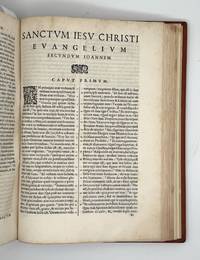
1590372093Rome: Ex Typographia Apostolica Vaticana 1590. First edition of the Sixtine Vulgate Bible. Engraved illustrated title-page. Title in red and black text in double columns. 8 479 1; 5 482-899; 5 902-1141pp. Lacks the 4ff preface i.e. the papal bull of Sixtus V beginning "Aeternus ille caelestium terrestriumq. rerum omnium conditr ac moderator Deus ." as often. Folio 13-1/2 x 9-1/2 inches. Later red morocco spine darkened corners bumped some repairs at head and tail of spine marbled endpapers gilt edges. Engraved title and title page paper-backed. Red quarter morocco clamshell box. First edition of the Sixtine Vulgate Bible. Engraved illustrated title-page. Title in red and black text in double columns. 8 479 1; 5 482-899; 5 902-1141pp. Lacks the 4ff preface i.e. the papal bull of Sixtus V beginning "Aeternus ille caelestium terrestriumq. rerum omnium conditr ac moderator Deus ." as often. Folio 13-1/2 x 9-1/2 inches. The Sixtine Bible containing the Vulgate text as edited by Pope Sixtus V intended as the first ecclesiastically authorized text to be used throughout Christendom. "In its text it comes closer to R. Stephanus' Bible of 1538-40 than to the Louvain editions" Darlow & Moule who discuss the textual variations. <br /> <br /> The association with Aldus II suggested by Renouard and lasting long thereafter is spurious.<br /> Pope Sixtus V died soon after the book was printed and was followed by three short-lived popes. The Sixtine Bible had "aroused antagonism among both clergy and laity" and was swiftly condemned; the edition was withdrawn by Pope Clement VIII soon after his elevation to the papal throne in 1592 and many copies were destroyed. Preparations began in 1591 for a new edition of the Vulgate printed in 1592 and known as the Clementine Bible which long remained the standard Vulgate text.<br /> <br /> As often e.g. the Brooker copy this copy without the preface the Bull of Sixtus declaring the text to be immutable and forbidding any reprint without papal permission. Copinger 521; Darlow & Moule 6181; Adams B1098; BM STC Italian 1465-1600 p. 93; EDIT16 CNCE 5805. Provenance: Henry John Farmer Atkinson his sale Sotheby Wilkinson & Hodge March 1896 lot 2752 sold for £18.15s to; Bernard Quaritch; General Theological Seminary bookplate Ex Typographia Apostolica Vaticana unknown
1527318283Coloniae: Petrus Quentel excudebat 1527. First Protestant Bible printed in Latin. Title-page with large woodcut vignette of arms of Cologne lion and gryphon rampant with and three crowns; numerous illustrations by Anton Woensam and ornamental initials throughout. Ff. 8 CCCXXV 1 LXXXVII i.e. 85 5. 1 vols. Folio. Recent half calf and marbled boards. Title page soiled old remargining tissue repairs on verso; some marginal worming and soiling generally clean with generous margins. Stamps of Cambridge Public Library in ink or in blind on four leaves. First Protestant Bible printed in Latin. Title-page with large woodcut vignette of arms of Cologne lion and gryphon rampant with and three crowns; numerous illustrations by Anton Woensam and ornamental initials throughout. Ff. 8 CCCXXV 1 LXXXVII i.e. 85 5. 1 vols. Folio. The first Protestant Bible in Latin edited by Johan Rüdel Rudelius printed in Cologne by Peter Quentel or Quentell and notable for the wood engraved illustrations by Anton Woensam Anton von Worms particularly those at the head of each of the four gospels. Matthew faces an angle who is touching his stylus; a lion is seated beside Mark; a bull with Luke; and an eagle stands beside John.<br /> <br /> Quentel was the printer of Tyndale's quarto Cologne English New Testament known from a single surviving fragment in the Grenville Collection where this same illustration to Matthew appears. It is a reasonable inference that each of the four gospels would have carried an illustration. The project which had "'got as far as the letter K' the signature that would have taken the work well into Mark" ODNB was unfinished at the time of Tyndale's flight from Cologne in 1525. Quentel's print shop was raided but sheets of the first gospel translated from the original Greek and printed in English soon began to circulate in England. Tyndale settled in Worms where Schöffer completed an octavo printing of the first complete English New Testament in 1526 a facsimile of the Grenville fragment and its illustration were published in 1871.<br /> <br /> The blocks for the illustrations evidently survived the raid on the Quentel's shop and are used here at the head of each of the four gospels.<br /> <br /> A notable edition in the history of the printing of the Bible. Adams 1007; not in Darlow & Moule but see note to 6107; VD16 B2589.OCLC: 22847218 Petrus Quentel excudebat unknown
1557254216Basilaea Basel: Nicolaum Bryling Nicolaus Brylinger 1557. Woodcut border and printer's device on title. INCOMPLETE. 8 479 of 500 8 leaves. Lacking ff. 46-56 & 61-70. 1 vols. 8vo. Bound in contemporary blind panel-stamped pigskin over bevelled wooden boards clasps removed binding worn exposing boards on rear cover title page detached contemporary marginalia by Johannes Weneken throughout. Woodcut border and printer's device on title. INCOMPLETE. 8 479 of 500 8 leaves. Lacking ff. 46-56 & 61-70. 1 vols. 8vo. Brylinger published the only 16th century edition of Luther's Bible in Switzerland published one of the earliest Greek and Latin diglot Bibles and published a series of 8vo editions of the Bible with diglot and Greek-only text which was popular with students. Darlow & Moule makes no mention of this or any other Latin-only edition by Brylinger.<br /> Front paste-down endpaper and front free endpaper display extensive annotations in Greek and Latin presumably by Johannes Weneken. The marginal annotations provide a fascinating insight into how this book was used. Not in Darlow & Moule but cf. 4621; Adams 1056; OCLC: 46973017 6 copies only 3 of which in U.S. Nicolaum Bryling [Nicolaus Brylinger] unknown
15546212Lyon: Jean de Tournes 1554. First edition. Octavo 6 3/4 x 4 3/4 inches; 171 x 121 mm. . 16 1152 76 pp bound without the last two blank leaves as in most copiese.g. Mortimer OCLC. The penultimate leaf had only a fleuron at the foot of the page and the final leaf was blank. Arabesque title border and 198 with 1 repeat woodcuts in the text by Bernard Salomon. Title-page with faint early ink "ex-Libris petri ------ at top blank margin. Title-page expertly cleaned some occasional mainly marginal faint foxing otherwise a superb example of this wonderfully illustrated mid sixteenth-century Latin Bible. Bound ca. 1880 by Chambolle-Duru in full brown crushed levant morocco spine with five raised bands lettered in gilt gilt ruled board edges decorative gilt turn-ins marbled endpapers all edge gilt. Armorial bookplate "In Memori: Weiler Bibliotheca Trautner Falkiana" on verso of front free endpaper.<br /> <br /> First De Tournes Latin Bible based on Robert Estienne's text and beautifully illustrated with 198 woodcuts by Bernard Salomon. "Considerable work could be done on Salomon's sources for these cuts. The Expulsion from Paradise suggests Holbein's version; the New Testament shows some dependence on the set owned by Sébastien Gryphius. the Apocalypse blocks are enlarged copies of the fine Janot Apocalypse. But the cumulative effect of Salomon's carefully detailed scenes is that of an individual contribution to Bible illustration. Particularly interesting from the point of view of technique are the night scenes in Exodus and the storm over Noah's ark. In this 1554 Bible the New Testament blocks are printed with arabesque strip borders at the sides. Arabesque and type ornament headpieces." Mortimer Contents include: Old Testament; Psalms; New Testament Epistles Acts; Index Testimoniorum & Index Epistolarum.<br /> <br /> Robert I Estienne 1503-1559 was a French protestant printer and scholar born into a printmaking family. He would take over his family's Paris firm in 1526 where he printed significant works in Latin Greek Hebrew and other languages. His 1531 Thesaurus linguae latinae is considered a major milestone in lexicography. Despite his many commissions for the King religious tensions forced Estienne to flee to Geneva. <br /> <br /> This bible was illustrated by Bernard Salomon c.1508-1561 a French artist who is known for engravings and illustrations. Although little is known about his life his art reveals stylistic influences from Mannerism and the School of Fontainebleau executed in a detailed and small scale. Salomon is known to have collaborated with the printer Jean de Tournes and produced decoration for emblem books bibles and classic texts. Many of his engravings also appear as source material for art objects such as a Faience plate at the MET featuring the Sacrifice of Noah.<br /> <br /> Brunet I 876 & Supplement I 125; Darlow & Moule 6134 note; Mortimer French no. 81. Jean de Tournes unknown
15847235Salamanca: Gasparem à Portonariis suis & Gulielmi Rouillii Benedictique Boierii expensis 1584. First Edition Primera edición. Hardcover Tapa dura. 297x210mm. 11¾x8¼". Salamanca Gasparem à Portonariis suis & Gulielmi Rouillij Benedictique Boierij expensis 1584-1585. 3 tomos en un volumen. En folio 297 x 210mm. 14 366 1 h.; 72 214 30 138 hojas 42 pp. Importante encuadernación mudéjar de época en piel sobre tabla planos ricamente gofrados lomera restaurada en cabeza y pie sin los broches. La Biblia de Salamanca con la traducción y notas de Francisco Vatablo publicada por primera vez en París en 1545 e impresa en España en 1554 con atribución a fray Domingo de Soto de la revisión del texto prohibida y mandada retirar por la Inquisición entre los años 1554 y 1559 pero que finalmente pudo ser publicada en Salamanca en 1584. Se conoce como <em>Biblia de Vatablo</em> a la edición preparada por Robert Estienne de la versión <em>Vulgata</em> de las Sagradas Escrituras junto con la traducción latina de Sanctes Pagnino y las anotaciones y correcciones de François Vatable profesor de hebreo del Collège de France; fue impresa en París en 1545. Se trata de una Biblia única ya que contiene 2 textos en latín de la Sagrada Escritura y no uno como es común. A la primera traducción se la denomina como la traducción vieja y se trata de la primera traducción de la Biblia realizada al latín desde el hebreo y griego llamada <em>Vulgata</em>; la segunda traducción se la denomina como traducción nueva y contiene las ideas renacentistas. Ambas traducciones confrontan el pensamiento de la <em>Vulgata</em> y las correcciones de ésta entre lo antiguo y lo nuevo. La primera impresión de la Biblia de Vatablo en España fue realizada en 1554 por Andrea de Portonaris en Salamanca; fue considerada ilegal un año más tarde y se dice de ella que no hay ejemplar conocido. Esta segunda impresión de 1584 la única que pudo ver la luz fue publicada después de ser cuidadosamente revisada y expurgada por la Inquisición y un grupo de teólogos de la universidad de Alcalá llamados los <em>hebraizantes</em> a los que le costó la cárcel y la muerte y entre los que se encontraba Fray Luis de León. Esta Biblia editada por Gaspar de Portonaris hermano del impresor de la primera y desconocida primera versión comenzó su andadura en 1569 en un proceso de más de 100 juntas reuniendo a gran número de teólogos y que se extendió por varios años. Contiene para el Antiguo Testamento la versión de San Jerónimo y Pagnini y para el Nuevo Testamento la versión de San Jerónimo y la traducción de Erasmo junco con ciertas revisiones de Teodoro de Beza. Durante los debates hubo momentos de mucha tensión. Especialmente furibundos fueron los enfrentamientos entre Fray Luis de León profesor de Teología Prima y León de Castro profesor de Griego experto acusador de judíos y judaizantes y abiertamente enemigo de todo aquello que tuviera que ver con los textos en hebreo donde las amenazas con denunciarse mutuamente ante el Tribunal del Santo Oficio fueron constantes durante estos años de deliberaciones. En las juntas se enfrentaron dos tendencias irreconciliables lo que iba a desencadenar las persecución de los hebraístas. Finalmente Fray Luis de León y sus otros compañeros hebraístas fueron llevados ante la Inquisición encarcelados y llevados a juicio. Es precisamente durante este largo cautiverio cuando Fray Luis realiza algunas traducciones de libros y escribe varias poesías y una de sus obras más significativas<em> De los nombres de Cristo</em>. Finalmente en 1575 el Tribunal reconociendo el valor y la energía impuesta por Fray Luis en su defensa oral le creyó exento de toda culpa y sospecha. Gasparem à Portonariis suis & Gulielmi Rouillii Benedictique Boierii expensis hardcover
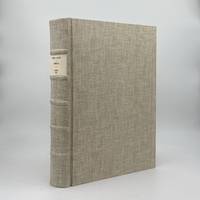
1512372103Paris: Philippe Pigouchet for Simon Vostre 1512. Title page printed in red and black with woodcut device of Simon Vostre; full page woodcuts of St. Jerome crucifixion old coloring. Text in gothic type in two columns ornamental initials some colored text ruled in red throughout. 15 340 28 leaves. Terminal black dd6 present. 1 vols. Folio. Modern linen conservation binding. First leaf toned ownership marks struck out early bibliopole's description in ink at bottom of title. Some minor worming at end. Very good. Title page printed in red and black with woodcut device of Simon Vostre; full page woodcuts of St. Jerome crucifixion old coloring. Text in gothic type in two columns ornamental initials some colored text ruled in red throughout. 15 340 28 leaves. Terminal black dd6 present. 1 vols. Folio. Large folio Bible printed for Simon Vostre by Philippe Pigouchet the famous printer of some of the most beautiful Books of Hours. Uncommon in institutions and in the trade. Renouard ICP II 248; Delaveau & Hillard 778 Philippe Pigouchet for Simon Vostre unknown