26 496 résultats
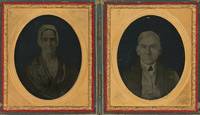
1854List1708Philadelphia 1854. Ninth plate ambrotypes in a union case measuring 2 ½ x 2 ⅛ inches visible in larger case. With the identification of Isaac Rehn with his imprint and “Patented July 4 & 11 1854†imprinted on the case. A fine pair. A striking pair of ambrotypes of Mary and Moses Pennock who were members of the Kennett Square Underground Railroad network as well as active members of the Kennett Square abolitionist and Quaker community. Moses was one of the founders of the Longwood Progressive Meeting. In R.C. Smedley’s History of the Underground Railroad in Chester and Neighboring Counties of Pennsylvania Lancaster Office of the Journal 1883 the Pennocks are mentioned on p. 301 as working as part of the network surrounding Isaac and Thamazine Meredity. Their son Samuel who would go on to secure important agricultural patents is also mentioned twice. <br /> <br /> The images are notable from a photographic history perspective as well as being early examples of the ambrotype process that had been patented in part by fellow Quaker and spiritualist Isaac Rehn. Rehn held a partial patent on ambrotypes along with James Ambrose Cutting of Boston and became unpopular among other photographers for his efforts to extend his patent. He later practiced spiritual photography and was a Professor of Chemistry at Pennsylvania Medical University in Philadelphia. Rehn was also involved in radical politics as a founder and leader of the Philadelphia section of the International Workingmen’s Association which was later disenfranchised by Karl Marx along with several other American sections. Examples of Rehn’s work are held at the National Gallery of Art the Library Company of Philadelphia and Yale’s Sterling Memorial Library. <br /> <br /> Overall a very fine and significant pair of images. unknown
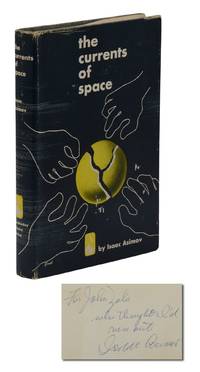
1952140945054Garden City New York: Doubleday & Company 1952. First Edition. Near Fine/Near Fine. First edition first printing. Signed by Isaac Asimov on the front free end paper and inscribed "To John Zola who thought I'd run out". Bound in publisher's original blue cloth-affect boards with spine lettered in white. Near Fine with toning to edges of boards and pages. In a Near Fine unclipped dust jacket with minor wear at the extremities light soiling browning to the blindside. Doubleday & Company unknown
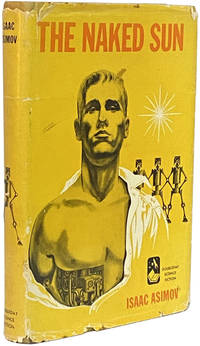
19571192Garden City NY: Doubleday 1957. First Edition. Jacket design by Ruth Ray. VG soiling to boards a few bumps to edges offsetting to endpapers slight spine lean in a Good unclipped dustjacket soiling and rubbing chipping and loss to edges light creasing to upper third dampstaining to flap edges and at rear fold fading to spine tape ghosts on verso. The second novel in Asimovs Robot series. Doubleday hardcover
003105London: printed by W. Griffin; for J. Newbery and W. Nicoll in St. Paul's Church-Yard; G. Kearsly in Ludgate-Street; T. Davies in Russel-Street Covent-Garden; and J. Walter at Charing-Cross 1763 i.e. 1762. Hardcover. Very Good. Octavo. viii 78. iipp. With the half-title and a final leaf containing 'A table of songs.' First edition. Early twentieth-century quarter brown morocco over cloth. With a frontispiece inserted. ESTC N3119; Roscoe A36 1. <br/> <br/> London: printed by W. Griffin; for J. Newbery, and W. Nicoll, in St. Paul's Church-Yard; G. Kearsly, in Ludgate-Street; T. Davie hardcover
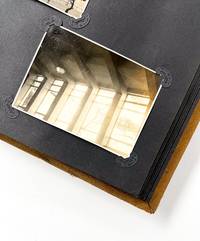
195547136Japan: n.p. 1955. Very good plus overall. Chronological and beautifully unified photo album detailing the construction and interior design of the now-lost Soviet embassy in Tokyo. Built during the tenure of Alexander Antonovich Troyanovsky as head of mission in Japan the new embassy was designed to be earthquake-resistant its concrete foundation set on a site on Mamiana Hill in the center of Tokyo. This album offers a look at the technicalities of building a new concrete structure during a period in Japanese history when heavy machinery was sometimes operated by men wearing hanten coats and pith helmets. The 24 larger format photos show interior 16 and exterior 7 views of the building as it was near or at completion as well as an architectural model of the embassy. The smaller format photos that introduce the album depict the earlier stages of construction including laying the foundation building the main structure and laying roof tiles. The clean lines and open spaces of the new embassy combine pre-Stalinist Soviet architecture with Art Deco and Japanese architectural leitmotifs reminiscent of and likely influenced by the Japanese work of Frank Lloyd Wright. <br /> <br /> Isaac Chertok 1889-1964 chief builder and architect for the embassy is visible in several photographs supervising and observing construction. Chertok had worked as chief builder for the Ministry of Trade in Moscow before joining the embassy staff in Tokyo in the late 1920s. When a visiting Soviet official warned him that he was to be arrested and sent to Gulag as a Japanese spy should he return home to the Soviet Union he fled to Palestine and subsequently emigrated to the United States. Also present here is a smaller album of and other assorted personal documents from Chertok's time in Japan as well as his later life. <br /> <br /> Chertok's Soviet Embassy was largely destroyed during American air raids the spring of 1945 a remaining portion was demolished after the Japanese surrender. An important record of a lost architectural landmark the building's ambitious ultramodern design reflecting the political optimism of the early years of the Soviet and Showa eras. 2.5'' x 2.25'' to 8.5'' x 11'' loose photographs and portfolios; 6.25'' x 8'' one album; 11'' x 13'' another album. Main album: original brown cloth boards string-bound. 192 small and 6 larger black-and-white photographs tipped onto black paper; 15 photographs apparently perished. One large portrait with names of those pictured loosely laid in. 30 leaves. Second album: original floral cloth boards string-bound. 51 black-and-white photographs tipped onto black paper; eight have come loose. 24 leaves. Also included: 10 stiff card studio portfolios with black-and-white photographs two identical. 42 loose black-and-white photographs and photo postcards some written on including six copies of one group photo in various orientations and sizes; one loose color photograph plus other assorted personal documents. Albums with mild to moderate edgewear and occasional chipping. Photos with occasional residue to rear from removal from album; studio portfolios with some edgewear and occasional cracking. Overall clean and bright. n.p. unknown
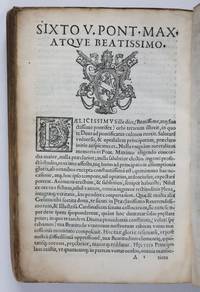
158747873Venice: Apud Ioannem de Gara Giovanni di Gara 1587. First edition. Hardcover. g to vg-. Large quarto. Paginated double sided leaves throughout: 5 1 5-62 238 leaves. Recased in its original period vellum binding and reinforced with new endpapers. Introductory text in Latin dedicates the book to Pope Sixtus V and includes his elaborate engraved papal coat of arms as well as large decorative initials. The initial text also gives biographical and historical background on the author and his roots. The Latin introduction is followed by a two-page Hebrew intoduction.<br /> <br /> This phenomenal volume is a pioneering trilingual Hebrew-Latin-Italian dictionary created by Italian Renaissance-Era Rabbi linguistic scholar and physician David ben Isaac De Pomis 1524-1594. De Pomis' aim with this work being as he was a scholar of both Jewish as well as secular subjects was to create a work which would who have crossover appeal and be useful to both Jewish and non-Jewish scholars alike. In many ways the work can be seen valuable outreach to the Christian and Italian communities of the period. Although De Pomis approaches this work from the perspective of Rabbinic/Biblical Hebrew he also includes numerous additional medical and biological terms given his background as a physician. The main body of the text consists of the dictionary which is organized alphabetically according to the Hebrew. What was originally bound in as a separately paginated concluding section at the end of the volume leaves 5-62 here has been mistakenly rebound before the main pagination 238 leaves. These sections include a glossary of common Rabbinic abbreviations a Italian-Hebrew Lexicon containing the original Italian in Roman script facing the Judeo-Italian in Hebrew script leaf 5-36 and a final alphabetical index of Latin words leaves 36-62.<br /> <br /> There are original printing errors resulting in the mis-pagination of 6 leaves #77 79 85 112 199 and #10 of the other pagination but all content is present.<br /> <br /> Text throughout in Hebrew Latin and Italian all printed in a two-column format.<br /> <br /> Binding with some light rubbing and bumping to the edges. A strip of vellum has been torn away at the top of the front cover. Some additional period staining to the covers. Light water stains and foxing to the title page which includes the period ink signature of the previous owner J. Blacknell in the left margin. Text pages throughout with some light to moderate staining to the margins. Text mostly unaffected and overall clean and vibrant. Bottom corners of the final two leaves including the blank with some light chipping. Book block tight. Binding in good interior in very good- condition overall. Hebrew title: צמח דוד : בו הצמיח ופרש ב×ר היטב בקצור בשלשה ×œ×©×•× ×•×ª כל שורש מלה ומלה ×©×ž×¦× ×‘×¡×¤×¨ הערוך הגדול<br /> Author: פומיס דוד בן יצחק<br /> Alternate Transliterations: Tsemach David Zemah Dawid Tzemach David Zemach David<br /> References: Bartol. II. 37; Wolf I. 311 III. 195 196. Vinograd Venice 717. Roest 944. Zedner p.641. Cowley p.154<br /> <br /> About the author:<br /> David ben Isaac De Pomis 1524-1594 was a noted Italian Rabbi physician linguist and scholar born in Spoleto. De Pomis was respected as something of a savant in his time by both the Jewish and non-Jewish community for his excellence across numerous fields of study. He traced his roots back to the original Roman Jewish community of the ancient era who had first come to the Italian Peninsula during the fist century. In 1587 he published this work "Tsemah David" which many consider to be his magnum opus. Apud Ioannem de Gara (Giovanni di Gara) hardcover
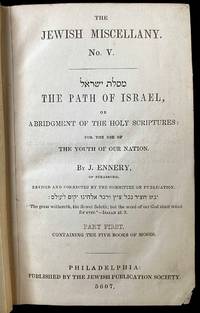
184742792Philadelphia Jewish Publication Society 1847. Hardback. 5607 1847. 1st English-language edition. Original boards 12mo 4 140 pages. Singerman 968. Rosenbach 609. Simon Gratz’s copy with designation bookplate from Gratz College the Jewish institution established by his family. The copyright page notes "Entered.in the year 1847 by John Moss Mayer Arnold and Gratz Etting." Copyright holder Gratz Etting's obituary from Isaac Leeser's Occident can be viewed at http://www.jewish-history.com/occident/volume7/jul1849/obituary.html. Gratz Etting's father Reuben Etting was the brother of Solomon Etting was the first American-born shochet ritual slaughterer who was married to Rachel Gratz only daughter of Barnard Gratz. The Gratz family tree showing both Simon Gratz this book's owner and Reuben Etting and Rachel Gratz the parents of copyright holder Gratz Etting can be viewed at https://d5iam0kjo36nw.cloudfront.net/V06p082001.jpg.<br> Published by Isaac Leeser's first Jewish Publication Society; Isaac Leeser had himself famously published the first Jewish translation of the 5 books of Moses into English just 2 years earlier in 1845. Leeser's monumental Twenty-Four Books of the Holy Scriptures the first Jewish translation of the 24 books of the Bible into English would not appear until 1852. <br> <br> â€Simon Gratz 1840-1925 was among the most recognized and respected Jewish Americans in the city of Philadelphia. He was born into one of the oldest families and perhaps most notable. He inherited a legacy of high ambition and accomplishment going back to the family’s early settlers in the United States—Barnard and Michael Gratz. The Gratz Brothers were most enterprising in shipping land acquisition and trading which allowed for the cementing of the strong and influential relationship between the family and the city. Simon’s father Edward Gratz was known for his activities with the construction of the Pennsylvania Railroad and his most famous aunt Rebecca Gratz for her ‘charm’ and philanthropy†Historical Society of Pennsylvania. The author Jonas Ennery 1801-1863 was a French deputy. He was for twenty-six years attached to the Jewish school of Strasbourg of which he became the head. In collaboration with Hirth he compiled a Dictionnaire Général de Géographie Universelle 4 vols. Strasburg 1839–41 for which Cuvier wrote a preface. Soon afterward he published Le Sentier d'Israël ou Bible des Jeunes Israélites Paris Metz and Strasburg 1843. At the request of the Société des Bons Livres he took part in the editorship of Prières d'un CÅ“ur Israélite which appeared in 1848. In 1849 despite anti-Jewish rioting in Alsace Ennery was elected representative for the department of the Lower Rhine and sat among the members of the "Mountain." He devoted his attention principally to scholastic questions. After the coup d'état he resisted the new order of things and was exiled for life in 1852. He retired to Brussels where he lived as a teacher until his death. <br> For a brief overview of the Gratz-Etting family around the time of publication see https://archives.cjh.org/agents/families/13583. <br> OCLC: 77743372. OCLC and Singerman together list 6 copies of this separate first edition from 1847 American Antiquarian Penn YU Free Lib Penn Library Company Phila PPRF. Gratz stamp on blank front pastedown period paper label on boards internally very clean and nice Very Good Condition. B AMR-57-9B-BD!X-'kk. Philadelphia, Jewish Publication Society unknown
1963C1436a<p>48 pages with photographs and diagrams. Octavo 8 1/2" x 5 1/2" bound in original publisher's spiral binding in blue felt wrappers with black and silver Piatigorsky Cup stamped to cover. Included 10 first day tickets for the cup. Signed or inscribed by all the contestants. First edition.<br /><br />The Piatigorsky Cup was a triennial series of double round-robin grandmaster chess tournaments held in the United States in the 1960's. Sponsored by the Piatigorsky Foundation only two events were held in 1963 and 1966. The Piatigorsky Cups were the strongest U.S. chess tournaments since New York 1927. Jacqueline Piatigorsky nie Rothschild was married to cellist Gregor Piatigorsky. One of the strongest woman chess players in the U.S. and a regular competitor in the U.S. Women's Chess Championship she designed the cup and was the primary organizer of the tournament. The prize funds were among the largest of any chess tournament up to that time. Every player was guaranteed a prize and all traveling and living expenses were paid.</p><p>The First Piatigorsky Cup was held in The Ambassador Hotel Los Angeles in July 1963. The tournament field of eight included players from five countries. The Soviet representatives Paul Keres and World Champion Tigran Petrosian finished equal first to share the cup with a score of 8½/14 receiving more than half of the $10000 prize fund $3000 for first. Since dollars brought back to the USSR were exchanged by the Soviet government for rubles at an unfavorable rate Keres and Petrosian were reported to have bought automobiles Ramblers with their winnings. Keres won the most games in the tournament six but lost twice to Samuel Reshevsky. The Cup was Petrosian's first tournament since winning the 1963 World Championship match with Mikhail Botvinnik and was one of two first prizes he shared in his six-year reign as champion. He was the first reigning champion to play in an American tournament since Alexander Alekhine at Pasadena 1932. After losing in the second round to Svetozar Gligoric Petrosian was never in danger the rest of the tournament. The remainder of the tournament field included two Americans Reshevsky and Pal Benko two Argentinians Oscar Panno and Miguel Najdorf and two Europeans Gligoric Yugoslavia and Fridrik Olafsson Iceland. U.S. Champion Bobby Fischer declined an invitation after his demand for a $2000 appearance fee was refused by the tournament organizers. Gligoric led halfway through the tournament with 4 1/2/7 but he scored only three draws in the last seven games and finished fifth behind Najdorf and Olafsson. Petrosian finished the strongest with 5/7 in the second half. Before the last round Petrosian led with 8 points followed by Keres with 7 1/2 and Najdorf and Olafsson with 7. Both Petrosian and Keres had Black in the final round. Petrosian drew his game against Reshevsky but Keres beat Gligoric to result in a tie for first place with 8 1/2 points each.<br /><br /><strong>Condition: </strong><br />Spiral spine small split at center else a better than very good copy.</p> Piatigorsky Cup Committee paperback
1732D427Amsterdam: R. en J. Wetstein en W. Smith 1732. Hardcover. Very Good. 2 volumes Elephant folio 445 x 296mm. 16 524pp. 4. Title-page in black and red with engraved vignettes. Text in Dutch and Latin parallel. Contemporary vellum with central medallion stamped in blind. Slight bowing to vellum as typical overall a superb two volume set of the Metamorphoses illustrated with in-text copper-engravings by Bernard Picart Charles le Brun and several other artists. Internally there are scattered stains but an excellent copy overall. The translator of this edition Isaac Verburg was born in Leiden around the year 1684. He was Rector of the Latin schools in Amsterdam and author and translator of several books; he died in 1745 in Amsterdam. Rare copy of the popular Dutch translation of Ovids masterpiece in prose Metamorphoses with clean bright and large illustrations. <br/><br/> R. en J. Wetstein, en W. Smith hardcover
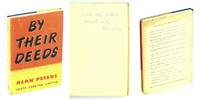
1946561j0929London: Heath Cranton Limited. Very Good in Good dust jacket. 1946. First Edition. Hardcover. Signed "With the Author's Compliments Alan Peters" atop front free endpaper. "Here are all the ingredients of strong drama and it was as a play the story was first written as early as 1933. Twice it was accepted for London production and twice it was banned by successive Lord Chamberlains in the days of pre-WWII German appeasement. At that time it was a warning and a prophecy which has unhappily been more than fulfilled." - dust jacket. A fascinating Leeds Libraries Heritage Blog article suggests Alan Peters was almost certainly the pseudonym of Leeds physician Dr. Isaac Hipshon and that this was his most famous work describing it as "a searing examination of the 'Nazi Revolution' of 1933 and its impact upon an inter-related group of characters including a middle-class German family and a Jewish scientist." 6-184 pp. Clean tight and unmarked with light wear to original bright blue cloth lettered in gilt upon spine. Average wear to complete dust jacket now preserved in archival-grade Brodart. A well-preserved signed copy of this important and prophetic work.; Sm 8vo; Signed by Author . Heath Cranton Limited hardcover
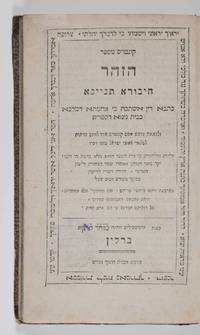
178248885Berlin and Dessau: Hevrat Hinukh Ne‘arim Berlin Freischule/n.p. 1782. First editions 2 of 4. Hardcover. Nearly Fine. Sammelband of four opuscules published between 1782 and 1819 octavo. Contemporary half calf top inch perished over pastepaper boards; spine lettered and tooled in gilt. Edges speckled blue. Covers lightly worn else fine clean copies the fourth work lightly foxed throughout. The first three works issued from the Hevrat Hinukh Ne'arim Berlin Freischule under the supervision of Isaac Satanow 1732-1804 the most prolific Hebrew writer of the Berlin Haskalah. As director of the publishing house Satanow was assigned the task of reissuing old Hebrew classics by the Marpeh ha-Nefesh a philanthropic group headed by the banker Daniel Itzig his son-in-law David Friedländer and the famous physican and philosopher Marcus Herz. A number of these editions however were in fact original works by Satanow which he presented as the work of earlier writers. The first item in the sammelband is an outstanding example of this latter type.<br /> <br /> I. Kuntres mi-Sefer ha-Zohar Hibura Tinyana Berlin: Hevrat Hinukh Ne‘arim 1783. aleph-gimel8 dalet1; 25ff. Vinograd Berlin 313. First edition of this polemic styled in imitation of the Zohar as a response to the Mitpahat Sefarim 1768 of Jacob Emden 1697-1776 in which the latter calls into question the antiquity and textual integrity of that chief work of the Jewish mystical tradition. Emden's critique may be understood as an attempt to undermine the doctrinal foundation of the Frankists who based their beliefs on the Zohar. "Emden had suspected the authenticity of the Zohar for a long time and he hoped some time 'to reveal the strange things found in the book.' But these intentions were secretly nursed within him for many years until the time was propitious for his exposé" Cohen. Perhaps surprisingly for a maskil Satanow held a very different view: "While advocating secular knowledge and the study of science Satanow also expressed great admiration for Kabbalah. In contrast to Emden he claims that the whole Zohar was written by Bar Yohai and Moses De Leon had nothing to do with its writing. He also rejects Emden's claim that in the Zohar there are words against the Talmud and promises to 'consult the Zohar and prove that all its words are right and truthful none of them is crooked Kuntres mi-Sefer ha-Zohar pp. 25 26" N. Rezler-Bersohn. Born in the Polish now Ukrainian town of Satanov Isaac Satanow settled in Berlin around 1771. "Among the most prolific of the early Haskalah writers. Satanow demonstrated a wealth of knowledge of the Hebrew language ranking as a model stylest throughout the Haskalah period" EJ 14: 905-906. As a leading representive of the eighteenth-century Jewish Enlightement Satanow boldly displayed a "conglomeration of contrasts" Jewish Enc. XI: 71: “Though Orthodox in his beliefs he nevertheless favored Reform in practice. He was one of the greatest authorities on Jewish tradition and lore yet he was one of the most free-thinking of philosophers.†For a more detailed discussion of this and other works by Satanow see N. Rezler-Bersohn "Isaac Satanow - An Epitome of an Era" in: Year Book XXV Leo Baeck Institute 1980. For Emden in the present context see M. L. Cohen Jacob Emden A Man of Controversy Philadelphia: The Dropsie College 1937 pp. 254ff.<br /> <br /> II. Sefer Igeret ha-Kodesh Berlin 553 1793. 7ff. Vinograd Berlin 415. Later edition of this well-known work. The celebrated talmudist and exegete Nachmanides the Ramban Moses ben Nachman ca. 1195-ca. 1270 acted as a conciliator between the parties in the early 13th-century controversies surrounding the philosophical and secular direction of Maimonides' growing influence. "After having given the earlier part of his life to his Talmudical works Moses Nachmanides devoted himself to writing of a homiletic-exegetic and devotional character. To these belong the "Iggeret ha-Kodesh" and the "Torat ha-Adam." In the former which deals with the holiness and significance of marriage Moses criticizes Maimonides for stigmatizing as a disgrace to man certain of the desires implanted in the human body. In Moses' opinion the body with all its functions being the work of God none of its impulses can be regarded as intrinsically objectionable" Jewish Enc. IX:88. The rare editio princeps appeared at Rome in 1546; the editor of the present edition Isaac Satanow notes at the title that the letter was “printed in Basel in the year 5340†referring to the 1580 edition of Ambrosius Froben Prijs 127.<br /> <br /> III. Nevu’at ha-Yeled Berlin: Hevrat Hinukh Ne‘arim 549 1789. asterisk8 2asterisk2. 10 unnumbered leaves. Vinograd Berlin 384. Later edition of a medieval Hebrew short story with commentary first printed at the end of Jacob Zemah's Sefer Nagid u-Metzaveh Constantinople 1726. "The body of the tale is followed by a number of occult prophecies in Aramaic. it was known already as early as the end of the 15th century and the beginning of the 16th when some kabbalists among them R. Abraham b. Eliezer ha-Levi wrote commentaries on the prophecies. The story tells of a wonder child Nahman born in the fifth century to a kabbalist; the child died very young but immediately upon birth began to tell his mother secrets of the heavenly worlds. His father cautioned him not to reveal mysteries forbidden to man and from then the child spoke only obscurely and enigmatically. Modern scholars have attempted to date the story and the prophecies therein by tracing known historical events hinted at and relating them to the text. The obscurity of the text makes this very difficult but it seems probable that historical events in the 15th century especially in the East are referred to in the prophecies. However the purpose of the story and its prophecies was to anticipate the coming of the Messiah and to describe the major political and historical events and catastrophes bringing about his final revelation. The kabbalists interpreted the prophecies as hinting at the coming of the Messiah in the early 16th century" JE XII:1020. Here the commentary on the Aramaic "prophecies" is likely attributable to Satanow.<br /> <br /> IV. Herev Nokemet Nekam Berit Dessau 5579 1819. 16pp. Vinograd Dessau 77. First edition of this famous polemical letter. A leader of the Reform movement Meyer Israel Bresselau d. 1839 together with I. S. Fraenkel edited and adapted in 1818 a prayer book for the Hamburg Reform Temple under the title Seder ha-Avodah. He anonymously published the present work in response to Eleh Divrei ha-Berit Altona 1819 "a pamphlet which collated the views of the greatest Orthodox rabbis of Western Europe against Reform Judaism and its innovations." A rhymed work written in a satirical biblical style Herev Nokemet is "remarkable in its witty take-off on the Orthodox rabbis who opposed the reforms in the Hamburg Reform synagogue. It ranks among the best Hebrew polemic literature written at the time of the Haskalah" EJ 4:1358 In response Meir Leib Reinitz published his Lahat ha-Herev ha-Mithappekhet in 1820. Bresselau's polemic was reprinted as an appendix to Bernfelds's Toledot ha-Reformazyon ha-Datit be-Yisrael in 1900. ×§×•× ×˜×¨×¡ מספר הזהר ×—×™×‘×•×¨× ×ª× ×™×™× ×<br /> ספר ×גרת הקדש<br /> × ×‘×•×ת הילד<br /> חרב × ×§×ž×ª × ×§× ×‘×¨×™×ª. Hevrat Hinukh Ne‘arim (Berlin Freischule)/[n.p.] hardcover
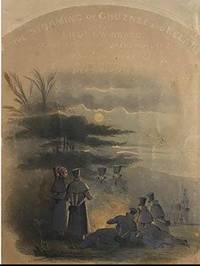
51-5693London: circa 1842. A suite of 10 handcolored lithographs mounted on card as issued. Average sheet size 50 x 37 or 38cm. Matted. One of the lithographs is missing most of the lower blank margin and one is missing the left side of the sky.The lithographs are not numbered or titled except for Abbey 5091 the title page.According to Abbey Travel II no. 509 there were 14 prints and they were tinted and not handcolored .After forcing the Bolan Pass and capturing Kandahar without a fight Sir John Keane's Army of the Indus advanced on the formidable Ghazni fortress. Protected by thick 60-feet high walls it presented a major problem for the British who lacked heavy artillery. They were only able to capture it because Mohan Lal a Kashmiri interpreter spy and assistant to the political officer Captain Sir Alexander Burnes managed to discover that one of the gates was poorly defended.Wingate was in India from March 1835 to January 1842. His sketch of the fortress of Ghuznee which as company commander in the 2nd Queen’s Royal Regiment of Foot he had stormed in July 1839 was published as a lithograph in London that same year one of fourteen large coloured lithographs by Weld Taylor after Wingate in an album entitled The Storming of Ghuznee and Kelat published 1842: copy British Library Oriental and India Office Collections. London: circa 1842 unknown
elala3022London: Isaac Ware 1731. First Edition. Ware's renderings engraved by P.Fourdrinier of designs by Jones and by William Kent depict chimney pieces ceilings mouldings staircases garden seats and structures and other ornaments. Kent is represented by more designs than Jones; and there is also one design by Lord Burlington of the piers at the entrance to Chiswick House and another unattributed design for an alcove. Some of these designs were in Burlington's collection and had not been previously published. This small-format edition supplied a wider audience of craftsmen and others with patterns indicative of Burlington's taste than the expensive folio of Designs of Inigo Jones published by Kent in 1727. Archer 340.1. Berlin Kat. 2274. Fowler 437. Harris 909. small 4to. engraved title pp. 5 engraved contents & 48 engraved plates numbered 1-53 6 folding - 5 assigned double numbers. contemporary calf artlessly rebacked corners lower edges & spine ends damaged title gutter margin strengthened & outer margin with small chip some marginal soiling [London]: I[saac] Ware, [1731] unknown
19812571BASTEI-LÜBBE 1981-82. 1. softcover. Lucky Starr: Weltraum-Ranger 211382114121143211452114721149 BASTEI-LÜBBE paperback
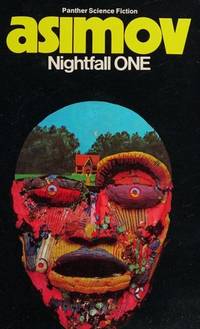
19742205PANTHER BOOKS 1974. 4. softcover. Nightfall 34663537 Maloftege! PANTHER BOOKS paperback
57375Signet / New American Library. As New. 1965. Paperback. 0451612906 . FREE UPGRADE to Courier/Priority Shipping Upon Request IN STOCK AND IMMEDIATELY AVAILABLE FOR SHIPMENT - AS NEW THE TEXT BLOCK IS PRISTINE CLEAN UNMARKED AND IN EXCELLENT CONDITION - - 357 pages. -- with a bonus offer-- . Signet / New American Library paperback
32189Boston MA: Houghton Mifflin. As New. Hardcover. FREE UPGRADE to Courier/Priority Shipping Upon Request - IN STOCK AND IMMEDIATELY AVAILABLE FOR SHIPMENT - 357 pages; ND; c 1963. -- with a bonus offer-- . Houghton Mifflin hardcover
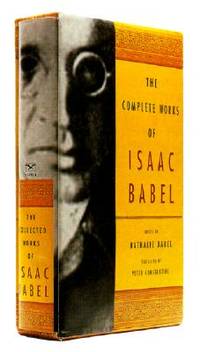
200151845New York: W. W. Norton. New. 2001. Hardcover. 0393048462 . FREE UPGRADE to Courier/Priority Shipping Upon Request IN STOCK AND IMMEDIATELY AVAILABLE FOR SHIPMENT - Flawless copy brand new pristine never opened - 1076 pages. Book Description: "A literary event of extraordinary dimensionsthe first single-volume edition of all of Isaac Babel's work. Considered one of the greatest writers of the twentieth centuryand the greatest short story writer since ChekhovIsaac Babel 1894-1941 also wrote numerous plays diaries and screenplays. Despite his stature the whole of Babel's work has never been assembled in one place. This magnificent edition of Babel's collected work edited and authorized by Babel's daughter Nathalie and newly translated by Peter Constantine includes such standard works as the "Red Cavalry" cycle and his diaries as well as several previously untranslated stories and screenplays. Often revolving around the tortured dilemmas faced by Jews within the ruthless Soviet state Babel's terse violent fiction has left its mark on generations of readers and writers. This book will stand as Babel's final most enduring legacy. Slipcased edition. 2 b/w photographs 3 maps. " W. W. Norton hardcover
1665D18691London: J. G. for Rich. Marriott 1665. First Edition. Hardcover. Near Fine. 8vo. Original calf. Wing W670; ESTC T10749. Provenance: Robert S Pirie bookplate. An exceptionally handsome copy in its original binding. "Thick paper " asks Pirie in pencil at the front. Rare. <br/><br/> J. G. for Rich. Marriott hardcover
17941252491794. First Edition. EATON Daniel Isaac. The Trial of Daniel Isaac Eaton for Publishing a Supposed Libel Comparing the King of England to a Game Cock In a Pamphlet Intitled Politics for the People; or Hog Wash at Justice Hall in the Old Bailey February Twenty-Fourth 1794. New York: L. Wayland 1794. Octavo modern half calf marbled boards pp. 48. $2400.First American edition of this account of the prosecution of radical printer Daniel Isaac Eaton for sedition with a wood engraving on the title page of the King of England next to a gamecock.In 1793 ""having acquired his own press Eaton launched Hog's Wash or A Salmagundy for Swine a weekly designed to spread political enlightenment among the masses. Partly original items partly excerpts enlivened by satire irony humour and verse it was immediately successful. Renamed Politics for the People it ran for sixty numbers September 1793 to March 1795. Through its pagesas through his pamphletsEaton consistently advocated universal manhood suffrage annual parliaments peace among nations education of the poor and unfettered discussion of politics and religion. When in the eighth number 16 November 1793 he published two items attacking monarchy one comparing the king to a cruel tyrannical gamecock Eaton was prosecuted for seditious libel but acquitted on both counts. He triumphantly adopted the imprint: 'Printed by D. I. Eaton at the Cock and Swine No. 74 Newgate Street.' The London Corresponding Society caused silver medals to be struck commemorating his acquittal. His shop became a gathering place for reformers and radicals"" DNB. Eaton is perhaps best remembered today for being arrested and convicted for publishing Thomas Paine's The Age of Reason serving 18 months in prison. Published earlier that same year in London. Scattered foxing extremely good condition. hardcover
1756191111London: Printed for T. Osborne and J. Shipton in the Gray's Inn J. Hodges near London Bridge L. Davis in Fleetstreet J. Ward in Cornhill and R. Baldwin in Pater-Noster-Row 1756. Hardcover. Fair missing coversmissing frontispiece and title page missing pages prior to page 9 expected age toning throughout spine is split plate 1 is loose appears all plates are here but many are wrongly numbered or double numbered pages 13-22 are torn appx 4 inches down from the top. Oversized missing front and rear covers brown leather spine with 6 raised bands 9-748 pp 20 pp 122 pages of engraved plates with several being fold-out. Includes a table of the plates errata and a table of contents. Isaac Ware's important comprehensive overview of Georgian architectural theory and practice. This work covers nearly every imaginable element of architectural design. 16x10x3" Printed for T. Osborne and J. Shipton, in the Gray's Inn, J. Hodges, near London Bridge, L. Davis, in Fleetstreet, J. Ward, in C hardcover
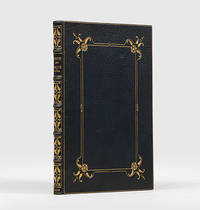
1908122897London: Privately Printed at the Chiswick Press 1908. A proud Jewish father publishes for his children First and only edition. A truly sumptuous piece of private publishing produced as a gift for the author's children and grandchildren handsomely printed at the Chiswick Press and finely bound by an unnamed binder of real quality. Among the varied pieces is "A Dream by One who Dreamt It" a prose fantasy conceived at the time of the Dreyfus case of a Jewish state "a beautiful land of very vast extent" where Jews driven out from the civilized countries of Europe by "hatred and envy of the race" live in paradisal self-government. The volume carries the bookplate of Bernard Alexander Isaac 1871-1938. If he is one of the children for whom the book was printed then "Pater" was Frederick Simeon Isaac c.1829-1915. With his siblings Benjamin and Alexander Frederick was a partner in Isaac & Samuel a City of London firm with worldwide interests. He was also a director of several South American utility and finance companies. In the 1871 Census he was described as a "South American merchant" and in the 1901 Census as a "financial merchant". He left £630000 including a range of legacies to Jewish charities. The book is likely to have been printed in small numbers and is unsurprisingly rare. There are no copies listed on Library Hub and Library Hub lists only the Toronto Public Library copy. We were unable to trace any other copy in libraries or auction records. Tall octavo 247 x 184 mm. Photographic portrait of the author as frontispiece with tissue guard title printed in red and black decorative opening initials headpieces and culs-de-lampe. Finely bound in contemporary dark blue crushed morocco titles in gilt direct to spine gilt-ruled raised bands compartments and turn-ins ruled and richly decorated with foliate and circlet motifs in gilt boards panelled in single gilt rules with floral and repeat foliate motifs to corners green silk endpapers edges gilt unsigned but evidently quality work. Pictorial bookplate of Bernard A. Isaac to front pastedown. A few minor marks to covers else a fine copy printed on thick paper and handsomely bound. Toronto Public Library call number 828 P1283. hardcover
1813117185London: H.M.S.O. 1813. First edition thus of Newton's reports to the Privy Council or the Treasury during his position of Master of His Majesty's Mint the report signed and dated in print 21 September 1717. Newton was first appointed warden of the Mint in May 1696 rising to the position of Master following the death of Thomas Neale in December 1699. "Macaulay avers in his history that Newton - independently I suppose of his public action in reference to the Re-Coinage - has left no exposition of his opinions touching the currency. The eloquent historian thus leaves out of view the well-known report of 1717 upon which was based the reduction of the Guinea from 21 shillings and 6 pence to 21 shillings. It would seem then that the doctrinal importance of this Report had escaped recognition from the English historian though as I have had occasion to ascertain it was the subject of appreciative comment in France and Prussia more than a century ago. Indeed I read it first in a German translation printed at Berlin in 1762." Horton quoted in Gray. Foolscap folio 332 x 202 mm pp. 3. Docket title printed on final blank for folding. Disbound two sewing holes as issued. Two small sewing holes to centre fold; in excellent condition. Gray 350; Wallis 350.6. World Cat and Library Hub Discover record a 4-page version with the title "Return to an order of the House of Commons dated 1 March 1813; - for copies of all reports or memorials; made by Sir Isaac Newton when Master of his Majesty's Mint to the Privy Council or to the Treasury on the state of the coin of these realms: so far as relates to the Treasury." taken from the series of British Parliamentary papers; Accounts and papers Great Britain Parliament. Session 1812-13. House of Commons; 77. We can find no record of the present version. unknown
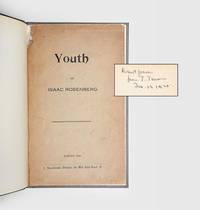
1915184818London: I. Narodiczky 1915. Robert Graves remembers a fallen poet First edition Robert Graves's copy with a gift inscription to him on the title page: "Robert Graves from J. Isaacs Feb 23 1920". Graves and his friend Jacob "Jack" Isaacs were both early supporters of Rosenberg. Isaacs met Rosenberg in 1917 while both were on leave from the front and he associated with Graves after the war in Oxford. Professor Isaacs 1896-1973 was a poet and critic who nurtured further friendships with Edmund Blunden and T. S. Eliot. In the newspaper article "Eliot's Friends" here loosely inserted Isaacs recalled that Eliot praised Rosenberg "and spread his fame long before the bandwagon rumbled. He once said to me that no English anthology that did not include Rosenberg was worth anything". Published in a run of roughly 100 copies just prior to his enlisting in the army Youth was the second of only three poetry pamphlets published during Rosenberg's lifetime. Rosenberg attended the Slade and became one of the most celebrated of the British war poets following his death on the Western Front in 1918. A posthumous collection of his works appeared in 1922. Octavo 202 x 123 mm pp. 18. Later grey cloth with original wrappers bound in. Bound-in front wrapper with long closed split to inner margin and a couple of repaired tears minor crease to contents very good. hardcover
1886D7497Pennsylvania 1886. Hardcover. Very Good. Contemporary quarter sheep marbled paper over boards; 112 x 176 mm; with 123 numbered and lined leaves mostly filled. Rather early and rare American railroad treatise made by one Isaac Dox chief engineer in the building of a rail line from Delano to Hazelton Pennsylvania 1886-1887. Covers all aspects of railroad construction and the working of railroads exceptionally well accomplished in a small precise hand with frequent illustrations and diagrams done in pen and ink. Spine chipped and scuffed; edges of boards scuffed. <br/><br/> hardcover