MOUCHERON, Isaac deBiblio.com
26 496 résultats
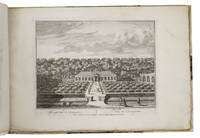
1731ABC_46670Amsterdam 1731. Small oblong folio 22 x 32.5 cm. Hendrik de Leth 20th-century half vellum marbled paper sides. With 26 numbered engraved prints including the title-page. 26 engraved ll. Second edition of a fine series of 26 beautiful and delicate etchings of the sumptuous 17th-century Heemstede estate near Utrecht not in the municipality Heemstede including a bird's-eye view of the entire estate and detailed views of the gardens house and other buildings fountains sculpture hedges and trellises all drawn and etched by Isaac van Moucheron. It also shows visitors strolling through the gardens horses coaches dogs and gardeners at work with pruning saws. "The fame of the gardens of Heemstede near Houten in the province of Utrecht was and still is considerable. . a highlight in Dutch garden art." Anglo-Dutch garden. Each print has a caption in Dutch and French the bird's-eye view with a key to five numbered features.With the bookplate of the Dutch entomologist Frans.Titus. Valck-Lucassen 1885-1939 on the front paste-down. Binding slightly worn and the vellum a little scuffed especially around the spine and the lower corners on the fore-edge vellum slightly dust-soiled. Leaves very slightly browned and slightly frayed some minor marginal staining never affecting the images overall in good condition.l Hollstein Dutch & Flemish XIV p. 94 nos. 10-35; cf. Anglo-Dutch garden pp. 193-198; STCN 4 copies of the 1st ed. incl. 2 incompl.; Springer Bibl. overzicht p. 47 1st ed. hardcover
16094708Full ruled contemporary vellum; red morocco label to spine. Gilt armorial 'Martis et artis honos' to boards. 60 1080 32 151 pages. Wear to fore edge of rear board. Dibdin p. 350: "A most excellent edition". Typis Wechelianis apud Claudium Marnium & haeredes Iohannis Aubrii hardcover
18285934New York: J & J Harper. Good. 1828. First Edition. Hardcover. This is a rare and interesting book relating to the western frontier of the early nineteenth century-- Isaac Reed was born in Granville NY in 1787 and after trying teach and the law he turned to ministry. Reed went West in 1816 and and preached on a circuit in Kentucky before removing to Indiana. He traveled throughout southern Indiana and was in charge of churches in Indianapolis and Bloomington. The rear joint is partially split but still holding well. There is some old staining to the title page and scattered foxing elsewhere. This book is bound in the original publisher's leather spine rear joint starting and paper covered boards. It is contained in a new green cloth tray case with a leather spine label. The last leaf is unpaged and contains errata information. Ref: Howes R126 b Buck Banta Indiana Authors not in Sabin. "Observations on people manners and conditions in frontier Indiana Illinois and Kentucky by an intelligent itenerant preacher. "--Howes R126b. "The Christian Traveler published immediately after his return to the East describes his travels and adventures in Indiana and Kentucky. It is a narrative of considerable charm and historical importance and is now quite rare."--Banta Indian Authors and Their Books. Reed was a Presbyterian minister in Indiana but his labors occasionally took him into eastern Illinois."--Buck. Not in Sabin ; 12mo 7" - 7½" tall; 242 pages . J & J Harper hardcover
82278London Published by R. Ackermann 1820. Folio. XIV 2 178 s. 24 hand-coloured aquatint views by R. Havell and T. Sutherland after M. Schuetz. Folding map. Contemporary full calf. Spine gilt. Gilt border on covers. Rebacked retaining old spine. Bookplate of Madame de Gablenz née de Stieglitz. . unknown
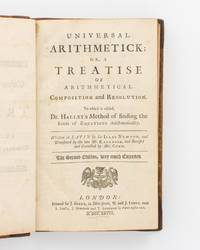
1728117773London: Printed for J. Senex W. and J. Innys J. Osborne and T. Longman 1728. 2nd Edition. Hardcover. Very Good. London Printed for J. Senex W. and J. Innys J. Osborne and T. Longman 1728 'Second Edition very much Corrected'/ 1720 first edition in English/ 1707 first edition in Latin. Octavo iv half-title and title leaves versos blank iv 271 1 publisher's advertisement pages plus 8 full-page plates. Early full polished calf decorated in blind on the sides later expertly recornered and rebacked retaining the original gilt-decorated spine with two contrasting leather title-labels; leather a little unevenly discoloured and rubbed with minor loss to the polished surface of the spine; scattered foxing moderate in places; plates offset; tiny blemish to the bottom margin of one plate a paper flaw well clear of the printed surface; trifling signs of age and use a shallow crease to the bottom corner-tip of the last ten leaves is about the extent of it; overall an excellent copy. The eight plates normally found with a small folding section are bound into this copy in an unfolded state by the simple expedient of having the narrow left-hand border of the printed surface of each plate deep in the gutter. The border is visible in four instances and although the border cannot be seen on the other four plates all of the other printed plate surface is visible. Interestingly the plates show no evidence of ever having been folded. Babson 202. Printed for J. Senex, W. and J. Innys, J. Osborne, and T. Longman hardcover
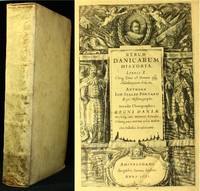
60086Amsterdam Ioannis Ianssoni 1631. Folio. Grav. titelblad 14 812 52 s. fyra utvikbara grav. kartor. Ett helsides graverat porträtt pÃ¥ författaren vid 59 Ã¥rs Ã¥lder i dedikationen. Kartorna löst bilagda Danmarkskartan lagad och uppfodrad med stor bildförlust. Ã…terkommande brunfläckiga sidor emellanÃ¥t kraftigt enstaka smÃ¥fläckar och enstaka understrykningar med rödkrita. Svag fuktrand mot slutet. Samtida pergamentband. Med professor Carl Aurivillius namnteckning pÃ¥ frampärmens insida daterad 1783. Ur Gustaf d’Albedyhlls bibliotek med hans exlibris variant 1 med devisen Mors sine musis vita och ur Ericsbergs bibliotek med Carl Jedvard Bondes exlibris klistrat över d’Albedyhlls. Warmholtz 2775. Bibl. danica III sp. 13. Thesaurus 596. Carlander II 499 & III 88 & 564ff. Ej i Nordenskiöld collection. Mycket sällsynt med kartorna. BÃ¥de Bibl. danica och Thesaurus anger tre kartor. Kartorna är en Danmarkskarta en Islandskarta en över hertigdömet Holstein och en över Fyn. Islandskartan av Carolous Flandro är densamma som sedan kom till användning först i Janssons och sedan i Blaeus stora Atlaser. StÃ¥tligt exemplar av den nya danska rikshistorien pÃ¥ latin vilken skulle ersätta Saxos krönika som internationell gÃ¥ngbar dansk historia. Detta är första delen vilket var allt som publicerades i samtiden. Den andra delen trycktes först 1740. Jobbet att fÃ¥ fram en ny rikshistoria pÃ¥ latin hade pÃ¥gÃ¥tt i Danmark sedan mitten av 1500-talet efter att publicerandet av Johannes Magnus svenska krönika 1554 gjort behovet märkbart. Ett stort antal danska historiker och rikshistoriografer hade i tur och ordning engagerats Svaning Vedel Krag Lyschander m.fl. men ingen blev färdigt. Arild Huitfelds stora historieverk som utkom under denna tid är skriven pÃ¥ danska. Slutligen utsÃ¥g man tvÃ¥ rikshistoriografer Pontanus och Johannes Meursius och under 1630-talet publicerades inte mindre än tvÃ¥ olika danska historieverk varav Pontanus är det största. Se Skovgaard-Petersen för alla turerna kring detta. Johannes Isaac Pontanus 1571-1639 frÃ¥n Helsingör studerade bÃ¥de Leiden och i England. Han blev nära vän med den inflytelserika Arild Huitfeldt och jobbade ett tag som assistent Ã¥t denne vilket skulle fÃ¥ stor betydelse för hans danska historia. Han blev 1604 professor i Harderwijk i Holland där han stannade till sin död och där han utgav en stor mängd verk i historia och geografi. 1618 blev han sÃ¥ även dansk rikshistoriograf med uppgiften att skriva den danska historien pÃ¥ latin vars första del skulle ta 13 Ã¥r i ansprÃ¥k. Resten av livet jobbade han med fortsättningen perioden 1448-1588 vilken han fullbordade strax före sin död. Denna del utgavs dock inte förrän 1740 av E. J. von Westphalen i â€Monumenta inedita rerum Germanicarumâ€. Carl Aurivillius 1717-86 var professor i österländska sprÃ¥k i Uppsala bibelöversättare och medlem i Gustav III:s bibelkommission. Hans bibliotek sÃ¥ldes pÃ¥ tvÃ¥ auktioner i Uppsala 1787 resp. 1788. Envoyén Gustaf d’Albedyhlls 1758-1819 boksamling ärvdes av hans son Carl Gustaf Eichstedt d’Albedyhll 1800-56 som därigenom tillsammans med egna förvärv byggde upp en mycket stor samling f.f.a. inom nordisk historia. Denna samling skulle sÃ¥lts pÃ¥ auktion 1843 men köptes i stället i sin helhet av Carl Jedvard Bonde f.ö. samma Ã¥r som denne efterträdde d’Albedyhll som överceremonimästare. unknown
183067190Philadelphia: Adam Walde 1830. LEESER Isaac. . JOHLSON Joseph author. Instruction in the Mosaic Religion. Translated from the German of J. Johlson Teacher of an Israelitish School at Frankford on the Maine. By Isaac Leeser Reader of the Portuguese Jewish Congregation in Philadelphia. Philadelphia: Adam Walde 5590 1830.<br> <br> First American edition and first edition in English. Octavo 8 1/4 x 5 1/8 inches; 210 x 131 mm. viii 139 1 blank pp.<br> <br> Full contemporary sheep. Red morocco spine label. Marbled endpapers. Page 35 with a large closed tear professionally repaired with no loss of text. Internally very clean. Overall a very good copy.<br> <br> "Leeser brought with him to Philadelphia his translation of J. Johlson's Instruction in the Mosaic Religion. He had it published there in 1830 appropriately dedicated to his uncle Zalman Rehine. The book is a catechism published in Germany and translated and adapted by Leeser for "the instruction of the younger . of Israelites of both sexes who have previously acquired some knowledge of the fundamental part . of their religion." Leeser undertook its publication because there was a great scarcity of elementary textbooks for Jewish children. It is significant that this Instruction in the Mosaic Religion Leeser's first issued work is a textbook of religious instruction for the young for though Leeser attained distinction as an author translator editor and a national leader of the American Jewish community he considered himself first and foremost an educator." The Jewish Virtual Library<br> <br> "Leeser's career as a translator also began in Philadelphia in 1830 with the publication of his rendering from German of J. Johlson's Instruction in the Mosaic Religion. Leeser as part of his ongoing efforts to contribute to the development of Jewish education and culture in America translated a number of important works into English from German Spanish French and Hebrew. " Penn Libraries.<br> <br> Rosenbach 321.<br> <br> HBS 67190.<br> <br> $3000. Adam Walde unknown
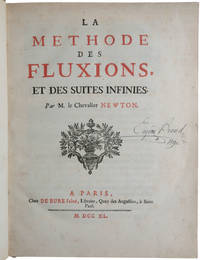
17405802Paris: De Bure l'aine 1740. First edition. <p>First edition in French of Newton's first exposition of his fluxional calculus translated with a long and impotant preface by the celebrated naturalist Comte de Buffon. Originally written in 1671 in Latin this was Newton's first comprehensive presentation of his method of fluxions which according to Hall 'might have effected a mathematical revolution in its own day' Philosophers at War pp. 65-6. It should properly be placed first in the great trilogy of Newton's major works: Fluxions Principia 1687 and Opticks 1704.</p>. BUFFON'S TRANSLATION OF NEWTON'S EXPOSITION OF CALCULUS. <p>First edition in French of Newton's first exposition of his fluxional calculus translated with a long and important preface by the celebrated naturalist Comte de Buffon. Originally written in 1671 in Latin this was Newton's first comprehensive presentation of his method of fluxions which according to Hall 'might have effected a mathematical revolution in its own day' Philosophers at War pp. 65-6. It should properly be placed first in the great trilogy of Newton's major works: Fluxions Principia 1687 and Opticks 1704. Newton's Methodus fluxionum remained unpublished until its English translation by John Colson in 1736. In it he presents a method of determining the magnitudes of finite quantities by the velocities of their generating motions. At its time of preparation it was Newton's fullest exposition of the fundamental problem of the calculus in which he presented his successful general method. Newton prepared this treatise just before his death. The autograph manuscript which survives in Cambridge University Library was entrusted to Henry Pemberton after Newton's death but he did not publish it. John Colson 1680-1760 based his translation on a copy of Newton's original manuscript made by William Jones. Both Newton's manuscript and Jones's copy lack a title page and it is unknown what title if any Newton gave to the manuscript. The title 'De methodus fluxionum' originates with Colson. In the preface Colson writes "I thought it highly injurious to the memory and reputation of our own nation that so curious and useful a piece should be any longer suppressed." Buffon translated Colson's edition in 1737 and added his lengthy preface the following year. The most interesting part of the preface is that dealing with the conception of the infinite and the metaphysical errors to which it leads. This includes a discussion of Berkeley's The analyst 1734 which oddly he criticizes although Berkeley's conclusions are very similar to his own.</p> <br /> <p>Provenance: Eugène Brand signature on title dated 1890.</p> <br /> <p>Newton wrote three accounts of the calculus. The composition of the first a tract entitled 'De analysi per aequationes numero terminorum infinitas' resulted from Newton's reception from Isaac Barrow in the early months of 1669 of a copy of Mercator's Logarithmotechnia a work which contained the series for log1 x. The work in which Newton demonstrated his much more general methods of infinite series was not published until 1711 when William Jones included it along with a number of other tracts in his Analysis per quantitatum series. In 'De analysi' however Newton "did not explicitly make use of the fluxionary notation or idea. Instead he used the infinitely small both geometrically and analytically in a manner similar to that found in Barrow and Fermat and extended its applicability by the use of the binomial theorem. . It will be noticed that although the work of Newton contains the essential procedures of the calculus the justification of these is not clear from the explanation he gave. Newton did not point out by what right the terms involving powers of o were to be dropped out of the calculation any more than Fermat or Barrow . His contribution was that of facilitating the operations rather than of clarifying the conceptions. As Newton himself admitted in this work his method is 'shortly explained rather than accurately demonstrated'" Boyer The Concept of Calculus p.191.</p> <br /> <p>It was first in 'Methodus fluxionum' that "Newton introduced his characteristic notation and conceptions. Here he regarded his variable quantities as generated by the continuous motion of points lines and planes rather than as aggregates of infinitesimal elements the view which had appeared in 'De analysi'. . In the 'Methodus fluxionum' Newton stated clearly the fundamental problem of the calculus: the relation of quantities being given to find the relation of the fluxions of these; and conversely" ibid. pp. 192-3.</p> <br /> <p>In Newton's third exposition De quadratura which was composed some twenty years after 'Methodus fluxionum' and published as an appendix to the Opticks "Newton sought to remove all traces of the infinitely small" ibid.</p> <br /> <p>"It was often lamented that the world had had to wait so many years to see Newton's masterpiece on fluxions. It is astonishing to realize that publication sixty years beforehand would have changed the history of the calculus and would have avoided for Newton any controversy over priority. In 1736 all the results contained in Newton's treatise were well known to mathematicians. However it was too concise for a beginner and Colson added almost 200 pages of explanatory notes. His commentary contributed to the establishment of a kinematical approach to the problem of foundations. In his explanatory notes Colson presents the 'geometrical and Mechanical Elements of Fluxions'. He writes:</p> <br /> <p>'The foregoing Principles of the Doctrine of Fluxions being chiefly abstracted and Analytical. I shall here endeavour after a general manner to shew something analogous to them in Geometry and Mechanicks: by which they may become not only the object of the Understanding and of the Imagination which will only prove their possible existence but even of Sense too by making them actually to exist in a visible and sensible form'.</p> <br /> <p>"Colson was convinced that by using moving diagrams it is possible to exhibit 'Fluxions and Fluents Geometrically and Mechanically . so as to make them the objects of Sense and ocular Demonstration'. The motivation for using the geometrical and mechanical elements of fluxions is clearly that of guaranteeing an ontological basis to the calculus; in fact:</p> <br /> <p>'Fluents Fluxions and their rectilinear Measures will be sensibly and mechanically exhibited and therefore must be allowed to have a place in rerum natura'.</p> <br /> <p>"Colson's approach to the calculus is representative of a whole generation of British mathematicians: his 'sensibly exhibited rectilinear measures' of fluxions are a naive anticipation of Maclaurin's kinematic definitions of the basic concepts of the calculus" Guicciardini The Development of Newtonian Calculus in Britain 1700-1800 pp. 56-57.</p> <br /> <p>"In his preface . Colson noted:</p> <br /> <p>'The chief Principle upon which the Method of Fluxions is here built is. taken from the Rational Mechanicks; which is That Mathematical Quantity particularly Extension may be conceived as generated by continued local Motion; and that all Quantities may be conceived as generated after a like manner. Consequently there must be comparative Velocities of increase and decrease during such generations whose Relations are fixt and determinable and may therefore . proposed to be found.'</p> <br /> <p>"Thus a line or a curve was seen as generated by a continuously moving point a surface by the motion of a line and a solid by the motion of a surface. After defining fluxions fluents and moments Newton went on to show how within this framework significant results could be derived. Following an introduction in which it was shown how equations could be solved with the use of infinite series seven major problems were considered:</p> <br /> <br /> From the Following Quantities fluents given to find their fluxions.<br /> From the given Fluxions to find the Flowing Quantities.<br /> To determine Maxima and Minima of Quantities.<br /> To draw Tangents to Curves.<br /> To find the Quantity of Curvature in any Curve.<br /> To find the Quality of Curvature in any Curve.<br /> To find any number of Curves that may be squared"<br /> <br /> <p>Gjertsen Newton Handbook p. 158.</p> <br /> <p>"Buffon did start his scientific career as a Newtonian. He agreed that science should search for nature's laws and that those laws should be as simple and as universal as possible. Buffon's strong stance in favor of an orthodox Newtonianism was most obvious during his academic polemics with Alexis Clairaut. Buffon also published translations of two English books: Stephen Hales's Vegetable Staticks 1735 and Newton's Treatise on Fluxions 1740. The young man who wrote the prefaces to these books praised the experimental spirit of the English. But to what extent did these texts in fact express Buffon's supposed Newtonian position .</p> <br /> <p>"The case of the preface to Newton's Fluxions 1740 was a different matter since it appeared to be a sign of allegiance both to Newton and to mathematics in the guise of the calculus. But in fact Buffon's preface while acknowledging the perfect clarity of Newton's ideas developed a metaphysical critique of the concept of the infinite that had been closely tied to the practice of geometry. Buffon asserted that our daily experience by means of sensation is restricted to the limited the finite-and therefore that the arithmetical or geometrical infinite had no actual existence. The preface to the Fluxions far from being a sign of Buffon's loyalty to mathematical conceptions of science instead stressed the lack of reality of mathematical ideas. Some of these strong statements would later be developed near the end of the 'Premier discours' of the Histoire naturelle" Hoquet pp. 39-41.</p> <br /> <p>"In his preface Buffon rewrote the history of the calculus - drawing inspiration largely from a book that Fontenelle had published in 1727 Élémens de la géométrie de l'infini - in which he sided strongly with Newton against Leibniz. He was rightly criticized for his lack of objectivity and he became closely tied with English scholars whose point of view he blindly adopted. In France furthermore he became involved with Clairaut Maupertuis and Voltaire in a battle in defense of Newton. His translation and preface must be viewed from his perspective - historical objectivity was not his main concern .</p> <br /> <p>"The debate on infinity tells us something about Buffon's intellectual temperament . At the end of the seventeenth century a lengthy evolution of ideas had led to the Newtonian conception of an infinite time and space and therefore an infinite universe . Calculus gave a new topicality to this philosophical debate since it raised the question of whether the infinitely small quantities manipulated by the new calculus really existed. Leibniz did not believe so . In 1727 Fontenelle defended their real existence and Buffon seemed at first to have accepted his argument. He now attacked Fontenelle without naming him .</p> <br /> <p>"Buffon rejected Fontenelle's conclusion mainly because he did not differentiate between geometrical and metaphysical infinities. 'The idea of infinity' he said 'is only an idea of absence and has no concrete representation.' Even 'space time and duration are not real Infinities.' Likewise 'there is no number that is at present Infinite or infinitely small or smaller or bigger than an Infinity etc.' Because 'Numbers are no more than representations and never exist independently of the things they represent' they do not have a 'real existence' and things themselves cannot be infinite .</p> <br /> <p>"The direct consequence of this philosophy was that mathematics does not teach us anything about reality. More precisely - and here Buffon distanced himself radically from Fontenelle - mathematics does not have its own reality. Fontenelle gives an intellectual reality to numbers and geometrical figures independent of all physical and metaphysical reality. For Buffon there was only physical reality. Thus mathematics was only a tool practical even indispensable but nothing more .</p> <br /> <p>"The last argument in which Buffon intervened was the one that the idealistic philosopher Berkeley had provoked by attacking the metaphysical foundations of calculus .it is clear that Buffon addressed it only to defend his friend the English doctor and mathematician James Jurin. Regardless of what he said Buffon certainly had not read Berkeley's book The analyst 1734 attentively otherwise he would have seen that Berkeley's criticisms of the status of the infinitely small corresponded exactly to his own although they were based on an extremely different metaphysics. As with Leibniz the fundamental philosophical differences prevented Buffon from recognising what they had in common. His attack on Berkeley was more satire than philosophical discussion. By intervening so lightly into a serious debate Buffon exposed himself to criticism. The interesting thing about this episode is that it shows his friendship with James Jurin and suggest that it was Jurin who had advised him in the Leibniz-Newton controversy" Roger pp. 34-38.</p> <br /> <p>Babson 173; Macclesfield 1533; Wallis 236. Hoquet 'History without Time. Buffon's natural history as a nonmathematical physique Isis 101 2010 pp. 30-61. Roger Buffon: A Life in Natural History 1997.</p> <br/> <br/> 4to 255 x 196 mm pp. xxx 4 errata and privilege 148 title printed in red and black woodcut figures in text. Contemporary quarter-morocco and marbled boards spine ruled and in gilt with red lettering-piece a little rubbed joints starting. De Bure l'aine unknown
19603899GOLDMANN WILHELM 1960. 1. hardcover. Roboter-Foundation Sirmkovrilo! GOLDMANN, WILHELM hardcover
19831905HEYNE WILHELM 1983-86. 1. softcover. Isaac Asimov präsentiert: 4022402340744159421542744332 HEYNE, WILHELM paperback
mon0002953351Gnome 1951-01-01. Hardcover. Very Good. 1.0000 8.2000 5.3000. FIRST edition stated on copyright page ""B"" binding 20.3x12.5cm sheets bulk 1.4cm across top. Dust Jacket is not price-clipped and is in a removable clear plastic Brodart protector with minor wear/chipping to the extremities later issue with next two Foundation books listed on the rear flap. Navy cloth cover with red lettering. SIGNED and inscribed by Asimov on the front free endpaper: ""For John Zola / who doesn't do / things by halves / Isaac Asimov"" Zola was a fan who brought up a large stack of books to be signed at Worldcon 14 at the Biltmore Hotel in New York City on September 2 1956. Pages are tanned and clean. A copy in near FINE condition. Gnome hardcover
1731EAHll[SA32Stockholm: Benjamin Gottlieb Schneider 1731. 1731. 2 Volumes in 1. pp. 8 p.l. 398 2; 1 p.l. 88 64 90 72. first title in red & black. woodcut ornaments. contemporary sprinkled calf gilt back rubbed spine & label bit chipped. old inscription on front free-endpaper: "Till Advocat Fisalen George Adolf Rutenschiöd". First Edition. "A survey of Dutch commercial affairs with considerable emphasis on its overseas companies and alliances." Bell Large sections are devoted to the Dutch East and West India Companies and their activities in Africa India south-east Asia and America. The engraved frontispiece to Volume II announced on the last page of Volume I was never published. Rare: two copies cited in NUC Harvard and Bell Library. Bell S35. Kress S.3380. Not in Sabin. Signed by Authors. F. Hardcover. Stockholm: Benjamin Gottlieb Schneider, 1731. Hardcover
196691059University of Pennsylvania Press. As New. 1966. Hardcover. FREE UPGRADE to Courier/Priority Shipping Upon Request - IN STOCK AND IMMEDIATELY AVAILABLE FOR SHIPMENT - AS NEW THE TEXT BLOCK IS PRISTINE CLEAN UNMARKED AND IN EXCELLENT CONDITION - - - Corresponds to ASIN: B0007DWNN2. 177 pages. Catalogue Raisonne Catalog Raisonné Complete Works Life and Work Raisonnee University of Pennsylvania Press hardcover
18780001064AUGUSTA MAINE ME. Good. 1878. On offer is a super original archive of five 5 handwritten manuscript diaries authored by Reverend Isaac J. Mead of Augusta Maine. He was the son of Albert Manley Read who died in 1861 fighting in the Civil War. Research finds that Mead is listed in the Universalist Register of 1895 as editor of THE GOSPEL BANNER. His handwritten diaries are for 1878 he is 37 years old 1882 1887 1888 and 1889 when he is 48. Mead is an enthusiastic prolific writer rarely failing to write a diary entry rarely failing to detail his visits his works his travels and to set these writings apart Isaac Mead proves to be a rather political churchman who rarely fails to press the Universalist Church's approach. His daily entries include the weather his work on the Banner Universalist meetings conferences Sunday services his preaching funeral duties etc. He makes many 'insider' remarks on Church doings and of other Church communities' doings. Historians and collectors of Maine and the neighboring states will have a treasure trove of information on religious matters of the day plus Mead also details: politics of the day; the Blaine and Harrison presidential contest local news like the Dexter Bank case Stain-Cromwell were defendants stabbing on the mail train soldier jumps fight leads to death collision of ocean steamers muster week-encamped on Leonard Farm Glencarin finished race faster etc. Took trip to New York City-Coleman House Coney Island "great playground of this city" Fleetwood Park Eden Museum wax Madison Square - 2 plays. Mr. Fairburn got him his Remington rifle -"a very pretty gun". Mead mentions many hundreds of names of his colleagues visitors family et al. Many entries about gun club target practice etc. Reverend Mead does not provide holographic ownership markings but this archive of diaries came from a larger archive of his estate ephemera. Some nibbling to the books but overall G.; 24mo - over 5" - 5¾" tall; MAINE ME RELIGION UNIVERSALISM CHRISTIANITY EVANGELISM EVANGELICAL CIRCUIT RIDER HANDWRITTEN MANUSCRIPT DOCUMENT LETTER AUTOGRAPH DIARY JOURNAL LOG KEEPSAKE WRITER HAND WRITTEN DOCUMENTS SIGNED LETTERS MANUSCRIPTS HISTORICAL HOLOGRAPH WRITERS DIARIES JOURNALS LOGS AUTOGRAPHS PERSONAL MEMOIR MEMORIAL PERSONAL HISTORY AMERICANA; Signed by Autograph . unknown
18620009086CAMBRIDGE BOSTON MASSACHUSETTS MA. Good. 1862. On offer is the 1862 diary of Isaac S. Pear owner of a Massachusetts factory and business manufacturing spring and cot beds and specialties in folding furniture. Pear speaks often of his day-to-day activities and his business which he writes have been negatively affected by the ongoing and bloody Civil War. The entries range from short concise entries of the weather to longer ones directly related to his business activities at the time. There are also reports of the Civil War battles won and lost and the general feeling of the people around him usually a mixture of exhaustion and anxiety. He obviously keeps tabs on the war especially as it reflects the effect on regiments and people from Massachusetts and his entries reflect this often. It seems about the middle of the year Pears factory begins making cots and beds for the Union Army. A call goes out in August for men to volunteer for the Union. For a few weeks Pear closes his store and factory at 2pm in aid of recruiting. He mentions that stores that did not close early were shut down by a mob. There also seems to be a dour attitude about the situation as Pear often reports the amount who have died in the war and the despondent look of the soldiers who return. The situation does not look good at all through Pears eyes. He also mentions people he knew by name who have died in the war. The Memoranda and Cash Accounts section of the diary contain a number of pages of detailed lists of items bought and paid for money received from clients at the store and money paid out to employees many of whom seem to be family. The book is approximately 380 pages of which there is writing in 300 or so. The cover is soft black leather with a wrap around portion meant to slide into a little loop however the loop no longer exists. It says Diary 1862 on the front. It shows a good bit of wear throughout. The pages show some discoloration and wear especially near the front and back but nothing that affects legibility. Pear wrote in pencil throughout the book and there is some smudging on certain pages that can affect legibility however these entries can be read with a bit of effort made easier under direct light. His handwriting is easy to read and legible throughout. The book is in overall good condition. Sample entries: Friday February 7 1862. Quite and warm all day. The snow thawed considerably. News of the taking of Fort Henry on the Tennessee River read to-day. People feel elated. This evening took tea at Mrs. Williams.; February 8. Comes in pleasant but colder than yesterday. A little trade at store though still poor. The war affects business very much and all are anxious for a short but honorable termination.; March 19. Pleasant all day. The taking of Newberne N.C. continued. The 21st 23rd 24th 25th Mass. Regts were in the action. Our cas. About ninety killed and 400 wounded.; June 19. Warm and pleasant all day. Busy at factory making spring cots for Army use.; August 5. Talk of a draft to fill the quota for 600000 more men for the army. Cities and towns offering bounties for volunteers for $100 to $200.; August 10. Visited Camp Cameron today.A large number of troops there under the new call of 300000 by President Lincoln.; September 3. All account go to show that the Rebels have an overwhelming Army and are determined to get into Washington and Maryland or die in the attempt.; December 13. John E. Noone was killed at the Battle of Fredericksburg this day aged 27 years. Background: In 1852 Mr. Pear went to California. He traded in San Francisco three years and worked in the mines one year and then returned to Cambridge in 1857. The same year he entered his present business as manufacturer of spring and cot beds and specialties in folding furniture his factory being situated on Brattle street Boston. In the presidential campaign of 1856 Mr. Pear cast his vote in California for the free soil candidate John C. Fremont. In 1860 he voted the Bell and Everett ticket in 18564 for Lincoln and has been a republican ever since. Mr. Pear was a member of the common council with William E. Russell and in the board of aldermen the next two years. In 1887-88 he was a member of the legislature serving upon the committee on elections and giving valuable aid upon the committee on water supply in the taking of land around Fresh pond. He worked for the Australian ballot which was then secured. During his legislative career he was an intimate of the late Chester F. Sanger who occupied the adjoining seat in the house. Mr. Pear has been on the Republican City committee for the past dozen years. He is to-day a director in the Cambridge Mutual Fire Insurance company and also in the Colombian Cooperative bank. He is also an esteemed member of the California Pioneers of New England.; Manuscript; 8vo - over 7¾" - 9¾" tall; KEYWORDS: HISTORY OF ISAAC S. PEAR CIVIL WAR ERA BRATTLE STREET CAMBRIDGE BOSTON MASSACHUSETTS BUSINESS OWNER COT AND BED MANUFACTURING UNION ARMY SUPPLIER REPORTS OF THE CIVIL WAR CIVILIAN LIFE ON THE UNION SIDE RECRUITMENT OF SOLDIERS EFFECT OF THE CIVIL WAR ON CIVILIANS WAR TIME COMMERCE ECONOMY SUPPLIERS TO THE UNION ARMY AMERICANA HANDWRITTEN MANUSCRIPT DOCUMENT LETTER AUTOGRAPH WRITER HAND WRITTEN DOCUMENTS SIGNED LETTERS MANUSCRIPTS HISTORICAL HOLOGRAPH WRITERS AUTOGRAPHS PERSONAL MEMOIR MEMORIAL ANTIQUITÉ CONTRAT VÉLIN DOCUMENT MANUSCRIT PAPIER ANTIKE BRIEF PERGAMENT DOKUMENT MANUSKRIPT PAPIER OGGETTO D'ANTIQUARIATO ATTO VELINA DOCUMENTO MANUSCRITTO CARTA ANTIGÜEDAD HECHO VITELA DOCUMENTO MANUSCRITO PAPEL . hardcover
1996C93166Peter Lang Pub Inc. As New. 1996. Paperback. 082042904X . FREE UPGRADE to Courier/Priority Shipping Upon Request - IN STOCK AND IMMEDIATELY AVAILABLE FOR SHIPMENT - TWO VOUME SET. Flawless copy brand new pristine never opened -- Text in English. DESCRIPTION - - Vol. I: Text- Vol. II: Plates. "Isaac de Moucheron 1667 1744 18th-century Dutch painter and interior decorator. In Holland at the turn of the eighteenth century the taste for more elaborate room decoration created a demand for large landscapes including imaginary garden scenes. Works by Isaac de Moucheron often illustrated imaginary Italianate gardens filled with classical architecture and statuary. His beautiful compositions were much sought after and often used for wall designs. Contents: Life and Times - Artistic Achievements - Appendices - Bibliography - Portraits of I. De Moucheron - Catalogue of Isaac de Moucheron's Oeuvre - An Inventory of Dutch Decorative Paintings - Indices - Plates. Peter Lang Pub Inc Frankfurt am Main 1996. 2 vols. Illustated. Scarce. One 1 2 Catalogue Raisonne Catalog Raisonné Complete Works Life and Work Raisonnee -- with a bonus offer-- - May be EITHER: out of print OOP and extremely rare in this pristine condition; signed by author or contributor; or a first or special edition; inquire for details . Peter Lang Pub Inc paperback
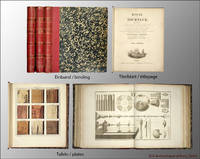
18421540DB1842. Nouvelle édition. 3 Bde. Paris Roret 1842. 4°. XXXII 5091 S.; XI1 542 8 S. Mit 1 gest. Titel Atlasband 97 Kupfertafeln dv. 8 kol. 41 doppelblattgross u. 10 gef. Halblederbände der Zeit mit Rückenvergoldung berieben und bestossen. Vgl. Brunet I 785 u. Grässe I 340 für die zweite Ausgabe. - Titelauflage der zweiten Ausgabe. Erschien erstmals 1792-1796 in Paris. Die farbigen Tafeln mit Holzmuster die übrigen Tafeln mit Holzverarbeitungsgeräten Maschinen und Holzarbeiten. Am Schluss mit einer zusätzlichen nicht nummerierten Tafel. Der gestochene Titel des Atlasbandes zur zweiten Ausgabe. - Die Seiten unbeschnitten. Einige Tafeln und die Seitenränder stärker gebräunt. Ansonsten nur wenig stockfleckig. unknown
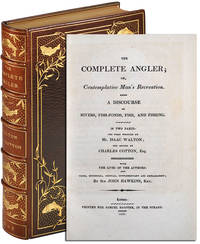
18086506London: Samuel Bagster 1808. Seventh edition first Bagster ed. Hardcover. Near fine. Octavo 22cm; full crushed dark brown morocco by Zaehnsdorf spines in six compartments with five raised bands gilt-tooled border and decorative corner pieces to covers; titling and salmon devices stamped in gilt in spine compartments; top edge gilt; hunter green silk doublures and endpapers with gilt dentelles; iivi7-512pp with engraved half-title portrait frontispiece and engraved plates by Philip Audinet. Gentle sunning to spine some trivial wear to board edges with a hint of offsetting opposite several plates and a discreet repaired tear to lower margin of p.55; Near Fine with the text fresh and wide-margined. According to the University of Pittsburgh which houses an extensive collection of 19th century editions of the Angler this first edition published by Samuel Bagster was "the earliest attempt at an exact reprint of the 1653 edition." As such more than an attractive binding but also a significant edition of a cornerstone of English sporting books. Samuel Bagster hardcover
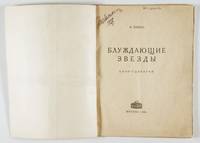
192654867Moscow МоÑква: Kinopechat Кинопечать 1926. First edition. Softcover. Good to very good condition. Octavo. 80pp. Dark blue and white wrappers with constructivist typography on the front cover housed in modern blue heavy paper portfolio with printed typographic design of original cover pasted to cover flap. Publisher's device on title page. This scarce published screenplay for the film adaptation of Sholem Aleichem's novel "Wandering Stars" by the acclaimed Russian-Jewish novelist playwright and journalist Isaac Babel 1894-1940. The film was premiered in Kiev on January 4th 1927 and was directed by Grigori Gritscher-Tscherikower 1883-1945. It was produced by VUFKU studios the national film studios of the Ukrainian SSR.<br /> <br /> This book contains the entirety of the film's screenplay accompanied by three striking b/w illustrations by Soviet artist and designer Alexander Bykhovskii 1888-1978 who likely also created the striking cover. The final three pages contain publisher's ads listing other work on the topic of cinema.<br /> <br /> The story tells of the love between Leibel the son of a wealthy shtetl family and Reizel a poor cantor's daughter in Bessarabia. The two run off to join a traveling Yiddish theater group. They are later separated with each becoming successful in their own right only to eventually reunite in America. The work was first serialized and originally appeared in the Warsaw newspapers between 1909 and 1911. It has come to be seen as the third in an unofficial trilogy of novels by the writer centering on musicians or performers preceded by Stempenyu 1888 and The Nightingale 1889.<br /> <br /> In 1925 the Moscow State Jewish Theater suggested that the Goskino the Soviet State Film Studio produce a film adaptation of Sholem Aleichem’s novel. The order was commissioned to Isaac Babel for translation and adaptation from the book's original Yiddish language to Russian for the screenplay. During this period Babel had been working on other translations of Yiddish literature into Russian including the collected works of Sholem Aleichem and work by David Bergelson. According to Babel's foreword printed here he faced a number of difficulties adapting the novel including the modification of petty bourgeoisie motifs as well as the changes of film directors and their differing requirements. Because of certain elements in the script of which the main committee of the Goskino did not approve the film's production had to ultimately be switched to VUFKU studios in Odessa. In a letter during the period of production Babel apparently wrote: “I will have to be present on the set. if I am not there the director will ruin everything" and later upon hearing of further changes made by Gritscher-Tscherikower wrote that "it is more profitable for me not to participate in this shameful productionâ€. Regardless of Babel's opinion of the final product the film was well received by Soviet audiences at the time.<br /> <br /> Text in Russian. Portfolio with minor wear. Wraps partially restored with minor wear. Previous owner's names and date at top of title page one near gutter. Light water staining along right half of bottom edge of first 30 pages reappearing from pages 40 to end though along lower part of foredge more pronounced on pages 75/76 and light fraying along foredge from pages 67 to 76. Block lightly age-toned. Kinopechat (Кинопечать) unknown
1740S13116Lausannae & Geneva: Marci-Michaelis Bousquet & Sociorum 1740. 1740. 4to. iv xxxii 363 1 pp. Half-title engraved frontispiece portrait of Newton engr. Jean-Louis Daudet after Vanderbank title printed in red & black 12 engraved folding plates title vignette of 4 cherubs and a female figure each using an optical instrument representing learning optics/perspective drawn by Delamoncein and engraved by Daudet head & tail pieces and woodcut initial letters drawn by Papillon index; first 11 leaves browned. Contemporary full vellum green leather gilt-stamped spine label edges with decorative red freckling as designed by the binder; foot of spine with faint ink marking "11-". Paper unevenly browned. Verso of title with small ink annotation "=1135="; rear pastedown with another notation "a 20.Luglio 1801." Very good. Third Latin edition edited by Bousquet with a dedication to Joannes Bernoulli. This edition contains the full array of 31 querries. / "Newton's contributions to the science of optics :: his discovery of the unequal refractions of rays of different color his theory of color and his investigations of 'Newton's rings' to mention only a few of the most noteworthy :: place him among the premier contributors to that science. . . . Today we recognize that his work on optics offers unique rewards in its exciting innovative conjunction of physical theory experimental investigation and mathematics and in the revealing glimpse that it provides of a crucial period in the evolution of experimental science." :: Alan E. Shapiro The Optical Papers of Isaac Newton: Volume 1 1984 p. xi. / Jean-Louis Daudet 1695-1756 who made the frontispiece and title vignette was an engraver and print publisher active in Lyon inherited business from his father Etienne Joseph Daudet. He flourished from 1722 till his death in 1756. Thereafter the business continued by his widow in association with his son-in-law Louis Martin Roch Joubert until 1773. / "Newton famously declared that it is not the business of science to make hypotheses. However it's well to remember that this position was formulated in the midst of a bitter dispute with Robert Hooke who had criticized Newton's writings on optics when they were first communicated to the Royal Society in the early 1670's. The essence of Newton's thesis was that white light is composed of a mixture of light of different elementary colors ranging across the visible spectrum which he had demonstrated by decomposing white light into its separate colors and then reassembling those components to produce white light again. However in his description of the phenomena of color Newton originally included some remarks about his corpuscular conception of light perhaps akin to the cogs and flywheels in terms of which James Maxwell was later to conceive of the phenomena of electromagnetism. Hooke interpreted the whole of Newton's optical work as an attempt to legitimize this corpuscular hypothesis and countered with various objections." / "Newton quickly realized his mistake in attaching his theory of colors to any particular hypothesis on the fundamental nature of light and immediately back-tracked arguing that his intent had been only to describe the observable phenomena without regard to any hypotheses as to the cause of the phenomena. Hooke and others continued to criticize Newton's theory of colors by arguing against the corpuscular hypothesis causing Newton to respond more and more angrily that he was making no hypothesis he was describing the way things are and not claiming to explain why they are. This was a bitter lesson for Newton and in addition to initiating a life-long feud with Hooke went a long way toward shaping Newton's rhetoric about what science should be. . ." / "The first edition of The Opticks 1704 contained only 16 queries but when the Latin edition was published in 1706 Newton was emboldened to add seven more which ultimately became Queries 25 through 31 when in the second English edition he added Queries 17 through 24. Of all these one of the most intriguing is Query 28 which begins with the rhetorical question "Are not all Hypotheses erroneous in which Light is supposed to consist of Pression or Motion propagated through a fluid medium" In this query Newton rejects the Cartesian idea of a material substance filling in and comprising the space between particles. Newton preferred an atomistic view believing that all substances were comprised of hard impenetrable particles moving and interacting via innate forces in an empty space as described further in Query 31." :: Newton's Cosmological Queries :: MathPages. / Grace K. Babson Sir Isaac Newton 1950 141; George J. Gray A Bibliography of the Works of Sir Isaac Newton 182; Wallis 182. See: Printing and the Mind of Man 172. Marci-Michaelis Bousquet & Sociorum, 1740. hardcover
195109964Gnome Press: NY 1951. First edition & 1st binding state. Hardcover. Absolutely classic sf novel. Currey A binding - cloth sheets measure 20.3cm x 13.5cm and 1.9cm in depth later issued in boards with sheets measuring 20.3cm x 12.5cm and 1.4cm in depth. See L. W. Currey: Science Fiction And Fantasy Authors: A Bibliography Of Their First Printings page 17. Dark blue boards with red lettering: 1st state dustjacket priced $2.75 on front inner flap and just three titles listed and one calendar on rear panel. Blue cloth mottled/stained light blue a VG copy in a VG bright unfaded pictorial dustjacket. Gnome Press: NY hardcover
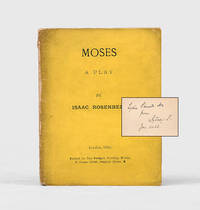
1916169657London: The Paragon Printing Works 1916. His third and final collection of war poems First edition privately printed and scarce especially so in collectable condition. This copy was given as a gift by Rosenberg's patron Sydney Schiff to the actress Lydia Sherwood inscribed by him on the front wrapper verso "To Lydia Sherwood from Sydney S. Jan 24 '26". This copy has ten manuscript corrections to the text as usual possibly by Rosenberg's sister Mina. Rosenberg first met Schiff 1868-1944 a translator of Proust's Recherche and a modernist financier in the spring of 1915 and soon joined Eliot Joyce and Wyndham Lewis as one of his beneficiaries. "Schiff became Rosenberg's 'absentee' patron in the sense that he put no pressure on him to produce works in return for occasional support and he was available whenever Rosenberg needed him" Cohen p. 116. The two men both Jewish corresponded throughout Rosenberg's time in the trenches where the poet faced antisemitism from his superiors and his fellow privates. Rosenberg's "friendship with Schiff also contributed to his growing consciousness of being a Jew" p. 128 and following the publication of Moses Schiff was instrumental in distributing copies of the book in literary circles in London. Under Schiff's wing Rosenberg became one of the most celebrated British poets of the period noted in particular for his war poems several of which are printed here alongside the titular verse-drama. "Rosenberg's poems from the front show him to have absorbed the great tradition of English pastoral poetry but his tone is different: more impersonal informal ironic and lacking the indignation characteristic of the work of Wilfred Owen and Siegfried Sassoon. Rosenberg was killed on the western front near Fampoux north-east of Arras on 1 April 1918 and buried in an unmarked grave. His remains were discovered eight years later and reinterred under a headstone in the Bailleul Road east cemetery in Flanders" ODNB. Small octavo. Original yellow wrappers printed in black. Housed in a custom yellow quarter morocco slipcase and chemise by James Macdonald Co. New York. Wrappers toned spine slightly worn and split at foot still sound a very good copy of a fragile publication. Reilly p. 279. Joseph Cohen Journey to the Trenches: The Life of Isaac Rosenberg 1890-1918 1975. unknown
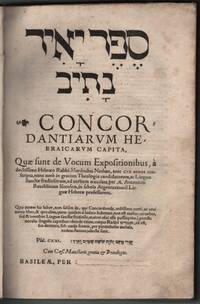
1556157Basileae Basel: Henricum Petri 1556. First edition. Printer’s device on last page. In contemporary vellum. Title on spine lettered in ink. Binding stained. Title page restored. Foxing and waterstain throughout. First edition. Printer’s device on last page. In contemporary vellum. Title on spine lettered in ink. 6°; A1–Ss6 8 p. 2 folding plates 980 col. 2 p. <p><br /> Isaac Nathan ben Kalonymus was a French philospher and contraversialist of the 15th century. Came from the renowned Nathan family which claimed it’s descent from King David. He is the author of the first Bible concordance and the division of the Old Testament into verses is attributed to him.<br /> <p><p><br /> Adams I. 188.<br /> <p>. Henricum Petri unknown
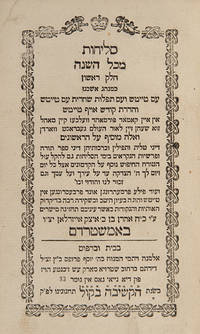
109036Amsterdam Widow and Orphans of Joseph Proops 1800. . 8vo two vols; publishers embossed leather boards with gilt ornamental borders to front and back and decorations to spine red morocco pastedowns to spine with gilt title in Hebrew spine corners rubbed and chipped with a piece missing from the top of the spine of vol. I hinges cracked but holding; all edges gilt contemporary Dutch marbled endpapers leaves clean; 1 52 120; 1 52 186 ll.<br /> Ashkenazic rite prayer-book with Judeo-German translation and commentary by Hadrath Kodesh edited by Aaron ben Isaac Eizerlohn. Title with ornamental border with atypical cupids to the top.<br /><br />The Proops family were a dynasty of well known Hebrew printers publishers and booksellers in Amsterdam. Solomon Ben Yosef d. 1734 whose father may have been a Hebrew printer as well was an established bookseller in Amsterdam and in 1704 had set up his own Hebrew press which produced mainly liturgical books as well as works on halakhah Kabbalah Jewish ethics and history. From 1715 productions by Proops carried advertisements of books he had published and in 1730 he issued a sales catalogue the first such Hebrew publication. <br />After his death appointed guardians continued to operate the press and even when his three sons took over they continued trade under the old name until 1751 and later - under their own names. In 1785 Joseph Proops sold most of his work to Kurzbeck of Vienna and when Proops died a year later his widow and sons continued printing on a small scale with various partners until 1812. Solomon ben Abraham Proops grandson of Solomon Ben Yosef split from the family printing house in 1797 and continued to work alone until 1827.<br /> Vinograd Amsterdam 2293. Amsterdam, Widow and Orphans of Joseph Proops, 1800. hardcover
1952mon0000074288Grayson & Grayson 1952. Hardcover. Very Good. in x in x in. Non price clipped dust wrapper. No inscriptions. Grayson & Grayson hardcover