[Taylor, Isaac]Biblio.com

1 398 résultats
1836BOOKS329033NY: D. Appleton & Company. Collectible-Good/NO DUSTJACKET. 1836. Hardcover. Nice stamped designed cloth cover of the period . 8vo. 278 pp. Former owner's inscription foxing . D. Appleton & Company hardcover
183614500London: William Pickering 1836. First Edition. Hardcover. Very Good. Original blue cloth spine label slightly chipped. Pickering catalogue bound in at front. Contemporary ownership signature of William Dawson. Small 19th century booksellers' label of Henry Greer Belfast. <br/><br/> William Pickering hardcover
183616522New York:: D. Appleton 1836. First American edition. original cloth. Foxed throughout; ends of spine worn; cloth lightly soiled; very good. 8vo. S & S 40416. Publisher's presentation copy with a pencil inscription on the front free endpaper. D. Appleton, hardcover
1853001020New York: William Gowans 1853. Hardcover. Very Good. 8vo - over 7¾ - 9¾" tall. Some well meaning soul has pt clear tape over the corners and the hinges. The rear hinge looks like it was coming loose so this is probably why. Dk brown or is it black embossed cloth with lovely gilt decoration corners bumped a little frayed. Some foxing and toning to the interior former owner's name in ink on title page. Overall about very good. In the rear is an 18 page catalog some were actually for sale of books on the immortality of the soul. If only we could go back in time and buy those titles for the prices stated. Whew. <br/> <br/> William Gowans hardcover
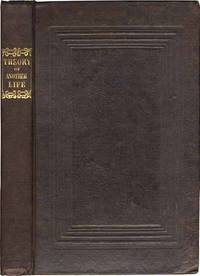
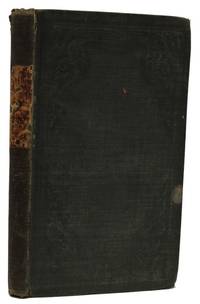
183677889New York: D. Appleton & Co 1836. First Edition. Hardcover. Very good. The philosopher and literary author Isaac Taylor 1787–1865 published this book anonymously in 1836. The work is a development of two earlier works: Saturday Evening 1832 and Natural History of Enthusiasm 1829 all three attempts to provide a philosophy to deal with the major problems and spiritual questions of the day. The popularity of Physical Theory led to Taylor relinquishing his previous anonymity. The work is a religious and philosophically speculative exploration of the possible paths of knowledge to information regarding the future existence of human beings. Taylor believed that knowledge of the human physical constitution could be used to conjecture information about the modes of human eternal life and eternity's scheme of moral duties. The work was very popular among contemporaries and offers today an important insight into Victorian intellectual life" Cambridge University Press. Small octavo: 278 pp. In the publisher's dark brown vertical fine-ribbed cloth binding with a ribbon-embossed floral paisley pattern blind-stamped concentric ruled frame and a gilt-stamped ornamental compartment with titling. Period pencil inscription and signature to the front endpaper with some light foxing along the edges. Minor bumping to the corners and tips; else very good or better. Provenance: from the Publishers' Bookbindings collection of Ellen K. Morris and Edward S. Levin. D. Appleton & Co hardcover
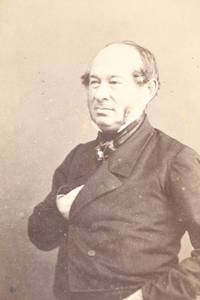
186073028Paris: Nadar 1860. Fine. Nadar Paris s. d. circa 1860 6.20 x 10.50 cm une photographie Original albumen photograph depicting violinist and conductor Isaac Strauss carte-de-visite format mounted on card from Nadar studio. Pencil annotation on verso of the photograph. Nadar's embossed stamp in lower left margin. Nadar unknown
1880144083Portland ca. 1880. Good. No. 135. 12 x 21 cm albumen silver print on 13.5 x 22 cm card. Ink stamp on rear for Canadian Pacific Railways Dec. 6 1892 Woodstock Ont. City. Stains to photo and reverse. Davidson's studio was on 125 First Street Portland Ore. and Over post office Tacoma W. T. <br/><br/> unknown
1852021959London: Fred Pitman 1852. Second Edition . No Binding. Near Fine. Phonographic and Pronouncing Vocabulary of the English Language. 1852 Second Edition Stated & dated 1852 on the title page. Spine strip missing FC hanging on by a thread rear cover loose but well-attached. 295 illustrated pages Catalog in the rear dated Jan. 1854. Several examples in public institutions however our search revealed none at other book or antique dealers worldwide. <br/> <br/> Fred Pitman unknown
182219114Glasgow: Andreae et Joannis M. Duncan 1822. FIRST GLASGOW EDITION. Numerous text diagrams and illustrations. Contemporary calf all covers with blind-stamped floral border within gilt floral borders within gilt-lined borders spines in compartments with gilt decoration spine labels; first few leaves of each volume spotted otherwise an excellent set. First Glasgow reprint of the first Jesuit edition printed in Geneva from 1739-1742. This edition of Newton’s Principia was edited by John Martin Frederick Wright of Trinity College who contributed additional commentary. Babson notes that Glasgow’s printing of this edition of the complete text was a great credit to the university whereas Cambridge was “satisfied with reprints of the first three sections of the first book.â€<br /> <br /> Babson 32; Gray 17; Wallis 17. Andreae et Joannis M. Duncan unknown
1871240980Glasgow: James Maclehose 1871. Reprint. Hardcover. Good/No Jacket. 4to - over 9¾" - 12. N/a. xxxvi 538pp. The 1871 facsmilie reprint of the third edition of Sir Isaac Newton's great work in 4to. which appears to be a very faithful re-rendering but with no frontispiece. Not missing from this edition - it seems that they chose to exclude it. A good only copy because as a former bookseller has noted: 'pages carelously opened'. A number of unopened pages have been somewhat carelously forced leaving to some mostly small or very small chips to the margins no loss of text that I can see and some torn pages. Should you ask me to - I can repair some of these tears and make it even more presentable but given the importance of this title I am selling it 'as is' so that a buyer may choose some more professional attention. Original publisher's cloth boards with a paper title label to the head of the spine - as issued. Once again there is an issue here too as the front board is only holding by the upper 2 thread with the lower 2 binding cords present but not holding. On the plus side - no ink inscriptions the former bookseller's remarks in pencil and will erase and the pages themselves the vast bulk of them are undamaged clean with no marginalia and just some scattered spotting which is heavier to the front endpapers to include the new facsimile title page which incidentally has 2 such aforementioned chips at the head. The facsimile title page printed in red and black is in lovely condition. James Maclehose hardcover
182167411London:: J. Fairburn April 1821. Hand-colored etching. Several short marginal tears and light soiling to margins; otherwise fine. . Approx. 10 x 14 inches. To "sham Abraham" is to feign illness. Colonel Charles Parker faces Peter Sham-peter Shampoo over a duel involving Lady Frances Caroline Webster-Wedderburn; a newsboy hawks news of the duel in the background. J. Fairburn, unknown
19000035-23-25Washington DC: Isaac Adams 1900. First edition. 536p decorative blue cloth no DW ill front and rear hinges weak VG- <br/><br/> Isaac Adams hardcover
19001393061900. Hardcover. ex library-good. 536 p. 23 cm. B&w illustrations. Burgundy library binding. Call number on lower spine labels and ink stamps on endpapers ink stamps on text block edges blind stamp on title page. A few small tears. Paper browning. Top corner p. 119 chipped. Some tape repairs. <br/><br/>Published in four languages - English Holland German and Swedish. hardcover
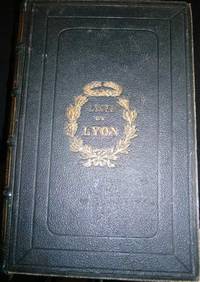
1872137276Librairie Hachette 1872. Bonded Leather. <b>Livre en français</b>. Couverture rigide. Illustré de 58 gravures. Traduit par Léon Renard. Reliure de l'éditeur. Décor sur le premier plat. Tranches dorées. 316 pages. Légèrement défraîchi. <i>ref. 137276</i> Librairie Hachette hardcover
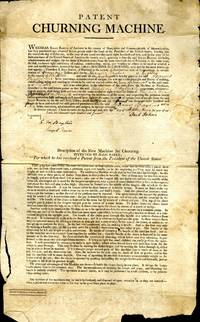
1804CAT0006861804. First Edition. Broadsheet. Good Condition. Patent broadsheet form filled out and dated 1804 torn at edges with loss to bottom margin chipping on one long edge short tear and a touch on the other a few pinholes touching letters but not obscuring sense. A sort of receipt for the transfer of manufacturing rights from Jack Johns of Hartford to Francis Bayless of Dighton for 20 dollars. Signed by Bayless Johns with spaces for the names and dollar amount.<br/> <br/> The first US patent granted for a churning machine was this one issued to Isaac Baker in 1802. From 1802 to 1870 1047 patents were granted for churning. "Probably in no other department of invention has so much ingenuity been expended to so little purpose." Annual Report of the American Institute of the City of New York 1870<br/> <br/> 2 copies in OCLC one at AAS accompanied by 3 illustrations not present here one at the Historic Deerfield Library. Quantity Available: 1. Shipped Weight: Under 1 kilo. Category: Cooking Wine & Dining; Engineering Industrial & Trades. Inventory No: CAT000686. unknown
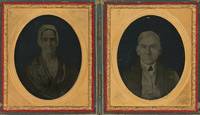
1854List1708Philadelphia 1854. Ninth plate ambrotypes in a union case measuring 2 ½ x 2 ⅛ inches visible in larger case. With the identification of Isaac Rehn with his imprint and “Patented July 4 & 11 1854†imprinted on the case. A fine pair. A striking pair of ambrotypes of Mary and Moses Pennock who were members of the Kennett Square Underground Railroad network as well as active members of the Kennett Square abolitionist and Quaker community. Moses was one of the founders of the Longwood Progressive Meeting. In R.C. Smedley’s History of the Underground Railroad in Chester and Neighboring Counties of Pennsylvania Lancaster Office of the Journal 1883 the Pennocks are mentioned on p. 301 as working as part of the network surrounding Isaac and Thamazine Meredity. Their son Samuel who would go on to secure important agricultural patents is also mentioned twice. <br /> <br /> The images are notable from a photographic history perspective as well as being early examples of the ambrotype process that had been patented in part by fellow Quaker and spiritualist Isaac Rehn. Rehn held a partial patent on ambrotypes along with James Ambrose Cutting of Boston and became unpopular among other photographers for his efforts to extend his patent. He later practiced spiritual photography and was a Professor of Chemistry at Pennsylvania Medical University in Philadelphia. Rehn was also involved in radical politics as a founder and leader of the Philadelphia section of the International Workingmen’s Association which was later disenfranchised by Karl Marx along with several other American sections. Examples of Rehn’s work are held at the National Gallery of Art the Library Company of Philadelphia and Yale’s Sterling Memorial Library. <br /> <br /> Overall a very fine and significant pair of images. unknown
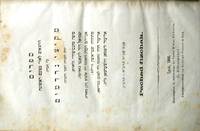
1866103039Edité à Lyck 1866. Bonded Leather. <b>Livre en hébreu</b>. Couverture rigide. Reliure défraîchie mors fendu. Dos cuir à nerfs. Rousseurs. Tranches rouges. Environ 300 pages. <i>ref. 103039</i> Edité à Lyck hardcover
1844AQ23281Dublin: William Curry 1844. vi 186pp. Original publisher's blind-stamped green cloth printed paper lettering-piece. Extremities marked and worn. Bookseller's ticket of White & Sons Carmarthen to FEP occasional spotting. The second edition of a translation into English of Ovid's Fasti by Irish politician Isaac Butt 1813-1879 first published in 1833 whilst an undergraduate of Trinity College. . Second edition. 8vo. William Curry hardcover
189538483New York: Baker Voorhis & Co. 1895. 23'5x14'5 XIIp 280p. Tela con tejuelos. Buen estado. Baker, Voorhis & Co. hardcover
187232652Newark: Clark & King Printers American Office 1872. 1872. OHIO. First edition. 8vo. Original blue printed wrappers lacking the rear wrappers 33 pp. double column. Contains biographical sketches of early pioneers a paper read by Rev. Mrs. Springer om July 4 1872 and a poem also read on July 4 1872 at the Pioneer Celebration held at the Fair Grounds Newark Ohio. Includes biographical sketches of Elias Hughes John Ratliff Benjamin Green Richard Pitzer John Van Buskirk Samuel Elliott John Larabee and Alexander Holmes. Information on pioneer women and the poem "The Pioneers of Licking." Sabin 85143 says "From the indefatigable Secretary of the Licking County Pioneer Society comes this Pioneer Pamphlet No. 7 a densely-spaced double-column batch of biographical sketches of early pioneers. The paper from Mrs. Springer on pioneer women is sadly short of solid historical information and instead makes a case for romanticizing the early women settlers rather than dismissing them as uncultured drabs." Very good copy. Clark & King, Printers, American Office, 1872. unknown