Mialhe, Pierre Toussaint FredericBiblio.com
2 599 résultats
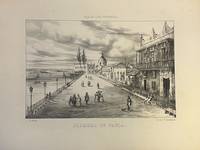
18423220Havana: Real Sociedad Patriótica 1842. First edition. Unbound. Some plates are chipped dogeared. Some tanned with foxing. Overall in very good condition. Lithographed title page and 48 lithograph plates. Lithographed title page and 48 lithograph plates. First edition. Unbound. <p><br /> Rare and remarkably extensive collection of 48 early lithographs by Frédéric Mialhe Cuba’s master lithographer. “One of the most outstanding enterprises of its kind ever attempted in Cuba.†Cueto<br /> <p><p><br /> A large collection of forty-eight prints of these early lithographs of Cuba created by Cuba’s master lithographer Pierre Toussaint Frédéric Mialhe 1810–1881. Mialhe a French artist and engraver arrived in Havana in 1838 to serve as the landscape painter for the newly established lithographic firm under the auspices of the Real Sociedad Patriótica de la Habana. Soon he produced three sets of lithographs among them the present series Isla de Cuba Pintoresca which as described by Emilio Cueto in his comprehensive book La Cuba pintoresca de Frédéric Mialhe stands out as one of the most outstanding enterprises of its kind ever attempted in Cuba. Mialhe must also be recognized for having been a pioneer in incorporating the use of the newly discovered technique of photography to help his lithographic endeavors. Collaborating with Italian photographer Antonio Rezzonico two of Rezzonico's daguerreotypes the earliest examples of cityscape photography in Cuba were reproduced in this series. <br /> <p><p><br /> Isla de Cuba Pintoresca covers the territories of Pinar del RÃo Havana Matanzas and Santiago de Cuba capturing the essence of mid-19th-century Cuba and offering glimpses of the everyday life on the island. It was originally planned as a set of 48 lithographs sold in installments of four black-and-white views each. The plates were printed at the establishment of the Real Sociedad Patriótica each bearing the title Isla de Cuba pintoresca and printed on two types of paper: simple white paper and China paper sized between 6.5–7 inches by 10–11 inches. <br /> <p><p><br /> Ultimately 49 distinct views were published with Cueto estimating that perhaps no more than 200 copies of the plates were printed. Due to the characteristics and the timeline of the publication spanning from 1839 to 1842 marked by interruptions and uncertainties and counting with the possibility of some prints being issued separately no two copies of this collection are identical. According to Cueto the most complete collection belonging to him comprises 53 plates including variants featuring minor modifications either in the image or in the title followed by the New York Historical Society’s collection which includes 46 plates in fact 47 as it includes a repeated plate. In Havana the National Museum of Fine Arts boasts the largest known collection with 43 plates. The José Martà National Library of Cuba holds 37 plates. Additionally there are only three other institutional collections with more than 25 plates: Yale University 36 plates the Cuban Collection of the University of Miami 32 plates and the Buffalo and Erie County Library 28 plates. The largest collections we have been able to trace at auctions are the Reese copy with 38 plates sold by Christie’s in 2023 and another set also sold by Christie’s in 2023 with 36 views.<br /> <p><p><br /> Our collection remained unbound and untrimmed comprises 48 plates of which one Puente de Almendares appears twice on different papers additionally it includes a title page originally accompanying the 10th installment. Printed on various quality papers the differences in size and condition are explained. The majority are on China paper thus preserved in very good condition while those on simple white paper show more signs of aging. <br /> <p><p><br /> This scarce and exceptionally comprehensive compilation serves as a testament to Mialhe's artistic skill and historical importance.<br /> <p><p><br /> Literature: Cueto E. 2010. La cuba pintoresca de Frédéric Mialhe. Biblioteca Nacional de Cuba José MartÃ.<br /> <p>. [Real Sociedad Patriótica] unknown
12951912. « CÉLÈBRE TRADUCTEUR D'ARABE, DE PERSAN, DE CHINOIS, DE JAPONAIS, LANGUES QU'IL IGNORAIT COMPLÈTEMENT. MAIS IL SAVAIT UN PEU LE FRANÇAIS » JEAN GIRAUDOUX
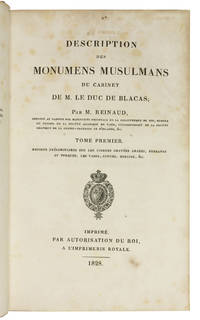
1828ABC_45227Paris: Imprimerie Royale 1828. Contemporary half mottled calf gold-tooled spines marbled endpapers and edges. 8vo. With 10 engraved plates 2 folding. 2 volumes. First edition of J. T. Reinauds 1795-1867 rare catalogue of the famous collection of Islamic Art amassed by the French statesman Blacas. Most copies have title changed to "Monumens arabes persans et turcs". This copy is inscribed by Reinaud to the Duc de Luynes another famous French antiquarian.The French antiquarian and diplomat Pierre Louis Jean Casimir prince de Blacas dAulps 1770-1839 acted as prime minister to Louis XVIII when he succeeded Napoleon in 1814 and later served as French ambassador to the Holy See. Remaining in Rome for many years he provided Ingres with a commission and became a patron to the German classicist Theodor Panofka. He worked closely with Italian archaeologist Carlo Fea in the excavation of the Roman Forum supported the orientalist Jean-François Champollion and created the "Musée Egyptien" within the Louvre. In 1866 his descendants sold most of his collection to the British Museum where it remains to this day.The plates show beautiful specimens of Arabic calligraphical art including many seals. Some browning and staining throughout. From the library of the Ducs de Luynes from the Château of Dampierre with bookplate to pastedowns.l Ibrahim-Hilmy II 159. Gay 3592 bis variant title. Brunet IV 1198. Graesse VI 72. Quérard VII 513. OCLC 39974885. Not in Arntzen/Rainwater. Imprimerie Royale, unknown
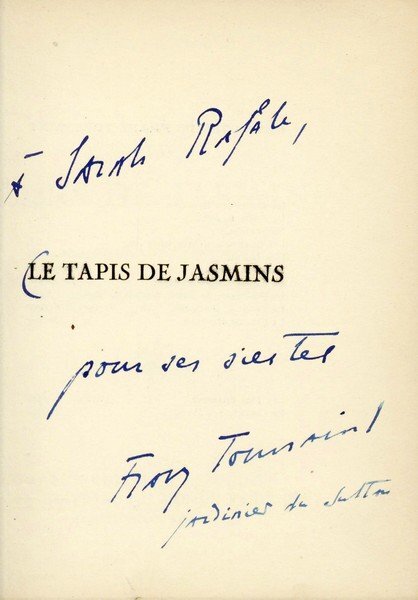
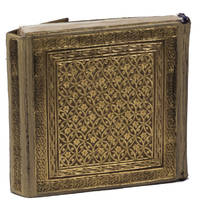
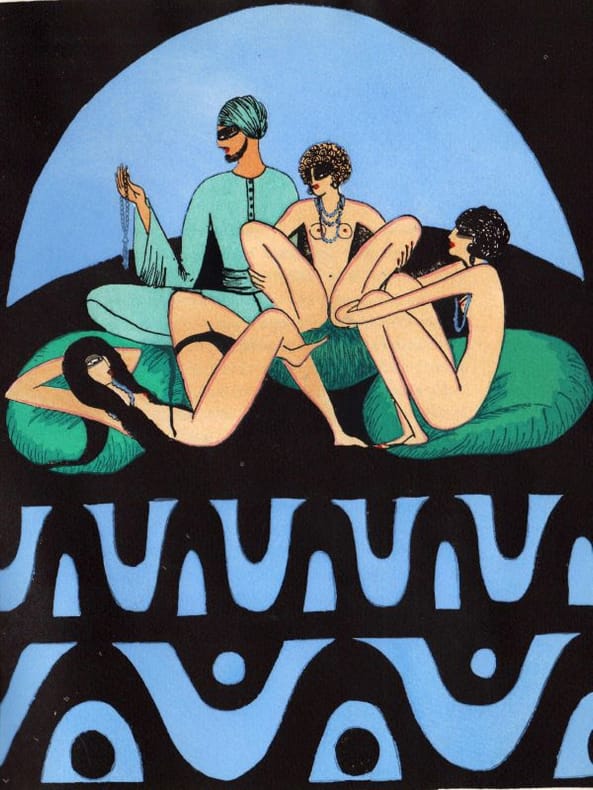
1936ABC_466121936. Bound in contemporary richly gold-tooled arabesque beige morocco with a flap at the front-edge covered with gold-tooled green morocco on the inside purple and white head and end bands gold and light blue endpapers. Stored in a professionally made beige morocco box ca. 15 x 15 cm with a gold-tooled three-line fillet frame on the boards on the inside covered with light pink silk title in gold on the spine. 11.5 x 12 cm. Manuscript in French written by the author in black ink a neat 20th-century hand in one column. Chapter divisions are made in the form of a calligraphic leaf drawn in the same black ink as the text. Autograph copy of Le jardin des caresses Toussaint's famous collection of Moorish erotic poems written and inscribed by the author himself as a gift to a his second wife. The work is considered to be a classic of 20th-century French orientalism. The work contains a collection of anonymously written Moorish sensual and erotic poems translated from the Arabic into French by Franz Toussaint. The present copy of the work was very likely made as a gift for his second wife married since 1925 Adelaïde Etelca Stefania Braggiotti and is inscribed by the author himself emphasizing his feelings for her: "À Etelka ma femme bien-aimée qui est pour moi toute la splendour du monde et toute la poësie. Franz Toussaint. Mai 1936".Franz Toussaint 1879-1955 was a French author and orientalist known for his translations of Arabic Persian Sanskrit and Japanese works. He is most known for his translation of the Rubaiyat of Omar Khayyam 1924. He was also a director of films.The present collection of poems inspired by Arabic literature were first published serially in 1909-11 before they were published together in 1911 by Henri Piazza in Paris. The work was reprinted many times in the 20th century all appearing as limited editions and also translated into English The garden of caresses; London Golden Cockerel Press 1934. The work also became very popular in song as the short stanzas in the work were very suitable to put to music. The present copy of Toussaint's "tales of love" being a presentation copy which is beautiful in its simplicity is the only autograph of the work known.With the monogrammed stamp of the author in black ink on both endpapers. Binding slightly worn around the edges of the spine and fore-edge including the flap first two endpapers almost loose with a few minor spots. The case is a little worn at a few places the two fastenings are gone but still preserved. Overall an autograph copy of Le jardin des caresses which is still in very good condition and in its original binding made by Toussaint as a gift for his wife. hardcover
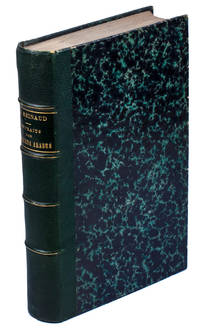
1829ABC_48384Paris 1829. 8vo. Imprimerie Royale Contemporary dark green half sheepskin gold-tooled spine marbled endpapers. XLVIII 582 pp. First edition of a work on Islamic texts on the Christian crusades by the French orientalist Joseph Toussaint Reinaud 1795-1867. It gives a French translation of numerous texts and extracts relating to the crusades originally written in Arabic from the 11th to the 15th century by Arab historians with occasionally some passages in Arabic in the notes. Most of the texts deal with major battles and sieges Saladin and victories and deaths of important leaders. The preliminaries include brief biographies of some of the major authors including Ali ibn al-Athir Baha ad-Din ibn Shaddad Imad ad-Din al-Isfahani Ibn al-Adim and many more. The texts are arranged into different chapters each devoted to a different stage of the crusades.The book is in fact the publication of a part of the extensive manuscript by Georges-François Berthereau 1732-1794 who collected numerous Arab texts on the crusades but the publication was prohibited during years following the French Revolution. The book was published as a part of the Biblithèque des croisades as an addition to the well-known Histoire des croisades written by Joseph François Michaud 1767-1839.With a stain on the half-title and some staining throughout otherwise in very good condition.l Hage Chahine 3963; not in Blackmer. unknown
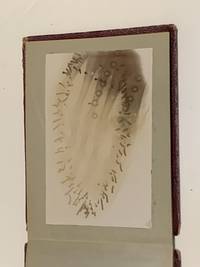
rbms41896-7 EXTREMELY EARLY ALBUM OF X-RAY PHOTOGRAPHS<br /><br />X-RAYS Barthelemy Toussaint & Oudin Paul Oblong 8vo burgundy leatherette rubbed with loss to spine. 1896-7. The album contains containing silver gelatin prints 15 each approximately 5x7 inches or slightly smaller. The extraordinary x-ray photographs feature multiple views of the bones of hands a few with broken joints an done taken under a cracked glass filter and other skeletal regions of the human body.<br />The most unusual perhaps is a purse and the sole of a shoe which foreshadows x-ray airport security as well as a rat which is certainly among the earliest examples of animal radiography. See: https://timeline.com/early-xrays-hidden-world-6bbc3a3fb267<br />Provenance: Swann Galleries New York 19 February 2002 Fine<br />Photographs lot 33<br /><br />Becquerel himself learned of the discovery of radiology on January<br />20 1896 when two physicians and French pioneers in the new medium<br />Paul Oudin and Toussaint Barthélemy submitted an X-ray image of a<br />hand to the Académie des Sciences. The submission date of their paper<br />Jan 20 almost coincides with Roentgen's announcement of his<br />discovery of x-rays that very month
18501612290028B. May y Ca 1850-1853. Hardcover. Very Good. Bound in fine Moroccan leather. Profusely gilt stamped in Zaehnsdorf style. 27 color lithographic plates 2 maps. Illuminated title-page. Blind stamp from Explorers Club on title. Marginal soiling to plates. Collated complete. Plates: 1. Morro y entrada puerto de la Habana -- 2. Vista de la Habana -- 3. Vista de la Habana: parte de Estramuros -- 4. Haban -- 5. Habana -- 6. Habana -- 7. Plaza de Armas -- 8. Puertas de Monserrate -- 9. Teatro de Tacon y parte del Paseo de Isabel II -- 10. Fuente de la India en el Paseo de Isabel IIa. -- 11. Alameda de Paula -- 12. El quitrin -- 13. El panadero y el malojero -- 14. El casero -- 15. Valla de gallos -- 16. Dia de reyes = The holy kings day -- 17. El zapateado national dance -- 18. Matanzas -- 19. Morro y entrada del puerto de Santiago de Cuba -- 20. Vista genl. de la ciudad y montanas de Baracoa -- 21. Cercanias de Baracoa -- 22. Vista de la iglesia major y de la Ermita del Buen Viaje -- 23. Vivienda de los pescadores de esponjas -- 24. Trinidad -- 25. Corrida de toros -- 26. Vista de una casa de calderas -- 27. Vista de una vega de tabaco. Picturesque Album of the Island of Cuba. Refs: Emilio Cueto's Mialhe's Colonial Cuba Miami 1994 pp. 73-77. Sabin 17748; Palau 5421 & 167989 note. B. May y Ca hardcover
16-4077Paris : Perrotin 1853. Large folio. 51 x 40 cm. Original qtr. roan and percaline restored.16pp. and 45 color lithograph plates. most lightly foxed and a few more heavily foxed. Provenance: Collector's mark of Gaston Courtois Costumier Paris. His collection sold at auction in Paris Décembre 1894.OCLC Number: 457516951 Paris : Perrotin, 1853. unknown
185511352Berlin: Oilprinting Storch & Kramer for B. May y Ca. 1855. One of two pirated editions printed in Germany in the 1850's a marvelous album of views based on the work of Cuba's master lithographer Frederic Mialhe depicted in his Viaje Pintoresco al Rededor de la Isla de Cuba Havana 1847-1848; this edition with captions in Spanish only and without vignettes on the maps the other pirated edition was printed in either Berlin or Hamburg with tinted lithographs instead of the color lithographed plates as here the captions were in Spanish English and German and a series of vignettes were printed around the border of the two maps; the lithographs in this issue are much more detailed than in the other pirated edition. <br /> <br /> Perhaps the finest pictorial record of daily life in Cuba in the 19th century with port and city views of Havana countryside scenes a bullfight and a cockfight. This copy with all plates fully and beautifully color lithographed. Sabin 17748 for the other pirated edition which had only 26 plates. Though OCLC locates an equal number of the two editions this colored issue seems to be less common in trade. For an account of Mialhe's original edition which was printed in Cuba and the two German piracies see Emilio Cueto's Mialhe's Colonial Cuba Miami 1994 pp. 73-77. See OCLC: 476499050.<br /> <br /> Oblong 4to. 27 color lithographed plates and color & gold lithographed illustrated title leaf printed rectos only with tissue guards 2 folding maps. With their original tissue guards some ruffled. All edges gilt. Scattered foxing; some minor insect damage on top margin of seven early pages. Original elaborate red velvet binding titled and ornamented in gold expertly rebacked. Possibly a presentation binding. Oilprinting Storch & Kramer (for) B. May y Ca. unknown
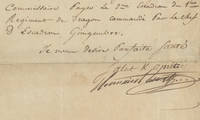
17983421524/05/1798. <div></div><div><div class=""yj6qo""><p>At the time of the outset of the French Revolution Haiti was the French colony of Saint Domingue. The colony featured large slave plantations that generated the cash crops of sugar coffee and cotton. This was a very profitable colony to the French owing largely to the sugar plantations. By the 1780s nearly two-thirds of French trade flowed through Saint Domingue and the island supplied nearly half of Europe with sugar.</p><p>The Haitian Revolution was a complex web of affairs. At one point there were over a half dozen parties involved all fighting for different purposes. Alliances were fickle as entities changed allegiance based on who was offering the best deal. The revolution began not only as a slave revolt but also as a class struggle among white landowners non-landowners and the free black landowners. The French military became involved as did the British and Spanish forces.</p><p>In August 1791 a full-fledged slave revolt began. In March 1793 the French assembly granted full rights and French citizenship to free black people and those of mixed race. The white planter class however objected and further violence erupted. The French sent military forces and a new governor to enact these measures. At this point England and Spain joined the fight. While the English sought to restore order and sided with the white social class the Spanish who controlled the other side of the island saw an opportunity in the dysfunction. When the French in 1794 ordered all slaves freed the ire turned against the English who now sent more forces to quell the revolt. In 1795 the Spanish signed a deal with the French and exited the conflict.</p><p>Toussaint Louverture a former slave emerged as the leader of the slaves seeking their freedom in the Haitian Revolution. He drew inspiration from the ongoing French Revolution and previous American Revolution to evolve his group’s demands and ultimate goals.</p><p>At the same time the French Directoire government which now ruled France was considerably less revolutionary than it had been. Suspicions began to brew that it might reconsider the abolition of slavery. In November 1797 Louverture wrote again to the Directoire assuring them of his loyalty but reminding them firmly that abolition must be maintained.</p><p>And for the British the benefit began to be outweighed by the cost an enormous loss of life. On April 30 1798 Louverture signed a treaty with British Army officer Thomas Maitland exchanging the withdrawal of British troops from western Saint-Domingue Haiti in return for a general amnesty for the French counter-revolutionaries in those areas. In May Port-au-Prince was returned to French rule in an atmosphere of order and celebration.</p><p>Gingembre-Trop-Fort also a former slave was one of Louverture's loyal officers. He was described with exaggerated uniform accoutrements a sword almost as tall as he was wearing “large and heavy rings†and with a pillow to his saddle already “covered in velours with gold fringes.†Interestingly his name in French means ""too strong ginger.""</p><p><strong>Letter signed</strong> May 24 1798 Port Republicain former name of Port-au-Prince to <em>""Citizen Deneyve Commissary Quartermaster of Wars for the Army of the Northwest Coast""</em> with integral address leaf. <em>""Citoyen Commissary please pay the 2nd Squadron of the 1st Regiment of Dragoons Commanded by the Squadron Chief Gingembre.""</em></p><p>Letters of Louverture are very uncommon. This is a particularly early one having been signed before he took control over the entire country.</p><p>This was not the end of the conflict as tensions with France were about to increase and would test Louverture.</p><p><img class=""alignnone wp-image-25018 size-post-window"" src=""https://cdn.raabcollection.com/wp-content/uploads/20231204144051/Folder-site-11-1600x1327.jpg"" alt="""" width=""1600"" height=""1327"" /></p></div></div> unknown
192723856Paris, Editions André Delpeuch 1927 1 Paris, Editions André Delpeuch, 1927, petit in-4, plein chevreau noir, mosaïqué de chagrin orange d'un décor aux yeux de biche surmonté d'un semi de grains de poivre, box noir et ivoire, serties bombées, titre sur le dos à l'encre orange, gardes en papier népalais au motif grains de poivre, sous étui toilé marqué d'une pièce de titre chagrin, (reliure signée Martine Clamagirand-Roth) avec un dessin original, encre de Chine et gouache, de la Sultane Zahia.
191013215Paris, A. Ferroud & F. Ferroud, 1910. 1 vol. in-8. Plein maroquin aubergine janséniste, dos à nerfs, titre et auteur dorés, date en queue, double filet doré sur les coupes, tête dorée, couvertures et dos conservés, sous étui [DUBOIS D'ENGHIEN - DOOMS]
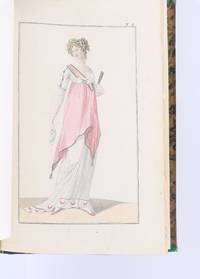
180290120Paris: s. n. 1802. Fine. s. n. Paris 1802 13.9 x 20.5 cm Relié First illustrated edition featuring at the end of the volume 12 charming hand-coloured copper engravings depicting fashionable hairstyles and costumes 10 as well as furniture 2. Contemporary binding in half midnight-blue calf smooth spine decorated with lozenge tools and gilt fillets gilt tail ornament marbled paper boards marbled endpapers marbled edges. The work is also illustrated with a portrait of Bonaparte as a frontispiece and one plate hors-texte. Foxing black ink stains to page 81. This work intended for an American readership as stated in the Preface ""L'espèce de journal dont nous offrons ici le premier essai ne contiendra que rarement des analyses d'ouvrages nouveaux mais une suite de morceaux détachés qui nous paraîtront le plus propre à faire connaître au public américain le goût actuel des différentes littératures de l'Europe"" is in fact far more than a literary collection offering a genuine overview of the state of the world political artistic geographical etc. during the Consulate and the rise of the future emperor. Alongside the 12 charming engravings it contains documents which though modest in extent are of considerable interest: a short notice on Toussaint-Louverture just after proclaiming a constitution granting him full powers for life; a portrait of the inhabitants of Benin drawing on the then unique work of Palissot Beauvois; a brief notice on Abbé Sicard educator of the deaf and mute; a ""portrait de Bonaparte"" at the very moment his fame was beginning to spread; an overview of ""Journaux et gazettes politiques dans les États-Unis de l'Amérique""; and various literary pieces. In short a compelling distillation of the spirit of the age. s. n. hardcover
191471211Paris: L'Edition d'art H. Piazza 1914. Fine. L'Edition d'art H. Piazza Paris 1914 23.50 x 30 cm broché sous étui L'édition d'art H. Piazza Paris 1914 23.5 x 30 cm original wrappers slipcase An edition of 500 copies this one of 100 copies on Japon imperial paper with a black-and-white suite of Léon Carré's 20 color illustrations. Publisher's blue paper covers with gilt arabesques in relief spine very slightly creased and sunned the chemise with a few tears slipcase with slight tears to two edges. L'Edition d'art H. Piazza unknown
191471211L'Edition d'art H. Piazza | Paris 1914 | 23.50 x 30 cm | broché sous étui
174839757, , 1748. 3 tomes en 1 vol. in-8 à pagination continue de 1 frontispice gravé, (32)-122 pp. ; (2)-123-386 pp. ; (2)-387-547 pp., maroquin vert, dos lisse orné à froid, filet à froid sur les plats, tranches dorées (reliure de l'époque).
114571aafB. May y Ca, / Berlin, Oilprinting Storch & Kramer, (1853), in-4to oblong, 28 planches en chromolithographie (page de titre incluse) avec légendes en espagnol + 1 carte dépl. de l’ile + 1 plan de la ’Havane, rousseurs surtout dans les marges, reliure en toile rouge d’origine, plat devant avec titre doré dans un décor pressé à froid, dos restauré.
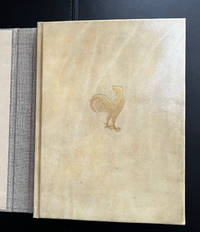
1934125919<p>The sole printing of this illustrated edition published by the Golden Cockerel Press in 1934. The BOOK is in near Fine condition. Printed in Gill Felicity Italic on Millbourn paper. 8vo. Translated from the Arabic into French by Franz Toussaint and then rendered into English by Christopher Sandford. 8 copper engraved erotic headpieces by Gertrude Hermes. This copy is number '26' from a total edition of 275 copies and is one of circa 25 randomly numbered special copies bound by the publishers in full vellum with gilt titling a gilt cockerel design to the front panel and issued with additional erotic engravings. The BOOK is in near Fine condition with just a small amount of lightening of colour to the front edge of the front board. Top edge gilt. Free from inscriptions. A hint of spotting to the blank end-papers. Although the specially bound full vellum copies were issued with six extra copper engravings inserted loose in the sleeve at the rear of the book this copy has only four of the engravings present. However all four of the engravings are signed in pencil and dated 1934 by Gertrude Hermes. 'Chanticleer bibliography of the Golden Cockerel Press 1921 -1936' does not reference the engravings as having been signed by Gertrude Hermes. The engravings are complete with some very light spotting to the edges. One plate is more spotted which has very lightly encroached onto the plate. The four extra engravings are much more distinctly erotic than the engravings in the book and have not been included as illustrations in the book. The book is housed in a custom chemise with a morocco printed label and a matching slipcase. The sensually joyful love poems were written by a Moor in Spain in the 10th century. Hermes's engravings for the Garden of Caresses are particularly sensuous and beautiful. Chanticleer 100. A very handsome production and extremely scarce with such attributes. More images available on request. Ashton Rare Books welcomes direct contact.</p> Golden Cockerel Press, London hardcover
1748136497S. n. l. 1748 In-16 16,5 x 10 cm. Reliure de l’époque veau havane raciné glacé, dos à nerfs encadrés de fers dorés, pièce de titre maroquin grenat, [30]-474 pp., frontispice, vignette au titre, 3 vignettes, table des chapitres et des articles. Ex-libris collé sur la page de garde, marque de possession manuscrite en page de titre, .Exemplaire en très bon état. édition originale.
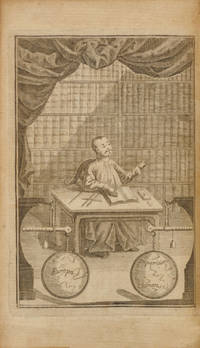
2508SB001<p>Contenant un Paralelle de celle de la Chine avec celle de lEurope. A Amsterdam & Leipzig. Chez J. Schreuder & P. Mortier. MDCCLXIII. 1763.</p>_x000d_<p>In 8.º de 155x10 cm. Com 291 i págs. Encadernação inteira de pele com nervos e ferros a ouro na lombada. Cortes das folhas carminados e folhas de guarda decorativas em papel fantasia da época.</p>_x000d_<p>Frontispício calcográfico representando um chinês sentado atrás de uma secretária encostado a uma vasta biblioteca diante de duas balanças que suportam cada uma um globo com as inscrições «Europa» num e «Imperium Chinense» no outro. Inclui ainda uma gravura em extratexto à página 70 representando uma cena com figuras em paisagem oriental com elementos arquitetónicos e palmeiras.</p>_x000d_<p>Impressão em caracteres redondos sobre papel de qualidade da época com vinhetas cabeções e iniciais decoradas com ornamentos tipográficos.</p>_x000d_<p>Exemplar com falhas de pele nas charneiras coifas e nos cantos das pastas. Tem colado na pasta anterior um recorte com uma entrada de catálogo desta obra e apresenta anotações coevas a tinta nas guardas incluindo um registo de cota na anterior «N336».</p>_x000d_<p>Obra muito rara e importante no panorama da literatura francesa do século XVIII dedicada ao estudo comparativo entre a China e a Europa. Testemunho particularmente valioso do interesse setecentista pelas civilizações orientais e do desenvolvimento da literatura pedagógica comparada no contexto do Iluminismo francês.</p>_x000d_<p>Esta edição de Amesterdão e Leipzig constitui a segunda edição conhecida sendo a primeira a edição sem data de Londres/Bruxelas c. 1761 com falsa indicação editorial «<em>chez Jean Nourse</em>» e venda anunciada em Bruxelas por <em>J. Van den Berghen & Pierre Vasse. </em></p>_x000d_<p>Composta por dez cartas organizadas por matéria precedidas de dedicatória «Aux Gens d'Esprit» e prefácio do editor. Inclui um índice detalhado dividido em três partes principais sobre educação costumes e instituições.</p>_x000d_<p>A obra apresenta-se como correspondência autêntica de um letrado chinês que teria viajado pela Europa durante quatro ou cinco anos mas trata-se manifestamente de uma ficção literária típica do período utilizando o artifício epistolar e o exotismo oriental para veicular críticas sociais e propostas pedagógicas. O prefácio do editor que alega ter recebido os originais em francês do próprio viajante chinês constitui parte integrante desta estratégia narrativa comum na literatura pseudoepistolar setecentista.</p>_x000d_<p>Esta singular publicação insere-se no contexto da sinofilia iluminista refletindo o seu fascínio pela civilização chinesa como modelo alternativo aos valores europeus tradicionais. O título «Balance Chinoise» revela a intenção comparativa da obra que estabelece um paralelo sistemático entre os sistemas educativos da China e da Europa colocando em confronto as tradições pedagógicas confucianas com os métodos ocidentais.</p>_x000d_<p>As cartas dirigem-se a personalidades específicas da época como Lord Chesterfield o doutor Richard Mead médico de Jorge II Mr. Nash o vice-chanceler da Universidade de Cambridge e o reitor da Universidade de Caen o que confere verosimilhança ao artifício epistolar e permite críticas dirigidas aos sistemas educativos de diferentes países europeus. O suposto autor chinês manifesta aprovação pelas escolas gratuitas europeias mas defende as vantagens da educação doméstica para a "pureza dos costumes" criticando igualmente o abandono do grego em França e propondo o latim como língua de comunicação europeia. Esta abordagem insere-se no movimento mais amplo de crítica das instituições europeias através do confronto com modelos civilizacionais alternativos estratégia frequentemente utilizada pelos autores iluministas para contornar a censura tradição que segue as pioneiras «Lettres persanes» de Montesquieu.</p>_x000d_<p>A edição de Amesterdão pelos livreiros J. Schreuder & P. Mortier conhecidos pela publicação de obras de carácter filosófico e político sugere um público cultivado e cosmopolita habituado às especulações comparativas sobre civilizações e costumes. O facto de a obra ter sido publicada fora de França indica provavelmente precauções face à censura régia ou eclesiástica. A atribuição desta obra a Toussaint encontra-se registada no catálogo da Bibliothèque Nationale de France possivelmente em colaboração com um certo "Wendler" segundo estudos bibliográficos especializados.</p>_x000d_<p>François-Vincent Toussaint Paris 1715 Berlin 1772 advogado homem de letras tradutor e enciclopedista francês conhecido sobretudo pela sua obra «Les Murs» 1748 que foi proibida aquando da sua publicação. Colaborou nos primeiros volumes da «Encyclopédie» de Diderot e d'Alembert para a qual redigiu os artigos de jurisprudência e trabalhou com Diderot na tradução do «Dictionnaire universel de médecine». Exilou-se em Bruxelas por volta de 1757 e posteriormente em Berlim em 1764 onde foi nomeado membro da Academia Real das Ciências da Prússia e professor da escola militar fundada por Frederico II.</p>_x000d_<p>EN In octavo. 15.5 x 10 cm. 291 pages. Full leather binding with raised bands and gilt lettering on the spine. Red edges and decorative patterned endpapers.</p>_x000d_<p>Intaglio frontispiece depicting a Chinese man seated behind a desk leaning against a vast library in front of two scales each supporting a globe inscribed with 'Europa' on one and 'Imperium Chinense' on the other. It also includes an engraving on page 70 depicting a scene with figures in an oriental landscape with architectural elements and palm trees.</p>_x000d_<p>Printed in round characters on high-quality paper with vignettes headpieces and initials decorated with typographical ornaments.</p>_x000d_<p>Copy with skin damage on the hinges caps and corners of the covers. A clipping with a catalogue entry for this work has been glued on the front pastedown and there are contemporary ink notes on the flyleaves including on the previous one a record of entry number 'N336'.</p>_x000d_<p>Very rare and important work in 18th-century French literature dedicated to the comparative study of China and Europe. A particularly valuable testimony to 18th-century interest in Eastern civilisations and the development of comparative educational literature in the context of the French Enlightenment.</p>_x000d_<p>This Amsterdam and Leipzig edition is the second known edition the first being the undated London/Brussels edition c. 1761 with the false publisher's imprint 'chez Jean Nourse' and advertised for sale in Brussels by J. Van den Berghen & Pierre Vasse.</p>_x000d_<p>Comprising ten letters organised by subject preceded by a dedication "Aux Gens d'Esprit" and a preface by the editor. Includes a detailed index divided into three main sections on education customs and institutions.</p>_x000d_<p>The work is presented as authentic correspondence from a Chinese scholar who travelled through Europe for four or five years but it is clearly a work of literary fiction typical of the period using the epistolary device and oriental exoticism to convey social criticism and pedagogical proposals. The editor's preface which claims to have received the originals in French from the Chinese traveller himself is an integral part of this narrative strategy common in 18th-century pseudo-epistolary literature.</p>_x000d_<p>This unique publication is part of the Enlightenment's Sinophilia reflecting its fascination with Chinese civilisation as an alternative model to traditional European values. The title "Balance Chinoise" reveals the comparative intention of the work which draws a systematic parallel between the educational systems of China and Europe contrasting Confucian pedagogical traditions with Western methods.</p>_x000d_<p>The letters are addressed to specific figures of the time such as Lord Chesterfield Dr Richard Mead George II's physician Mr Nash Vice-Chancellor of Cambridge University and the Rector of the University of Caen which lends credibility to the epistolary device and allows for criticism of the educational systems of different European countries. The supposed Chinese author expresses approval for free European schools but defends the advantages of domestic education for the "purity of customs" also criticising the abandonment of Greek in France and proposing Latin as the language of European communication. This approach is part of a broader movement of criticism of European institutions through comparison with alternative civilisational models a strategy often used by Enlightenment authors to circumvent censorship a tradition that follows Montesquieu's pioneering "Lettres persanes".</p>_x000d_<p>The Amsterdam edition by booksellers J. Schreuder & P. Mortier known for publishing philosophical and political works suggests a cultured and cosmopolitan audience accustomed to comparative speculations on civilisations and customs. The fact that the work was published outside France probably indicates precautions against royal or ecclesiastical censorship. The attribution of this work to Toussaint is recorded in the catalogue of the Bibliothèque Nationale de France possibly in collaboration with a certain "Wendler" according to specialised bibliographic studies.</p>_x000d_<p>François-Vincent Toussaint Paris 1715 Berlin 1772 was a French lawyer man of letters translator and encyclopaedist best known for his work Les Murs 1748 which was banned upon publication. He contributed to the first volumes of Diderot and d'Alembert's Encyclopédie for which he wrote the articles on jurisprudence and worked with Diderot on the translation of the <em>Dictionnaire universel de médecine</em>. He went into exile in Brussels around 1757 and later in Berlin in 1764 where he was appointed a member of the Prussian Royal Academy of Sciences and professor at the military school founded by Frederick II.</p>_x000d_<p>Referências/References: <br />Catalogue BnF FRBNF33254721.<br />China-Bibliographie Universität Wien.<br />Bertrand Galimard Flavigny "Des lettres chinoises à l'index!" Canal Académies.<br />Un encyclopédiste à Bruxelles : Fr.-V. Toussaint l'auteur des "murs" / Gustave Charlier Annales du Prince de Ligne 1937 tome 18 p. 5-22.</p> M-11-D-33 hardcover
67464Paris,, Briasson, David l'a n , Durand., 1746-1747 6 vol. in-folio. Dos 6 nerfs orn s de fleurons dor s, 66 planches d pliantes.
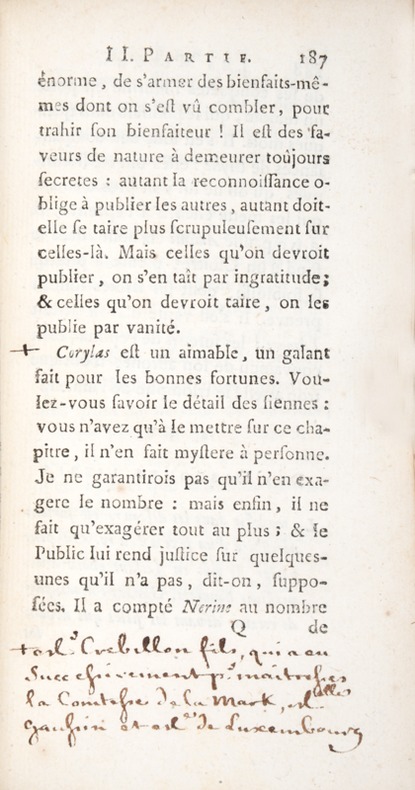
1748elala1493np: 1748. 1748. 3 Parts in 2 Volumes. 12mo. pp. 16 p.l. 122; 1 p.l. 123-386; 1 p.l. 387-547. engraved frontis. 3 engraved headpieces. engraved title vignettes. contemporary sprinkled calf gilt backs extremities worn. This work outlining a natural code of moral conduct independent of religion was originally attributed to Diderot. It was condemned as blasphemous and immoral by the Paris parlement and ordered to be burned on May 6 1748. Both Barbier and Cioranescu cite pp. 474 for the first edition while Cohen-De Ricci cites date 1747. Cohen-De Ricci 995. cfBarbier III 322. cfCioranescu 62094. BOUND WITH: DIDEROT Denis 1713-1784. Pensées Philosophiques. 12mo. pp. 1 p.l. 136 12. lacking half-title engraved frontis. The Hague: Aux dépens de la Compagnie 1746. First Edition Second Issue without the imposition errors noted by Tchemerzine. Diderots first original work the Pensées Philosophiques consists of short reflections on christianity deism scepticism and atheism and is primarily concerned with sceptically questioning the argument from design in nature a fundamental premise of deism. At first a deist Diderot later became an experimental materialist in philosophy and an atheist in religion. The Pensées Philosophiques was condemned to be burned by the Paris parlement on July 7 1746. Barbier III 826. Cioranescu 24143. Cohen-De Ricci 305. Quérard II 554. Tchemerzine IV 427 a. 1st Edition. Hardcover. np: 1748. Hardcover
192719644Paris, Editions André Delpeuch 1927 1 Paris, Éditions André Delpeuch, 1927, petit in-4, couverture titrée, 154 pages, plein chevreau noir, mosaïqué de peau de buffle sertie bombée rose et de box incrustré noir, ivoire et cuivre au décor figurant un couple enlacé surmonté d'un semi de grains de poivre sur papier, titre au dos à l'oeser ivoire et rose, gardes décor poivres en papier népalais, sous étui toilé décor au poivres marqué d'une pièce de titre chagrin, (reliure signée Martine Clamagirand-Roth).
17761105020009J.E. Dufour & P.H. Roux Imprimeurs & Libraires Affocies 1776. Hardcover. Very Good. Elephant folio. Maestricht : J.E. Dufour & Ph. Roux 1776. Bound in tan cloth. Gilt lettering on spine over dark red title plate. 5 raised bands. Six compartments. Publishers imprint and publication date on bottom of spine. Light gray endpapers. Elaborately decorated title page with red and black lettering. Intricately detailed copperplate engravings throughout. This edition of the Bibliotheque Orientale is the second printing created in Maastricht in the year 1776. The book was Herbelots greatest achievement occupying most of his life. It was completed in 1697 by Antoine Galland. It is based on the immense Arabic bibliography the Kashf al-Zunun of Hadji Khalfa Katip Celebi of which it is largely an abridged translation but also contains the substance of a vast number of other Arabic Persian and Turkish compilations and manuscripts. Tight binding and solid boards. Minimal scuffing to boards. Small scrape along leather title plate. Slight bumping to corners. Clean unmarked pages. Library sticker gently removed from endpaper. Slight residue remains. Minor wrinkling to pages. Minimal discoloration to pages. A beautifully preserved volume in exceptional condition. Please view our images of this rare item. Brunet II 664. J.E. Dufour & P.H. Roux, Imprimeurs & Libraires, Affocies hardcover
50565Paris.1746-1748.6 vols.in-folio en veau raciné brun.Traduit de l'anglais par M.James.Complet des 68 planches.Bel ensemble uniforme. Dos à 6 nerfs avec ornements dorés.Cuir frotté.Tranches rouges.Reliures par endroit frottées, avec qques manques peu importants.