Toussaint LouvertureBiblio.com
2 687 résultats
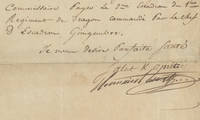
17983421524/05/1798. <div></div><div><div class=""yj6qo""><p>At the time of the outset of the French Revolution Haiti was the French colony of Saint Domingue. The colony featured large slave plantations that generated the cash crops of sugar coffee and cotton. This was a very profitable colony to the French owing largely to the sugar plantations. By the 1780s nearly two-thirds of French trade flowed through Saint Domingue and the island supplied nearly half of Europe with sugar.</p><p>The Haitian Revolution was a complex web of affairs. At one point there were over a half dozen parties involved all fighting for different purposes. Alliances were fickle as entities changed allegiance based on who was offering the best deal. The revolution began not only as a slave revolt but also as a class struggle among white landowners non-landowners and the free black landowners. The French military became involved as did the British and Spanish forces.</p><p>In August 1791 a full-fledged slave revolt began. In March 1793 the French assembly granted full rights and French citizenship to free black people and those of mixed race. The white planter class however objected and further violence erupted. The French sent military forces and a new governor to enact these measures. At this point England and Spain joined the fight. While the English sought to restore order and sided with the white social class the Spanish who controlled the other side of the island saw an opportunity in the dysfunction. When the French in 1794 ordered all slaves freed the ire turned against the English who now sent more forces to quell the revolt. In 1795 the Spanish signed a deal with the French and exited the conflict.</p><p>Toussaint Louverture a former slave emerged as the leader of the slaves seeking their freedom in the Haitian Revolution. He drew inspiration from the ongoing French Revolution and previous American Revolution to evolve his group’s demands and ultimate goals.</p><p>At the same time the French Directoire government which now ruled France was considerably less revolutionary than it had been. Suspicions began to brew that it might reconsider the abolition of slavery. In November 1797 Louverture wrote again to the Directoire assuring them of his loyalty but reminding them firmly that abolition must be maintained.</p><p>And for the British the benefit began to be outweighed by the cost an enormous loss of life. On April 30 1798 Louverture signed a treaty with British Army officer Thomas Maitland exchanging the withdrawal of British troops from western Saint-Domingue Haiti in return for a general amnesty for the French counter-revolutionaries in those areas. In May Port-au-Prince was returned to French rule in an atmosphere of order and celebration.</p><p>Gingembre-Trop-Fort also a former slave was one of Louverture's loyal officers. He was described with exaggerated uniform accoutrements a sword almost as tall as he was wearing “large and heavy rings†and with a pillow to his saddle already “covered in velours with gold fringes.†Interestingly his name in French means ""too strong ginger.""</p><p><strong>Letter signed</strong> May 24 1798 Port Republicain former name of Port-au-Prince to <em>""Citizen Deneyve Commissary Quartermaster of Wars for the Army of the Northwest Coast""</em> with integral address leaf. <em>""Citoyen Commissary please pay the 2nd Squadron of the 1st Regiment of Dragoons Commanded by the Squadron Chief Gingembre.""</em></p><p>Letters of Louverture are very uncommon. This is a particularly early one having been signed before he took control over the entire country.</p><p>This was not the end of the conflict as tensions with France were about to increase and would test Louverture.</p><p><img class=""alignnone wp-image-25018 size-post-window"" src=""https://cdn.raabcollection.com/wp-content/uploads/20231204144051/Folder-site-11-1600x1327.jpg"" alt="""" width=""1600"" height=""1327"" /></p></div></div> unknown
B9781169075566New. unknown
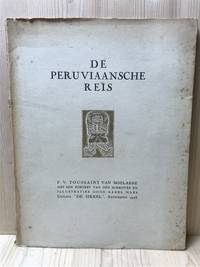
19253380De sikkel Antwerpen 1925. 22 x 285 cm 62 pp genummerde oplage n° 332 van 350 bevat roestplekjes De sikkel Antwerpen unknown
0483558079.Ghardcover. Good. Access codes and supplements are not guaranteed with used items. May be an ex-library book. hardcover
0428900828.Gpaperback. Good. Access codes and supplements are not guaranteed with used items. May be an ex-library book. paperback
0428901190.Ghardcover. Good. Access codes and supplements are not guaranteed with used items. May be an ex-library book. hardcover
B9781167611032New. unknown
B9781167627484New. unknown
B9781167638497New. unknown
0282474242.Gpaperback. Good. Access codes and supplements are not guaranteed with used items. May be an ex-library book. paperback
0656014458.Ghardcover. Good. Access codes and supplements are not guaranteed with used items. May be an ex-library book. hardcover
B9781167605307New. unknown
1927247631927. Paris Editions de la Nouvelle revue critique 1927. Un vol. au format pt in-4 248 x 196 mm de 9 pp. brochÂŽ sous couverture ˆ rabats rempliÂŽs. Edition originale. Tirage de tÂte : un des 20 premiers exemplaires du tirage numÂŽrotÂŽ sur vergÂŽ blanc de Hollande van Gelder Zonen. ''Il y avait dans le Nedjd un village dont l'ÂŽcole ÂŽtait dirigÂŽe par un vieillard dÂŽbonnaire. Au lieu de contraindre ses ÂŽlÂves ˆ rÂŽpÂŽter du matin au soir des versets du Koran il leur lisait des poÂŽsies qui exaltaient la douceur de vivre. Des rosiers toujours fleuris entouraient cette ÂŽcole o frÂŽquentaient aussi les papillons lorsqu'ils ne pouvaient plus rÂŽsister ˆ la brise''. TrÂs rares tout autant que discrÂtes rousseurs dans le texte. Du reste trÂs belle condition. b42961 unknown
19352554Brussel: De Vrienden van het boek 1935. 4° met kopergravures van Joris Minne. Gedrukt in oplage van slechts 100 genummerde exemplaren. Dit is nr. 67 op oorspronkelijk Japans Codo Mitsu-mata nacré. Getekend door auteur en kunstenaar. Oorspronkelijke kaft van uitgever. Bijgevoegd: folder in tweekleurendruk van dit werk Bibliophile editions De Vrienden van het boek unknown
0366703641.Ghardcover. Good. Access codes and supplements are not guaranteed with used items. May be an ex-library book. hardcover
0366703625.Gpaperback. Good. Access codes and supplements are not guaranteed with used items. May be an ex-library book. paperback
1390753832.Gpaperback. Good. Access codes and supplements are not guaranteed with used items. May be an ex-library book. paperback
1391127803.Ghardcover. Good. Access codes and supplements are not guaranteed with used items. May be an ex-library book. hardcover
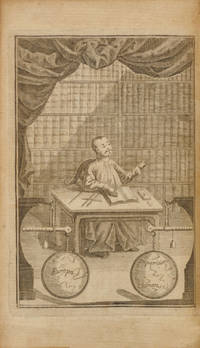
2508SB001<p>Contenant un Paralelle de celle de la Chine avec celle de lEurope. A Amsterdam & Leipzig. Chez J. Schreuder & P. Mortier. MDCCLXIII. 1763.</p>_x000d_<p>In 8.º de 155x10 cm. Com 291 i págs. Encadernação inteira de pele com nervos e ferros a ouro na lombada. Cortes das folhas carminados e folhas de guarda decorativas em papel fantasia da época.</p>_x000d_<p>Frontispício calcográfico representando um chinês sentado atrás de uma secretária encostado a uma vasta biblioteca diante de duas balanças que suportam cada uma um globo com as inscrições «Europa» num e «Imperium Chinense» no outro. Inclui ainda uma gravura em extratexto à página 70 representando uma cena com figuras em paisagem oriental com elementos arquitetónicos e palmeiras.</p>_x000d_<p>Impressão em caracteres redondos sobre papel de qualidade da época com vinhetas cabeções e iniciais decoradas com ornamentos tipográficos.</p>_x000d_<p>Exemplar com falhas de pele nas charneiras coifas e nos cantos das pastas. Tem colado na pasta anterior um recorte com uma entrada de catálogo desta obra e apresenta anotações coevas a tinta nas guardas incluindo um registo de cota na anterior «N336».</p>_x000d_<p>Obra muito rara e importante no panorama da literatura francesa do século XVIII dedicada ao estudo comparativo entre a China e a Europa. Testemunho particularmente valioso do interesse setecentista pelas civilizações orientais e do desenvolvimento da literatura pedagógica comparada no contexto do Iluminismo francês.</p>_x000d_<p>Esta edição de Amesterdão e Leipzig constitui a segunda edição conhecida sendo a primeira a edição sem data de Londres/Bruxelas c. 1761 com falsa indicação editorial «<em>chez Jean Nourse</em>» e venda anunciada em Bruxelas por <em>J. Van den Berghen & Pierre Vasse. </em></p>_x000d_<p>Composta por dez cartas organizadas por matéria precedidas de dedicatória «Aux Gens d'Esprit» e prefácio do editor. Inclui um índice detalhado dividido em três partes principais sobre educação costumes e instituições.</p>_x000d_<p>A obra apresenta-se como correspondência autêntica de um letrado chinês que teria viajado pela Europa durante quatro ou cinco anos mas trata-se manifestamente de uma ficção literária típica do período utilizando o artifício epistolar e o exotismo oriental para veicular críticas sociais e propostas pedagógicas. O prefácio do editor que alega ter recebido os originais em francês do próprio viajante chinês constitui parte integrante desta estratégia narrativa comum na literatura pseudoepistolar setecentista.</p>_x000d_<p>Esta singular publicação insere-se no contexto da sinofilia iluminista refletindo o seu fascínio pela civilização chinesa como modelo alternativo aos valores europeus tradicionais. O título «Balance Chinoise» revela a intenção comparativa da obra que estabelece um paralelo sistemático entre os sistemas educativos da China e da Europa colocando em confronto as tradições pedagógicas confucianas com os métodos ocidentais.</p>_x000d_<p>As cartas dirigem-se a personalidades específicas da época como Lord Chesterfield o doutor Richard Mead médico de Jorge II Mr. Nash o vice-chanceler da Universidade de Cambridge e o reitor da Universidade de Caen o que confere verosimilhança ao artifício epistolar e permite críticas dirigidas aos sistemas educativos de diferentes países europeus. O suposto autor chinês manifesta aprovação pelas escolas gratuitas europeias mas defende as vantagens da educação doméstica para a "pureza dos costumes" criticando igualmente o abandono do grego em França e propondo o latim como língua de comunicação europeia. Esta abordagem insere-se no movimento mais amplo de crítica das instituições europeias através do confronto com modelos civilizacionais alternativos estratégia frequentemente utilizada pelos autores iluministas para contornar a censura tradição que segue as pioneiras «Lettres persanes» de Montesquieu.</p>_x000d_<p>A edição de Amesterdão pelos livreiros J. Schreuder & P. Mortier conhecidos pela publicação de obras de carácter filosófico e político sugere um público cultivado e cosmopolita habituado às especulações comparativas sobre civilizações e costumes. O facto de a obra ter sido publicada fora de França indica provavelmente precauções face à censura régia ou eclesiástica. A atribuição desta obra a Toussaint encontra-se registada no catálogo da Bibliothèque Nationale de France possivelmente em colaboração com um certo "Wendler" segundo estudos bibliográficos especializados.</p>_x000d_<p>François-Vincent Toussaint Paris 1715 Berlin 1772 advogado homem de letras tradutor e enciclopedista francês conhecido sobretudo pela sua obra «Les Murs» 1748 que foi proibida aquando da sua publicação. Colaborou nos primeiros volumes da «Encyclopédie» de Diderot e d'Alembert para a qual redigiu os artigos de jurisprudência e trabalhou com Diderot na tradução do «Dictionnaire universel de médecine». Exilou-se em Bruxelas por volta de 1757 e posteriormente em Berlim em 1764 onde foi nomeado membro da Academia Real das Ciências da Prússia e professor da escola militar fundada por Frederico II.</p>_x000d_<p>EN In octavo. 15.5 x 10 cm. 291 pages. Full leather binding with raised bands and gilt lettering on the spine. Red edges and decorative patterned endpapers.</p>_x000d_<p>Intaglio frontispiece depicting a Chinese man seated behind a desk leaning against a vast library in front of two scales each supporting a globe inscribed with 'Europa' on one and 'Imperium Chinense' on the other. It also includes an engraving on page 70 depicting a scene with figures in an oriental landscape with architectural elements and palm trees.</p>_x000d_<p>Printed in round characters on high-quality paper with vignettes headpieces and initials decorated with typographical ornaments.</p>_x000d_<p>Copy with skin damage on the hinges caps and corners of the covers. A clipping with a catalogue entry for this work has been glued on the front pastedown and there are contemporary ink notes on the flyleaves including on the previous one a record of entry number 'N336'.</p>_x000d_<p>Very rare and important work in 18th-century French literature dedicated to the comparative study of China and Europe. A particularly valuable testimony to 18th-century interest in Eastern civilisations and the development of comparative educational literature in the context of the French Enlightenment.</p>_x000d_<p>This Amsterdam and Leipzig edition is the second known edition the first being the undated London/Brussels edition c. 1761 with the false publisher's imprint 'chez Jean Nourse' and advertised for sale in Brussels by J. Van den Berghen & Pierre Vasse.</p>_x000d_<p>Comprising ten letters organised by subject preceded by a dedication "Aux Gens d'Esprit" and a preface by the editor. Includes a detailed index divided into three main sections on education customs and institutions.</p>_x000d_<p>The work is presented as authentic correspondence from a Chinese scholar who travelled through Europe for four or five years but it is clearly a work of literary fiction typical of the period using the epistolary device and oriental exoticism to convey social criticism and pedagogical proposals. The editor's preface which claims to have received the originals in French from the Chinese traveller himself is an integral part of this narrative strategy common in 18th-century pseudo-epistolary literature.</p>_x000d_<p>This unique publication is part of the Enlightenment's Sinophilia reflecting its fascination with Chinese civilisation as an alternative model to traditional European values. The title "Balance Chinoise" reveals the comparative intention of the work which draws a systematic parallel between the educational systems of China and Europe contrasting Confucian pedagogical traditions with Western methods.</p>_x000d_<p>The letters are addressed to specific figures of the time such as Lord Chesterfield Dr Richard Mead George II's physician Mr Nash Vice-Chancellor of Cambridge University and the Rector of the University of Caen which lends credibility to the epistolary device and allows for criticism of the educational systems of different European countries. The supposed Chinese author expresses approval for free European schools but defends the advantages of domestic education for the "purity of customs" also criticising the abandonment of Greek in France and proposing Latin as the language of European communication. This approach is part of a broader movement of criticism of European institutions through comparison with alternative civilisational models a strategy often used by Enlightenment authors to circumvent censorship a tradition that follows Montesquieu's pioneering "Lettres persanes".</p>_x000d_<p>The Amsterdam edition by booksellers J. Schreuder & P. Mortier known for publishing philosophical and political works suggests a cultured and cosmopolitan audience accustomed to comparative speculations on civilisations and customs. The fact that the work was published outside France probably indicates precautions against royal or ecclesiastical censorship. The attribution of this work to Toussaint is recorded in the catalogue of the Bibliothèque Nationale de France possibly in collaboration with a certain "Wendler" according to specialised bibliographic studies.</p>_x000d_<p>François-Vincent Toussaint Paris 1715 Berlin 1772 was a French lawyer man of letters translator and encyclopaedist best known for his work Les Murs 1748 which was banned upon publication. He contributed to the first volumes of Diderot and d'Alembert's Encyclopédie for which he wrote the articles on jurisprudence and worked with Diderot on the translation of the <em>Dictionnaire universel de médecine</em>. He went into exile in Brussels around 1757 and later in Berlin in 1764 where he was appointed a member of the Prussian Royal Academy of Sciences and professor at the military school founded by Frederick II.</p>_x000d_<p>Referências/References: <br />Catalogue BnF FRBNF33254721.<br />China-Bibliographie Universität Wien.<br />Bertrand Galimard Flavigny "Des lettres chinoises à l'index!" Canal Académies.<br />Un encyclopédiste à Bruxelles : Fr.-V. Toussaint l'auteur des "murs" / Gustave Charlier Annales du Prince de Ligne 1937 tome 18 p. 5-22.</p> M-11-D-33 hardcover
28271Paris Éditions de Minuit 2 novembre 2020. 1 vol. 105 x 190 mm de 46 p. et 1 f. Broché non coupé. . Edition originale. Un des 73 premiers exemplaires sur vergé n° 49. À l'état de neuf. . Paris, Éditions de Minuit, (2 novembre) 2020. 1 vol. (105 x 190 mm) de 46 p. et [1] f. Broché, non coupé. unknown
20152-2343062730Editions L'Harmattan 2015. Paperback. New. 430 pages. French language. 9.37x6.14x1.42 inches. Editions L'Harmattan paperback
32145Couverture rigide. Bon/1923. in-8. Paris Mornay 1923 in-8 223pp broché Quelques traces de scotch sur les deuxième et troisième de couverture sinon superbe exemplaire illustré de bandeaux lettrines et illustrations orientales hors-texte en noir et or par Thomas! unknown
1980100088772Université catholique de Louvain 1980. Bon état général cependant adhésit sur le dos un peu décollé par endroit bonne tenue par ailleurs intérieur propre légères rousseurs sur tranche. in4. 1980. Broché. Université catholique de Louvain unknown