734 résultats
173928620The Hague: Depens de la Compagne 1739. 2 volumes 12mo. Titles printed in red and black. 12 224; 4 254pp. Half titles. Later full polished calf spine gilt with raised bands marbled endpapers. In a modern slipcase.<br/> <br/>First French edition of Behren's account of Jacob Roggeveen's 1721-22 Pacific voyage.<br/> <br/>The first French edition of Behren's German account of Jacob Roggeveen's 1721-22 Pacific voyage which provided important impetus for further exploration for the great Southern Continent. The author was a sergeant and commander of marines on the voyage. Contemporary accounts of Roggeveen's explorations were first published in Dutch in 1728 and in German beginning in 1735. This French translation was based on the Frankfurt and Leipzig editions of 1737. Behrens' scarce narrative tells the story of one of the most significant of the Dutch voyages ranking with those of Le Maire Schouten and Tasman. Roggeveen set out to rediscover the part of Terra Australis which Quiros had led the exploring world to believe existed but in fact added substantially to the Dutch record of Polynesian discoveries with Easter Island and Samoa described here for the first time. "Roggewein's is the first certified account of contact with Easter Island and its great stone images as well as the last of the great Dutch circumnavigations" Cox. "Though some attribute the translation to Charles de Brosses Chareles Pierre Claret Fleurieu believed that the style of language revealed the efforts of a non-native speaker. With the text often more a paraphrasing of the German version than a direct translation Fleurieu and others credit Behrens himself with the translation" Hill.<br/> <br/>European Americana 739/21; Sabin 4379; Hill 99; Cox I p.51; Borba de Moraes p.95; Howgego R63. Depens de la Compagne unknown books
1739WRCAM48796The Hague: Aux depens de la Compagnie 1739. Two volumes. 12224; 4254pp. Half titles. 12mo. Later polished calf gilt spine gilt with raised bands leather labels marbled endpapers. Minor shelf wear joints slightly rubbed. A clean near fine copy. In a buckram slipcase. The first French edition of Behrens' REISE DURCH DIE SÜD-LÄNDER UND UM DIE WELT an account of Jacob Roggeveen's 1721-22 Pacific voyage which provided important impetus for further exploration for the great Southern Continent. "Roggewein's is the first certified account of contact with Easter Island and its great stone images as well as the last of the great Dutch circumnavigations" - Cox. <br> <br> The author was a sergeant and commander of marines on the voyage. Contemporary accounts of Roggeveen's explorations were first published in Dutch in 1728 and in German beginning in 1735. This French translation was based on the Frankfurt and Leipzig edition of 1737. "Though some attribute the translation to Charles de Brosses Charles Pierre Claret Fleurieu believed that the style of language revealed the efforts of a non-native speaker. With the text often more a paraphrasing of the German version than a direct translation Fleurieu and others credit Behrens himself with the translation" - Hill. EUROPEAN AMERICANA 739/21. SABIN 4379. HILL 99. COX I p.51. BORBA DE MORAES p.95. HOWGEGO R63 for Roggeveen. Aux depens de la Compagnie hardcover books
1732WRCAM55846London: Printed for D. Midwinter and A. Ward. 1732. 2214197-40016 of 24pp. plus seven plates including frontispiece. Lacks the final four leaves of the index. 12mo. Contemporary calf rebacked with original backstrip laid down. Light shelf wear corners worn. Contemporary bookplate and presentation inscriptions see below. One plate torn lacking the lower left quarter of the sheet repaired with blank paper. One page with early manuscript marginalia. Scattered light foxing. About very good. A remarkable association copy connecting two significant members of the Revolutionary generation who were also united by family intermarriage and whose friendship was riven by their divergent loyalties during the American Revolution. This copy bears the bookplate of Francis Hopkinson 1737-91 signer of the Declaration of Independence author and poet composer judge and Pennsylvania government official. The ANB calls him "arguably the most versatile American of the revolutionary generation." This book was given to Hopkinson by the noted minister Jacob Duché who would shortly thereafter marry Hopkinson's sister and who famously broke with the cause of liberty during the Revolution. <br> <br> A front fly leaf bears the presentation inscription "The Present of Mr. Jacob Duché Junr. to Francis Hopkinson December 1757." The same hand has signed the titlepage with the names of Jacob Duché and Francis Hopkinson and the date 1757. On that page Duché's name has been crossed out indicating that the inscriptions are likely in the hand of Duché and that he crossed out his own name on the titlepage when he gave the book to Francis Hopkinson. Jacob Duché and Francis Hopkinson had a long and complicated friendship dating back at least to their college days at the College of Philadelphia later the University of Pennsylvania. In 1760 three years after giving him this book Duché married Hopkinson's sister Elizabeth. Francis Hopkinson was a prolific author and musician and published forty poems before the Revolution. A copy of HUDIBRAS Samuel Butler's famous satirical poem on English politics would have been a welcome and influential gift. "During the Revolution Hopkinson wrote a number of ballads and essays poking fun at the British cause and the Loyalists. 'The Birds the Beasts and the Bat' written in Hudibrastic verse served to ridicule those persons who tried to take both sides during the Revolution" - ANB. <br> <br> It is impossible not to believe that one of those targets of Hopkinson's ridicule was the gifter of the present edition of HUDIBRAS his brother-in-law Jacob Duché. Duché 1738- 98 born into a wealthy Philadelphia family was only twenty-two years old when he married Elizabeth Hopkinson. He would go on to become a prominent minister and religious leader in Philadelphia noted for his well- written sermons and essays. In 1774 he was asked to serve as the chaplain to the Continental Congress and he therefore gained political prominence as well displaying an apparent zeal for liberty. Duché resigned his official position with the Congress in October 1776 having concluded that the Declaration of Independence - signed just three months earlier by his friend and brother-in-law - would not serve as a tool for reconciliation with England. When the British captured Philadelphia Duché was imprisoned by General Howe and came to a permanent change of heart regarding the revolutionary cause. In 1777 he wrote a rash letter to George Washington urging that Washington undo the Declaration of Independence and negotiate a peace. The publication of the letter destroyed Duché's career and "those whose hearts had thrilled to Duché's eloquence now cursed him as a traitor and even Hopkinson wrote him a burning letter of protest" DAB. Duché and his family soon exiled themselves to London. The conclusion of the Revolutionary War did not provide Duché with an opportunity to return to the United States - anti-Loyalist sentiments were still too raw. It was not until 1792 having by then taken up the tenets of Swedenborgianism that Duché and his family finally returned to Philadelphia where he lived the rest of his life. <br> <br> Francis Hopkinson's bookplate was engraved by the noted artist and engraver Henry Dawkins one of the early engravers in the colonies. Dawkins was born in England but came to New York City in 1754. He found work engraving bookplates maps and music in New York and then in Philadelphia before returning again to New York in 1774. He was arrested there in 1776 and charged with counterfeiting paper money apparently not for the first time for which he was jailed. Later that year he petitioned the New York Provincial Congress for release but the record of Dawkins's life ends there and we do not know what became of him. <br> <br> This is a later edition of Samuel Butler's famous epic poem first published in three parts in London beginning in 1663. An edition containing all three parts together was first published in 1684. This edition contains seven engravings by William Hogarth. In the present edition parts two and three have separate titlepages and that of part three bears the imprint "printed for B. Motte. The text is continuous despite the pagination. <br> <br> A remarkable volume - a gift of youthful friendship inspirational to a signer of the Declaration of Independence whose long and close friendship with his brother-in-law would become a casualty of conflicting loyalties during the American Revolution. ESTC N17078. DAB IX pp.220-23; V 476-77. ANB 11 pp.190-92; 7 pp.4-5. Printed for D. Midwinter and A. Ward... unknown books
171752850Frankfurt and Leipzig: Samuel Tobias Hocker 1717. Hardcover. Good to very good condition. Bound in full vellum with handwritten lettering on spines. Octavo. Vol. I.: 24 incl. frontispiece 580pp. 8 432 383 1pp. Franckfurter Juden Ehverlöbniß und Hochzeit. Vol. II.: 8 358 1pp. 30 320pp. 447 1 192pp. plus two registers and a supplement 1717 38 48 1 60pp. Frontispiece and ten copper plate engravings some folding. Part two and three published in 1714 part four in three parts published in 1717 with two chapters published in 1716 see below. Speckled edges. Decorative initials head- and endpiece woodcuts.<br /> <br /> Jewish oddities introducing curiosities and memorable events of Jews in "all four parts" of the world in the last few centuries particularly of Jews scattered in Germany. Contains a complete Frankfurt Jewish Chronicle with memorable events relating to Jews living in Frankfurt for centuries including several elucidating engravings. Part two includes the chapter XXV "about Jews in Frankfurt regarding marriage vows and wedding" on six pages. Part four in three chapters of which the last includes the apparel regiment for Frankfurt Jews and a chapter on the celebration on the occasion of the birth of the Crown Prince of Jews in Frankfurt and Prague both 1716 both with separate title pages and frontispieces but continuous pagination.<br /> <br /> Though not addressed to a particular Jewish community most of the information was gathered in Frankfurt with several texts copied by Schudt in Hebrew and Yiddish that are not recorded in elsewhere e.g. a Selicha authored by Rabbi Shmuel Schotten Katz after the great fire in the Jewish Quarter of Frankfurt in 1711 the Purim play "Ahasuerus-Spiel" most copies of the play were burnt following a rabbinical decree; thanks to Schudt the text was preserved two versions of women's incantations for childbirth regulations of the Jewish community forbidden luxuries among others. <br /> <br /> Schudt's writings are considered a landmark in the history of modern anti-Semitism mainly due to a chapter dedicated entirely to describing the Jewish body its shape colors and smells promulgating racist anti-Semitism in Europe. <br /> <br /> Schudt's book features several copperplate engravings. The most prominent of these is an image of the Judensau Jews' Sow which first appeared in medieval sculptures found in churches throughout Germany starting in the 14th century and then was subsequently depicted in woodblock and copperplate engravings. Schudt's version of this notorious anti-Semitic image is an elaborate construction taking motifs from three or more predecessors presenting a panoply of negative anti-Semitic tropes including: the blood libel ritual murder the devil's association with the Jewish people Jews "sucking and eating the wealth" from the allegorical pig and their belief in the absolution of sin through the sacrifice of the Azazel during the holiday of Yom Kippur. He includes descriptive text to elucidate the images.<br /> <br /> The main part of this folk art image shows three Jewish figures one sitting backwards atop the sow holding its tail facing the devil while another Jew kneels behind the pig eating its excrement encouraged by the devil. A third Jew is lying on his back suckling the sow's milk. On the other side of the sow a high priest stands with the Azazel goat.<br /> <br /> Additional engravings depict Jacob blessing Joseph's sons another two festive processions held in Jewish communities in Germany in 1716 for the birth of Leopold Johann son of the Holy Roman Emperor Carl VI and a portrait of Johann Jacob Schudt among others. Some of the engravings are placed into the text.<br /> <br /> With elaborate inscription inked to verso of front free endpaper. Text in German Gothic script. Some wear with light staining of lower edge of back cover of Vol. I more extensive on back cover of Vol. II here with some light staining of spine and rubbing of bindings. Some water staining in lower edges of last 200 pages of volume one not affecting text. Volume one with light erosion at bottom foredge corner of some 200 pages not affecting text. Volume two with some light fraying of lower foredge corner of Vol. II. Johann Jacob Schudt studied theology Wittenberg and then orientalism Hamburg under Ezra Edzardi. Devoted to Jewish history he published several works but is best known for his "Jüdische Merckwürdigkeiten" in three parts first published in 1714 with part IV a supplement volume published in 1717 containg the fourth part in three chapters.<br /> <br /> Schudt's standing in the Jewish community of Frankfurt he taught here at the gymnasium he had been educated at deteriorated with the publication of the "Oddities." Though he had published "Judaeus Christicida" on his own in 1703 suggesting corporal as well as spiritual punishment for the crucifixion the writings in "Jewish Oddities" repeats many of the anti-Semitic tropes found in Johann Andreas Eisenmenger two volumes under the title "Entdecktes Judentum" Judaism Unmasked first published in 1711. Eisenmenger's then was banned after several complaints by the Jewish bankers Oppenheimer and Wertheim only to be republished three years later.<br /> <br /> Schudt's "Jewish Oddities" however is still considered a fundamental source for Jewish history especially in Frankfurt documenting details of Jewish life their language prayers holidays dress and customs not found in other sources. Samuel Tobias Hocker hardcover
178625988Ephrata: The Cloister 1786. First edition 4to pp. 6 250 2; printed in black letter throughout; engraved vignette pasted on title page; prelims and terminals waterstained small tear in the lower margin of title not touching letterpress old ownership signature at the top of the title page of Christian Stauffer 1736-1808 and a 30-line poem also presumably by him on the final blank leaf as well as a few marginal annotations; contemporary full calf front cover detached but present; the whole in a new cloth clamshell box. An abstract of the diary of the Brotherhood which had been kept by Brother Lamech and continued and edited by Brother Jaebez Agrippa i.e. Johan Peter Miller. Brother Lamech has been identified as Jacob Gass by Seidensticker First Century of German Printing in America p. 117. Evans 19558: "This biography of Johann Conrad Beissel the founder of the Ephrata Community is the principal source of information regarding that remarkable institution. Brother Agrippa is Johann Peter Miller; and Brother Lamech's secular name is said to be Jacob Gass. An English translation was printed in Lancaster Pennsylvania in 1890." Howes G76 identifying this as the second issue of three with the title page seal pasted on. <br/><br/> [The Cloister] hardcover books
178625988Ephrata: The Cloister 1786. First edition 4to pp. 6 250 2; printed in black letter throughout; engraved vignette pasted on title page; prelims and terminals waterstained small tear in the lower margin of title not touching letterpress old ownership signature at the top of the title page of Christian Stauffer 1736-1808 and a 30-line poem also presumably by him on the final blank leaf as well as a few marginal annotations; contemporary full calf front cover detached but present; the whole in a new cloth clamshell box. An abstract of the diary of the Brotherhood which had been kept by Brother Lamech and continued and edited by Brother Jaebez Agrippa i.e. Johan Peter Miller. Brother Lamech has been identified as Jacob Gass by Seidensticker First Century of German Printing in America p. 117. Evans 19558: "This biography of Johann Conrad Beissel the founder of the Ephrata Community is the principal source of information regarding that remarkable institution. Brother Agrippa is Johann Peter Miller; and Brother Lamech's secular name is said to be Jacob Gass. An English translation was printed in Lancaster Pennsylvania in 1890." Howes G76 identifying this as the second issue of three with the title page seal pasted on. [The Cloister] unknown
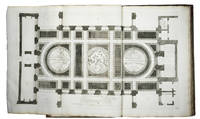
1780K6QE3E6Q77WKAmsterdam 1780. Large folio 49.5 x 30 cm. Johannes Covens Cornelis Mortier and Johannes Covens junior Contemporary half red roan sheepskin brown sprinkled paper sides. With the title page printed in red and black with J. Covens & C. Mortiers engraved device by Bernard Picart JCCM cypher monogram in a laurel wreath carried by 6 putti dated 1730; 2 preliminary plates containing portraits of Jacob van Campen by Lutma and Arthus Quellinus by Henricus Quellinus; CIX 109 numbered engraved and etched architectural plates 7 folding 30 double-page and 72 single-page a few printed from 2 or 3 copper plates distinguished by arabic numerals showing plans elevations tympana ceilings floors statues festoons and other ornamentation mostly engraved by Hubertus Quellinus after Arthus Quellinus but some after R.V.H. Rombout Verhulst. All plates have French captions some with laudatory verses below and are described in Dutch in the letterpress text pp. 3-15. 15 pp. A comprehensive collection of plates showing all architectural features and sculpture of the Amsterdam City Hall since 1808 the Royal Palace here in the Covens & Mortier firm's rare ca. 1780 issue with the engravings newly printed from the original copper plates from the years 1655 to 1664 and the text reissued from Leonardus Schenk's 1747 Dutch language edition the whole with a new title-page. ''This version has not been seen'' BAL. At least most of the plates were engraved for and first published in Jacob van Campen's masterpiece Afbeelding van 't stadt huys van Amsterdam Amsterdam Frederick de Wit 1664 Hubert Quiellinus's Prima et secunda pars praecipuarum . curiae Amstelrodamenis Amsterdam Frederick de Wit 1655-1663 and Afbeelding van 't stadt huys van Amsterdam in dartigh coopere plaaten . geteeckent door Jacob Vennekool Amsterdam Dancker Danckerts 1661.It includes the famous plate showing the extraordinary cartographic mosaic floor of the Burgerzaal of the Amsterdam City Hall designed by Jacob van Campen with a celestial map in the centre and the magnificent map of the world in 2 hemispheres on either side. The engraving was first published in 1661 and the map shows Tasman's recent discoveries in Australia and Tasmania and depicts California as an island. Many discoveries from his second voyage remained otherwise unpublished until the end of the 17th century. The drawing of the floor was made by Jacob Vennekool who worked closely with Van Campen and since his drawings were first published even before the building was completed they may reflect Van Campen's plan more closely than the finished building itself. They also of course show it before the alterations made at various times in later years.Binding a little worn untrimmed otherwise in good condition. The Amsterdam city hall in full glory with all its architectural features and sculpture.l BAL 132 note description of 1719 French language ed. but citing Berlin Kat. & Kuyper for unseen "1730" Dutch ed.; Berlin Kat. 2236; Kuyper Dutch Classicist architecture Delft 1980 pp. 212- 215 and note 25 p. 318; STCN 3 copies; cf. for dating the impressum: Van Egmond Covens & Mortier 2005 pp. 66 83-88. ABE CAT Architecture ABE CAT Art History unknown
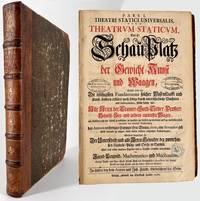
17261595Leipzig: Christoph Zunkel 1726. First Edition. Near fine. 4 parts in one volume; Folio13 1/3 x 8 7/8 inches 337 x 228 mm; half title title printed in back and red 57 copperplate engravings thus divided:<br /> Theatrum Staticum Universalis 1726 half title blank title blank dedication to Charles VI 3 Foreword 3 Contents 2 92 pp 19 plates; <br /> Theatrum Hydrostaticum pp. title blank 2 197 - 236 7 plates <br /> Theatrum Aërostaticum: title blank contents 2 241 - 308 23 plates<br /> Theatrum Horizontostaticum: title blank Contents 1 blank pp. 313 - 332 Index 3 Errata 8 plates. <br /> Contemporary half-binding in brown leather with speckled boards spine with gilt decorations in compartments and gilt title; contemporary leather binding with gilt decorations in compartments on spine and gilt title; edges red; corners bumped and some scratches on boards; binding tight and square with a surface split at title page. Pages clean and supple with very light and even toning. Stamps of the Royal Engineering Artillery Library of Hanover on half title and title pages.<br /> <br /> Poggendorf I 1438; Ferguson p. 45-46. The Theatrum Staticum Universalis is the 6th volume of the 10-volume magnum opus of Jacob Leupold 1674 - 1727. It is extensively illustrated with copper plate engravings that fold out so that they can be viewed while consulting the text. What is particularly striking is the strong systematization that is lacking in most works of this period. The technical devices are always described in such a way that the isolated basic elements are first explained and then placed in their functional context. The illustrations show among other things draw wells water wheels pumping stations excavators pumps valves and fountains.<br /> <br /> Leupold was a German physicist mathematician instrument maker engineer and was director of mines to the Elector of Saxony. His seminal work Theatrum Machinarum Generale "The General Theory of Machines" was published in Leipzig between 1724 and 1739 with the last volumes issued after his death. The Theatrum was the first systematic analysis of mechanical engineering the most complete and the most extensively illustrated work on mechanical engineering hitherto published. It included ahead of its time a design for a high-pressure non-condensing steam engine the likes of which were not built until the early 19th century. Christoph Zunkel unknown
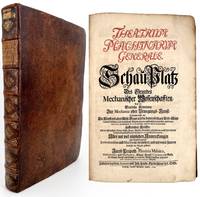
17241596Leipzig: Ch. Zunkel 1724 1724. First Edition. Very Good . Folio; 14 1/16 x 9 1/4 inches 360 x 234 mm; 11 240 pp. 2 II; title printed in back and red with 71 copperplate engraving by Krügner Böcklin Uhlich and others after Leupold. Most of the plates are folding and attached to a blank so that they may be consulted while reading the accompanying text. The plate at page 71 has a revolving volvelle. Contemporary speckled calf rebacked but retaining its original spine with gilt floral decorations in compartments and gilt title on tan calf label. Pages supple and evenly toned with scattered foxing some dampstain and occasional ink marks; first leaf with wormholes in the lower margin without loss of text or image plate LXVII with expertly supplemented corner tear; corners bumped and some scratches on boards; stamped on front endpaper illegible. All conditions consistent with the nature and age of the volume.<br /> Poggendorf I 1438; Ferguson p. 45-46. The Theatrum Machinarum Generale is the first volume of the 10-volume magnum opus of Jacob Leupold 1674 - 1727. It is extensively illustrated with copper plate engravings that fold out so that they can be viewed while consulting the text. What is particularly striking is the strong systematization that is lacking in most works of this period. The technical devices are always described in such a way that the isolated basic elements are first explained and then placed in their functional context. The illustrations show among other things draw wells water wheels pumping stations excavators pumps valves and fountains. Leupold was a German physicist mathematician instrument maker engineer and was director of mines to the Elector of Saxony. His seminal work Theatrum Machinarum Generale "The General Theory of Machines" was published in Leipzig between 1724 and 1739 with the last volumes issued after his death. The Theatrum was the first systematic analysis of mechanical engineering the most complete and the most extensively illustrated work on mechanical engineering hitherto published. It included ahead of its time a design for a high-pressure non-condensing steam engine the likes of which were not built until the early 19th century. Ch. Zunkel, 1724 unknown
1741WRCAM37910Philadelphia: Printed and Sold by Andrew Bradford 1741. 32pp. 12mo. Printed self-wrappers stitched. Contemporary ink inscription "Jacob Taylor" in upper margin of titlepage; contemporary ink correction on p.27. Cellophane tape joining signature at spine occasional minor foxing. Else bright clean and very good. In a half morocco and cloth box. An almanac by Jacob Taylor who published his important Pennsylvania almanac for the years 1700 to 1746. It is a distinct possibility that the present copy was owned and signed by Taylor as his inscribed name on the titlepage is accompanied later in the volume by a manuscript correction to a poem "manumated" becomes "manumitted". Taylor took the poetry in his almanacs seriously printing excerpts of PARADISE LOST in 1741 and composing well-received verse of his own. In addition to the calendar this 1746 almanac contains a substantial amount of poetry; lists of courts fairs and Quaker meetings; and a discussion of Hannibal's oath before the gods. This he concludes with a quote from the 1739 almanac of "R. Saunders" Benjamin Franklin's Poor Richard on the dangers of false wit and pride in the present age commenting favorably on Saunders "By wicked Wit the Truth is often drown'd; Here certain Truth adorn'd with Wit is found" p.23. <br> <br> Taylor's almanac was printed by different Philadelphia printers over time. Some were printed by Franklin but this one was issued by Andrew Bradford one of Franklin's rivals and the son of William Bradford the first printer in Philadelphia. DRAKE 9634. EVANS 4818. ESTC W22747. Printed and Sold by Andrew Bradford hardcover books
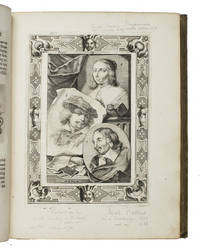
1729ABC_45605The Hague widow of E. Boucquet H. Scheurleer F. Boucquet J. de Jongh 1729 vols. 1-3; 1729. 4to. Dordrecht Ab Blussé & son 1769 vol. 4. Contemporary blind-tooled vellum with manuscript titles on spines. Sprinkled edges. With an engraved frontispiece title pages in red and black and with engraved vignettes a folding portrait of Willem Karel Hendrik Friso 1711-1751 Prince of Orange and from 1747 hereditary Stadtholder Willem IV a portrait of the author 40 engraved plates by Houbraken with multiple portraits of artists on each plate 1 plate with a night scene 1 mezzotint and 118 engraved vignettes. 4 volumes. 16 412 6; 4 412 6 4 446 4. First edition of richly illustrated biographies of more than 100 Dutch painters male and female still of interest for the history of Dutch art. The author Jacob Campo Weyerman 1677-1747 was one of the foremost Dutch authors of the Enlightenment and was known for his merry style. For this history of Dutch art he leans on Houbraken's De groote schouburgh der Neder-lantsche konstschilders en schilderessen 1718-1721.The first three parts were all published in 1729; the fourth - 40 years later - is mainly devoted to the painters from the Art Academy at The Hague. All 40 plates with artists' portraits the frontispiece 2 other portraits and the night scene are in the first 3 volumes the later volume 4 has no plates. The lavish vignettes throughout the volumes are worth mentioning as well mostly executed by Picart and apparently made for the present publication.The plates seem to be from a rare early state avant la lettre: all other copies we have seen have lettering on the plates but the present copy has the information written on the plates in ink. The title-page lettering seems to be very slightly moved compared to other copies but positions of the quire signatures all match. Perhaps this was a first impression or proof.From the library of Belgian artist/curator Philippe Jacques van Brée 1786-1871 with his owner's inscription on the front paste-down of each volume: "P.J. van Bréé". He was curator of the Royal Museum of Fine Art in Brussels from 1831-1861.With a few neat annotations in pencil in the margins of the plates and a small tear in the foot margin of a text page. Vellum slightly thumbed. Otherwise in very good condition.l Kunst op schrift 243-245; Arntzen/ Rainwater H129. ABE CAT Art History hardcover
171652920<p>London printed by J. N. Assignee of Edw. Sayer for D. Brown et al. 1716. FIFTH EDITION OF PLEAS OF THE CROWN 1716 INCLUDING THE SECOND ISSUE OF THE TRYAL OF WITCHES AT THE ASSIZES HELD AT BURY ST. EDMUNDS 1716. 3 title pages at front and each part has a separate title page; 1 Pleas of the Crown 2 A Short Treatise touching Sheriffs Accompts 3 A Tryal of Witches at the Assizes held at Bury St Edmunds for the Country of SUFFOLK on the Tenth Day of March 1664 pages 5 78-104; 4 A Discourse touching Provision for the Poor 5 Pleas of the Crown The Second Part by Giles Jacob. 8vo approximately 190 x 115 mm 7½ x 4½ inches pages: 22 1-272 8; 4 5-143 1; 2 1-121. Bound in full contemporary calf gilt lettered label to spine. Age-browning to margins of first General title page heavy age-browning to pastedowns and endpapers occasional pale age-browning to text a very good tight copy. "The publication A Tryal of Witches related to the 1662 Bury St. Edmunds witch trial first published in 1682 and was used by the magistrates at Salem when looking for a precedent in allowing spectral evidence. Since the jurist Sir Matthew Hale had permitted this evidence supported by the eminent philosopher physician and author Thomas Browne to be used in the Bury St Edmunds witch trial and the accusations against two Lowestoft women the colonial magistrates also accepted its validity and their trials proceeded." Wikipedia under the headings "Salem witch trials Spectral Evidence". See: Geoffrey Keynes A Bibliography of Sir Thomas Browne pages 197-99: "The sheets of the Tryal of Witches whole volume were reissued in 1716 pages 5 78-104 and were added to Hale's Pleas of the Crown"; Diana and Jeremy Norman The Haskell F. Norman Library of Science and Medicine Volume 1 page 352 No. 966 listing the first edition of 1683; Leslie F. Maxwell A Bibliography of English Law 1651-1800 Volume 2 page 54 No. 4. MORE IMAGES ATTACHED TO THIS LISTING ALL ZOOMABLE FURTHER IMAGES ON REQUEST. POSTAGE AT COST.</p> London, printed by J. N. Assignee of Edw. Sayer for D. Brown et al., 1716. hardcover
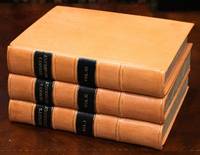
1775919London: T. Payne 1775. Second Edition. Fine Leather Large Quarto 11.75"x10" Bindings Bound by A.B. Buck. Near Fine. A New System or An Analysis of Ancient Mythology by Jacob Bryant – 3 Volume Set Second Edition 1775<br /> Author: Jacob Bryant<br /> Publisher: London: Printed for T. Payne P. Elmsly B. White and J. Walter<br /> Publication Date: 1775 MDCCLXXV<br /> Edition: Second Edition<br /> Format: 3 Volumes Quarto 11.75"x10".<br /> Description:<br /> Presenting a striking and complete three-volume set of Jacob Bryant’s magnum opus A New System or An Analysis of Ancient Mythology. In this highly influential 18th-century work Bryant attempted to trace the mythologies and traditions of ancient civilizations—including the Greeks Romans Egyptians and Babylonians—back to a common origin heavily linking them to the events of Genesis and the dispersal of nations following the Tower of Babel.<br /> This set is profusely illustrated with 32 striking copperplate engravings including detailed folding maps ancient coins architectural ruins and intricate depictions of mythological figures and symbols such as serpents and temple rites. Notably the renowned artist and poet William Blake was an apprentice to James Basire the principal engraver for this work and scholars frequently attribute several of the engravings in this edition to a young Blake.<br /> The set is masterfully bound in pristine full tan leather. The spines feature classic raised bands with contrasting dual black morocco labels elegantly tooled with gilt lettering indicating the title "BRYANT'S MYTHOLOGY" and volume numbers. The text blocks are solid and the pages remain wonderfully crisp pages with some light sporadic foxing pages overall are bright and clean showcasing the impressive typography and detailed plates that make this work so desirable.<br /> The immaculate condition of the binding makes this a stunning presentation piece perfect for an advanced collector of mythology early anthropology or 18th-century antiquarian works. T. Payne unknown
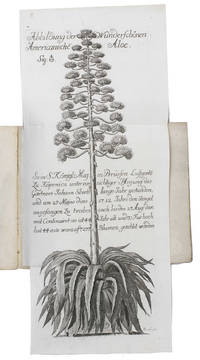
1727ABC_49435Nuremberg 1727. Oblong 4to ca. 16.7 x 21.2 cm. Bey Wolfg. Moritz Endters seel. Erben und Jul. Arn. Engelbrecht. Gedruckt bey Joh. Ernst Adelbulner Contemporary brown sprinkled paper wrappers. With a full-page engraved plate with 6 figures an additional engraved folding plate by Busch 2 decorated woodcut initials a woodcut headpiece and a woodcut tailpiece. 36 1 1 blank pp. First and only edition of a treatise on the American Aloe Agave Americana with a very rare additional plate not present in any other copies of the work. This plate drawn by Busch who we have not been able to identify shows the spectacular blooming American aloe from the gardens of Köpenick Palace which was the largest American aloe in any royal garden at the time. It caused a sensation when it finally bloomed in 1712 after 44 years; even Tsar Peter the Great paid a visit to admire it. The present plate is not only one of the few contemporary images of the so-called "wunderaloe" miracle aloe but also one of the very few illustrations of any part of the Köpenick Palace gardens of the time.The present work is a comprehensive study of the American aloe. It was written by the German physician and botanist Christoph Jacob Trew 1695-1769 after observing a blooming aloe in Nuremberg in 1726. His treatise offers explanations for the plant's unusual growth as well as descriptions of its medicinal use. It is partly based on his own observations but also compiles the findings of other studies on the plant. The work contains meteorological tables in which Trew attempts to forecast the natural conditions for growing ripe Aloe seeds and an engraved plate with detailed illustrations of the flowers and seeds. The present copy also includes the final leaf with a note to page 8 which is not mentioned in the reference works.Trew studied medicine at the University of Altdorf graduating in 1717. He wrote his dissertation under the supervision of the surgeon and botanist Lorenz Heister 1683-1758. He became a physician in Nuremberg and also supervised the Hortus Medicus the medical university garden. After thorougkly studying the plants with the help of students he published several richly illustrated botanical works including Hortus nitidissimis omnem per annuum superbiens floribus 1750-1786 Plantae selectae quarum imagines ad exemplaria Londini 1750-1773 and Plantae rariores quas maximam partem ipse in horte domestico colui 1763. He also had his own garden in which he was able to successfully cultivate many exotic plants including 32 species of aloe.The wrappers are scuffed the spine shows traces of use with two small tears that extend into the front and back wrapper. The work is slightly browned throughout with an additional plate not present in other copies. Otherwise in good condition.l Pritzel 9497 does not record the final leaf or additional plate; Stafleu & Cowan 15.129 does not record the final leaf or additional plate; VD18 11388935; WorldCat 889555595 311430074 24 copies of which none with the additional plate. unknown
1758016251Philadelphia: William Bradford 1758. First Edition. Hardcover. Title page with a few repaired tears hinged with following Preface page; two adjoining leaves pages 441-444 of text lacking and supplied with facsimiles. Contents Very Good binding about Fine. Folio 7-1/4" x 11-1/2" bound in contemporary calf leather with a decorative blindstamped border recently rebacked with a new gilt-lettered and decorated spine preserving original paste-downs and free endpapers; 4 763 pages. Title within rule border decorative woodcut head- and tail-pieces. An important compilation of the fundamental New Jersey charters and session laws of the proprietary period 1664 to 1702 up to Lord Cornbury's commission and instructions as Royal Governor when New Jersey became a crown colony under Queen Anne. Publication was ordered by the New Jersey Assembly in 1752 but two years were required to collect the documents to be included while the typesetting and printing took Bradford an additional three. By the date of publication some 170 copies had been subscribed. This title was the largest volume issued from Bradford's press and one of the largest from any eighteenth-century American press. Evans 8205; Sabin 39527. Early owner name on the title page and early twentieth century names on the front pastedown. <br/><br/> W[illiam] Bradford hardcover
178010913Leiden: for H. Mostert 1780. Contemporary Dutch red-dyed pigskin backed marbled paper boards rubbed front panel with paper loss UNCUT. Schultens' collection contained over twelve thousand titles and rivaled the University library in size. Three quarters of his books dealt with the Abrahamic religions systematic theology biblical commentary church history philology and ancient history including INCUNABLES ILLUMINATED VELLUM COPIES AND ONE HUNDRED ARABIC HEBREW PERSIAN AND TURKISH MANUSCRIPTS. Leiden University acquired eighty of the manuscripts its largest single manuscript purchase in more than a century.     THIS COPY IS PRICED THROUGHOUT by Leiden printer and bookseller Dirk II Haak 1754-18-- who signed the title. In good condition foxed two quires heavily last leaves dampstained in the lower margin.¶Vrolijk & Leeuwen Arabic Studies in the Netherlands 79-82; Blogie Répertoire des catalogues de ventes IV: 30; STCN 241214483. for H. Mostert unknown books
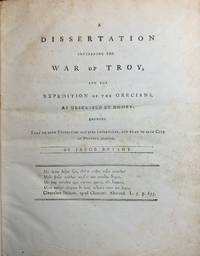
17967271<b>Jacob Bryant. <i>A Dissertation concerning the War of Troy and the Expedition of the Grecians as Described by Homer; Shewing that No Such Expedition was ever Undertaken and that No Such City of Phrygia Existed.</i> <br /></b><br />Illustrated with folding map. 4to. Late 18th or early 19th century half-calf over marbled boards leather label on spine. London N.D. 1796 per ESTC.<b> First Edition</b> of Bryant's controversial dissertation in which he ignited one of the longer scholarly controversies of the 18th century asserting that there never was a war at Troy.<br /><br /> Bound with: <br /><b><br />John Bacon Sawrey Morritt </b>'Troy Morritt'.<b><i> A Vindication of Homer and of the Ancient Poets and Historians Who Have Recorded the Siege and Fall of Troy. In Answer to Two Late Publications of Mr. Bryant. <br /></i></b><br />Illustrated with a folding map of the plain of Troy and 5 folding plates. York 1798. <b>First Edition </b>of Morritt's very critical and beautifully illustrated response to Bryant. The 5 folding pictorial views include the plain of troy; the tombs of Ajax; Achilles; Patroculus and Hector; and of Troy from the Scamander. <br /><br />Binding is scuffed and worn with the boards just holding by the cords; text is in very good condition with moderate toning; the plates and the maps being on finer paper are excellent examples. From the library at Ditton Park. Rare.
1716100847<p>Leiden Petrus van der Aa; Luchtmans & Haak 1716 - 1741. x 500pp; 60 unnumbered ff; titlepage of supplement; pages 501-534. 2 parts in one. Folio. Title in red and black with engraved vignette.With finely engraved frontispiece representing the library interior and heads of celebrated Dutch scholars full page plate of benefactors and plate of the Copernican Globe preserved in the library. Preface and index. Full contemporary mottled sheep rubbed corners lightly bumped head & foot of spine chipped lower back joint cracked. Red morocco title shield. The present catalogue was first published in 1716. When the supplement was completed in 1741 a newer and fuller titlepage was substituted in the copies then unsold but still dated 1716. The supplement has a separate titlepage: Supplementum Catalogus librorum tam impressum quam manuscriptum Bibliothecae publicae Universitatis Lugduno-Batavae. Leiden Samuel Lugtmans & Cornelius Haak 1741 but the pagination is continuous the supplement occupies pages 501-534. Incidentally there is a substantial unpaginated index placed between them of 60ff. The Catalogue of the University Library at Leyden has a certain air of modernity in its carefully listed holdings in theology jurisprudence medicine philosophy philology political economy history belles-lettres classics numismatics etc. A single chapter enumerates the celebrated collection of 1993 Oriental manuscripts in Persian Turkish Hebrew Armenian Coptic etc. Separate chapters list the special collections donated by Huygens Vossius Perizonius De Smet and others. Rare Brunet 31496 says that this is one of the most representative sources of Oriental manuscript holdings.</p>
1758801511758. LEAMING Aaron and SPICER Jacob. The Grants Concessions and Original Constitutions of the Province of New-Jersey: The Acts Passed During the Proprietary Governments and Other Material Transactions before the Surrender thereof to Queen Anne the Instrument of Surrender and Her Formal Acceptance thereof Lord Cornbury's Commission and Instructions Consequent Thereon. Collected by Some Gentlemen Employed by the General Assembly and Afterwards Published by Virtue of an Act of the Legislature of the Said Province with Proper Tables Alphabetically Digested Containing the Principal Matters in the Book. Phila.: Printed by W. Bradford 1758. 4763pp. Folio. Period-style 3/4 calf and marbled boards gilt-ruled raised spine bands red morocco spine label. Internally clean a very good copy. Evans 8205. Hildeburn A Century of Printing 1596. The Charlemagne Tower Collection of American Colonial Laws 561. Sabin 39527. Benedict Acts and Laws of the Thirteen Original Colonies and States 270. Felcone New Jersey Books 156. An important volume of colonial American laws the third and scarcest official compilation fundamental laws constitutions and documents for New Jersey covering from 1663-64 to 1702 with the session laws from 1668 to 1701. "Prior to the middle of the 18th century all of New Jersey's fundamental documents remained in manuscript form only" -- Felcone. "This handsome volume generally known as Leaming and Spicer's Laws was prepared under the authority of an act of Assembly passed in 1752 and is the largest work issued from the press of Wm. Bradford."--The Charlemagne Tower Collection. Subscribers were solicited beginning in February 1755; the compilers chiefly by Samuel Nevill and Samuel Smith spent almost two years preparing the text. The printing under the supervision of Leaming and Spicer took three more years until it was ready for delivery in May 1758. The subscribers had taken 170 copies and the editors say in the Pennsylvania Journal 11 May 1758 "a number of copies yet remain not subscribed for" and "any person may be supplied" until "the 17th of July next after which we will not further extend the sale." See Felcone for a detailed ten-page study of this highly important colonial New Jersey book. unknown
175751848Amsterdam Petrus Schenk 1757-74. Large folio. 55 x 345 cm. A large uncut copy in contemp. marbled boards spine gone and later backed with buckram original corners in leather a bit bumped. Stamps on foot of first title-page. Halftitel title-pages in red/black with engraved vignettes. 22 engraved leafs with dedications 14;28 pp. and 25 24 large double-page or triple-page folded engraved plates 6 additional plates only sometimes present. With a total of 55 plates. On thick heavy paper wide-margined and internally fine and clean. <br/><br/><em>Second edition. "Tileman van der Horst and Jan Schenk produced the Theatrum Machinarium Univesale one of the most celebrated works on the construction of all those elements so necessary to keeping life dry in Amsterdam the place of the book’s publication. It was perhaps the most important work then produced on dikes sluices dams weirs canals and swing-bridges the very elements of existence in Holland. Jan Schenck was the engraver of this work which may also be the most accurate and the most sumptuously illustrated book of its type in Holland in the 18th century - the technical aspects of the rendering was just superb." - Brunet V1082 - Graesse VII 258. </em> hardcover
175751848Amsterdam, Petrus Schenk, 1757-74. Large folio. (55 x 34,5 cm.). A large uncut copy in contemp. marbled boards, spine gone and later backed with buckram, original corners in leather a bit bumped. Stamps on foot of first title-page. Halftitel, title-pages in red/black with engraved vignettes. (2),2 engraved leafs with dedications, 14"(2),8 pp. and 25 + 24 large double-page or triple-page folded engraved plates + 6 additional plates (only sometimes present). With a total of 55 plates. On thick, heavy paper, wide-margined and internally fine and clean.
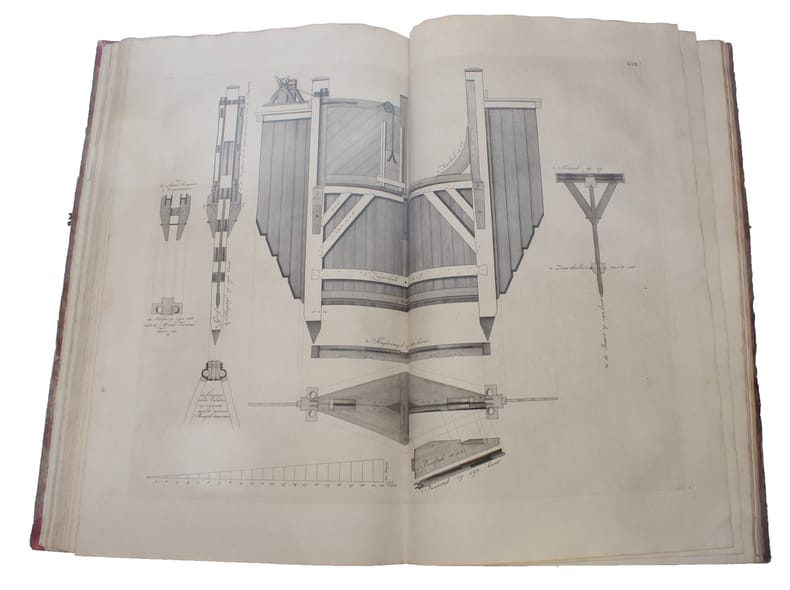
1757A2DFNA01U79OAmsterdam: Petrus Schenk II & son vol. II: Petrus Schenk III 1757. Red half sheepskin blue-grey paper sides ca. 1800. Imperial folio 50 x 34 cm. With 2 title pages in red and black each with the same engraved allegorical device a double-page engraved dedication plate with 2 large cartouches showing the arms of the Beemster polder and of the 9 members of its water authority and 41 double-page and 7 larger folding engraved illustration plates the folding plates numbered as 2 to give plates I-XXV vol. I I-XXIV and I-VI vol. II. Further with 1 woodcut tailpiece and bands of cast fleurons. Second edition of both volumes of a remarkably detailed set of scale construction drawings plans sections elevations perspective views etc. including many detail drawings of individual parts of 18th-century Dutch waterworks with the accompanying letterpress descriptions and notes. It includes locks sluices bridges pumps pile drivers an ice-breaker an elaborate water-bailing mill and more. Most of the plates measure about 45 x 54 cm with the folding ones about 52 x 76 cm. At least most of the plates depict existing works and the text occasionally gives some historical information. The drawings are so detailed and give such a clear picture of how the mechanisms functioned that one could use them to reconstruct the works shown.A fine copy nearly untrimmed with only some false folds in the half-title and an occasional minor defect in the paper. Plate 23 in volume 1 has no number but it may have been trimmed off at the head. The inside front hinge has partly separated from the book-block but the binding is otherwise good. A fine copy of a magnificent display of Dutch hydraulic engineering.l Bierens de Haan 3818.5 & 4839.5 vol. II only with later ed. of vol. I; STCN 2 & 4 copies of the 2 volumes; not in Berlin Kat.; Roberts & Trent Bibl. Mechanica. Petrus Schenk [II] & son (vol. II: Petrus Schenk [III]), unknown
17740000222Leipzig: Bernhard Christoph Breitkopfs und Sohn 1774. Second edition. Contemporary calf. Very Good. 2nd edition. Folio Contemporary full calf with some ware and loss to ends of spine . Collation: 12 1-184 4p. with 51 copper-engraved plates. Internally this is a clean and bright copy with only minor spotting. <br/><br/>Leupold unlike his contemporary Newton was a designerand builder of instruments. In this work Leupold provides information and illustration of numerous devices that he built that were useful in handling water. This is a posthumous reprinting of his earlier edition in 1724which was the 2nd volume of his larger work Theatrum machinarum. Bernhard Christoph Breitkopfs und Sohn unknown books
1756elala1110Paris: l'Imprimerie Royale 1756. 1756. 12mo. pp. viii 275. full modern mottled calf a few scattered stains. First Duodecimo Edition. Published the same year as the first edition in quarto. This is the French reply to an English memorial addressed to the courts of Europe stating their position on the war on the Ohio justifying their actions and setting forth their claims to the region west of the Alleghenies. Accusing the English of unprovoked aggression and foul play the French sought to demonstrate that it was Washington's 'assassination' of Jumonville in the Fort Necessity campaign among other offensive actions which had sparked the war. Most of the text is composed of 'pièces justificatives' comprising documents and letters written between 1749 and 1755 by La Jonquière Governor of New France Albemarle Rouillé General Braddock Contrecoeur Villiers Sir William Johnson George Washington and Robert Stobo an engineer with Washington who had planned Fort Necessity. Among the more important papers are translations of the instructions given to Braddock by the British Crown letters to and from Braddock and Sir William Johnson and various officials two of Johnson's 'harangues' to the Indians and the first printing although in French translation of extracts from the journal kept by George Washington in the 1754 expedition to fortify the forks of the Ohio that ended with the British surrender to the French at Fort Necessity in July 1754 pp. 109-146. This is quite distinct from Washington's first journal of his mission for Governor Dinwiddie late in 1753 printed at Williamsburg in 1754. Most of these British papers were seized by the French following the capitulation at Fort Necessity. An early work on the French and Indian War described by Lawrence Wroth in his John Carter Brown Library report for 1945-46' as "one of the most important documents in American colonial history." Dionne II 548. JCB I 1123. Lande 657. Sabin 47511. TPL 250. Vlach 549. cfHowes M-787 different pag. cfGagnon II 1369 & cfStreeter II 1013 first in 4to. Wroth American Bookshelf p. 22. 1st Edition. Soft cover. Paris: l'Imprimerie Royale, 1756. Paperback
17124343Rome: Francesco Gonzaga 1712. Extremely rare first edition of this luxuriously illustrated anthology of extracts from papal sermons delivered between 1703-09 in Latin prose and facing Italian verse: an unusual example of Baroque ecclesiastical culture from the pontificate of Clement XI. On the basis of extreme rarity and contents the volume numbers among those commemorative and honorific volumes which were never sold in the trade but offered as a ceremonial gift to cardinals ambassadors and other important personagescorroborated by the ownership inscription in the present volume by a monsignor during Clements papacy. The volume is singular in our experience for its contents. Latin extracts of Clements sermons generally rather brief are printed on the left side of the page then freely and somewhat copiously versified in Italian by the poet Guidi. The sparsity of the elegantly printed text leaves positively wasteful margins! Each sermon is preceded by a full-page engraving on the subject of the sermon the Holy Family adoring the Christ Child for Christmas the Resurrection for Easter etc. designed by Pietro Leone Ghezzi one of the principal artists in Clements retinue and engraved by Roman engravers generally also associated with Clementine projects Frey van Westerhout etc. The designs were made expressly for the present volume and are echoed as it were in a series of initials and vignettes devoted to the same theme; as such they must have been engraved for the present volume and not simply taken from the printers stock. If somewhat overshadowed by Maratti in his lifetime and by his epoch-making role as the first professional caricaturist Ghezzi 1674-1755 was nonetheless an important painter of religious subjects who worked on Albanis most prestigious public projects. The surfaces of Ghezzis paintings were considerably less finished than those of Maratti and he seems more receptive to Venetian color and unfinishednessthus showing a different aspect of Albani taste. Ghezzi was commissioned in 1712 the year this book was published to paint The Election of St. Fabian for the Albani Chapel in S. Sebastiano fuori le Mura. Within the next decade he helped paint the frescos the ancient basilica of S. Clemente and the nave decoration of St. John Lateran. His portraits including one of Clement XI are unusually informal and realistic possibly due to Ghezzis experience at caricature. Alessandro Guidi 1650-1712 who translated the sermons was a prolific Arcadian poet. OCLC records a single copy Berkeley and we locate no additional American copies. Large 4to. 28 x 20.5 cm engraved portrait of Clement XI xvi pp. full-page engraving 213 pp. including 5 full-page engravings paginated with text. 18th-c. vellum over boards spine with 5 raised bands and red morocco label gilt-stamped; covers with large blind-tooled central ornament blind-tooled filets and ornaments. Short tears at head and foot of spine and a few nicks there. Early inscription on front pastedown mentions Monsignor Bianchini Prelato Domestico e Camerario segreto di S. Santita Papa Clem. XI. Mild finger-soiling in margins of title and a little foxing on some text leaves but overall a very fine attractive copy. Francesco Gonzaga hardcover