1 395 résultats
183676290viii 247 pages Published by R. Needham hardcover
1862161711Elberfeld : R. L. Friderichs 1862. First Edition. Hardcover. Minor generalized wear to extremities of covers with insignificant dust-dulling. Internally altogether clean and quite sound. A very good copy; 8vo 8"" - 9"" tall; 467 pages; Physical desc. : iv 467 p ; 23 cm. Subject: Bible. O. T. --Subject: Testament Old --Theology - Miscellaneous Elberfeld : R. L. Friderichs hardcover

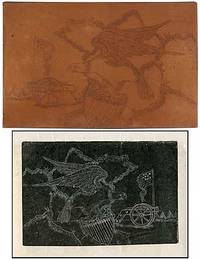
18653407161865. Unbound. Engraved copper plate. Measuring 2.25" x 3.25". The plate was stored with two proofs of the engraving made photographically that were folded around the plate. Very good or better bright copper with no discernible wear to the engraved lines. Depicts a bald eagle carrying a shield in its talons in flight with a continental land mass in the background and facing a fortified Civil War camp with an American flag and cannon in the foreground. "Engraving by Jacob Stadelman done about 1865" in pencil on the back of the proofs. Jacob Stadelman was a captain in the First Regiment Pennsylvania Reserve Cavalry from August 8 1861 to March 26 1862. Unique. unknown
1806BOOKS313528FR/NO DUSTJACKET. 1806. Journal. Items that were transacted include whiskey corn wheat working shoeing lending wagon apples wood salt tea sleigh to Cooper town wagon to Albany etc. Names found in history of the area and in ledger. David and Anna Cunningham Sprague; Jacob Duel . Folio 100 pp. No covers some torn pages stains. . unknown
18266455Nijmegen: the widow of J.C. Vieweg and son 1826. Modern quarter sheepskin with a morocco title and author label on the spine lettered in gold the year of publication lettered in gold below marbled paper sides blue sprinkled edges. 8vo. With 4 letterpress folding tables and numerous illustrations and figures on 16 folding plates lithographed by Guillaume Philidor van den Burggraaf Brussels. First edition of a rare Dutch technical handbook on clockmaking which was considered an important manual for the technical training of clockmakers at the time. It aimed to foster a more intuitive understanding of the concepts instead of explaining rules that students would learn at school. The work is divided into four parts: the first part treating basic mechanics the second the calculation and design of clockworks the third clock music and the fourth sundials. The whole is preceded by an introduction on the history of the profession. The work is illustrated with several technical plates and figures offering a visual explanation of the concepts described.Jacob Levi Smit ca. 1766-1826 was a master clock- and watchmaker from Groningen with more than forty years of experience. He was born in Friesland and likely learnt the profession in Leeuwarden where he worked for several years. A number of his clocks have survived. The present work is his only written publication and was intended for the students of the clockmakers school. The publishers preface tell us that Smit passed away on 1 November just as the main part of the text was being printed. A second edition appeared in 1836 and a third in 2011.With the owners stamp of M. Passenier Domburg on the half title. The spine is slightly rubbed. Several faint water stains in the margins of the plates occasional very minor foxing. Otherwise in very good condition.l NCC 63936431 8 copies; Saalmink p. 1788; Tardy Bibliogr. mesure du temps p. 233; not in Bibl. Horlogère de Monsieur R.P.; WorldCat. the widow of J.C. Vieweg and son, unknown
183720027Amsterdam: Snelpersdruk I. Vita Israel firma J. B. de Mesquita 1837. Third edition. Hardcover. g. 8vo. XI 672 LXVI pp. Brown cloth with leather spine. Raised bands on spine. Lovely decorative front endpapers. Important work on Jewish history by the pioneers of the critical study of religion. In German. Scuffing and age wear to spine. Age wear to boards. Sporadic foxing throughout. Otherwise book is in good condition. Snelpersdruk I. Vita Israel firma J. B. de Mesquita hardcover
189934573Warsaw: Meir Jehiel Halter 1899. Second edition. 8vo. 88pp. Blue half-cloth over black pebbled cloth. A Zionist tract by one of the founders of the religious Zionist movement. This work was first published in 1891 and is a collection of pro-Zionist statements by rabbis. This Text in Hebrew. Corners worn. Head and tail of spine bumped. Some age toning and rippling to leaves. Overall in good condition. Meir Jehiel Halter unknown
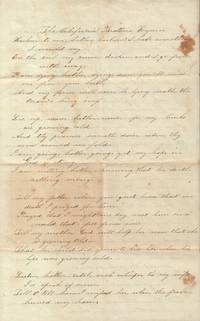
1861022383Good. 1861. Ephemera. A historic hymn that was written to Joseph Slichter a private in the Civil War from his brother Jacob Slichter of Hummelstown PA. Dated December 30th 1861. Manuscript letter is written in a clear hand. Letter has moderate toning foxing and soiling; previous owner has written "old letters" in blue ink. The letter was "coppiedsic by Edwin Bower Hummelstown Dec. 30th 1861 by request of Jacob Slichter to his brother Joseph Slichter in the army 3d Reg. Co. D. P. R.V.C. under Captain Briner in Gen McClellan Division." We do not know who first authored this hymn but we found other versions of it with stanzas in differing order but all with the same tone. The hymn is a sad one written from the perspective of a man telling his brother that he is dying: "Harken to me brother harken! I hark something I would say/Ere the veil my vision darken and I go from earth away;/I am dying brother dying; soon you'll miss me from your berth/And my form will soon be lying neath the ocean's briny surf " We found that a Jacob Slichter was aHummelstown PA Methodist minister in 1861. We hope that he was not dying when this hymn was sent to his brother but if he was it was done in a beautiful way. Joseph Slichter enlisted in Co. "D" of the 3rd Pennsylvania Reserves 32nd Infantry and mustered out on 6/17/1864 at Philadelphia PA. The 3rd Pennsylvania Reserves fought at Turner's Gap in the Battle of South Mountain and at the Battle of Antietam. ; 7 1/2" x 12"; 3 pp . unknown
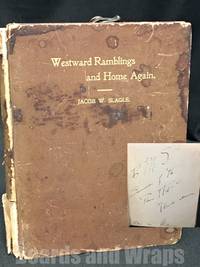
189686163Baltimore: Educator of Morgan College Print. Good with no dust jacket. 1896. First Edition. Hardcover. No date c. 1896 per ink inscription on the front endpaper with "From the author" although his signature is not readily seen. Brown textured cloth stamped in gilt floral endpapers. Travelogue. Front and rear endpapers excised heavy rubbing toning foxing small stains loss to spine no loose pages. Scarce. ; 12mo 7" - 7½" tall . Educator of Morgan College Print hardcover
1835270251835. Zweite umgearbeitete Auflage. - Berlin Friedrich August Herbig 1835 IV II IV 393 pp. 2 Bl. 88 statt 91 Kupfertafeln 2 Leinenbände der Zeit; ohne Tafel 28-30 etwas fleckig. Klassisches Wekr der Geburtshilfe nach dem Kupferstichwerk von Maygier "Nouvelle démonstrations de l'acouchement' 1822 hrsg. die deutsche Erstausgabe war 1828 mit 68 Tafeln erschienen. Eduard Caspar Jacob von Wiebold 1801-1861 Mitglied der bekannten Würzburger Ärztefamilie und berühmter Professor der Geburtshilfe in Marburg. Neben den Abbildungen aus der praktischen Geburtshilfe enthält sind noch ca. 190 Instrumente abgebildet. unknown
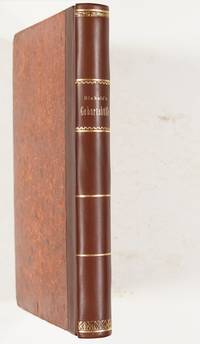
1862226781862. Braunschweig Druck und Verlag von Friedrich Vieweg und Sohn 1862 8° XIV. 214 pp. Leinenband der Zeit; frisches Exemplar. Erste Ausgabe. Eduard Casper Jacob von Siebold 1801-1861 Mitglied der bekannten Würzburger Ärztefamilie und berühmter Prof. der Geburtshilfe in Marburg und Göttingen. Das vorliegende Werk ist eine Autobiographie des großen Arztes "sein Schwangengesang". Hirsch .alle seine Erlebnisse und zugleich seine Ansichten über die Ausbildung des Arztes speziell des Geburtshelfers und Gynäkolgen niederlegte . sie sind noch so geistig frisch und anregend und von so humanen Anschauungen durchweht daß ihre Lektüre . jungen Medizinern nicht genug empfohlen werden kann." -ADB Siebold was professor of medicine and midwifery at Marburg and Göttingen. - Waller 8920. unknown
1841274461841. Berlin Verlag von Th. Chr. Fr. Enslin 1841 8° XVI 675 1 pp. Pappband der Zeit. Erste Auflage! Eduard Kaspar Jakob Siebold 1801-1861 "nimmt in der Geschichte der Geburtshilfe eine ganz eigentümliche Stellung ein. Ein Kind der naturphilosophischen Medicin die bis über das 3. Decennium unseres Jahrhunderts hinaus herschte passte er mit seinen Anschaunungen in die spätere Zeit den Beginn der naturwissenschaftlichen Medicin nicht mehr hinein. Er vermochte den in ihrem Entwicklungsgange ihm fremden neuen Fortschritten der Medicin nicht zu folgen und sich ihnen zu assimiliren. Sie standen ihm fern. Aufgewachsen in einer Zeit in der die Geburtshilfe noch fast getrennt von der Gesammtmedicin bearbeitet wurde konnte er sich in die neuere Anatomie und Physiologie nicht einleben. Das Gleiche galt auch von der am Ende des 4. und am Anfange des 5. Decenniums unseres Jahrhunderts sich entwickelnden modernen Gynäkologie. Andererseits aber besass er eine allgemein classische Bildung die theilweise an den Polyhistorismus des 18. Jahrhunderts erinnernd ihn weit über seine Zeitgenosssen stellte ." -cf. Kleinwächter Hirsch V. 392f. unknown
1854605641854. Zweite verm. u. verb. Aufl. - Braunschweig Druck und Verlag von Fr. Vieweg und Sohn 1854 8° X 386 pp. 108 in den Text eingedruckten Holzschnitten grösstenteils nach Originalzeichnungen Halbledereinband; Rücken erneuert St.a.Tit. Eduard Kaspar Jakob Siebold 1801-1861 "nimmt in der Geschichte der Geburtshilfe eine ganz eigentümliche Stellung ein. Ein Kind der naturphilosophischen Medicin die bis über das 3. Decennium unseres Jahrhunderts hinaus herschte passte er mit seinen Anschaunungen in die spätere Zeit den Beginn der naturwissenschaftlichen Medicin nicht mehr hinein. Er vermochte den in ihrem Entwicklungsgange ihm fremden neuen Fortschritten der Medicin nicht zu folgen und sich ihnen zu assimiliren. Sie standen ihm fern. Aufgewachsen in einer Zeit in der die Geburtshilfe noch fast getrennt von der Gesammtmedicin bearbeitet wurde konnte er sich in die neuere Anatomie und Physiologie nicht einleben. Das Gleiche galt auch von der am Ende des 4. und am Anfange des 5. Decenniums unseres Jahrhunderts sich entwickelnden modernen Gynäkologie. Andererseits aber besass er eine allgemein classische Bildung die theilweise an den Polyhistorismus des 18. Jahrhunderts erinnernd ihn weit über seine Zeitgenosssen stellte ." -cf. Kleinwächter Hirsch V. 392f. unknown
1847658241847. Berlin: Verlag von Theod. Chr. Fr. Enslin 1847 8° XII 510 2 pp. grüner Haalblederband mit Bünden und Rückenvergoldung d.Zt.; zarter St.a.Tit.; minimal fleckig. Erste Auflage! "Vorliegendes Lehrbuch der gerichtlichen Medicin hat der Verfasser zunächst für seine Zuhörer bestimmt welche sich seit einer Reihe von Jahren in jedem Semester aus beiden Facultäten der medicinischen und juristischen um ihn versammeln um die Grundsätze der Medicina forensis vortragen zu hören." "Die Beurtheilung der im Leben noch aufgetretenen Erscheinungen welche auf Vergiftung schließen lassen die Würdigung der an der Leiche vorgefundenen Veränderungen welche möglicher Weise von einem Gifte herrühren können so wie die gehörige Behandlung der Organe und Stoffe welche das Gift enthalten können behufs der Uebergabe an den Chemiker zu weiterer Untersuchung gehören allerdings der Sphäre des gerichtlichen Arztes an: diese sind daher im Lehrbuche erörtert. Dagegen ist von dem eigentlichen chemischen Verfahren hinsichtlich der Ausmittelung des Giftes selbst nur das Allgemeine und von dem Speciellen blos die Arsenik-Vergiftung als die am häufigsten vorkommende aufgenommen und zwar auch nur aus dem Grunde um dem gerichtlichen Arzte und Rechtsgelehrten ein Bild zu geben von Dem was die Chemie bei der gerichtlich-chemischen Untersuchung zu leisten hat. Ist diese vollendet und ihr Resultat dem Arzte übergeben dann tritt erst dieser wieder in seine Rechte ein und giebt sein medicinisches Gutachten auf die Ergebnisse des chemischen Befundes basirt den Gerichten ab. Daß aber die Bearbeitung des chemischen Theils insofern ein solcher nach den eben entwickelten Ansichten in dem Lehrbucbe mit aufgenommen worden von dem lieben Freunde und Collegen des Verfassers Friedr. Wöhler gütigst übernommen worden erkennt nicht allein der Verfasser höchst dankbar an sondern werden mit ihm auch alle Leser dem ausgezeichneten Chemiker Dank wissen. Seiner Feder sind die §§. 517 - 534 entflossen." Vorwort Eduard Caspar Kaspar Jakob von Siebold auch Eduard von Siebold 1801-1861 Professor der Gynäkologie. Er wirkte an den Universitäten Berlin Marburg und Göttingen. unknown
1841002347Berlin: Verlag Von Th. Chr. Fr. Enslin 1841. In German. Sponge-patterned black paper covered boards with paper spine label all edges tinted red xvi 675 1p. Boards worn and scuffed lightly chipped at spine ends label no longer readable good hinges sound binding clean pages free from chips tears or foxing. Name and date on front free endpaper no other markings. Endpapers have light soil. Internally near fine. Hard Cover. Good. 8vo - over 7¾" - 9¾" tall. Verlag Von Th. Chr. Fr. Enslin Hardcover
1839682881839-1845. Berlin Verlag von Theod. Chr. Friedr. Enslin 1839-1845 8° XVI 308; XVIII 802 pp. 2 Kartoneinbände; Rücken erneuert; teilweise gebräunt. unknown
1884118755Aachen: Selbstvlg. d. Verf. 1884. 198 S.,1 dopplbl. Taf. HLn.d.Zt.
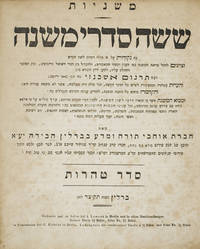
183419636Berlin: I. Lewent 1834. Hardcover. g. Six octavo volumes bound in three quarter leather over paper covered boards. Each volume has ties on fore edge of front and rear boards. Vol. 1: "Seder Zeraim" 196 pp. Vol. 2: "Seder Moed" 232 pp. Vol. 3: "Seder Nashim" 212 pp. Vol. 4: "Seder Nezikin" 268 pp. Vol. 5: "Seder Kodshim" 264 pp. Vol. 6: "Seder Tehorot" 212 pp. Book has the original Hebrew of the Mishnah and the translation into Judeo-German in double columns atop the commentary "Melo Kaf Nahat" which is in Hebrew Rashi Script. The author of the commentary was a renowned talmudic scholar and author who lived in the first half of the eighteenth century. This groundbreaking commentary was considered a “funnel of sorts†for previous rabbinic and Medieval commentaries on the Mishnah for it collected explanations from Rashi Maimonides Bertinoro and Tosafot Yom-Tov. It also drew heavily upon Isaac ibn Gabbai's commentary. This work was originally in Amsterdam in the year of 1732. This is the later reprint from Berlin printed between the years 1832-1834. Age wear and scuffing to leather some Hebrew script handwriting on front endpapers but books are in overall good condition. I. Lewent hardcover
18592310187Boston: John P. Jewett and Company 1859. First Edition. Hard Cover. Good/No Jacket. 0x0x0. First edition Sabin 80503. Corners rubbed with a few tape repairs to spine library bookplate and stamp on front endpapers a few pages lightly foxed. 1859 Hard Cover. vii 1 280 pp. 8vo. Two-column format. Engraved illustration of Cleveland Ohio jail where the prisoners were confined on title page. An account of escape recapture and rescue of a 'fugitive slave' and subsequent indictment of the rescuers. From Sabin: "An extraordinary case under the Fugitive Slave Act. Wellington is located thirty-six miles southwest of Cleveland; Oberlin is nine miles north of Wellington. In January 1856 a negro slave called John was missing from a plantation in Mason county Kentucky. In August 1856 a friend of the owner recognized John at Oberlin and with the aid of friends from Kentucky arrested him with the intention of taking him back. They took him to Wellington where he was rescued by a large body of persons from Oberlin and Wellington---hence the title. Thirty-seven of the rescuers were indicted by the State and confined for many months in the Cleveland jail while the trial progressed. They were finally acquitted and great was the rejoicing. The account of the affair is contained in 280 double column solidly printed pages."---THOMSON'S Bibliography of Ohio. John P. Jewett and Company hardcover
1859508400Boston: Published by John P. Jewett and Company; Cleveland Ohio: Henry P. Jewett; New York: Sheldon and Company 1859. Hardcover. Very Good. First edition. Compiled by Jacob R. Shipherd. With an Introduction by Prof. Henry E. Peck and Hon. Ralph Plumb. Large octavo. 280pp. Binding dull and moderately worn with bit of fraying at extremities of spine text has some light browning and foxing else a very good copy. A transcription of a court case testing the Fugitive Slave Act involving a slave that had escaped from Kentucky to the Oberlin area of Ohio and the attempts by the slaveholder to recapture his slave John. Howes 5419. Sheldon and Company hardcover
1859507399Boston: Published by John P. Jewett and Company 1859. Hardcover. Fair. First edition Compiled by Jacob R. Shipherd. With an Introduction by Prof. Henry E. Peck and Hon. Ralph Plumb. Large octavo. 280pp. Cloth. Contemporary stamp of Paynesville Ohio bookseller C. S. Bartlett. Binding quite worn at extremities spine and endpapers crudely repaired text has some early dampstaining and foxing with owner's early pencil notes and scoring to endpapers and text; just a good copy. A transcription of a court case testing the Fugitive Slave Act involving a slave that had escaped from Kentucky to the Oberlin area of Ohio and the attempts by the slaveholder to recapture his slave.Howes 5419. Published by John P. Jewett and Company hardcover
185943720Boston: John P. Jewett and Company 1859. Hardcover. Small 4to. Original blind-ruled grown cloth with gilt spine lettering. viii 280pp. Good plus overall. While inner hinges and text block are a solid very good clean and nice the binding is quite rough and edgeworn especially along length of spine which is chipped along the top and rear board cloth mottled. A tight and decent first edition of this court case transcript introduced by Henry E. Peck and Ralph Plumb -- a famed test of the Fugitive Slave Law involving an escaped slave from Kentucky and the owner's attempt to reclaim him in Ohio. HOWES S 419. John P. Jewett and Company hardcover