Descendants of John Jacob LinkBiblio.com

53 307 résultats
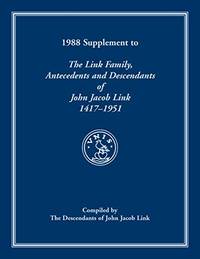
ria9780788418174_inpPaperback. New. New Book; Fast Shipping from UK; Not signed; Not First Edition; Contains a history of John Jacob Link and his family their immigration to America in 1733 their antecedents in Germany and all known American descendants. This supplemental volume extends the family data through 11 generations and p paperback
B9780788418174Paperback / softback. New. paperback
0788418173.Gpaperback. Good. Access codes and supplements are not guaranteed with used items. May be an ex-library book. paperback
Q-0788418173Heritage Books. Paperback. New. New. In shrink wrap. Looks like an interesting title! Heritage Books paperback
SONG0788418173Heritage Books 2019-06-13. paperback. Used: Good. 8.50x0.90x11.00. Buy with confidence. Excellent Customer Service & Return policy. Heritage Books paperback
DADAX0788418173Heritage Books 2019-06-13. paperback. New. 8.50x0.90x11.00. Buy with confidence. Excellent Customer Service & Return policy. Heritage Books paperback
9518plon nourrit & Cie collect roseau dor 1925
GOR014876024Paperback. Acceptable. paperback
GOR002560985Paperback. Very Good. paperback
1992S41982Hildesheim Zürich und New York: Olms-Weidmann 1992. hardcover. gebraucht sehr gut Gebundene Ausgabe SEHR GUTES EXEMPLAR. Für Ihre Zufriedenheit versenden wir mit DHL und ausschließlich mit Trackingcode für eine sichere Sendungsverfolgung! Weitere Angebote unter antiquariat-kastanienhof Hildesheim, Zürich und New York: Olms-Weidmann hardcover
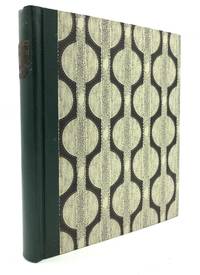
1738H21444Amsterdam: Martin Schagen 1738. Hardcover. Good. Small quarto 10 x 7.5 inches bound in modern patterned paper-covered boards green cloth spine preserving the remains of the original 18th century spine label contents very good light tanning and occasional light wear and some gentle diagonal creases to upper corner of first third of book; preliminary pages have faint tidemark from old dampstain to fore-edge margin. 2 copperplate title-pages engraved portrait engraved frontispiece 88 plates. Later enlarged edition first published in Antwerp in 1615 and 1627 and later in Berlin in 1705 and including 12 equestrian portraits of the Caesars engraved by C. de passe after Johannes Stradanus. The remaining 76 copper-engraved plates depict a total of 912 coin impressions. The binding is nice enough but clearly the work of an amateur. Martin Schagen hardcover
197026646California Federation Republican Women 1970 2 Religious PROGRAM 1 with small light stain Cvr both have Blue & White Drawing White House on front. 6 1/2 X 9 in. VG Nice Condition Light Wear Stamp excellent condition 17th Annual Republcan Womens Conference PROGRAMhas B/W photo of 4 in Nixon Family & has foxing edge of program forward together Banquet Honor of Mrs. Richard Nixon Miss Patricia Nixon & Mrs. David Eisenhower April 16th. Sheraton Hall Washington Prayer By Reverend Dr. Norman Vincent Peale. 1st Edition. Printer Wrapper. California Federation Republican Women paperback
2023BN125276Skandalon Uitgeverij B.V. 2023. 2023. Hardcover. 2-pak Talmoed Sanhedrien I II hfst 1-6 <br/><br/>2-pak Talmoed Sanhedrien I II hfst 1-6 de Leeuwe Jacob Skandalon Uitgeverij B.V. hardcover
19853227Kassel, Weber & Weidemeyer 1985. EA. 631, 343, 156 Seiten = 1130 S. 26x21 cm , mit zahlreichen s/w und farbigen Abbildungen 4° Broschiert, im Schuber, Exemplar in gutem Erhaltungszustand, Exemplare in gutem Erhaltungszustand
1968387331968. <p>Jacob Francois 1920- ; Monod Jacques 1910-75; Lwoff Andre 1902-94; & Brenner Sydney 1927- . Group of 22 offprints mimeographs etc. on molecular biology and bacterial genetics together with 2 related papers by other authors. Various sizes. 1947-1968. Together in one volume cloth "Institut Pasteur" in gilt on the spine. Overall good to very good; see detailed condition descriptions below. From the library of G. G. and Elinor Meynell authors of Theory and Practice in Experimental Biology 1970 with their address label on the front endpaper and ownership signatures on several of the offprints.</p> <p>First / First Separate Editions. Jacob Monod and Lwoff all colleagues at the Institut Pasteur received the 1965 Nobel Prize in physiology / medicine for their discoveries concerning genetic control of enzyme and virus synthesis-discoveries that "opened up a new field of research that deserved to be called 'molecular biology'" Magill The Nobel Prize Winners: Physiology or Medicine II p. 921. Their work answered the fundamental question of how the hereditary information contained in DNA can be translated into the chemical processes that synthesize cellular proteins this question had been posed most succinctly and explicitly in Francis Crick's theoretical paper "On protein synthesis" 1957 which laid the groundwork for over a decade's worth of research in this area. Brenner another key figure in this field worked with Jacob and Matthew Meselson on providing experimental evidence for messenger RNA; he was awarded a share of the 2002 Nobel Prize for his discoveries concerning genetic regulation of organ development and programmed cell death.</p> <p>The collection we are offering here focuses largely on the Nobel Prize-winning work done by the Institut Pasteur group-Lwoff Jacob and Monod-in the 1950s and 1960s. The work can be divided into four sections: </p> <p>1 lysogeny and bacterial conjugation</p> <p> 2 expression of the genetic material via messenger RNA</p> <p> 3 the regulation of the genetic activity of bacterial cells by operons</p> <p>4 the organization of bacterial genetic material.</p> <p> In the following paragraphs we will attempt to highlight the more important papers in this remarkable collection; however all the papers here touch upon these central questions of molecular biology.</p> <p>Lysogeny defined as the hereditary ability to produce the bacteriophage virus is a peculiar type of infection in which the phage becomes part of the genetic material of a bacterial cell; in this non-infective form prophage it can then be inherited by succeeding generations of cells becoming virulent only when some environmental stimulus causes the bacterium to produce and release phage.</p> <p> "Lysogeny brought a model for the interrelation between a virus and a cell. And also a model for the possible mode of action of carcinogenic agents which could disturb something in this balance" Judson p. 368. Lwoff studied this phenomenon intensively in the late 1940s and early 1950s successfully demonstrating the genetic nature of lysogeny which was disputed by several scientists including Delbruck and discovering how it is induced. In 1953 he published an important review of the subject "Lysogeny" Bacteriological Review 17; see no. 2 below. Lysogeny was also studied by Jacob and Elie Wollman whose paper "Induction of phage development in lysogenic bacteria" CSH Symposia on Quant. Biol. 18 1953; see no. 5 below summarizes what had been learned about lysogeny as of that date.</p> <p>Lwoff's work on lysogeny inspired Jacob and Wollman to investigate the phenomenon of bacterial conjugation the transfer of genetic information from a male donor bacterium to a female recipient resulting in genetic recombination to see if they could discover where in the bacterium's genetic material the prophage was located. In 1955 working with a highly recombinant strain of E. coli K12 discovered by William Hayes Jacob and Wollman performed what came to be known as their "coitus interruptus" experiment in which they used a Waring blender to interrupt the mating bacteria at various stages of their conjugation. They found that the donor cell's genetic characteristics were not transferred all at once but rather sequentially over time-a discovery of great importance. </p> <p>"Wollman and Jacob had stumbled upon a way to measure off the genes on the bacterial chromosome as directly and physically as a child squeezes toothpaste onto a brush or a carpenter unrolls a coiled steel tape measure. As they saw instantly and reported in a note in mid-June 1955 in the weekly Comptes rendus of the Academie des Sciences "Sur le mecanisme du transfert de materiel genetique au cours de la recombinaison chez E. coli K12"; see no. 6 below they had the means to make a genetic map of biochemical characteristics expressed in units of time" Judson p. 385.</p> <p> In 1956 Wollman and Jacob published the first albeit rudimentary timed map of the K12 strain of E. coli in a paper published in France. This map was printed again in their English-language paper "Conjugation and genetic recombination in E. coli K-12" CSH Symposia on Quant. Biol. 21 1956; see no. 8 below which also contained the first publication of Thomas Anderson's famous electron micrograph of two conjugated bacteria.</p> <p>In 1958 Jacob delivered his paper "Transfer and expression of genetic information in E. coli K12" see no. 9 below at a symposium in Brussels; this paper together with one given by Jacob's sometime colleague Arthur Pardee "ranged over the whole matter of transfer of genes between bacteria and the regulation of their expression" Judson p. 400. Jacob and Wollman had originally represented the hereditary material in linear form while stating that the genetic map could be formally represented as a circle. In 1963 at a Cold Spring Harbor conference the researcher J. Cairns provided physical evidence that the E. coli chromosome was circular; at this same conference Jacob Brenner and co-author Francois Cuzin presented their paper "On the regulation of DNA replication in bacteria" CSH Symposia on Quant. Biol. 28; see no. 16 below containing their "replicon model of chromosome replication in bacteria a model that almost required circularity of chromosomal and F factor DNA" Brock p. 103.</p> <p>Experimental proof of the existence of messenger RNA the substance responsible for coding protein synthesis was announced in Brenner Jacob and Meselson's landmark paper "An unstable intermediate carrying information from genes to ribosomes for protein synthesis" Nature 190 1961; see no. 1 below. The theoretical groundwork for messenger RNA had been laid in Crick's "On protein synthesis" 1957; demonstration of the substance's existence had been foreshadowed by Volkin and Astrachan's discovery of a high-turnover unstable RNA distinct from the ribosomal and transfer varieties 1956 and by the famous "PaJaMo" experiment demonstrating the negative control mechanism of enzyme induction 1958. However it was not until the spring of 1960 that these previous findings were combined by Brenner Jacob and Francis Crick into a biological model setting forth the exact means of communication between gene and cytoplasm while eliminating the various problems associated with earlier ribosome-based theories of gene expression. As Brock puts it the ribosome was now seen as "simply a nonspecific translation machine something like a computer whose behavior depended on what software it contained" Brock p. 306.</p> <p> Working with Matthew Meselson who had developed experimental techniques for tagging and separating ribosomes Brenner and Jacob performed the critical experiment described in their paper which provided direct evidence for the existence of an unstable rapidly turning over messenger RNA.</p> <p>The concept of the operon-a group of adjacent genes functioning as a unit under the control of another gene the operator gene-developed between 1958 and 1960 on the basis of work done by Monod and Jacob who were investigating the repressor model of gene regulation. Jacob developed the idea that gene regulation was based on a repression system that operated like an on-off switch and that "genetic units of a higher order existed . . . that contained several genes subject to unitary expression. . . . On the basis of these ideas and observations Jacob and Monod developed the concept of two kinds of genes structural which coded for the synthesis of proteins and regulatory which did not" Brock p. 300. In October 1959 Jacob and Monod published the theoretical basis for the operon in "Genes de structure et genes de regulation dans la biosynthese des proteines" C. r. Acad. Sci. 249; see no. 11 below. Their paper "established the sharp distinction between the familiar genes that determined protein structures and the new class of genes that regulated. It even looked to them then as though the product of the regulatory gene were not a protein by RNA. But the fact to be underlined they said was that in every known case when several structural genes had their expression controlled by the same regulatory gene-'that is to say in all probability by a unique repressor'-the structural genes were grouped tightly together. . . . The best fit to the evidence was that the group of genes had among them a single element: the operator target of the repressor" Judson p. 410. </p> <p>The Jacob/Monod operon model of gene expression was further explored in their 1961 paper "On the regulation of gene activity CSH Symposia on Quant. Biol. 26; see no. 14 below which presented a more detailed examination of the mechanics of protein synthesis. For further information see Judson The Eighth Day of Creation 2nd ed. and Brock The Emergence of Bacterial Genetics; specific references are given below.</p> <p>1. Brenner Sydney; Jacob Francois; & Meselson Matthew. An unstable intermediate carrying information from genes to ribosomes for protein synthesis. Offprint from Nature 190 May 13 1961. 576-581pp. Diagrams. Without wrappers as issued. Light toning. Ownership signature of E. W. Meynell on the first page. Garrson-Morton 256.10. Brock ch. 10.12. Judson pp. 414-27.</p> <p>2. Lwoff Andre. Lysogeny. Offprint from Bacteriological Review 17 1953. 269-337pp. Without wrappers. Small stamp on first page. Brock ch. 7.4.</p> <p>3. Monod Jacques. Inhibition de l'adaptation enzymatique chez une bacterie E. coli infectee par un bacteriophage. Offprint from C. r. Acad. Sci. 224 1947. 2 2 blankpp. Without wrappers. Light browning creased horizontally with small tear along crease. Ownership stamp and ms. annotations of A. A. Miles.</p> <p>4. Lwoff & Siminovitch Louis. Induction de la lyse d'une bacterie lysogene sans production de bactÈrophage. Offprint from C. r. Acad. Sci. 233 1951. 3pp. Fore-edge frayed marginal tear affecting a few words. A. A. Miles's signature.</p> <p>5. Jacob Francois & Wollman Elie. Induction of phage development in lysogenic bacteria. Offprint from CSH Symposia on Quant. Biol. 18 1953. 101-121pp. Without wrappers. Light soiling a few annotations. Owner's name on first page. Judson p. 382.</p> <p>6. Wollman & Jacob. Sur le mecanisme du transfert de materiel genetique au cours de la recombinaison chez E. coli K12. Offprint from C. r. Acad. Sci. 240 1955. 3pp. Without wrappers. Creased horizontally light toning. Ownership signature of Elinor Meynell. Brock ch. 5.7.</p> <p>7. Jacob; Alfoldi Lajos; & Wollman Elie. Zygose letale dans des croisements entre souches colicinogenes et non colicinogËnes d'E. coli. Offprint from C. r. Acad. Sci. 244 1957. 3pp. Without wrappers. Small marginal tears. Elinor Meynell signature.</p> <p>8. Wollman; Jacob & Hayes W. Conjugation and genetic recombination in E. coli K-12. Offprint from CSH Symposia on Quant. Biol. 21 1956. 141-162pp. Without wrappers. Brock ch. 5.11.</p> <p>9. Jacob. Transfer and expression of genetic information in E. coli K12. Manuscript for the Symposium of the Society for Cell Biology Brussels 1958. 29 3pp. Dittoed table. Mimeographed. Without wrappers. Edges a bit frayed. E. Meynell signature. Judson p. 400.</p> <p>10. Jacob & Fuerst Clarence R. The mechanism of lysis by phage studied with defective lysogenic bacteria. Offprint from J. Gen. Microbiol. 18 1958. 518-526pp. Without wrappers. E. Meynell signature.</p> <p>11. Jacob & Monod. Genes de structure et genes de regulation dans la biosynthese des proteines. Offprint from C. r. Acad. Sci. 249 1959. 3pp. Without wrappers. Creased horizontally. E. Meynell signature. Brock ch. 10.10. Judson p. 410.</p> <p>12. Changeux Jean-Pierre. Sur l'expression biochimique de determinants genetiques d'E. coli introduits chez Salmonella typhimurium. Offprint from C. r. Acad. Sci. 250 1960. 3pp. Creased horizontally. Meynell signature.</p> <p>13. Jacob. Comments. Offprint from Cancer Research 20 1960. 695-697pp. Without wrappers.</p> <p>14. Jacob & Monod. On the regulation of gene activity. Offprint from CSH Symposia on Quant. Biol. 26 1961. 193-211pp. Without wrappers. Meynell signature. Brock ch. 10.13.</p> <p>15. Jacob & Monod. Elements of regulatory circuits in bacteria. Unesco Symposium on Biological Organization. Paris 1962. Mimeographed. 27pp. plus tables and figures. Without wrappers. Light browning.</p> <p>16. Jacob; Brenner Sydney; & Cuzin Francois. On the regulation of DNA replication in bacteria. Offprint from CSH Symposia on Quant. Biol. 28 1963. 329-348pp. Without wrappers. Meynell signature. Brock ch. 5.11.</p> <p>17. Jacob & Ryter Antoinette. Etude au microscope Èlectronique des relations entre mÈsosomes et noyaux chez Bacillus subtilis. Offprint from C. r. Acad. Sci. 257 1963. 4pp. Plate. Without wrappers. Meynell signature.</p> <p>18. Lennox Edwin S. ; Novick Aaron; & Jacob. Relation between repression level and rate of enzyme synthesis. Offprint from Colloques Internationaux du Centre Nat. de la Recherche Scientifique. No. 124. Mecanismes de regulation des activites cellulaires chez les microorganisms 1965. 209-219pp. Orig. wrappers. Meynell signature.</p> <p>19. Sebald Madeleine & Schaeffer Pierre. Toxinogenese et sporulation chez Clostridium histolyticum. Offprint from C. r. Acad. Sci. 260 1965. 3pp. Without wrappers.</p> <p>20. Jacob & Ryter. Segregation des noyaux chez Bacillus subtilis au cours de la germination des spores. Offprint from C. r. Acad. Sci. 263 1966. 4pp. Plate. Without wrappers. Meynell signature.</p> <p>21. Jacob & Ryter. Segregation des noyaux pendant la croissance et la germination de B. subtilis. Offprint from C. r. Acad. Sci. 264 1967. 3pp. Plate. Without wrappers.</p> <p>22. Jacob. Genetics of the bacterial cell. Offprint from Science 152 1966. 9pp. Orig. printed self-wrappers. Nobel address. Meynell signature.</p> <p>23. Jacob; Pereira da Silva Luiz; & Eisen Harvey. Sur la rÈplication du bacteriophage l. Offprint from C. r. Acad. Sci. 266 1968. 3pp. Without wrappers.</p> <p>24. Ryter A.; Hirota Y.; & Jacob. DNA-Membrane complex and nuclear segregation in bacteria. Offprint from CSH Symposia on Quant. Biol. 33 1968. 669-676pp.</p> . unknown books
DADAX0999599720Anom Aly Publishing LLC 2019-09-23. hardcover. New. 6.00x0.25x9.00. Buy with confidence. Excellent Customer Service & Return policy. Anom Aly Publishing, LLC hardcover
0999599755.Ghardcover. Good. Access codes and supplements are not guaranteed with used items. May be an ex-library book. hardcover
0999599747.Ghardcover. Good. Access codes and supplements are not guaranteed with used items. May be an ex-library book. hardcover
0999599763.Ghardcover. Good. Access codes and supplements are not guaranteed with used items. May be an ex-library book. hardcover
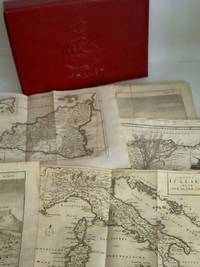
2j12522Joh. Just. Gebauer Halle um 1750. 25 gefalt. Kupferkarten und 9 gefalt. Kupfertafeln in roter Kunstleder-Kassette beide Athen-Ansichten links mit Ausrissen und etwas Bildverlust/ teils etwas fleckig bzw. leicht wasserrandig. - Enthalten: Heutiges Athen/ Vorstellung des alten und neuen Athens/ Gantz Italien nach der Alten Zeit/ Das Alte Sizilien/ Vindelicien Rhetien und Noricum/ Italien wie es C. Augustus in eilf Landschaften eingetheilet/ Belgica oder Nieder Teutschland/ Das alte Germanien oder Teutschland/ Pannonien Mösien Dacien und Illyricum/ Das Alte Gallien und zwar das Narbonische das Lugdunische und Aquitanien/ Klein Asien/ Karte der Eroberungen des grossen Alexanders/ Aegypten Libyen und Cyrenaica/ Syrien nach dem Tode des grossen Alexanders/ Das Alte Griechenland mit dessen umliegenden Insulen/ Das Alte Spanien/ Grundriss der Stadt Jerusalem/ Das Jüdische Land/ Grundriss des Tempels zu Jerusalem 3 1 davon mit Einriss/ Charte von dem Auffenthalt und Wohnstädten derer Celten oder Gomeriers und Scythen die ersten in Europa und die letzten in Asien/ Geographische Karte von Persien/ Karte der mittelsten Landschaften in Italien/ Die Königreiche in Armenien Pontus Cappadocien Medien Bactriana/ Karte von dem alten Macedonien Thessalien und Epirus/ Abbildung von den Stein Haufen von Palmyra/ Tadmor an der Sud Seyte genommen/ Karte von der Reise der Kinder Israel unten mit Abriss und etwas Bildverlust/ Karte von Syrien und Phenicien/ Ägypten Egypten nach dem Zustand der alten Zeit vorgestellt/ Norden Ägyptens/ Alt Griechenland/ Beiliegen 7 Karten des Geografen H. Moll: Eine neue Charte der Insel Jamaica/ Barbadoes/ Virginia und Maryland/ Neu Engeland Neu York New Iersey Pensilvanien/ Charte des neu gefundnen Landes Neu Schottlands der Inseln Breton Anticoste/ Neue Charte von America nach den neusten Observationen/ Insel St. Christopher/ Beiliegt ein Stammbaum des Habsburger Kaisers Ferdinand I 1503-1564 - unknown
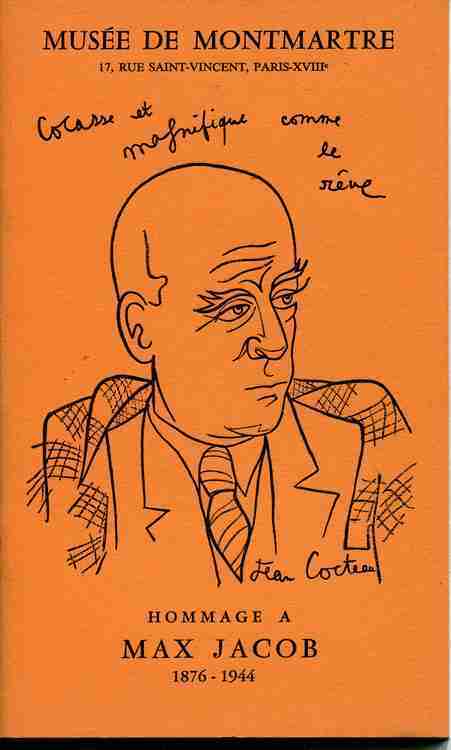
15725,Paris, Musée de Montmartre 1976, 62 pp., 1 vol. in 12 br. couverture illustrée d'après un dessin de Jean Cocteau, illustrations hors-texte. Liste des oeuvres exposées. Chronologie et bibliographie. Etat de neuf. Rare édition originale.
1982N3446Tel Aviv: Kol Printing Service 1982. Original Plasticlike BoardsDJ. Very Good. 4to. 317pp. Hundreds of illustrations of coins with classifications. Dust jacket with some marginal wear and loss.Otherwise a very good clean and fresh copy. Inscribed by the author to a fellow numismatic Shraga Qedar on title page. <br/> <br/> Kol Printing Service hardcover
Leena MannilaIn Pristine Condition. unknown
9517Plon Nourrit & Cie collect roseau dor 1926
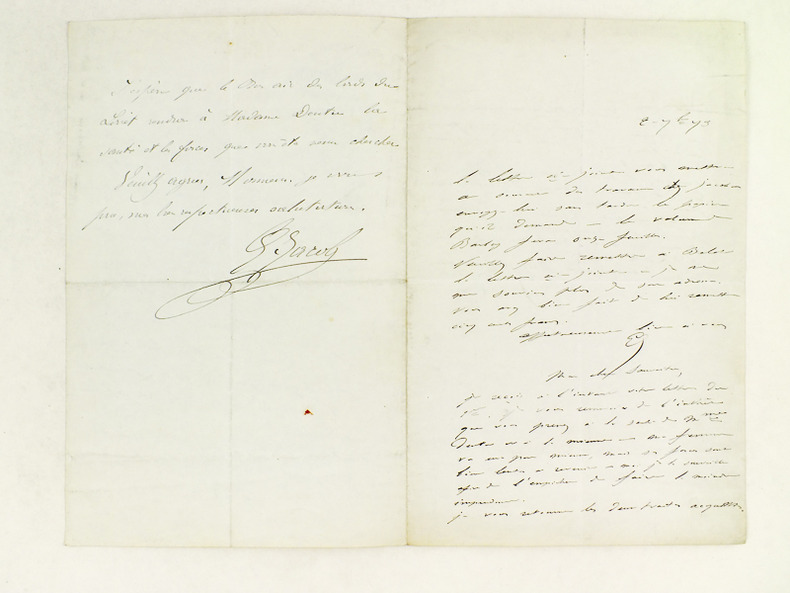
1873444603 L.A.S. totalisant 4 ff. in-12 rédigés recto-verso,datées des 27 août, 1er septembre et 10 septembre 1873 : détail du texte : Première L.A.S. : " Orléans le 27 août 1873. Monsieur, je vous adresse le spécimen pour le volume de M. d'Aurevilly. Il y a énormément de matières : le spécimen est encore neuf sur une justification assez large comme vous le voyez, interligne à deux points, et nous formerons 10 feuilles pleines à 10 feuilles 1/2. Il faudra évidemment un faux titre pour chaque partie. Le caractère sera très bon, très net. Mais la quantité de matière et le nombre limité de feuilles nous forcent à être compact, trop compact pour faire un volume élégant. Il faudrait pouvoir blanchir davantage et s'étendre jusqu'à 19 feuilles au moins. Je ne vous parle pas du corps 10, nous faisons d'emblée 11 feuilles et plus. Je pourrais me mettre en mesure de vous livrer pour paraître dans la première quinzaine d'octobre". - Seconde L.A.S. : "Orléans, le 1 septembre 1873. Monsieur, Je prends la liberté de venir troubler la tranquillité de votre villégiature pour vous mettre un peu au courant de mes travaux. J'ai envoyé à Monsieur Assollant ses 5 et 6e feuilles. La 7e sera prête sous trois jours au plus. [...] Barbey d'Aurevilly est commencé et d'ici 4 jours j'ajouterai trois compositeurs jusqu'à épuisement de la lettre disponible. Cardenio va partir en ballots chez le brocheur. Veuillez être assez bon pour donner des ordres pour l'expédition du papier pour achever Rachel et commencer le nouveau [... avec les commentaires autographes d'Edouard Dentu à la suite, pour son commis Sauvaitre : ] "La lettre ci-jointe vous mettra au courant des travaux chez Jacob. Envoyez-lui sans tarder le papier qu'il demande. Le volume de Barbey fera onze feuilles. [ ... ] Je vous retourne les deux traites acquittées. Envoyez à Emile Gaboriau, hôtel d'Orléans à Royan (Charente-Inférieure) quinze cents francs [... ] Il est en effet préférable de ne faire paraître l'affiche qu'au moment de la mise en vente des Mémoires de Paul de Kock". - Troisième L.A.S. "Orléans le 10 septembre 1873. Monsieur, J'expédie à M. Barbey d'Aurevilly la dernière feuille de son travail, et la troisième sera finie lundi et expédiée le jour même ou mardi au plus tard. Vous ne m'avez pas fixé de nombre ; prendra-t-on empreintes ? Monsieur Assolant ne renvoie pas plus les épreuves que par le passé. Je lui avais écrit directement le conjurant de hâter sa lecture des épreuves. Ainsi que je vous l'ai dit dans ma dernière lettre j'ai expédié Cardenio chez le brocheur et la facture du volume que M. Sauvaistre doit avoir sous les yeux. Je serai à Paris la semaine prochaine vers le 16. Je serai très heureux de vous y rencontrer [ etc... ]"