[Bünting, Heinrich:]Antiquariat.de

10 440 résultats
1587910999CGWittenberg:, Ambrosius Kirchner, 1587. Holzschnitt, 26 x 36 cm, Blattgröße 30,5 x 39 cm. [2 Warenabbildungen]
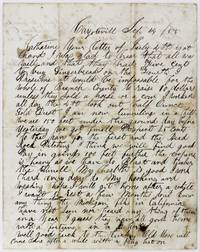
18553206Coyoteville: September 12 1855. Very good. 2pp. plus integral blank. Original mailing folds moderate toning staining and ink spotting but still easily readable. Bottom fourth of integral blank excised. An informative Gold Rush letter about mining in the long-vanished ghost town of Coyoteville which was an extraordinarily rich gold area for a couple of years in the early 1850s. A noted tunneling method nicknamed "coyoteing" was developed in the town and subsequently inspired the name of the town. In the present letter Moses Pine writes to "Catherine" in Branch County Michigan and signs his name simply as "Mose Esq" at the conclusion. The author informs Catherine presumably his wife or sister of his activities some of the economic realities and some of the practical details of prospecting for gold in California. Presuming that "it would be impossible for the whole of Branch County to raise $10 unless they sell a horse" Pine comments that he had ginger bread on the Fourth of July after working all day and yielding a "half Ounce Gold Dust." He then provides a detailed description of his mining: "I am now tunneling in a hill. We are 150 feet under the ground. Day before yesterday we got small respect 25 cents to the pan for the first and the bed rock pitching. I think we will find good pay in the going 100 feet further the expense is heavy as we have to blast and timber the tunnel." Pine also talks of his health and that "I work hard every day do my cooking and baking." He then expresses his hope to get back to Michigan to "rest a few months" but knows nothing of other Michigan folks in California: "Have not seen nor heard anything of them in a year. I guess they have all gone home with a fortune in a horn. Well good luck to the lucky. Old Mose will come home after a while with a pretty hat on." A nicely-detailed letter from an unusual and obscure Gold Rush location. September 12 unknown
193656738Shanghai China: China Journal Printed by The Mercury Press Dec. 1936. Tall 8vo. A32 4 311-354 A33-60 pp. With photo plates 1 colour plate photo text illustrations illustrated ads including index. Colour-illustrated softcovers Art Deco cover art of pink & yellow blossoms on black background lettering in green & black minor soiling minor chipping head & foot of spine minor tear & creasing to lower corner still G copy. First edition of this installment in the storied journal founded by Sowerby 1885-1954 the naturalist and explorer. Of particular interest in this installment is the first published announcement of Ruth Harkness’ d. 1947 as the first person to bring a living Giant Panda out of China a female named Su Lin. Her husband William Harkness zoologist and adventurer had headed an expedition to capture Giant Pandas but died before he even entered the habitat. Ruth traveled into Wenchuang County of Sichuan Province then onto Baoxing County where she discovered the cub less then 2 kilometers from Jiajin Mountain and was later donated to the Brookfield Zoo in Chicago. China Journal, Printed by The Mercury Press, paperback
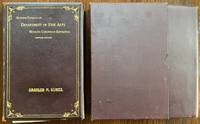
189360194Chicago: W.B. Conkey Co. Publishers to the Exposition 1893. Two vols. 8vo. 506; 506 pp. Frontisp. both vols. With maps photo plates. 1st vol. -- Full dark brown morocco over beveled boards gilt ornamented borders gilt lettering & ownership stamp on front cover gilt lettering on spine gilt inner dentelles marbled endpapers t.e.g. minor rubbing edgewear front hinge tender rear hinge just starting very slight uniform interior toning as usual still VG- copy w/ presentation ALS on Conkey private letterhead presenting to Charles M. Kurtz dated Oct. 28th 1893; 2nd vol. -- Full flexible Bible calf dark purple silk moire endpapers gilt lettering stamped front cover & spine a.e.g. w/ dark maroon cloth d.j. backed in dark purple silk moire a F/F presentation copy from Conkey to Kurtz w/ inscription on half-title preserved in open-backed slipcase. First editions thus presentation copies and the second copy with publisher’s note indicating this was No. 91 of 275 Editor’s Deluxe copies signed & presented to Charles McMeen Kurtz 1855-1909 at the time one of Halsey Ives’s Assistants in the Fine Arts Department of the 1893 World’s Columbian Exposition Art Director of the 1894 St. Louis Exposition and later Museum Director at the Buffalo Museum of Art 1905-1909. Conkey writes in the letter for the first volume to Charles Kurtz “I send you herewith a copy of the Catalogue which you may deem to file away as a reminder of many hours spent in order that others might see intelligently the grand work which you with others have done in the Art Department.†Walter Blakesley Conkey had founded the printing house in 1877 occupied many different job printers and in 1890 absorbed the Illinois Printing & Binding Co. and in Jan. 1893 signed the contracts awarding him exclusive rights for printing the myriad of catalogues and handbooks for the Columbian Exposition receiving a deposit of $ 10000. W.B. Conkey Co., Publishers to the Exposition, hardcover
2009168331Santa Fe: Radius Books / Art Santa Fe Presents 2009. First Edition. Hardcover. First Edition. The first major monograph devoted to the work of Ed Moses a Southern California artist associated with the Ferus Gallery. With 120 color illustrations. <br /> <br /> About Fine in a Fine dust jacket. <br /> <br /> Oversize volume shipping billed at cost. Radius Books / Art Santa Fe Presents unknown
44574P., de Gigord, 1917, in 12 broché, 375 pages ; manque de papier à la page des matières sans atteinte au texte.
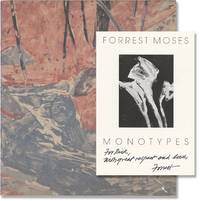
1987168664Santa Fe: Munson Gallery 1987. First Edition. Softcover. First Edition. INSCRIBED on the title page: "For Rick / with great respect and love / Forrest."<br /> <br /> Catalog for an exhibition held at Munson Gallery in Santa Fe. <br /> <br /> About Fine in saddle-stapled wrappers. Munson Gallery unknown
186436882np 1864. 4to. Written in ink and signed at the end by Royce on the verso of a single leaf. Several small holes text unaffected a few closed tears two archival tape repairs. Very Good. <br /> <br /> This unusual insightful document illuminates the laws of war applicable to the Civil War. Royce's Petition seeks justice for Confederate Captain Frank R. Gurley. Royce sent it to the Confederate Commission of Exchange. Its author Confederate Captain Moses Strong Royce was captured in Tennessee and imprisoned at Nashville. Gurley Royce's cell-mate had killed Union General Robert McCook of Ohio near Huntsville Alabama in August 1862. <br /> In October 1863 Union forces captured Gurley and charged him with murdering McCook. Gurley Union officials claimed was a guerrilla who shot McCook while the General was lying in an ambulance. Southerners claimed that Gurley was not a guerrilla but a regular soldier in the Confederacy's 4th Alabama Cavalry; and that he killed McCook according to the laws of war. <br /> Harper's Weekly and Frank Leslie's Illustrated Newspaper fanned the flames claiming that lawless Confederate guerrillas murdered the general; feelings ran high. "US General Grant wrote CS General Hardee in December of 1863 and said that although Gurley was a member of the Confederate army that did not preclude him from being tried for having committed a foul murder" online Huntsville-Madison County Public Library essay 'Frank B. Gurley's 1866 Diary'.<br /> Having escaped from prison in March 1864 Royce pleads Gurley's case. "He was confined in a cell for sixty-eight days and allowed only about one hour a day for exercise and was put upon trial for the killing of Genl. McCook. He was obliged to employ counsel to defend himself at an expense of 2500 dollars in greenbacks. The evidence produced completely exonerated him of anything like murder and the argument of his counsel was a complete vindication of his right as a soldier and an officer to do all that he did in bringing Genl. McCook to his death. <br /> "When the trial was nearly ended four communications by flag of truce were sent to the court and were there read - one from Lt. Col. Hambrick one from Genl. Forrest one from Genl. Hardee and one from Genl. Johnston" assuring that Gurley was not a guerrilla but a duly enrolled member of the Confederate military forces. Nevertheless Gurley was found guilty and sentenced to death.<br /> "The undersigned believes that if an effort were to be made by the Confederate Commission of Exchange to have Capt. Gurley exchanged the Federal authorities would immediately send him forward for that purpose and as a friend of Capt. Gurley the undersigned respectfully requests General Johnston to use his influence in procuring the exchange of Capt. Gurley. Respectfully submitted M. S. Royce." <br /> Even after War's end the dispute continued. Gurley having been released from prison in an administrative snafu was re-arrested charged but finally released and placed on parole in April 1866. unknown
elala3576New York: The South Publishing Co. & St. Johnís N.F.: S.E.Garland 1900. OíDea 1231a. 12mo. pp. 196 lxii. numerous text illus. some full-page. with large folding colour map tipped on to rear paste-down not always present. original cloth New York: The South Publishing Co. & St. Johnís, N.F.: S.E.Garland, 1900 hardcover
1085629 Feb. 1885. 3pp. large folio. Signed by Landau and Alexander. Their agreement was for a business as "Dealers on the Stock Exchange" revealing the investment of both partners and their terms covering terms of liquidation etc. Attached: Letter Signed 'Jas M Alexander' to Landau 26 Feb. 1885 with information about insurance policy on his life. Note: 1885 the year of this agreement was the year in which the Jews Temporary Shelter was founded the improved version of which founded 1886 attracted Landau's benevolence and active support. 29 Feb. 1885. unknown
2010LFA-126721746Revue de 96 pages, format 165 x 240 mm, illustrée, brochée couverture couleurs, publiée en 2010, bon état
1985202006465Paris, Flammarion, Nouvelle Bibliothèque Scientifique, 1985 ; in-8, 219 pp., broché, couverture illustrée. Quelques passages soulignés au crayon à papier. Préface de Pierre Vidal-Naquet. Traduit de l'anglais par Jeannie Carlier.
180655698Dover N.H.: Charles Peirce bookseller Portsmouth and Samuel Bragg Jr. Dover . Nov 1806. First edition 8vo pp. 8 431 1 4 ads; recent calf-backed cloth spine in 6 compartmjents red morocco label in 1; overall appearancve is fine. American Imprints 10569; Cohen 8395; not in Sabin. Charles Peirce, bookseller, Portsmouth, and Samuel Bragg, Jr., Dover ... Nov unknown
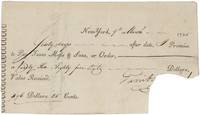
179542478New York 1795. paperback. Single leaf 4x7 inches. Printed on one side with blanks filled in in manuscript and signature obscured by cancellation tear-off; “Isaac Moses & Sons†penned on blank side in period hand. Early American Jewish merchants Isaac Moses & Sons operated on Greenwich Street.Isaac Moses 1742-1818 was born in Giessen Germany but moved to New York in 1764 and in 1766 he became a “freeman†of New York City. He became a prominent businessman and American patriot. He worked in his uncle's Hayman Levy's mercantile firm until he established Isaac Moses & Company with two new business partners in 1775. This firm supported the revolutionary army by accepting $20000 in Continental paper dollars in exchange for $20000 in hard currency thereby financing the war effort. The firm also traded for military supplies internationally and sold guns and ammunition to the army. When the British occupied New York Isaac Moses left for Philadelphia and ran the firm from there. In 1783 he returned to New York City and continued his commercial enterprises. He was generally financially successful establishing Isaac Moses & Sons an international trading company. He was also a founder and major stockholder in the Bank of New York  a Mason in New York City's Union Lodge and an important member of the New York City Chamber of Commerce. Isaac Moses was also president of Congregation Shearith Israel in New York the oldest Synagogue in American and the only Jewish congregation in New York City until 1820. He was also one of the principle organizers of the Congregation Mikveh Israel in Philadelphia. His descendants were prominent Jewish businessmen in New York who traveled internationally and served in the Union Army during the Civil War AJHS & Wikipedia. For more on Isaac Moses see the JTA’s report on the donation of his portrait by John Wesley Jarvis to the Museum of the City of New York in 1934 https://www.jta.org/archive/painting-of-isaac-moses-patriot-of-revolution- given-to-museum. Portraits of Moses can be viewed online at https://loebjewishportraits.com/portrait/isaac-moses/ and https://loebjewishportraits.com/portrait/isaac-moses-2/. An indenture signed by his heirs after his death in 1818 sold for $3500 plus commissions at auction in 2019 https://www.sothebys.com/en/auctions/ecatalogue/2019/fine-manuscripts-prin ted-americana-n10002/lot.2180.html. Promiser’s signature torn of as cancellation as often found otherwise Very Good Condition BK5 AMR-67-39. New York unknown
201103705Paris, Librairie Plon, 1927-1928 ; in-12, 248-245-241 pp., broché, couverture illustr. Les 3 volumes. Bon état général un manque sur le bas du dos du 3e vol.
201904883S.l., Les editions MEIR, 1988 ; in-8, 127 pp., cartonnage de l'éditeur. Comme neuf - (traduite et annotée) edition bilingue francais-hebreu - avec une dédicace.
64144P., NRF, Gallimard, Editions de la Nouvelle Revue Française (Collection "Les Peintres Français Nouveaux" n°30), 1928, petit in 12 broché, 63 pages ; couverture illustrée ; couverture légèrement fanée ; mention de Quatrième édition sur la couverture.
2008LFA-126716676Une revue de 80 pages, format 205 x 280 mm, illustrée, broché couverture couleurs, bon état
193144873AB1931. Philadelphia Dropsie College 1931. 16 cm x 24 cm. VII 189 pages. Original Cloth Hardcover in protective Mylar. Very good condition with only minor signs of wear. Includes for example the following : The pre-Luzzatto Period / Life of Moses Hayyim Luzzato / Beginning of The Luzzatto Persecution / Works of Moses Hayyim Luzzatto / Cabbalistic and Rabbinic-Philosophical Works / Meter and Style. hardcover
15202401040023xbvkOhne Druckerangabe (gem. VD16 gedruckt in Leipzig bei Melchior Lotter d. Ä., 1520) [MDXX]. (7) Seiten (inkl. der unbedruckten 'Titelblatt'-Rückseite) auf 4 Blättern, mit figürlicher Holzschnitt-Initiale 'N' auf S. (3); in braunem Halbleineneinband der 1. Hälfte des 20. Jahrhundert mit Pappdeckeln (blaues Überzugspapier) und handschriftlichem Papierrückenschild; kl.-4to.(ca. 20 x 15,5 cm).
5689"P., Saillant ; et Bayeux, Lepelley ; 1772. In 8 veau marbré de l'époque, frontispice, (4)-XXIV-343 (2) pp. et privilège. "
196526905Berlin, Walter de Gruyter, 1965. Gr.-8°. Mit 8 Tafelabbildungen. XXI S., 1 Bl., 343 (1) S., OLwd. m. OCellophanumschlag in OKart.-Schuber.
1901052829Constantinople: I. Camondo & Cie Constantinople Letterhead. 17 Janvier 1901 1901. No Binding. Very Good. Original autograph letter signed ALS by P.pon "We hereby declare that Ms. L. Cassinelli occupied our house located in Pera Rue Hodja Ali No 19. On December 1 1887 and left him on September 30 1899. That during all time he did not pay me the tax. P. pon de la succession de feu le Comte A. de Camondo. i.e. On behalf of the succession of Count Abraham Salomon Camondo 1781-1873. Probably it's signed by his advocate of Moise de Camondo. Recipient is not defined. Letter indicates one of Camondo family's houses in Pera Constantinople. 265x21 cm. Completely in French. 14 lines. On a paper watermarked "William Brown & Co. London". William Brown and Co. were located in London in this 'St. Mary Axe and 40 to 41 Old Broad Street London E.C.' address according to Grace's guide to British industrial industry; they worked on 'Lithographic and Letterpress Printers'. 1887 Registered as a Limited Company. Count Moïse de Camondo 1860-1935 was an Ottoman Empire-born French banker and art collector. He was a member of the prominent Camondo family. As a child Camondo moved with his family from their home in Constantinople Ottoman Empire to Paris around 1869 where he grew up and continued the career of his father Nissim de Camondo 1830-1889 as a banker. He was born into a Sephardic Jewish family that owned one of the largest banks in the Ottoman Empire established in France since 1869. Starting in 1911 he completely rebuilt the family's Parisian mansion on the Parc Monceau in order to house his collection of 18th-century French furniture and artwork. Working closely with the architect René Sergent he created a palatial home conforming to certain 18th-century traditions even planning the room dimensions to match exactly the objects in his collection. The entryway is inspired by the Petit Trianon of Versailles. The home includes a kosher kitchen with separate sections for meat and dairy. The dining room includes a beautifully-carved green marble fountain in the shape of a shell with a dolphin spigot for the ritual washing of hands before eating a meal. Some highlights of his collection include a French silver service that had been ordered by Russian Empress Catherine the Great a set of Buffon porcelain with exact reproductions of ornithological drawings from the Sèvres manufacturer and perhaps the only existing complete set of Gobelin royal tapestry sketches. He married Irène Cahen d'Anvers daughter of Louis Cahen d'Anvers in 1891. They separated in August 1897 after her affair with de Camondo's stable master Count Charles Sampieri whom she would later marry and divorce. The children Nissim and Beatrice remained with de Camondo. The mansion was completed in 1914 but his son did not reside there very long as he rejoined the French Army to fight in The Great War. It had been de Camondo's great hope that his son whom he adored would take over the family empire. Following Nissim's death in 1917 de Camondo closed all banking activities. He largely withdrew from society and devoted himself primarily to his collection and to hosting dinners for a club of gourmets at regular intervals. Camondo died in 1935 and the museum opened the following year. He donated the home to Paris's Decorative Arts society as a museum Musée Nissim de Camondo in honor of the loss of his son Nissim in World War I. In addition to the collection the meticulously-restored service areas elevator and woodwork of the mansion are noteworthy. During the German occupation of France during World War II his daughter Béatrice his son-of-law Léon Reinach and their children Fanny and Bertrand were deported from France and died in the Auschwitz concentration camp. As a result the de Camondo family died out. <br/> <br/> I. Camondo & Cie, Constantinople Letterhead., 17 Janvier 1901 unknown
182246405442Paris, chez l’éditeur rue Montmartre n° 154, au premier, (1822) ; petit in-8, broché, couv. beige ornée. VI pp. (catalogue), 2 ff. (fx-titre et titre), 246 pp. - Frontispice dépliant gravé et colorié et 2e titre gravé et illustré d’une vignette.ÉDITION ORIGINALE. Quérard Supercheries II, 732 nous apprend que sous le pseudonyme de Le Joyeux de Saint-Acre se cache un certain J. M. Mossé, ou plutôt Moses, marchand de meubles et homme de lettres. La France Littéraire V, 330 précise qu’il est né à Avignon, d’une famille juive et mort à Paris en 1825. Il a beaucoup produit, un peu à la façon et dans le (non) style de Cuisin et vendait lui-même ses livres avec ses meubles et avait créé à cet effet un réseau de distribution chez les commerçants de province. Le petit catalogue en-tête ne concerne que les livres du même auteur-éditeur. Quérard précise encore que ce Moses avait été un temps employé dans les bureaux de la préfecture de l’Aube et qu’il avait essayé de faire paraître un journal à Carcassonne. En 1812 il était à Paris et donnait des articles au Mercure. Dans sa Bibliographie vauclusienne, Barjavel le nomme J. M. Mossé et le fait naître à Carpentras vers 1780 : “Israélite (...) enlevé à sa famille vers l’âge de 7 ans, par ordre du greffier de la rectorie qu’animait un faux zèle catholique (il suffisait alors, pour qu’un enfant israélite fut légalement arraché à ses père et mère que le premier venu eût affirmé l’avoir baptisé), ne fut rendu à ses parents et sur leurs réclamations, qu’à l’époque où fut proclamée l’émancipation politique de ses coreligionnaires (...) Mossé s’est suicidé à paris peu avant 1830” Barjavel II p. 204.
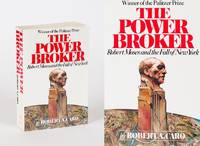
197443904AB1974. New York and Toronto Random House 1974. 15.5 cm x 23 cm 1246 XXXIV pages. With index. With many photographs and several maps. Original softcover. Excellent condition with only very minor signs of external wear. Inscription by preowner. Otherwise clean inside with solid binding. Includes the following: Part 1 The Idealist / Part II The Reformer / Part III The Rise to Power / Part IV The Use of Power / Part V The Love of Power / Part VI The Lust for Power / Part VII The Loss of Power. "One of the most acclaimed books of our time winner of both the Pulitzer and the Francis Parkman prizes The Power Broker tells the hidden story behind the shaping and mis-shaping of twentieth-century New York city and state and makes public what few have known: that Robert Moses was for almost half a century the single most powerful man of our time in New York the shaper not only of the city's politics but of its physical structure and the problems of urban decline that plague us today." Publisher "The book focuses on the creation and use of power in local and state politics as witnessed through Moses' use of unelected positions to design and implement dozens of highways and bridges sometimes at great cost to the communities he nominally served. It has been repeatedly named one of the best biographies of the 20th century and has been highly influential on city planners and politicians throughout the United States." Wikepedia paperback