Ortelius, AbrahamBiblio.com
285 résultats
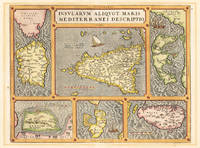
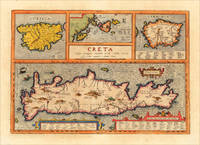
161213729Antwerp: Juan Baptist Vrients 1612. Other. In excellent condition. 342 by 491mm 13 by 19 inches. Original antique copper engraving decorative hand colored. Published 1612 in the historical Atlas "Parergon" by Abraham Ortelius bound with his famous Theatrum Orbis Terrarum. Finely hand-colored in wash and outline. Four maps on one plate: Corsica the Ionian Islands Cephalonia Zacynthus Corcyra Sardinia and Crete. Villages and towns are shown as miniature views moreover the map at the bottom is ornated with ships sea monsters and animals. At the bottom we find two cartouches with listings of antique place names and explanations. A very good example in excellent condition. Ortelius was born on 14 April 1527 in the city of Antwerp which was then in the Habsburg Netherlands modern-day Belgium. The Orthellius family were originally from Augsburg a Free imperial city of the Holy Roman Empire. In 1535 the family had fallen under suspicion of Protestantism. Following the death of Ortelius's father his uncle Jacobus van Meteren returned from religious exile in England to take care of Ortelius. Abraham remained close to his cousin Emanuel van Meteren who would later moved to London. In 1575 he was appointed geographer to the king of Spain Philip II on the recommendation of Arias Montanus who vouched for his orthodoxy. He travelled extensively in Europe and is specifically known to have traveled throughout the Seventeen Provinces; in southern western northern and eastern Germany e.g. 1560 15751576; France 15591560; England and Ireland 1576; and Italy 1578 and perhaps twice or thrice between 1550 and 1558. Beginning as a map-engraver in 1547 he entered the Antwerp Guild of Saint Luke as an illuminator of maps. He supplemented his income trading in books prints and maps and his journeys included yearly visits to the Frankfurt book and print fair where he met Gerardus Mercator in 1554. In 1560 however when travelling with Mercator to Trier Lorraine and Poitiers he seems to have been attracted largely by Mercator's influence towards the career of a scientific geographer. Wikipedia Broe. 217 Juan Baptist Vrients unknown
16248000Antwerp: Plantin-Moretus 1624. Copper engraving 36 x 46 cms modern hand colour Latin text on verso. Ancient Dacia and Moesia modern Romania and Bulgaria on the Black Sea. Our example was published by Balthasar Moretus at the Plantin Press in the final edition of the Parergon. Ortelius's Theatrum Orbis Terrarum is generally considered the first modern atlas of the world originally published in 1570. Ortelius gathered and selected the best available cartographic knowledge and presented it in a single volume duly credited and finely engraved in a consistent style with explanatory text. The Theatrum was very decorative and hugely popular amongst the wealthy and educated running into over forty editions in Latin and the major European languages. For Ortelius himself however his accompanying atlas of ancient geography the Parergon was a "personal work" Koeman. He seems to have regarded himself first and foremost as an antiquary and rather than copying other people's maps he drew the originals himself; they were subsequently engraved for him by the master engraver Jan Wierix. The results have to be evaluated as the most outstanding engravings depicting the wide-spread interest in classical geography in the 16th century Koeman. Koeman Atlantes Neerlandici Ort 46. Van den Broecke 212.2 Map Plantin-Moretus unknown
1603299083Antwerp: Abraham Ortelius 1603. unbound. Map. Engraving with hand coloring. Image measures 14" x 18 3/4". Staining toning and chips to margins but otherwise is good condition.<br/> <br/> Friuli is the northeast Italian region bordering Austria Slovenia and the Adriatic Sea. It's home to the sharp-peaked Dolomite Mountains and vineyards producing white wines. Ortelius' 1603 edition extends from Venice north to the Italian Alps and east to Trieste and Istria. Lovely depiction of Venice floating on several islands. Abraham Ortelius 1527--1598 a Flemish cartographer and geographer is widely regarded as one of the important and influential cartographers in history. He is known for his "Theatrum Orbis Terrarum" which was the first modern atlas. Van Den Broecke 119<br/> <br/> Abraham Ortelius unknown
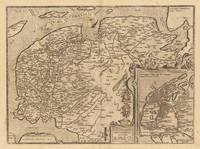
161233372Antwerp: Juan Baptist Vrients 1612. A minor printers crease on the right side of the double page slightly visible. Overall in excellent condition. 36.8 x 498 cm 14.5 x 195 inches. Hand-Colored Original Copperplate Engraving by Abraham Ortelius depicting Frisia Occidentalis. Sibrandus Leonis Leovardiensis Describ. Cum privilegio Imp. et Reg. Mtm. ad. decenninium. 1579. Published Antwerp Juan Baptist Vrients 1612. Sheet: 36.8 x 498 cm 14.5 x 195 inches. A fine and original hand-colored example of Ortelius's celebrated cartographic work documenting this region of Germany with the precision and decorative artistry characteristic of the 16100s. Abraham Ortelius 1527-1598 was a Flemish cartographer and geographer from Antwerp widely regarded as the creator of the first modern atlas. His landmark publication Theatrum Orbis Terrarum 1570 set the standard for atlas-making for the next century presenting uniform copper-engraved maps with scholarly commentary. By Ortelius's death the Theatrum had appeared in 25 editions in seven languages. In 1575 King Philip II of Spain appointed him Royal Geographer. His maps engraved with extraordinary precision are among the most sought-after in antique cartography held in collections including the Plantin-Moretus Museum in Antwerp the Library of Congress and the British Library.This original copperplate engraving with original hand coloring depicts the region of Frisia Occidentalis. Sibrandus Leonis Leovardiensis Describ. Cum privilegio Imp. et Reg. Mtm. ad. decenninium. 1579. published in Antwerp Juan Baptist Vrients 1612. An inset map is included providing additional geographic context. The map records the political and geographic boundaries of the region as understood in 1612 offering a fascinating window into the history of German territorial organization. Sheet measures 36.8 x 498 cm 14.5 x 195 inches. In good condition overall with minor signs of age appropriate for a 17th-century engraving. Ready to frame. Broe. 81 Juan Baptist Vrients unknown
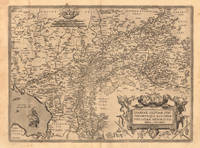
16247933Antwerp: Plantin-Moretus 1624. Copper engraving 36.5 x 46.5 cms modern hand colour a couple of unobtrusive printers creases Latin text on verso. Ancient Gaul engraved on the basis of Caesars commentaries on the Gallic Wars his first hand account of the campaign. The text on the verso explores ancient source material relating the the druids. Our example was published by Balthasar Moretus at the Plantin Press in the final edition of the Parergon. Ortelius's Theatrum Orbis Terrarum is generally considered the first modern atlas of the world originally published in 1570. Ortelius gathered and selected the best available cartographic knowledge and presented it in a single volume duly credited and finely engraved in a consistent style with explanatory text. The Theatrum was very decorative and hugely popular amongst the wealthy and educated running into over forty editions in Latin and the major European languages. For Ortelius himself however his accompanying atlas of ancient geography the Parergon was a "personal work" Koeman. He seems to have regarded himself first and foremost as an antiquary and rather than copying other people's maps he drew the originals himself; they were subsequently engraved for him by the master engraver Jan Wierix. The results have to be evaluated as the most outstanding engravings depicting the wide-spread interest in classical geography in the 16th century Koeman. Koeman Atlantes Neerlandici Ort 46. Van den Broecke 194.3 Map Plantin-Moretus unknown
16248029Antwerp: Plantin-Moretus 1624. Copper engraving 39.5 x 49.5 cms modern hand colour Latin text on verso. Van den Broecke stresses the sigificance of this map of Gaul: in contrast to plate Ort 194 Gallia vetus based on Caesars commentaries this map is based on ancient geographical rather than on ancient military sources and is much more detailed. It contains the largest amount of text to be found on any map by Ortelius . testifying the importance he attached to it. It contains all elements of Ortelius as a true Renaissance scholar. Our example was published by Balthasar Moretus at the Plantin Press in the final edition of the Parergon. Ortelius's Theatrum Orbis Terrarum is generally considered the first modern atlas of the world originally published in 1570. Ortelius gathered and selected the best available cartographic knowledge and presented it in a single volume duly credited and finely engraved in a consistent style with explanatory text. The Theatrum was very decorative and hugely popular amongst the wealthy and educated running into over forty editions in Latin and the major European languages. For Ortelius himself however his accompanying atlas of ancient geography the Parergon was a "personal work" Koeman. He seems to have regarded himself first and foremost as an antiquary and rather than copying other people's maps he drew the originals himself; they were subsequently engraved for him by the master engraver Jan Wierix. The results have to be evaluated as the most outstanding engravings depicting the wide-spread interest in classical geography in the 16th century Koeman. Koeman Atlantes Neerlandici Ort 46; Van den Broecke 196.2. Map Plantin-Moretus unknown
161213895Antwerp: Vrients 1612. Other. In excellent condition. 372 by 503mm 14 by 19 inches. Original antique copper engraving published 1612 in a Italian text edition of the " Theatrum Orbis Terrarum. Uncolored example in a strong impression. The map is ornated with a title cartouche in the lower right corner naming the autor "Christian Schrot" on whom Abraham Ortelius based his cartographic source for this map in his atlas. Top left corner with a small mileage scale. For the decoration of the map we find a sailing ship in the "Zuyder Zee". Ortelius was born on 14 April 1527 in the city of Antwerp which was then in the Habsburg Netherlands modern-day Belgium. The Orthellius family were originally from Augsburg a Free imperial city of the Holy Roman Empire. In 1535 the family had fallen under suspicion of Protestantism. Following the death of Ortelius's father his uncle Jacobus van Meteren returned from religious exile in England to take care of Ortelius. Abraham remained close to his cousin Emanuel van Meteren who would later moved to London. In 1575 he was appointed geographer to the king of Spain Philip II on the recommendation of Arias Montanus who vouched for his orthodoxy. He travelled extensively in Europe and is specifically known to have traveled throughout the Seventeen Provinces; in southern western northern and eastern Germany e.g. 1560 15751576; France 15591560; England and Ireland 1576; and Italy 1578 and perhaps twice or thrice between 1550 and 1558. Beginning as a map-engraver in 1547 he entered the Antwerp Guild of Saint Luke as an illuminator of maps. He supplemented his income trading in books prints and maps and his journeys included yearly visits to the Frankfurt book and print fair where he met Gerardus Mercator in 1554. In 1560 however when travelling with Mercator to Trier Lorraine and Poitiers he seems to have been attracted largely by Mercator's influence towards the career of a scientific geographer. Wikipedia Broe. 61. State 3/4. Vrients unknown
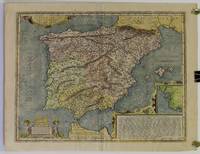
1603W2303Antwerp Belgium: Jan Baptiste Vrients 1603. 14 3/4 inches by 19 3/8 inches on a 16 5/8" by 21 3/4" sheet of laid paper. Latin text on the verso. van den Broecke 193. Abraham Ortelius was a Flemish scholar who moved to Antwerp to become a bookseller and cartographer. This map of ancient Spain is from his PARERGON published as an appendix to the THEATRUM ORBIS TERRARUM the world's first true atlas as well as the most authoritative and commercially successful atlas of the late 16th and early 17th centuries. Although it is dated 1586 in one cartouche this map actually is a second state printed between 1601 and 1612 as indicated by the stipple engraving in the ocean & seas and by the line through the word "Cinniana" in line 8 of the descriptive text within the cartouche in the lower right corner. The map is in very good condition: generally clean and bright with barely a hint of toning and minor soiling limited to the blank margins. Madrid bookseller's stamp and brief handwritten comment and signature in the margin on the verso. Original. Single Sheet. Very Good. Folio - over 12" - 15" tall. Map. Jan Baptiste Vrients
16248030Antwerp: Plantin-Moretus 1624. Copper engraving 37.5 x 49.5 cms modern hand colour small burn hole in table of peoples and places Latin text on verso. Our example was published by Balthasar Moretus at the Plantin Press in the final edition of the Parergon. Ortelius's Theatrum Orbis Terrarum is generally considered the first modern atlas of the world originally published in 1570. Ortelius gathered and selected the best available cartographic knowledge and presented it in a single volume duly credited and finely engraved in a consistent style with explanatory text. The Theatrum was very decorative and hugely popular amongst the wealthy and educated running into over forty editions in Latin and the major European languages. For Ortelius himself however his accompanying atlas of ancient geography the Parergon was a "personal work" Koeman. He seems to have regarded himself first and foremost as an antiquary and rather than copying other people's maps he drew the originals himself; they were subsequently engraved for him by the master engraver Jan Wierix. The results have to be evaluated as the most outstanding engravings depicting the wide-spread interest in classical geography in the 16th century Koeman. Koeman Atlantes Neerlandici Ort 46; Van den Broecke 193.3. Map Plantin-Moretus unknown
160316331Antwerp 1603. Other. A very good example in vivid handcolor. Minor lightstaining outside the image. 365 by 478mm 14 by 18 inches. Original antique copper engraving from the 'Theatrum Orbis Terrarum' by Abraham Ortelius the world's first modern atlas published in Antwerp 1603. Depicting Mediterranean Islands this map is a fine example of 1600s European cartography. Image: 365 by 478mm 14 by 18 inches. An attractive and historically significant 17th-century map for the discerning collector. Abraham Ortelius 15271598 was a Flemish cartographer and geographer born in Antwerp. He is widely regarded as the creator of the first modern atlas the 'Theatrum Orbis Terrarum' Theatre of the World first published in 1570 by Gilles Coppens de Diest in Antwerp. Considered the world's first true atlas it established the modern format of uniform standardized maps bound together in a single volume. Appointed Geographer to King Philip II of Spain in 1575 Ortelius was one of the most influential figures in the history of cartography. His maps are held in the collections of the British Library the Library of Congress and major European institutions. The 'Theatrum' went through more than 30 editions and was translated into multiple languages making Ortelius's maps among the most sought-after in the world of antique cartography.Decorative doublepage map showing six islands in the Mediterranean Islands Sicily Sardinia Corfu Malta Djerba Elba. Sicily is prominently displayed in the center of the map above the title cartrouche.A fine example from Theatrum Orbis Terrarum Antwerp sought after by collectors of antique maps of Italy antique maps of Mediterranean Islands and antique copper engravings for sale. In excellent condition. Broe. 141 unknown
1603299306Antwerp: Abraham Ortelius 1603. unbound. Map. Engraving with beautiful original hand color. Image measures 14" x 18 3/4". Light staining and toning but otherwise is good condition.<br/> <br/> A representation of some islands in the Mediterranean Sea. Abraham Ortelius 1527-1598 a Flemish cartographer and geographer is widely regarded as one of the important and influential cartographers in history. He is known for his "Theatrum Orbis Terrarum" which was the first modern atlas. Van den Broecke #141<br/> <br/> Abraham Ortelius unknown
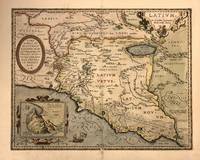
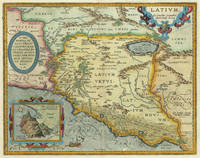
1603322945Antwerp: Abraham Ortelius 1603. framed. Map. Engraving with beautiful hand coloring. Image measures 14" x 18".<br/> <br/> Beautiful 1603 map by Abraham Ortelius depicting Ancient Latium including Rome from his "Parergon". It covers Latium from the Tyrrhenian Sea to Umbria with parts of Tuscany and Campania. Cities are identified as individual buildings with particular focus on Rome its walls and notable buildings like the Coliseum. Notes mountains rivers marshlands and forests beautifully illustrated in profile. <br> <br> The map also includes historical and mythological elements such as a reference to Pliny in the Fucine Lake adding depth to the map's depiction of the region. Three cartouches adorn the map. The first is an ornate title cartouche in the upper right quadrant. Another is a dedication to Marcus Velser Augustanus. The third contains an inset of Mount Circeo the supposed dwelling place of the mythical goddess Circe who enchanted Odysseus and turned his companions into swine. <br> <br> This is the second state of the map identified by the addition of a network of roads around Rome and the designation of the swamp extended in the lower right along with the letters "VOLCI". The map is in good condition with some toning and minor abrasion loss near centerfold and verso repair near bottom margin. Van den Broecke #209. <br> <br> Abraham Ortelius 1527-1598 was a prominent Flemish cartographer geographer and cosmographer renowned for creating the first modern atlas "Theatrum Orbis Terrarum" which first appeared in 1570 and expanded over time to include 134 maps by 1592. Born in Antwerp he began his career as a map colorist and became a significant figure in cartography after being influenced by Gerard Mercator. His work was pivotal in the development of modern cartography integrating maps from various sources and reflecting his advanced geographical theories including early thoughts on continental drift. Appointed Royal Cartographer to King Philip II of Spain in 1575 Ortelius had access to extensive Spanish geographical knowledge. Despite the religious and political turmoil of his time he maintained a position of relative neutrality focusing on his scholarly and cartographic pursuits. His influential works also included "Synonymia Geographica" "Nomenclator Ptolemaicus" and "Parergon."<br/> <br/> Abraham Ortelius unknown
16247958Antwerp: Plantin-Moretus 1624. Copper engraving 32.5 x 48 cms modern hand colour Latin text on verso. Latium the hinterland of ancient Rome. Van den Broecke notes a minor change in nomenclature which was made for the 1624 edition 209.3 which is not present here although our example was published by Balthasar Moretus at the Plantin Press in the final edition of the Parergon. Ortelius's Theatrum Orbis Terrarum is generally considered the first modern atlas of the world originally published in 1570. Ortelius gathered and selected the best available cartographic knowledge and presented it in a single volume duly credited and finely engraved in a consistent style with explanatory text. The Theatrum was very decorative and hugely popular amongst the wealthy and educated running into over forty editions in Latin and the major European languages. For Ortelius himself however his accompanying atlas of ancient geography the Parergon was a "personal work" Koeman. He seems to have regarded himself first and foremost as an antiquary and rather than copying other people's maps he drew the originals himself; they were subsequently engraved for him by the master engraver Jan Wierix. The results have to be evaluated as the most outstanding engravings depicting the wide-spread interest in classical geography in the 16th century Koeman. Koeman Atlantes Neerlandici Ort 46. Van den Broecke 209.2 Map Plantin-Moretus unknown
161230976Antwerp: Balthasar Moretus 1612. Other. In excellent condition. 356 by 453mm 14 by 17 inches. Original antique copper engraving from the 'Theatrum Orbis Terrarum' by Abraham Ortelius the world's first modern atlas published in Antwerp 1612. Depicting Rome & Latium this map is a fine example of 1610s European cartography. Image: 356 by 453mm 14 by 17 inches. An attractive and historically significant 17th-century map for the discerning collector. Abraham Ortelius 15271598 was a Flemish cartographer and geographer born in Antwerp. He is widely regarded as the creator of the first modern atlas the 'Theatrum Orbis Terrarum' Theatre of the World first published in 1570 by Gilles Coppens de Diest in Antwerp. Considered the world's first true atlas it established the modern format of uniform standardized maps bound together in a single volume. Appointed Geographer to King Philip II of Spain in 1575 Ortelius was one of the most influential figures in the history of cartography. His maps are held in the collections of the British Library the Library of Congress and major European institutions. The 'Theatrum' went through more than 30 editions and was translated into multiple languages making Ortelius's maps among the most sought-after in the world of antique cartography.The map is ornated with three cartouches in the upper left corner the title cartouche on the upper right side we find an oval text cartouche and in the lower left corner an inset. The privilegium is written on the lower right side. Villages and towns are shown as miniature views. Moreover the map is ornated with a ship.A fine example from Theatrum Orbis Terrarum Antwerp sought after by collectors of antique maps of Italy antique maps of Rome and antique copper engravings for sale. In good condition consistent with age. Light age-toning to the sheet as expected for a 17th-century engraving. Centerfold as published. Koe. Ort. 46; Broe: 209 state 2/2; Balthasar Moretus unknown
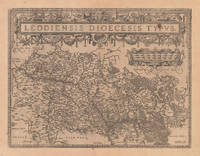
161220662Antwerp: Juan Baptist Vrints 1612. Other. Within the title cartouche an old small rust spot. In very good to excellent condition. 380 by 497mm 15 by 19 inches. Original antique copper engraving published 1612 in a Italian text edition Vriens edition of the " Theatrum Orbis Terrarum. This antique map shows the region of Lüttich in Belgium. The map is equipped with many small place names rivers woods etc. Uncolored copy in a strong impression. The map is ornated a large title cartouche and below a decorative mileage scale. Ortelius was born on 14 April 1527 in the city of Antwerp which was then in the Habsburg Netherlands modern-day Belgium. The Orthellius family were originally from Augsburg a Free imperial city of the Holy Roman Empire. In 1535 the family had fallen under suspicion of Protestantism. Following the death of Ortelius's father his uncle Jacobus van Meteren returned from religious exile in England to take care of Ortelius. Abraham remained close to his cousin Emanuel van Meteren who would later moved to London. In 1575 he was appointed geographer to the king of Spain Philip II on the recommendation of Arias Montanus who vouched for his orthodoxy. He travelled extensively in Europe and is specifically known to have traveled throughout the Seventeen Provinces; in southern western northern and eastern Germany e.g. 1560 15751576; France 15591560; England and Ireland 1576; and Italy 1578 and perhaps twice or thrice between 1550 and 1558. Beginning as a map-engraver in 1547 he entered the Antwerp Guild of Saint Luke as an illuminator of maps. He supplemented his income trading in books prints and maps and his journeys included yearly visits to the Frankfurt book and print fair where he met Gerardus Mercator in 1554. In 1560 however when travelling with Mercator to Trier Lorraine and Poitiers he seems to have been attracted largely by Mercator's influence towards the career of a scientific geographer. Wikipedia Juan Baptist Vrints unknown
160153035Antwerp. 1601. Ornate map of Luxembourg eastern Belgium and part of North Eastern France with flamboyant strapwork decoration to title across upper centre. Decorated frame. The stippling around the scale identifies this as the later of two plates of the same subject. Published in Ortelius' landmark atlas the Theatrum Orbis Terrarum. Copper engraving. Fine condition Later colour. Size: 48.5 x 37.5 cm. Ref: Van den Broecke 64. unknown
1610M1953Antwerp c.1610. Very Good. Notes: Rare Cartographer Portantius Latin text on verso Size : 227x250 mm 8.875x9.875 Inches Coloring: Hand Colored Category: Maps Europe Estonia Latvia; unknown
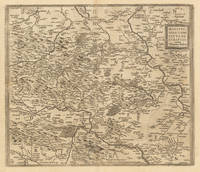
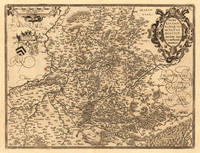
161233375Antwerpen: Juan Baptist Vrients 1612. In excellent condition. 368 by 430mm 14 by 17 inches. Hand-Colored Original Copperplate Engraving by Abraham Ortelius depicting Mansfeldiae Comitatus Descriptio auctore Tilemanno Stella. Sig. Published Antwerpen Juan Baptist Vrients 1612. Sheet: 368 by 430mm 14 by 17 inches. A fine and original hand-colored example of Ortelius's celebrated cartographic work documenting this region of Germany with the precision and decorative artistry characteristic of the 16100s. Abraham Ortelius 1527-1598 was a Flemish cartographer and geographer from Antwerp widely regarded as the creator of the first modern atlas. His landmark publication Theatrum Orbis Terrarum 1570 set the standard for atlas-making for the next century presenting uniform copper-engraved maps with scholarly commentary. By Ortelius's death the Theatrum had appeared in 25 editions in seven languages. In 1575 King Philip II of Spain appointed him Royal Geographer. His maps engraved with extraordinary precision are among the most sought-after in antique cartography held in collections including the Plantin-Moretus Museum in Antwerp the Library of Congress and the British Library.This original copperplate engraving with original hand coloring depicts the region of Mansfeldiae Comitatus Descriptio auctore Tilemanno Stella. Sig. published in Antwerpen Juan Baptist Vrients 1612. The map features a decorative Baroque cartouche containing the title inscription. A distance scale is incorporated within the cartouche or alongside it. The map records the political and geographic boundaries of the region as understood in 1612 offering a fascinating window into the history of German territorial organization. Sheet measures 368 by 430mm 14 by 17 inches. In good condition overall with minor signs of age appropriate for a 17th-century engraving. Ready to frame. Broe. 94 Koeman 32 Juan Baptist Vrients unknown
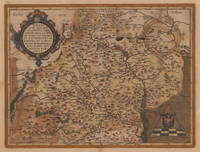
161235663Antwerpen: Christopher Platin 1612. In good condition. Old oxidations on the back. 35.6 x 475 cm 14 x 1875 inches. Original antique copper engraving old colored. Spanish text edition. Fine and decorative early map of Moravia. The map provides good information on early place names in the 16th century in Moravia as well rivers and mountains are engraved. Villages and towns are still shown as miniature views. In the upper left corner we find the renaissance cartouche and in the lower right corner we see a mileage scale with a circle and the coats of arms of Moravia. Christopher Platin unknown
160269318Antwerp. c.1602. A striking and very handsome map of the province of Namur in modern day Belgium. This map was first used by Ortelius in 1579 and it is based on the earlier map by I. Surhon. The map features a pair of stylish title cartouches and a directional compass. Namur is a province in Wallonia in the French speaking part of Belgium. The city stands astride the twin rivers of the Sambre and the Meuse. Published in Ortelius' landmark atlas the Theatrum Orbis Terrarum. Copperplate engraving with original colour. Size: 400x 525 mm Good condition. unknown
1601208175Antwerp: Ortelius Abraham 1601. unbound. very good. Map. Engraving with hand coloring. Image measures 15.5" x 20.25".<br/> <br/> Lovely map of the Namur region of Belgium. Includes a compass rose and a cartouche incorporating the Belgian coat of arms. From the 1601 Latin edition of Ortelius' "Theatrum Orbis Terrarum" the first modern Atlas. Margins have been cropped some chipping and tears along margins. Stain to top center margin and also to lower left and right of image.<br/> <br/> Ortelius, Abraham unknown
161220665Antwerpen: Juan Baptist Vrints 1612. Other. In very good to excellent condition. 369 by 488mm 14 by 19 inches. Original copper engraving published 1612 in a Italian text edition Vriens edition of the " Theatrum Orbis Terrarum. This antique map shows Hannonia in Belgium. The map is equipped with many small place names rivers woods etc. In the upper right corner we see an allegoric title cartouche and in the upper left corner a mileage scale and at the bottom two coat of arms. Ortelius was born on 14 April 1527 in the city of Antwerp which was then in the Habsburg Netherlands modern-day Belgium. The Orthellius family were originally from Augsburg a Free imperial city of the Holy Roman Empire. In 1535 the family had fallen under suspicion of Protestantism. Following the death of Ortelius's father his uncle Jacobus van Meteren returned from religious exile in England to take care of Ortelius. Abraham remained close to his cousin Emanuel van Meteren who would later moved to London. In 1575 he was appointed geographer to the king of Spain Philip II on the recommendation of Arias Montanus who vouched for his orthodoxy. He travelled extensively in Europe and is specifically known to have traveled throughout the Seventeen Provinces; in southern western northern and eastern Germany e.g. 1560 15751576; France 15591560; England and Ireland 1576; and Italy 1578 and perhaps twice or thrice between 1550 and 1558. Beginning as a map-engraver in 1547 he entered the Antwerp Guild of Saint Luke as an illuminator of maps. He supplemented his income trading in books prints and maps and his journeys included yearly visits to the Frankfurt book and print fair where he met Gerardus Mercator in 1554. In 1560 however when travelling with Mercator to Trier Lorraine and Poitiers he seems to have been attracted largely by Mercator's influence towards the career of a scientific geographer. Wikipedia Juan Baptist Vrints unknown
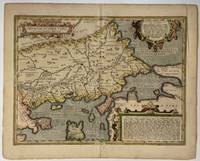
1630324748Antwerp: Abraham Ortelius 1630. unbound. Map. Engraving with hand color. Image measures 14" x 18 3/4".<br/> <br/> This beautiful map by Abraham Ortelius depicts the Balkan Peninsula or the Balkans extending from The Sea of Marmara Istanbul and the Bosporus Strait westward to Macedonia including Bulgaria. Portions of the Black Sea and the Thrakikon Pelagos are also shown. Topographical and geographical features such as mountains forests and cities are beautifully rendered in profile.<br> <br> Ortelius based this map on the 1560 South-East Europe map by Gastaldi and on on information from numerous ancient sources specifically Herodotus Plinius Strabo Appianus Virgilius Plutarchus and Sidonius. A beautifully engraved title cartouche adorns the top left of the map. Two additional cartouches containing text are also included in the top and bottom right.<br> <br> This map was published in the 1630 edition of Ortelius's famous "Theatrum Orbis Terrarum" which is historically considered the first modern atlas. Based on the Latin text on verso only 300 copies of this particular atlas were ever printed van der Broecke 214. The map is in good condition with minor wear and toning along the original centerfold. Printers crease to right margin not affecting the image. Latin text on verso.<br> <br> Abraham Ortelius 1527 - 1598 a Flemish cartographer and geographer is widely regarded as one of the important and influential cartographers in history. He is known for his "Theatrum Orbis Terrarum" which was the first modern atlas. Van den Broecke #214<br/> <br/> Abraham Ortelius unknown
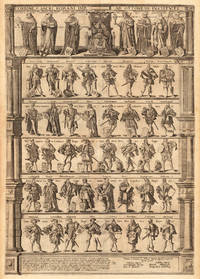
162425470Antwerpen 1624. Other. In excellent condition. 755 by 520mm 29 by 20 inches. Original copper engraving published 1624 in a Latin text edition of the famous historical atlas" Parergon by Abraham Ortelius. Printed from two plates. Latin text edition. Uncolored example in two sheets as published. Highly decorative engraving published from two double pages showing the dignitaries of the Holy Roman Empire. This engraving was published from 1593 for the first time in the atlas by Gerard de Jode. The plate was later acquired by Vrients and was then from 1603 onwards included in Ortelius' s "Theatrum" and the "Parergon". Our example was published 1624 in a Latin text edition of the Parergon."They represent the dignitaries entitled to choose German Emperors as instituted to end the turmoil and quarreling that occurred after the death of Charles the Great by Otto IV and the Pope. This plate shows left of the Emperor the highest ranking officials three ecclesiastical and four lay dignitaries. The second rank consists of four dukes and four marquesses the third of 8 earls." Broe. 201 Ortelius was born on 14 April 1527 in the city of Antwerp which was then in the Habsburg Netherlands modern-day Belgium. The Orthellius family were originally from Augsburg a Free imperial city of the Holy Roman Empire. In 1535 the family had fallen under suspicion of Protestantism. Following the death of Ortelius's father his uncle Jacobus van Meteren returned from religious exile in England to take care of Ortelius. Abraham remained close to his cousin Emanuel van Meteren who would later moved to London. In 1575 he was appointed geographer to the king of Spain Philip II on the recommendation of Arias Montanus who vouched for his orthodoxy. He travelled extensively in Europe and is specifically known to have traveled throughout the Seventeen Provinces; in southern western northern and eastern Germany e.g. 1560 15751576; France 15591560; England and Ireland 1576; and Italy 1578 and perhaps twice or thrice between 1550 and 1558. Beginning as a map-engraver in 1547 he entered the Antwerp Guild of Saint Luke as an illuminator of maps. He supplemented his income trading in books prints and maps and his journeys included yearly visits to the Frankfurt book and print fair where he met Gerardus Mercator in 1554. In 1560 however when travelling with Mercator to Trier Lorraine and Poitiers he seems to have been attracted largely by Mercator's influence towards the career of a scientific geographer. Wikipedia Broe. 201/202. State 2/2 xxij / xxj Latin text edition. unknown
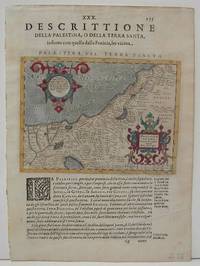
1610M1853Antwerp 1610. Excellent. Size : 137x178 mm 5.375x7 Inches Coloring: Hand Colored Category: ; Maps Asia Middle East Holy Land & Palestine unknown