HENRY HENRY ABRAHAM (1800-1879).Livre Rare Book

774 résultats
18591157SAN FRANCISCO. TOWNE & BACON, PUBLISHERS AND PRINTERS. 1859. IN-8 (11,5 X 19,5 X 2 CENTIMETRES ENVIRON) DE 187 PAGES, RELIURE DE L’EDITEUR A LA BRADEL PLEINE PERCALINE VERTE, PLATS ENCADRES DE FLEURONS A FROID, TITRE DORE SUR LE PLAT SUPERIEUR. EDITION ORIGINALE. ETIQUETTE EX-LIBRIS COLLEE SUR LE CONTREPLAT SUPERIEUR. TIMBRE HUMIDE EX-LIBRIS ET SIGNATURE AUTOGRAPHE SUR UN FEUILLET BLANC DE GARDE. PETITS DEFAUTS EXTERIEURS, DONT PETIT ACCROC SUR LE PLAT INFERIEUR, SINON BON EXEMPLAIRE.
1802102952À Freiberg, chez Craz, libraire, 1802, in-8, portrait-frontispice, XXXII-311-[] pp, Basane de l'époque, dos lisse fileté et fleuronné, tranches rouges, Première édition française de cet ouvrage très rare, mémorable dans l'histoire des théories géologiques : la traduction a été donnée par Aubuisson des Voisins, élève de Werner à la Bergakademie de Freiberg. L'exemplaire est bien complet du portrait de l'auteur, gravé d'après Vogel et reproduit ici pour la première fois. La même année a été publiée une édition parisienne (Villier) qui ne comporte pas le portrait. La Neue Theorie von der Entstehung der Gänge a été publiée à l'origine à Freiberg en 1791. Werner, père de la géognosie, y formule, définitivement et catégoriquement, ses opinions sur la formation de la terre. Celles-ci se résument en dix arguments que l'auteur utilise comme réponse aux objections qui lui sont faites (chapitre VII, 68, pp. 133 et suiv.), le premier d'entre eux étant la base de la thèse dont il est le fondateur, le neptunisme : "les montagnes primitives et secondaires ont été formées par une suite de précipités et de dépôts successifs... [qui] proviennent d'une mer qui couvroit le globe, mer toujours existante, plus ou moins générale, et renfermant les diverses substance qui s'en sont précipitées". Abraham Gottlob Werner (1749 ou 1750-1817) est sans conteste le géologue la plus influent de la fin du XVIIIe siècle. Il imposa ses convictions au monde entier, passant pour certains comme un professeur enthousiaste et zélé, pour d'autres comme un doctrinaire refusant les opinions contraires et fourvoyant ses nombreux disciples. En défendant ses thèses, il fait montre d'un dogmatisme farouche, particulièrement frappant dans cette Nouvelle théorie de la formation des filons : "It would be difficult to cite from any other modern scientific treatise a series of consecutive sentences containing a larger number of dogmatic assertions" (Geikie p. 216). Cachets et cote de l'Institut Catholique de Paris. Rousseurs claires en début et en fin de volume; autrement, bon état intérieur. Frottements et épidermures, dos passé, galeries superficielles sur le plat supérieur. Schuh II, 5006. Ward & Carozzi, 2306. Geikie, The Founders of Geology, p. 201 et suiv. DSB XIV p. 262. Norman 2206 pour l'édition originale allemande. Couverture rigide
1864WB163441864. Hardcover. Very Good. Rare broadside tipped into a copy of The Early Life of Abraham Lincoln: Containing many unpublished documents and unpublished reminiscences of Lincoln's early friends. TARBELL Ida M. Assisted by James McCann Davis. Published by McClure New York 1896. The broadside printed in two columns presents the platforms of the Republicans who in June in Baltimore nominated Lincoln and the Democrats who in August in Chicago nominated McClellan. <br /> <br/><br/> hardcover
1865235590Boston: Oliver Ditson & Co 1865. First edition front wrapper without portrait of Lincoln appearing in later issues. Engraved title and piano score; 5 pp. 1 vols. Folio. Loose as issued; split along spine with some chipping to extremities. First edition front wrapper without portrait of Lincoln appearing in later issues. Engraved title and piano score; 5 pp. 1 vols. Folio. Donizetti died 17 years before Lincoln having gone mad from syphilis. His Funeral March gained a measure of recognition in America after it was performed during Lincoln's funeral ceremonies. It is a heavy solemn piece in a minor with droning octaves in the bass a haunting chromatic figure in the middle register and a lyrical upper voice. see Barret Sale Lot 693; Stern Collection of Lincolniana Oliver Ditson & Co unknown
1860377692New York: Horace Greeley & Co 1860. 32pp. 8vo. Disbound. 32pp. 8vo. An early campaign biography of future president Abraham Lincoln written by John Locke Scripps of the New York Tribune. Scripps reports on the life of Abraham Lincoln in eight chapters touching on the major events of his life and career beginning with his early life and his move to Illinois through his transition from merchant to lawyer and legislator and covering his time in Congress with accounts of Lincoln's opposition to the Mexican-American War his support of the Wilmot Proviso and his involvement with the organization of the Republican Party. <br /> <br /> Wessen states that this edition was printed by Horace Greeley "from plates cast from the same type forms" as the 1860 Chicago edition which is considered the first published biography of Lincoln. An advertisement for the Tribune and the Tribune Almanac fills the bottom two thirds of the last page. <br /> <br /> "Most authentic of Lincoln campaign biographies" - Howes. Howes S247a "aa"; Managhan 79 note; Wessen Campaign Lifes of Abraham Lincoln 12 ref; Miles 418a; Abraham Lincoln: His Life in Print p. 85 Horace Greeley & Co unknown
186482099New York:: National Union Executive Committee 1864. Creased where folded vertically and multiple times horizontally; some minor use to edges and a few tiny losses at folds; very attractive. . 11-1/2 x 8-3/4 inches. A Lincoln re-election broadside setting forth in detail and contrasting The Chicago Platform proposing "immediate efforts be made for a cessation of hostilities" and The Baltimore Platform "quelling by force of arms the rebellion." National Union Executive Committee, unknown
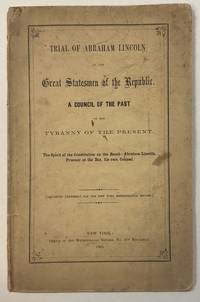
186340887New York: Office of the Metropolitan Record 1863. Original printed wrappers. Stitched. 29 1 blank 1- advertisement for 'The Washington Despotism Dissected' 1 blank pp. Light wear and fox. About Very Good.<br /> <br /> The Metropolitan Record whose Prospectus is printed on the rear wrapper calls itself "an unswerving opponent of fanaticism in every form and an advocate of constitutional liberty and the rights of the citizens against despotic usurpation." <br /> This pamphlet is "A mock trial wherein Lincoln was charged with treasonable intent purposes and designs and of having committed among other unconstitutional acts the following: 'Declared War against Sovereign States under pretence of repossessing himself of certain forts and other property; arresting citizens without process of law; suppressed liberty of speech; stopped publication of certain newspapers; placed the military power above the civil power; overthrown State Sovereignty; forced unconstitutional acts through Congress.' At the conclusion of the trial the Court addressed the 'Criminal' as follows: 'You have been tried and found wanting. You have been given the opportunity of saving a nation but you have stabbed it to the heart. You have converted your country into a despotism'." Eberstadt.<br /> "Quotations from Lincoln and others selected to discredit his administration" Monaghan. A second edition was printed in 1867. Sabin Monaghan and LCP do not collate the advertisement at page 31.<br /> FIRST EDITION. 111 Eberstadt 332. Monaghan 252. Sabin 41234. LCP 10399. Office of the Metropolitan Record unknown
186323577.01<p>"<i>and that Government of the people for the people and for all people shall not perish from earth.</i>"</p><p>As printing technology advanced through the middle decades of the nineteenth century illustrated newspapers grew in popularity even though their engravings added a few weeks to press time. <i>Leslie's</i>printing—from December 5—includes an article containing the full text of Lincoln's timeless speech page 11. Illustrations include a centerfold spread with the formal dedication ceremony prominently placed and smaller views of Union and rebel graves defensive works Meade's headquarters and a view of the town centerfold. A large illustration of "<i>The War in Tennessee—Lookout Mountain and Its Vicinity</i>" appears on the front page.</p><p>There is no definitive text that captures exactly how Lincoln spoke that day though the AP reporter's text is most familiar. <i>Leslie's</i> printing following the <i>Philadelphia Enquirer</i>version contains variations most notably in the final two sentences regarding the nation's unfinished work and closing phrase of "<i>Government of the people for the people and for all people</i>" rather than "<i>of the people by the people and for the people.</i>"</p> <b>ABRAHAM LINCOLN. GETTYSBURG ADDRESS.</b>Newspaper <i>Frank Leslie's Illustrated Newspaper</i> New York December 5 1863. 16 pp. complete.<p><b><br /></b></p><p><b>Excerpt:</b></p><p>"<i>Fourscore and seven years ago our fathers brought forth upon this Continent a new nation conceived in liberty and dedicated to the proposition that all men are created equal. Now we are engaged in a great civil war testing the question whether this nation or any nation so conceived so dedicated can long endure. We are met on the great battle-field of that war. We are met to dedicate it on a portion of the field set apart as the final resting place of those who gave their lives for the nation's life; but the nation must live and it is altogether fitting and proper that we should do this. In a larger sense we cannot dedicate we cannot consecrate we cannot hallow this ground in reality. The number of men living and dead who struggled here have consecrated it far above our poor attempts to add to its consecration. The world will little know and nothing remember of what we see here but we cannot forget what these brave men did here. We own this offering to our dead. We imbibe increased devotion to that cause for which they here gave the last full measure of devotion; we here might resolve that they shall not have died in vain; that the nation shall under God have a new birth of freedom and that Government of the people for the people and for all people shall not perish from earth.</i>"</p><p><b>Historical Background</b></p><p>Though November 20th imprints are the most valuable newspaper publications of the Gettysburg Address none are as lavish as this issue of <i>Leslie's</i> and none show the cemetery or provide images of the ceremony. It is also interesting to note that the leading illustrated newspaper <i>Harper's Weekly</i> did not publish the Address or illustrate the ceremony. This <i>Leslie's</i> issue published in far smaller quantities than <i>Harper's</i> is quite scarce.</p><p><i>Frank Leslie's Illustrated Newspaper</i> was founded in 1852 and published until 1922. Originally established by <i>Illustrated London News</i>owner Frank Leslie 1821-1880 the weekly continued under the guidance of his widow suffragette Miriam Florence Leslie from 1880 until 1902 when she sold the highly recognizable brand. Specializing in patriotic topics and heavily reporting war efforts from the Civil War to World War I the newspaper also covered Arctic exploration the Klondike Gold Rush strikes and sporting events. Civil War reporting and illustration was among the paper's most successful ventures.</p><p><b>Historical Background</b></p><p>Lincoln's speech delivered at Gettysburg National Cemetery on November 19 1863 has endured as a supreme distillation of American values. Over the past 150 years it has become a compelling testament to the sacrifices required to achieve freedom for all Americans. Lincoln made his speech at the cemetery's dedication some four months after the bloody and pivotal battle that turned the tide of the Civil War in favor of the Union. Edward Everett the most famous orator of his day spoke first and his address took some ninety minutes to deliver. He evoked the ancient Greeks who save their society by defeating the Persians at Marathon drew upon Wellington's victory over Napoleon at Waterloo and then moved to a history of the Battle of Gettysburg—America's decisive victory in the struggle to save the nation. Though a masterpiece of period it has been largely forgotten.</p><p>Lincoln's speech delivered in only a few minutes has persisted despite his assertion that "the world will little note nor long remember what we say here." Much has been written about Lincoln's famous speech from whether he read it or memorized it to when and where he wrote it. Many Americans believe Lincoln wrote the speech on the back of an envelope while riding the train to Gettysburg. This charming piece of fiction originated in Mary Shipman Andrews's 1906 book <i>The Perfect Tribute</i>. The real Address's writing is more complex. When Secretary of State William Seward gave a prepared speech on the evening of November 18 he gave a copy to the Associated Press. Reporters then repeatedly harassed John Hay one of Lincoln's personal secretaries for a copy of the President's speech. Hay demurred having neither the text nor any idea when it would be available. Based on the paper Lincoln used for his two drafts one page of Executive Mansion stationery and a page of lined paper then 2 identical pages of lined paper historian Gabor Boritt has concluded that the "likelihood remains that having written the first part of his speech in Washington Lincoln finished his First Draft in the evening in Gettysburg and then hurriedly wrote his Second Draft the next morning" Boritt 273. The text of the second draft is closest to the words recorded by reporters at the scene and is generally considered to be Lincoln's reading copy.</p><p>Newspaper copies and reports are another story one complicated by the fact that most witnesses to the dedication ceremony and speech outlived Lincoln by decades. But the words he spoke at Gettysburg only gained traction as his seminal contribution in the 1880s. As both the Lincoln legend and the speech's significance grew following the Civil War Reconstruction the Centennial and the rise of Jim Crow many more people than could have been possibly involved in the event have staked their claims to a Gettysburg Address connection.</p><p>With the advent of the telegraph news reporting had become big business and Lincoln surrounded himself with the press corps. Roy Basler editor of the <i>Collected Works of Abraham Lincoln</i> noted four reporters making shorthand notes of the speech: Associated Press and <i>New York Herald</i> reporter Joseph Gilbert <i>Boston Daily Advertiser</i> reporter Charles Hale and reporters from the <i>Chicago Tribune</i> and <i>Philadelphia Enquirer</i>. Gabor Boritt author of the definitive <i>The Gettysburg Gospel</i> adds John Hay one of Lincoln's personal secretaries to the list and refers to at least 23 additional reporters on the scene including many of Lincoln's allies in the Republican press. Known as "Lincoln's dog" <i>Philadelphia Press</i>owner John Forney offered a drunken pro-Lincoln rant on the evening before the speech but he was sober enough to wait for a slew of correspondents to arrive to take down his words.</p><p>What has come down as the standard version of the Address was compiled from Lincoln's drafts reports of what he spoke at the time and later revisions made by Lincoln himself. What is certain however is that "variations of the AP version reached more Americans in 1863 than any other" Boritt 239. The <i>New York Herald</i> received the text by telegraph and published it the next day. Later when Lincoln penned copies of his speech he is said to have referenced the AP report. A longtime story credits Joseph I. Gilbertof the Associated Press as having had "actually consulted Lincoln's delivery text briefly after the ceremony." This noted Garry Wills in 1992 "makes his version more authoritative for some scholars." Wills correctly credits the AP text as authoritative and in terms of cultural significance no other version had the reach of the AP's wording. The AP version and its slight variants usually comma placement and capitalization are easily identifiable because of the phrase "dedicated here to the refinished work…" rather than the correct "unfinished work."</p><p>However Gilbert's claim to be the reporter who delivered the AP's text does not withstand scrutiny. Gilbert did work for the AP at the time of the speech but he only made his assertion in 1914. In the ensuing fifty-four years the event's stature had grown to near-Biblical proportions. Gilbert recalled being so taken with Lincoln's words that he stopped recording the speech in shorthand. He claimed the President fortuitously allowed him to look at the manuscript copy and Gilbert insisted that "the press report was made from the copy no transcription from shorthand notes was necessary Boritt 371. However the AP version missed the word "poor" which other reporters caught and was present in the second draft; it also contained the phrase "under God" which was absent from the draft and notes five interruptions for applause followed by sustained applause at the speech's conclusion. When asked in 1917 Gilbert denied hearing any applause at all. These and other critical elements of the AP text cast serious doubt on Gilbert's claims.</p><p>Gabor Boritt writes that <i>Boston Daily Advertiser</i> reporter Charles Hale's eyewitness handwritten version should be preferred since it relied only on what Lincoln said; although one could counter-argue that he may not have captured Lincoln's words exactly. Both Boritt and Wills agree that while many other reporters' transcripts are generally inferior they nevertheless captured the word "poor" that both the AP and Hale missed. Interestingly when Hale's paper the <i>Boston Daily Advertiser</i> first published the Address on November 20 the paper incorrectly printed "The world will note nor long remember what we say here but it can never forbid what they did here" omitting the word "little" before "note" and changing "forget" to "forbid" —an odd discontinuity for a claim to the authoritative text though the reporter lamented that the speech had "suffered somewhat at the hands of telegraphers."</p><p>Versions printed on November 20 1863 are the Address's first appearance anywhere and are highly desirable as are other early printings. The <i>Washington Daily Chronicle</i> also owned by John Forney published Edward Everett's speech in its entirety but failed to include Lincoln's words in their November 20 edition so the paper published a 16-page pamphlet entitled "The Gettysburg Solemnities" dated November 22. It contained a number of the day's speeches and was the first time Lincoln's speech was printed separately. There are only three known copies a fourth disappeared from a library the last one on the market having sold at auction and then resold privately for approximately $650000. The first publication in book form printed by Baker and Godwin of New York was entitled <i>An Oration Delivered on The Battlefield of Gettysburg November 19 1863 at the Consecration of the Cemetery Prepared for the Interment of the Remains of Those Who Fell in the Battles of July 1st 2d and 3d 1863</i> also appeared within the week. Copies have sold privately for over $30000.</p><p><b>Gettysburg Address Manuscripts</b></p><p>Five manuscript versions written in Lincoln's hand are known. Library of Congress.</p><p>1. First draft the Nicolay copy after Lincoln's personal secretary John Nicolay. Library of Congress.</p><p>2. Second draft the Hay copy after Lincoln's personal secretary John Hay.</p><p>Much ink has been spilled over which of the first two was the copy Lincoln read; the answer is probably neither.</p><p>Three more versions were written later for charitable purposes and more closely approximate the words that Lincoln actually spoke.</p><p>3. The copy given to Edward Everett was intended as a fundraiser for the New York Metropolitan Fair; it is now at the Abraham Lincoln Presidential Library in Springfield Illinois.</p><p>4. George Bancroft requested a copy to be lithographed and sold at the Baltimore Sanitary Fair to support the troops. Lincoln agreed but did not pen a title or signature and ran into the margins. Cornell University.</p><p>5. Because the Bancroft copy was impractical to reproduce Lincoln penned another adding the title and his signature. This known as the Bliss copy after Bancroft's stepson is at the White House.</p><p><b>Condition</b></p><p>Some loss to the gutter margin; the only text/engravings affected are along the vertical fold of the center spread on pages 8-9 168-69. The majority of the issue including the text of Lincoln's Address is in good or better condition.</p> books
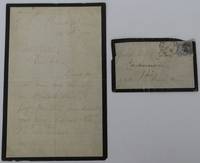
186921090191869. letter. very good. Autograph Letter signed by Laura Keene a successful actress who was the female lead in the play Our American Cousin on the evening that President Lincoln was shot at Ford's Theater in Washington D.C. It is rumored that Ms. Keene cradled the President's wounded head against her knees. Ms. Keene herself never offered any details. All accounts of her holding the President's head are from later remembrances. In this letter Ms. Keene writes to Judge Carter of Cincinnati regarding a play he has written and hopes to have produced. Included is a signed photo of Judge A.G.W. Carter and a broadsheet announcement for one of Carter's works "The Sicilian Sisters" and some other ephemera. Letter and envelope are creased some browning and fading small chip to second sheet; very good. unknown
1863021633New York City: New York Daily Tribune. Good with no dust jacket. 1863. Newspaper. Original issue of the New York Daily Tribune November 21 1863 featuring a very early printing of Abraham Lincoln's Gettysburg Address. Paper measures 15 5/8 x 19 7/8 inches. Typical disbound tears to spine not intruding into text save for a couple tears to final leaf but no loss of text. Uneven trimming to bottom edge with loss of a line of text on several pages. Front page headlines include "Entire Success of the Rio Grande Expedition" "Siege of Charleston" and "From the Army of the Ohio". The report from the Gettysburg Ceremonies and Consecration of the National Cemetery fill three columns on page 2. Lincoln's short speech was preceded by several other orators including Edward Everett's ninety minute speech. Lincoln's 271 word speech remains one of America's best known and memorable speeches soon to be published in newspapers throughout the United States. Some Eastern papers published the speech on November 20th. Versions printed on the 20th are the Addresss first appearance and are highly desirable as are other early printings such as this copy. ; 12 pp . New York Daily Tribune unknown books
1860WRCAM54620New York 1860. 117pp. plus 4pp. of ads including rear wrapper. Frontispiece portrait. Original printed wrappers. Wrappers chipped and worn spine perished lower quarter of rear wrapper torn away. Very light dampstaining occasional spotting. Good. A rare campaign biography of Lincoln with a portrait of a beardless Lincoln and his first name spelled incorrectly. Prints many of his speeches and glorifies his backwoods origin and includes a very brief biographical sketch of Hannibal Hamlin. ".This was the first life of Lincoln in book form" - Howes. HOWES L341 "aa". STREETER SALE 1744. SABIN 41200. MONAGHAN LINCOLNIANA 92. unknown books
1865235590Boston: Oliver Ditson & Co 1865. First edition front wrapper without portrait of Lincoln appearing in later issues. Engraved title and piano score; 5 pp. 1 vols. Folio. Loose as issued; split along spine with some chipping to extremities. First edition front wrapper without portrait of Lincoln appearing in later issues. Engraved title and piano score; 5 pp. 1 vols. Folio. Donizetti died 17 years before Lincoln having gone mad from syphilis. His Funeral March gained a measure of recognition in America after it was performed during Lincoln's funeral ceremonies. It is a heavy solemn piece in a minor with droning octaves in the bass a haunting chromatic figure in the middle register and a lyrical upper voice. see Barret Sale Lot 693; Stern Collection of Lincolniana Oliver Ditson & Co unknown books
1860116741Columbus: Follett Foster and Company 1860. First edition second issue with the Table of Contents on page ii of "the most important series of American political debates" Howes L338. Octavo original publisher's brown cloth with gilt titles to the spine and elaborate blind stamping to the front and rear panels. In very good condition. Ownership name. Although the debates were originally performed during the Illinois Senatorial race in 1858 they were published when both men became presidential candidates in 1860. Douglas won the race for senator but the debates were his undoing in the presidential race as Lincoln reminded voters repeatedly of the inconsistency between Douglas' principle of "popular sovereignty" in which the new territories would individually determine the status of slavery and the Dred Scott decision in which the Supreme Court declared that slavery would not be excluded from the territories by Congress. As a result Douglas was too tolerant of slavery for many northerners and not vigorous enough for Southern Democrats. Somewhat surprisingly for an attorney Lincoln did not seek Douglas' permission to publish a book of their combined speeches although Douglas was later given the last-minute opportunity--he declined--to make corrections to his own remarks" Morris 121. Follett, Foster and Company hardcover books
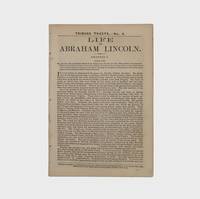
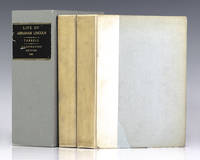
1900131290New York: The Doubleday & McClure Co. 1900. First Special Illustrator's edition of the work that earned Tarbell a national reputation as a major writer and the leading authority on Abraham Lincoln. Quarto two volumes half cloth over paper-covered boards illustrated tissue-guarded frontispiece portrait of Lincoln to each volume. One of only 75 numbered copies printed this is number 51. In near fine condition. Rebacked. Housed in a custom slipcase. Rare. Meant to compete against a Century Magazine series which had been written by Lincoln's private secretaries John Nicolay and John Hay Tarbell's 20-part series The Life of Abraham Lincoln was a massive success and earned Tarbell a national reputation as a major writer and the leading authority on Abraham Lincoln. The popular series based on Tarbell's own original research and interviews helped boost McClure's circulation to over 250000 which climbed to over 300000 by 1900 and allowed McClure to buy a printing plant and a bindery. Tarbell went on to publish five books about Lincoln and traveled on the lecture circuit recounting her discoveries to large audiences. The Doubleday & McClure Co. hardcover
18860002014NORTH OXFORD COUNTY ON EAST NISSOURI WOODSTOCK. Fair. 1886. On offer is an interesting original later 19th Century Municipal Record book from North Oxford Ontario dated 1886-87. Titled: Township of North Oxford Debenture Accounts Henderson Creek Drain under By Law No. 176. 1886 & 1887. The treasurer is an Abraham John Hillsdon and the accounts are written in his hand ~ lists of income received and expenditures for this Henderson Creek Drain project in 1887. There are 29 written pages starting in 1887 with the last entry in 1895. They are sporadic in the book some at the front some in the middle and some right at the end of the book with blank pages in between. There is a small glued in handwritten receipt: 'Received from Mr. Hillsdon Treasurer of North Oxford the Sum of Five dollars and Seventy three cents ~ East Nissouri Township's share of the refund on the Henderson Creek Drain" signed David Lawrence Treasurer East Nissori'. Many names in this book a very interesting piece of south western Ontario history. The back of the book has several pages on the Gravel Account for 1894; Reports from Each Pathmaster of the Gravel Used in their Division; lists of names numbers of loads and pit locations. There is also a copy of By-Law # 176 for the year 1886 inserted ~ By-Law to provide for draining of parts of the first second and third concessions of the Township of North Oxford and for borrowing on the credit of the Municipality the sum of one thousand nine hundred and fifteen dollars for completing the same. Provisionally adopted the twentieth day of October A.D. 1886. Also there is a worn copy of the Seventh Annual Report for the Agricultural Mutual Assurance Association of Canada tucked in. The book itself is in fair shape having a cracked hinge some loose pages and some chipping but overall Fair.; 8vo - over 7¾" - 9¾" tall; KEYWORDS: HISTORY OF NORTH OXFORD COUNTY ABRAHAM JOHN HILLSDON KITCHENER ONTARIO UPPER CANADA GALT WATERLOO HENDERSON CREEK DRAIN DAVID LAWRENCE EAST NISSORI LAKESIDE THAMESFORD ECONOMY FINANCE WOODSTOCK INGERSOLL TILLSONBURG BLANDFORD-BLENHEIM EAST ZORRA-TAVISTOCK NORWICH SOUTH-WEST OXFORD TOWNSHIP OF ZORRA HESSE DISTRICT MENNONITES AMISH CANADIANA CANADIAN HANDWRITTEN MANUSCRIPT DOCUMENT LETTER AUTOGRAPH DIARY JOURNAL LOG KEEPSAKE WRITER HAND WRITTEN DOCUMENTS SIGNED LETTERS MANUSCRIPTS PHOTO ALBUM PHOTOGRAPHIC ALBUM HISTORICAL HOLOGRAPH WRITERS HANDSCHRIFT HANDGESCHRIEBEN MANUSKRIPT DIARIES JOURNALS LOGS AUTOGRAPHS PERSONAL MEMOIR MEMORIAL PERSONAL HISTORY antiquité contrat vélin document manuscrit papier Antike Brief Pergament Dokument Manuskript Papier oggetto d'antiquariato atto velina documento manoscritto carta antigüedad hecho vitela documento manuscrito Papel . unknown
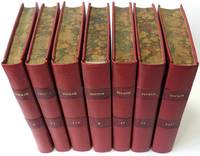
1805614705London: R. Faulder/T. Payne 1805. Volume I to VII complete. Hardcovers with red boards no dust jackets gilt lettered spines and complementary marbled page blocks in very good condition. Page block heads are slightly tanned. Within age related tanning and foxing on some of the pages which are otherwise clear. Boards are clean and bindings are sound. LW. Hardcover. Very Good/No Dust Jacket. Used. R. Faulder/T. Payne Hardcover
186444789Boston: Little Brown and Company 1864. Original full black cloth blind embossed boards spine lettered in gilt. Frontispiece "Map of the Gettysburg Battlefield and Hospitals." Folding plate "Map of the Grounds and Design For the Improvement of the Soldiers' National Cemetery Gettysburg PA. 1863." The scarce Erratum slip is laid in. Wear and chipping to spine and edges old dampstain affecting the bottom portion of the text. Contains the first authorized appearance of Lincoln's Gettysburg address in book form. Scarce. See photos. First Edition. Hard Cover. Little, Brown and Company Hardcover
1867000793IPSWICH MASSACHUSETTS MA. Good. 1867. On offer are five handwritten manuscript journals all having belonged to the Caldwell family who lived in Massachusetts one of the diaries 1870 has the name Ezra S. Vieyes written in it. A casual reading does not determine where Ezra fits in with the Caldwell family but a more detailed reading will hopefully flesh out the relationship. Two of the diaries have the name of the family scion being Abraham Caldwell of Ipswich Massachusetts. Other towns mentioned include Westminster Fitchburg Northborough and Worcester. The diaries represent the years 1867 full of entries 1870 a quarter full 1875 a half filled 1887 fully written and the 1890's. Though not all fully written and the entries suggest illiterate writers these diaries represent a true piece of Americana with a treasure trove of local historical detail and genealogical information. For the medical collector there is an interesting thread running throughout - Mr. Caldwell is quite aged and he catalogues his daily ailments certainly a medical professional may assess his health from his writings. Here are some snippets: 1867 - "February 26th Went to examination. Lizzie Rawson teach good." "March 4th Went to town meeting. Another trial of Shemp decided as it should be." "May 10th Surveyed road to town distance of about 2 ¾ miles 15 ft." "June 17th Golden wedding 75-100 people persons present." "September 13th Took Templers Degrees. Went to town to lecture. Carried B.M. Balch." "October 13th On euqaduct to town meeting for roads. Was chosen on committee." 1887 "January 9th 7 Below. Very cold. Snow flakes flying all day. Ben out very little today. Louitah Lord little more comfortable but very sick." "February 9th Sick all day. From Salem paper I see Mr. Joseph Pusfer died in Salem Oct. 19th 1886. Born July 18th 1798." "March 14th Today I hav made a grait mistak in being two positive when in fact I was rong. My mind is faking me." "June 22nd and 23rd Stage coach below belonged to Appleton farm . Boiled out sink cess pool very hard job. Had nummness in my arm and shoulder. Stage coach passed to day for Salem." "July 25th Hot and sultry. A young lady came to Mrs. Batysons. Sang for House Benefit." "August 9th Went marsh with North Harris and Negro. Went to Beverly. Stayed at Edwards over night." "August 21st Fine and pleasant. John Billy's mother and sister here. Conrad G to made round Cape Ann." "October 6th Tryed to make some wine. Caried my grapes to Capt. Wilcomb and he pressed them for me." "October 19th Finished pounding the beans then went to Georgetown. Went in to Noisas Shoe factory. Was kindly received and shown from basement up. Felt interest and enjoyed it muh." "December 14th Very warm and Pleasant. Went over to south side river to Mrs. Dolls with Edy B. Escamined his stock." "December 16th Cooler. Gave notice to Mrs. Campbell that I should want the tenement she now ocupies for my own use the first of April next." "December 19th Mrs. Smith at the Invenational House left and fell and broke both arms. Slippery this morn. Bought turkey of Perkins." The 1893-1900 journal in the lot is a handwritten financial journal which has about 100 pages of expense type entries. I believe most of the entries have to do with rentals and money collected for the rentals. This journal has the name John Caldwell written on the inside. The front cover has fallen off of this journal and some of the pages are torn. The first 20 pages have also been torn out and are not accounted for. Overall G.; Manuscript; 24mo - over 5" - 5¾" tall; HANDWRITTEN MANUSCRIPT DOCUMENT LETTER AUTOGRAPH DIARY JOURNAL LOG KEEPSAKE WRITER HAND WRITTEN DOCUMENTS SIGNED LETTERS MANUSCRIPTS HISTORICAL HOLOGRAPH WRITERS DIARIES JOURNALS LOGS AUTOGRAPHS PERSONAL MEMOIR MEMORIAL PERSONAL HISTORY AMERICANA antiquité contrat vélin document manuscrit papier Antike Brief Pergament Dokument Manuskript Papier oggetto d'antiquariato atto velina documento manoscritto carta antigüedad hecho vitela documento manuscrito Papel HISTORY MASSACHUSETTS MA FARMING ECONOMICS GENEALOGICAL . unknown
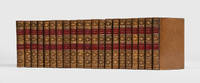
1830192234London: Printed by A. J. Valpy 1830-1834. First editions from this noted series representing the Greek tragedians Latin satirists the prose of great statesmen and Roman history. Valpy 1786-1854 began to publish Classical literature as a schoolboy. The Family Classical Library followed his reissue of the Delphin Classics 1819-30 a series of annotated Latin texts. 21 vols small octavo 154 x 98 mm. Portrait frontispiece of each author. Contemporary speckled calf red labels compartments tooled in gilt double gilt fillet to boards gilt inner dentelles marbled endpapers top edges gilt. Bookplates of the collector Charles Waterman Armour 18571927. A few headcaps worn restoration to headcap and joints of Euripides vol. I spines flaking light foxing. A very good set. hardcover
18661009808vo one sheet printed on both sides. Even toning and aging small closed tear to the upper margin; otherwise very good. This is a rather scarce government document that informs the military that the "Thirteenth Amendment" has passed and slavery is officially abolished. Article XIII states "Neither slavery nor involuntary servitude except as a punishment for a crime whereby the party shall have been duly convicted shall exist within the United States or any place subject to their jurisdiction." This document is signed in type by William H. Seward 1801-1872 as the Secretary of State. Congress would follow with a Civil Rights Act of 1866 to give African Americans the same rights as all citizens but this small printed document presenting the essence of the "Thirteenth Amendment" is an important piece of history. ANB.
18661009808vo one sheet printed on both sides. Even toning and aging small closed tear to the upper margin; otherwise very good. This is a rather scarce government document that informs the military that the "Thirteenth Amendment" has passed and slavery is officially abolished. Article XIII states "Neither slavery nor involuntary servitude except as a punishment for a crime whereby the party shall have been duly convicted shall exist within the United States or any place subject to their jurisdiction." This document is signed in type by William H. Seward 1801-1872 as the Secretary of State. Congress would follow with a Civil Rights Act of 1866 to give African Americans the same rights as all citizens but this small printed document presenting the essence of the "Thirteenth Amendment" is an important piece of history. ANB. books
18774837Miller's Bible and Publishing House 23,5 30,5 Montréal, Canada / Philadelphia 1877 Fort volume in-4, reliure de plein cuir vert sombre, dos à quatre nerfs et à six caissons ornés, deux portant le titre doré "Holy Bible", plats bisautés encadrés d'un triple filet et d'une guirlande dorés, entrelacs dorés au centre, dentelle sur les chasses, tranches dorées, VII-1011 p., Marriages (1 p.), Births (1 p.), Memoranda (1 p.), Family portraits (4 p., soit 16 emplacements de portraits en oval) et 4 p. non paginées, 9 gravures hors texte, dont celle de Gustave Doré "Daniel the Statesman-Prophet". La première traduction en anglais de la Bible hébraïque (Ancien Testament) a été, sur le sol américain, éditée et publiée à Philadelphie en 1854. Notre réédition date de 1877-78 (année hébraïque 5638 comme l'indique la page de titre). Isaac Leeser (1806-1868) est né en Allemagne et a émigré aux Etats-Unis en 1824. Il a été le rabbin de la Synagogue Mikweh Israel à Philadelphie et le créateur du premier périodique juif au Etats-Unis (The Occident). Il a été un promoteur très actif de la culture juive aux Etats-Unis, face au risque d'assimilation ou de protestantisation. Il rappelle au début de la préface son objectif "a desire entertained for more than a quarter of a century, since the day he quitted school in his native land to come to this country, to present to his fellow-Israelites an English version, made by one of themselves, of the Holy Word of God." Sa traduction est une oeuvre de foi : "The translator is an Israelite in faith, in the full sense of the word : he believe in the Scriptures as they have been handed down to us". La traduction de Leeser s'est imposée comme un "standard" jusqu'aux travaux de la Jewish Publication Society (JPS). La page de titre porte la mention "Abraham de Sola, LLD. Montréal, Canada". De Sola (1825-1882), ministre de la Synagogue espagnole et portugaise de Montréal, fut un des continuateurs de Leeser. Coiffes abîmées, mors fendus en tête et en queue, légère déreliure entre les pages VIIet VII, coins un peu émoussés, petite réparation en bas des pages 17-18-19-20, bon intérieur.(EvB19) PHOTOS NUMERIQUES DISPONIBLES PAR EMAIL SUR SIMPLE DEMANDE-DIGITAL PHOTOGRAPS MAY BE AVAILABLE ON REQUEST
18774837Miller's Bible and Publishing House 23,5 30,5 Montréal, Canada / Philadelphia 1877 Fort volume in-4, reliure de plein cuir vert sombre, dos à quatre nerfs et à six caissons ornés, deux portant le titre doré "Holy Bible", plats bisautés encadrés d'un triple filet et d'une guirlande dorés, entrelacs dorés au centre, dentelle sur les chasses, tranches dorées, VII-1011 p., Marriages (1 p.), Births (1 p.), Memoranda (1 p.), Family portraits (4 p., soit 16 emplacements de portraits en oval) et 4 p. non paginées, 9 gravures hors texte, dont celle de Gustave Doré "Daniel the Statesman-Prophet". La première traduction en anglais de la Bible hébraïque (Ancien Testament) a été, sur le sol américain, éditée et publiée à Philadelphie en 1854. Notre réédition date de 1877-78 (année hébraïque 5638 comme l'indique la page de titre). Isaac Leeser (1806-1868) est né en Allemagne et a émigré aux Etats-Unis en 1824. Il a été le rabbin de la Synagogue Mikweh Israel à Philadelphie et le créateur du premier périodique juif au Etats-Unis (The Occident). Il a été un promoteur très actif de la culture juive aux Etats-Unis, face au risque d'assimilation ou de protestantisation. Il rappelle au début de la préface son objectif "a desire entertained for more than a quarter of a century, since the day he quitted school in his native land to come to this country, to present to his fellow-Israelites an English version, made by one of themselves, of the Holy Word of God." Sa traduction est une oeuvre de foi : "The translator is an Israelite in faith, in the full sense of the word : he believe in the Scriptures as they have been handed down to us". La traduction de Leeser s'est imposée comme un "standard" jusqu'aux travaux de la Jewish Publication Society (JPS). La page de titre porte la mention "Abraham de Sola, LLD. Montréal, Canada". De Sola (1825-1882), ministre de la Synagogue espagnole et portugaise de Montréal, fut un des continuateurs de Leeser. Coiffes abîmées, mors fendus en tête et en queue, légère déreliure entre les pages VIIet VII, coins un peu émoussés, petite réparation en bas des pages 17-18-19-20, bon intérieur.(EvB19) PHOTOS NUMERIQUES DISPONIBLES PAR EMAIL SUR SIMPLE DEMANDE-DIGITAL PHOTOGRAPS MAY BE AVAILABLE ON REQUEST
186322448.01New York N.Y. 1863. No binding. Fine. New York Journal of Commerce. Newspaper. New York Journal of Commerce. New York N.Y. January 3 1863. 4 pp. 24 x 32 1/2 in. An early report of the Emancipation Proclamation where the editors describe Lincoln's bold move as ""a farce coming in after a long tragedy.Most of the people regard it as a very foolish piece of business."" Historical BackgroundThe Emancipation Proclamation was the single most important act of Lincoln's presidency. Its text reveals the major themes of the Civil War: the importance of slavery to the war effort on both sides; the courting of border states; Lincoln's hopes that the rebellious states could somehow be convinced to reenter the Union; the role of black soldiers; Constitutional and popular constraints on emancipation; the place of African Americans in the United States and America's place in a worldwide movement toward the abolition of slavery. In sounding the death knell for slavery and the ""Slave power"" the President took a decisive stand on the most contentious issue in American history and the United States joined other western nations in embracing a future of free labor.In addition to the moral impact of this ""sincerely believed.act of justice"" the Proclamation aided the Union cause tangibly and decisively. Because it focused on territory still held by the Confederacy only small numbers of slaves compared to the total slave population were immediately freed. However the Proclamation deprived the South of essential labor by giving all slaves a reason to escape to Union lines. Failing that it freed slaves immediately upon the Union Army's occupation of Confederate territory. The Proclamation also encouraged the enlistment of black soldiers who made a crucial contribution to the Union war effort. Moreover England and France who had already abolished slavery were restrained from supporting the Confederacy which would have been in their own economic interests. Lincoln summed up the Proclamation's importance in 1864: ""no human power can subdue this rebellion without using the Emancipation lever as I have done.""Nonetheless the editors of the Journal of Commerce disagreed and their opinion reflects the truly controversial nature of the act for many contemporary Americans.
186322448.01New York N.Y. 1863. No binding. Fine. New York Journal of Commerce. Newspaper. New York Journal of Commerce. New York N.Y. January 3 1863. 4 pp. 24 x 32 1/2 in. An early report of the Emancipation Proclamation where the editors describe Lincoln's bold move as ""a farce coming in after a long tragedy.Most of the people regard it as a very foolish piece of business."" Historical BackgroundThe Emancipation Proclamation was the single most important act of Lincoln's presidency. Its text reveals the major themes of the Civil War: the importance of slavery to the war effort on both sides; the courting of border states; Lincoln's hopes that the rebellious states could somehow be convinced to reenter the Union; the role of black soldiers; Constitutional and popular constraints on emancipation; the place of African Americans in the United States and America's place in a worldwide movement toward the abolition of slavery. In sounding the death knell for slavery and the ""Slave power"" the President took a decisive stand on the most contentious issue in American history and the United States joined other western nations in embracing a future of free labor.In addition to the moral impact of this ""sincerely believed.act of justice"" the Proclamation aided the Union cause tangibly and decisively. Because it focused on territory still held by the Confederacy only small numbers of slaves compared to the total slave population were immediately freed. However the Proclamation deprived the South of essential labor by giving all slaves a reason to escape to Union lines. Failing that it freed slaves immediately upon the Union Army's occupation of Confederate territory. The Proclamation also encouraged the enlistment of black soldiers who made a crucial contribution to the Union war effort. Moreover England and France who had already abolished slavery were restrained from supporting the Confederacy which would have been in their own economic interests. Lincoln summed up the Proclamation's importance in 1864: ""no human power can subdue this rebellion without using the Emancipation lever as I have done.""Nonetheless the editors of the Journal of Commerce disagreed and their opinion reflects the truly controversial nature of the act for many contemporary Americans. books