699 résultats
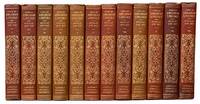
18942311448Harrogate Tennessee: Lincoln Memorial University 1894. Limited Edition. Half-Leather. Near Fine/No Jacket. 0x0x0. Limited edition #399 of an unspecified limitation this set 'especially prepared for Harry J. Williams.' Signed by John Wesley Hill opposite limitation page. Copyright page states 1894 but this is clearly reproduced from the plates of the original - this set is circa 1905. Volume 1 has very minor discoloration to edges of cloth on rear board minor wear to corners spine a bit faded. Complete in twelve hardcover volumes. Red half-leather gilt titles and decorations top edges gilt decorative endpapers. A complete collection of Abraham Lincoln's works including speeches letters biographical writings etc. with an introduction by John Wesley Hill and special articles by various other contributors. The editors were Lincoln's private secretary and assistant secretary and also served in various other governmental roles Hay going on to become Secretary of State under McKinley and Roosevelt. Nicolay and Hay are perhaps best known for their ten-volume biographical history of Lincoln's administration originally published serially in The Century Magazine beginning in 1886 -- it remains one of the more exhaustive and personal accounts of the life of the 16th President of the United States and is notable for the inclusion of facsimiles of original drafts of important documents most importantly the Emancipation Proclamation. This set includes facsimiles of original correspondence and documents reproductions of contemporary photographs and engravings etc. Lincoln Memorial University hardcover
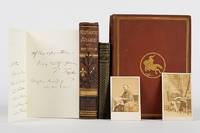
185028839AB1850. London / Cambridge etc. Chatto & Windus / Routledge & Sons / etc. c. 1850-1879. Octavo. Ballads and Songs of Brittany 1865 edition: Frontispice XXII 239 pages / Ballads and Songs of Brittany Later Routledge edition: XVI 176 pages / Tom Taylor's Historical Dramas: VIII 466 32 pages. / Manuscript Letter: 2 1/2 pages. Original Hardcover / The manuscript letter in a Folder it includes an A4 manuscript leaf from a 19th century autograph-collector describing the letter by Taylor. / The two vintage cabinet photographs of Taylor included in the Folder with the autograph. Very good condition with only minor signs of external wear. Tom Taylor 19 October 1817 12 July 1880 was an English dramatist critic biographer public servant and editor of Punch magazine. Taylor had a brief academic career holding the professorship of English literature and language at University College London in the 1840s after which he practised law and became a civil servant. At the same time he became a journalist most prominently as a contributor to and eventually editor of Punch. In addition to these vocations Taylor began a theatre career and became best known as a playwright with up to 100 plays staged during his career. Many were adaptations of French plays but these and his original works cover a range from farce to melodrama. Most fell into neglect after his death but Our American Cousin 1858 which achieved great success in the 19th century remains famous as the piece that was being performed in the presence of US President Abraham Lincoln when he was assassinated in 1865. hardcover
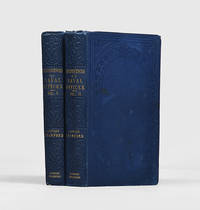
1851193281London: Henry Colburn 1851. Navy life so full of incident as to suggest Marryat Forester or O'Brian First edition scarce this attractive copy in its smart original navy-blue cloth binding is apparently the only one currently on the market. Although "the opening pages are touched by the verbosity of the early Victorians read on. Quickly the veneer is torn away by the vigour of his memories springing from the past like boarders with cutlass pistol and boarding-pike" Pocock p. vii. Born in Lismore County Waterford Crawford 1785-1869 entered the navy in 1800 as a first class volunteer on board HMS Diamond "in which he assisted in the capture of many of the enemy's ships armed and otherwise" O'Byrne. He transferred to the Immortalité and Clyde frigates under Admiral Owen as a midshipman "and appears to have been almost daily in action from June 1802 until Aug. 1806 with detachments of the Boulogne flotilla". With Duckworth on the Royal George at the forcing of the Dardanelles in 1807 Crawford was present at the destruction of a Turkish squadron off Point Pesquies. Promoted lieutenant in the Sultan he was involved in frequent cutting out operations in the Gulf of Genoa taking part in the pursuit of the French ships of the line Robuste and Lion in 1809. In 1810-11 he served under Admiral Carew in the blockade of Toulon and support of the Catalonian insurgents on the coast being present at the siege of Tarragona. Promoted commander in 1815 he was given command of the Grasshopper on the West India Station where he served until invalided home in 1829. Tom Pocock praises the quality of Crawford's descriptions of naval actions the sea and his portraits of fellow officers as in the postprandial face of one lieutenant assuming "the hue of an unripe mulberry". Crawford also talks of Congreve rockets Fulton's torpedoes and the transformation of the quarterdeck of a frigate into a dancefloor for an onboard ball. 2 vols octavo. Tissue-guarded lithographic portrait frontispieces of admirals Sir Edward Owen and Sir Benjamin Hallowell Carew by R. J. Hamerton printed by Metchin; publisher's 24-page catalogue at end of vol. II. Original navy-blue cloth gilt-lettered spines with decoration in blind covers with blind decorative panels pale yellow coated endpapers bearing publisher's advertisements. Spines cocked a few marks to covers internally cracked at gutter in one or two places but firm pale brown stain across vol. II pp. 28-9: very good. William O'Byrne A Naval Biographical Dictionary 1990; Tom Pocock intro to the Chatham Publishing edition of 1999. hardcover
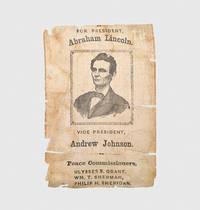
18641922921864. Peace through strength A rare ribbon from Lincoln's 1864 campaign to retain the Presidency during the Civil War where he faced down the Democrats who were campaigning to sue for peace - the ribbon satirically names the military generals Grant Sherman and Sheridan as Lincoln's own "Peace Commissioners" underneath a profile of a beardless Lincoln. Silk ribbon printed in black 142 x 96 mm. Trimmed at head losing the "Union forever" notice at the head found on other examples splits and wear nonetheless a sound example of a very fragile survival. unknown
1863017619Coblenz: Karl Baedeker 1863. Book. Near Very Good. Pictorial Cover. First Edition. Illustrated softcover with all 13 plates and with the folded map present uncut pages. Spot foxing marginal wear. bookplate of Charles W. Nettleton later owners signature thus near very good. Dj has browning due to age missing 30% of spine split along the seam very fragile. Scarce in dj. Karl Baedeker Hardcover
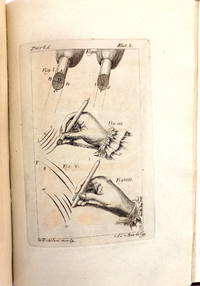
18013776<p><i>First Portuguese Translation of Bosse's Engraving Manual</i></p><p>BOSSE Abraham. Tratado da Gravura a agua forte e a buril e em maneira negra com o modo de construir as prensas modernas e de imprimir em talho doce. Nova ediçao traduzida do francez. por José Joaquim Viegas Menezes. Lisbon Arco do Cego 1801.</p><p>Tall 8vo 208 x 152 mm engraved title pp. x ix 1 189 1 errata with 21 engraved plates; plates printed on slightly darker stock; a wide-margined clean copy in recent full calf gilt.</p><p>First Portuguese translation of Bosse's classic introduction to copperplate etching and engraving Traité des manières de graver en taille douce. This Portuguese translation by José Joaquim Viegas Menezes is clearly taken from the Jombert edition and reproduces the same plates though newly engraved with subtle adaptations; an extensive introduction precedes the text.</p><p>Bosse's treatise the first manual of copperplate etching and engraving and the printing of intaglio plates was first published in French in 1645. It was aimed both at the professional engraver and at the amateur and is extensively illustrated with detailed engravings based on Bosse's own designs. A second edition of 1701 had contained revisions by LeClerc the third of 1745 those of the engraver Cochin. The Jombert edition added two new plates by Louis-Marin Bonnet the inventor of the Crayon manner of colour printing and a separate chapter on this method of colour printing. In addition to a wealth of technical information the work includes views of the engraving studio and the copperplate press.</p><p>As adaptations were made to all subsequent editions the work has remained an important introduction to print-making which is of practical use to the printmaker even today.</p><p>Innocencio IV 415; Moraes p. 11; see Bigmore & Wyman I 72 and Cicognara 255 for French edition; OCLC: Harvard Getty John Carter Brown Library British Library and V & A.</p> Menezes
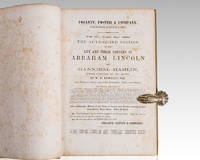
1860147733Columbus: Follett Foster and Company 1860. First edition early issue of the most famous debates in American history which cemented Lincoln as a national presidential candidate. Octavo original cloth stamped in blind with rule above the publisher's imprint on the copyright page. In good condition darkening to the edges toning throughout some damp staining inscription to the rear pastedown. Running as a little-known candidate for the Illinois senatorship in 1858 Lincoln challenged incumbent and Democratic leader Stephen Douglas to a series of debates. The result was a memorable chain of lively arguments in front of cheering crowds. Though Lincoln lost the senatorial race “he began collecting a scrapbook of his best speeches particularly those from the just-concluded campaign against Douglas for possible inclusion in a book. Assiduously pasting newspaper accounts of the debates into the scrapbook Lincoln cast about for a publisher. Initial efforts failed mainly because Lincoln wanted the book printed in Springfield which had no local publishing or printing facilities. Eventually however the Columbus Ohio firm of Follett Foster & Company showed interest and he began preparing the first edition… Somewhat surprisingly for an attorney Lincoln did not seek Douglas’ permission to publish a book of their combined speeches although Douglas was later given the last-minute opportunity—he declined—to make corrections to his own remarks†Morris 121. Follett, Foster and Company hardcover
182718472Stockholm: Johan Horberg 1827. First edition. leather_bound. Contemporary half polished russet calf and marbled boards. All edges yellow. Fine. 137 pages. 27 1/2 x 22 cm. Forty-seven hand-colored engraved plates with tissue guards plus hand-colored vignette title and two engraved plates of music. Grafstrom poet and historian wrote the text and Forssell made the engravings. Index. List of Plates and errata. Costumes from Dalarna Helsingland Lappland Sodermanland Westergothland Smaland Blekinge and Skane. Lovely copy plates and text clean fresh and bright; bookplate raised bands spine panels richly guilt in floral motifs marbled endpapers maroon morocco spine label printed in gilt. Johan Horberg unknown
183435602Rochester Boston MA 1834. A collection of six letters ranging in size from 8-1/2" x 11" to 8-1/2" x 12-3/4" five complete and one partial letter. All in ink manuscript on unlined paper. Old folds light toning occasional light foxing two on untrimmed paper. Most are addressed on final blank page and have wax seal remnants with the usual tear where wax was torn open occasional loss to a few letters. Overall Very Good. <br /> <br /> Abraham Holmes was a Massachusetts legislator and attorney. Opposing ratification of the Constitution he was allied with the Anti-Federalist Otis family of Barnstable and Freeman family of Sandwich. He was an Anti-Federalist delegate from Rochester MA to the Massachusetts Ratifying Convention of 1788. He served as Sergeant in Capt. Barnabas Doty's company Col. Ebenezer Sproat's regiment during the Revolutionary War. He was admitted to the Plymouth County Bar in April 1800 at the age of forty-six. Though he had no formal legal education his admission to the Bar was permitted in consideration of his respectable official character learning and abilities and on the condition that he study three months in an attorney's office. He served as president of the Court of Sessions prior to his bar admission practiced law in Rochester until the early 1830s was a member of the State Constitutional Convention of 1820 and a member of the Executive Council from 1821 to 1823. Davis William T.: BENCH AND BAR OF THE COMMONWEALTH OF MASSACHUSETTS IN TWO VOLUMES VOLUME II. Boston: 1895. Page 235; Daughters of the American Revolution: LINEAGE BOOK VOLUME 12 1900 Page 15. <br /> William Baylies 1776-1865 and Francis Baylies 1783-1852 were brothers and partners in a Massachusetts law firm. William served as a U.S. Representative from Massachusetts in 1809 1813-1817 and 1833-1835; was a member of the Massachusetts House of Representatives from 1808-1809 1812-1813 and 1820-1821; and a member of the Massachusetts Senate from 1825-1826 and 1830-1831. Francis was a Congressman from 1821-1827; a member of the Massachusetts House of Representatives from 1827-1832 and in 1835; and the United States Charge d'Affaires Argentina in 1832. <br /> Holmes's Letters are as follows:<br /> 1 Letter to Francis Baylies Member of Congress dated at Boston January 19 1822. Holmes then member of the Massachusetts Executive Council awaits reports of the State legislative committees the incorporation of Boston "which will serve to procrastinate the session" the "suspense of the acceptance of office of the Judge of the Municipal Court" and issues such as criminal trials and the death sentence. "We pass our time here in Boston. the frequent application for appointments of both proper and improper candidates is rather an uncomfortable circumstance; but not so distressing as in affixing the time when convicts shall live no longer. to determine whether a convict shall die or not. It is probable we shall have the trial of both soon as there has been three capital convictions since I was here; one for murder and two for highway robbery. Those trials I attended; a Mr. Simmons formerly of Taunton as I am told managed the Defence; I can not record him as possessing great oratorical abilities but for integrity of arrangement and strength and argument perhaps no man of his years stands higher." Boston was incorporated March 4 1822 and the same year the Boston Police Court for criminal cases and Justice's Court for the County of Suffolk for civil claims were established. <br /> 2 Holmes's Letter to Francis Baylies dated at Boston March 28 1822. Holmes notes that the State legislative session is coming to a close. He anticipates orations which would "cause Tully to wish that he hadn't ever learned to speak; and all this for the good of the Nation."<br /> 3 Letter to William Baylies Counsellor at Law dated at Rochester MA October 24 1828 docketed October 25. An interesting three pages for lawyers anyway written in small yet legible hand on legal size paper. Holmes discusses with "great anxiety" and detail strategies and implications of the case entitled Rounseville Spooner versus Davis et ux. presentation of which had just concluded in the Massachusetts Supreme Court. Holmes and Baylies had represented Rounseville. Judge Wilde issued his decision on the following day October 25th. <br /> The case involved land in Fairhaven conveyed by Alden Spooner to Walter Spooner which later descended to Humphrey Davis's wife; but Alden Spooner later conveyed it again to Rounseville Spooner. What will be done in the case Holmes says "God only knows." Judge Wilde's Opinion reported at page 147 of Pickering's Reports Boston: 1830 gives the victory to Holmes and Baylies. <br /> 4 Letter to William Baylies Nov. 21 1828. Holmes discusses his excitement over a favorable verdict. "I rode into the yard. Mr. Bassett's son met me and informed me that the verdict of the jury was in favour of our client. Do you think I was sorry My heart jumped to my throat and with some difficulty I prevented my immortal spirit from bursting thro' the clay tenement. I am glad now that we did not use Joshua Vincent's Deposition for they would have objected and the point next word illegible for the Whole Court./ The next enquiry is Compensation. But I must stop with my hearty congratulations." Docketed on final page in part "Thomas v. D. & wife Nov. 21 1828."<br /> 5 Letter to William Baylies dated Rochester MA April 11 1834. A lengthy poignant letter discussing his advanced age and retirement. He no longer views political issues with the same interest; despite his overall good health he is troubled with lameness and currently lives with his son and his son's wife. "Some of my old customers are not willing to apply to anyone else."<br /> 6 Partial Letter to Francis Baylies December 1821. ". I dread the power of some of your colleagues. Mr. Saltonstall whose abilities are competent to make white and black synonymous terms I understand -which God forbid is strongly intrenched in a. Battery of Bankruptcy. unknown
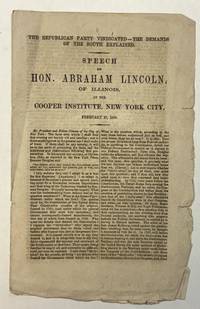
186041018np 1860. 8pp caption title as issued. Untrimmed and uncut. A single folio leaf folded. Very Good plus.<br /> <br /> Lincoln's great Cooper Union Address argues that the Framers and early Congresses contemplated a narrow and ever-diminishing role for slavery. Examining Constitutional and early Congressional debates he demonstrates that contemporary statesmen viewed slavery "as an evil not to be extended but to be tolerated and protected only because of and so far as its actual presence among us makes that toleration and protection a necessity." <br /> Lincoln's argument fusing the interests of all anti-slavery men whether abolitionists or not ranks among his greatest contributions to American political thought. It received wide press coverage catapulting him into presidential contention for it transported the new Republican Party into the center of American constitutional and legal thinking. He thus made it easy for moderate Northern Democrats Whigs and Know-Nothings to vote Republican in 1860.<br /> Monaghan 55. LCP 5944. unknown
1802ZB1325720Hartford: John Babcock printer 1802. Price HAS BEEN REDUCED by 10% until Monday June 29 SALE item first edition; 166 pp. lacks the rear free endpaper; original boards with later paper tape rebacking covers very worn masonic book plate to the front free endpaper text age-toned a few instances of foxing else internally clean and tight. - If you are reading this this item is actually physically in our stock and ready for shipment once ordered. We are not bookjackers. Buyer is responsible for any additional duties taxes or fees required by recipient's country. Photos available upon request. Hartford: John Babcock, printer hardcover
186322448.01New York N.Y. 1863. No binding. Fine. New York Journal of Commerce. Newspaper. New York Journal of Commerce. New York N.Y. January 3 1863. 4 pp. 24 x 32 1/2 in. An early report of the Emancipation Proclamation where the editors describe Lincoln's bold move as ""a farce coming in after a long tragedy.Most of the people regard it as a very foolish piece of business."" Historical BackgroundThe Emancipation Proclamation was the single most important act of Lincoln's presidency. Its text reveals the major themes of the Civil War: the importance of slavery to the war effort on both sides; the courting of border states; Lincoln's hopes that the rebellious states could somehow be convinced to reenter the Union; the role of black soldiers; Constitutional and popular constraints on emancipation; the place of African Americans in the United States and America's place in a worldwide movement toward the abolition of slavery. In sounding the death knell for slavery and the ""Slave power"" the President took a decisive stand on the most contentious issue in American history and the United States joined other western nations in embracing a future of free labor.In addition to the moral impact of this ""sincerely believed.act of justice"" the Proclamation aided the Union cause tangibly and decisively. Because it focused on territory still held by the Confederacy only small numbers of slaves compared to the total slave population were immediately freed. However the Proclamation deprived the South of essential labor by giving all slaves a reason to escape to Union lines. Failing that it freed slaves immediately upon the Union Army's occupation of Confederate territory. The Proclamation also encouraged the enlistment of black soldiers who made a crucial contribution to the Union war effort. Moreover England and France who had already abolished slavery were restrained from supporting the Confederacy which would have been in their own economic interests. Lincoln summed up the Proclamation's importance in 1864: ""no human power can subdue this rebellion without using the Emancipation lever as I have done.""Nonetheless the editors of the Journal of Commerce disagreed and their opinion reflects the truly controversial nature of the act for many contemporary Americans.
18661009808vo one sheet printed on both sides. Even toning and aging small closed tear to the upper margin; otherwise very good. This is a rather scarce government document that informs the military that the "Thirteenth Amendment" has passed and slavery is officially abolished. Article XIII states "Neither slavery nor involuntary servitude except as a punishment for a crime whereby the party shall have been duly convicted shall exist within the United States or any place subject to their jurisdiction." This document is signed in type by William H. Seward 1801-1872 as the Secretary of State. Congress would follow with a Civil Rights Act of 1866 to give African Americans the same rights as all citizens but this small printed document presenting the essence of the "Thirteenth Amendment" is an important piece of history. ANB.