23 962 résultats
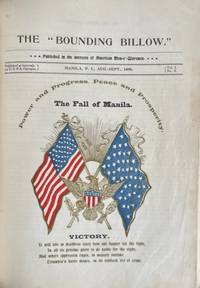
189959607San Francisco & USFS Olympia: The Bounding Billow Printed by Whittaker & Ray Co. Inc. 1899. Eleven parts in one vol. 4to. 2 138 6 pp. With text photos illustrations 2 colour illustrations map photo plates at rear. Original blue publisher’s cloth embossed gilt lettering & shield on front cover edgewear rubbing wear to corners some spotting & wear a few occasional minor closed tears still a G copy from library of Chief Petty Officer William E. Bates 1871-1941 who served in the U.S. Navy for 30 years beginning with the Asiatic Squadron under Admiral Dewey and later during World War I w/ ownership marking on 2nd flyleaf a couple spelling corrections in manuscript. First edition thus of this “cruise book†for the U.S.S. Olympia which served as Admiral Dewey’s flagship during the Spanish-American War and had served as the flagship from 1895 three years prior as flagship of the Asiatic Squadron. This volume opens with an illustrated account of the USS Olympia’s cruises and experiences visiting China Japan Siberia and The Philippines. Included here as well is a reissue including photos colour illustrations and map Vol. 1 Nos. 1-7 of the shipboard periodical published by the seamen of the USS Olympia with place imprints of Nagasaki Hong Kong and Manila. Incorporated are firsthand accounts of shipboard life battle accounts contemporary photos and map prepared by L.C. Passano using sail needles. Of particular interest is the appendix listing the crews of the U.S. Asiatic Squadron including the USS Olympia USS Raleigh USS Boston USS Baltimore USS Concord USS Petrel USS McCulloch. The Bounding Billow, Printed by Whittaker & Ray Co., Inc.], hardcover
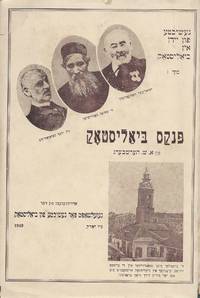
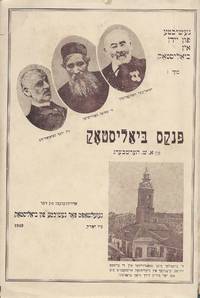
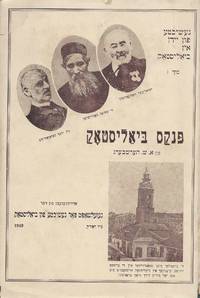
194941480New York Bialystok Jewish Historical Association 1949. HARDBACK. 1st edition. Original Cloth 8vo 380 pages. In Yiddish. The chronicle of Bialystok: basic material for the history of the Jews in Bialystok until the period after the First World War. Very Good ConditionYIZ-10-1A. New York, Bialystok Jewish Historical Association unknown
194941479New York Bialystok Jewish Historical Association 1949. HARDBACK. 1st edition. Original Cloth 8vo 480 380 pages. In Yiddish. The chronicle of Bialystok: basic material for the history of the Jews in Bialystok until the period after the First World War. OCLC: 10792576. Very Good ConditionYIZ-10-1. New York, Bialystok Jewish Historical Association unknown
194914335New York Bialystok Jewish Historical Association 1949. HARDBACK. 1st edition. Original Cloth 8vo 480 380 pages. In Yiddish. The chronicle of Bialystok: basic material for the history of the Jews in Bialystok until the period after the First World War. Very Good ConditionYIZ-10-1. New York, Bialystok Jewish Historical Association unknown
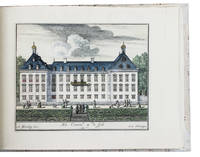
16833691Amsterdam 1683. Oblong 8vo. Modern half vellum floral chintz paper sides. With 16 numbered engraved views ca. 13 x 16 cm tipped onto blank leaves 17 x 23 cm all hand coloured. 16 ll. with engravings. Extraordinary rare first state of a very fine print series of the Honselaarsdijk palace and gardens at Honselersdijk near Naaldwijk complete with all 16 views. They are all signed numbered and captioned in Dutch and have been coloured by hand. We have not been able to find any other copies of the complete series in the first state.The monumental palace of Honselaarsdijk was built between 1621 and 1647 on the orders of the stadholder Frederik Hendrik 1584-1647 who - together with his wife Amalia van Solms and in the context of their ambition to enhance the position and power of the House of the Dutch stadholder possibly to a Royal status - was involved in a project to build a number of new prestigious castles and manor houses in and around The Hague Huis Ten Bosch Rijswijk and Honselaarsdijk as well in the country Soestdijk Het Loo Dieren etc. He financed the building of Honselaarsdijk mainly with the money coming from the "Silverfleet" captured from the Spaniards by Piet Hein in 1629. A number of important architects were involved with the Honselaarsdijk-project among others the famous Jacob van Campen 1596-1657 and Pieter Post 1608-1669. French garden architects were hired for designing the gardens. King William III further embellished the gardens under the direction of the architect Jacob Roman 1640-1716. As early as 1671 William III was personally involved with the rebuilding of the water supply system at Honselaarsdijk as evidenced by a letter of Christiaan Huygens to his brother Lodewijk. The palace later became known as "Little Versailles". After the death of William III in 1702 the estate was neglected and ultimately demolished in 1815. All that still remains is a part of the garden and parts of the coach-houses.Abraham Blooteling 1640-1690 a pupil of Cornelis Van Dalen II 1636-1664 was a Dutch engraver draughtsman and print seller. His dated prints begin to appear in 1665 and they include portraits biblical mythological and genre subjects as well as six views of Amsterdam after Jacob van Ruisdael and two of the Jewish burial-ground in Ouderkerk 1670 also after van Ruisdael. From 1672-78 he worked in London with Gerard Valck. His major contribution was in the development of the new technique of mezzotint specifically the invention of the rocker the tool used in the technique. In England the technique was adopted with such success that it later became known as the "English Manner". Blooteling was again in Amsterdam by September 1678 when he acted as godfather to his nephew Abraham Valck but he kept up his contacts with London.Between 1681 and 1685 his presence in The Hague is recorded. During these years he engraved a major view of Honselaarsdijk 385 x 482 mm after the design by Abraham Begheyn alias Bega 1637-1697. It is likely that he engraved our 16 views in the same year probably also after the drawings by Abraham Bega. However both the 16 views and the bird's eye view are now exceptionally rare. In fact the present 16 views were until now only known in their second state the reissue by Gerard Valck 1651/2-1726 in his Veues et perspectives de Loo Honslardyck et Soestdyck chasteau & maison de plaisance du Roy de la Grande Bretagne 1695. The views in the second state are numbered differently and lack Blooteling's name.Some of the views have been cut a few millimetres short on the right hand side two of the blank leaves with a crease and two pinprick holes in the bottom margin. Otherwise a fine hand coloured copy.l Hunt & de Jong The Anglo-Dutch garden pp. 136-7; cf. Hollstein II p. 216 no. 117 bird's eye view of Honselaarsdijk by Blooteling after A. Bega dated 1683 & XXI p. 267 nos. 95-16 same print-series by G. Valck dated 1695; Thieme/ Becker IV pp. 139-40; not in Springer. hardcover
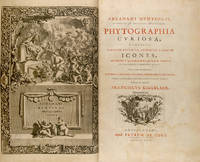
99525Amsterdam Petrus de Coup 1727. . First Latin edition presumed third issue; two parts in one folio 39.2 x 25.4 cm; engraved title-page used here as a frontispiece and 245 engraved botanical plates inserted at rear with allegorical vignette on title-page and two engraved headpieces on ppiii and 25 by Goeree title-page printed in black and red lacking half-title and dedication leaf text somewhat toned frontispiece repaired at inner margin all inserted plates with small circular ink stamp of the Massachusetts Horticultural Society near the bottom their bookplate is present on the front pastedown plates twenty-five and twenty-six are trimmed smaller as most likely supplied some soiling and foxing to text and plates prominent damp staining on plates 144 to 245 plate 32 has small marginal repairs a few leaves with minor marginal worming plates 1 - 48 with neat ink captions in an unknown hand; nineteenth-century quarter calf over marbled boards spine ruled in gilt in compartments black morocco lettering piece gilt edge wear to binding especially at spine and corners upper board detached lower board loose; xxvi 47 1 blank pp.<br /> First Latin edition presumed third issue. A good copy only sold with all faults. 'The illustrations are remarkable for their elegance and originality' Oak Spring Flora 45. This is perhaps the most handsome and influential botanical of its day with its near-dreamlike depiction of plants suspended above cityscapes and other backgrounds.<br /><br />Munting 1626-1683 was a Dutch botanist and botanical artist the son of Henricus Munting 1583-1658. He studied under his father and at the universities of Franeker Utrecht and Leiden also spending two years in France where he obtained an M.D. degree in Angers. Returning to Groningen in 1651 he joined the staff at the Rijkshogeschool Groningen which eventually became the University of Groningen. Here he taught for 24 years as professor of botany and chemistry. On his father's death he assumed management of the Hortus Botanicus Groninganus from 1658 to 1683. His botanist friends sent him seeds from the Dutch East- and West Indies Africa and the Americas. His daughter Hester died after eating Deadly Nightshade from the Garden. Munting subsequently developed a particular interest in the medicinal uses of plants.<br /><br />The present work Munting's best known was first published in Dutch as Naauwkeurige Beschryving Der Aardgewassen 1696. Illustrated were trees shrubs flowers and grasses of temperate zones with some tropical and subtropical plants that had been introduced to the Netherlands.<br /> Nissen BBI 1429; Hunt 404. Amsterdam, Petrus de Coup, 1727. hardcover
186358199Camp near Brooks Station Saturday April 11 1863. Fine original condition. 15-1/2 x 9-3/4 inches. ".Yesterday I witnessed one of the grandest sights that I ever beheld. Our whole corps was reviewed by the President Generals Hooker McLain Howard Steinway Secretary Seward and an innumerable host of Brigadier Generals and it was a sight that has paid me for coming to war." The spectacle is described in great detail. Private Penfield was soon to be captured at Chancellorsville spending 12 days as a prisoner of war before being exchanged. He survived the war to carry on his father's carriage making business in Monroe Connecticut and later founded a small private academy. unknown
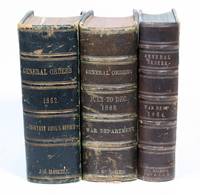
18622923Washington D.C.: War Department 1862. Calf marbled boards. Very Good. FIRST OBTAINABLE PRINTING OF THE PRELIMINARY EMANCIPATION PROCLAMATION setting a date for the freedom of more than three million enslaved in the United States and reframing the Civil War as a fight against slavery. Issued by the War Department to regimental commanders in the field during the Civil War in the week after the completion of President Lincoln’s official manuscript version. Contained is a set of three volumes of General Orders covering the full year 1862 July-Dec 1863 and the full year 1864. History of the Emancipation Proclamation:<br /> <br /> “The proclamation has been called by responsible persons one of the three great<br /> documents of world history ranking with Magna Carta and the Declaration of<br /> Independence†– Eberstadt<br /> <br /> “From the first days of the Civil War slaves had acted to secure their own liberty. The Emancipation Proclamation confirmed their insistence that the war for the Union must become a war for freedom. It added moral force to the Union cause and strengthened the Union both militarily and politically. As a milestone along the road to slavery’s final destruction the Emancipation Proclamation has assumed a place among the great documents of human freedom†– National Archives<br /> <br /> Following the Seven Days Battle and General McClellan’s retreat from the Peninsula at the end of June 1862 President Lincoln realized that there would be no early end to the war and found himself “as inconsolable as it was possible for a human to be and yet live.†Anxious for news from the army and needing to escape the constant interruptions at the White House he frequently visited the telegraph office in the War Department building to await dispatches. It was during one such visit early in July that he asked the chief of the telegraph staff Major Thomas Thompson Eckert for some paper to “write something special†and began the first draft of the Emancipation Proclamation completing it in a few weeks. Lincoln had long hoped to resolve the slavery issue through a congressional act of emancipation compensating slave owners for their loss of “property†but that approach was roundly rejected by representatives from the border states leaving the President who had decided upon the necessity of emancipation with a presidential proclamation as the only option. The extraordinary document he conceived would announce the liberation on January 1 1863 of all slaves in those states still in rebellion against the Union and promised compensation to slave owners in those states that returned to the fold before that time if they adopted “immediate or gradual abolishment of slavery.†This proclamation would be followed by a final proclamation issued on the 1st of January identifying those states still in rebellion and confirming the liberation of all slaves therein.<br /> <br /> On Tuesday July 22 Lincoln presented his draft to the Cabinet telling them that he had resolved firmly upon the course of action it specified and asking them not for advice but suggestions. The only observation he had not anticipated came from Secretary of State Seward who proposed that it might be best to wait for a military victory before issuing the Proclamation as it could otherwise seem like “the last measure of an exhausted government.†Immediately recognizing the wisdom of the suggestion Lincoln held back. On September 17 after an anxious wait of nearly two months he received the victory he needed at the bloody Battle of Antietam. Completing his final draft Lincoln presented it to his cabinet for refinement on September 22. Following the meeting Seward took the amended draft with him to the State Department where a formal manuscript copy was made then signed by Lincoln and Seward. The formal official “Emancipation Proclamation†was of course issued on January 1 1863 the day it became the law of the land.<br /> <br /> Printing History:<br /> <br /> This printing in the War Department’s official “General Orders†is the fourth printing overall but realistically the first obtainable printing. It is preceded by:<br /> <br /> -The first printing Eberstadt #1 a small three-page circular intended for distribution within the government and to the local press likely printed on September 22. At the time that Charles Eberstadt published his study of the Proclamation 1950 he was able to locate only one copy which he himself owned and as nearly as we have been able to determine no other copies have come to light since then.<br /> <br /> -The second printing Eberstadt #2 may be a phantom printing. Charles Eberstadt was not able to locate a copy but he inferred its existence from the standard State Department practice of printing a folio edition consisting solely of the text of the proclamation followed by another printing consisting of the text of a letter of transmittal from the Secretary of State as well as the text of the proclamation. While there may be a copy of Eberstadt #2 in the National Archives as he speculated it is not recorded in their online catalogue nor have we been able to find a copy in any other online catalogue including OCLC the Library of Congress and the Abraham Lincoln Library.<br /> <br /> -Eberstadt’s third printing is of legendary rarity. It consists of Secretary of State Seward’s one-page letter of transmittal addressed “To the Diplomatic and Consular Officers of the United States in foreign countries†and the text of the proclamation. Eberstadt located a total of only five copies in institutions at the Library of Congress the National Archives Yale the Clements Library and Brown. OCLC does not record any additional copies nor is it recorded in Monaghan. There has been one copy at auction $400000 in 2021 and that was described as the only copy in private hands. <br /> <br /> -The present copy General Orders No. 139 is Eberstadt’s fourth printing of the Preliminary Emancipation Proclamation dated in print on September 24. Eberstadt surmises that this field order printing could have been accomplished as late as September 29 or 30. Although it may have been printed in as many as 15000 copies it is very rare in commerce likely due to the ephemeral nature of the printing and distribution.<br /> <br /> Additional General Orders and Provenance:
<br /> <br /> The three volumes once belonged to John G. Haskell A.Q.M. Chief Quartermaster and contain the General Orders for the year 1862 July-December only for the year 1863 and for the full year 1864. John Gideon Haskell 1832-1907 was a resident of Kansas and joined the Union Army when the war broke out. He enlisted with the 14th Kansas Volunteer Cavalry Regiment and later served as Assistant Quartermaster General of Kansas as quartermaster of the Third Kansas and the Tenth Kansas Volunteers as Captain and Assistant Quartermaster on the staff of General James G. Blunt and as Chief Quartermaster of the Army of the Frontier. After the war Haskell was named official state architect and worked on the state house the capitol the State University and more.<br /> <br /> In addition to the preliminary Emancipation Proclamation the three volumes also contain the Acts of Congress on many other subjects including pay discharge recruitment handling of troops etc.<br /> <br /> Washington D.C.: War Department Adjutant General’s Office 1862-64. Three volumes. Small octavo contemporary three-quarter brown morocco two volumes with cloth boards one with marbled boards. Some rubbing and wear to bindings pencil notations on endpapers with collation and highlighting certain orders and some internal pages. Dampstaining to general title of 1862 volume; internal text and Emancipation Proclamation generally fine. RARE AND IMPORTANT.<br /> <br /> References:<br /> <br /> Charles Eberstadt. “Lincoln’s Emancipation Proclamation.†New York: 1950. War Department unknown
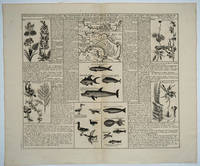
172125850Paris 1721. From the Australian point of view most interesting for the illustrations drawn from Dampier's explorations on the West Australian coast particularly the images of fish birds squid & plants the first images of Australian fauna & flora to be seen by the Western world.<br /> It includes extensive text describing the natural history found there in French. His account of the expedition was published as "A Voyage to New Holland" in 1703. Dampier is regarded by many as Australia's first natural historian. <br /> <br /> The three maps at the top of the plate are of the Isthmus of Darien and the Gulf of Panama. Size : 370x433 mm 14.57x17.05 Inches. Many of the maps are based on the work of Guillaume de l'Lisle.<br /> <br /> Published in Chatelain's "Atlas Historique ou nouvelle introduction a l'histoire a la chronologie & a la geographie ancienne & moderne" in Amsterdam 1721. Many of the maps are based on the work of Guillaume de l'Lisle.<br /> <br /> Copperplate engraving 14.5 x17". Full impression mark with wide margins. Some slight bends in margin fine overall. unknown
194680806Amsterdam: L.J. Veen's Uitgeversmaatschappij N.V. 1946-51. Quarto 29cm. Quarter linen over marbled boards containing 44 consecutive issues with original front and rear wrappers bound in individual issues ranging from 8pp to 24pp. Generally good and sound; a few leaves with tape old tape repairs; later issues have been trimmed with occasional loss to printed cover titles but no loss to text. Photo-illustrated throughout. First three issues without editorial attribution; later issues attribute editorship to Abraham van der Vies Rudolf Eschder Albert Bocai Paula Balma and L. Hornstra. Text primarily in Dutch. <br /> <br /> Uncommon post-war Dutch dance journal billed on its masthead as "The first magazine in the Netherlands devoted exclusively to the dance." Provides extensive coverage of both classical ballet and modern choreography and performance from a global perspective including numerous articles on American dancers and choreographers such as Ted Shawn Katherine Dunham Maria and Marjorie Tallchief Martha Graham and others. Included in the run is a July 1950 extra number devoted to the Ballets Russes de Monte Carlo production of Stravinsky's Petrouchka. The journal appears to have run until 1958. Quite scarce; OCLC notes about six locations all in the Netherlands. L.J. Veen's Uitgeversmaatschappij N.V. unknown
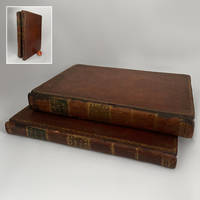
54574London: Record Commisioners 1783. EDITIO PRINCEPS. 2 vols. Folio. ff. 382; pp. 450. Without titles as issued. Vol. I first 4 leaves a little creased light toning very faint foxing to some leaves occasional light smudgy marks; vol. II occasional tiny spots and smudges but generally brighter inside than vol. I. Contemporary reddish-brown diced russia neatly rebacked with original spines retained. Spines gilt with green morocco title and volume labels gilt borders marbled endpapers. Vol. I spine a bit crackled ruined a few small marks corners worn and repaired; vol. II head cap split horiztonally with both it and the endband coming loose a little rubbed corners repaired but bumped still very good overall. Recent bookplate of Josceline Grove to ffep verso each volume. Three booksellers' catalogue descriptions tipped onto ffep verso vol. I. The significance of Domesday Book was perceived at an early stage by scholars such as Selden who printed extracts at the end of his edition of Eadmer in 1623. Domesday Book itself was held under lock and key and could only be consulted for a fee with an additional charge of fourpence for each line transcribed. Without a complete printed edition scholar's regard for Domesday was combined with an ignorance of its general contents until 1783 when this edition was printed at the behest of a Royal Comission. It was printed in record type designed for the occasion by J. Nicholls and cut by J. Jackson former apprentice of William Caslon the elder and later destroyed in the Westminster fire of 1834. Douglas in his work English Scholars 1660-1730 expresses the view that Farley's achievement has been 'shamefully neglected' and that 'he produced one of the most accurate and reliable transcripts in the history of English scholarship'. Title-pages to theses volumes were supplied by the Record Commission in 1816 and two subsequent volumes comprising additions and index were provided in 1811 and 1816. ESTC 097297; Upcott p.xiii [London]: [Record Commisioners], [1783.] unknown
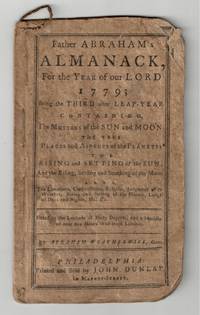
177927545Philadelphia: Printed and sold by John Dunlap 1779. A very early issue of a Weatherwise American Almanac. Illustrated with the well-known anatomical woodcut of a man “governed by the twelve constellations†and woodcut page frames. 12mo original printed self wrappers stitched. 15 leaves unnumbered including printed wrappers. A very well preserved little almanac the wrappers somewhat worn at the corners the rear with a little loss at the bottom outside corner some expected toning and mellowing to the paper and some spotting but complete and very usable and with the original stitching still strong and tight. AN EARLY WEATHERWISE ALMANAC and a competitor of Franklin's "Poor Richard". Abraham Weatherwise was of course a pseudonym and one which was likely used by multiple almanac printers. They “ushered in the healthiest and most interesting period of almanac making†Sagendorph 116.<br> Along with the typical astronomical data and weather forecasts this almanac also contains a table valuing the dollar humorous stories and historical tracts a collection of hints and home remedies for the care of horses court dates for Pennsylvania and New Jersey and a schedule for Quaker meetings. Printed and sold by John Dunlap unknown
182045432London:: Reprinted for T. and H. Rodd 1820. First separate edition reprinted from the original in the British Museum; noted in Stow in his additions to Holinshed for the year 1577. original drab unprinted wrappers. Tiny chips to wrappers; light soiling; but very nice. 8vo. Reprinted for T. and H. Rodd, unknown
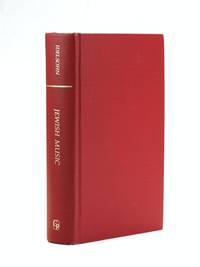
1981504137Greenwood 1981. Hardcover. FINE. 535pp. Sewn binding in red cloth with gilt stamped spine lettering. Sans DJ as issued. Facsimile of the 1929 Holt edition. Some trivial rubbing to tips otherwise a very clean sharp copy. Greenwood hardcover
197580001Np:: Reed Wallcoverings 1975. Publisher's lettered portfolio with snap closure and handle. Fine. 26 x 26 x 3:. Illustrated with large actual samples of reproduction wallpaper including that in the Presidential Box at Ford's Theatre reproduced from a 3 x 5" souvenir sample. There are 3 bifold samples 3 folded samples and 19 full-page samples; each with descriptive text and color photographs. This is a huge and very heavy volume. Additional postage will apply and international shipping will be prohibitive. Reed Wallcoverings, unknown
1730378329Samuel Fuller; J. Peele 1730 1731. Full leather. Ex-library foxing. Full leather with raised bands. Boards are significantly bowed. The first title lacks title page and publisher and publication date unknown. 135 72 32 pages. Samuel Fuller; J. Peele hardcover
191655737Fort Wayne IN: Weil Bros. & Co. Nov. 27 1916. Folio. 12 x 18 in. 4 pp unpaginated. printed in red & black w/ illustrations state map diagrams diagrams. Self-printed softcovers minor fold creases as issued couple very slight closed tears minor shelfwear NF. First edition of this scarce price list from the storied Weil Bros. fur trading company in Fort Wayne Indiana. During the opening decades of the 20th century there were skyrocketing prices for furs driven by the fashion market especially the more affordable ones such as mink skunk raccoon muskrat opossum and wild cat. Premiums were paid for mink beaver and especially otter. The Weil Bros. had initially established their business in 1870 and continued to operate for decades often issuing Trappers’ Guide books advertising in trapping and taxidermy magazines and issuing catalogues. No copies located in Worldcat. Weil Bros. & Co., paperback
191555738St. Louis MO: I. Abraham Fur Company Dec. 1915. Folio broadside. 12 x 18 in. 2 pp unpaginated. w/ folds as issued slight shelfwear NF. First edition of this scarce price list from the Abraham Fur Company in St. Louis which dominated the fur trade market in the United States from the 19th through the 20th Century. During the opening decades of the 20th century there were skyrocketing prices for furs driven by the fashion market especially the more affordable ones such as mink skunk raccoon muskrat opossum and wild cat. Premiums were paid for mink beaver and especially otter. No copies located in Worldcat. I. Abraham Fur Company, unknown
1808AQ26487Philadelphia: Printed by William Duane 1808. 123pp 1. Recent gilt-tooled half-half marbled paper boards contrasting dark green morocco lettering-piece to spine. Lightly rubbed and marked. Slight browning to title otherwise internally clean and crisp. The second edition of a report on America's roads and canals by Abraham Albert Gallatin 1761-1849 Genevan-American politician often termed 'America's Swiss Founding Father'. Gallatin's tremendous proposals included plans for a $20 million federal infrastructure program which would involve the construction of a canal through Cape Cod the connection of the Hudson River with the Great Lakes and a road linking Maine and Georgia. Ultimately Democratic-Republican pushback prevented his vision from being realised but he was granted the funds to construct the National Road America's first improved highway built by the federal government. . Second edition. 8vo. Printed by William Duane hardcover
19503273New York: Aldus Book Company 1950. De luxe limited edition . Original Cloth. Very Good in Very Good DJ. Octavo pp. 99 with 100 plates one hand-colored and 38 text illustrations one hand-colored. A very nice copy in an excellent dust jacket of an uncommon book. Kubin was one of the greatest book illustrators in Germany of the last century. Aldus Book Company hardcover
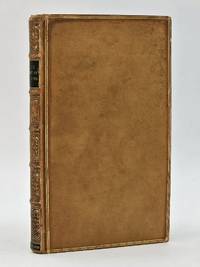
1853293169London.: John Murray. 1853. 2nd Edition. Small 8vo. Finely bound by Hayday in tan calf raised bands gilt spine decorations in six compartments black spine label gilt ruled borders gilt dentelles on turn-ins marbled edges marbled endpapers. Very good spine head chipped otherwise near fine. 16.8x10.3x1.3 cm. A history of gastronomy by the sharp-witted essayist. This finely bound copy will make a nice addition to any gastronomy collection. weight: 0.5 lb. John Murray. hardcover
1985135071Washington DC: The Film Company / Public Broadcasting Service PBS 1985. Original Press Kit for the 1985 documentary. With a transcript of the program and a 32-page companion guide featuring facts about Herman Melville's life and work articles on Melville and a selected bibliography. <br /> <br /> This documentary tracks the personal and intellectual adventures of Herman Melville. Narrated by John Huston the film includes readings and commentary by F. Murray Abraham Robert Penn Warren Alfred Kazan and other notable writers and critics. <br /> <br /> Arthur Unger with The Christian Science Monitor reviewed the film in 1985: <br /> <br /> "Directed written produced and photographed mostly by Robert Squier a unique and dedicated artist himself. Mr. Squier has accomplished an inspired film about a writer and his writing which manages to combine the song of poetry and the zing of adventure with the shock of psychological recognition. not merely a labor of love; it is a probing and incisive study of how a man and his work interact with the environment physical and emotional. Utilizing real locations top literary scholars and a delicate sense of time and place with a minimal amount of reenactment Mr. Squier's film records the paradoxes in Melville's life his sense of hopelessness his disgust with brutality his agonizing search for religion his intellectual resolve his determination to survive personal disasters."not afraid of deep questions.''<br /> <br /> Companion guide 32 pages transcript 36 pages and promotional letter from the publishers advertising a videocassette of the film rental $75 purchase $350 house in a dark green folder with silver titles and blind-stamped design. Near Fine overall. The Film Company / Public Broadcasting Service [PBS] unknown
182013545New York: C. S. Van Winkle 1820. First American Edition 1st Printing. Softcover. Good. 12mo 150pp. "From the London edition with alterations." A good copy bound in later 19th century plain card wrappers with yapped edges and inked title and the edges marbled. Some marginal staining. C. S. Van Winkle unknown
1821D19279New York: James Eastburn Literary Rooms 1821. First Edition. Hardcover. Good. 8vo Original plain boards stained printed paper spine label. Bookplate removed. Uncommon. <br /> <br/><br/> James Eastburn, Literary Rooms hardcover
180360643Leominster Massachusetts:: by Adams & Wilder for Isaiah Thomas Jun. 1803. old full leather overlaid with an old sheep covering. . Free endpapers lacking front and rear; horizontal tear across the title page repaired with clear tape which has discolored; some moderate staining; binding very worn. 12mo. by Adams & Wilder for Isaiah Thomas, Jun., hardcover