23 962 résultats
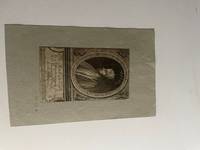
14911Johannes Groenewegen and Abraham van der Hoeck booksellers in the Strand London. Early eighteenth century. In good condition on lightly-aged paper tipped in onto a grey paper mount. Engraved on 13 x 8 cm piece of wove paper with no margin. The firm's shop was at the sign of Horace's head in the Strand and the engraving depicts a lapidary carving off the head and shoulders of the poet with laurel leaf above in an oval frame around which are 'carved' decorations including lyre and grapes. Beneath the portrait on a carved panel: 'This Book is to be sold by J: Groenewegen & A: vander Hoeck in the Strand.' The firm issued catalogues betwen 1715 and 1728 after which Groenwegen disappeared from the scene while van der Hoeck continued in business although not in BBTI. No copy found on either COPAC or OCLC WorldCat. [Johannes Groenewegen and Abraham van der Hoeck, booksellers in the Strand, London. Early eighteenth century.] unknown
199121246AB1991. Tübingen Niemeyer 1991. 8°. VI 683 Seiten. Softcover / Kartoniert. Sehr guter Zustand mit nur ganz geringen äußerlichen Gebrauchsspuren kleiner Lichtrand. KEIN Besitzvermerk. KEINE Anstreichungen. KEIN Mängelexemplar. Frühe Neuzeit ; Bd. 5 Vita A. G. Kaestneri / Der Gelehrte / Der Biedermann / Kästners literarische Werke / Oden / Parodien / Elegien / Prosa / Rezeptionsgeschichte / Kästners naturwissenschaftlicher Ansatz etc. etc. Abraham Gotthelf Kästner 27. September 1719 in Leipzig; 20. Juni 1800 in Göttingen war ein deutscher Mathematiker und Epigrammdichter. Er war der Sohn des Juraprofessors Abraham Kästner. 1756 heiratete er nach 12-jähriger Verlobung Johanna Rosina Baumann. Am 4. März 1758 starb seine Ehefrau an einer Lungenkrankheit. Später heiratete Kästner die Witwe eines französischen Offiziers. Ob aus dieser Verbindung eine Tochter entstammt ist fraglich. Kästner studierte ab 1731 in Leipzig Jura Philosophie Physik Mathematik und Metaphysik. 1733 wurde er zum Notar ernannt. 1739 folgte die Habilitation an der Universität Leipzig Kästner hielt mathematische philosophische und juristische Vorlesungen. 1746 wurde er außerordentlicher Professor an der Universität Leipzig. 1756 folgte er einem Ruf als ordentlicher Professor der Naturlehre und Geometrie nach Göttingen. Ab 1763 war er zugleich Leiter der dortigen Sternwarte. Kästner war Lehrer und später Kollege von Lichtenberg und Erxleben. Weitere Schüler waren Johann Pfaff der Doktorvater von Carl Friedrich Gauß Johann Tobias Mayer der Sohn seines Freundes und vormaligen Leiters der Göttinger Sternwarte Tobias Mayer und Heinrich Wilhelm Brandes. Kästner war ein entschiedener Gegner von Tierversuchen damals: Vivisektion und bekämpfte diese Praxis aufs Schärfste. Er starb 1800 als Hofrat in Göttingen und wurde auf dem Bartholomäusfriedhof beigesetzt. 1750 wurde er als auswärtiges Mitglied in die Preußische Akademie der Wissenschaften aufgenommen. Er war ab 1751 auswärtiges und ab 1755 ordentliches Mitglied der Göttinger Akademie der Wissenschaften. Seit 1786 war er Ehrenmitglied der Russischen Akademie der Wissenschaften in Sankt Petersburg. Der Mondkrater Kästner ist nach ihm benannt. Von seinen zahlreichen Schriften über Mathematik sind seine Anfangsgründe der Mathematik Göttingen 17581769 4 Bände; 6. Aufl. 1800 hervorzuheben. Seine Geschichte der Mathematik Göttingen 17961800 4 Bände ist im Einzelnen ein scharfsinniges Werk doch fehlt ihr der umfassende Überblick über alle Teilgebiete der Mathematik. Am bekanntesten wurde Kästner durch seine Sinngedichte die zuerst ohne seine Einwilligung 1781 in Gießen erschienen und ihm durch ihren beißenden Witz und ihre scharfe Ironie auf verschiedene Persönlichkeiten viel Kritik einbrachten. Sie wurden später in seine Vermischten Schriften 1 und 2 Altenburg 1783 2 Bände aufgenommen und erschienen auch in seinen Gesammelten poetischen und prosaischen schönwissenschaftlichen Werken Berlin 1841 4 Bände sowie später in Joseph Kürschners Deutscher Nationalliteratur Band 73 hrsg. von Minor; Stuttgart 1883. Kaum bekannt ist seine Lobschrift auf Gottfried Wilhelm Freyherrn von Leibniz Altenburg 1769. Wikipedia paperback
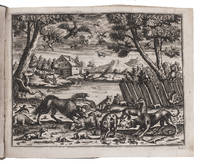
1709KAHFNW706ETUNürnberg 1709. 8vo. Johann Leonhard Buggel Contemporary but not uniform vellum sewn on 3 cords with a hollow back vol. I with dark blue edges with a manuscript title in Latin at the head of the spine: Tractatus de insectis aliisque animalibus nocivis extirpandis; vol. II with a manuscript title in German at the head of the spine: Von schadliechen Ungedierter Außrottung II. Each volume with a folding illustrated engraved title-page and a folding letterpress title-page a larger folding engraved plate in volume II woodcut tailpieces and decorated initials headpieces built up from typographic ornaments. Set in fraktur types with incidental Schwabacher and roman types. 2 volumes. 22 699 = 697 23; 38 944 48 pp. plus 2 folding letterpress title-pages and the 3 engravings. First edition rarely found complete of a detailed account of animals that are harmful to people and to their livestock the treatment of bites illnesses and poisonings they cause and instructions for their extermination. It covers animals on land in water in the air and underground. The large folding plate in vol. II shows 38 insects including 14 caterpillars and the two engraved title-pages for volumes I and II show well over 50 vol. I about 25 vol. II animals not counting a large group of ants and many birds in the distance in the former. The book also provides information about uses of the dead harmful animals for making clothes and medicines and includes many medicinal recipes. The animals discussed include wolves foxes mad dogs birds including birds of prey snakes frogs toads rats mice moles beetles caterpillars bed bugs lice fleas and other insects spiders snails and other molluscs various kinds of worms and even a dragon and basilisk the latter illustrated in the engraved title-page to volume I: it looks more cock-like than snake-like so most people would now call it a cockatrice but the two have long been used almost interchangeably. Krafft notes that dragons are rarely or never found in Germany but says one was found in Bohemia a few years ago and that they are more common in Nubia Libya and the largest ones in "Indien" probably meaning the East Indies and perhaps based on reports of the Komodo dragon.With an owner's inscription of Stefan von Clodt 1674-1737 Vicar General and Provost of Michaelsberg in Fulda on the title-page of vol. I. Somewhat browned vol. I only slightly and with an occasional small stain but still in good condition. The binding of vol. I is in very good condition with only a few small worm holes in the hinges; vol. II is rubbed and damaged lacking the lowest 3 cm of the backstrip. A very detailed source of information on animals regarded as pests from both a medical and a farming and gardening perspective.l Lindner Jagdliteratur 11.1171.01 & 11.1173.01; VD18 11041935 = 90643208 & 90643224; cf. Horn & Schenkling 12340 with 1713 ed. of vol. I. ABE CAT Agriculture hardcover
111594Liverpool J. Walmsley 1846. xii240pp. Original blind-stamped cloth a little worn at extremities unevely faded. Old inscription on title. Scattered foxing otherwise a very good copy. . First English version of Ben Levi's Moral Tales. Liverpool, J. Walmsley 1846. hardcover
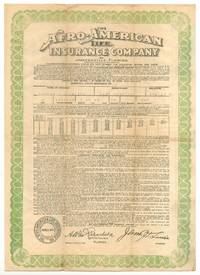
1949518371Jacksonville Florida: The Afro-American Life Insurance Company 1949. Softcover. Near Fine. Original printed life insurance policy certificate issued March 21 1949. Large single sheet measuring 11" x 15" printed on both sides text in black within decorative border printed in green. Prints details about premiums and benefits "Conditions Privileges and Limitations" details about the policy holder General A Burkette and beneficiary Mary Burkette etc. Signed in holograph facsimile by James H. Lewis son of one of the company founders and former President of the company Abraham Lincoln Lewis. Verso prints charts of extended term insurance and premiums.<br /> <br /> Small tears at old folds a near fine example of a fragile ephemeral item. Abraham Lincoln Lewis 1865-1947 African-American businessman was one of the founders of the Afro-American Industrial and Benefit Association which became the Afro-American Life Insurance Company in Jacksonville Florida in 1901. It was the first insurance company in Florida and one of the largest black-owned businesses in Florida. "As the oldest life insurance company in Florida and one of the most successful black businesses in the state it helped thousands of blacks over the years. The importance of that insurance company… cannot be underestimated. According to the 'Encyclopedia of Southern Culture' the insurance companies established by African-Americans and catering to them 'formed the heart of black financial networks the cultural beginnings of which can be traced to mutual benefit societies and the church'" McCarthy African-American Sites in Florida' p. 52; c.f. Low Encyclopedia of Black America p. 207. Lewis helped found the National Negro Insurance Association and the exclusive African-American vacation spot American Beach on Amelia Island and was Florida's first black millionaire. "By 1902 the Afro-American Life Insurance Company was the cornerstone of Black economic development in the city… and grew into one of the most successful minority owned insurance companies in the country. He was a close friend of Booker T. Washington and helped Washington establish the Negro Business League…" Bartley Keeping the Faith p. 10. The company closed in 1990. The Afro-American Life Insurance Company unknown
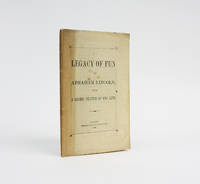
19931London: Frederick Farrah. 1865. First edition first printing. First edition first printing. Publisher's original printed paper wrappers. 48pp. A very good copy the binding firm with some toning to the spine. The contents with a few occasional dots of foxing and the odd minor mark to the margins are otherwise clean throughout and remain free from any previous owners' inscriptions or stamps. A scarce British publication celebrating the wit and wisdom of President Abraham Lincoln published shortly after his assassination on 14th April 1865. Beginning with a brief overview of his life the work comprises a wide ranging collection of humorous anecdotes and stories attributable to Lincoln including several relating to the Civil War and emancipation. Quite a number appear specific and plausible others less so: "'How old is that tree Abe' said a friend of the now President when the latter was engaged in the occupation of rail-splitting. 'Well I am not sure; but I am just about to axe him'". Seldom seen in commerce with no copies appearing in auction/catalogue records since 1966. Further details and images for any of the items listed are available on request. Lucius Books welcomes direct contact with our customers. London: Frederick Farrah. 1865 unknown
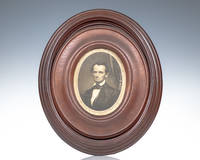
146474Engraved oval portrait of Abraham Lincoln the sixteenth president of the United States. Displayed in an antique wooden frame. The engraving measures 4.5 inches by 6 inches. The entire piece measures 10.75 inches by 12.75 inches. In near fine condition. Abraham Lincoln served as the 16th President of the United States from March 1861 until his assassination in April 1865. He led the United States through its Civil War and in doing so preserved the Union of the United States of America abolished slavery and strengthened the federal government. Lincoln began constructing his cabinet on election night and sought to create a cabinet that would unite the Republican party. His eventual cabinet would include his primary rivals for the Republican nomination and although his appointees held differing views on economic issues all were opposed to the expansion of slavery into the territories of the United States. The most senior cabinet post of Secretary of State was appointed to William Seward who had recently failed to win the 1860 Republican presidential nomination and Lincoln's choice for Secretary of the Treasury was Ohio Senator Salmon P. Chase Seward's primary political rival and the leader of a radical faction of the Republican party that sought the immediate abolition of slavery. unknown
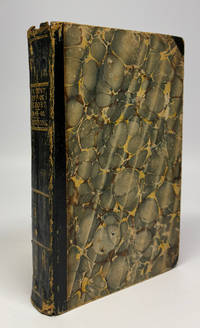
185013208Washington DC: Office of Printers to the House of Reps 1850. First Edition. Hardcover. Good . Octavo 626pp. illustrated plus six plates. A good or better copy in contemporary 3/4 black leather and marbled boards. Contemporary ownership signature to front free endpaper and small private library label to front paste-down else unmarked. Mild foxing to first and last few leaves. Extremities rubbed and scuffed and the joints tender but sound. An important volume in the pantheon of presidential books which chronicles on pp. 57 and 262 the award of a patent to then-Illinois Congressman Abraham Lincoln. Having twice been aboard a riverboat which got stuck on shallow shoals he developed a concept for a bellows fixed under the hull of a riverboat which could be inflated to lift the boat over the obstruction and then retract. Lincoln had been a patent lawyer in the mid-1840s and was closely familiar with the laborious patent application process. <br /> <br /> To this day Lincoln is the only president to have been awarded a patent a fact which contributes to his enduring legacy as an uncommon genius and polymath. As such this tract while unrelated to politics is an essential volume in any substantial Lincoln collection. Uncommon in the trade. Not listed in Monaghan. Office of Printers to the House of Reps hardcover
FORT867401Harcourt Brace & Company. Used - Good. Abraham Lincoln: The War Years: 4 Volume Set Harcourt, Brace & Company unknown
194612569n.p.: n.p. 1946. Lithographic print of a pencil and charcoal drawing of Abraham Lincoln signed in pencil by Woolf. Protected in a matted portfolio and tissue guard. Light soiling. Near fine. Samuel Johnson Woolf 1880-1948 was a famous portrait artist whose subjects included Mark Twain Winston Churchill and other famous performers writers and politicians. His work is represented in collections of the Metropolitan Museum of Art and New York Public Library among many other museums and has been exhibited all over the world. He also published numerous interviews for the New York Times Magazine each accompanied by a portrait of his subject. [n.p.] unknown
1933226729Chicago Chicago Book & Art Auctions 1933. 1933. First edition. 8vo. Foreword by Franklin J. Meine. Bibliographical references. Original stiff tan wrappers stamped in black. 66 pages. Very good. Catalogue of 531 Lincoln related items for "unrestricted public auction" June 14-15 1933. 1st Edition. Soft cover. Very Good. Chicago, Chicago Book & Art Auctions [1933]. paperback
306153Boston Houghton Mifflin Company 1928. First edition later state with no date on the title page. Thick 8vo. Frontispiece portraits; 16 illustrations. Original gilt stamped blue cloth. Very good. 2 volumes. No dust jackets. Volume I - 607 pages. Volume II - 741 pages. 1st Edition. Hardcover. Very Good/No Jacket. Boston, Houghton Mifflin Company, 1928. hardcover
189912434n.p.: n.p. 1899. FIRST EDITION. Bound in half morocco and marbled boards; light creasing and soiling. Judd Stewart's copy with his bookplate. Very good. First edition of this inspirational address. Monaghan 1254. [n.p.] unknown
189244848Concord N.H. October 1892. First edition. contemporary half morocco. Minor rubbing at extremities; a few light spots to cloth; a very nice copy. 8vo. Illustrated from engraved portraits. Inscribed to an old friend "With the compliments of The Author 1893." hardcover
1718102323<p> Newspaper 16" x 22" six columns of text 4 pp. Folded at center several tears and chips at folds and extremities some loss of text Lincoln text less affected some aging and browning and some uneven darkening ; in about fair condition overall for a newspaper from this period. Dated April 17 1865 this is a relatively early account of the Lincoln assassination. Most of the coverage is on the second and third pages of the newspaper. The articles include stories on the "death bed scene" the attacks on Secretary Seward and his son the national reaction and reports on those involved in the plot. Some interesting coverage of a national event in a local newspaper.</p>
1865102324<p>Newspaper 16" x 22" six columns of text small Lincoln engraving 4 pp. Folded at center a few tears and chips at folds and extremities some loss of text at the center fold some aging and browning and a little uneven darkening; despite these faults the paper is in decent condition overall for a newspaper from this period. Dated April 26 1865 this paper provides considerable detail on Lincoln's funeral. The coverage includes an OBIT on Lincoln and a small engraving of the slain president. Most of the coverage is on the second page of the newspaper. The articles include stories on events at the capital to honor Lincoln and the impact of the event on a grieving nation.</p>
1864D16155Baltimore: Cushings & Bailey 1864. First Edition. First and only edition extra-illustrated with approximately 65 inserted portraits. Full red pebbled morocco gilt dated 1882 on the spine rebacked with the original spine laid down the covers panelled in gilt the spine tooled and lettered in gilt with the initials "W.H.W." at the foot. 10 x 8 inches 25.5 x 21 cm; with lithographed title and approximately 65 mostly engraved or lithographed portraits inserted three are original drawings including one of Julia Ward Howe xi lithographed contents 200 pp. lithographed fascsimiles of the handwriting of the authors. Intermittent foxing the inserted portraits have offset to the text leaves opposite rebacked as noted and lightly rubbed. <br/><br/>This volume produced at the time of the 1864 Baltimore Sanitary Fair contains what is considered the first reproduction of the Gettysburg Address in Lincoln's hand. The facsimile was made from what is now known as the "Bliss Copy" of the address the fifth and final manuscript copy of the address that Lincoln executed at the request of the editors of this volume. Other authors represented here include Emerson Poe Melville Hawthorne and many other notables of the period. Cushings & Bailey unknown
1865106234<p>Newspaper folio 21" x 28" eight columns 4 pp. Chips and folds in margins center page crease folded a couple of holes at folds with some loss some soiling aging and darkening; otherwise fair to good. Dated May 31 1865 this local Boston paper carries two stories about the Lincoln assassination. Both articles start on front page. The first discusses the trial of the conspirators and the second deals with the trial also but presents information about the individuals involved. Back page has the usual ads. </p>
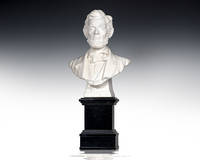
1909148487c. 1909. Painted plaster bust of Abraham Lincoln mounted on a wood pedestal base. After Raffaello Gironi for The Boston Sculpture Company. Signed faintly on reverse of integrated plaster pedestal "R. Gironi." An unpainted plaster of this sculpture is in the collection of the Canadian Museum of History Ottawa. In fine condition. The piece measures 21 inches by 9.5 inches. Abraham Lincoln served as the 16th President of the United States from March 1861 until his assassination in April 1865. He led the United States through its Civil War and in doing so preserved the Union of the United States of America abolished slavery and strengthened the federal government. In his Address at the Sanitary Fair in Baltimore Maryland in April of 1861 Lincoln stated: “The world has never had a good definition of the word liberty and the American people just now are much in want of one. We all declare for liberty; but in using the same word we do not all mean the same thing. With some the word liberty may mean for each man to do as he pleases with himself and the product of his labor; while with others the same word may mean for some men to do as they please with other men and the product of other men’s labor. Here are two not only different but incompatible things called by the same name liberty. And it follows that each of the things is by the respective parties called by two different and incompatible names…liberty and tyranny.†unknown
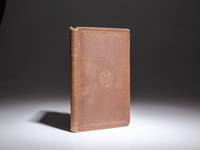
186017676Columbus Ohio: Follett Foster And Company 1860. First Edition. Cloth. Very good. First edition of Caucasus of 1860: A History of the National Political Conventions of the Current Presidential Campaign by Murat Halstead published in 1860. Octavo 6 232pp 2. Pebbled brown cloth title in gilt on the spine. Previous ownership stamp on the title page and preface blindstamp on the front free endpaper. Includes an ownership inscription on the front free endpaper dated 1860. A few marginalia notes in pencil. Solid text block text generally clean. Rubbing to cloth wear at head of the spine. Sabin 29924 Howes H-102. Murat Halstead's The Caucuses of 1860 published in Columbus by Follett Foster and Company in 1860 provides a detailed eyewitness narrative of the major party conventions that shaped the outcome of the pivotal presidential election. As a reporter and editor for the Cincinnati Commercial Halstead attended the Democratic conventions in Charleston April and Baltimore June where the party split over the issue of slavery-ultimately nominating two different candidates Stephen A. Douglas for the Northern Democrats and John C. Breckinridge for the Southern faction. He also covered the Republican convention in Chicago May describing the nomination of Abraham Lincoln over front-runner William H. Seward in day-by-day reports. The book includes transcriptions of key speeches roll-call votes delegate maneuverings and even floor plans of the convention halls. Follett, Foster And Company unknown
186512437New York: Athenaeum Club 1865. FIRST EDITION. Original printed purple wrappers lightly chipped with sun fading to the front wrapper. Unopened. First edition. One of five hundred copies printed. It contains addresses by T. Bailey Myers Parke Godwin George P. Putnam and others and a poem by Henry T. Tuckerman. Monaghan 379 variant. [Athenaeum Club] unknown
186511541New York: Athenaeum Club 1865. FIRST EDITION. With engraved frontispiece portrait. Original printed purple wrappers housed in a quarter-calf portfolio rear joint splitting; chipping and soiling to wrappers with some splitting at the folds still a very good copy of this large fragile item. First edition number 46 of 50 large paper copies. Monaghan 379. [Athenaeum Club] unknown
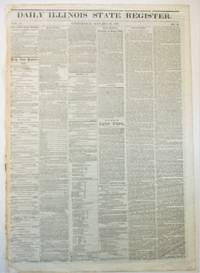
186139392Springfield: Charles H. Lanphier 1861. 4 pp. Folio. 16-1/4" x 23-1/2.". Lightly chipped blank inner edge. Each page printed in six columns each separated by a rule. Very Good.<br /> <br /> The Register no friend of Abraham Lincoln was a Democratic Paper supporting the Crittenden Compromise. Reporting on State and National issues the Register notes "The Crittenden Resolutions have strong friends but the ultra republicans will not take them." Lincoln had insisted that his allies hold firm against Crittenden's Compromise. The Register rebukes Lincoln for his famous declaration that "the Union could not endure permanently part slave and part free." Developments in the fracturing Union are reported. <br /> Lincoln had been elected President nearly three months before the appearance of this issue. His inauguration would occur five weeks later. Paid advertisers include John McClernand and John Stuart who advertise their legal services in the first column of page 1. The large number and variety of advertisements for an array of medical complaints about four columns are surprising- - and a little disturbing. <br /> This issue also reports an incident involving the John Brownites at Boston who were snubbed by British Lord Brougham after inviting him to attend a convention discussing the abolition of slavery. Charles H. Lanphier unknown
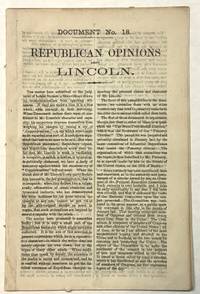
186442090np. 1864. Caption title as issued. 16pp printed in two columns per page. Stitched Very Good. <br /> <br /> This unusual item a Democratic Party campaign pamphlet is a compendium of "Derogatory Republican statements concerning Lincoln's capacity compiled for the campaign of 1864. The Pomeroy circular Fremont's letter of acceptance the Wade-Davis manifesto" Monaghan. It is a forceful reminder of the low esteem in which Lincoln was held during 1864 until Atlanta fell to the Union in September. <br /> FIRST EDITION. Monaghan 349. Sabin 70036. unknown
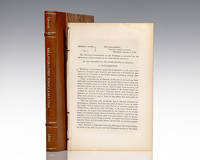
1863149486Washington: Government Printing Office January 2 1863. Rare first War Department and fifth overall printing of the Emancipation Proclamation. Twelvemo General Orders No. 1 extracted from the larger volume of orders for 1863 4 pages disbound. President Lincoln had intended to issue the order earlier in 1862 but deliberately delayed its release until after the Union's strategic victory at Antietam at which point he announced the Preliminary Emancipation Proclamation. General Order No. 139 September 22 1862 which declared that all slaves held in rebelling states would be forever free from the first day of January 1863. The text of the final Emancipation Proclamation present in this order is noted for its direct and decisive language: "By the President of the United States of America . That on the first day of January in the year of our Lord one thousand eight hundred and sixty-three all persons held as slaves within any State or designated part of a State the people whereof shall then be in rebellion against the United States shall be then thenceforward and forever free; and the Executive Government of the United States including the military and naval authority thereof will recognize and maintain the freedom of such persons and will do no act or acts to repress such persons or any of them in any efforts they may make for their actual freedom." The first printing for the War Department of General Orders No. 1 was distributed to various military outposts and bureaus throughout the United States. Based on the extensive research of Charles Eberstadt the copy for the War Department was the fifth time the final version of the Emancipation Proclamation appeared in print on January of 1863 following three hastily prepared issues for the State Department and another for Lincoln's hometown Illinois States Journal newspaper in Springfield Illinois. A copy of the War Department Printing was included in the Grolier Club's One Hundred Influential American Books Printed before 1900. Eberstadt 12; Grolier Club One Hundred Influential American Books 71; Streeter 1751. In near fine condition. Housed in a custom half morocco case. A scarce work. The Emancipation Proclamation issued by President Abraham Lincoln on January 1 1863 represented a pivotal moment in the trajectory of the American Civil War and the broader struggle over the institution of slavery. Although it did not immediately free all enslaved individuals the proclamation declared that all persons held as slaves in states or parts of states still in rebellion against the United States were to be henceforth free. This executive order grounded in Lincoln's war powers as commander-in-chief was intended primarily as a military measure to weaken the Confederacy by undermining its labor force and discouraging foreign powers from recognizing or supporting the secessionist cause. The proclamation also signaled a significant shift in Union war aims reframing the conflict from a struggle solely to preserve the Union to one explicitly linked to the abolition of slavery. While its immediate legal impact was limited to areas outside Union control the Emancipation Proclamation laid the groundwork for the eventual passage of the Thirteenth Amendment which formally abolished slavery throughout the United States. Government Printing Office unknown