987 résultats
19271327049Boston: Houghton Mifflin Company 1927. Limited edition. Hardcover. Octavo; Limited edition 369/440; G/no DJ; Hardcover w/out DJ; Spine yellow with black print on white label; Black slipcase has edgewear lacks rear panel tears to corners shelfwear; Boards quarter bound with yellow cloth to spine and blue paper to boards slight wear to spine caps soiling to spine and light smudging to boards; Text block has spotting to deckled edges names in ink on front flyleaf slight spotting to endpapers foxing to page 3 and facing plate else clean interior; 70 pages frontispiece illustrated b&w plates Laid in is an offprint from Century Magazine Feb. 1894 pp. 589-608 containing essay by John Coleman Adams and text of Lincoln's Gettysburg Address. 1327049. FP New Rockville Stock. Houghton Mifflin Company hardcover books
19251342baIChicago IL: University of Chicago Press 1925. Book. Hardcover. Americana; politics; 22p; 29.7cm; 1/2 tan cloth paper covered boards soiled; frontis portrait of Lincoln U. S. president 1861-65; 2 illus.; facsimile of speech; introduction by Oliver R. Barrett b. 1873; p. 17-19 "Mr. Lincoln at home" column from Springfield Journal Nov. 1 1858; p. 21-22 printed letter from John H. Morgan. University of Chicago Press Hardcover books
184822094.01 -.02<p>Lincoln's spot resolution and speech condemns the pretexts for starting the war with Mexico. He requests proof from President Polk that American blood was shed on American soil and that the enemy provoked the Americans and he asks if those Americans present were ordered there by the United States Army.</p> <b>ABRAHAM LINCOLN.</b>Newspaper. <i>National Intelligencer</i> Thursday December 23 1847. Washington: Gales & Seaton . 4 pp. Offered with another issue of the <i>National Intelligencer</i> January 20 1848. 4 pp.<p><b><br /></b></p><p><b>Excerpts:</b></p><p><b>December 23 1847 issue</b></p><p>Page 2 bottom of first column to second column</p><p><i>Mr. LINCOLN moved the following preamble and resolutions which were read and laid over under the rule:</i></p><p><i> Whereas the President of the United States in his message of May 11 1846 has declared that "the Mexican Government not only refused to receive him the envoy of the United States or listen to his propositions but after a long-continued series of menaces have at last invaded </i>our territory<i> and shed the blood of our fellow citizens on</i> our own soil<i>."</i></p><p><i> And again in his message of December 8 1846 that "we had ample cause of war against Mexico long before the breaking out of hostilities; but even we forbore to take redress into our own hands until Mexico herself became the aggressor by invading </i>our soil <i>in hostile array and shedding the blood of our citizens."</i></p><p><i> And yet again in his message of December 7 1847.</i></p><p> Resolved by the House of Representatives<i> that the President of the United States be respectfully requested to inform this House—</i></p><p><i> 1st. Whether the spot on which the blood of our citizens was shed as in his messages declared was or was not within the territory of Spain at least after the treaty of 1819 until the Mexican Revolution.</i></p><p><i> 2d. Whether that spot is or is not within the territory which was wrested from Spain by the revolutionary Government of Mexico. </i></p><p><i> 3d. Whether that spot is or is not within a settlement of people which settlement has existed ever since long before the Texas revolution and until its inhabitants fled before the approach of the United States army.</i></p><p> <i>4th. Whether that settlement is or is not isolated from any and all other settlements by the Gulf and the Rio Grande on the south and west and by wide uninhabited regions on the north and east.</i></p><p><i> 5th. Whether the people of that settlement or a majority of them have ever submitted themselves to the government or laws of Texas or of the United States by consent or by compulsion either by accepting office or voting at elections or paying tax or serving on juries or having process served upon them or in any other way.</i></p><p><i> 6th . Whether the people of that settlement did or did not flee from the approach of the United States army leaving unprotected their homes and their growing crops </i>before<i> the blood was shed as in the messages stated; and whether the first blood so shed was or was not shed within the enclosure of one of the people who had thus fled from it. </i></p><p><i> 7th. Whether our </i>citizens<i> whose blood was shed as in his messages declared were or were not at that time armed officers and soldiers sent into that settlement by the military order of the President through the Secretary of War.</i></p><p><i> 8th. Whether the military force of the United States was or was not so sent into that settlement after Gen. Taylor had more than once intimated to the War Department that in his opinion no such movement was necessary to the defense or protection of Texas. </i></p><p><i> Several resolutions of inquiry were here offered my Messrs. GEORGE S. HOUSTON W.P. HALL PHELPS GREEN McCLELLAND and KAUFMAN which are omitted for want of room.</i></p><p><b>January 20 1848 issue: </b></p><p>Page 2 bottom of 3rd column thru 6th column. In this lengthy address Lincoln questions President Polk's judgment regarding the aims and prosecution of the war in Mexico putting it in the context of the American Revolution: <i>"Texas revolutionized against Mexico and became the owner of something…if she got it in any way she got it by revolution; one of the most sacred of rights—the right which he believed was yet to emancipate the world; the right of a people if they have a government they do not like to rise and shake it off…He talked like an insane man. He did not propose to give Mexico any credit at all for the country we had already conquered; he proposed to take more than he asked for last fall…"</i></p><p>Additional news: page 2 middle of 4th column prints a lively senatorial debate involving Jefferson Davis. Page 3 bottom of 2nd column <i>"Mr. LINCOLN from the same committee reported a bill for the relief of William Fuller and Orlando Saltmarsh. Read and committed." </i>Page 4 middle of 3rd column <i>"By Mr. LINCOLN: A bill to amend an act entitled 'An Act to raise for a limited time an additional military force and for other purposes' approved February 11 1847."</i> This act gave the president permission to raise one regiment of dragoons and nine regiments of infantry to be used in the war with Mexico. In addition the act dealt with the logistics of each regiment such as raising the pay for field surgeons or adding a quartermaster to each regiment.</p> books
186330001.20<p>Contains Lincoln's entire 1863 Message to Congress where he reaffirmed his commitment to emancipation as well as His Proclamation of Amnesty and Reconstruction which laid out a plan to return the rebellious states to the Union fold. Commonly called the "Ten Percent Plan" it allowed for a state to hold new elections when 10% of its 1860 voters took a loyalty oath to the Union.</p> <b>ABRAHAM LINCOLN.</b>Newspaper. <i>New York Times</i> New York N.Y. Dec. 10 1863 with <i>"Supplement to The New York Times"</i> complete with its own masthead. 12 pp. 14¾ x 21 in.<p><b><br /></b></p><p><b>Excerpt</b></p><p>"<i>To now abandon them would be not only to relinquish a lever of power but would also be a cruel and an astounding breach of faith. I may add at this point that while I remain in my present position I shall not attempt to retract or modify the emancipation proclamation nor shall I return to slavery any person who is free by the terms of that proclamation or by any of the acts of Congress.</i>"</p><p><b>Historical Background</b></p><p>Throughout the fall of 1863 eventual Union victory became increasingly clear and on December 8 1863 Lincoln issued his Proclamation of Amnesty and Reconstruction. This lenient plan that offered citizens of the rebellious states full pardons voting and property rights except possession of slaves encouraged the states to begin addressing the issue of the freedmen and women without compromising their rights and allowed a former Confederate state to hold elections and form a pro-Union government once 10% of the number of voters in the 1860 election swore loyalty oaths. Commonly called the "Ten Percent Plan" it reflected both Lincoln's charitable view of Reconstruction as well as the reality that heavy penalties denial of voting and property rights to rebels and impoverishing the South was no way to rebuild a nation after a war fought at least initially to preserve the Union.</p> books
186423084New York: Sold at 13 Park Row and at all Democratic Newspaper Offices 1864. 8pp caption title disbound a bit of blank margin wear Good. At head of title: 'Document No. 12.' <br/><br/> This Democratic Party campaign pamphlet portrays President Lincoln as an incompetent military strategist who perpetually "interfered with General McClellan both when he was general-in-chief and afterward when he commanded the brave Army of the Potomac." Worse Lincoln has "The Taint of Disunion." He not McClellan the Democratic presidential candidate supported the Jeffersonian right of revolution in a speech during his single term in Congress. He and other "ultra abolitionists" are the "original secessionists and disunion men." <br/> George McClellan wants the rebel States to return to the Union but Lincoln's policies render that impossible. Lincoln "regards the States as dead and gone. He magnifies and strengthens the position of the Richmond dynasty" by seeking to negotiate "only with Jefferson Davis." <br/>Monaghan 326. Not in LCP. Sold at 13 Park Row, and at all Democratic Newspaper Offices unknown books
194312572LA LFSC 1943 1943. SIGNED BY LINDSTROM & RISDON FWD FIRST EDITION FINE. Signed by Authors. F. LA, LFSC, 1943 unknown books
198923399New York: Library of America. Fine in Near Fine dust jacket. 1989. First Edition Thus; First Printing. Hardcover. 2 volume set books are fine in near fine dust jackets. Publisher's slipcase is near fine.; Small 8vo 7½" - 8" tall; 898 & 787 pp . Library of America hardcover books
168643445Nuremberg: Johann Georg Endter 1686. <p>Linden Johannes Antonides van der 1609-64. Lindenius renovatus sive . . . de scriptis medicis libri duo . . . noviter praeter haec addita plurimorum authorum . . . a Georg. Abrah. Mercklino . . . 4to. 22 210 221-1101 55pp. Lacking Part II "Cynosura medica" approx. 170pp. containing Mercklin's subject index to Lindenius renovatus. Engraved frontispiece. Nuremberg: Endter 1686. 200 x 163 mm. Vellum ca. 1686 head of spine and hinges repaired. Occasional light foxing but fine. From the library of anthropologist Johann Friedrich Blumenbach 1752-1840 with booklabel bearing his autograph signature on the front pastedown and annotations and underlinings possibly his on at least 50 leaves. Modern bookplate of Gordon W. Jones M.D.</p> <p>First Edition of Georg Abraham Mercklin's considerably expanded version of van der Linden's bibliography of medicine. First published in 1637 Van der Linden's was the most complete medical bibliography of its time; it was also the most modern of early medical bibliographies both in its contents and format. Mercklin 1664-1702 supplied corrections biographical material on authors and additions that included the innovative listing of articles from the publications of learned societies.</p> <p>This copy is from the library of Johann Friedrich Blumenbach the founder of modern anthropology. He was the author of De generis humani varietate nativa 1775 in which he divided humanity into four races based on head shape skin color and hair type; he later added a fifth race and in the expanded third edition of De generis 1795 he introduced the famous terms "Caucasian Mongolian Ethiopian American and Malayan" to describe the "white yellow black red and brown" varieties of mankind. Brodman Development of Medical Bibliography pp. 29-33; no. 14. Fulton Great Medical Bibliographers pp. 35-36. </p> . Johann Georg Endter unknown books
197055247Norwalk:: Heritage Press. Near Fine. 1970. Hardcover. Selected with an introduction by Carl Van Doren. "Sandglass" laid in. A reprint edition. Fine in a near fine a bit faded along the edges slipcase. . Heritage Press, hardcover books
1970181917Banfield Provinica de Buenos Aires: Editorial IndoAmerica 1970. Paperback. v 400p. text in Spanish scattered b&w images in text first edition trade paperback in frenchfold orange pictorial wraps. Slightly edgeworn "Complimentary copy" in pen on half-title else a very good copy. Historia de la Literatura. Editorial IndoAmerica paperback books
196863431Buenos Aires: Editorial Indoamerica 1968. Novena edicion. Paperback. Very Good. errata slip laid in 304p. Wrapper. 23cm. Backstrip browned. INSCRIBED by Arias-Larreta. Spanish text. <br/><br/> Editorial Indoamerica paperback books
196262962Los Angeles 1962. Octava edicion. Paperback. Very Good/Very Good. 124p. Wrapper with a dj. 23cm. INSCRIBED by Arias Larreta Typed Letter signed from the author also laid in. Spanish text. <br/><br/> paperback books
195139793Los Angeles 1951. 1st ed. Hardcover. Very Good. 125p. Hardcover. 23cm. No Jacket. INSCRIBED by Arias-Larreta. Spanish text. <br/><br/> hardcover books
186534970New York: Currier & Ives 152 Nassau St. 1865. Folio broadside 12" x 16". Black and white bust portrait of a well-groomed bearded Abraham Lincoln. He wears a dark jacket and vest with a white button-down collared shirt and dark bow tie. In very small print below the caption appears to be the number 205 or possibly 105. Moderately tanned small white scattered spots. Several closed tears at edges and corners several archival tape repairs on verso. Good. Currier & Ives, 152 Nassau St. unknown books
196545554New York: Holt Rinehart & Winston. Very Good. 1965. Hardcover. New York: Holt Rinehart & Winston 1965. 8vo green cloth only light soil to page edges else VG. No DJ. . Holt Rinehart & Winston hardcover books
196386775Washington:: Library of Congress. Near Fine. 1963. Paperback. B000P1K2CA . First edition paperback. Laid in is another facsimile reproduced on antiquated parchment 1977 - folded and in original envelope. Near fine in oversize illustrated stapled wraps. . Library of Congress, paperback books
1998011785Westport CN: Auburn House 1998. First Printing. Cloth. Octavo 7¾" - 9¾" tall. 216pp. Text references tables. Bibliography. Index. Bound in dark blue cloth with white titles. Near Fine. Auburn House unknown books
18041188409New York: The Shakespeare-Gallery 1804. Eighth Edition. Hardcover. Approx. 4.5" x 7" VG marbled sandy brown hardcover with no text on spine or cover. Rubbing to corners and spine ends of boards. Mild foxing to edges of text block. Hinges starting at front pastedown which opposes first of two title pages one for each discrete section of this directory. Old hand-calligraphed swooping names penned to first title page. A few internal chips and tears to each title page subtly affecting text of Astronomical Calculations subtitle; and a 1.5" x .25" chip to July/August 1804 astronomical charts with resulting loss to a few calculations across a couple of categories. Foxing throughout; binding remains tight. Shelved in Case 13. 1188409. Shelved Dupont Bookstore. The Shakespeare-Gallery hardcover books
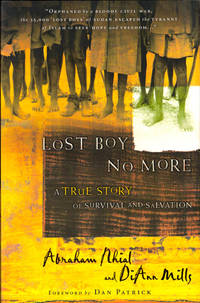
200441550Nashville: Broadman and Holman 2004. Paperback. Very good. Second Printing. 118pp. Very good in publisher's wraps. Inscribed and signed by Nhial on the half title page. <br/><br/> Broadman and Holman paperback books
183435602Rochester Boston MA 1834. A collection of six letters ranging in size from 8-1/2" x 11" to 8-1/2" x 12-3/4" five complete and one partial letter. All in ink manuscript on unlined paper. Old folds light toning occasional light foxing two on untrimmed paper. Most are addressed on final blank page and have wax seal remnants with the usual tear where wax was torn open occasional loss to a few letters. Overall Very Good. <br/><br/> Abraham Holmes was a Massachusetts legislator and attorney. Opposing ratification of the Constitution he was allied with the Anti-Federalist Otis family of Barnstable and Freeman family of Sandwich. He was an Anti-Federalist delegate from Rochester MA to the Massachusetts Ratifying Convention of 1788. He served as Sergeant in Capt. Barnabas Doty's company Col. Ebenezer Sproat's regiment during the Revolutionary War. He was admitted to the Plymouth County Bar in April 1800 at the age of forty-six. Though he had no formal legal education his admission to the Bar was permitted in consideration of his respectable official character learning and abilities and on the condition that he study three months in an attorney's office. He served as president of the Court of Sessions prior to his bar admission practiced law in Rochester until the early 1830s was a member of the State Constitutional Convention of 1820 and a member of the Executive Council from 1821 to 1823. Davis William T.: BENCH AND BAR OF THE COMMONWEALTH OF MASSACHUSETTS IN TWO VOLUMES VOLUME II. Boston: 1895. Page 235; Daughters of the American Revolution: LINEAGE BOOK VOLUME 12 1900 Page 15. <br/> William Baylies 1776-1865 and Francis Baylies 1783-1852 were brothers and partners in a Massachusetts law firm. William served as a U.S. Representative from Massachusetts in 1809 1813-1817 and 1833-1835; was a member of the Massachusetts House of Representatives from 1808-1809 1812-1813 and 1820-1821; and a member of the Massachusetts Senate from 1825-1826 and 1830-1831. Francis was a Congressman from 1821-1827; a member of the Massachusetts House of Representatives from 1827-1832 and in 1835; and the United States Charge d'Affaires Argentina in 1832. <br/> Holmes's Letters are as follows:<br/> 1 Letter to Francis Baylies Member of Congress dated at Boston January 19 1822. Holmes then member of the Massachusetts Executive Council awaits reports of the State legislative committees the incorporation of Boston "which will serve to procrastinate the session" the "suspense of the acceptance of office of the Judge of the Municipal Court" and issues such as criminal trials and the death sentence. "We pass our time here in Boston. the frequent application for appointments of both proper and improper candidates is rather an uncomfortable circumstance; but not so distressing as in affixing the time when convicts shall live no longer. to determine whether a convict shall die or not. It is probable we shall have the trial of both soon as there has been three capital convictions since I was here; one for murder and two for highway robbery. Those trials I attended; a Mr. Simmons formerly of Taunton as I am told managed the Defence; I can not record him as possessing great oratorical abilities but for integrity of arrangement and strength and argument perhaps no man of his years stands higher." Boston was incorporated March 4 1822 and the same year the Boston Police Court for criminal cases and Justice's Court for the County of Suffolk for civil claims were established. <br/> 2 Holmes's Letter to Francis Baylies dated at Boston March 28 1822. Holmes notes that the State legislative session is coming to a close. He anticipates orations which would "cause Tully to wish that he hadn't ever learned to speak; and all this for the good of the Nation."<br/> 3 Letter to William Baylies Counsellor at Law dated at Rochester MA October 24 1828 docketed October 25. An interesting three pages for lawyers anyway written in small yet legible hand on legal size paper. Holmes discusses with "great anxiety" and detail strategies and implications of the case entitled Rounseville Spooner versus Davis et ux. presentation of which had just concluded in the Massachusetts Supreme Court. Holmes and Baylies had represented Rounseville. Judge Wilde issued his decision on the following day October 25th. <br/> The case involved land in Fairhaven conveyed by Alden Spooner to Walter Spooner which later descended to Humphrey Davis's wife; but Alden Spooner later conveyed it again to Rounseville Spooner. What will be done in the case Holmes says "God only knows." Judge Wilde's Opinion reported at page 147 of Pickering's Reports Boston: 1830 gives the victory to Holmes and Baylies. <br/> 4 Letter to William Baylies Nov. 21 1828. Holmes discusses his excitement over a favorable verdict. "I rode into the yard. Mr. Bassett's son met me and informed me that the verdict of the jury was in favour of our client. Do you think I was sorry My heart jumped to my throat and with some difficulty I prevented my immortal spirit from bursting thro' the clay tenement. I am glad now that we did not use Joshua Vincent's Deposition for they would have objected and the point next word illegible for the Whole Court./ The next enquiry is Compensation. But I must stop with my hearty congratulations." Docketed on final page in part "Thomas v. D. & wife Nov. 21 1828."<br/> 5 Letter to William Baylies dated Rochester MA April 11 1834. A lengthy poignant letter discussing his advanced age and retirement. He no longer views political issues with the same interest; despite his overall good health he is troubled with lameness and currently lives with his son and his son's wife. "Some of my old customers are not willing to apply to anyone else."<br/> 6 Partial Letter to Francis Baylies December 1821. ". I dread the power of some of your colleagues. Mr. Saltonstall whose abilities are competent to make white and black synonymous terms I understand -which God forbid is strongly intrenched in a. Battery of Bankruptcy. unknown books
CA06A-00516Collectible - Acceptable. 4 vols bound in 1. 1st Edition. xxxvi132pp. Early brown buckram with black spine printing and brown endpapers. Front cover damp-bubbled and lightly stained else VG. Weight: 2 pounds = 911 grams. Size: 9.5 x 6.6 x 1.2 inches = 23.8 x 16.5 x 3cm. Inquire if you need further information. Gach. hardcover books
1983153342New York: Farrar Straus & Giroux 1983. Paperback. x 273p. no illustrations softbound in 8x5.5 inch wraps. Slightest edgewear a sound clean unmarked copy. Farrar Straus & Giroux paperback books
1696211506Leyden and Utrecht: Pieter Vander Aa 1696. unbound. very good. Botanical. Copper plate engraving with hand coloring. Image measures 12.5" x 8.25".<br/><br/> Stunning early botanical. Abraham Munting 1626-1683 taught medicine and botany at the Academy of Groningem in the Netherlands. He had a particular interest in the uses of plants especially medicinally. This engraving is from "Naauwkeurige Beschryving Der Aardgewassen". Aging and scattered foxing around edges and margins. Please visit our gallery for more Munting prints.<br/><br/> Pieter Vander Aa unknown books
195178342Philadelphia: Jewish Publication Society of America 1951. First edition of this modern classic of Jewish theology. Octavo original cloth. Near fine in the rare original dust jacket with some chips and rubbing. Jacket designed by Marshall Lee. Man Is Not Alone is a profound beautifully written examination of the ingredients of piety: how man senses God's presence explores it accepts it and builds life upon it. Abraham Joshua Heschel's philosophy of religion is not a philosophy of doctrine or the interpretation of a dogma. He erects his carefully built structure of thought upon foundations which are universally valid but almost generally ignored. It was Man Is Not Alone which led Reinhold Niebuhr accurately to predict that Heschel would "become a commanding and authoritative voice not only in the Jewish community but in the religious life of America." Jewish Publication Society of America hardcover books
1648001623Paris: Pierre Des-Hayes 1648. Book. Very good- condition. Hardcover. First Edition. 16mo - over 5¾" - 6¾" tall. xviii 342 pages of text. Defective copy lacking five plates the frontis and a final engraved table. Attractive early-to-mid-18th century leather binding with moderate wear to the hinges spine extremities and corners. Raised bands gilt tooling and lettering on spine. Decorative marbled endpapers and blank endsheets supplied at time of binding. Present is the full-page engraved portrait of Michel Larcher engraved armorial dedication to Larcher and the engraved title page following page 58. A complete copy has the plate numbers 151 and 156 used twice totalling 158 plates showing plans and designs of perspective of which 153 only are present in this copy. Lacks plate numbers 110 151 both 154 and 155. However early hand-drawn facsimiles of plates 151 one of two and 155 are supplied and bound-in leaving three images unrepresented. The majority of the plates are double-sided. Plate 156 is in less than good condition with heavy staining and soiling. Engraved title page is repaired with early conservator's tape with no loss. Pages 168 through 193 are bound out of order. Several leaves are affected by damp staining and minor rippling; approximately 15 front and 30 rear. The title page and several adjacent leaves as well as a few at the rear of the text are heavily stained. Some of the staining appears to originate from washed-out markings -- notations to which an attempt at removal were made -- that are in blank areas mainly in the front and rear pages but also in the blank areas in the introduction. Includes Desargues New Theory at the end with demonstrations. Protected in a modern circa 1950 slipcase decorated with marbled endpaper the seams of which are detached at the top edge. Desargues 1593-1661 was a French mathemetician and a founder of modern Geometry. With Pascal he introduced the method of perspective; treated conic sections as projections of circles formulated the so-called Arguesian transformation; developed the theory of involution and of transversals; defined parallels as lines that intersect at infinity. Measures 6-5/8" tall by 4-1/2" wide; printed on thick paper with ample margins. 20th century bookplate of Paul and Verner Mac Alister on front pastedown and a neatly handwritten identification on the 2nd front endpaper. On the same leaf is a contemporary name or marking. French France Fortifications Conics Cartography Projective and Descriptive Geometry. Early editions of Desargues works are quite uncommon. Pierre Des-Hayes Hardcover books