400 résultats
17787902CBNouvelle édition. 2 Bände. Neuchâtel, Fauche, 1778. 4°. (4), IV, 454, (2) S.; (4), 391, (1) S. Mit 2 gest. Frontisp. und 77 Kupfertafeln (davon 15 gef.) Lederbände der Zeit mit Rückenschild und Rückenvergoldung.
1714355Leiden 1714. Avec un Mémoire instructif sur les Causes de la Guerre arrivé en Suisse l'an 1712 par Gottlieb Kypseler de Munster 4 tomes Guter Zustand Originalausgabe Pierre van der Aa Kl.-8°. Ldr. Raetica/ Helvetica unknown
17787902CB1778. Nouvelle édition. 2 Bände. Neuchâtel Fauche 1778. 4°. 4 IV 454 2 S.; 4 391 1 S. Mit 2 gest. Frontisp. und 77 Kupfertafeln davon 15 gef. Lederbände der Zeit mit Rückenschild und Rückenvergoldung. Haller I 718. Brunet VI 25894. Haller I 718. Wäber I 38. Lonchamp 2560. Vierte nach Haller und Wäber die «beste» Ausgabe. «Diese Ausgabe ist vollkommen umgearbeitet und weit richtiger als die vorigen» Haller. Die Kupfer mit zahlreichen Orten der ganzen Schweiz diverse Karten und paläontologische sowie archäologische Darstellungen. Das Papier durchgehend gebräunt und stockfleckig. Die Einbände berieben. unknown
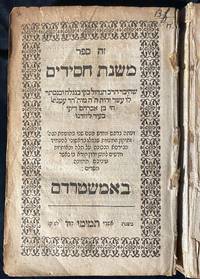
174042573Amsterdam: No Publisher Listed 1740. Hardback. 2nd edition. Period Vellum binding 12mo 132 leaves; 17 cm. In Hebrew. Mayer Sulzberger's copy with his bookplate. Like the Mishnah Mishnat Hasidim is arranged in "Sedarim" which are divided into "massechtot" and subdivided into "perakim." With an introduction entitled: Olam Katan. Includes index. Title-page has ornamental border. <br> Raphael Immanuel ben Abraham Hai Ricchi 1688-1743 was an "Italian rabbi cabalist and poet.After having studied Talmud under Nathan Pinkerle rabbi of Alessandria della Paglia Ricchi became tutor in the houses of several wealthy Jews. He was thus successively employed at Göritz Fiorenzuola Finale in Modena and Venice; in the last-named place he opened a school. He then went to Triest where he was ordained rabbi in 1717 by Hillel Ashkenazi rabbi of Canea after which he was invited to the rabbinate of Görz.<br> Owing to his great love for cabalistic studies and to his ascetic tendencies Ricchi resolved to settle in Palestine. He arrived at Safed in 1718 and during his stay there of two years he occupied himself with the study of the works of Isaac Luria and Hayyim Vital. He was also reordained rabbi by Hayim Abulafia. In 1720 an epidemic broke out in Palestine and Ricchi was compelled to return to Europe. <br> On the voyage he and all his fellow passengers were captured by pirates and brought to Tripolitza whence through the efforts of Abraham Halfon Ricchi and his family were allowed to return to Italy. He then occupied the rabbinate of Florence till 1723 in which year he removed to Leghorn where for twelve years he engaged in business as a merchant. He spent twenty months in travel visiting Smyrna Salonica Constantinople Amsterdam and London and in 1735 set out for Palestine spending two years at Aleppo and three at Jerusalem. In 1741 he returned to Leghorn and in 1743 while traveling in Italy for the purpose of selling his works he was killed by robbers who buried his body by the shore of the Reno. Six days later some Modena Jews discovered the remains and brought them to Cento for burial.<br> Ricchi's most important work is the above-cited 'Mishnat Hasidim' a cabalistic work begun in 1726 at Leghorn. <br> Like the Mishnah it is arranged in orders 'sedarim' which are divided into treatises 'massektot' and subdivided into chapters 'peraim' the names of the six Mishnah orders being taken in a cabalistic sense. But the chief divisions of the work are three termed 'mafteot' besides the introduction entitled ''Olam Kaon' = 'microcosmos' in which Ricchi endeavors to popularize the Cabala. <br> The first main division is the 'Maftea ha-'Olamot' in which the worlds are treated. It contains: 1 the order of Zera'im treating of the cabalistic cosmology and of metaphysics and divided into seven massektot and eighteen chapters; 2 the order Kodashim treating of the realm of emanation 'olam ha-azilut' which is styled 'the holy of holies' and containing twenty massektot and seventy-eight chapters; 3 the order ohorot treating of the three other realms namely those of creative ideas 'beri'ah' creative formations 'yezirah' and creative matter 'asiyah' and divided into nine massektot and twenty-seven chapters; and 4 the order Nezikin treating of the demons and 'kelifot' and divided into six massektot and seventeen chapters. <br> The second main division entitled 'Maftea ha-Neshamot' contains the order Nashim treating of souls in twelve massektot and forty-eight chapters. The third main division entitled 'Mafteah ha-Kawwanot' contains the order Mo'ed divided into fifty-eight massektot and 371 chapters and treating of the Kawwanah. It will be seen that the number of massektot in this work is 112 corresponding to the numerical value of the sacred name ; and the number of chapters 547 equal to the numerical value of Ricchi's name plus twelve the number of its letters. <br> The sources for this work besides the Zohar are mostly Isaac Luria's and Hayyim Vital's writings of which the 'Sefer ha-Gilgulim' 'Kanfe Yonah' and 'Shulhan 'Aruk' may be particularly mentioned. Ricchi drew also from other cabalists" M. Seligsohn in JE 1905.<br> NYU houses their copy in the Mitchell M. Kaplan Collection of Rare Judaica and Hebraica. Aviva Ben-Ur's Ladino catalog list #14. Judge Mayer Sulzberger "was closely associated with Isaac Leeser and assisted that scholar in editing The Occident contributing to it a partial translation of Maimonides' "Moreh Nebukim." After Leeser's death Sulzberger edited vol. xxvi. of The Occident. He was one of the founders of the Young Men's Hebrew Association which he served as president; and he has taken great interest in the Jewish Hospital of Philadelphia of which he has been vice-president since 1880. He was from the beginning in 1888 chairman of the publication committee of the Jewish Publication Society of America; was one of the original trustees of the Baron de Hirsch fund; and interested himself in the establishment of agricultural colonies at Woodbine N. J. and in Connecticut.Sulzberger had one of the best private libraries in America; it contained a very large number of Hebraica and Judaica" WIkipedia. SUBJECTS: Cabala -- Early works to 1800. Siddurim -- Texts. Judaism -- Ari rite -- Liturgy -- Kabbale -- Ouvrages avant 1800. Siddour -- Textes. Cabala. OCLC: 904949349. OCLC lists only 2 copies of this 1740 2nd edition worldwide NYU & Cambridge and only 3 copies of the first edition of 1727.<br> Boards slightly bowed with front hinge starting. Remains of 19th Century paper label on spine. Lacks front blank pastedown. Jewish institutional bookplate in addition to that of Sulzberger. Paper toning but strong. About Very Good- Condition. Attractive copy of early edition of an important cabalistic text. RAB-67-7. Amsterdam: [No Publisher Listed] unknown
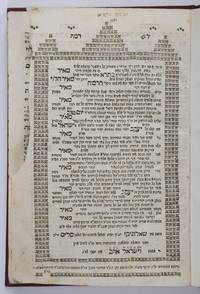
179148770Thessaloniki: Mordekhai Nahman ve-David Yisraelig'ah 1791. First edition. Hardcover. g- to vg-. Two volumes large quarto. Vol.1: 2 157. Vol.2: 3 158- 274 1 35. Double-sided leaves. Rebound in modern burgundy mottled faux-leather boards with gilt lettering on the front covers gilt lettering and ruling on the spines. Edges of the book block in red. Title pages bordered with small woodcut motifs.<br /> <br /> The first printed edition of this commentary on the Talmudic tractate Bava Batra by famed mediaeval Spanish Rabbi Meir Abulafia aka 'The Ramah' c. 1170 – 1244. The work is one of only three surviving parts Tractates Bava Batra Sanhedrin and Kidushin plus the fourth chapter of Tractate Gittin from his larger series of his Talmudic commentaries known as Yad Ramah meaning "Hand of the Ramah" or "The Upraised Hand". The final section of the second volume contains Shiyur Shitah Mekubetset with its own title page a subsequent commentary on the work by Rabbi Bezalel Ashkenazi c. 1520 – c. 1592 and an approbation at the start of the first volume by editor Yosef Elia Halevi. The first volume includes a few illustrated figures and diagrams on leaf 123.<br /> <br /> Text throughout in Hebrew printed in Rashi script in a two column format.<br /> <br /> Bindings with minor rubbing bumping and damp staining to the corners. Minor scratches and smudges to the covers. Title page in volume one torn along the left margin. Title page of volume torn along the left margin with no loss of text. Title page of volume 2 with tears worming and staining with some loss of text. Volumes quite clean overall with only minor sporadic staining in the margins. Worming throughout both volumes with some loss of text mostly in the second volume. A few pages throughout the volumes have been repaired with tape. Bindings in very good- interiors in good- to good condition overall. Scarce. Hebrew title: יד רמה<br /> Authors: רבי מ×יר הלוי ×בו××œ×¢×¤×™×™× ×”×¨×ž"×” יוסף ×ליה הלוי בצל×ל בן ××‘×¨×”× ××©×›× ×–×™<br /> Publication: ש××œ×•× ×™×§×™ בדפוס ×”×©×•×ª×¤×™× ×ž×¨×“×›×™ × ×—×ž×Ÿ ודוד ישר×ליג'×”<br /> <br /> Bibliographic references: Vinograd- Salonica 407. Mordekhai Nahman ve-David Yisraelig'ah hardcover
17210010068London: J. Tonson 1721. Twelfth Edition. Hardcover. Good. 16mos; 829 470 pages contemporary full calf gilt rules. <br/><br/>Constisting of those Which were formerly Printed; And those which He Design'd for the PRess; Published out of the Author's Original Copies. With the Cutter of Coleman-Street. This third volumes includes His Six Books of Plants . with necessary Tables and diverse Poems of eminent Persons in praise of the Author; and other consderable Additions and Improvements. J. Tonson hardcover
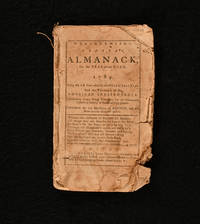
1788702L27Boston: John Norman 1788. First edition. Disbound. Fair. 7" by 4". None. An extremely scarce American almanac from the eighteenth century containing ephemerides. An early publication following American independence this work contains many astronomical notes. The first edition of this almanac containing many tables of ephemerides for the year 1789. Undated dated using Library Hub as 1788. Very scarce only seen at auction twice in the last forty years. Both times disbound - as issued Abraham Weatherwise was a pseudonym used for many almanacks from the years 1784 to 1788. It is believed that this is a pseudonym for Samuel Bullard. This is because the astronomical notes on the calendar pages parallle those in his 'An almanach for the year of the Christian aera 1789 Boston'. Disbound as issued lacking the half-title and bookseller's advertisement occasionally seen. This astronomical calendar was calculated for the meridian of Bostonm 'but will serve for the adjacent states'. A very scarce work. Disbound. Externally chipped to the extremities with handling marks and a light tidemark to the front wrap. Internally firmly bound. Chipping has affected the bottom seven entries of the tables which are slightly obscured due to a spill burn. Tidemark to the final three leaves not affecting the text. Occasional spots to pages. Fair John Norman unknown
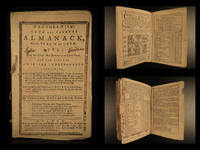
178515589<p><b>1785 Boston Revolutionary War Soldier Colonial America Weatherwise Almanac</b></p><p>Eighteenth-century American periodicals are notoriously rare regardless of contents. This 1785 edition of Abraham Weatherwise's Almanac was published in Boston shortly after the end of the Revolutionary War. This issue includes like others phrases of the moon eclipses sunrises and other calendar notes; however it also <b>features a letter from an anonymous Revolutionary War soldier written to his beloved.</b></p><p>Item number: #15589</p><p>Price: $499</p><p>JUDD Eben Warner pseud. Abraham Weatherwise</p><p><b><i>Weatherwise's town and country almanack for the year of our Lord 1785</i></b></p><p>Boston: Printed and sold by Weeden and Barrett 1785. 1st edition</p><p><u>Details</u>: </p><p>· Collation: Complete with all pages</p><p>o 24</p><p>· References: Evans 19224</p><p>· Provenance: Handwritten – <i>Lydia Goodwin</i></p><p>· Language: English</p><p>· Binding: Pamphlet</p><p>· Size: ~6.5in X 4in 16.5cm x 10cm</p><p>Our Guarantee:</p><p>Very Fast. Very Safe. Free Shipping Worldwide.</p><p>Customer satisfaction is our priority! Notify us with 7 days of receiving and we will offer a full refund without reservation!</p><p>15589</p> Weeden and Barrett paperback
1782799391782. WEATHERWISE Abraham. Weatherwise's Town and Country Almanack for the Year of Our Lord 1782. Boston: Nathaniel Coverly and Robert Hodge 1781. 13 leaves. Disbound. Lacks 5 leaves else very good. Drake 3313. Evans 17354. ESTC W20838. Erroneously attributed to David Rittenhouse by Evans. The actual calculator appears to have been Nathan Daboll who calculated The New England almanack and gentleman's and lady's diary for 1782 New London Conn. under the pseudonym of Edmund Freebetter. Verso of titlepage has announcement for James Murray's An Impartial History of the War in America. unknown
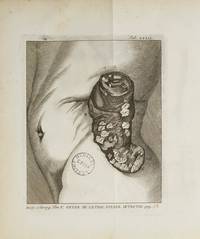
1720583091720. Disp. chir. 5/128. - Hrsg. v. Albrecht v. Haller. - Lausannae Sumptibus Marci-Michael Bousquet & Socior 1756 4° pp.61-73 1 Kupferstichtafel Rückenbroschur. Zweitabdruck "Dissertatio Inavgvralis Chirvrgico Medica Qva Vulnervm In Intestinis Lethalitas Occasione Casvs Rarissimi Qvo Colon Vulneratione Inversvm Per XIV. Annos Ex Abdomine Propendens Exhibetvr / Pro Licentia . Praeside Dn. Abrahamo Vatero Phil. Et Med. Doct. Hvivsqve Prof. Pvbl. Ord. . Placidae Dissentientivm Disqvisitioni Exponitvr A Respondente Joanne Reichard Tieffenbach Magdebvrgensi D. Decembr. M DCC XX. ." Praeses: Abraham Vater 1684-1751 Resps.: Johann Reichard Tieffenbach Abraham Vater 1684-1751 Sohn von Christian Vater 1651-1732 "geb. 9. Dec. 1684 zu Wittenberg studirte von 1702 ab daselbst erwarb 1706 die philos. 1710 auch die med. Doctorwürde nach längerem Studium in Leipzig. Er unternahm hierauf durch Deutschland England und Holland eine wissenschaftliche Reise von welcher er 1712 nach Wittenberg zurückkehrte woselbst er als Docent sich habilitirte. Er wurde 1719 zum a. o. Prof. der Anat. und Botanik ernannt 1733 aber zum ord. Prof. der Anat. in welcher Stellung er sich namentlich auch durch Errichtung eines reichen anat. Museums grosse Verdienste erworben hat. Unter seinen Leistungen auf dem Gebiete der Anatomie verdienen besonders hervorgehoben zu werden die Abhandlungen über den Mechanismus der Schliessung des Foramen ovale 1714 über ein Divertikel an der Mündung des Ductus choledochus im Duodenum 1720 über einen Speichelgang in der Zunge 1720 23 über einen Ringmuskel im Fundus uteri 1723. Erwähnt sei ausserdem dass Vater anat. Demonstrationen für Frauen gehalten und die Ablieferung der Leichen von Selbstmördern an die Anat. ausgewirkt hat. Im Jahre 1737 erhielt Vater die Professur der Patholologie überliess jedoch die Vorträge über dieselbe Dr. STENZEL während er selbst als Lehrer der Anatomie seine Thätigkeit in gleichem Maasse fortsetzte. In die erste Professur der Therapie rückte Vater 1746 auf und verwaltete dieselbe mit grösster Auszeichnung bis zu seinem 1751 erfolgten Tode. Vater's ausserordentlich ausgedehnte literarische Thätigkeit war vorwiegend der Anatomie zugewendet; ausserdem aber hat er zahlreiche meist als Inaug.-Disscrtt. veröffentlichte Abhandlungen aus dem Gebiete der Botanik der Chemie der Pharmakol. der allgem. und spec. Pathol und Ther. sowie auch der Chir. Gynäkol. und Staatsarzneik. verfasst. Einen sehr grossen Theil derselben hat HALLER wieder abdrucken lassen Disp. ad morb. hist. I-IV VI VII ; Disp. chir. Ill-V ; Disp. anat. I-III V VI. Unter den Uebrigen verdienen folgende erwähnt zu werden: "Das Blatter-Beltzen oder die Art und Weine die Blattern durch künstliche Einpfropfung zu erwecken" Wittenberg 1721; vergl. auch: "Ausführliche Nachricht von der Beschaffenheit und Success des Blatter-Beltzens in Neu-England; aus dem Engl nach Benj. Colman" 1723 - "De calculis in locis inusitatis natis et per vias insolitas exclusis" 1741 - "De instrumento ad determinandas lucis refractiones" 1751 - "Diss. qua valor et sufficientia signorum infantem recens natum aut mortuum aut vivum editum arguentium examinatur" 1735; vergl. J. CHR. T. SCHLEGEL Coll. nd. med. for. V pag. 1." Winter Hirsch-H. V pp.711-712 siehe - Boerner I p. 116 398 912; II p. 426 750; III p. 381 welcher auch ein Verzeichniss der von Vater veröffentlichten Schriften giebt. -Baldinger p. 197.- Titius De Vaterorum meritis ; Programma II Wittenbergae 1795. - Biogr. méd. VII p. 399. - Dict. hist. IV. p. 309. - ADB XXXIX p.502. - Vierordt Med. - gesch- Hilfsb. p. 293. Intestines Wounds and injuries of unknown
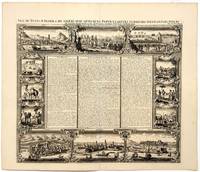
17231687Paris: Châtelain 1723. Copperplate engraving on cream laid paper 15 x 17 1/4 inches 381 x 440 mm; sheet 17 1/4 x 20 1/4 inches 438 x 551 mm full margins. In good condition consistent with age and with a reinforced central crease as issued. An image from volume VI of Châtelain's monumental Atlas Historique with text by the prolific author Nicolas Gueudeville. Châtelain unknown
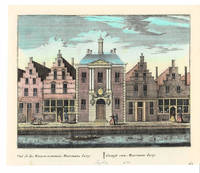
173298587Amsterdam: Leonardus Schenk 1732. 1732. Very good. - A 6 inch high by 7-1/2 inch wide handcolored engraving on a 7 inch high by 8 inch wide sheet of watermarked laid paper. The image was drawn by Abraham Rademaker and the copperplate engraving is by Leonardus Schenk. "Leyden" and what appears to be an initial are penned in ink in an early hand along the bottom margin. Near fine. <p>The print originally appeared as print number 69 in the view book: "Rhynlands fraaiste gezichten.Van Halfwegen Haarlem en Leyden af door Lisse Sassenheim Warmont de Noortwykerhout Noortwyk binnen en buiten Katwyk binnen en buiten Rhynsburg Oestgeest Valkenburg Leyden met deszelfs poorten kerken en voornaamste gebouwen tot Leyderdorp toe". Published Amsterdam Leonardus Schenk 1732. Amsterdam: Leonardus Schenk, 1732. unknown
172730277Amsterdam: Michel Charles le Céne 1727. 2 volumes in 1 small folio. 12 1/8 x 7 5/8 inches. Titles printed in red and black. Engraved portrait frontispiece 44 engraved maps plans and views 31 folding 19 in-text engraved illustrations. Contemporary calf spine with raised bands in seven compartments red and green morocco lettering pieces in the second and third the others with a repeat decoration in gilt marbled endpapers and edges.<br/> <br/>A lovely copy of a noted illustrated work on Asia including maps and views of India China and Japan.<br/> <br/>"Johann von Mandelslo was a friend of Adam Olearius and a former page of the Duke of Holstein-Gottorp. Together Mandelslo and Olearius were sent by the Duke on an embassy to the Russian Czar and to the Shah of Persia for the purpose of initiating trade relations with Russia Tartary and Persia. Mandelslo was authorized to leave the embassy in Persia and to continue his travels to the Far East. He went to Surat Agra and Goa in India where he received great kindness from the English merchants and he also visited Ceylon. He gives long accounts of the other parts of the Far East which he did not visit personally. His return was made to England by sea via the Cape of Good Hope which he visited in 1639" Hill. Mandelslo's narrative contains substantial information on the Far East. "Before his death Mandelslo had entrusted his rough notes to Olearius who subsequently published them bound with his numerous official accounts of the embassy" Howgego. Following the first publication Olearius added additional information to subsequent editions. A new edition in French translated by Wicquefort included still more additional material including an account of the travels of Henri de Feynes to China Formosa and Japan. The present edition published in Amsterdam in 1727 is a re-issue of the Van der Aa edition of 1719 published in Leiden; both are celebrated as the best editions being the most complete and with the largest number of illustrations. The plates include views and plans of London Amsterdam Brussels Antwerp Capetown Goa Surat Jedo Tokyo St. Helena Mauritius Madagascar the Canary Islands Java Congo and elsewhere.<br/> <br/>Brunet IV 178; Cordier Japonica 367-368; Cordier Indosinica 883; Cordier Sinica 2076-77; cf. Hill 1073; Howgego M-38; Lust 342. Michel Charles le Céne unknown books
17271510220001Amsterdam: Michel Charles Le Cene 1727-01-01. Hardcover. Very Good. Folio. 2 12 439 pp.; 2 pp. 445-808p pagination continuous 43 of 44 plates. 2 Volumes in One Bound in contemporary vellum. 7 raised bands. Leather spine label. Good binding and cover. Spine and hinges restored. Faint soiling to vellum. Pages tanned with a several pages with some offsetting and foxing. Lacks frontis and added title. All 27 plates & 16 maps are present. Brunet IV 178; Cordier Japonica 367-68; Cordier Sinaca 2077; Lust 342 <br><Br> Jean Albert Mandeslo set out in 1636 with the Embassy that the Duke of Holstein sent to Russia and Persia. He visited India Ceylon Madagascar West Africa Congo and returned four years later. His story gives a very vivid picture of luxury vices curiosity and absolute disregard for life under the despotic tyranny of the Moghul Empire under Shah Jahan. In the port of Surat he arrived in April 1638 after he went to Ahmedabad and Agra. Although his observations of life in the capital are useful he apparently did not hear anything about the Taj Mahal which at that time was in the sixth year of building. Amsterdam: Michel Charles Le Cene hardcover
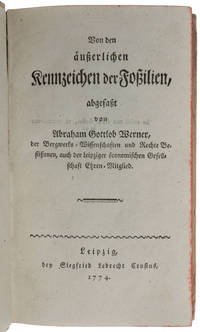
17745615Leipzig: Siegfried Lebrecht Crusius 1774. First edition. <p>First edition rare of Werner's first published work. "This book in which Werner develops a completely new scientific description of minerals is actually the first modern textbook on mineralogy. He was the first to recognize that a true and final classification of minerals should be based on their chemical composition and that it would be possible to identify the various minerals with certainty by their external characters and physical properties" Carozzi. </p>. THE FIRST MODERN TEXTBOOK ON MINERALOGY". <p>First edition rare of Werner's first published work and the first modern textbook of descriptive mineralogy the 'fossils' in the title refer to anything removed from the ground. "Although Werner is best known for his contribution to the founding of geology as a science he first achieved recognition as a mineralogist. He considered mineralogy to be the basis for all study of the earth dividing it into five branches of which geognosy historical geology was one and oryctognosy descriptive mineralogy another. And during all the years in which his theories on geognosy were arousing so much interest and controversy he continued to work on his mineral system the final version of which appeared after his death in 1817. His first important mineralogical work however Von den äusserlichen Kennzeichen der Fossilien was not a mineral system but a classification of external characteristics of minerals designed to aid the worker or the student in the field. In it Werner gave an unprecedented number of external characteristics with definitions usually accompanied by homely examples which could be understood by both the layman and the natural philosopher. He also attempted to establish some standards of quantification and thus to clear away the vagueness in the terminology then in use. As chemistry and crystallography developed mineralogists came to rely more on chemical analysis and less on external characteristics but Von den äusserlichen Kennzeichen der Fossilien published when Werner was twenty-five years old continued to be an important work into the nineteenth century . Werner remained convinced of the importance of external characteristics not only in the identification of minerals but also in the study of their composition. He reasoned that since the appearance of a mineral changes when its chemical composition is changed there should be a correlation between chemical composition and external characteristics" DSB. "Werner was the champion of a geological theory known as Neptunism in which he believed that all minerals precipitated out of water. Neptunists were opposed to believers of Vulcanism a theory that espoused the igneous origin of rocks" Dibner </p> <br /> <p>This book is "one of the most influential writings in the development of the mineralogical sciences. It is the first successful attempt at describing systematically determinative mineralogy. Werner who wrote this book his first as a student at the youthful age of 24 had been around minerals and mining his entire life. He had practical experience in what was needed by the miners to identify minerals and the reasons for identification. Werner had originally intended to publish an annotated translation of the dissertation written by Johann Carl Gehler titled: De Characterivs Fossilivm Externis Lipsiæ 1757. After showing the completed translation to his scientific circle he was advised to that it was better to write a book that was wholly his own. The result was Von den äusserlichen Kennzeichen der Fossilien which took the young Werner only a few months to complete. Based upon this book's merits Werner was appointed to the staff of the Freiberg Bergakademie where he stayed the remainder of his professional life.</p> <br /> <p>"The book is written not as a mineralogical classification system as was then typical but rather as a compendium of external characteristics of a large number of minerals. Werner intended it to be used as a practical guide for mineral identification and proposed that this study be given the name 'oryctognosy' - a term previously applied in a wider sense such as Bertrand's Dictionnaire Oryctologique Universalle Paris 1763. For his book Werner precisely defined an unprecedented number of external characteristics that could be used to accurately identify specimens through hand examination. Included in the distinguishing features identified for use are color luster form streak hardness and specific weight. Werner claimed that determining all of these qualities for a given mineral specimen was enough to identify its species. In fact these same characters are readily found in modern handbooks of determinative mineralogy because in most cases they are enough to distinguish the common species. The landmark character of Werner's work rests on the fact that no one before had so precisely defined the properties used to test minerals and the effect on mineralogical science can be described as revolutionary with many of his former students writing their own texts to spread Werner's theories in a multitude of other languages" Schuh.</p> <br /> <p>"This book in which Werner develops a completely new scientific description of minerals is actually the first modern textbook on mineralogy. He was the first to recognize that a true and final classification of minerals should be based on their chemical composition and that it would be possible to identify the various minerals with certainty by their external characters and physical properties . Upon its publication in 1774 Von den äusserlichen Kennzeichen der Fossilien created an immense scientific interest all over Europe and inspired increased investigations in the particular field it had so brilliantly renovated that is the determination and classification of minerals according to external characters" Carozzi pp. 554-555.</p> <br /> <p>"Werner 1749-1817 was born into a family with a mining tradition; therefore it was expected he should enter the profession. In 1774 as a student at the Freiberg Bergakademie he wrote his first book Von den äußerlichen Kennzeichen der Foßilien and based upon its merit in 1775 Werner was appointed professor of mineralogy at that institution. He remained there the rest of his professional life. He was by accounts an electrifying teacher who devoted himself to developing the sciences of mineralogy and geology. His students many of whom became famous instructors in there own right spread his theories throughout Europe and North America. However Werner's idea that basalt was aqueous in origin sparked the great controversy between his theory and that of Scottish geologist James Hutton 1726-1797. Werner accumulated an extensive personal mineral collection of over 10000 specimens which he sold for 40000 talers to the Freiberg Bergakademie. Today it is together with Werner's library among the earliest of the great collections that still remains intact" Schuh.</p> <br /> <p>Dibner Heralds of Science 81; Norman 2205; Sparrow Milestones of Science 196; Ward & Carozzi 2299. Carozzi 'A Study of Werner's Personal Copy of Von den äusserlichen Kennzeichen der Fossilien 1774' Isis 51 1960 pp. 554-557.</p> <br/> <br/> 8vo 176 x 103 mm pp. 302 2 with 8 folding tables. Contemporary boards a little frayed at head. A fine copy. Custom half leather clamshell box gilt spine. Siegfried Lebrecht Crusius unknown
178954410BB(Bern). Emanuel Hortin. 1789. 89°. 38 S. Kleisterpapierumschlag der Zeit.
175532315-315Altenburg Richter 1755. With engr. title-vignette by G. L. Crusius showing a bearded scholar with a telescope and 22 engr. folding plates. Title 10 unn. leaves 531 pp. 5 pp. table of contents and errata. 4to. Contemp. plain boards somewhat rubbed. Altenburg Richter 1755. First German edition of Robert Smith's 1689-1768 "A compleat system of opticks in four books" 1738. It was translated and revised by Abraham Gotthelf Kästner 1719-1800 professor of mathematics at Leipzig later of mathematics and physics at Göttingen teacher of Lessing and Lichtenberg friend of Gottsched. Smith's work "became probably the most influential optical textbook of the eighteenth century. It was also published in Dutch in 1753 in German in 1755 and in two different French translations in 1767" DSB. The work consists of two books a general text on light reflection the eye colors etc.; and a second book divided into three parts: analytical catoptrics analytical dioptrics and the manufacturing of optical instruments; the remaining texts are Kästner's own contributions. - Light browning throughout otherwise a good wide-margined copy. - Poggendorff I 1219; DSB XII 477 Smith and VII 206 Kästner. SCIENCE: OPTICS ; Altenburg, Richter hardcover
1755016046Richterischen Altenburg 1755. Edition Unstated . Hardcover. Very Good Condition/No Dust Jacket. Size: 9 1/2" x 8" . Text is in German. Text body is clean and free from previous owner annotation underlining and highlighting. Full leather marbled end papers pp. 24 531 3 plus 22 engraved folding plates. Robert Smith's 1689-1768 "A compleat system of opticks in four books" translated and revised by Abraham Gotthelf Kastner 1719-1800 a mathematics and physics professor. This work was one of the most influential optical textbooks of the 18th century. Covers worn especially at corners and spine ends previous owner's name on front fly leaf scattered toning. Quantity Available: 1. Shipped Weight: 3 lbs 13 oz. Category: Antiquarian & Rare; German Language; Pictures of this item not already displayed here available upon request. Inventory No: 016046. . Richterischen hardcover
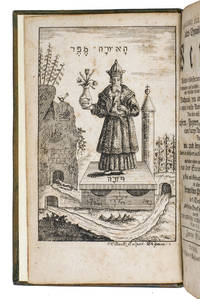
1760ABC_48609Leipzig: Lankischens Buchhandlung 1760. Modern silver- and blind-tooled greenish-brown leather with a red morocco title label lettered in silver on the spine red edges. 8vo. With an engraved frontispiece 15 numbered full-page engravings numerous woodcut illustrations in the text woodcut decorated initials and woodcut head- and tailpieces at the beginning and end of each part. 2 parts in 1 volume. Including: IDEM. Donum dei Samuelis Baruch des Juden Rabbi. Second enlarged edition of a scarce alchemical work supposedly copied from the manuscript from which Nicolas Flamel 1340-1418 gained his skill. The beautifully illustrated work discusses the basics of alchemy and the creation of the philosopher's stone. It also contains 156 rules and canons relating to the philosopher's stone which are exclusive to the second edition. The work rarely appears on the market as we have only been able to find four other copies in sales records of the past hundred years the last complete copy being offered in 1998.In the preface editor Julius Gervasius von Schwarzburg dates unknown states that the present work was transcribed from a highly sought after manuscript known as The Book of Abraham the Jew which was allegedly owned by Flamel. This manuscript was a principal source on alchemy as Abraham de Jew or Abraham Eleazar had copied the notions and illustrations in it directly from the copper tables of Tubal-Cain the first blacksmith from the Bible. However this manuscript has never been found and the current consensus is that the present work was written by Gervasius himself. Both the first 1735 and second edition of his work are relatively scarce especially complete. The beautiful alchemical plates capture the imagination and are therefore often removed and sold separately. The present copy however contains all illustrations.The leather is scratched on the back with a few green stains. The work is somewhat browned throughout with annotations in the margins of some of the leaves lacking the final blank leaf. Otherwise in very good condition.l Brüning 4844; Caillet I 31 part 1 and 32 part 2; Duveen p. 1; Ferguson I pp. 2-3; VD18 10213538 part 1; VD18 1053881X part 2; WorldCat 493643101 5043078 311551310 1046410976. Lankischens Buchhandlung, hardcover
1735EBS100373Erfurt: Augustinus Crusius 1735. 2nd Edition. Hardcover. Good/No Jacket. BREATHTAKING ALCHEMICAL WOODCUTS IN SOUGHT AFTER TREATISE. Claus Priesner Ambix Vol. 63 No. 1 February 2016 pp 1-27 attributes this work to the probably pseudonymous Julius Gervasius who connects the work to Nicolas Flamel. Supposedly the Werckh manuscript was written by a Rabbi Abraham Eleazar while the Donum Dei manuscript is attributed to a Rabbi Samuel Baruch who is supposed to have received his alchemical knowledge from Tubal-Cain said to be the grandson of Adam. BOOK DETAILS AND CONDITION: First Edition 16.5 X 9.5 cm. ½ leather over boards very considerable wear including losses to leather on spine: frontispiece 30 122 14 pp; 2 87 25 1; In the first part Werckh there are 6 of 7 allegorical plates and numerous in-text woodcuts one full-page on p 49 that are both allegorical and depict apparatus; In the second part Donum Dei there 8 allegorical plates the first 7 each divided into 2 figures 1-14 and the final plate is figure15. The frontispiece and the title pages are dusty but the remainder of the book internally is VG-. Missing plate in the Werckh is number 7 and is likely to have been omitted rather than removed. In this copy Figure 7 provided loose in facsimile on antiquarian paper. Gerhard Gruber Catalogue 130 Jan. 2007 has this edition lacking 2 plates. PROVENANCE: From the Arthur C. Greenberg History of Chemistry Library. Bookplate of Women s College of Frederick Maryland inside from board light library stamp on first page of text and small library pocket envelope inside rear board. REFERENCES AND RARITY: The first edition in Duveen collection absent in Neville Cole Ferguson which includes the 1760 edition. Duveen 1f; Ferchl 1; Ferguson I 3 Anm.; Caillet 31 Anm. Bolton p 980: This work is of great rarity. OCLC lists 10 copies in the world's libraries - none in the United States. Nine copies of this work sold at auction in the last century RBH. FULL TITLE: Uraltes Chymisches Werck. Welches ehedessen von dem Autore Theils in Lateinischer und Arabischer theils auch in Chaldaeischer und Syrischer Sprache geschrieben Nachmals von einem Anonymo In unsere Deutsche Mutter-Sprache übersetzt. Erfurt: Augustinus Crusius hardcover
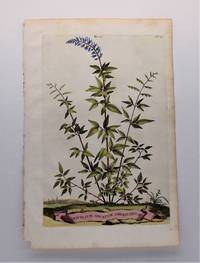
1702W1935Amsterdam: Lugduni Batavorum 1702. Original hand-colored engraving on hand-made laid paper. Size: 15" X 9 5/8". Plate #220 from Phytographia Curiosa by the Dutch botanist and botanical artist Abraham Munting 1626-1683 published in Amsterdam and Leyden in 1702 and referenced on page 123 of Sitwell's Great Flower Books. The plates were drawn by Munting and engraved by Jan Baptist; coloring was added later. This engraving like the other plates in the monumental and scarce work portrays the plant larger than life with an almost whimsical title ribbon. The print is in very good condition with some browning limited to the blank margins. First Edition. Single Sheet. Very Good. Illus. by Abraham Munting and Jan Baptist. Folio - over 12" - 15" tall. Fine Art Print. Lugduni Batavorum
1790799921790. WEATHERWISE Abraham pseud. The Town and Country Almanack for the Year of Our Lord 1790. Boston: J. White and C. Cambridge 1789. 12 leaves. Sewn. Complete. Some toning and foxing else very good. Drake 3437. Evans 22249. ESTC W32425. Includes a report on the Friends' yearly meeting for Rhode Island held in Portsmouth. unknown
17055584Amsterdam c. 1705. Copper engraved title-page 40 x 24.5 cms black and white as issued blank verso. Engraved for the first volume of Chatelains historical atlas. The classical muses represent Chronology History Navigation and Geography. Atlas braces himself against a crumbling pyramid supporting the heavens while the title of the atlas is suspended on a banner borne by the winged angel of fame. Shirley Courtiers & Cannibals 75. Map unknown
170837855London: Jacob Tonson 1708. In all 36 fine engraved plates. 3 vols. 8vo. Beautifully bound in full nineteenth-century crimson crushed morocco gilt spines green leather labels marbled endpapers a.e.g. BY RIVIERE. BEAUTIFUL SET with the engraved bookplate of "John Sheepshanks 1852" in each volume. In all 36 fine engraved plates. 3 vols. 8vo. Jacob Tonson unknown books
1707biblio7<p>The Works of Abraham Cowley Printed and Published by Jacob Tonson 1707-08 3 Volumes with 33 beautifully engraved plates including one folding linen-backed plate. Volume 2 has 2 pages of advertising at the rear. The text is trimmed by the book binder not affecting text with occaisonal light browning and spotting. Volume 3 M2 has a marginal repair and boards are loose on Volume 1 and Volume 3 has upper joint split. Cloth Slip-case a little rubbed at the extremities but the binding is superb and certainly worthy of repair. Gold leaf edges with gold leaf filigree and wonderful Red Moroccan leather. Binder is unknown but certainly is of the quality of a Riviere binding placing the rebinding of the book in the 1800's. The bookplate is the initials 'D D' entwined with one another and the words. Quis Separatbit and the date 1783 making this owner a standing member of the Order of Saint Patrick founded by George III in 1783 specifically for the Irish aristocracy who in many cases supported the Catholic Irish rights some of course did not. This work is very nice with many wonderful poems plays and writings as well as many notables living during Cowley's time. A rare and beautiful set.</p><p>Title: The works of Mr. Abraham Cowley .<br />Consisting of those which were formerly printed; and those which he design'd for the press publish'd out of the author's original copies. With The cutter of Coleman-street.<br />Authors: Cowley Abraham 1618-1667. <br />Sprat Thomas; 1635-1713. <br />Publication: London J. Tonson<br />Edition: The 10th ed. Adorn'd with cuts.<br />Year: 1707-1708<br />Description: 3 v. fronts. plates part fold. ports. 21 cm.<br />Standard No: LCCN: 12-18676<br />Notes: Vols. 1 and 2 paged continuously./ "The mistress Pindarique odes Davideis" v. 1 and "Cutter of Coleman-street" v. 2 have special title-pages./ <br />Vols. 1-2: 10th ed.; v.3 has title: The 3d and last volume of the works of Mr. Abraham Cowley: being the 2d and 3d parts thereof: Adorn'd with proper and elegant cuts. Part II. What was written and publish'd by himself; now reprinted together. The 8th ed. Part III. His six books of plants . London Printed for C. <br />Harper 1708./ The 3d pt. with special t-p. is 3d ed./ "The tragical history of Piramus and Thisbe" the 8th ed. with special t.-p. has imprint: London Printed for <br />C. Harper 1708. "Loves riddle" with special t.-p. has imprint: London Printed by B. Motte for C. Harper 1707; "Naufragium joculare" with special t.-p. has imprint: Londini typis B. Motte; veneunt apud C. Harper 1707.<br />Class Descriptors: LC: PR3370; Dewey: 821.4<br />More Records: Show record information<br />Entry: 19760419<br />Update: 20110503<br />Accession No: OCLC: 2124771</p> Tonson, Jacob hardcover