775 résultats
1825AQ26068London: Baldwin Cradock and Joy 1825. xiii 230pp. With an engraved frontispiece. Uncut in original publisher's two-tone blue paper boards printed paper lettering-piece to spine. Worn and marked with substantial loss to spine and lettering-piece boards detached.Ownership inscription of J. T. Coleridge to FFEP. Presentation copy inked inscription to recto of FFEP: 'J.T. Coleridge ESq. with the author's best regards'. A presentation copy of the first published work of English critic journalist poet and acquaintance of the Romantic circle John Abraham Heraud 1799-1887. The Chambers Cyclopedia of English Literature perhaps rather too flatteringly suggested that Heraud was to contemporary epic poetry what John Martin was to epic art: 'a worshipper of the vast the remote and the terrible'. . Second edition. With additions. 8vo. Baldwin, Cradock, and Joy hardcover
183919181Longman & Co. Paternoster Row and Butterworth Fleet Street 1839. 16mo. First Edition endpapers mildly age-stained; publisher's original brown cloth backstrip with printed paper label chipped but entirely legible uncut AND PARTIALLY UNOPENED covers moderately age-stained else a remarkably crisp clean copy in wholly unrestored publisher's binding. Sold from a sporting institution with its stamp on endpapers. EXTREMELY SCARCE. Longman & Co., Paternoster Row, and Butterworth, Fleet Street, hardcover
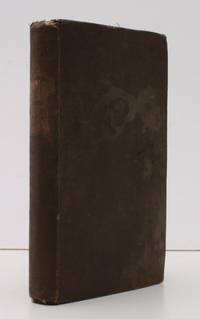
18396637London Longman & Co. 1839. 1839 xviii 400 p. Contemporary half calf rubbed but sound. Spine with a contrasting label. Armorial bookplate of Francis Jervoise Collas. A very good copy. London, Longman & Co., unknown
18964983London: Eyre and Spottiswoode 1896. First Edition. Hardback. Good/No Jacket. 587 8vo. The first edition of this important work. Part 1 by May Abraham: a practical guide to the law and its administration. Part 2 By Arthur Llewellyn Davies: The Acts with Notes Containing The Factory and Workshop Acts 1878 to 1895; The Shop Hours Acts 1892 to 1895; The Truck Acts 1831 and 1887; Parts of Other Acts Relating to Factories and Workshops; All Orders Made by the Secretary Of State under the Factory and Workshop Acts; with Explanatory Notes. 283 pages including an Appendix Special Rules for Dangerous Employments and Index. There is a one-page publisher's advertisement and two pages i.e. the verso of the rear free endpaper and the rear paste down advertising the St John Ambulance Association. Condition notes: The green cloth covered boards are somewhat rubbed and worn but the gilt titles to the front board and spine are bright. There is some foxing the first few pages and to the index and a little spotting to the fore-edges. Eyre and Spottiswoode hardcover
182126063New York: Published by James Eastburn Literary Rooms 1821 1821. First edition. BAL 8512. Boards somewhat stained and slightly worn; very good copy. 8vo original drab boards and printed paper label. ¶ A vision poem about the final day of retribution read by James Hillhouse 1789-1841 at the anniversary of the Phi Beta Kappa Society in 1812. This was an early work by the New York poet predating his first book by several years but it was not published until this edition in 1821. <br/><br/> New York: Published by James Eastburn, Literary Rooms, 1821 hardcover books
1821D19279New York: James Eastburn Literary Rooms 1821. First Edition. Hardcover. Good. 8vo Original plain boards stained printed paper spine label. Bookplate removed. Uncommon. <br /> <br/><br/> James Eastburn, Literary Rooms hardcover
1898241437Boston: Houghton Mifflin and Company 1898. Hardcover. 256p. first edition spine lettering obliterated worn and soiled binding hinges cracked. A poor copy of a scarce first edition. Houghton, Mifflin and Company hardcover books
1845163008New York: Daniel Fanshaw Printers 1845. Original Edition not a reprint. Paperback. Fair. Complete but with covers detaching soiling to covers and foxing to pages. Pages corners curled. No extraneous marks. Green wraps with black lettering. 40 pp.; no illustrations. Cover title reads "Dr. Messer's Discourse on Domestic Feeling." Important to New Brunswick NJ and the Reformed Church in America. Daniel Fanshaw (Printers) paperback books
1845163008New York: Daniel Fanshaw Printers 1845. Original Edition not a reprint. Paperback. Fair. Complete but with covers detaching soiling to covers and foxing to pages. Pages corners curled. No extraneous marks. Green wraps with black lettering. 40 pp.; no illustrations. Cover title reads "Dr. Messer's Discourse on Domestic Feeling." Important to New Brunswick NJ and the Reformed Church in America. Daniel Fanshaw (Printers) paperback
1883NF0107THE IMPERIAL HIGHWAY; OR THE ROAD TO FORTUNE AND HAPPINESS WITH BIOGRAPHIES OF SELF-MADE MEN Borland 1883 first edition some wear to the cloth of the front panel near the leather corners else a vg copy bound in half leather with raised spines and marbled end-papers and page edges. Illustrated with fine engravings of every day vignettes including some of the subjects mentioned herein: Dickens Longfellow Lee Lincoln Garfield et.al. Borland hardcover
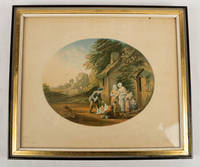
1870176927London. circa1870. Oval print after a technique pioneered by George Baxter 13.1 x 17 cm image size in the original embossed mount approx 20 x 23.5 cm titled and numbered lower right " The Image Boy 49" the image a trifle faded and the mount lighty spotted but overall in good condition preserved in a modern frame. Attractive composition the image adapted from James Collinson’s painting of 1849. LB No 49 CL No 86 "This picture features an Image Boy – a person who made a living selling unglazed plaster or parian-ware models often of classical or religiously significant figures. Such persons are motifs used by a number of other Victorian artists – including William Daniels.Collinson himself first used the subject-matter in a large painting entitled "Italian Image-Boys at a Roadside Alehouse" – his first ‘official’ Pre-Raphaelite Brotherhood painting exhibited at the Royal Academy in 1849." Paul Crowther Awakening Beauty: The Crowther-Oblak Collection of Victorian Art. Exhibition catalogue. . unknown
186841288Cincinnati Ohio: Wrightson & Company Printers 1868. 4th Edition Thirty-Fifth Thousand Wheaton & Kelly 2996. Not found in Axford. Cf. Monaghan 734 for the 1865 1st printing of Biographies. Original publisher's green cloth spine over printed buff paper-wrapped boards. Average wear to binding. Prior owner signature to ffep. A VG copy. 96; 2 46 pp. 2nd title illustrated with 19 bust portrait wood engravings. 12mo. 7-1/2" x 4-7/8" <br/><br/>Uncommon recipe book first published in 1865 with this 4th edition adding "a large number of new ones never before made public .". Wrightson & Company, Printers hardcover books
18851158993Veteran Association of the Regiment 1885. Handsomely rebound in blue cloth with bright gilt spine titles. Hardcover. Very Good/No Jacket. Octavo. Book. Veteran Association of the Regiment Hardcover
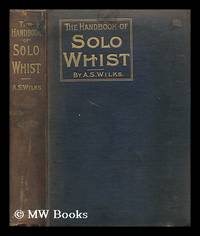
1898180421London : John Hogg 1898. First Edition. Hardback. Near fine copy in the original gilt-blocked cloth. Spine bands and panel edges very slightly dust-toned as with age. Corners sharp with an overall tight bright and clean impression. Previous owner's bookplate to inner front cover.; 8vo 8"" - 9"" tall; 204 pages; Physical desc.: 216 p. : ill. ; 18 cm. Subject: Whist --Cards --Solo whist. London : John Hogg hardcover
186325971<p>"<i>The brave men living and dead who struggled here have consecrated it far above our poor power to add or detract…</i>"</p><p>Lincoln's Gettysburg Address is on page 2 along with Edward Everett's entire speech and a report on the ceremonies. Printed in an important newspaper owned by John Forney this version is in some ways more accurate than the more widely spread Associated Press report.</p> <b>ABRAHAM LINCOLN. GETTYSBURG ADDRESS.</b>Newspaper <i>Philadelphia Press</i> Philadelphia November 20 1863. Complete 4 pp. approx. 20¼ x 28 in.<p><b><br /></b></p><p><b>John Wien Forney</b> 1817-1881 had been a Democrat whose support for President James Buchanan brought appointment as clerk of the House of Representatives and lucrative printing contracts. However after Forney lost his election bid for the U.S. Senate he started the anti-Buchanan Philadelphia <i>Press</i> and switched to the Republican Party in 1860 becoming a key Lincoln supporter. Forney again served as House clerk and then secretary of the Senate until 1868. In that position he was one of only four men to sign the official 13th Amendment Resolution: President Lincoln Vice President Hamlin Speaker of the House Schuyler Colfax and Forney writing "I certify that this Resolution originated in the Senate." At the same time he maintained his editorial "Letter from Occasional" column in the <i>Press</i> and established the Washington <i>Chronicle</i> aimed at the public and to soldiers in the Army of the Potomac. He interviewed the President on issues such as freedom of the press and the probable effects of the Emancipation Proclamation and was invited to consult about cabinet appointments. His White House access caused opponents to call him "Lincoln's dog."</p><p>The night before the Gettysburg Cemetery Forney got "roaring drunk and gave a violently pro-Lincoln speech" Boritt. Given that history he probably should not have been chosen to chaperone newly-elected vice president Andrew Johnson at the March 4 1865 inauguration; Johnson was widely criticized for his drunken performance there. After Lincoln's assassination and Johnson's veto of the Freedman's Bureau Act in 1868 Forney changed positions and campaigned for impeachment. Selling the <i>Chronicle</i> and returning to Philadelphia the chameleon-like editor switched back to the Democrats and started a weekly magazine <i>The Progress</i>. In addition he served as a director of the Texas & Pacific Railway.</p><p><b>Partial Transcript:</b></p><p>"<i>Four score and seven years ago our fathers brought forth upon this continent a new nation conceived in liberty and dedicated to the proposition that all men are created equal. Applause Now we are engaged in a great civil war testing whether that nation or any nation so conceived and so dedicated can long endure. We are met on a general battle-field of that war; we are met to dedicate a portion of it as the final resting place of those who here gave their lives that that nation might live. It is altogether fitting and proper that we should do this but in a larger sense we cannot dedicate we cannot consecrate we cannot hallow this ground. The brave men living and dead who struggled here have consecrated it far above our poor power to add or detract. Applause The world will note nor long remember what we say here but it can never forget what they did here. Applause. It is for us the living rather to be dedicated here to the unfinished work that they have thus far so nobly carried on. Applause. It is rather for us here to be here dedicated to the great task remaining before us that from these honored dead we take increased devotion to that cause for which they here gave the last full measure of devotion. That we here highly resolve that the dead shall not have died in vain. Applause That the nation shall under God have a new birth of freedom and that the Government of the people by the people and for the people shall not perish from the earth. Long applause. Three cheers given for the President of the United States and the Governors of the States…</i>"</p><p><b>Textual Differences</b></p><p>The speed with which printings were produced given 19th century communication issues and the lack of any official manuscript or text produced questions about Lincoln's exact words. This version includes the word "poor" in the line "<i>far above our <b>poor</b> power to add or detract.</i>" This was heard by some reporters and is present in both of Lincoln's drafts though is lost in most other contemporary printings. This version correctly quotes Lincoln's "<i>unfinished work</i>" which the AP incorrectly transcribed as "refinished work." The applause notations also differentiates the <i>Philadelphia Press</i> version from the AP report especially with the three cheers at the speech's conclusion.</p><p>Additional differences:</p><p>- The "<i>general battle-field of that war</i>" is the "great battle-field of that war" in the AP text.</p><p>- "<i>We are met to dedicate</i>" is "We have come to dedicate" in Lincoln's written copies.</p><p>- "<i>carried on</i>" is found here and in Lincoln's second draft but Lincoln used "advanced" in subsequent versions: "<i>have thus so far</i> so <i>nobly</i> carried on advanced"</p><p><b>Other Contents of the Paper</b></p><p>Page 1 starts with a column of advertising ie "<i>Cotton is not king yet.-I am selling linen sheetings at prices that are cheaper than cotton.</i>" The news begins with a report from Chattanooga: "<i>We lost 100 a fourth of whom were killed. The enemy had completely invested the place but Gen. Burnside will defend it to the last man … Our troops are in the best spirits. Every import point is fortified and confidence prevails that we shall whip the enemy out.</i>" Also reports from Charleston Atlanta Cumberland MD Harpers' Ferry VA Texas etc. A report via Baltimore on November 19th carries "most gloomy" news from Union prisoners at Richmond ending "these men must not be permitted to starve." A New York bank was rumored to have been robbed of $20000.</p><p>From Europe there's notice of a speech of Emperor Napolean III the differing interpretations as to whether it called for peace or war. There are reports of war like preparations in Russia.</p><p>An interesting notice: "<i>A slander on Mr. Lincoln refuted.-The remark said to have been ascribed to President Lincoln by Wendall Phillips to the affect that 'the greatest folly of his life was the issuing of the Emancipation Proclamation' out of which such Copperhead journals as The World and The National Intelligencer are attempting to make political capital is emphatically pronounced in high quarters to be all together untrue.</i>"</p><p>Column 4 starts the extensive reporting on the National Cemetery at Gettysburg dedication including a "documentary history on the battles of July" and General Meade's letter sending his official report on the battle.</p><p>Column 5 discusses the grounds of the cemetery and starts Edward Everett's two hour oration which on page 2. Transcriptions include the prayer the dirge after the dedication the consecration speech by Charles Henry Brock and more.</p><p>Page 2 column 5 has more foreign news re Japan Britain Napoleon III's war with Mexico etc. Column 8 includes lengthy reports on battles in Tennessee and Virginia "half of Lee's army reported to be falling back to Richmond." At the bottom a <i>Boston Journal</i> description of some of Confederate firebrand Robert Toombs' slaves is republished.</p><p>Page 3 includes advertisements list of arrivals at hotels the offering of about 200 million dollars in treasury notes and the "five-twenty" six percent loan with Jay Cooke as subscription agent.</p><p>Page 4 includes a report from New York on the raising of colored troops and a notice about Professor McCulloh "who recently left a professorship in Columbia College … suddenly turned up in the south as Confederate brigadier general. He's said to be a native of Baltimore and a graduate of Princeton College. The <i>Pittsburgh Commercial</i> says that several years ago he was a professor of mathematics and natural sciences in Jefferson College Pennsylvania and was subsequently connected with the Coast Survey and the Philadelphia Mint."</p><p>More political news includes from a Western newspaper a platform "said to have been adopted by Ohio and others elsewhere since the elections: "<b>Resolved That we air in favur uv subjoogashen emansipashen confiscashen taxashen conscripshen exterminashen nigger enlistments and f there is anything else the peeple desire let em write post-pade and weel pass the necessary resolushen.</b>"</p><p>Reports from Philadelphia including police account of an attempted murder by a deserter who was passing counterfeit money a case of concealed deadly weapons and an arraignment of a women for running a "disorderly house". Plus Philadelphia financial reports "gold was much excited today and rose to 153 ½" p 4 col 3.</p><p>This is a scarce large format paper.</p><p><b>Condition</b></p><p>Some archival tape repairs on front page which we will have removed by a conservator.</p> books
186323577.01<p>"<i>and that Government of the people for the people and for all people shall not perish from earth.</i>"</p><p>As printing technology advanced through the middle decades of the nineteenth century illustrated newspapers grew in popularity even though their engravings added a few weeks to press time. <i>Leslie's</i>printing—from December 5—includes an article containing the full text of Lincoln's timeless speech page 11. Illustrations include a centerfold spread with the formal dedication ceremony prominently placed and smaller views of Union and rebel graves defensive works Meade's headquarters and a view of the town centerfold. A large illustration of "<i>The War in Tennessee—Lookout Mountain and Its Vicinity</i>" appears on the front page.</p><p>There is no definitive text that captures exactly how Lincoln spoke that day though the AP reporter's text is most familiar. <i>Leslie's</i> printing following the <i>Philadelphia Enquirer</i>version contains variations most notably in the final two sentences regarding the nation's unfinished work and closing phrase of "<i>Government of the people for the people and for all people</i>" rather than "<i>of the people by the people and for the people.</i>"</p> <b>ABRAHAM LINCOLN. GETTYSBURG ADDRESS.</b>Newspaper <i>Frank Leslie's Illustrated Newspaper</i> New York December 5 1863. 16 pp. complete.<p><b><br /></b></p><p><b>Excerpt:</b></p><p>"<i>Fourscore and seven years ago our fathers brought forth upon this Continent a new nation conceived in liberty and dedicated to the proposition that all men are created equal. Now we are engaged in a great civil war testing the question whether this nation or any nation so conceived so dedicated can long endure. We are met on the great battle-field of that war. We are met to dedicate it on a portion of the field set apart as the final resting place of those who gave their lives for the nation's life; but the nation must live and it is altogether fitting and proper that we should do this. In a larger sense we cannot dedicate we cannot consecrate we cannot hallow this ground in reality. The number of men living and dead who struggled here have consecrated it far above our poor attempts to add to its consecration. The world will little know and nothing remember of what we see here but we cannot forget what these brave men did here. We own this offering to our dead. We imbibe increased devotion to that cause for which they here gave the last full measure of devotion; we here might resolve that they shall not have died in vain; that the nation shall under God have a new birth of freedom and that Government of the people for the people and for all people shall not perish from earth.</i>"</p><p><b>Historical Background</b></p><p>Though November 20th imprints are the most valuable newspaper publications of the Gettysburg Address none are as lavish as this issue of <i>Leslie's</i> and none show the cemetery or provide images of the ceremony. It is also interesting to note that the leading illustrated newspaper <i>Harper's Weekly</i> did not publish the Address or illustrate the ceremony. This <i>Leslie's</i> issue published in far smaller quantities than <i>Harper's</i> is quite scarce.</p><p><i>Frank Leslie's Illustrated Newspaper</i> was founded in 1852 and published until 1922. Originally established by <i>Illustrated London News</i>owner Frank Leslie 1821-1880 the weekly continued under the guidance of his widow suffragette Miriam Florence Leslie from 1880 until 1902 when she sold the highly recognizable brand. Specializing in patriotic topics and heavily reporting war efforts from the Civil War to World War I the newspaper also covered Arctic exploration the Klondike Gold Rush strikes and sporting events. Civil War reporting and illustration was among the paper's most successful ventures.</p><p><b>Historical Background</b></p><p>Lincoln's speech delivered at Gettysburg National Cemetery on November 19 1863 has endured as a supreme distillation of American values. Over the past 150 years it has become a compelling testament to the sacrifices required to achieve freedom for all Americans. Lincoln made his speech at the cemetery's dedication some four months after the bloody and pivotal battle that turned the tide of the Civil War in favor of the Union. Edward Everett the most famous orator of his day spoke first and his address took some ninety minutes to deliver. He evoked the ancient Greeks who save their society by defeating the Persians at Marathon drew upon Wellington's victory over Napoleon at Waterloo and then moved to a history of the Battle of Gettysburg—America's decisive victory in the struggle to save the nation. Though a masterpiece of period it has been largely forgotten.</p><p>Lincoln's speech delivered in only a few minutes has persisted despite his assertion that "the world will little note nor long remember what we say here." Much has been written about Lincoln's famous speech from whether he read it or memorized it to when and where he wrote it. Many Americans believe Lincoln wrote the speech on the back of an envelope while riding the train to Gettysburg. This charming piece of fiction originated in Mary Shipman Andrews's 1906 book <i>The Perfect Tribute</i>. The real Address's writing is more complex. When Secretary of State William Seward gave a prepared speech on the evening of November 18 he gave a copy to the Associated Press. Reporters then repeatedly harassed John Hay one of Lincoln's personal secretaries for a copy of the President's speech. Hay demurred having neither the text nor any idea when it would be available. Based on the paper Lincoln used for his two drafts one page of Executive Mansion stationery and a page of lined paper then 2 identical pages of lined paper historian Gabor Boritt has concluded that the "likelihood remains that having written the first part of his speech in Washington Lincoln finished his First Draft in the evening in Gettysburg and then hurriedly wrote his Second Draft the next morning" Boritt 273. The text of the second draft is closest to the words recorded by reporters at the scene and is generally considered to be Lincoln's reading copy.</p><p>Newspaper copies and reports are another story one complicated by the fact that most witnesses to the dedication ceremony and speech outlived Lincoln by decades. But the words he spoke at Gettysburg only gained traction as his seminal contribution in the 1880s. As both the Lincoln legend and the speech's significance grew following the Civil War Reconstruction the Centennial and the rise of Jim Crow many more people than could have been possibly involved in the event have staked their claims to a Gettysburg Address connection.</p><p>With the advent of the telegraph news reporting had become big business and Lincoln surrounded himself with the press corps. Roy Basler editor of the <i>Collected Works of Abraham Lincoln</i> noted four reporters making shorthand notes of the speech: Associated Press and <i>New York Herald</i> reporter Joseph Gilbert <i>Boston Daily Advertiser</i> reporter Charles Hale and reporters from the <i>Chicago Tribune</i> and <i>Philadelphia Enquirer</i>. Gabor Boritt author of the definitive <i>The Gettysburg Gospel</i> adds John Hay one of Lincoln's personal secretaries to the list and refers to at least 23 additional reporters on the scene including many of Lincoln's allies in the Republican press. Known as "Lincoln's dog" <i>Philadelphia Press</i>owner John Forney offered a drunken pro-Lincoln rant on the evening before the speech but he was sober enough to wait for a slew of correspondents to arrive to take down his words.</p><p>What has come down as the standard version of the Address was compiled from Lincoln's drafts reports of what he spoke at the time and later revisions made by Lincoln himself. What is certain however is that "variations of the AP version reached more Americans in 1863 than any other" Boritt 239. The <i>New York Herald</i> received the text by telegraph and published it the next day. Later when Lincoln penned copies of his speech he is said to have referenced the AP report. A longtime story credits Joseph I. Gilbertof the Associated Press as having had "actually consulted Lincoln's delivery text briefly after the ceremony." This noted Garry Wills in 1992 "makes his version more authoritative for some scholars." Wills correctly credits the AP text as authoritative and in terms of cultural significance no other version had the reach of the AP's wording. The AP version and its slight variants usually comma placement and capitalization are easily identifiable because of the phrase "dedicated here to the refinished work…" rather than the correct "unfinished work."</p><p>However Gilbert's claim to be the reporter who delivered the AP's text does not withstand scrutiny. Gilbert did work for the AP at the time of the speech but he only made his assertion in 1914. In the ensuing fifty-four years the event's stature had grown to near-Biblical proportions. Gilbert recalled being so taken with Lincoln's words that he stopped recording the speech in shorthand. He claimed the President fortuitously allowed him to look at the manuscript copy and Gilbert insisted that "the press report was made from the copy no transcription from shorthand notes was necessary Boritt 371. However the AP version missed the word "poor" which other reporters caught and was present in the second draft; it also contained the phrase "under God" which was absent from the draft and notes five interruptions for applause followed by sustained applause at the speech's conclusion. When asked in 1917 Gilbert denied hearing any applause at all. These and other critical elements of the AP text cast serious doubt on Gilbert's claims.</p><p>Gabor Boritt writes that <i>Boston Daily Advertiser</i> reporter Charles Hale's eyewitness handwritten version should be preferred since it relied only on what Lincoln said; although one could counter-argue that he may not have captured Lincoln's words exactly. Both Boritt and Wills agree that while many other reporters' transcripts are generally inferior they nevertheless captured the word "poor" that both the AP and Hale missed. Interestingly when Hale's paper the <i>Boston Daily Advertiser</i> first published the Address on November 20 the paper incorrectly printed "The world will note nor long remember what we say here but it can never forbid what they did here" omitting the word "little" before "note" and changing "forget" to "forbid" —an odd discontinuity for a claim to the authoritative text though the reporter lamented that the speech had "suffered somewhat at the hands of telegraphers."</p><p>Versions printed on November 20 1863 are the Address's first appearance anywhere and are highly desirable as are other early printings. The <i>Washington Daily Chronicle</i> also owned by John Forney published Edward Everett's speech in its entirety but failed to include Lincoln's words in their November 20 edition so the paper published a 16-page pamphlet entitled "The Gettysburg Solemnities" dated November 22. It contained a number of the day's speeches and was the first time Lincoln's speech was printed separately. There are only three known copies a fourth disappeared from a library the last one on the market having sold at auction and then resold privately for approximately $650000. The first publication in book form printed by Baker and Godwin of New York was entitled <i>An Oration Delivered on The Battlefield of Gettysburg November 19 1863 at the Consecration of the Cemetery Prepared for the Interment of the Remains of Those Who Fell in the Battles of July 1st 2d and 3d 1863</i> also appeared within the week. Copies have sold privately for over $30000.</p><p><b>Gettysburg Address Manuscripts</b></p><p>Five manuscript versions written in Lincoln's hand are known. Library of Congress.</p><p>1. First draft the Nicolay copy after Lincoln's personal secretary John Nicolay. Library of Congress.</p><p>2. Second draft the Hay copy after Lincoln's personal secretary John Hay.</p><p>Much ink has been spilled over which of the first two was the copy Lincoln read; the answer is probably neither.</p><p>Three more versions were written later for charitable purposes and more closely approximate the words that Lincoln actually spoke.</p><p>3. The copy given to Edward Everett was intended as a fundraiser for the New York Metropolitan Fair; it is now at the Abraham Lincoln Presidential Library in Springfield Illinois.</p><p>4. George Bancroft requested a copy to be lithographed and sold at the Baltimore Sanitary Fair to support the troops. Lincoln agreed but did not pen a title or signature and ran into the margins. Cornell University.</p><p>5. Because the Bancroft copy was impractical to reproduce Lincoln penned another adding the title and his signature. This known as the Bliss copy after Bancroft's stepson is at the White House.</p><p><b>Condition</b></p><p>Some loss to the gutter margin; the only text/engravings affected are along the vertical fold of the center spread on pages 8-9 168-69. The majority of the issue including the text of Lincoln's Address is in good or better condition.</p> books
186421371<p><i>Report of the Select Committee Relative to the Soldier's National Cemetery Together with the Accompanying Documents as Reported to the House of Representatives of the Commonwealth of Pennsylvania March 31 1864.</i></p> <b>ABRAHAM LINCOLN.</b>Book. Includes a foldout map of the planned cemetery and a copy of Lincoln's dedication. Published in Harrisburg 1864. Fair condition. <br /> hardcover books
18641403210Wright & Potter 1864. 5th or later Edition. Soft cover. Very Good. Boston. 1864. 88110pp. plus folding map. Original printed paper wrappers. Internally clean back cover not attached anymore water stain at top of spine and around it. Very good. Devoted almost entirely to the Massachusetts war effort published early in January 1864. The folding map shows the Soldier's National Cemetery at Gettysburg dedicated November 19 1863 with the long speech of Edward Everett of Massachusetts and the short "Dedicatory Speech by President Lincoln" better known as the Gettysburg Address. Also printed is the "Programme of Arrangements" of that day a list of Massachusetts soldiers killed at Gettysburg and buried there and details of the cemetery. Monaghan notes this as an early printing of the Gettysburg Address. MONAGHAN LINCOLN BIBLIOGRAPHY I:48. This historically significant and very early book publication of the Gettysburg Address which may be the most important and certainly best known speech in US history is extremely uncommon and almost only found rebound or with the covers missing. This version intact and in its original condition is a coveted artifact of Americana. Comes in a custom-made slipcase. Wright & Potter unknown books
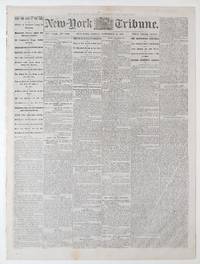
1863372898New York 1863. 8pp. printed in six columns on a single folded sheet. Large folio. Disbound. Natural paper flaw to first leaf not affecting text of the Gettysburg Address. Cloth portfolio. 8pp. printed in six columns on a single folded sheet. Large folio. The complete issue of the New-York Tribune printing the Gettysburg Address on the morning of Nov. 20 1863 the first possible date of the speech's printing. The previous day Lincoln delivered his great address at the dedication of a cemetery on the Gettysburg battlefield four months after the bloody and pivotal battle that turned the tide of the Civil War in favor of the Union. Lincoln's speech was preceded by an address from Edward Everett the most famous orator of his day. Everett's speech took between ninety minutes and two hours to deliver and today is largely forgotten. Lincoln's speech delivered in only a few minutes stands as a supreme distillation of American values and of the sacrifices necessary for the survival of liberty and freedom.<br /> <br /> Much controversy surrounds the circumstances and content of the address as it was actually delivered at Gettysburg. The words spoken in the speech differ in the versions appearing in newspapers and the text which appeared in Washington several days later published as The Gettysburg Solemnities and known in only four copies which is now taken as the closest version to Lincoln's final intent because of its correspondence to the known manuscript versions. Interestingly and according to Carbonell the text of the first appearance of the speech in book form published a few days later as An Oration Delivered on the Battlefield of Gettysburg is taken largely from this New York Tribune printing.<br /> <br /> As it appears here the address corresponds closely to the transcription printed in the same day's edition of the New York Times with slight variations in punctuation and capitalization "Four score and seven years ago our fathers brought forth on this continent a new Nation." in the Tribune versus "Fourscore and seven years ago our Fathers brought forth on this Continent a new nation." in the Times e.g. The address is printed on the first page at the bottom of the fifth column running to the top of the sixth. Significantly it notes the five places during Lincoln's speech where applause broke out thereby providing an important historical record of the reception of the speech as it was delivered by Lincoln. It is noted that the conclusion of the speech was met with "long continued applause" and that "three cheers were here given for the President and the Governors of the States." Lincoln's speech is preceded by the opening prayer of the Rev. Thomas H. Stockton and followed by Everett's speech which occupies the rest of the sixth column and the vast majority of space on page two. War news occupies the other column space on the front page.<br /> <br /> Together with examples from other newspapers of Nov. 20 1863 this issue of the New-York Tribune represents the first appearance of any version of the Gettysburg Address in print although at some variance with the version Lincoln eventually disseminated. The exact order in which the morning editions of November 20 were printed is practically impossible to determine at this point and as Carbonell states "will almost certainly never be known." Rightfully so Carbonell includes all November 20 morning newspaper printings of the Gettysburg Address as his first entry with no priority. Suffice to say this is as early a printing of one of the foundational documents of American life as one can ever encounter.<br /> <br /> "Lincoln's speech composed on the train on the way to Gettysburg and written down according to tradition on scratch-paper and the backs of envelopes comprised ten sentences and took only a few minutes to deliver. From the first words - 'Four score and seven years ago' - to the last - 'that government of the people by the people and for the people shall not perish from the earth' - it is immortal one of the supreme utterances of the principles of democratic freedom" PMM. Carbonell 1. Grolier American 100 72 ref. Streeter Sale 1748 ref. PMM 351 ref. Howes E233 ref. Monaghan 192 ref. Paul M. Angle "Four Lincoln Firsts" in Papers of the Bibliographical Society 36 Spring 1942 pp.13-17 unknown
18641403210Wright & Potter 1864. 5th or later Edition. Soft cover. Very Good. Boston. 1864. 88110pp. plus folding map. Original printed paper wrappers. Internally clean back cover not attached anymore water stain at top of spine and around it. Very good. Devoted almost entirely to the Massachusetts war effort published early in January 1864. The folding map shows the Soldier's National Cemetery at Gettysburg dedicated November 19 1863 with the long speech of Edward Everett of Massachusetts and the short "Dedicatory Speech by President Lincoln" better known as the Gettysburg Address. Also printed is the "Programme of Arrangements" of that day a list of Massachusetts soldiers killed at Gettysburg and buried there and details of the cemetery. Monaghan notes this as an early printing of the Gettysburg Address. MONAGHAN LINCOLN BIBLIOGRAPHY I:48. This historically significant and very early book publication of the Gettysburg Address which may be the most important and certainly best known speech in US history is extremely uncommon and almost only found rebound or with the covers missing. This version intact and in its original condition is a coveted artifact of Americana. Comes in a custom-made slipcase. Wright & Potter unknown
1841898851841. 1841 Messler Rev Abraham THE FRUITS OF EARLY PIETY; OR MEMORIALS OF A YOUNG DISCIPLE Philadelphia: American Sunday School Union c1841 54pp 12mo Leather spine with gold titles over marbled paper-covered boards Some foxing througout Contemporary pencil signatures of Mrs PH Sapp 308 CC Ave Columbia MO and Mrs LM Ashland MO Very good hardcover with light shelfwear and rubbing along the edges and corners of covers. unknown
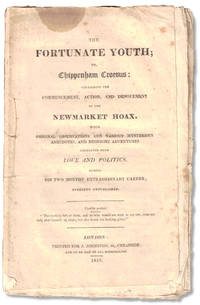
181857875London: J. Johnston 1818. Paperback. Good. Paperback. 42pp 4 ads. Side stitched signatures. Foxed throughout with some expected loss to the edges and a stain to the top of the front else a good complete example. Uncommon. An odd hoax perpetrated by a student at Shrewsbury School. Abraham Cawston aged about 16 claimed to have met in a coach a stranger who took a fancy to him and expressed the intention of making the boy heir to his own enormous fortune. Cawston then announced his patron's death and proceeded to convince his family and various bankers of the truth of his story. "He referred to a palace that he had in Spain full of works of art and instructed his solicitor to look out for a large country house for him and to acquire for him a few parliamentary boroughs. The Empress of Russia he said paid interest of six thousand pounds a year on a loan from his benefactor and he claims too on the King of Spain. the hoax lasted only a few months. The acceptance of his story is incapable of explanation but the facts are not in dispute. He subsequently became a clergyman."-Oldham A History of Shrewsbury School pages 88-9. OCLC locates only ten examples. J. Johnston paperback
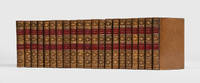
1830192234London: Printed by A. J. Valpy 1830-1834. First editions from this noted series representing the Greek tragedians Latin satirists the prose of great statesmen and Roman history. Valpy 1786-1854 began to publish Classical literature as a schoolboy. The Family Classical Library followed his reissue of the Delphin Classics 1819-30 a series of annotated Latin texts. 21 vols small octavo 154 x 98 mm. Portrait frontispiece of each author. Contemporary speckled calf red labels compartments tooled in gilt double gilt fillet to boards gilt inner dentelles marbled endpapers top edges gilt. Bookplates of the collector Charles Waterman Armour 18571927. A few headcaps worn restoration to headcap and joints of Euripides vol. I spines flaking light foxing. A very good set. hardcover
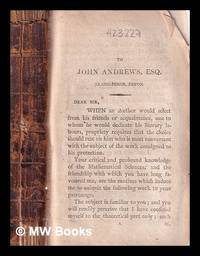
1806423227London : Printed for Richard Phillips 1806. 1st edition. Softcover. Poor copy with no boards cracked spine with loss no title page copyrights page. Creased and cracked pages with some browning. Physical description; 2 xii 279 9 pages 17 unnumbered leaves of plates 3 folded : illustrations 1 color engravings maps ; 18 cm 12mo. Subjects; Surveying Study and teaching. Surveying. ENGLAND. ; Literature 1806-1809. Geometry and surveying Children's non-fiction. London : Printed for Richard Phillips paperback
1806475689London : Printed for R. Phillips 1806. 1st edition. Hardcover. Poor copy in full leather binding. Spine bands and boards rubbed and worn. Spine leather cracked. Binding somewhat loose. Text clear and strong. Physical description: xii 279 pages 14 unnumbered leaves of plates : illustrations maps. Series: The Making of the Modern World Part I : The Goldsmiths'-Kress Collection 1450-1850. Series: The Making of the Modern World Part I : The Goldsmiths'-Kress Collection 1450-1850. Subject: Surveying. London : Printed for R. Phillips hardcover