P AbrahamBiblio.com
399 résultats
176333871763. : 75 Hole in first blank. Part 1: 2 Blank pages / 1 Blank pages / 2 NNP / 268 Pages / 2 Blank pages / 1 Engraved Plates Part 2: 2 Blank pages / 1 Blank pages / 316 Pages / 36 NNP / 2 Blank pages Binding: Contemporary Full Leather Sextodecimo 16mo Height cm: 159 CM Width cm: 10 CM Thickness cm: 52 CM hardcover
17926287AB1792. 4. verm. Aufl. Göttingen Vandenhoek und Ruprecht 1792. Kl.-8°. 9 Kupfertaf. 8 Bl. 414 S. Mod. Pp.-Bd. mit RSch. Abraham Gotthelf Kästner 1719-1800 wurde 1756 Professor in Göttingen.- DBE 397: 'Aus seinen Vorlesungen gingen die 'Mathematischen Anfangsgründe' hervor ein an den Lehrbüchern von Christian Wolff orientiertes siebenbändiges Lehrbuch der reinen und angewandten Mathematik 1758-91.' unknown
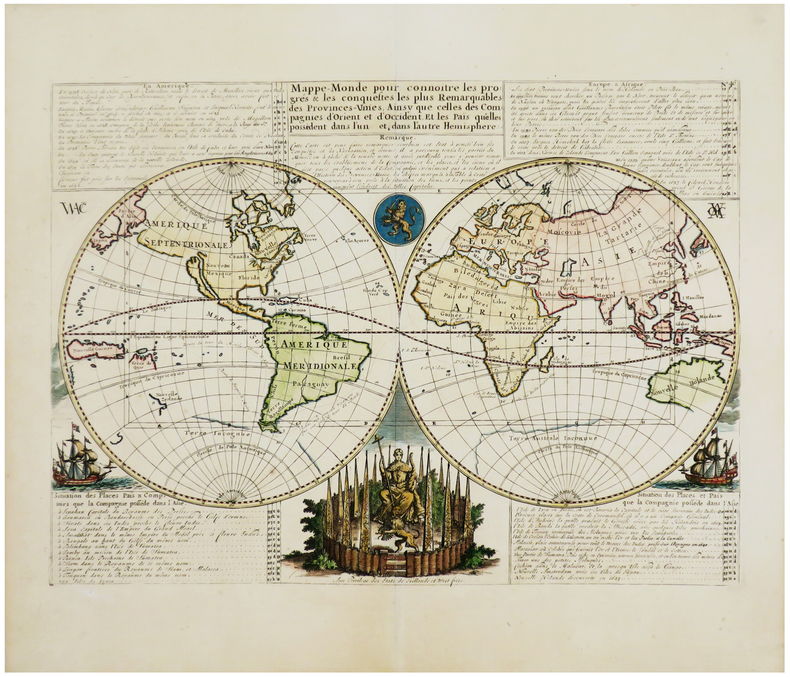
170516453Amsterdam 1705. Unusual double-hemisphere map of the world illustrating the success of the Dutch East and West India Companies throughout the world. With text above and below sailing ships lions and the figure of Europa seated inside a native fort. Showing California as an island incomplete Australia and New Zealand and the west coast of America extending toward Asia. From Chatelain's 'Atlas Historique'. Uncolored . Image size: 18 x 13". References: MCC 2 Tooley - Antarctica #54. Very good. unknown
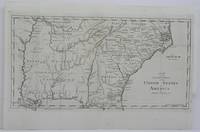
1797M4824USA 1797. Very Good. Size : 210x400 mm 8.25x15.75 Inches Coloring: Black & White Category: Maps United States East Carolinas; Maps United States South States; unknown
17977225Boston:: S. Hall 1797. First Edition. Near Fine. Near Fine. With folds as issued faint offset from folded image. Darkened along folds. Professionally cleaned with small edge tear repairs. Laid down on cotton. A very nice solid copy of an early desirable map. Copperplate engraving on laid paper. Sheet size: 40 x 21 cm. A fine example of Early American Mapmaking by Abraham Bradley Jr engraved by S. Hill prior to the Louisiana Purchase showing the Southern Parts of the United States from the coast of Virginia at Norfolk down to St. Augustine across the Gulf to the Mississippi River and up through to the Ohio River in Kentucky. Highly detailed with mountain ranges water tributaries dozens of native territories and United States claim line divided by Western Georgia and Chactaws Territory. Alexander Bradley Conn. 1767-1838 lawyer then judge in Pennsylvania who became assistant postmaster general and supervised the move of the general post office from Philadelphia to Washington DC. Known for his excellence in detailed mapmaking as well as his knowledge of postal routes he created to the first official map used by the US Postal Department which became the standard by 1825. In 1803 Thomas Jefferson wrote to Bradley requesting an early copy of one such map. Howes 839; Ristow 70-1; Sabin 50923 https://founders.archives.gov/documents/Jefferson/01-41-02-0206 single sheet S. Hall, unknown
170578315Amsterdam 1705-39. Folio. Arkets størrelse : 265 cm X 45 cm. Med gammel kolorering. Folio. Size of sheet : 265 cm X 45 cm. Old colouring. . <br/><br/><em>Henri Abraham Châtelain 1684-1743. Fra hans verk “Atlas historique†som utkom i syv bind. Et av de største nederlandske oversiktsverker fra denne tiden. Fra bind 4 av dette verket. From his work “Atlas historique†published in seven volumes. One of the largest encyclopediac works published in the Netherlands in the 18th century. This print is from volume 4. </em> unknown
178132033Amsterdam: Yaccov Proops 1781. Third edition. Hardcover. g-. Quarto. 2 52 double-sided leaves. Rebacked in modern brown leather spine over original period brown leather boards. Gilt lettering and ruling on the spine. Modern endpapers. Profusely illustrated throughout with copperplate engravings. Includes both an initial illustrated title page with copperplate engravings surrounding the text Ma'aleh Bet Horin and a printed title page with decorative woodblock borders and the publisher's device. In addition to the Hebrew text a few sections throughout are in Judeo-German Yiddish printed in Vaybertaytsh script.<br /> <br /> This third edition of the famous Amsterdam Haggadah found the work reformatted into a smaller size and saw the title officially changed to Maleh Beit Horin meaning "house free men". Most of the same famous copperplate engravings by Abraham ben Jacob aka Abraham bar Yaccov that previously appeared in the 1695 and 1712 editions are retained here. The two images added to the 1712 second edition are included the illustrated order of the Seder and the complete ten plagues but four of the full series of images included in the first two editions are not present. These missing images are Abraham smashing the idols of his father Moses receiving the Ten Commandments a Mount Sinai Moses and Aaron coming to Pharaoh and the Holy Temple in Jerusalem. In our copy the engraved title and three other other engravings contain contemporary hand-coloring the rabbis of Bene Brak the Four Sons the angels visiting Abraham. <br /> <br /> The text of this third edition replaces the complete running commentary from Isaac Abravanel of the earlier editions with 3 additional text commentaries. These include the "Gevurot Hashem" from the Maharal of Prague Judah Loew ben Bezalel writings by Rabbi Moshe Alshich and "Olelot Ephraim" a collection of ethical homilies by Rabbi Shlomo Ephraim Luntschitz. However Abravanel's commentary is present following Yishtabach through the end of the Seder and in the initial six-leaf section preceding the text of the Passover seder which discusses the laws of Passover.<br /> <br /> This copy is lacking the original engraved map of the Holy Land at the rear as it was originally issued. Binding with some rubbing and abrasions to the original boards and spine. Interior with heaving staining to pages throughout with text still legible. Biding and interior in in good- condition overall. Hebrew title: מעלה בית חורין ×•×”×•× ×¡×“×¨ הגדה של פסח <br /> Alternate Hebrew title: הגדה של פסח: ×›×ž× ×”×’ ××©×›× ×–×™× ×•×›×ž× ×”×’ ספרדי×<br /> Publication: יעקב פרופס ××ž×©×˜×¨×“× ×ª×§×ž"×<br /> Alternate transliterations: Ma'ale Bet Horin Ma'ale Beit Khorin Ma'ale Beit Chorin Ma'ale Beit Horin <br /> Bibliographic references: Yaari 199 Vinograd: Amsterdam 2113 Yudlov 300 Yerushalmi: Plate 75<br /> <br /> This contravenes the statement made by Yerushalmi Plate 75 that all of the engravings of the previous editions are retained. Yaccov Proops hardcover
176490743Basle : chez Emmanuel Tourneisen 1764. 185x105mm. XXIV- Cartonnage du XIXe siÂcle ÂŽtiquette de titre manuscrite au dos.IllustrÂŽ de 4 planches dÂŽpliantes concernant les sciences naturelles dont Ã’Basse montagne de glace dans le GrindelwaldÓ 250 chez Emmanuel Tourneisen unknown
1778CLL-133Amsterdam, Marc-Michel Rey, 1778 In-4 de (8)ff., VI, 312pp., 1 f. bl., (19)ff. de table, (1)f. bl., sous couverture d'attente muette, entièrement non rogné.
171712572Nürnberg, Johann Christoph Lochner, 1717. 1. Auflage "8° (18,5-22,5 cm). 10 Bll., 352 S., 6 Bll. (Register); 10 Bll. (inkl. Register), 616 S." Pergament der Zeit mit lederverstärktem Rücken [5 Warenabbildungen]
17506717IB1750. London 1750. 8 Bl. 72 S. Pappband der Zeit mit handschriftlichem Rückentitel gering fleckig. Titel verso mit längerem handschriftlichem Text. Sehr schönes nahezu fleckenfreies Exemplar. - Vorgebunden und teils zum selben Thema: Bibliotheque raisonnée des ouvrages des savans de l'europe. Pour les Mois d'Octobre Novembre et Decembre 1750 Article XVI und de Janvier Février et Mars 1751 Article IV X XIII. Buchblock nach dem vorgebundenen Teil gebrochen. Franz. EA. - Wellcome III 264; Weller Druckorte II 127; vgl. Hayn/G. IV 297; nicht bei Blake. - Der Glaube an die Niederkunft ohne Beischlaf Lucina sine concubito erhielt sich neben dem Glauben an Dämonenschwängerung bis in die Neuzeit. Anlaß des vorliegenden Werkes war eine Frau die durch den Südwestwind geschwängert worden sein wollte; die Königliche Sozietät der Wissenschaften in London erklärte dies für möglich. Hill nimmt dies als Anlaß für eine Satire die auch die übernatürliche Geburt Jesu aufs Korn nimmt jedoch in einem so ernsthaften Ton verfaßt ist daß Haller das Buch in seine 'Bibliotheca anatomica' aufnahm. unknown
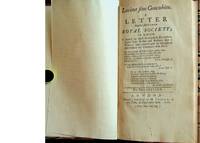
1750AA429London: M. Cooper 1750. Third. <p>Hoax- Hill "Sir" John "Abraham Johnson" Lucina sine Concubitu A Letter humbly address'd to the Royal Societythat a woman might conceive and be brought to Bed without any Commerce with Man The Third Edition light staining to inner margin of title modern roan-backed marbled boards 8vo by MCooper 1750</p> <p>An amusing satire concerning women becoming pregnant without sexual intercourse written by "Sir" John Hill in revenge for his rejection by the Royal Society One of 5 London editions issued in 1750 two designated "third" this with 50pp another with 35pp; there was also a Dublin printing</p> <p>From Wikipedia:</p> <p>"Sir" John Hill was an English composer actor author and botanist He contributed to contemporary periodicals and engaged in literary battles with poets playwrights and scientists He is remembered for his illustrated botanical compendium The Vegetable System one of the first works to use the nomenclature of Carl Linnaeus In recognition of his efforts he was created a knight of the Order of Vasa in 1774 by Gustav III of Sweden and thereafter called himself Sir John Hill</p> <p>During the 1740s and especially in 1746â€"1747 Hill attended many meetings of the Royal Society and there presented the results of several of his studies both in the field of botany on the propagation of moss medicine a surgical operation to remove a needle from the abdominal wall of a man and geology-chemistry on the origin of the sapphire's colour on chrysocolla on an alternative to Windsor loam for the making of fire-resistant bricks His works On the manner of seeding mosses and On Windsor loam appeared in the Royal Society's journal the Philosophical Transactions</p> <p>On the basis of these contributions Hill apparently hoped to be elected Fellow of the Royal Society Furthermore he had the backing of several members of the Royal Society: the botanist Peter Collinson the physician and scientist William Watson and the antiquarian William Stukeley Moreover Hill had links with important nobles: John Montagu 2nd Duke of Montagu and Charles Lennox 2nd Duke of Richmond also Fellows of the Royal Society; and Sir Thomas Robinson Governor of Barbados and antiquarian Despite Hill's merits as a scientist at a time when many Fellows had no scientific background and his relations his election to the title of Fellow failed to materialise</p> <p>Disappointed by the Royal Society's lack in his opinion of scientific standards Hill started to criticise the Society In December 1749 he started writing anonymous critical reviews of some articles published in the Philosophical Transactions Moreover in January 1750 Hill began a campaign of criticism and derision against the Royal Society and its president Martin Folkes by publishing under an alias a treatise entitled Lucina sine concubitu A letter humbly address'd to the Royal Society; In which is proved by most Incontestable Evidence drawn from Reason and Practice that a Woman may conceive and be brought to bed without any commerce with Man Under the false name of Abraham Johnson a physician and man-midwife Hill claimed to have observed cases where women had become pregnant without having had any kind of sexual relations with a man</p> <br /> 50 pp. M. Cooper unknown
174665781746 A Berne: De l'imprimerie de Leurs Excellences, 1746. 1 vol. pt. in-4: 17 x 21 cm, 3 ff., 122 pp., 34 ff.. non.chiff. de table générale. Reliure en demi-parchemin. Dos lisse avec titre manuscrit à l'encre. Plats recouverts de papier marbré. Reliure frottée, papier uniformément piqué. Exemplaire toutefois solide.
176716573Sans lieu 1767. 165x105mm. brochÂŽ. La premiÂre lettre manquante est photocopiÂŽe. 116 unknown
1743AQ15123London: Printed for J. Nourse 1743. viii 155pp 1. Recent navy half-morocco blue cloth boards lettered in gilt T.E.G. Very minor wear to extremities. Recent marbled endpapers marginal repair to penultimate leaf else internally clean and crisp. The first English translation of the correspondence of Dutch ambassador to the court of France Abraham van Hoey 1684-1766 a position he held for 20 years prior to being relieved of his duties in 1747 evidently having dissatisfied members of his nation's government for too often aligning with Louis XV. ESTC T84028. First English edition. 8vo. Printed for J. Nourse hardcover
1743BS45SLIM14London: J. Nourse 1743. Pamphlet disbound. viii 155pp. Last 3 leaves slightly crumpled to top edge. Private ownership. bs45. Soft Cover. Good. J. Nourse Paperback
176680021Oosterbeek:: J van Hooimaand 1766. original gilt-embossed decorative wrappers. . A fine copy. 8vo. J van Hooimaand, unknown
1732129198La Haye : Chez P. Gosse & J. Neaulme 1732. First Edition. Hardback. Full contemporary tree calf very good. Red Morocco label; spine compartments uniformly tooled in gilt. Generalized wear to extremities with insignificant dust-dulling. Internally altogether clean and quite sound. Scans and additional detail on request. ; 165 pages; Physical desc. : c 165 i. E. 157 2 p. ; 8vo. Subject: Jesus Christ - Resurrection. La Haye : Chez P. Gosse & J. Neaulme hardcover
17147878CB1714. 4 Bände. Leiden Pierre van der Aa 1714. Kl.-8°. 18 Bl. 220 recte 224 S.; 2 Bl. S. 221228 233434; 2 Bl. S. 435676; 2 Bl. S. 6771027. Mit gest. Titelblatt doppelblattseitig 1 gest. Frontispiz doppelblattseitig 68 davon 50 gef. und 5 von 6 gef. Kupferkarten. Lederbände der Zeit mit reicher Rückenvergoldung. Lonchamp 812. Haller I 718. Barth 17210. Feller/Bonjour 529. e-hls für den Autor. Erste Ausgabe. Abraham Ruchat 16801750 veröffentlichte das vorliegende Werk unter dem Pseudonym Gottlieb Kypseler von Münster. In der Vorrede beschreibt er sein Anliegen die West- und Deutschschweizer einander näherzubringen. Ruchat geboren in Vevey gilt als der erste bekannte Geschichtsschreiber der Waadt. Er studierte in Lausanne Bern Berlin und Leiden Theologie und war ab 1721 als Professor für Redekunst in Lausanne tätig. Es fehlt die Gesamtkarte der Schweiz ansonsten ein sehr gutes Exemplar. Das Papier vereinzelt stockfleckig. Die Vorsätze leimschattig. Die schönen Einbände minim berieben. unknown
1732859061732 La Haye, P. Gosse & J. Neaulme, 1732, c p., 165 p., pleine reliure d'époque, environ 20x12cm, dos à 5 nerfs ornés de frises et motifs floraux aux entre-nerfs, coiffes manquantes, manque de cuir sur les coins et les coiffes, quelques pages roussies sans gêne pour la lecture.
17147878CB4 Bände. Leiden, Pierre van der Aa, 1714. Kl.-8°. (18) Bl., 220 (recte 224) S.; (2) Bl. S. 221–228, 233–434; (2) Bl. S. 435–676; (2) Bl., S. 677–1027. Mit gest. Titelblatt (doppelblattseitig), 1 gest. Frontispiz (doppelblattseitig), 68 (davon 50 gef.) und 5 (von 6) gef. Kupferkarten. Lederbände der Zeit mit reicher Rückenvergoldung.
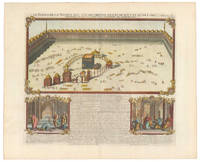
1730320794Amsterdam: Henri Abraham Chatelain 1730. unbound. View. Uncolored engraving. Image measures 12" x 21.5". Handsome antique brown frame 18 3/4 x 21" not examined out of frame.<br/> <br/> This striking view by Henri Abraham Chatelain depicts the interior of the temple of Mecca. Features the interior prayer scene of the temple with a key below the map noting the locations mapped on the map. Issued in the 1730 edition of Chatelain's "Atlas Historique" one of the most widely distributed and lavishly illustrated work of its kind in the 18th century. Henri Abraham Chatelain 1684 - 1743 was a Dutch cartographer pastor best known for his seminal seven volume "Atlas Historique". This is a beautiful example of his work.<br/> <br/> Henri Abraham Chatelain unknown
1719NL-02162<p>This is Henri Chatelain's dramatic and detailed capture of the <em>Haram</em> or Sacred Precinct in Mecca—the holiest site in Islam. It provides a detailed view of the historic complex which draws millions of pilgrims annually. In the center of the view the quadratic black Kaaba dominates. According to Islamic tradition this complex stands on the remains of the first temple that Abraham and his son Ishmael built for God.</p><p>In addition to the Kaaba several shrines and other buildings have been drawn in their relative positions and domed porticoes frame the enormous courtyard holding it all. In this manner the view almost takes on the character of a plan. Chatelain brings his view to life by including many worshippers within the complex.</p><p>While the view of the Holy Precinct occupies the upper register of the print in the lower register we find two smaller vignettes depicting the various positions that Muslims assume during prayer. Between the vignettes is a text that includes a legend and key related to the larger view as well as an introduction to the Islamic faith and tradition.</p><p><strong>Census</strong></p><p>The copper-engraved view comes from Chatelain's seminal seven-volume <em>Atlas Historique</em> published in Amsterdam between 1705 and 1720. The atlas combines the finest engraving and cartographic craftsmanship with academic studies of geography history ethnology heraldry and cosmography and it was one of the most widely distributed atlases in the 18th century.</p><p><strong>Context is Everything</strong></p><p>When Chatelain's detailed plan of Mecca was first published it was a true rarity. Few European travelers had ventured so profoundly into Arabia and the accounts of Muslims did not resonate broadly among the European intelligentsia at the time. Western Arabia particularly Mecca had been subjugated by the Ottoman Empire when Selim I defeated and dissolved the Mamluk Sultanate in Egypt. For centuries the Mamluks had controlled access to the sacred cities but now Barakat bin Muhammed the Sharif of Mecca was forced to acknowledge Ottoman supremacy. The only European to ever truly penetrate Mamluk Arabia was the Italian traveler Ludovico di Varthema who in 1502-03 visited Mecca with a Hajj caravan on his journey to India.</p><p>But a French traveler truly opened Western Arabia to the world. The Parisian Jean Chardin 1643-1712 was a distinguished French traveler merchant and polyglot whose extensive travels in the Middle East and beyond significantly impacted the European understanding of Islam and its holy sites in the 18th century. Chardin spent eleven years exploring the Middle East where he gained access to the Persian court being appointed a royal merchant by Shah 'Abbas II. His journeys took him through Persia Turkey India and Georgia before he eventually settled in England. Among the most notable aspects of Chardin's voyages was his attempt to depict Islam's holy places particularly Mecca and Medina. His depictions were mainly based on information he acquired from Muslims who had performed the Hajj.</p><p>Depictions of Islam's holiest sites were virtually non-existent in Europe at his time and Chardin's drawings constitute some of the earliest and best sources available. There is an unfinished manuscript plan of the Prophet's Tomb in Medina at the Royal Society in London. Still the more impactful image was Chardin's completed plan of the Kaaba precinct in Mecca. While this pioneering plan accurately captures the individual buildings and minarets including the colonnaded porticoes surrounding the central courtyard it also conflated elements from Medina and Mecca the circular colonnade around the Kaaba.</p><p>Despite traveling with two professional artists including Grélot the drawings attributed to Chardin were most likely his work demonstrating his engagement with documenting his experiences. His detailed accounts and illustrations were later included in his publication <em>Voyages en Perse et Autres Lieux de l'Orient</em> the first volume published in 1686. Further volumes followed in 1711. These works were praised for their detailed observations and accuracy providing a valuable non-Persian perspective on the Safavid and Ottoman empires and it is clear that they were the source for Chatelain's view.</p><p>Chardin's extensive travels and keen observations earned him a knighthood from Charles II of England for his services to the East India Company. His pioneering contributions remain crucial sources on Persia and Arabia's political history and cultural landscapes.</p><p>Cartographer:</p><p><strong>Henri Abraham Chatelain 1684 – 1743</strong> was a Protestant pastor Huguenot from Paris who due to his faith was forced to flee his native France. He settled first in London and later in Holland where he worked from both The Hague and Amsterdam during the early 18th century. While his primary calling was as a preacher his <em>Atlas Historique</em>became a huge success partly due to the vivacious decoration and abundance of information on his charts.</p>
1776133671Milan: Giuseppe Galeazzi 1776. First edition in Italian of part of de Moivre's early and important contribution to the calculus of games of chance and probability theory one of the first instructional texts on the subject which together with the works of Montmort and Bernoulli was one of the most important books written on the subject in the early eighteenth century. His introduction contains an overview of main concepts such as probability conditional probability expectation dependent and independent events the multiplication rule and the binomial distribution. The translator Roberto Gaeto of the University of Pavia translates the parts of de Moivre's work dealing with the application of the doctrine of chance to annuities tontines life expectancies and mortallity tables. Gaeta has added an introduction notes and appendices comparing other European writers on lifetime annuities such as Deparcieux Kersseboom Süssmilch and Bernoulli with a useful bibliography of works of mortality tables and statistics pages lix-lxviii. Two works bound in a single vol. octavo 207 x 130 mm. Printer's woodcut device on title tables and vignettes in the text. Contemporary half mottled calf and sprinkled boards rebacked preserving the original spine red morocco label sprinkled edges. Spine neatly repaired and lined where split recased with new endpapers board edges worn. Second work has the half title cut away. Pale damp mark to lower margin extending into the text in places occasional light foxing marginal worming to last 4 leaves of the second work; good copies of two scarce works. hardcover