Lincoln, Abraham and Stephen A DouglasBiblio.com
699 résultats
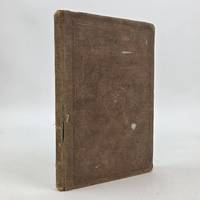
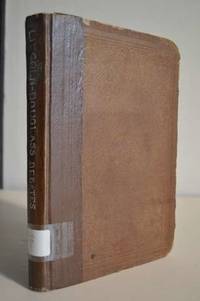
1860SKU1039674Follett Foster and Company 1860. First Edition. hardcover. Acceptable. 0x0x0. This Book is an Ex-Library Book with several library markings. Political debates between Hon. Abraham Lincoln and Hon. Stephen A. Douglas in the celebrated campaign of 1858 in Illinois; including the preceding speeches of each at Chicago Springfield etc.; also the two great speeches of Mr. Lincoln in Ohio in 1859 as carefully prepared by the reporter of each party and published at the times of their delivery. Follett Foster and Company; Columbus 1860. Hardcover. First Edition First Issue. First issue with no advertisements no rule above the publishers imprint on the copyright page and with numeral 2 at the bottom of page 17. An Acceptable brown cloth binding with blind stamped ornate design on boards re-enforced spine with handwritten white ink title and library locations sticker on spine binding shaky starting hinges with partially cracked rear hinge heavy wear to board corners with some loss some scuffing and discoloration to boards abrasions along board margins specifically to rear bit pulpy text block with age toning and scattered foxing throughout rubbing to board and spine edges previous owner handwritten ink info on front free endpaper few small dog-eared pages faint moisture stain on fore-edge and slightly on page margins several library markings include: library bookplate library due date card pocket embossed library stamp ink library stamps few ink and pencil notes barcode sticker without Dust wrapper. 8vooctavo or approx. 6 x 9 inches. 268pp. We pack securely and ship daily with delivery confirmation on every book. The picture on the listing page is of the actual book for sale. Additional Scans are available for any item please inquire. Follett, Foster and Company hardcover
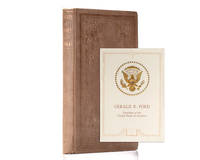
1860149362Columbus: Follett Foster and Company 1860. First edition early issue of the most famous debates in American history which cemented Lincoln as a national presidential candidate. Octavo original cloth stamped in blind. Ownership bookplate of President Gerald R. Ford to the front pastedown. President Gerald R. Ford and Abraham Lincoln occupy distinct yet symbolically linked places in American presidential history united by their encounters with political violence and national division. Abraham Lincoln the 16th president led the United States through the Civil War and became the first American president to be assassinated when he was shot by John Wilkes Booth at Ford’s Theatre in 1865—a moment that transformed him into a martyr for the Union and a symbol of democratic perseverance. Over a century later Gerald R. Ford the 38th president survived two assassination attempts within seventeen days in 1975 both carried out by women—Lynette “Squeaky†Fromme and Sara Jane Moore—amid the turbulence of the post-Watergate era. While Ford’s brush with assassination did not result in tragedy it echoed the lingering volatility of American political life that had claimed Lincoln’s. In near fine condition. An exceptional example with even better provenance. Running as a little-known candidate for the Illinois senatorship in 1858 Lincoln challenged incumbent and Democratic leader Stephen Douglas to a series of debates. The result was a memorable chain of lively arguments in front of cheering crowds. Though Lincoln lost the senatorial race “he began collecting a scrapbook of his best speeches particularly those from the just-concluded campaign against Douglas for possible inclusion in a book. Assiduously pasting newspaper accounts of the debates into the scrapbook Lincoln cast about for a publisher. Initial efforts failed mainly because Lincoln wanted the book printed in Springfield which had no local publishing or printing facilities. Eventually however the Columbus Ohio firm of Follett Foster & Company showed interest and he began preparing the first edition… Somewhat surprisingly for an attorney Lincoln did not seek Douglas’ permission to publish a book of their combined speeches although Douglas was later given the last-minute opportunity—he declined—to make corrections to his own remarks†Morris 121. Follett, Foster and Company hardcover
18601408600Columbus: Follett Foster and Company 1860. First Edition Second Impression. Hardcover. Octavo 2-5 4 268 pages. In Good condition. In publisher's full brown cloth binding with blind stamped decoration to covers. Sunning and heavy wear to spine with gilt titling mostly worn away. Boards show significant scuffing and soiling with rubbing and exposed board along all edges and at fore corners. Splitting to joints hinges in tact. Chipping at head and tail of spine lacking end bands. Text block is moderately worn and soiled along edges. Age toning light foxing and faint tidemarks throughout. Pencil inscriptions on front endpapers. Tear in front flyleaf near gutter is patched with tape. Shelved in Room F. 1408600. Special Collections. Follett, Foster and Company hardcover
1860147733Columbus: Follett Foster and Company 1860. First edition early issue of the most famous debates in American history which cemented Lincoln as a national presidential candidate. Octavo original cloth stamped in blind with rule above the publisher's imprint on the copyright page. In good condition darkening to the edges toning throughout some damp staining inscription to the rear pastedown. Running as a little-known candidate for the Illinois senatorship in 1858 Lincoln challenged incumbent and Democratic leader Stephen Douglas to a series of debates. The result was a memorable chain of lively arguments in front of cheering crowds. Though Lincoln lost the senatorial race “he began collecting a scrapbook of his best speeches particularly those from the just-concluded campaign against Douglas for possible inclusion in a book. Assiduously pasting newspaper accounts of the debates into the scrapbook Lincoln cast about for a publisher. Initial efforts failed mainly because Lincoln wanted the book printed in Springfield which had no local publishing or printing facilities. Eventually however the Columbus Ohio firm of Follett Foster & Company showed interest and he began preparing the first edition… Somewhat surprisingly for an attorney Lincoln did not seek Douglas’ permission to publish a book of their combined speeches although Douglas was later given the last-minute opportunity—he declined—to make corrections to his own remarks†Morris 121. Follett, Foster and Company hardcover
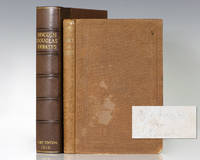
1860138634Columbus: Follett Foster and Company 1860. First edition first issue of the most famous debates in American history which cemented Lincoln as a national presidential candidate; inscribed by Lincoln in pencil to close friend Martin S. Morris and accompanied by the table from the Morris household that Lincoln signed the book on. Octavo original cloth stamped in blind. First issue with no advertisements no rule above the publisher’s imprint on the copyright page and with numeral 2 at the bottom of page 17. Association copy inscribed by Abraham Lincoln in pencil on the front free endpaper "M. S. Morris Esq A. Lincoln." The recipient Martin S. Morris was was a long-time political supporter and friend of Abraham Lincoln from Menard County Illinois. In March 1843 Lincoln wrote to Morris “It is truly gratifying to me to learn that while the people of Sangamon have cast me off my friends of Menard who have known me longest and best of any still retain their confidence in me.†Morris was selected as one of the delegates from Menard County to attend the Whig convention in Pekin in May 1843 but was detained by an illness and Francis Regnier attended in his place. The convention selected John J. Hardin rather than Lincoln as the Whig candidate for Congress from that district. In June 1852 Morris's close friend Whig Congressman and later Illinois governor Richard Yates wrote to him from Washington regarding the 1852 presidential election. The Democratic National Convention was then underway in Baltimore and after 32 ballots by the convention Yates believed the chances of receiving the nomination were against U.S. Senator Stephen A. Douglas of Illinois unless “his almost never failing good luck may avail him.†Ultimately on the 49th ballot the Convention nominated Franklin Pierce who had received no votes until the 35th ballot. Laid in is Yates' letter to Morris which reads in part “Washington June 4 1852 Dear Morris I thank you kindly. The Democratic Convention is now in session in Baltimore. The 32nd ballot has been had and no nomination. Douglass does not appear to have as much strength as anticipated and if we were to judge from present indications the chances are against him. How far his almost never failing good luck may avail him remains to be seen. The contest between Fillmore & Scott it is now believed will be very close. Some of the knowing ones who have not much to do but make calculations say that the vote of Illinois will decide the question. We do not know how the Illinois delegation stands but we suppose nearly equal for Scott and for Fillmore. Fillmore and his friends will if necessary to defeat Gen'l Scott cast their vote for Mr. Webster. My opinion and it is only an opinion is that Gen'l Scott will receive the nomination. Of one thing I feel pretty sure that either Scott or Fillmore will be supported most cheerfully by the Whigs and what is better the Whigs here and throughout the Union have an abiding confidence that they will again gloriously triumph in November. Such was not the case at the beginning of the session. There was more or less of despondency then but the skies are bright ahead now and be the result what it may the Whigs will march up to the work with unfaltering purpose and in the confident hope of victory. Your friend Richard Yates." The Whig National Convention met a few weeks later also in Baltimore and the contest remained close between Winfield Scott and incumbent president Millard Fillmore with Daniel Webster running a distant third until Scott finally received the nomination on the 53rd ballot. In his letter to Morris Yates was confident of a Whig victory in November but Pierce went on to defeat Scott with 51 percent of the vote to Scott’s 44 percent and an overwhelming 254-to-42 victory in the Electoral College. In May 1858 Morris wrote to Lincoln that he and other Republicans in Menard County “are up and doing†and “though we are in a minority we nevertheless intend to give them the Democrats the best fight we can.†Four months later he again wrote to “Friend Lincolnâ€: "If there is any reliance to be placed on the papers which I read you are certainly making a very successful electioneering tour through the state and whether you are elected to the senate or not you certainly have reason to congratulate yourself and feel proud of the manifestations of confidence every where shown you by the people I have said and believed ever since Douglass repealed the MO. Com. That you would be his successor the first chance the people had to vote in matter that was a most rascally thing and I believe would and know it ought to politically damn him and all who had anything to do with it at least in the north. But my object is not to write a dissertation on politicks knowing well that I could say nothing But which you already know But merely to inform you by way of adding to the encouragement which I believe you are every where receiving the good news that you may calculate with a very great degree of certainty on a vote from Menard & Cass. We are glad that you have made an appointment to speak here and will endeavor to get you a large crowd." Contrary to Morris’s assurances in the race for state representative from Cass and Menard Democrat William Engle defeated Republican James W. Judy for a seat in the legislature where he dutifully voted for Stephen A. Douglas for the U.S. Senate. In September 1859 Morris was a delegate from Menard County to the Republican Congressional Convention for the Sixth Congressional District in Springfield. At the Convention Morris was elected to the District Central Committee which consisted of one delegate from each county. Among the resolutions passed by the Convention were “Resolved That the Territories of the United States are the common property of all the free white citizens of the whole Union but that the institution of Slavery has no right or heritage therein.but at the same time we strenuously oppose every attempt to interfere with slavery in the States where it now exists.†and “Resolved That Freedom is universal and Slavery sectional and cannot exist where it is not authorized by virtue of special local legislation; and that the Government of the United States in the exercise of its powers whether executive legislative or judicial is bound to adhere in substance and in form to the generous and noble spirit of these important maxims.†6 Less than a month later John Brown did “interfere with slavery in the States where it now exists†by seizing the federal arsenal in Harpers Ferry Virginia. In 1862 Morris wrote to President Lincoln on behalf of his friend Henry Clay Denison who was serving as a commissary clerk in the 14th Illinois Infantry regiment. Denison wanted a position as assistant quartermaster or assistant commissary in the army. Morris stressed that Denison was “a descendant of a good Whig family of the good old Whig state of Vermont his native place being Woodstock. He is also as good a Republican as lives and if he didn’t do as much he tried as hard as any one else to bring about your nomination &election.†President Lincoln dutifully forwarded the letter to the War Department. With Yates' June 1852 letter to Morris laid in and with the ownership inscription of Morris' great granddaughter beneath Lincoln's inscription “Property of Pauline Madgett Welton Lincoln’s signature above." Provenance: kept in the Morris family for over six generations Martin S. Morris 1816-1884 husband of Elizabeth Waggoner Morris 1820-1901; Their daughter Jane Eliza Morris Nance 1857-1927 wife of Benjamin Franklin Nance 1853-1914; Their daughter Pauline E. Nance Madgett 1879-1971 wife of William P. Madgett 1875-1951; Their daughter Pauline Helen Madgett Welton 1908-1978 wife of Claude R. Welton 1908-1978; Their son William R. Welton 1939-2014; Welton family. Ownership inscription of Pauline Helen Madgett Welton. In very good condition. Housed in a custom half morocco clamshell box. Exceptionally rare signed by Lincoln with no other signed copies traced at auction. Accompanied by the original pedestal table from the Morris household that according to generations of family lore Lincoln sat at with Morris signed the book and ate apples as well as an oil portrait of Martin S. Morris which hung by the table. With a letter of provenance signed by a descendant of Pauline Helen Madgett Welton attesting to the provenance of the book table and a portrait. According to Rae Katherine Eighmey Abraham Lincoln in the Kitchen: A Culinary View 2014 fellow lawyer Charles S. Zane recalled Lincoln at a circuit town inn: "There was a 'large basket of apples in the sitting room and we were invited to help ourselves. Mr. Lincoln was a great eater of apples. He said to me once that a man should eat and drink only that which is conducive to his own health. "Apples" he said "agree with me."'" p. 131 citing Zane's article in the Journal of the Illinois State Historical Society in 1921. According to Eighmey Herndon wrote of Lincoln: "He loved best the vegetable world generally.and especially did he love apples. Running as a little-known candidate for the Illinois senatorship in 1858 Lincoln challenged incumbent and Democratic leader Stephen Douglas to a series of debates. The result was a memorable chain of lively arguments in front of cheering crowds. Though Lincoln lost the senatorial race “he began collecting a scrapbook of his best speeches particularly those from the just-concluded campaign against Douglas for possible inclusion in a book. Assiduously pasting newspaper accounts of the debates into the scrapbook Lincoln cast about for a publisher. Initial efforts failed mainly because Lincoln wanted the book printed in Springfield which had no local publishing or printing facilities. Eventually however the Columbus Ohio firm of Follett Foster & Company showed interest and he began preparing the first edition… Somewhat surprisingly for an attorney Lincoln did not seek Douglas’ permission to publish a book of their combined speeches although Douglas was later given the last-minute opportunity—he declined—to make corrections to his own remarks†Morris 121. Follett, Foster and Company hardcover
1860022564Columbus: Follett Foster. Original brown stamped cloth. First Edition Later Issue. Two leaves of Follett ads rule over publishers imprint on copyright page numeral 2 at bottom of page 13. Debates about whether slavery should be permitted in new states. The publicity from these debates made Lincoln a national figure. Previous owners names in pencil and ink foxing Good. . Good. Hardcover. 1st Edition. 1860. Follett, Foster hardcover
18015986CB1801. Zürich bey Johann Heinrich Waser an der Marktgass 1801. 8°. 2 Bl. Neuere steife Broschur neue fliegende Blätter. Gedicht auf Lavaters Tod 2.1.1801 mit 10 vierzeiligen Strophen verfasst von "Abraham Rudolf Schweizer im Bureau-Militaire N. 85. auf der Marktgasse in Bern". unknown
1876227154Bingley : T. Harrison 1876. First Edition. Hardcover. Fine copy in the original gilt-blocked cloth. Remains particularly and surprisingly well-preserved; tight bright clean and especially sharp-cornered. Physical description; 261 p.; 8º. Subjects; Poetry - Miscellaneous. Bingley : T. Harrison hardcover
1804924T55London: T. N. Longman and O. Rees 1804. First edition. Cloth. Very Good. 6.5" by 4". None. A very scarce first edition of this collection of poetry from English British Army officer Charles Abraham Elton. First edition. Very scarce work. The author's first published work. A collection of poetry with titles such as: To a Young Lady Written During Illness The Miniature Mary The Cathedral and more. With lyrical poems sonnets blank verse odes and translations. Written by Sir Charles Abraham Elton an English officer in the British Army and an author. In the original full cloth binding. Externally smart with minor rubbing and bumping to the extremities. Light fading to the spine with the odd mark to the boards. Internally firmly bound. Pages are very bright and clean with the odd small spot or handling mark. Very Good T. N. Longman and O. Rees hardcover
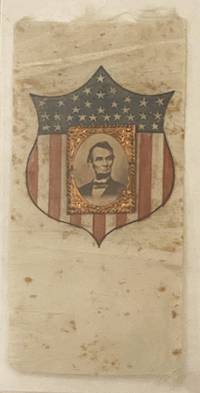
1864BB_Lincoln_badge<p><strong>LINCOLN</strong> Abraham 1809–1865</p><p><em><strong>PHOTO BADGE</strong></em> in copper frame with silk <strong>Campaign Ribbon</strong> circa 1864</p><p>Framed Albumen Portrait measures 1 x ¾ inches; Ribbon imprinted Chicago: North Western Flag & Banner Co. L. 4 inches.</p><p>The portrait by Anthony <strong>BERGER</strong> of Matthew Brady's Gallery the image taken in Washington DC 9 February 1864</p><p>Reference: C Hamilton and L Ostendorf: <em>Lincoln in Photographs</em> 109</p> North Western Flag & Banner Co.
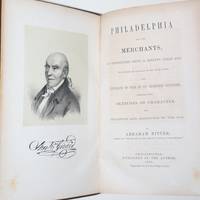
1860007988Philadelphia: By the Author 1860. First Edition. Blindstamped Cloth. Very Good. A few names still well-remembered with accounts of many now a distant memory from what had been the largest city in the United States until the late 18th Century. 8vo. 23.5 by 16 cm. 223 pp. 20 plates half of which are portraits with tinted background and the other half are maps or diagrams of streets. These diagrams in most instances have indications of the owners of storefronts. Two of the maps are folding expanding by their width. The widest with three folds doesn't name proprietors of stores but has pleasant drawings of the buildings although these drawings have a generic quality like Monopoly buildings and thus aren't reliable as a visual source of the actual appearance of the riverfront at the time. Although this was privately printed as indicated by its being published by the Author there is a substantial subscription list almost six pages long at the end. Howes R321. Condition: erosion of cloth at spine extremities. Tearing along joints repaired but still apparent where there was tear. Corners rubbed and other typical symptoms of shelfwear. Slight cocking of text block -- front board overhangs over rear board. Foxing generally light and other than along page edges quite occasional -- we don't think the foxing and other soiling and/or age toning is going to be disconcerting to most. By the Author unknown
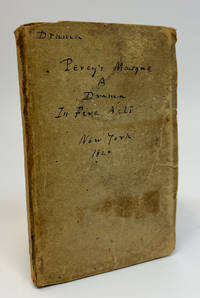
182013545New York: C. S. Van Winkle 1820. First American Edition 1st Printing. Softcover. Good. 12mo 150pp. "From the London edition with alterations." A good copy bound in later 19th century plain card wrappers with yapped edges and inked title and the edges marbled. Some marginal staining. C. S. Van Winkle unknown
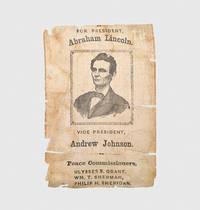
18641922921864. Peace through strength A rare ribbon from Lincoln's 1864 campaign to retain the Presidency during the Civil War where he faced down the Democrats who were campaigning to sue for peace - the ribbon satirically names the military generals Grant Sherman and Sheridan as Lincoln's own "Peace Commissioners" underneath a profile of a beardless Lincoln. Silk ribbon printed in black 142 x 96 mm. Trimmed at head losing the "Union forever" notice at the head found on other examples splits and wear nonetheless a sound example of a very fragile survival. unknown
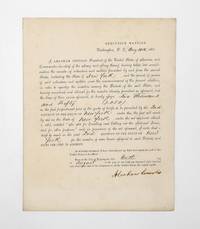
1863373004Washington D.C. 1863. 1p. plus integral blank. 4to 9-3/4x7-3/4 inches. Minor smudging to signature. Housed in a blue full morocco box. 1p. plus integral blank. 4to 9-3/4x7-3/4 inches. The first military draft in U.S. history was passed by Congress in early 1863 and signed into law by President Abraham Lincoln in March of that year. The Enrollment Act or Civil War Military Draft Act required the enrollment of every male citizen between twenty and forty-five years of age as well as those immigrants who had filed for citizenship unless exempted by the Act. It set enlistment quotas for each state and required states to draft men if they did not meet their enlistment quotas through volunteers. It also included the policies of substitution furnishing a suitable substitute to take the draftee's place and commutation paying $300 to avoid the draft which led to substantial resentment among working-class citizens not wealthy enough to pay their way out of service.<br /> <br /> Only July 13 during the draft lottery in New York City a riot broke out leading to three days of violence and destruction. Although initially focused on the draft the protests subsequently devolved into vicious race riots. The rioters were largely white and in the wake of the Emancipation Proclamation claimed to fear that freed enslaved men would migrate to the city and take their jobs. Since Blacks were exempted from the draft the Draft Act only heightened fears of Black migration to the city. The violence against the Black community in New York as well as against abolitionists was substantial: the death toll reached upwards of 120 and numerous homes and churches were burned. Since most of the New York State Militia was fighting with Union troops at Gettysburg the New York Police Department was the only force on hand to deal with the rioters initially and they were badly outnumbered and underequipped. By day four of the riots five New York Militia units had reached the city along with the 26th Michigan Volunteers and the 27th Indiana Volunteers and were able to start restoring order. Eventually there were several thousand troops in the city and they brutally put down the remaining rioters.<br /> <br /> Almost immediately calls came to suspend the draft in New York most notably by Horatio Seymour the Governor of New York who wrote to Lincoln several times in the weeks which followed arguing against the constitutionality of the draft and the inequity in its application. <br /> <br /> Lincoln replied on August 7 refusing to acquiesce to Seymour's demands writing: "I shall direct the draft to proceed in all the Districts drawing however at first from each of the four Districts towit: the second fourth sixth and eighth . I do not object to abide a decision of the United States Supreme Court or of the judges thereof on the constitutionality of the draft law. In fact I should be willing to facilitate the obtaining of it; but I can not consent to lose the time while it is being obtained. We are contending with an enemy who as I understand drives every able bodied man he can reach into his ranks very much as a butcher drives bullocks into a slaughter-pen. No time is wasted no argument is used. This produces an army which will soon turn upon our now victorious soldiers already in the field if they shall not be sustained by recruits as they should be. It produces an army with a rapidity not to be matched on our side if we first waste time to re-experiment with the volunteer system already deemed by congress and palpably in fact so far exhausted as to be inadequate; and then more time to obtain a court decision as to whether a law is constitutional which requires a part of those not now in the service to go to the aid of those who are already in it; and still more time to determine with absolute certainty that we get those who are to go in the precisely legal proportion to those who are not to go. My purpose is to be in my action just and constitutional; and yet practical in performing the important duty with which I am charged of maintaining the unity and the free principles of our common country" Collected Works of Abraham Lincoln Vol. 6.<br /> <br /> Three days later on August 10 Lincoln signed the present order to resume the draft in the Second Congressional district of New York the western portion of Long Island primarily Nassau County and part of Queens County. This is the first draft order following his refusal to Governor Seymour to suspend the draft in the New York City area.<br /> <br /> In full manuscript accomplishments in brackets: "I Abraham Lincoln President of the United States of America and Commander-in-chief of the Army and Navy thereof having taken into consideration the number of volunteers and militia furnished by and from the several States including the State New York and the period of service of said volunteers and militia since the commencement of the present rebellion in order to equalize the numbers among the Districts of the said States and having considered and allowed for the number already furnished as aforesaid and the time of their service aforesaid do hereby assign Two Thousand and Fifty 2050 as the first proportional part of the quota of troops to be furnished by the 2ndDistrict of the State of New York under this the first call made by me on the State of New York under the act approved March 3 1863 entitled 'An Act for Enrolling and Calling our the National Forces and for other purposes' and in pursuance of the act aforesaid I order that a draft be made in the said 2nd District of the State of New York for the number of men herein assigned to said District."<br /> <br /> On the same day as this order Lincoln would meet with Frederick Douglass at the White House to discuss his traveling through the south to recruit former slaves to fight for the Union. An extraordinary Lincoln document at a turning point moment in the Civil War. unknown
1862129821862. Original Civil War dated newspaper. The Republican Herald and Post dated Providence Saturday morning September 27 1862. 4 pages recto verso. Includes a front page print of a September 22 proclamation from Abraham Lincoln. The proclamation reads in part: "I Abraham Lincoln President of the United States of America and Commander-in-Chief of the Army and Navy thereof do hereby proclaim and declare that hereafter as heretofore the war will be prosecuted for the object of practically restoring the constitutional relations between the United States and the people thereof. Abraham Lincoln." Newspaper is in excellent condition with some minor chipping to the edges. unknown
1865127171865. 16th president of the United States who held the country together during civil war and abolished slavery. Newspaper "The Independent" New York May 4 1865. 1 page 18" x 25". Front Page Including a poem entitled "President Lincoln Dead" and a central headline "The Last Word and Deed of Abraham Lincoln. Some spotting some tearing around edges and at the creases not affecting the text and a small amount of paper loss from the top right hand corner of the banner. unknown
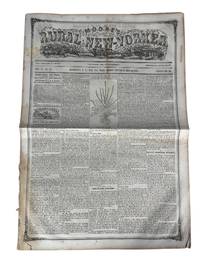
186058991860. New York Newspaper featuring a detailed account of Lincoln's very close nomination to the Presidency of the United States. How Lincoln was seriously behind Seward in the first ballot. Moore's Rural For The Week Ending Saturday May 26 1860 Rochester N.Y. In part: ".The resolutions were adopted and on motion the Convention proceeded to ballot for a candidate for President of the United States. Various individuals were put in nomination and the vote resulted as follows:. FIRST BALLOT Seward - 173 1/2 Lincoln - 102. . .Not having effected a choice another and the final ballot was taken when Abraham Lincoln of Illinois received 2311/2 votes or within 11/2 of the nomination. Mr. Andrews of Mass. rose and corrected Massachusetts by changing four votes and giving them to Lincoln thus nominating Lincoln by 21/2 majority." Very light foxing otherwise in very good condition. unknown
1865851311865. LINCOLN Abraham. ORDER OF SERVICES FOR THE MEETING OF THE PEOPLE OF CONCORD AT THE HOUR OF THE FUNERAL OF PRESIDENT LINCOLN APRIL 19 1865. n.p. n.p. ca. 1865. 8 3/8 x 10 3/4 inches pale paper printed in black folded to make a four panel program of services. Annotated in pencil with a quote by Judge Ebenezer Rockwood Hoar and some other notes. The program of services: I. Voluntary on the Organ. II. Chant. III. Prayer by the Rev. G. Reynolds. IV. Selections from Scriptures. V. Hymn. VI. Addresses by R. W. Emerson and others. VII. Concluding Prayer by Rev. Thomas Rattray. VIII. Hymn. IX. Benediction. unknown
180431931New Haven Hartford Connecticut: From Sidney's Press 1804. First Edition. Wraps. Fair. Wraps. Approx. 8.5" x 5". 24 pages. Title page hasmedge tears creases and scattered toning no loss of printed content. Thin dark leather spineremnant. Interior contents are lightly toned. Wraps are not trimmed and are creased in the corners. Old ink initials on the last page. A fair tattered copy only. <br /> <br /> Howes B 472 "aa"; Sabin 5596 Howes places the publication of this work in Hartford but in OCLC lists New Haven as the publication location. From Sidney's Press unknown