OLEARIUS, ADAMBiblio.com
95 résultats
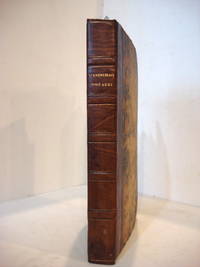
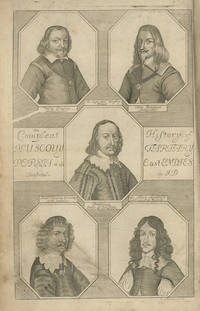
166928698London: Printed for John Starkey and Thomas Basset 1669 1669. Second edition in English preceded by the edition of 1662. ESTC R30756; Wing O270; Cox Literature of Travel I page 249. Several of the maps have paper repairs at the folds and in the margins; the third map of the River Volga is a little darkened at the edges and dust-soiled; the two leaves Q4 & R1 adjacent to that map are also a little darkened and dust-soiled; one clean tear to a leaf without loss; very good copy. Folio in fours contemporary mottled calf rebacked red morocco spine label blind rules and gilt lettering. Frontispiece six folding maps two portraits and one engraved Cyrillic alphabet in the text. In 1634 Frederick III of Holstein-Gottorp present day Denmark and Germany sent an expedition with Adam Olearus 1603-1671 as its secretary from Hamburg to Moscow in an attempt to establish commercial relations with Russia which failed. Undeterred Frederick sent a similar expedition to Persia in 1636 also with Adam Olearius as secretary The first part of this work is the first English translation by John Davies of Olearius' detailed account of those expeditions in its second edition. The second part contains the account by German adventurer Johan Albrecht de Mandelslo 1616-1644 of his departure from Frederick's mission to Persia and continuation on to India China Japan and Formosa also translated by Davies from Olearius' posthumous editing and publication of that travelogue. Though trade missions generally make for dull reading Olearius' narrative is quite engaging with details and anecdotes about the people and places they encountered. Typical of his observations is one about the Russians: "There is no place in the World where drunkenness is more common than in Muscovy . . . Ecclesiastics and laicks Men and Women Old and Young will drink strong water at any time before at and after their meals . . . will drink of it till they lye down and many times die in the place." From the library of John Evelyn with the Evelyn book label "JE" on the front paste-down. Early marginal notes in Mandelslo's adventures though not in Evelyn's hand alas. London: Printed for John Starkey and Thomas Basset, 1669 unknown
16699791London: John Starkey and Thomas Basset 1669. 2nd revised English. Half morocco. Very good. Folio. 2 parts in 1 each separately paginated with separate title-pages. Note: in this copy the title page for Mandelslo appears first in error. 6316;2223210pp. Complete with an added engraved title with 5 portraits 2 separate engraved portraits and a total of 6 folding or double-page maps. In this copy the very large folding map of the Volga River found at p. 112 has been divided in two the second half bound at p. 126 with a slight loss at the fold where they were divided. Engraved table of the Ruthenian alphabet in text. 19th century brown morocco spine over old marbled boards rubbed. Small chip at the top of spine otherwise an attractive copy. This is an odd copy quite complete but with certain preliminaries for the first part bound at front of the second part. The second edition revised of the English translation first published in 1662 made from a 1659 version in French. It contains material not found in the original German edition of 1656 and 1658. An important account of Central Asia including Persia and Russia and the East Indies. The Duke of Holstein's embassies were to negotiate trade. See Cox's THE LITERATURE OF TRAVEL Vol. 1 pp. 249 and 271 for more details. Wing O270. John Starkey and Thomas Basset unknown books
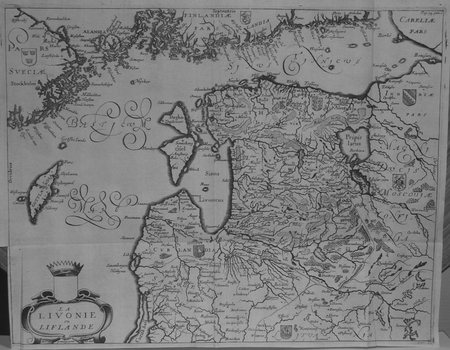
1659LBW02521[1659]. 279 x 361 mm.
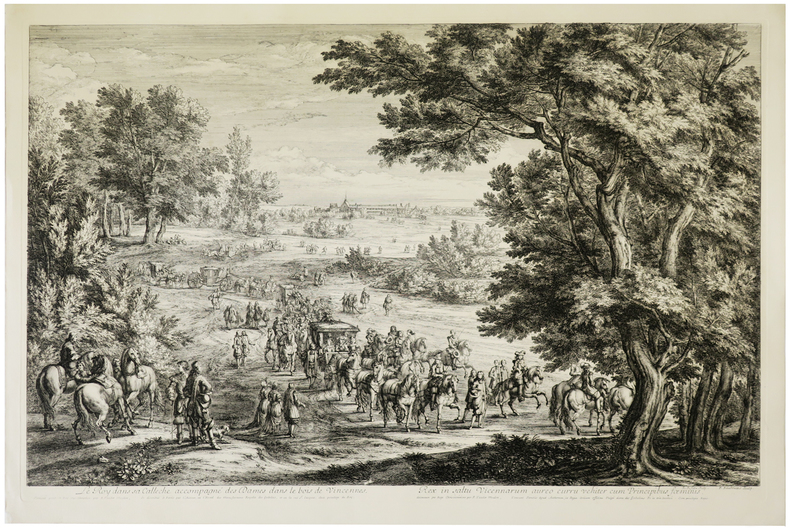
168515007Paris: distribuë par l'Auteur en l'Hostel des Manufactures des Gobelins et en la rue St.Jacques 1685. Copper engraving on two joined sheets by Van Huctenburg and A.F. Baudouinst after Van der Meulen. Titled in French and Latin. Painted from life by the artist who accompanied Louis XIV on his campaigns Adam Frans Van der Meulen depicted in this wonderful panorama a post-battle view of Dôle the capital of Franche-Comté and the handsome surrounding region. In it Louis XIV and his brother survey the city they've won from a hilltop. There is actually no unpleasant evidence of military activity except for some smoke billowing from the far side of Dôle. Adam Frans Van der Meulen was a landscape and genre painter who specialized in battle scenes and his early works i.e. those from the years before he left for Paris the earliest dated work is from 1653 are mainly cavalry skirmishes in the manner of his teacher Pieter Snayer. After he moved to Paris the character of his work changed and became more ceremonial. He now specialized in large topographical views and military scenes and in royal journeys processions and receptions. His most important task was to accompany the king on his many campaigns during the wars of conquest waged in the 1660s and 1670s against inter alia the Spanish Netherlands and as Peintre de conquêtes du roi officially to portray the memorable sieges battles and conquests of le Roi Soleil in large-scale canvases or cartoons which were later transformed into tapestries. Van der Meulen was born in Brussels in 1632. In 1646 he was apprenticed to the battle painter Pieter Snayers. In 1651 he became a master in the Guild of St Luke in Brussels but by 1663 he had moved to Paris where he joined a group of Netherlandish artists associated with the French painter Charles Le Brun 1619-90 who not only was Premier peintre du roi but also from 1663 director of the Parisian tapestry manufactory Manufacture royale des Gobelins. Van der Meulen quickly became a protégé of Le Brun and on his recommendation Van der Meulen was appointed court painter to Louis XIV on 1 April 1664 and at the same time became Le Brun's collaborator in the tapestry manufactory. In 1673 he was accepted as a member of the Académie royale de Peinture et de Sculpture without any obligation to submit a morceau de réception; in 1681 he became conseiller and in 1686 premier conseiller. He died as a highly esteemed artist in the Hôtel des Gobelins 15 October 1690. distribuë par l'Auteur, en l'Hostel des Manufactures des Gobelins, et en la rue St.Jacques unknown
16853659Paris: distribuë par l'Auteur en l'Hostel des Manufactures des Gobelins et en la rue St.Jacques 1685. Copper engraving on two joined sheets by A.F. Baudouin with the figures by R. Bonnart after Van der Meulen. Titled in French and Latin. A fine view of the fortified town of Calais and its environs recalling king Louis XIV's gradual acquisition of territory on the Channel coast from 1667 onwards.<br/> <br/> This excellent panorama shows Calais as seen from the landward side looking across to the ramparts of the fortifications surrounding the town to the roofs of the town itself and then beyond to the sea. In the fore and mid-ground the French army of King Louis XIV moves forward towards the town this scene enlivened by Van der Meulen's portrayal of the stormy conditions: hats blow off cloaks are wrapped around peoples' heads foot soldiers lean into the wind. This sort of detail supports the statement in the imprint that the present scene was painted from life by Van der Meulen. Adam Frans Van der Meulen was a landscape and genre painter who specialized in battle scenes and his early works i.e. those from the years before he left for Paris the earliest dated work is from 1653 are mainly cavalry skirmishes in the manner of his teacher Pieter Snayer. After he moved to Paris the character of his work changed and became more ceremonial. He now specialized in large topographical views and military scenes and in royal journeys processions and receptions. His most important task was to accompany the king on his many campaigns during the wars of conquest waged in the 1660s and 1670s against inter alia the Spanish Netherlands and as Peintre de conquêtes du roi officially to portray the memorable sieges battles and conquests of le Roi Soleil in large-scale canvases or cartoons which were later transformed into tapestries. Van der Meulen was born in Brussels where he was baptised in 1632. In 1646 he was apprenticed to the battle painter Pieter Snayers. In 1651 he became a master in the Guild of St Luke in Brussels but by 1663 he had moved to Paris where he joined a group of Netherlandish artists associated with the French painter Charles Le Brun 1619-90 who not only was Premier peintre du roi but also from 1663 director of the Parisian tapestry manufactory Manufacture royale des Gobelins. Van der Meulen quickly became a protégé of Le Brun and on his recommendation Van der Meulen was appointed court painter to Louis XIV on 1 April 1664 and at the same time became Le Brun's collaborator in the tapestry manufactory. In 1673 he was accepted as a member of the Académie royale de Peinture et de Sculpture without any obligation to submit a morceau de réception; in 1681 he became conseiller and in 1686 premier conseiller. He died as a highly esteemed artist in the Hôtel des Gobelins 15 October 1690. distribuë par l'Auteur, en l'Hostel des Manufactures des Gobelins, et en la rue St.Jacques unknown
168516903Paris: distribuë par l'Auteur en l'Hostel des Manufactures des Gobelins et en la rue St.Jacques 1685. Copper engraving on two joined sheets after Van der Meulen. Titled in French and Latin. In excellent condition. Some infill work along the bottom margin. Image size: 18 1/2 x 38 5/8 inches. A striking contemporary view of Gray in Franche-Comte by the celebrated court painter Van der Meulen.<br/> <br/> This fine view shows the town of Gray in Franche-Comte built on the banks of the Saône River. One of the most important trading towns in Franche-Comte the region became a possession of the Spanish Hapsburgs in 1556. Although some of the region's fortified towns were occupied by France during the Wars of Religion peace and prosperity continued until the advent of the Thirty Years War when the region was ravaged by both Catholics and Protestants. Louis XIV conquered Franche-Comté in 1668 and again in 1674 and finally obtained its cession from Spain. Van der Meulen's striking image depicts the king and his armies entering the town after they successfully re-conquered the region. Adam Frans Van der Meulen was a landscape and genre painter who specialized in battle scenes and his early works i.e. those from the years before he left for Paris the earliest dated work is from 1653 are mainly cavalry skirmishes in the manner of his teacher Pieter Snayer. After he moved to Paris the character of his work changed and became more ceremonial. He now specialized in large topographical views and military scenes and in royal journeys processions and receptions. His most important task was to accompany the king on his many campaigns during the wars of conquest waged in the 1660s and 1670s against inter alia the Spanish Netherlands and as Peintre de conquêtes du roi officially to portray the memorable sieges battles and conquests of le Roi Soleil in large-scale canvases or cartoons which were later transformed into tapestries. Van der Meulen was born in Brussels where he was baptized in 1632. In 1646 he was apprenticed to the battle painter Pieter Snayers. In 1651 he became a master in the Guild of St. Luke in Brussels but by 1663 he had moved to Paris where he joined a group of Netherlandish artists associated with the French painter Charles Le Brun 1619-90 who not only was Premier peintre du roi but also from 1663 director of the Parisian tapestry manufactory Manufacture royale des Gobelins. Van der Meulen quickly became a protégé of Le Brun and on his recommendation Van der Meulen was appointed court painter to Louis XIV on 1 April 1664 and at the same time became Le Brun's collaborator in the tapestry manufactory. In 1673 he was accepted as a member of the Académie royale de Peinture et de Sculpture without any obligation to submit a morceau de réception; in 1681 he became conseiller and in 1686 premier conseiller. He died as a highly esteemed artist in the Hôtel des Gobelins 15 October 1690. distribuë par l'Auteur, en l'Hostel des Manufactures des Gobelins, et en la rue St.Jacques unknown
168515007Paris: distribuë par l'Auteur en l'Hostel des Manufactures des Gobelins et en la rue St.Jacques 1685. Copper engraving on two joined sheets by Van Huctenburg and A.F. Baudouinst after Van der Meulen. Titled in French and Latin. Painted from life by the artist who accompanied Louis XIV on his campaigns Adam Frans Van der Meulen depicted in this wonderful panorama a post-battle view of Dôle the capital of Franche-Comté and the handsome surrounding region. In it Louis XIV and his brother survey the city they've won from a hilltop. There is actually no unpleasant evidence of military activity except for some smoke billowing from the far side of Dôle. Adam Frans Van der Meulen was a landscape and genre painter who specialized in battle scenes and his early works i.e. those from the years before he left for Paris the earliest dated work is from 1653 are mainly cavalry skirmishes in the manner of his teacher Pieter Snayer. After he moved to Paris the character of his work changed and became more ceremonial. He now specialized in large topographical views and military scenes and in royal journeys processions and receptions. His most important task was to accompany the king on his many campaigns during the wars of conquest waged in the 1660s and 1670s against inter alia the Spanish Netherlands and as Peintre de conquêtes du roi officially to portray the memorable sieges battles and conquests of le Roi Soleil in large-scale canvases or cartoons which were later transformed into tapestries. Van der Meulen was born in Brussels in 1632. In 1646 he was apprenticed to the battle painter Pieter Snayers. In 1651 he became a master in the Guild of St Luke in Brussels but by 1663 he had moved to Paris where he joined a group of Netherlandish artists associated with the French painter Charles Le Brun 1619-90 who not only was Premier peintre du roi but also from 1663 director of the Parisian tapestry manufactory Manufacture royale des Gobelins. Van der Meulen quickly became a protégé of Le Brun and on his recommendation Van der Meulen was appointed court painter to Louis XIV on 1 April 1664 and at the same time became Le Brun's collaborator in the tapestry manufactory. In 1673 he was accepted as a member of the Académie royale de Peinture et de Sculpture without any obligation to submit a morceau de réception; in 1681 he became conseiller and in 1686 premier conseiller. He died as a highly esteemed artist in the Hôtel des Gobelins 15 October 1690. distribuë par l'Auteur, en l'Hostel des Manufactures des Gobelins, et en la rue St.Jacques unknown books
168516903Paris: distribuë par l'Auteur en l'Hostel des Manufactures des Gobelins et en la rue St.Jacques 1685. Copper engraving on two joined sheets after Van der Meulen. Titled in French and Latin. In excellent condition. Some infill work along the bottom margin. Image size: 18 1/2 x 38 5/8 inches. A striking contemporary view of Gray in Franche-Comte by the celebrated court painter Van der Meulen.<br/> <br/>This fine view shows the town of Gray in Franche-Comte built on the banks of the Saône River. One of the most important trading towns in Franche-Comte the region became a possession of the Spanish Hapsburgs in 1556. Although some of the region's fortified towns were occupied by France during the Wars of Religion peace and prosperity continued until the advent of the Thirty Years War when the region was ravaged by both Catholics and Protestants. Louis XIV conquered Franche-Comté in 1668 and again in 1674 and finally obtained its cession from Spain. Van der Meulen's striking image depicts the king and his armies entering the town after they successfully re-conquered the region. Adam Frans Van der Meulen was a landscape and genre painter who specialized in battle scenes and his early works i.e. those from the years before he left for Paris the earliest dated work is from 1653 are mainly cavalry skirmishes in the manner of his teacher Pieter Snayer. After he moved to Paris the character of his work changed and became more ceremonial. He now specialized in large topographical views and military scenes and in royal journeys processions and receptions. His most important task was to accompany the king on his many campaigns during the wars of conquest waged in the 1660s and 1670s against inter alia the Spanish Netherlands and as Peintre de conquêtes du roi officially to portray the memorable sieges battles and conquests of le Roi Soleil in large-scale canvases or cartoons which were later transformed into tapestries. Van der Meulen was born in Brussels where he was baptized in 1632. In 1646 he was apprenticed to the battle painter Pieter Snayers. In 1651 he became a master in the Guild of St. Luke in Brussels but by 1663 he had moved to Paris where he joined a group of Netherlandish artists associated with the French painter Charles Le Brun 1619-90 who not only was Premier peintre du roi but also from 1663 director of the Parisian tapestry manufactory Manufacture royale des Gobelins. Van der Meulen quickly became a protégé of Le Brun and on his recommendation Van der Meulen was appointed court painter to Louis XIV on 1 April 1664 and at the same time became Le Brun's collaborator in the tapestry manufactory. In 1673 he was accepted as a member of the Académie royale de Peinture et de Sculpture without any obligation to submit a morceau de réception; in 1681 he became conseiller and in 1686 premier conseiller. He died as a highly esteemed artist in the Hôtel des Gobelins 15 October 1690. distribuë par l'Auteur, en l'Hostel des Manufactures des Gobelins, et en la rue St.Jacques unknown books
16853659Paris: distribuë par l'Auteur en l'Hostel des Manufactures des Gobelins et en la rue St.Jacques 1685. Copper engraving on two joined sheets by A.F. Baudouin with the figures by R. Bonnart after Van der Meulen. Titled in French and Latin. A fine view of the fortified town of Calais and its environs recalling king Louis XIV's gradual acquisition of territory on the Channel coast from 1667 onwards.<br/> <br/>This excellent panorama shows Calais as seen from the landward side looking across to the ramparts of the fortifications surrounding the town to the roofs of the town itself and then beyond to the sea. In the fore and mid-ground the French army of King Louis XIV moves forward towards the town this scene enlivened by Van der Meulen's portrayal of the stormy conditions: hats blow off cloaks are wrapped around peoples' heads foot soldiers lean into the wind. This sort of detail supports the statement in the imprint that the present scene was painted from life by Van der Meulen. Adam Frans Van der Meulen was a landscape and genre painter who specialized in battle scenes and his early works i.e. those from the years before he left for Paris the earliest dated work is from 1653 are mainly cavalry skirmishes in the manner of his teacher Pieter Snayer. After he moved to Paris the character of his work changed and became more ceremonial. He now specialized in large topographical views and military scenes and in royal journeys processions and receptions. His most important task was to accompany the king on his many campaigns during the wars of conquest waged in the 1660s and 1670s against inter alia the Spanish Netherlands and as Peintre de conquêtes du roi officially to portray the memorable sieges battles and conquests of le Roi Soleil in large-scale canvases or cartoons which were later transformed into tapestries. Van der Meulen was born in Brussels where he was baptised in 1632. In 1646 he was apprenticed to the battle painter Pieter Snayers. In 1651 he became a master in the Guild of St Luke in Brussels but by 1663 he had moved to Paris where he joined a group of Netherlandish artists associated with the French painter Charles Le Brun 1619-90 who not only was Premier peintre du roi but also from 1663 director of the Parisian tapestry manufactory Manufacture royale des Gobelins. Van der Meulen quickly became a protégé of Le Brun and on his recommendation Van der Meulen was appointed court painter to Louis XIV on 1 April 1664 and at the same time became Le Brun's collaborator in the tapestry manufactory. In 1673 he was accepted as a member of the Académie royale de Peinture et de Sculpture without any obligation to submit a morceau de réception; in 1681 he became conseiller and in 1686 premier conseiller. He died as a highly esteemed artist in the Hôtel des Gobelins 15 October 1690. distribuë par l'Auteur, en l'Hostel des Manufactures des Gobelins, et en la rue St.Jacques unknown books
1685LBW-3818[circa 1685]. 518 x 794 mm.
168019670Paris 1680 Une gravure à l'eau-forte sur cuivre , Format : 56 centimètres de haut par 97 centimètres de large (cuvette : 53.0 x 96.5 cm ), sur papier verger crème, inscription au bas de la gravure : R. Bonnart Sculp. + puis inscrit dans la moitié gauche : "Valenciennes prise d'assaut, et sauvee du pillage par la clemence du Roy, le 10 Mars 1677 - Dessigne sur le lieux, pour le Roy tres-chrestien, par F. Vander Meulen. Se distribue a Paris par l'Auteur, en l'Hostel des Manufactures Royales des Gobelins, Et en la rue St Jacques, Avec privilege du Roy." + puis inscrit en latin dans la moitié droite : "Valencenae vi captae et clementia Victoris ab excidio servatae XVI Martii 1677 - Ad Verum delineatus pro Rege Christianissimo per F. Vander Meulen. Prostat Parisiis apud Authorem in Regia Artium officina Vulgo dicta des Gobelins Et in via Jacobea, Cum privilegio Regis.", Fait à Paris, sans date (1680),
1632910084CGFrankfurt:, Merian, 1632. Kupferstich, 10 x 14 cm, gedruckt auf der vollen Blattseite 32 x 20 cm.
16442933550París.: Toussainct Quinet. 1644. Hardcover. Cubierta deslucida. Firma del anterior propietario. Good. 21 cm. 315 p. Encuadernación en pergamino. Idioma francés . Cubierta deslucida. Firma del anterior propietario. Literatura.82 82 Toussainct Quinet. hardcover
161514675Haidelbergae Heidelberg Heidelberg: Impensis Jonae RosaeTypis Johannis Lacelloti 1615. Fine. Impensis Jonae Rosae Typis Johannis Lacelloti Haidelbergae Heidelberg Heidelberg 1615 19 x 12 cm relié First edition. Printer's device on title page. Not in Brunet or Graesse. Contemporary full calf binding. Spine with raised bands decorated. Head worn. Lack to tail. Upper joint partially cracked. Lacking endpapers with marbled paper. Lives of Germanic philosophers from the late 15th century to 1614. The notion of Germanity and philosopher in the humanist sense is extended since the list includes Erasmus Swiss Dutch and even Dürer. but also Joan Faustus Georgius Fabricius Christophorus Longolius Copernicus Mercator Orlandus de Lasso Nicodemus Frischlinus Nicolas Clenard Henricus Glareanus. that is mathematicians physicians astronomers geographers. Impensis Jonae RosaeTypis Johannis Lacelloti hardcover
161514675Impensis Jonae Rosae Typis Johannis Lacelloti | Haidelbergae (Heidelberg) 1615 | 19 x 12 cm | relié
1650B5834Paris: : Mariette c. 1650-1700; . Rare example in near fine condition with repaired tear to the 151st plate small marginal hole on the 36th plate and occasional marginal spots. . Edition: First or Early Binding: 18th century black half-calf with marbled boards spine flat with horizontal gilt dentelles creating five 5 compartments; all edges speckled brown. Notes: Captions in French This is a rare attractive example of views of French topography engraved by the accomplished members of the Perelle family and published as collection in an oblong album; the present work may therefore not necessarily have another matching or comparative album containing the same plates. Size: oblong quarto 193x 305 m Illustration: With illustrated title page and 178 etched plates from various suites by the Perelle family including Gabriel Perelle 1603-77 Nicolas b.1631 and Adam 1638-1695 predominantly landscapes but including a set of the 12 months of the year a set of six illustrating fountains of Fontainebleau and The Château de Saint-Cloud four illustrating the seasons numerous Mediterranean harbour views and maritime scenes and many othersetchings on laid paper various watermarks throughout probably mid to late 17th century. Provenance: unobtrusive blind stamp on lower free endpaper “Neatham Mill Library// TW// 228†References: William Roberts 'Perelle's Topographical Albums: Problems and Solutions' Relations & Relationships in Seventeenth-Century French Literature Portland State University 2004 pp. 163-176; Berlin Kat. 2483 2675; cf. Fowler 245 and Millard I 136-37; Category: Book Europe France; Book Plate Books General; Mariette, hardcover
1679RLONKRE00twKolbl / Wagner 1962 / 1679. Very Good. Lonicero Adamo Adam Lonicer; Adamus Lonicerus. Kreuterbuch. Krauterbuch. Munich / Ulm: Kolbl / Wagner 1962 / 1679. Reprint of 1679 edition. 750pp. Indexed. Illustrated. 8vo. Brown cloth. Book condition: Very good. Tiny tear and small gouge in top edge of spine. Kolbl / Wagner hardcover
1678780961678. LITTLETON Adam. Linguae Latinae Liber Dictionarius Quadripartitus. A Latine Dictionary in Four Parts. I. An English-Latine. II. A Latine-Classical. III. A Latine-Proper. IV. A Latine-Barbarous. London T. Basset J. Wright and R. Chiswell 1677 and 1678. Folio. Unpaginated. Second edition the first was 1673 much enlarged. The English-Latin portion is as much thesaurus as dictionary. The "Latine-Classical" is a Latin-English dictionary with etymology including Hebrew; the "Latine-Proper" is a dictionary of personal and place names; the "Latine-Barbarous" dated 1677 contains erroneous and foreign words. A legal dictionary and tables of weights measures coinage chronology etc. crown the work. In 1670 Littleton was made chaplain to Charles II. His dedication to the King explains that he has rejected much of former dictionaries which would not be of use to students. His dictionary remained in print until 1735. An engraved frontispiece rebacked shows the Palatine Library established by Augustus. The engraved map of Ancient Italy and the engraved plan of Rome showing all its monuments and buildings are both present. In an unsophisticated calf binding of the period with plain boards and spine in six compartments with elaborate floral tooling. Hinges cracked externally. Bookplate of Watkin Williams of Penbedw Denbigh probably the Welsh schoolmaster-poet who won the Eisteddfod at the Chicago World's Fair in 1893 with a poem in Welsh on George Washington. Cordell 220. BL 612.1.13. unknown
1680V73264London: S. Roycroft for Richard Marriott. 1680. Hardcover. Good. Folio contemporary calf with newer label spine repaired with old spine relaid/recornered but some surface pitting.TP 14p=Preface & table of texts 352pp TP 328pp TP 102pp !0p= Scripture texts 52p=Index 1p=errata verso blank First titlepage in red and black 4 further titlepages dated 1679 one of which is within thru pagination Free endpapers with fine calligraphic ownership dated 1770 surrounded by Biblical inscriptions but endpaper restored to all margins and hinge. Both front and back pastedowns marked lacks rear free endpaper but final leaf of text errata is blank on rear except for ownerships which have ink show-through to the errata on the recto of Mmm4. Book block with some marginal browning and a few marks but wide margins and tightly bound sound condition. S. Roycroft for Richard Marriott. hardcover
1680779131S. Roycroft for Richard Marriott. London 1680. Fair. 1680. Hardcover. hardback 4to lacking first title page and table of contents pp: 14Preface352; title page to '21 Sermons' dated 1679328; tp to '5 Sermons'102; 52 table of Matters. lacks upper board and prelims before the Dedication remaining text-block tightly bound browning and foxing throughout but otherwise clean no inscriptions lacks front board remaining binding full leather gilt decorated spine overall Fair condition . S. Roycroft for Richard Marriott., London, 1680, hardcover
1678780961678. LITTLETON Adam. Linguae Latinae Liber Dictionarius Quadripartitus. A Latine Dictionary in Four Parts. I. An English-Latine. II. A Latine-Classical. III. A Latine-Proper. IV. A Latine-Barbarous. London T. Basset J. Wright and R. Chiswell 1677 and 1678. Folio. Unpaginated. Second edition the first was 1673 much enlarged. The English-Latin portion is as much thesaurus as dictionary. The "Latine-Classical" is a Latin-English dictionary with etymology including Hebrew; the "Latine-Proper" is a dictionary of personal and place names; the "Latine-Barbarous" dated 1677 contains erroneous and foreign words. A legal dictionary and tables of weights measures coinage chronology etc. crown the work. In 1670 Littleton was made chaplain to Charles II. His dedication to the King explains that he has rejected much of former dictionaries which would not be of use to students. His dictionary remained in print until 1735. An engraved frontispiece rebacked shows the Palatine Library established by Augustus. The engraved map of Ancient Italy and the engraved plan of Rome showing all its monuments and buildings are both present. In an unsophisticated calf binding of the period with plain boards and spine in six compartments with elaborate floral tooling. Hinges cracked externally. Bookplate of Watkin Williams of Penbedw Denbigh probably the Welsh schoolmaster-poet who won the Eisteddfod at the Chicago World's Fair in 1893 with a poem in Welsh on George Washington. Cordell 220. BL 612.1.13. unknown books
1700000819Boston Massachusetts MA 1700. On offer is a superb and important piece of Americana specifically a handwritten deed concerning the very important geographic area of Fort Warren which defends the harbor in Boston Massachusetts and has done so from 1861 through the end of World War II. To buffs of the Civil War it was also the location where the famous Union marching anthem 'John Brown' was written using a tune from an old Methodist camp song 'Glory Glory Hallelujah!' and signed by Isaac Addington who served on the Salem Witch Trial Grand Jury and Adam Winthrop the son of John Winthrop First Governor of Massachusetts. John Winthrop 1588-1649 is perhaps best remembered for the famous sermon in which he likened the Massachusetts Bay Colony to a 'city upon a hill' a model to the world of social and religious order." Ref: Wikipedia. This manuscript document is dated Boston 27 Dec 1700. Folded into thirds Calligraphic initials. SIGNED BY ADAM WINTHROP son of John Winthrop First Governor of Massachusetts and ISAAC ADDINGTON clerk of the Grand Jury during the Salem Witch Trials. This is the original deed referenced by Holmes Abiel 1763-1837. Cambridge : Hilliard and Brown 1829. from the Coll. Mass. HiM. Soc. iii. 299. which states: "In 1700 Adam conveyed the island to his son-in-law and daughter to be transmitted to their descendants. The Indenture handsomely written on parchment is now before me. It covenants and grants the island to "John Wainwright and to Ann his wife during the term of their natural lives and afterward to the use and behoof of the heires of their two body. begotten or to be begotten forever." The island was next owned by their son John Winthrop Professor of Mathematics and Natural Philosophy In Harvard College; and next by his sons Hines and William of Cambridge lately deceased. James purchased of William his share and a few years since sold to the United States about five acres in two parcels at the east and west end of the island with a passage way rota the one to the other for the purpose of fortifications. On the west end has been erected Fort Warren which defends the entrance of the harbour." CONDITION: signatures are strong and legible majority of the deed legible though with age-wear sometimes serious rubbing and fading discoloration some holes; certainly not in the presumed fine condition when Abiel Holmes held the document in 1829 but certainly very presentable with the red wax seal still intact. This document is a wonderful tapestry comprised of the strands of early Colonial history. Inherited by his son Adam it links the famous Winthrop name from his namesake Grandfather Adam Winthrop 1548-1623 an English lawyer and famous Puritan reformer in the Elizabethan and Jacobean periods through his great grandson Professor John Winthrop who was intimately connected to Harvard University's early history. The document is also witnessed and signed by Isaac Addington the first Secretary of the Mass. Bay Colony from 1692 to 1714 who additionally served on the grand jury in the Salem witch trials. The trials famously resulted in the executions of 20 people 14 women 6 men. PROVENANCE: Most recently from a private collector the present condition suggests this deed has long been in private hands and not an institutional archive. While in the 1820s the deed was possibly present in the archives of the Mass Historical Society it did not remain in the archives long thereafter and entered less protected private circulation. That stated Mr. Jeremy B. Dibbell of the Massachusetts Historical Society has kindly confirmed that this document like others that have entered private hands is not the property of the Massachusetts Historical Society. . Good. Atlas Folio - over 23" - 25" tall. Manuscript. unknown
16923615Amstelodami Amsterdam Peter Le Clert 1692. Hardcover. . ~ ~ NOTE: THE PRICE OF THIS BOOK IS CURRENTLY REDUCED! ~ ~ . Three volumes in one. Octavo 205 x 180mm. Pp. xxxii 368 viii; xxii 274; 275-638 i.e. 538 vi. Numerous errors in pagination. Tome I pp. 369-372 misbound; Tome III pp. 451-537 misnumbered 551-637; pp. 568-569 572-573 blank. Plus engraved frontispiece portrait of Matthaeus Hostus chipped at corner with slight loss to background skilfully restored on mount. Folding tables. Title-page printed in red and black list of contents printed on verso. Woodcut device to title. Large illustrated woodcut head- and tail-pieces and initials; occasionally slight browning. HARDCOVER bound in handsome modern vellum lettering to spine sprinkled edges. A fine copy. Crisp interior exceptionally well preserved attractive binding. ~ First part complete in itself of the collective work "Tractatuum series". This part is entirely made up of the works of Matthaeus Hostius which are divided into three tomes having each a separate title-page. First Tome contains 5 books or parts; Second Tome contains 3 books; Third Tome contains 10 books. Each of the 18 books has a separate title-page. The "Tractatuum series" contains the following works: I. Matthaei Hosti: Historica antiquitas: Rei nummariae Mensurarum Ponderum &c. in tres tomos distincta; II: Joannis Seldeni i.e. Alessandro Sardi: Liber de nummis; III: Philippi Labbe: Bibliotheca nummaria; IV: Guilielmi Budaei: De asse & partibus eius libri V; Cum indicibus locupletissimis. Matthaeus Host 1509-1587. Adam Rechenberg 1642-1721. Alessandro Sardi 1520-1588. Guillaume Bude 1468-1540. Philippe Labbe 1607-1667. Lipsius p. 326. I-5 OUT <br/> <br/> Amstelodami, [Amsterdam] Peter Le Clert hardcover
1692019576Amstelodami Amsterdam: Peter Le Clert 1692. Book. Very good condition. Hardcover. Early edition. Octavo 8vo. Book I: xxxiv 372 pages of text viii pages of index. Book II: xxiv 274 pages. Book III; 275-638 pages followed by vi pages of index. In book III pages 451-537 are mis-numbered 551-637. Original full vellum binding with minor shelfwear moderate soiling hand-lettered spine and a small paper label. Gilt heraldic device stamped on the front cover. Measures 196mm x 157mm. Illustrated with a frontisportrait of the author and complete with two 2-page tables and a large fold-out table. Title printed in red and black. Previous owner's bookplate affixed to the inside of the front cover over a remnant of another bookplate: Bruno Kisch Pragensis. Previous owner's markings on the front endpaper and stamped on the back of the title page. There is a small amount of minor damp-staining and rippling to the bottom corner of the final half of the text. The final two endpapers have a small crease. Numismatics. Early printing. Peter Le Clert Hardcover
1692019576Amstelodami Amsterdam: Peter Le Clert 1692. Book. Very good condition. Hardcover. Early edition. Octavo 8vo. Book I: xxxiv 372 pages of text viii pages of index. Book II: xxiv 274 pages. Book III; 275-638 pages followed by vi pages of index. In book III pages 451-537 are mis-numbered 551-637. Original full vellum binding with minor shelfwear moderate soiling hand-lettered spine and a small paper label. Gilt heraldic device stamped on the front cover. Measures 196mm x 157mm. Illustrated with a frontisportrait of the author and complete with two 2-page tables and a large fold-out table. Title printed in red and black. Previous owner's bookplate affixed to the inside of the front cover over a remnant of another bookplate: Bruno Kisch Pragensis. Previous owner's markings on the front endpaper and stamped on the back of the title page. There is a small amount of minor damp-staining and rippling to the bottom corner of the final half of the text. The final two endpapers have a small crease. Numismatics. Early printing. Peter Le Clert Hardcover books