Weikard, Melchior AdamAntiquariat.de

387 résultats
1784113205Frankfurt, Hanau und Leipzig - Berlin und Leipzig, 1784. 20,5 x 12 cm ; Halbleder
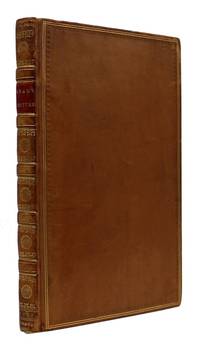
1755AQ20641London: Printed for C. Hitch and L. Hawes 1755. vi 1 118pp 2. With a final leaf of publisher's advertisements. Handsomely bound in ninetenth-century polished calf tooled in gilt and blind contrasting red morocco lettering-piece marbled edges. Lightly rubbed. Marbled endpapers internally clean and crisp. A choice copy of the second edition and first to appear with a London imprint of a set of 10 'lectures' on Christian teaching stressing the importance of personal devotion by Yorkshire-born English clergyman Thomas Adam 1701-1784. A popular reprinted throughout the eighteenth- and into the nineteenth-centuries especially in the provinces these lectures are said to have profoundly influenced the Liverpudlian evangelical divine William Romaine 1714-1795. As with the Lincoln printed first edition rare: ESTC records copies of this edition at two locations in the British Isles BL and Manchester and none elsewhere. ESTC T88403. Second edition. 12mo. Printed for C. Hitch and L. Hawes unknown
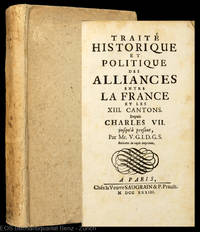
17337893CB1733. Paris Chéz la Veuve Saugrain & P. Prault 1733. 8°. 462 10 S. Pappband der Zeit. Barth 23956. Haller VI 1807. HBLS VII 286 für die Erstausgabe und für den Verfasser. Zweite Ausgabe erschien erstmals 1731. Franz Adam Vogel 1749 war Grossrichter der Schweizergarde in Paris. Seine erste Ausgabe von 1731 war in Frankreich verboten. Vorliegende Ausgabe gemäss Haller nicht in Paris sondern in Bern «gesondert» verlegt «und auch mit den Bündnissen selbst abgedruckt worden». Das Papier durchgehend stockfleckig. Der Einband berieben und bestossen. unknown
17337893CBParis, Chéz la Veuve Saugrain & P. Prault, 1733. 8°. 462, (10) S. Pappband der Zeit.
1796mon0003328626London: A. Strahan; T. Cadell 1796. Hardcover. Acceptable. . Volume 2 only. Lacking the top board. Rubbing to the spine and rear board minor loss at the spine ends. Pages with light scattered foxing. London: A. Strahan; T. Cadell hardcover
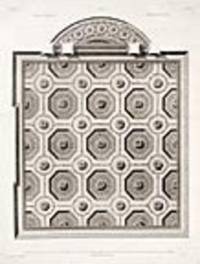
177717132London 1777. Copper engraving. Engraved by Roe. In excellent condition. An elegant engraving of the elaborate ceiling in the dining room of Sir Watkin Williams Wynn's celebrated house in St. James's Square London.<br/> <br/>Robert and his brother James Adam forever changed the face of British architecture by introducing innovative Classical design ideas. From 1754-57 Robert lived in Italy where he had a long productive friendship with Piranesi which was inspirational for both men. Adam's first book on Diocletian's palace in Dalmatia is clearly very like the archaeological investigations Piranesi was making at the same time of similar ruins. Piranesi's friendship and passion for Roman Classicism were seminal influences on Adam and the greatest single factor other than his own talent in the work Adam produced on his return to England. Upon his return the brothers launched their career by building the Adelphi from the Thames to the Strand in London which although not a commercial success at the time included one of London's most cherished buildings the Adlephi Theatre. Together the Adam brothers designed and built some of the most famous buildings in England including such bastions of English architecture as Kenwood House Keddlestone Manor and Syon House. To the interiors of their English country houses the Adams brought wonderful ornamental elements in niches lunettes festoons and reliefs. Their classically designed buildings were so numerous in London that they changed the prevailing feel of the city and established their brand of neo-Classicism as the model of elegance and importance. It is asserted that the brothers originated the concept of the uniform facade attached to the typical English row house an architectural device that distinguishes London buildings. This monumental contribution is evidenced in the Adams' designs for Portland Place and Fitzroy Square and these were used as architectural models for the whole city. The brothers brought their talents into other areas by designing furniture to complement their beautiful interiors and by creating and publishing a treatise of design entitled 'Works in Architecture'. The work was published in three volumes over an extended span of time beginning in 1773 with the final volume being published posthumously in 1822.<br/> <br/>Cf. Brunet I.47; cf. Lowndes I p.8; DNB; Wilton-Ely The Mind and Art of Giovanni Battista Piranesi. unknown books
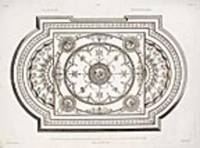
177717133London 1777. Copper engraving. Engraved by T. Morris. In excellent condition with the exception of a small area of foxing in the sheet. An elegant engraving of the elaborate ceiling in the music room of Sir Watkin Williams Wynn's celebrated house in St. James' Square London.<br/> <br/> Robert and his brother James Adam forever changed the face of British architecture by introducing innovative Classical design ideas. From 1754-57 Robert lived in Italy where he had a long productive friendship with Piranesi which was inspirational for both men. Adam's first book on Diocletian's palace in Dalmatia is clearly very like the archaeological investigations Piranesi was making at the same time of similar ruins. Piranesi's friendship and passion for Roman Classicism were seminal influences on Adam and the greatest single factor other than his own talent in the work Adam produced on his return to England. Upon his return the brothers launched their career by building the Adelphi from the Thames to the Strand in London which although not a commercial success at the time included one of London's most cherished buildings the Adlephi Theatre. Together the Adam brothers designed and built some of the most famous buildings in England including such bastions of English architecture as Kenwood House Keddlestone Manor and Syon House. To the interiors of their English country houses the Adams brought wonderful ornamental elements in niches lunettes festoons and reliefs. Their classically designed buildings were so numerous in London that they changed the prevailing feel of the city and established their brand of neo-Classicism as the model of elegance and importance. It is asserted that the brothers originated the concept of the uniform facade attached to the typical English row house an architectural device that distinguishes London buildings. This monumental contribution is evidenced in the Adams' designs for Portland Place and Fitzroy Square and these were used as architectural models for the whole city. The brothers brought their talents into other areas by designing furniture to complement their beautiful interiors and by creating and publishing a treatise of design entitled 'Works in Architecture'. The work was published in three volumes over an extended span of time beginning in 1773 with the final volume being published posthumously in 1822.<br/> <br/> Cf. Brunet I.47; cf. Lowndes I p.8; DNB; Wilton-Ely The Mind and Art of Giovanni Battista Piranesi. unknown
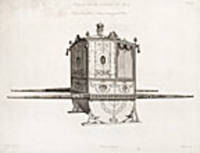
177517100London 1775. Engraving by P. Begbie. In excellent condition with the exception of some paper discolouration on the upper margin. A fine engraving of the sedan chair designed for Queen Charlotte.<br/> <br/> Robert and his brother James Adam forever changed the face of British architecture by introducing innovative Classical design ideas. From 1754-57 Robert lived in Italy where he had a long productive friendship with Piranesi which was inspirational for both men. Adam's first book on Diocletian's palace in Dalmatia is clearly very like the archaeological investigations Piranesi was making at the same time of similar ruins. Piranesi's friendship and passion for Roman Classicism were seminal influences on Adam and the greatest single factor other than his own talent in the work Adam produced on his return to England. Upon his return the brothers launched their career by building the Adelphi from the Thames to the Strand in London which although not a commercial success at the time included one of London's most cherished buildings the Adlephi Theatre. Together the Adam brothers designed and built some of the most famous buildings in England including such bastions of English architecture as Kenwood House Keddlestone Manor and Syon House. To the interiors of their English country houses the Adams brought wonderful ornamental elements in niches lunettes festoons and reliefs. Their classically designed buildings were so numerous in London that they changed the prevailing feel of the city and established their brand of neo-Classicism as the model of elegance and importance. It is asserted that the brothers originated the concept of the uniform facade attached to the typical English row house an architectural device that distinguishes London buildings. This monumental contribution is evidenced in the Adams' designs for Portland Place and Fitzroy Square and these were used as architectural models for the whole city. The brothers brought their talents into other areas by designing furniture to complement their beautiful interiors and by creating and publishing a treatise of design entitled 'Works in Architecture'. The work was published in three volumes over an extended span of time beginning in 1773 with the final volume being published posthumously in 1822.<br/> <br/> Cf. Brunet I.47; cf. Lowndes I p.8; DNB; Wilton-Ely The Mind and Art of Giovanni Battista Piranesi. unknown
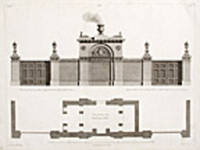
177817144London 1778. Copper engraving. Engraved by Robert Blyth. In excellent condition. An elegant engraving of the gateway and porters lodge at Ashburnham House on Dover Street in London.<br/> <br/> Robert and his brother James Adam forever changed the face of British architecture by introducing innovative Classical design ideas. From 1754-57 Robert lived in Italy where he had a long productive friendship with Piranesi which was inspirational for both men. Adam's first book on Diocletian's palace in Dalmatia is clearly very like the archaeological investigations Piranesi was making at the same time of similar ruins. Piranesi's friendship and passion for Roman Classicism were seminal influences on Adam and the greatest single factor other than his own talent in the work Adam produced on his return to England. Upon his return the brothers launched their career by building the Adelphi from the Thames to the Strand in London which although not a commercial success at the time included one of London's most cherished buildings the Adlephi Theatre. Together the Adam brothers designed and built some of the most famous buildings in England including such bastions of English architecture as Kenwood House Keddlestone Manor and Syon House. To the interiors of their English country houses the Adams brought wonderful ornamental elements in niches lunettes festoons and reliefs. Their classically designed buildings were so numerous in London that they changed the prevailing feel of the city and established their brand of neo-Classicism as the model of elegance and importance. It is asserted that the brothers originated the concept of the uniform facade attached to the typical English row house an architectural device that distinguishes London buildings. This monumental contribution is evidenced in the Adams' designs for Portland Place and Fitzroy Square and these were used as architectural models for the whole city. The brothers brought their talents into other areas by designing furniture to complement their beautiful interiors and by creating and publishing a treatise of design entitled 'Works in Architecture'. The work was published in three volumes over an extended span of time beginning in 1773 with the final volume being published posthumously in 1822.<br/> <br/> Cf. Brunet I.47; cf. Lowndes I p.8; DNB; Wilton-Ely The Mind and Art of Giovanni Battista Piranesi. unknown
177517122London 1775. Engraving by Joshua Record. In excellent condition. An elegant engraving showing the chimney in the anteroom of Lord Derby's house in Grosvenor Square London.<br/> <br/> Robert and his brother James Adam forever changed the face of British architecture by introducing innovative Classical design ideas. From 1754-57 Robert lived in Italy where he had a long productive friendship with Piranesi which was inspirational for both men. Adam's first book on Diocletian's palace in Dalmatia is clearly very like the archaeological investigations Piranesi was making at the same time of similar ruins. Piranesi's friendship and passion for Roman Classicism were seminal influences on Adam and the greatest single factor other than his own talent in the work Adam produced on his return to England. Upon his return the brothers launched their career by building the Adelphi from the Thames to the Strand in London which although not a commercial success at the time included one of London's most cherished buildings the Adelphi Theatre. Together the Adam brothers designed and built some of the most famous buildings in England including such bastions of English architecture as Kenwood House Keddlestone Manor and Syon House. To the interiors of their English country houses the Adams brought wonderful ornamental elements in niches lunettes festoons and reliefs. Their classically designed buildings were so numerous in London that they changed the prevailing feel of the city and established their brand of neo-Classicism as the model of elegance and importance. It is asserted that the brothers originated the concept of the uniform facade attached to the typical English row house an architectural device that distinguishes London buildings. This monumental contribution is evidenced in the Adams' designs for Portland Place and Fitzroy Square and these were used as architectural models for the whole city. The brothers brought their talents into other areas by designing furniture to complement their beautiful interiors and by creating and publishing a treatise of design entitled 'Works in Architecture'. The work was published in three volumes over an extended span of time beginning in 1773 with the final volume being published posthumously in 1822.<br/> <br/> Cf. Brunet I.47; cf. Lowndes I p.8; DNB; Wilton-Ely The Mind and Art of Giovanni Battista Piranesi. unknown
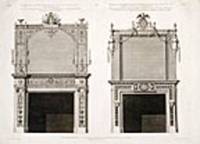
177717125London 1777. Engraving by J. Zucchi. In excellent condition. An elegant engraving depicting two chimneys in Lord Derby's celebrated house in Grosvenor Square London.<br/> <br/> Robert and his brother James Adam forever changed the face of British architecture by introducing innovative Classical design ideas. From 1754-57 Robert lived in Italy where he had a long productive friendship with Piranesi which was inspirational for both men. Adam's first book on Diocletian's palace in Dalmatia is clearly very like the archaeological investigations Piranesi was making at the same time of similar ruins. Piranesi's friendship and passion for Roman Classicism were seminal influences on Adam and the greatest single factor other than his own talent in the work Adam produced on his return to England. Upon his return the brothers launched their career by building the Adelphi from the Thames to the Strand in London which although not a commercial success at the time included one of London's most cherished buildings the Adlephi Theatre. Together the Adam brothers designed and built some of the most famous buildings in England including such bastions of English architecture as Kenwood House Keddlestone Manor and Syon House. To the interiors of their English country houses the Adams brought wonderful ornamental elements in niches lunettes festoons and reliefs. Their classically designed buildings were so numerous in London that they changed the prevailing feel of the city and established their brand of neo-Classicism as the model of elegance and importance. It is asserted that the brothers originated the concept of the uniform facade attached to the typical English row house an architectural device that distinguishes London buildings. This monumental contribution is evidenced in the Adams' designs for Portland Place and Fitzroy Square and these were used as architectural models for the whole city. The brothers brought their talents into other areas by designing furniture to complement their beautiful interiors and by creating and publishing a treatise of design entitled 'Works in Architecture'. The work was published in three volumes over an extended span of time beginning in 1773 with the final volume being published posthumously in 1822.<br/> <br/> Cf. Brunet I.47; cf. Lowndes I p.8; DNB; Wilton-Ely The Mind and Art of Giovanni Battista Piranesi. unknown
177517121London 1775. Engraving by P. Begbie. In excellent condition with the exception of being trimmed just outside the platemark on the left margin. An elegant engraving depicting various furnishings designed by Robert and James Adam including decorative clocks an ornamental knocker and two elaborate hanging lights.<br/> <br/> Robert and his brother James Adam forever changed the face of British architecture by introducing innovative Classical design ideas. From 1754-57 Robert lived in Italy where he had a long productive friendship with Piranesi which was inspirational for both men. Adam's first book on Diocletian's palace in Dalmatia is clearly very like the archaeological investigations Piranesi was making at the same time of similar ruins. Piranesi's friendship and passion for Roman Classicism were seminal influences on Adam and the greatest single factor other than his own talent in the work Adam produced on his return to England. Upon his return the brothers launched their career by building the Adelphi from the Thames to the Strand in London which although not a commercial success at the time included one of London's most cherished buildings the Adlephi Theatre. Together the Adam brothers designed and built some of the most famous buildings in England including such bastions of English architecture as Kenwood House Keddlestone Manor and Syon House. To the interiors of their English country houses the Adams brought wonderful ornamental elements in niches lunettes festoons and reliefs. Their classically designed buildings were so numerous in London that they changed the prevailing feel of the city and established their brand of neo-Classicism as the model of elegance and importance. It is asserted that the brothers originated the concept of the uniform facade attached to the typical English row house an architectural device that distinguishes London buildings. This monumental contribution is evidenced in the Adams' designs for Portland Place and Fitzroy Square and these were used as architectural models for the whole city. The brothers brought their talents into other areas by designing furniture to complement their beautiful interiors and by creating and publishing a treatise of design entitled 'Works in Architecture'. The work was published in three volumes over an extended span of time beginning in 1773 with the final volume being published posthumously in 1822.<br/> <br/> Cf. Brunet I.47; cf. Lowndes I p.8; DNB; Wilton-Ely The Mind and Art of Giovanni Battista Piranesi. unknown
171241752Amsterdam: Gysbert de Groot 1712. Later printing. Paper-covered boards. A good copy with chipped spine and front board text block almost detached but holding writing on front pastedown dampstain to margin or top edge of a few leaves. 22 580 36 pp. 16mo. This traditional book of homilies prayers and hymns for seamen was first published in 1625 and reprinted a number of times until 1743. Contains sections on whaling. OCLC locates three copies of this edition. Gysbert de Groot hardcover books
1770357207Bern.: Neue Buchhandlung. 1770. 1st Edition. 8vo. Publisher’s plain gray boards. Spine darkened otherwise very good. 19x12x1.5 cm. German text. An uncommon treatise on potatoes with information on history culture uses storage and cooking. weight: 0.4 lb. Neue Buchhandlung. hardcover
1776269431Berlin, Pauli, 1776-84. 4to. Pappbände d. Zeit mit 4 (von 7) Rückenschildern (fleckig, berieben u. bestoßen, Vorsatzpapier meist von den Deckeln gelöst, Band 8 mit Wasserschaden, Vorderdeckelbezug fehlt). [2 Warenabbildungen]
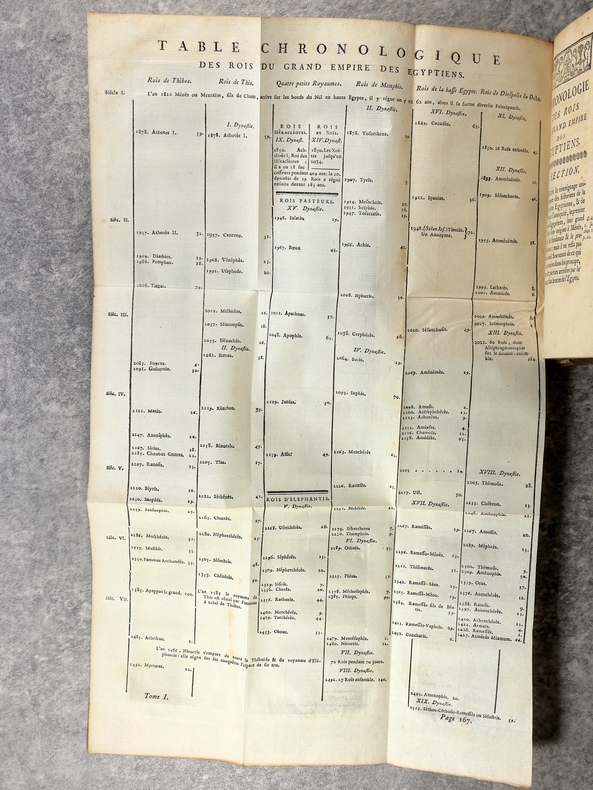
17653452A PARIS. CHEZ VINCENT, IMPRIMEUR-LIBRAIRE. 1765. 2 VOLUMES IN-12 (10,5 X 17,5 X 6 CENTIMETRES ENVIRON) DE (2) + XCIV + 402 + (2 - CATALOGUE) ET XVI + 390 + (2) PAGES, RELIURE D'EPOQUE PLEIN VEAU MARBRE, DOS LISSE ORNE DE CAISSONS A FLEURONS DORES, TITRE DORE SUR ETIQUETTE MAROQUIN HAVANE, FILET DORE SUR COUPES, TRANCHES MARBREES BLEUES. AVEC 3 TABLEAUX REPLIES. EDITION ORIGINALE (QUERARD. VI. 499). PETITES TRACES D'USURE EXTERIEURE, SANS GRAVITE, SINON BON EXEMPLAIRE .
17970082728WVienna: A. Blumauer 1797. early edition. Hardcover. Very Good. 1797 early edition. Hardcover. 2 volumes in 1. 302 208 pp. Frontis of Rembrandt plus 3 fold-outs and 1 engraved plate. Rebound in later 1/2 leather with gilt titles. Very Good. Leather scuffed at corners and joints. Light foxing throughout; occasional faint pencil marginalia; previous owner's bookplate. An early revised edition of the works of Rembrandt. Digital images available upon request. A. Blumauer hardcover
178770526Lyon: chez Bruyset freres 1787. 2 volumes in 1 12mo pp. 2 lxiv 156; iv 290; Latin and French on facing pages; woodcut vignettes on title pages woodcut ornaments; contemporary tree calf smooth gilt-paneled spine laid out in 6 compartments red morocco label in 1; a very good sound and clean copy. Not in Mills College Check List or Riedel-Horatiana. In the U.S. OCLC locates copies at Union Northwestern and Chapel Hill only. chez Bruyset freres unknown
178956256Hamburg 1789. With four folding charts in vol. I. Pp.2 xxx 14 contents 578; xii 2 contents 556. 2 vols. 8vo. Contemporary quarter calf and boards. Rubbed. About very good. With four folding charts in vol. I. Pp.2 xxx 14 contents 578; xii 2 contents 556. 2 vols. 8vo. First and only edition of this important documentary source publishing letters and papers of Frederick IV of Denmark Queen Anna Sophia of Dänemark correspondence with the King of Prussia as well as texts concerning Copenhagen the judiciary police and city council changes in the Danish language etc.<br /> <br /> A further continuation volume appeared in 1790. unknown
178956256Hamburg 1789. With four folding charts in vol. I. Pp.2 xxx 14 contents 578; xii 2 contents 556. 2 vols. 8vo. Contemporary quarter calf and boards. Rubbed. About very good. With four folding charts in vol. I. Pp.2 xxx 14 contents 578; xii 2 contents 556. 2 vols. 8vo. First and only edition of this important documentary source publishing letters and papers of Frederick IV of Denmark Queen Anna Sophia of Dänemark correspondence with the King of Prussia as well as texts concerning Copenhagen the judiciary police and city council changes in the Danish language etc.<br/><br/>A further continuation volume appeared in 1790. unknown books
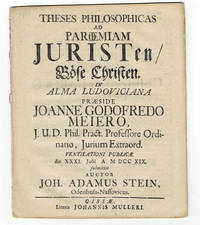
171998283Gissae Giessen: Literis Johannis Mulleri 1719. 1719. Very good. - Small quarto 7-1/8 inches high by 5-7/8 inches wide. Softcover bound in printed self-wrappers. There is an line penned in ink to the right of the title and the rear cover leaf is nearly detached though present. 20 pages illustrated with a headpiece featuring lady justice holding a scale in one hand and a sword in the other set within an oval in a floral decorated panel with a cherub at each side. There are a couple of minor creases to the corners and a tiny chip to the front edge of one leaf. Very good. <p>RARE. First only edition.<p>The work is a University of Giessen thesis. It is in the form of 11 theses followed by a response.<p>Johann Gottfried von Meiern 1664-1721 was a German lawyer and historian. In 1718 he became Professor extraordinarius of law at the University of Giessen. His professorship at Giessen was short-lived due to conflict with his colleagues over his belief in the theory of natural law. He returned to his hometown of Bayreuth in 1720. Von Meiern aka Meyern is probably best known for his contribution to the "Acta Pacis Westphalicae" from 1734. Gissae [Giessen]: Literis Johannis Mulleri, (1719). paperback
17689542A Bienne, dans la librairie Heilmann, 1768. In-8 de [10]-328-[1] pages, cartonnage gris (frotté), étiquettes au dos (titre et vierge). Rares rousseurs, inscritption à la plume en page de titre.
177955885ABMaestricht, Jean-Edmé Dfour & Phil. Roux. 1779. 4°. XXIV p., 340 p. Cartonnage d'époque, pièce de titre manuscrit.
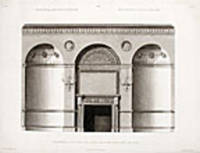
177517114London 1775. Engraving by T. Vivares. In excellent condition. An elegant elevation of the north and southe sides of Sutton Park in North Yorkshire the seat of the Earl of Bute.<br/> <br/>Robert and his brother James Adam forever changed the face of British architecture by introducing innovative Classical design ideas. From 1754-57 Robert lived in Italy where he had a long productive friendship with Piranesi which was inspirational for both men. Adam's first book on Diocletian's palace in Dalmatia is clearly very like the archaeological investigations Piranesi was making at the same time of similar ruins. Piranesi's friendship and passion for Roman Classicism were seminal influences on Adam and the greatest single factor other than his own talent in the work Adam produced on his return to England. Upon his return the brothers launched their career by building the Adelphi from the Thames to the Strand in London which although not a commercial success at the time included one of London's most cherished buildings the Adlephi Theatre. Together the Adam brothers designed and built some of the most famous buildings in England including such bastions of English architecture as Kenwood House Keddlestone Manor and Syon House. To the interiors of their English country houses the Adams brought wonderful ornamental elements in niches lunettes festoons and reliefs. Their classically designed buildings were so numerous in London that they changed the prevailing feel of the city and established their brand of neo-Classicism as the model of elegance and importance. It is asserted that the brothers originated the concept of the uniform facade attached to the typical English row house an architectural device that distinguishes London buildings. This monumental contribution is evidenced in the Adams' designs for Portland Place and Fitzroy Square and these were used as architectural models for the whole city. The brothers brought their talents into other areas by designing furniture to complement their beautiful interiors and by creating and publishing a treatise of design entitled 'Works in Architecture'. The work was published in three volumes over an extended span of time beginning in 1773 with the final volume being published posthumously in 1822.<br/> <br/>Cf. Brunet I.47; cf. Lowndes I p.8; DNB; Wilton-Ely The Mind and Art of Giovanni Battista Piranesi. unknown books
1799241669Bell & Bradfute 1799. Hardcover. Very Good. Five volumes small 8vo original or contemporary full calf red leather spines with gilt titles and devices six folding maps Very Good: rubbing at the corners spine ends and gutters; bindings tight and firm text blocks mildly toned with minimal offsetting. Bell & Bradfute hardcover