387 résultats
177731054London 1777. Copper engraving. Engraved by B. Pastorini. In excellent condition. An elegant engraving depicting the beautiful ceiling design in the countess of Derby's dressing room in her celebrated house in Grosvenor Square London.<br/> <br/> Robert and his brother James Adam forever changed the face of British architecture by introducing innovative Classical design ideas. From 1754-57 Robert lived in Italy where he had a long productive friendship with Piranesi which was inspirational for both men. Adam's first book on Diocletian's palace in Dalmatia is clearly very like the archaeological investigations Piranesi was making at the same time of similar ruins. Piranesi's friendship and passion for Roman Classicism were seminal influences on Adam and the greatest single factor other than his own talent in the work Adam produced on his return to England. Upon his return the brothers launched their career by building the Adelphi from the Thames to the Strand in London which although not a commercial success at the time included one of London's most cherished buildings the Adlephi Theatre. Together the Adam brothers designed and built some of the most famous buildings in England including such bastions of English architecture as Kenwood House Keddlestone Manor and Syon House. To the interiors of their English country houses the Adams brought wonderful ornamental elements in niches lunettes festoons and reliefs. Their classically designed buildings were so numerous in London that they changed the prevailing feel of the city and established their brand of neo-Classicism as the model of elegance and importance. It is asserted that the brothers originated the concept of the uniform facade attached to the typical English row house an architectural device that distinguishes London buildings. This monumental contribution is evidenced in the Adams' designs for Portland Place and Fitzroy Square and these were used as architectural models for the whole city. The brothers brought their talents into other areas by designing furniture to complement their beautiful interiors and by creating and publishing a treatise of design entitled 'Works in Architecture'. The work was published in three volumes over an extended span of time beginning in 1773 with the final volume being published posthumously in 1822.<br/> <br/> Cf. Brunet I.47; cf. Lowndes I p.8; DNB; Wilton-Ely The Mind and Art of Giovanni Battista Piranesi. unknown
177931060London 1779. Engraving by T. White. A fine engraving of a grand hallway at Syon House from Robert Adam's seminal work on British architecture.<br/> <br/> Robert and his brother James Adam forever changed the face of British architecture by introducing innovative Classical design ideas. From 1754-57 Robert lived in Italy where he had a long productive friendship with Piranesi which was inspirational for both men. Adam's first book on Diocletian's palace in Dalmatia is clearly very like the archaeological investigations Piranesi was making at the same time of similar ruins. Piranesi's friendship and passion for Roman Classicism were seminal influences on Adam and the greatest single factor other than his own talent in the work Adam produced on his return to England. Upon his return the brothers launched their career by building the Adelphi from the Thames to the Strand in London which although not a commercial success at the time included one of London's most cherished buildings the Adlephi Theatre. Together the Adam brothers designed and built some of the most famous buildings in England including such bastions of English architecture as Kenwood House Keddlestone Manor and Syon House. To the interiors of their English country houses the Adams brought wonderful ornamental elements in niches lunettes festoons and reliefs. Their classically designed buildings were so numerous in London that they changed the prevailing feel of the city and established their brand of neo-Classicism as the model of elegance and importance. It is asserted that the brothers originated the concept of the uniform facade attached to the typical English row house an architectural device that distinguishes London buildings. This monumental contribution is evidenced in the Adams' designs for Portland Place and Fitzroy Square and these were used as architectural models for the whole city. The brothers brought their talents into other areas by designing furniture to complement their beautiful interiors and by creating and publishing a treatise of design entitled 'Works in Architecture'. The work was published in three volumes over an extended span of time beginning in 1773 with the final volume being published posthumously in 1822.<br/> <br/> Cf. Brunet I.47; cf. Lowndes I p.8; DNB; Wilton-Ely The Mind and Art of Giovanni Battista Piranesi. unknown
1785318437London 1785. The Sixth Edition. First published in 1678 as 'Linguæ Latinæ liber dictionarius quadripartitus'. With 2 maps one of Italy coloured and the other of Rome. 1430pp. Thick 4to. Bound in modern three quarters mottled tan calf and marbleds boards. Fine minor worming in small part of margin. The Sixth Edition. First published in 1678 as 'Linguæ Latinæ liber dictionarius quadripartitus'. With 2 maps one of Italy coloured and the other of Rome. 1430pp. Thick 4to. ESTC T84402 unknown books
1785318437London 1785. The Sixth Edition. First published in 1678 as 'Linguæ Latinæ liber dictionarius quadripartitus'. With 2 maps one of Italy coloured and the other of Rome. 1430pp. Thick 4to. Bound in modern three quarters mottled tan calf and marbleds boards. Fine minor worming in small part of margin. The Sixth Edition. First published in 1678 as 'Linguæ Latinæ liber dictionarius quadripartitus'. With 2 maps one of Italy coloured and the other of Rome. 1430pp. Thick 4to. ESTC T84402 unknown
178429261784 Paris, chez Nyon l'aîné, 1784, 7 volumes in-12 reliure pleine basane marbrée de l'époque, dos lisses ornés de fleurons et caissons dorés, pièces de titre bordeaux (titre et tomaison), 6 cartes dépliants, sans défaut notable, excellent état
179210781792 Neuchatel, L. Fauche-Borel, 1792, 5 vol. in 12 de (2)-XII-(2)-384 pp. ; (4)-406 pp.; (4)-400 pp., (4)-437 pp., (4)-432 pp., rel. d'ép. demi-veau brun moucheté à coins, dos lisse orné de roulettes dorées, pièces de titre beiges, et tomaisons dans des écussons de maroquin vert, bel exemplaire.
179359006509London: Printed and Sold By Edwards 1793. Bound in 1/4 leather over boards. Scuffing to spine ends. Two of Four parts in one volume. This is the final two volumes. 99 illustrations of Religious houses and Castles interspersed. With a brief description below the plates. The work was intended as a supplement for travellers to Pennants "Tour in Scotland" and the first two parts were published in 1788. According to OCLC this later volume is scarcer than the 1788 book. First Edition. Hard Cover. Very Good/No Jacket. 21 Cm. Printed and Sold By Edwards Hardcover
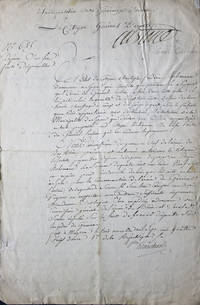
177200JT061CHARTRES RHEIMS FRANCE 1772. On offer is a pre French Revolution handwritten manuscript letter dated 1772 written by Adam Phillippe the Vicomte de Custine noted Colonel of the French Army to Monsier de Boynes requesting a position for Lieut. Constant son of a noble Major perhaps in the Colonies. Shortened at right for small loss but otherwise G. Autograph. Manuscript. Good. 8vo - over 7¾" - 9¾" tall. Paperback
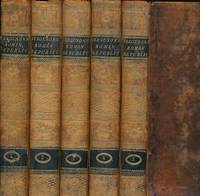
1799r4450bLondon: Bell & Bradfute; G G & J Robinson. G : in good condition without dust jacket. 1799. Revised edition. Brown hardback leather cover. 210mm x 140mm 8" x 6". xxx 422pp; vii 449pp; vi 416pp; vi 451pp; vi 420pp maps. 6 b/w fold-out maps. Heraldic bookplate on front paste-downs. Heavy item - shipping supplement may apply for overseas. . Bell & Bradfute; G G & J Robinson hardcover
176961822Lpz.: M.G. Weidmanns Erben u. Reich 1769. 1 Bl., XX, 128 Ss. (beginnend mit S. 3). Kl.8°. HKalbLd. d.Z. mit 5 aufgesetzten Bünden, rotem Rückenschild, reicher floraler Rückenvergold. u. Rotschnitt (Deckel etw. angestaubt u. tls. leicht berieben, Ecken etw. bestoßen). [2 Warenabbildungen]
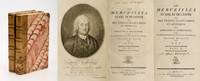
178229252AB1782. 2 Volumes ensemble complet. Berlin G.J.Decker 1782. Octavo 13 cm x 20 cm. Frontispice 98 1 304; 2 382 1 pages. Reliure originale demi-cuir de 19ème siècle. Tres bon exemplaire. This work is listed in Albert Louis Calillet - Manuel bibliographique des sciences psychiques ou occultes - No. 10472 First French edition of one of Swedenborg's main works from the library of swedish baron Carl Adam Wrangel with his name on the titlepage in ink. Carl Adam Wrangel af Adinal born 28 November 1748 in Ovesholm died 16 April 1829 in Araslöv in Färlöv parish was a Swedish baron one of the kingdom's lords and governor of Kristianstad county. He was the son of Baron Henning Reinhold Wrangel af Adinal and his wife Hedvig Sofia Winterfeld. Wrangel became a lifeguard in 1766 a captain in the army in 1772 and then resigned in April 1773. He became chamberlain to the widowed queen Lovisa Ulrika in 1774 and governor of Kristianstad county from 1786 to January 1803. After his father's death in 1783 Carl Adam Wrangel inherited Ovesholm's estate in Träne parish from his parents. In 1787 he also inherited Araslöv's estate which at this time encompassed the entire parish of Färlöv. Araslöv was previously owned by his mother's aunt Sofia Elisabeth Ridderschantz. She was called "Skånska Prinsessan" because she was the grand-granddaughter of King Christian IV of Denmark and her habits were also very royal. Carl Adam Wrangel was a prominent farmer fully comparable to Macklean on Svaneholm and Stjernswärd on Engeltofta and carried out major reforms on his Scanian properties. Through large ditching companies new land was laid under the plow. One shift was carried out and Araslöv was divided according to the Scottish pattern into farm units eleven so-called farmer. Each farm covered a few hundred acres and was provided with magnificent and stately buildings newly laid out gardens and avenue-planted access roads. During the years 1790-1820 the manors Wrangelsberg Sofieberg Sofiedal Hamiltonhill Harastorp Gustafsfält Skottlandshus Wrangelsdal Ulriksdal Adinal and Kristineberg arose to which was added the mother property Araslöv. An entire parish was transformed in this way and today Araslöv's farmers with their fields and avenue systems give a definite touch to the landscape. Carl Adam Wrangel finally inherited Sperlingsholm's estate in Övraby parish outside Halmstad in 1789 from his uncle Georg Gustaf Wrangel who this year moved abroad. He married 6 April 1779 at Barsebäck in Skåne to Countess Anna Margareta Hamilton born 1760. She was the daughter of the field marshal Baron Gustaf David Hamilton af Hageby and his wife Jakobina Henrietta Hildebrand. In the marriage two sons were born: Henning Gustaf 1780-1833. Ludvig Ulrik Carl Adam 1783-1809. None of the sons had children and the baronial family Wrangel af Adinal was thus extinct in 1833. unknown
1792304899Speyer Austria 1792. 4 pp. pen and ink on paper in French in various hands with embossed seal. Old folds and light soiling paper repairs at folds. 4 pp. pen and ink on paper in French in various hands with embossed seal. Document payorder for firewood for the French Army encamped at Speyer "pour le chauffage de l'armée au Camp et Corps de Gardes" signed by General Adam Philippe Comte de Custine and Claude Blanchard. Both Custine 1740-1793 and Blanchard 1742-1802 fought in the American Revolution. Custine who lead the French forces in the Rhine campagins that seized Speyer and Mainz was guillotined in 1793 during the Reign of Terror. unknown
17745594London 1774. Engraving by J. Roberts. Expert repairs to lower left corner. A fine architectural engraving of the interior of Kenwood House in Hampstead London re-modelled in 1761-1773 and now home to the Iveagh Bequest picture collection.<br/> <br/>Robert and his brother James Adam forever changed the face of British architecture by introducing innovative Classical design ideas. From 1754-57 Robert lived in Italy where he had a long productive friendship with Piranesi which was inspirational for both men. Adam's first book on Diocletian's palace in Dalmatia is clearly very like the archaeological investigations Piranesi was making at the same time of similar ruins. Piranesi's friendship and passion for Roman Classicism were seminal influences on Adam and the greatest single factor other than his own talent in the work Adam produced on his return to England. Upon his return the brothers launched their career by building the Adelphi from the Thames to the Strand in London which although not a commercial success at the time included one of London's most cherished buildings the Adlephi Theatre. Together the Adam brothers designed and built some of the most famous buildings in England including such bastions of English architecture as Kenwood House Keddlestone Manor and Syon House. To the interiors of their English country houses the Adams brought wonderful ornamental elements in niches lunettes festoons and reliefs. Their classically designed buildings were so numerous in London that they changed the prevailing feel of the city and established their brand of neo-Classicism as the model of elegance and importance. It is asserted that the brothers originated the concept of the uniform facade attached to the typical English row house an architectural device that distinguishes London buildings. This monumental contribution is evidenced in the Adams' designs for Portland Place and Fitzroy Square and these were used as architectural models for the whole city. The brothers brought their talents into other areas by designing furniture to complement their beautiful interiors and by creating and publishing a treatise of design entitled 'Works in Architecture'. The work was published in three volumes over an extended span of time beginning in 1773 with the final volume being published posthumously in 1822.<br/> <br/>Cf. Brunet I.47; cf. Lowndes I p.8; DNB; Wilton-Ely The Mind and Art of Giovanni Battista Piranesi. unknown books
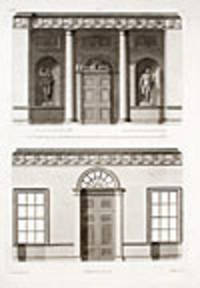
177817136London 1778. Copper engraving. Engraved by P. Mazell. In excellent condition. An elegant engraving the Porter's Lodge at Shelburne House in Berkeley Square in London.<br/> <br/>Robert and his brother James Adam forever changed the face of British architecture by introducing innovative Classical design ideas. From 1754-57 Robert lived in Italy where he had a long productive friendship with Piranesi which was inspirational for both men. Adam's first book on Diocletian's palace in Dalmatia is clearly very like the archaeological investigations Piranesi was making at the same time of similar ruins. Piranesi's friendship and passion for Roman Classicism were seminal influences on Adam and the greatest single factor other than his own talent in the work Adam produced on his return to England. Upon his return the brothers launched their career by building the Adelphi from the Thames to the Strand in London which although not a commercial success at the time included one of London's most cherished buildings the Adlephi Theatre. Together the Adam brothers designed and built some of the most famous buildings in England including such bastions of English architecture as Kenwood House Keddlestone Manor and Syon House. To the interiors of their English country houses the Adams brought wonderful ornamental elements in niches lunettes festoons and reliefs. Their classically designed buildings were so numerous in London that they changed the prevailing feel of the city and established their brand of neo-Classicism as the model of elegance and importance. It is asserted that the brothers originated the concept of the uniform facade attached to the typical English row house an architectural device that distinguishes London buildings. This monumental contribution is evidenced in the Adams' designs for Portland Place and Fitzroy Square and these were used as architectural models for the whole city. The brothers brought their talents into other areas by designing furniture to complement their beautiful interiors and by creating and publishing a treatise of design entitled 'Works in Architecture'. The work was published in three volumes over an extended span of time beginning in 1773 with the final volume being published posthumously in 1822.<br/> <br/>Cf. Brunet I.47; cf. Lowndes I p.8; DNB; Wilton-Ely The Mind and Art of Giovanni Battista Piranesi. unknown books
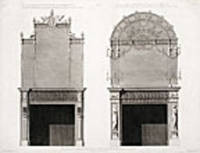
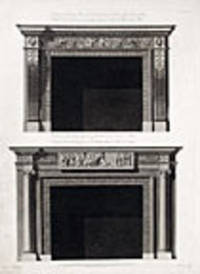
177517123London 1775. Engraving by Joshua Record. In excellent condition. An elegant engraving showing the two chimneys in Lord Derby's house in Grosvenor Square London.<br/> <br/>Robert and his brother James Adam forever changed the face of British architecture by introducing innovative Classical design ideas. From 1754-57 Robert lived in Italy where he had a long productive friendship with Piranesi which was inspirational for both men. Adam's first book on Diocletian's palace in Dalmatia is clearly very like the archaeological investigations Piranesi was making at the same time of similar ruins. Piranesi's friendship and passion for Roman Classicism were seminal influences on Adam and the greatest single factor other than his own talent in the work Adam produced on his return to England. Upon his return the brothers launched their career by building the Adelphi from the Thames to the Strand in London which although not a commercial success at the time included one of London's most cherished buildings the Adlephi Theatre. Together the Adam brothers designed and built some of the most famous buildings in England including such bastions of English architecture as Kenwood House Keddlestone Manor and Syon House. To the interiors of their English country houses the Adams brought wonderful ornamental elements in niches lunettes festoons and reliefs. Their classically designed buildings were so numerous in London that they changed the prevailing feel of the city and established their brand of neo-Classicism as the model of elegance and importance. It is asserted that the brothers originated the concept of the uniform facade attached to the typical English row house an architectural device that distinguishes London buildings. This monumental contribution is evidenced in the Adams' designs for Portland Place and Fitzroy Square and these were used as architectural models for the whole city. The brothers brought their talents into other areas by designing furniture to complement their beautiful interiors and by creating and publishing a treatise of design entitled 'Works in Architecture'. The work was published in three volumes over an extended span of time beginning in 1773 with the final volume being published posthumously in 1822.<br/> <br/>Cf. Brunet I.47; cf. Lowndes I p.8;DNB; Wilton-Ely The Mind and Art of Giovanni Battista Piranesi. unknown books
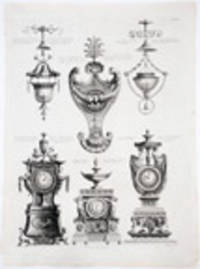
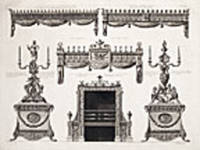
177517574London 1775. Engraving by P. Begbie. In excellent condition with the exception of being trimmed just outside the platemark on the left margin. An elegant engraving depicting various furnishings designed by Robert and James Adam including decorative clocks an ornamental knocker and two elaborate hanging lights.<br/> <br/>Robert and his brother James Adam forever changed the face of British architecture by introducing innovative Classical design ideas. From 1754-57 Robert lived in Italy where he had a long productive friendship with Piranesi which was inspirational for both men. Adam's first book on Diocletian's palace in Dalmatia is clearly very like the archaeological investigations Piranesi was making at the same time of similar ruins. Piranesi's friendship and passion for Roman Classicism were seminal influences on Adam and the greatest single factor other than his own talent in the work Adam produced on his return to England. Upon his return the brothers launched their career by building the Adelphi from the Thames to the Strand in London which although not a commercial success at the time included one of London's most cherished buildings the Adlephi Theatre. Together the Adam brothers designed and built some of the most famous buildings in England including such bastions of English architecture as Kenwood House Keddlestone Manor and Syon House. To the interiors of their English country houses the Adams brought wonderful ornamental elements in niches lunettes festoons and reliefs. Their classically designed buildings were so numerous in London that they changed the prevailing feel of the city and established their brand of neo-Classicism as the model of elegance and importance. It is asserted that the brothers originated the concept of the uniform facade attached to the typical English row house an architectural device that distinguishes London buildings. This monumental contribution is evidenced in the Adams' designs for Portland Place and Fitzroy Square and these were used as architectural models for the whole city. The brothers brought their talents into other areas by designing furniture to complement their beautiful interiors and by creating and publishing a treatise of design entitled 'Works in Architecture'. The work was published in three volumes over an extended span of time beginning in 1773 with the final volume being published posthumously in 1822.<br/> <br/>Cf. Brunet I.47; cf. Lowndes I p.8; DNB; Wilton-Ely The Mind and Art of Giovanni Battista Piranesi. unknown books
1796289419Philadelphia: Printed By Thomas Dobson 1796. Second American Edition. Hard Cover. Very Good binding. Volume 2 only of 3 volumes; the Second American Edition. Scattered foxing. Full sheep binding. Edgewear to spine with some small loss of leather at top. Front board has been discreetly reattached. A quite serviceable copy of this volume from this early edition. Very Good binding. Printed By Thomas Dobson unknown books
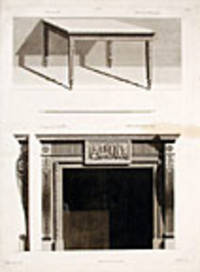
177817139London 1778. Copper engraving. Engraved by Caldwell. In excellent condition with the exception of a waterstain in middle of sheet. Left margin is trimmed just outside platemark. An elegant engraving of a fireplace and table at Shelburne House in Berkeley Square in London.<br/> <br/> Robert and his brother James Adam forever changed the face of British architecture by introducing innovative Classical design ideas. From 1754-57 Robert lived in Italy where he had a long productive friendship with Piranesi which was inspirational for both men. Adam's first book on Diocletian's palace in Dalmatia is clearly very like the archaeological investigations Piranesi was making at the same time of similar ruins. Piranesi's friendship and passion for Roman Classicism were seminal influences on Adam and the greatest single factor other than his own talent in the work Adam produced on his return to England. Upon his return the brothers launched their career by building the Adelphi from the Thames to the Strand in London which although not a commercial success at the time included one of London's most cherished buildings the Adlephi Theatre. Together the Adam brothers designed and built some of the most famous buildings in England including such bastions of English architecture as Kenwood House Keddlestone Manor and Syon House. To the interiors of their English country houses the Adams brought wonderful ornamental elements in niches lunettes festoons and reliefs. Their classically designed buildings were so numerous in London that they changed the prevailing feel of the city and established their brand of neo-Classicism as the model of elegance and importance. It is asserted that the brothers originated the concept of the uniform facade attached to the typical English row house an architectural device that distinguishes London buildings. This monumental contribution is evidenced in the Adams' designs for Portland Place and Fitzroy Square and these were used as architectural models for the whole city. The brothers brought their talents into other areas by designing furniture to complement their beautiful interiors and by creating and publishing a treatise of design entitled 'Works in Architecture'. The work was published in three volumes over an extended span of time beginning in 1773 with the final volume being published posthumously in 1822.<br/> <br/> Cf. Brunet I.47; cf. Lowndes I p.8; DNB; Wilton-Ely The Mind and Art of Giovanni Battista Piranesi. unknown
177517099London 1775. Engraving by D. Cunego. In excellent condition with the exception of being trimmed just outside the platemark on left margin. Some paper discolouration on left margin and 1" loss lower left corner. A fine engraving of the fireplaces at St. James's Palace and the Queen's House in London.<br/> <br/> Robert and his brother James Adam forever changed the face of British architecture by introducing innovative Classical design ideas. From 1754-57 Robert lived in Italy where he had a long productive friendship with Piranesi which was inspirational for both men. Adam's first book on Diocletian's palace in Dalmatia is clearly very like the archaeological investigations Piranesi was making at the same time of similar ruins. Piranesi's friendship and passion for Roman Classicism were seminal influences on Adam and the greatest single factor other than his own talent in the work Adam produced on his return to England. Upon his return the brothers launched their career by building the Adelphi from the Thames to the Strand in London which although not a commercial success at the time included one of London's most cherished buildings the Adlephi Theatre. Together the Adam brothers designed and built some of the most famous buildings in England including such bastions of English architecture as Kenwood House Keddlestone Manor and Syon House. To the interiors of their English country houses the Adams brought wonderful ornamental elements in niches lunettes festoons and reliefs. Their classically designed buildings were so numerous in London that they changed the prevailing feel of the city and established their brand of neo-Classicism as the model of elegance and importance. It is asserted that the brothers originated the concept of the uniform facade attached to the typical English row house an architectural device that distinguishes London buildings. This monumental contribution is evidenced in the Adams' designs for Portland Place and Fitzroy Square and these were used as architectural models for the whole city. The brothers brought their talents into other areas by designing furniture to complement their beautiful interiors and by creating and publishing a treatise of design entitled 'Works in Architecture'. The work was published in three volumes over an extended span of time beginning in 1773 with the final volume being published posthumously in 1822.<br/> <br/> Cf. Brunet I.47; cf. Lowndes I p.8; DNB; Wilton-Ely The Mind and Art of Giovanni Battista Piranesi. unknown
177517116London 1775. Engraving by B. Pastorini. In excellent condition. An elegant engraving showing the decorations of the chimney piece and curtain cornices at Sutton Park House in North Yorkshire.<br/> <br/> Robert and his brother James Adam forever changed the face of British architecture by introducing innovative Classical design ideas. From 1754-57 Robert lived in Italy where he had a long productive friendship with Piranesi which was inspirational for both men. Adam's first book on Diocletian's palace in Dalmatia is clearly very like the archaeological investigations Piranesi was making at the same time of similar ruins. Piranesi's friendship and passion for Roman Classicism were seminal influences on Adam and the greatest single factor other than his own talent in the work Adam produced on his return to England. Upon his return the brothers launched their career by building the Adelphi from the Thames to the Strand in London which although not a commercial success at the time included one of London's most cherished buildings the Adlephi Theatre. Together the Adam brothers designed and built some of the most famous buildings in England including such bastions of English architecture as Kenwood House Keddlestone Manor and Syon House. To the interiors of their English country houses the Adams brought wonderful ornamental elements in niches lunettes festoons and reliefs. Their classically designed buildings were so numerous in London that they changed the prevailing feel of the city and established their brand of neo-Classicism as the model of elegance and importance. It is asserted that the brothers originated the concept of the uniform facade attached to the typical English row house an architectural device that distinguishes London buildings. This monumental contribution is evidenced in the Adams' designs for Portland Place and Fitzroy Square and these were used as architectural models for the whole city. The brothers brought their talents into other areas by designing furniture to complement their beautiful interiors and by creating and publishing a treatise of design entitled 'Works in Architecture'. The work was published in three volumes over an extended span of time beginning in 1773 with the final volume being published posthumously in 1822.<br/> <br/> Cf. Brunet I.47; cf. Lowndes I p.8; DNB; Wilton-Ely The Mind and Art of Giovanni Battista Piranesi. unknown
177517118London 1775. Engraving by T. Vivares. In excellent condition with the exception of some paper discolouration in the bottom right corner of the sheet. A fine architectural engraving of a part of the vast Adelphi development in London; the largest project undertaken by the Adam brothers.<br/> <br/> Robert and his brother James Adam forever changed the face of British architecture by introducing innovative Classical design ideas. From 1754-57 Robert lived in Italy where he had a long productive friendship with Piranesi which was inspirational for both men. Adam's first book on Diocletian's palace in Dalmatia is clearly very like the archaeological investigations Piranesi was making at the same time of similar ruins. Piranesi's friendship and passion for Roman Classicism were seminal influences on Adam and the greatest single factor other than his own talent in the work Adam produced on his return to England. Upon his return the brothers launched their career by building the Adelphi from the Thames to the Strand in London which although not a commercial success at the time included one of London's most cherished buildings the Adelphi Theatre. Together the Adam brothers designed and built some of the most famous buildings in England including such bastions of English architecture as Kenwood House Keddlestone Manor and Syon House. To the interiors of their English country houses the Adams brought wonderful ornamental elements in niches lunettes festoons and reliefs. Their classically designed buildings were so numerous in London that they changed the prevailing feel of the city and established their brand of neo-Classicism as the model of elegance and importance. It is asserted that the brothers originated the concept of the uniform facade attached to the typical English row house an architectural device that distinguishes London buildings. This monumental contribution is evidenced in the Adams' designs for Portland Place and Fitzroy Square and these were used as architectural models for the whole city. The brothers brought their talents into other areas by designing furniture to complement their beautiful interiors and by creating and publishing a treatise of design entitled 'Works in Architecture'. The work was published in three volumes over an extended span of time beginning in 1773 with the final volume being published posthumously in 1822.<br/> <br/> Cf. Brunet I.47; cf. Lowndes I p.8; DNB; Wilton-Ely The Mind and Art of Giovanni Battista Piranesi. unknown
17745385London 1774. Engraving by J. Zucchi. A fine architectural engraving of the interior of Kenwood House in Hampstead London re-modelled in 1761-1773 and now home to the Iveagh Bequest picture collection.<br/> <br/> Robert and his brother James Adam forever changed the face of British architecture by introducing innovative Classical design ideas. From 1754-57 Robert lived in Italy where he had a long productive friendship with Piranesi which was inspirational for both men. Adam's first book on Diocletian's palace in Dalmatia is clearly very like the archaeological investigations Piranesi was making at the same time of similar ruins. Piranesi's friendship and passion for Roman Classicism were seminal influences on Adam and the greatest single factor other than his own talent in the work Adam produced on his return to England. Upon his return the brothers launched their career by building the Adelphi from the Thames to the Strand in London which although not a commercial success at the time included one of London's most cherished buildings the Adelphi Theatre. Together the Adam brothers designed and built some of the most famous buildings in England including such bastions of English architecture as Kenwood House Keddlestone Manor and Syon House. To the interiors of their English country houses the Adams brought wonderful ornamental elements in niches lunettes festoons and reliefs. Their classically designed buildings were so numerous in London that they changed the prevailing feel of the city and established their brand of neo-Classicism as the model of elegance and importance. It is asserted that the brothers originated the concept of the uniform facade attached to the typical English row house an architectural device that distinguishes London buildings. This monumental contribution is evidenced in the Adams' designs for Portland Place and Fitzroy Square and these were used as architectural models for the whole city. The brothers brought their talents into other areas by designing furniture to complement their beautiful interiors and by creating and publishing a treatise of design entitled 'Works in Architecture'. The work was published in three volumes over an extended span of time beginning in 1773 with the final volume being published posthumously in 1822.<br/> <br/> Cf. Brunet I.47; cf. Lowndes I p.8; DNB; Wilton-Ely The Mind and Art of Giovanni Battista Piranesi. unknown
177817136London 1778. Copper engraving. Engraved by P. Mazell. In excellent condition. An elegant engraving the Porter's Lodge at Shelburne House in Berkeley Square in London.<br/> <br/> Robert and his brother James Adam forever changed the face of British architecture by introducing innovative Classical design ideas. From 1754-57 Robert lived in Italy where he had a long productive friendship with Piranesi which was inspirational for both men. Adam's first book on Diocletian's palace in Dalmatia is clearly very like the archaeological investigations Piranesi was making at the same time of similar ruins. Piranesi's friendship and passion for Roman Classicism were seminal influences on Adam and the greatest single factor other than his own talent in the work Adam produced on his return to England. Upon his return the brothers launched their career by building the Adelphi from the Thames to the Strand in London which although not a commercial success at the time included one of London's most cherished buildings the Adlephi Theatre. Together the Adam brothers designed and built some of the most famous buildings in England including such bastions of English architecture as Kenwood House Keddlestone Manor and Syon House. To the interiors of their English country houses the Adams brought wonderful ornamental elements in niches lunettes festoons and reliefs. Their classically designed buildings were so numerous in London that they changed the prevailing feel of the city and established their brand of neo-Classicism as the model of elegance and importance. It is asserted that the brothers originated the concept of the uniform facade attached to the typical English row house an architectural device that distinguishes London buildings. This monumental contribution is evidenced in the Adams' designs for Portland Place and Fitzroy Square and these were used as architectural models for the whole city. The brothers brought their talents into other areas by designing furniture to complement their beautiful interiors and by creating and publishing a treatise of design entitled 'Works in Architecture'. The work was published in three volumes over an extended span of time beginning in 1773 with the final volume being published posthumously in 1822.<br/> <br/> Cf. Brunet I.47; cf. Lowndes I p.8; DNB; Wilton-Ely The Mind and Art of Giovanni Battista Piranesi. unknown
177517574London 1775. Engraving by P. Begbie. In excellent condition with the exception of being trimmed just outside the platemark on the left margin. An elegant engraving depicting various furnishings designed by Robert and James Adam including decorative clocks an ornamental knocker and two elaborate hanging lights.<br/> <br/> Robert and his brother James Adam forever changed the face of British architecture by introducing innovative Classical design ideas. From 1754-57 Robert lived in Italy where he had a long productive friendship with Piranesi which was inspirational for both men. Adam's first book on Diocletian's palace in Dalmatia is clearly very like the archaeological investigations Piranesi was making at the same time of similar ruins. Piranesi's friendship and passion for Roman Classicism were seminal influences on Adam and the greatest single factor other than his own talent in the work Adam produced on his return to England. Upon his return the brothers launched their career by building the Adelphi from the Thames to the Strand in London which although not a commercial success at the time included one of London's most cherished buildings the Adlephi Theatre. Together the Adam brothers designed and built some of the most famous buildings in England including such bastions of English architecture as Kenwood House Keddlestone Manor and Syon House. To the interiors of their English country houses the Adams brought wonderful ornamental elements in niches lunettes festoons and reliefs. Their classically designed buildings were so numerous in London that they changed the prevailing feel of the city and established their brand of neo-Classicism as the model of elegance and importance. It is asserted that the brothers originated the concept of the uniform facade attached to the typical English row house an architectural device that distinguishes London buildings. This monumental contribution is evidenced in the Adams' designs for Portland Place and Fitzroy Square and these were used as architectural models for the whole city. The brothers brought their talents into other areas by designing furniture to complement their beautiful interiors and by creating and publishing a treatise of design entitled 'Works in Architecture'. The work was published in three volumes over an extended span of time beginning in 1773 with the final volume being published posthumously in 1822.<br/> <br/> Cf. Brunet I.47; cf. Lowndes I p.8; DNB; Wilton-Ely The Mind and Art of Giovanni Battista Piranesi. unknown
1786720406Mentz and Frankfort: J. F. Schiller 1786. Hardcover no dust jacket. Good. Small octavo 19.5 x 12.5 cm bound in 'lapped component' paper cased boards. Boards show some wear with paper chipped and receding spine label missing; ffep torn out bookplate light worming to front glued end paper and first few leaves not affecting text. Otherwise a clean sound copy of the first German printing of this classic of Scottish philosophy. Mentz and Frankfort: J. F. Schiller hardcover