1 033 résultats
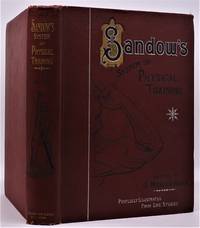
1894008930New York: J. Selwin Tait & Sons 1894. "the Marvel of Anatomists Sculptors and Artists in the Nude; embracing the great Athlete's simple method of Physical Education for the Home the Gymnasium and the Army Training School; preceded by a Biography dealing with the chief incidents in Mr. Sandow's Professional Career his Phenomenal Prowess and Gladiatorial Skill in Competitive Matches Contests and Exhibitions; with Mr. Sandow's Scheme of Dumb-bell and Bar-bell Exercises and his Views on the Physiology of Gymnastics the Function of the Muscles etc. Richly illustrated from photographs expressly taken for the work by Sarony of New York Morrison of Chicago and White of Birmingham and of Drawings by A. Casarin." Very Good Plus bound in red cloth decorated and lettered in gilt black and white front hinge cracked yet holding well light rubbing to cloth at the tips the stamp of "The Tarr System Library" front paste down which would seem to be a prior owner's obvious reference to Edgar Allen Poe's 1850 story THE SYSTEM OF DR. TARR AND PROF. FETHER. Eugen Sandow was a German bodybuilder and showman who in 1901 organized the world's first major bodybuilding competition. Considered the "Father of modern bodybuilding" he was one of the first to model his physique to predetermined dimensions so as to resemble classic Greek and Roman sculptures. . First Edition. Decorative Cloth. Very Good Plus. 8vo - over 7¾" - 9¾" tall. J. Selwin Tait & Sons Hardcover books
17994947London: Printed for the Author. 1799. First edition. First edition. Lg. 4to. xviii572pp. Index. Plus 4pp. subscriber's list bound in near front. Lacking the half-title. Illustrated with 47 copper engraved folding plates. Cont. spotted calf nicely rebacked red calf spine label. The 1799 original edition is quite scarce. With some great engravings such as the "Extinguishing Fire Machine" "Walker's Improved Steam Engine" etc. Printed for the Author. unknown books
1865100069Folio original cloth with leather spine and corners gilt title on front cover 55 colo maps.Extremities quite worn some general fading hinges repaired and rear free endpaper glued down maps with scattered narrow dampstain to bottom margin some splitting at centerfolds and a few scattered spots and toning or offsetting title with some offsetting; still a pretty sturdy atlas that has very good content overall. Colorful general atlas with double page maps of Australia various countries in Europe South America and Africa.There are two double page maps of the United States; the Eastern United States and the Western United States. Washington Dacotah Idaho and Utah are shown larger than they are today. Adam and Charles Black, books
16991295121Amsterdam: Jean-Louis De Lorme 1699. First French Edition. Hardcover. 12mo. 4 249 pages; newlyre bound in 1/4 brown leather brown cloth boards paneled spine with green label and gilt lettering; title page has two stamps for a Cabinet De Lecture or reading room; title page also has a pen scribble line underneath the word 'voyage' not impacting any text; two sheets of contemporary blue paper bound in presumably publisher's wraps; lacking engraved frontispiece; large folding map present in excellent condition; CM consignment; shelved case 3. First French edition original published in German one year earlier in 1698. A journal of the Russian embassy headed by Everard Isbrand Ides which went over land from Moscow to Peking written by the secretary of the embassy Adam Brand. The aim of the expedition was to conclude commercial agreements with the Chinese but in fact this was not incorporated. Includes a table "des chiffres de la carte" pp. 183-92 with numbers of cities and other places passed along the route indicated on the map. The map only to be found in this edition. At end there is an anonymous letter about the present state of Moscow included;. 1295121. Shelved Dupont Bookstore. Jean-Louis De Lorme hardcover books
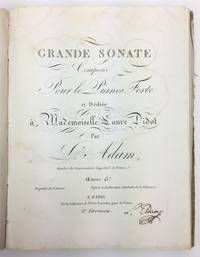
10243Used; Like New/Used; Like New. Sammelband containing rare early editions of 16 sonatas published ca. 1790â1820 by the Czech composer Jan Ladislav Dussek the French composer Louis Adam the English composer and pianist Johann Baptist Cramer and the French composer Jean-Baptiste Le Moyne including one signed on the title by Louis Adam as well as piano arrangements of two Haydn symphonies works by Kuhn Hebenheim and Chabanon and one piece of manuscript music. Hardcover spine of reused vellum with earlier text; marbled paper boards; shield-shaped label to the cover reads: ". grandes Sonates sans Accompagnement par Dussek Adam et autres auteurs à Mme. Sara Davoit." Music engraved throughout. Boards rubbed; edge and shelf wear; binding structurally sound and overall very good. 10 x 13.5 inches 27 x 34 cm.<br style=""><br style="">The contents bound in the following order:<br style="">Trois grandes sonates pour piano composées et dediées à Gabrielle Pleyel par J. L. Dussek. Oeuvre 35. A Paris chez Jmbault rue Honoré label affixed over the original imprint of Pleyel ca. 1797. Stamped by Pleyel on the title. PN 64. 55 pp. Very rare.<br style="">Grande Sonate pour le piano forte composée et dédiée par D. Steibelt à Madame Bonaparte A Paris chez M.elles Erard A Lyon chez Garnier ca. 1800. PN 29. 35 pp. Rare.<br style="">Sonate pour le Forté Piano dédiée à Monsieur le Marquis de Grimaldi composée par L. Adam. A Paris chez Sieber label affixed over the original imprint of Pleyel 1801. Stamped by Pleyel on the title. PN 374 C. 23 pp.<br style="">Grande Sonate composée pour le Piano-Forte et dédiée à Mademoiselle Laure Didot par L. Adam. A Paris self-published de la Collection de Pièces Nouvelles pour le Piano 8e. Livraison. ca. 1820. Signed by Adam on the title. PN 8. A. 27 pp.<br style="">Trois Grandes Sonates pour le Forte Piano dédiées à son ami Désormery par G. Le Moyne. Oeuvre 10. A Paris chez Sieber label affixed over the original imprint not legible n.d. Stamped by Lemoyne on the title. PN 10. 24 pp. Very rare; we have located no copies on WorldCat.<br style="">Quatres Sonates pour Clavecin our Forte-Piano composés par J. B. Cramer. A Paris: Chez Jmbault rue Honoré label affixed over the original imprint of Sieber 1795. PN 1077. 41; pp.<br style="">Five items of music without title pages or imprints:No. 30. Prix 3H 12S. Sonate par A. Kuhn. 2â13 pp.3e. Année. No. 28. 3H 12S. Simphonie par J. Hemmerlein. 2â10 pp.3e. Année. No. 32. 2H 8S. Sonate de Mr. Chabanon. 5 pp.IIe. Simphonie d'Haydn. 5 pp.Seconde Année. No. 22. Simphonie d'Haydn. 2â13 pp.<br style="">La Rosiere de Salency Ouverture arrangée pour Clavecin ou Piano-Forte. A Paris: Chez H. Naderman label affixed over the original imprint of Imbach n.d. PN 22. 4 pp. Followed by part for "violon d'accompagnement ad libitum" 3 pp. Very rare.<br style="">Manuscript music titled "Bataille de Prague" for keyboard. 5 pp.<br style="">Louis Adam spent over four decades from 1797 through 1842 as Professor of Pianoforte at the Conservatoire de Paris. In addition to being a skilled pianist he composed a number of popular pieces for piano and also wrote two standard methods: Méthode ou principe générale du doigté pour le Forté-piano 1798 and Méthode nouvelle pour le Piano 1802. His son Adolphe Adam is known as the composer of the ballet Giselle.<br>"Dussek is an unjustly neglected composer. Admittedly some of his more insignificant works. are trivial and deservedly forgotten but there is a body of piano sonatas piano concertos and chamber works that are of sufficient musical worth to be performed and enjoyed today. His music seems to have been received with enthusiasm in his own time; reviews of the original editions in the Allgemeine musikalische Zeitung praise Dussek's originality and expressiveness and the appropriateness to the piano of his melody harmony and scoring . Most of his works were reprinted at least once and some as many as ten times some important works appeared in as many as three different editions by Breitkopf & Härtel alone who issued a 12-volume collected edition of his works just after his death." Howard Allen Craw et al in Grove Online hardcover books
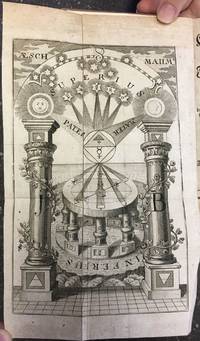
17821334227Berlin: Friedrich Maurer 1782. Second Edition. Hardcover. Octavo 16 429 1; VG; bound in brown library cloth gilt titling to spine; ex-library label removed from spine pencil erased from recto of title page; 2 vignettes folding frontispiece plate symbolic content some tape repair to rear wear and separation at folds; very mild foxing; faint orange underlining to three words on title page scattered pencil to title page;<br /> <br><br /> <br><br /> Scarce; AG consignment; shelved case 3. Rare and early freemasonry work by the German Adam Michael Birkholz. The First Masonic Grand Lodge was founded in England in 1717 spreading to the continent in the decades following. This history was first published in 1779 and republished in 1782.;<br /> <br><br /> <br><br /> "Birkholz was a Rosicrucian writer.Der Compass der Weisen.is a well known work though not trustworthy as to history. He wrote under the name of Adamah Booy" Adolph Frederick Alexander Woodford;<br /> <br><br /> <br><br /> "Birkholz maintained that he was one of the "members of the inner Constitution of the genuine and right Freemasonry" and with this book he intended "to present clearly and faithfully the history of this illustrious Order from the beginning of its founding." Florian Ebeling;<br /> <br><br /> <br><br /> "The history of the Order was described in detail in the book The Compass of Wisemen which was extremely popular in the masonic milieu" Konstantin Burmistrov Maria Endel;. 1334227. Shelved Dupont Bookstore. Friedrich Maurer hardcover books
38715ANDERSON Adam. AN HISTORICAL AND CHRONOLOGICAL DEDUCTION OF THE ORIGIN OF COMMERCE. Two Volumes. London: A. Millar J. and R. Tonson and others 1764. Folio. Contemporary quarter calf marble papered boards. x xxxiv iii 500 pages; ii 434; Chronological Index 126; Postscript 4; Appendix 111; Index 5 pages. Fir edition. According to the title page it contains the "Origin of commerce from the earliest accounts of time to the present time. Containing an history of the great commercial interests of the British Empire. To which is prefixed an introduction exhibiting a view of the ancient and modern state of Europe; of the importance of our colonies; and of commerce shipping manufactures fisheries &c. of Great Britain and Ireland: and their influence on the lande interest. With an appendix containing the modern politico-commercial geography of the several countries of Europe." There are regular references the colonies. Those for Virginia begin with Sir Walter Raleigh's attempt to establish a colony in the New World in 1584 up to references in 1740 to tobac shipments to England from both Virginia and Maryland. Copies of the book wer in Virginia libraries including those of John Mercer of Marlborough Lord Botetourt the royal governor of the colony Thomas Jefferson and Ralph Wormeley in Rosegill Plantation in Middlesex County. Jefferson and Wormeley owned the later 1790 octavo edition of this popular work. While many copies but not all of this edition of Anderson's work have up to three folding map in the first volume there is no evidence our copy was ever bound in the eighteenth century with maps. Being that it is an untrimmed copy it probabl was never intended to have plates. Bookplates of Colonial Williamsburg Foundation library on the inside of the front boards of both volumes. Hinges cracked. Lacks the three folding maps however copies of the three maps are loosely laid-in. Text collates complete with untrimmed leaves. Boards worn along edges. unknown books
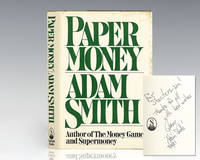
1981112445New York: Summit Books 1981. First edition of this modern classic. Octavo original half cloth. Presentation copy inscribed and dated by the author on the half-title page in the year of publication "Fr Shecters-san! Thanks for all with best wishes Jerry 'Adam Smith' 2/2/81." Very good in a very good dust jacket. Jacket design by Robert Anthony. George Jerome Goodman was an American author and economics broadcast commentator best known by his pseudonym Adam Smith which was assigned by Clay Felker at New York magazine in order to keep his published articles about Wall Street anonymous. "Like the painter Mondrian Adam Smith makes it look simple." Summit Books hardcover books
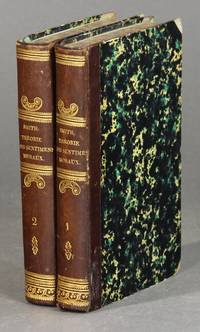
179854493Paris: F. Buisson 1798. 2 volumes 8vo pp. viii 466; 4 51 1; sporadic foxing; pencil notes in the top margins of C6v and C7r in volume I and K5r in volume II; paper flaw in C4 of the second volume affecting 4 or 5 letters; F1 in volume II with blank corner torn no loss and the second A gathering in volume II substantially toned; all else quite nice in contemporary brown calf-backed marbled boards with vellum tips; smooth gilt-decorated spine laid out in three compartments gilt-lettered direct in 1; very pretty marbled edges green silk bookmarkers; near fine. There's a wonderful abstract of an article on line compliments of Laurie Breban and Jean Dellemotte at the Sorbonne which "aims at providing a critical analysis of Sophie de Grouchy's translation and commentary of Adam Smith's Theory of Moral Sentiments . This paper focuses on Sophie de Grouchy's translation of the Theory of Moral Sentiments 1759 published in 1798." At that time her translation was not the first attempt to spread Adam Smith's moral philosophy in France. However the two previous translations did not succeed there. The first one from Marc-Antoine Eidous and entitled Metaphysique des moeurs 1764 was unanimously criticized because of its bad quality. Smith himself looked at it as responsible for the bad reception of his work across the Channel. As for the second translation 1774-75 from Jean-Louis Blavet it seems to have been poorly disseminated. This contrasts with the reputation of Grouchy's translation which was praised from the very moment of its publication for its accurateness with respect to the original text. The success was such that it has been viewed for two centuries as the definite French translation of the Theory of Moral Sentiments. And Grouchy is even sometimes considered as "Smith's best-known contemporary translator." <br/><br/> F. Buisson hardcover books
177431062London 1774. Engraving by B. Pastorini. A fine engraving of a painted plaster and stucco ceiling from the interior at Kenwood House in Hampstead London re-modelled in 1761-1773 and now home to the Iveagh Bequest picture collection.<br/> <br/>Robert and his brother James Adam forever changed the face of British architecture by introducing innovative Classical design ideas. From 1754-57 Robert lived in Italy where he had a long productive friendship with Piranesi which was inspirational for both men. Adam's first book on Diocletian's palace in Dalmatia is clearly very like the archaeological investigations Piranesi was making at the same time of similar ruins. Piranesi's friendship and passion for Roman Classicism were seminal influences on Adam and the greatest single factor other than his own talent in the work Adam produced on his return to England. Upon his return the brothers launched their career by building the Adelphi from the Thames to the Strand in London which although not a commercial success at the time included one of London's most cherished buildings the Adlephi Theatre. Together the Adam brothers designed and built some of the most famous buildings in England including such bastions of English architecture as Kenwood House Keddlestone Manor and Syon House. To the interiors of their English country houses the Adams brought wonderful ornamental elements in niches lunettes festoons and reliefs. Their classically designed buildings were so numerous in London that they changed the prevailing feel of the city and established their brand of neo-Classicism as the model of elegance and importance. It is asserted that the brothers originated the concept of the uniform facade attached to the typical English row house an architectural device that distinguishes London buildings. This monumental contribution is evidenced in the Adams' designs for Portland Place and Fitzroy Square and these were used as architectural models for the whole city. The brothers brought their talents into other areas by designing furniture to complement their beautiful interiors and by creating and publishing a treatise of design entitled 'Works in Architecture'. The work was published in three volumes over an extended span of time beginning in 1773 with the final volume being published posthumously in 1822.<br/> <br/>Cf. Brunet I.47; cf. Lowndes I p.8; DNB; Wilton-Ely The Mind and Art of Giovanni Battista Piranesi. unknown books
177434076London 1774. Engraving coloured by hand by B. Pastorini old dampstain to upper left margin. A fine engraving with contemporary hand colouring of a painted plaster and stucco ceiling from the interior at Kenwood House in Hampstead London re-modelled in 1761-1773 and now home to the Iveagh Bequest picture collection.<br/> <br/>Robert and his brother James Adam forever changed the face of British architecture by introducing innovative Classical design ideas. From 1754-57 Robert lived in Italy where he had a long productive friendship with Piranesi which was inspirational for both men. Adam's first book on Diocletian's palace in Dalmatia is clearly very like the archaeological investigations Piranesi was making at the same time of similar ruins. Piranesi's friendship and passion for Roman Classicism were seminal influences on Adam and the greatest single factor other than his own talent in the work Adam produced on his return to England. Upon his return the brothers launched their career by building the Adelphi from the Thames to the Strand in London which although not a commercial success at the time included one of London's most cherished buildings the Adlephi Theatre. Together the Adam brothers designed and built some of the most famous buildings in England including such bastions of English architecture as Kenwood House Keddlestone Manor and Syon House. To the interiors of their English country houses the Adams brought wonderful ornamental elements in niches lunettes festoons and reliefs. Their classically designed buildings were so numerous in London that they changed the prevailing feel of the city and established their brand of neo-Classicism as the model of elegance and importance. It is asserted that the brothers originated the concept of the uniform facade attached to the typical English row house an architectural device that distinguishes London buildings. This monumental contribution is evidenced in the Adams' designs for Portland Place and Fitzroy Square and these were used as architectural models for the whole city. The brothers brought their talents into other areas by designing furniture to complement their beautiful interiors and by creating and publishing a treatise of design entitled 'Works in Architecture'. The work was published in three volumes over an extended span of time beginning in 1773 with the final volume being published posthumously in 1822.<br/> <br/>Cf. Brunet I.47; cf. Lowndes I p.8; DNB; Wilton-Ely The Mind and Art of Giovanni Battista Piranesi. unknown books
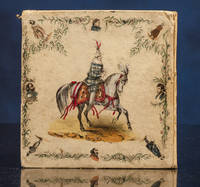
05085Brussels & Leipzig: C. Muquardt 1841. The 'Artistic Fantasies' of Victor Adam<br/>Eighteen Fine and Humorous Lithographs all Heightened with Gum Arabic<br/><br/>ADAM Victor illustrator. NOREW Madame la Baronne de pseud of EYMERY Alexis. Fantaisies Artistiques. Album Récréatif. Illustré par Victor Adam. - Texte de Madame La Baronne de Norew. Brussels & Leipzig: C. Muquardt 1841. <br/><br/>First edition. Small quarto 5 13/16 x 5 7/8 inches; 148 x 149 mm. iv 1-114 pp. Hand colored lithograph title and seventeen hand colored lithograph plates all heightened with gum arabic. Tiny piece missing 1/4 x 1/4 inch from blank top corner of pp. 29/30; some slight loss of text to p. 100 due to to adhesion to varnish on facing color plate plate unaffected lower marginal tear on last leaf of text. Some slight offsetting from the text to the plates and some very light foxing. <br/><br/>Publisher's color pictorial lithograph boardssmooth spine lettered in black slight rubbing to extremities and corners small one-inch split to upper board. Still a near fine example of this very rare little book in the publisher's binding. With the small bookseller's label of H. Rohr Zurich on rear pastedown. An excellent example of this rare little color-plate book.<br/><br/>Rare this is the only colored copy that we have ever seen. OCLC locates just one 'uncolored' copy in libraries and institutions worldwide at Zeeuse Bibliotheek Middelburg Netherlands. <br/><br/>In this charming little album of artistic fantasies Victor Adam depicts many different and amusing scenes including 'an old couple' military men horses camels and a wonderful scene 'Le Gentil' the laughing stock of the village ladies who amusingly protects himself from being bitten by the local dogs by holding two chairs. <br/><br/>Jean Victor Adam 1801-1866 was a French painter and lithographer. Born in Paris he was the son of Jean Adam an esteemed engraver. During the years 1814 to 1818 he studied at the Ecole des Beaux-Arts and also in the ateliers of Meynier and Régnault. In 1819 he exhibited 'Herminia succouring Tancred.' He was almost immediately afterwards employed to paint various subjects for the Museum at Versailles amongst which are 'The Entry of the French into Mainz' 'The Battle of Varroux' 'The Taking of Menin 'The Battle of Castiglione' 'The Passage of the Cluse' 'The Battle of Montebello' 'The Capitulation of Meiningen;' the last three in association with Alaux. He also exhibited down to the year 1838: 'Henry IV. after the Battle of Coutras' 'Trait of Kindness in the Duke de Berri' 'The Postillion' 'The Vivandiere' 'The Road to Poissy' 'The Return from the Chase' 'Horse-fair at Caen' and numerous other subjects. He then retired from publicity till 1846 when he appeared as the exhibitor of some works in lithography to which branch of art he afterwards restricted himself. In this line he produced a lithographic album 'Views in the Environs of Paris' 'Studies of Animals for an edition of Buffon' &c. He obtained a gold medal in 1824 a second class medal in 1836 besides several others from Lille Douai and other cities. He died at Viroflay in 1866.<br/><br/>Alexis Eymery 1774-1854 aka. Amélie d 'Avignon de Norew was a French bookseller printer publisher and writer. He was a leading publisher of educational books in the 19th c. Eymery went to Paris at the beginning of the 19th c. where he worked first at the Ministry of War and began writing for the theater since 1801. On May 2nd 1809 he joined forces with the bookseller Pierre Blanchard 1772-1856 to form the company P. Blanchard et compagnie which became on November 30th 1811 Blanchard and A. Eymery. The association was officially dissolved on May 4th 1812 and the two partners split the business with Eymery keeping the address of 30 rue Mazarine. Eymery was the author of plays as well as numerous religious or moralizing books for young people published under different pseudonyms. His works were published between 1801 and 1854 and then posthumously between 1857 and 1867. He directed the collection of the Education Library founded by his daughter Désirée Eymery in 1834. His Bookshop was at 15 quai Voltaire from 1834 to 1844 he died at Neuilly-sur-Seine on May 1st 1854. Brussels & Leipzig: C. Muquardt, 1841 unknown books
2775Two folding engraved plates. xvi 427 pp. 8vo cont. calf upper joint with tiny split at foot spine gilt red morocco lettering piece on spine. Edinburgh: printed by A. Donaldson & J. Reid; for the Author and A. Donaldson; sold by A. Millar et al. London 1762. First edition. The author's first book and one of the most important Scottish agricultural treatises of the 18th century. Dickson 1721-76 was a clergyman in Dunse with a strong interest in the techniques of farming. The text here is divided into four parts: on vegetation tillage manures and soil. The underlying principle which runs throughout the book is that English works on agriculture were ill-suited to the soil and climate of Scotland. An expanded version of this work was published in Edinburgh in 1770 in two volumes. A nice copy. ❧ Fussell II pp. 55-56. unknown books
1640D17896Paris: Toussainct Quinet 1640. First Edition thus. Hardcover. Good. Folio a5 -a1 blank A-Y4 Z2; 8 179 1 pp. Illustrated with thirty-five double-paged engraved plates and eight double-paged typographical tables engraved title contemporary ownership inscription to title three parts bound as one; occasional staining but not a bad copy. Full contemporary speckled calfskin spine gilt. First edition published in France translated from the original German edition of 1631. <br/><br/> Toussainct Quinet hardcover books
201629564London: Studio Leigh 2016. First edition. 16-7/8 x 12 inches 44 leaves all but two with the fore edges uncut. Card covers hand-painted by the artist in a flourescent tinted Perspex box as issued. One of an edition of 30 numbered copies plus two artist proofs signed by the artist. Printed on the Indigo Digital Press by F.E. Burman on 100 gsm Zerkall mouldmade paper. RadioPaper is a collection of abstract color lithographs by Mary Ramsden; the textured colors and her use of show-through give a sense of three-dimensionality. The title comes from one of the names used for electronic paper. There are five tiny stories by the two-time Granta award-winning novelist Adam Thirlwell also partially hidden by the uncut pages. Mary Ramsden's first artist book. A set of unbound signed lithographs edition of ten is also available: please inquire. <br/><br/> Studio Leigh unknown books
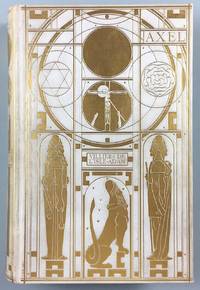
19253347London: Jarrolds Publishers 1925. First edition. First edition. Thick quarto. Original white cloth with bold gilt-blocked and stamped Art Deco design by T. Sturge Moorevon front cover and spine. Limited to 500 Signed H.P.R. Finberg publisher No. 123. Preface by William Butler Yeats. Cover design exquisite illustrations and decorations throughout by T. Sturge Moore. One of the more impressive gilt stamped bindings of the period and seldom seen in fine condition. This without a doubt the finest copy we have seen of this book with no fading or browning to spine almost always seen. J. Taylor in "The Art Nouveau Book in Britain" 1980 has the following quote by T. Sturge Moore concerning the cover design: "The minor decorations are symbols: for the 'uncreated light' an unfigured circle; for the great renunciation a crucifix; for heaven-reflecting life a rose." Very fine. <br/><br/> Jarrolds Publishers hardcover books
17971329312Paris: H. Agasse 1797. First French Edition. Hardcover. Octavo 316 283 pages; VG; bound in period quarter calf green marbled boards gilt titling and tooling to spine; mild wear and rubbing marbled paper slightly damaged in four places; speckled text block; interior clean with no names or markings; two parts bound together lacking frontispiece portrait as usual only bound into some copies; both half-titles and title pages present; JL consignment; shelved case 3. Essays on Philosophical Subjects is a posthumously published history of astronomy until Smith's own era plus some thoughts on ancient physics and metaphysics; This French translation published two years after the first English was translated by Pierre Prévost a Swiss philosopher and physicist who he demonstrated in 1791 that all bodies cold or hot emit heat by radiation. 1329312. Shelved Dupont Bookstore. H. Agasse hardcover books
17641334674Paris: Briasson 1764. First French Edition. Hardcover. Octavos 2 volumes; VG; bound in contemporary acid-washed calf spines with two burgundy morocco labels each gilt titling and tooling; marbled endpapers; text block red; 1 leaf ad in volume 2 rear; JL consignment; shelved case 3. The first French edition was unauthorized the first authorized French translation would not appear until 1774. The 1774 translation was done by Blavet who published a letter from Smith in which Smith called Eidous's translation 'mortifying' a reaction which prompted Blavet to pursue his own attempt.;<br /> <br><br /> <br><br /> First appearing in 1759 The Theory of Moral Sentiments lays the ethical and philosophical groundwork for Smith's later economic work.;. 1334674. Shelved Dupont Bookstore. Briasson hardcover books
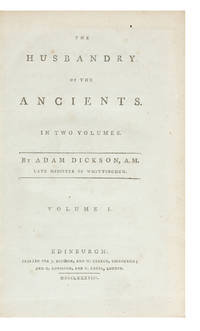
2722One engraved plate. xxiii 527 pp.; vi 494 pp. Two vols. 8vo cont. calf a few unimportant binding defects spines gilt red morocco lettering pieces on spines. Edinburgh: J. Dickson & W. Creech 1788. First edition of the author's most important book; it was published posthumously by one of the author's daughters who has provided here a biography of her father. Dickson 1721-76 wrote a number of practical works on agriculture which described techniques adapted to the soil and climate of Scotland. In the present work Dickson "collects the agricultural processes of the ancients under their proper heads and compares them with modern practice in which his experience renders him a safe guide. The first volume contains accounts of the roman villa crops manures and ploughs; the second treats of the different ancient crops and the times of sowing."-D.N.B. V pp. 943-44. Attractive set. ❧ Fussell II p. 57-Dickson "was able to dispose of some obscurities in Rei Rusticae Scriptores that had puzzled earlier non-agricultural scholars.". unknown books
1692019576Amstelodami Amsterdam: Peter Le Clert 1692. Book. Very good condition. Hardcover. Early edition. Octavo 8vo. Book I: xxxiv 372 pages of text viii pages of index. Book II: xxiv 274 pages. Book III; 275-638 pages followed by vi pages of index. In book III pages 451-537 are mis-numbered 551-637. Original full vellum binding with minor shelfwear moderate soiling hand-lettered spine and a small paper label. Gilt heraldic device stamped on the front cover. Measures 196mm x 157mm. Illustrated with a frontisportrait of the author and complete with two 2-page tables and a large fold-out table. Title printed in red and black. Previous owner's bookplate affixed to the inside of the front cover over a remnant of another bookplate: Bruno Kisch Pragensis. Previous owner's markings on the front endpaper and stamped on the back of the title page. There is a small amount of minor damp-staining and rippling to the bottom corner of the final half of the text. The final two endpapers have a small crease. Numismatics. Early printing. Peter Le Clert Hardcover books
168515007Paris: distribuë par l'Auteur en l'Hostel des Manufactures des Gobelins et en la rue St.Jacques 1685. Copper engraving on two joined sheets by Van Huctenburg and A.F. Baudouinst after Van der Meulen. Titled in French and Latin. Painted from life by the artist who accompanied Louis XIV on his campaigns Adam Frans Van der Meulen depicted in this wonderful panorama a post-battle view of Dôle the capital of Franche-Comté and the handsome surrounding region. In it Louis XIV and his brother survey the city they've won from a hilltop. There is actually no unpleasant evidence of military activity except for some smoke billowing from the far side of Dôle. Adam Frans Van der Meulen was a landscape and genre painter who specialized in battle scenes and his early works i.e. those from the years before he left for Paris the earliest dated work is from 1653 are mainly cavalry skirmishes in the manner of his teacher Pieter Snayer. After he moved to Paris the character of his work changed and became more ceremonial. He now specialized in large topographical views and military scenes and in royal journeys processions and receptions. His most important task was to accompany the king on his many campaigns during the wars of conquest waged in the 1660s and 1670s against inter alia the Spanish Netherlands and as Peintre de conquêtes du roi officially to portray the memorable sieges battles and conquests of le Roi Soleil in large-scale canvases or cartoons which were later transformed into tapestries. Van der Meulen was born in Brussels in 1632. In 1646 he was apprenticed to the battle painter Pieter Snayers. In 1651 he became a master in the Guild of St Luke in Brussels but by 1663 he had moved to Paris where he joined a group of Netherlandish artists associated with the French painter Charles Le Brun 1619-90 who not only was Premier peintre du roi but also from 1663 director of the Parisian tapestry manufactory Manufacture royale des Gobelins. Van der Meulen quickly became a protégé of Le Brun and on his recommendation Van der Meulen was appointed court painter to Louis XIV on 1 April 1664 and at the same time became Le Brun's collaborator in the tapestry manufactory. In 1673 he was accepted as a member of the Académie royale de Peinture et de Sculpture without any obligation to submit a morceau de réception; in 1681 he became conseiller and in 1686 premier conseiller. He died as a highly esteemed artist in the Hôtel des Gobelins 15 October 1690. distribuë par l'Auteur, en l'Hostel des Manufactures des Gobelins, et en la rue St.Jacques unknown books
168516903Paris: distribuë par l'Auteur en l'Hostel des Manufactures des Gobelins et en la rue St.Jacques 1685. Copper engraving on two joined sheets after Van der Meulen. Titled in French and Latin. In excellent condition. Some infill work along the bottom margin. Image size: 18 1/2 x 38 5/8 inches. A striking contemporary view of Gray in Franche-Comte by the celebrated court painter Van der Meulen.<br/> <br/>This fine view shows the town of Gray in Franche-Comte built on the banks of the Saône River. One of the most important trading towns in Franche-Comte the region became a possession of the Spanish Hapsburgs in 1556. Although some of the region's fortified towns were occupied by France during the Wars of Religion peace and prosperity continued until the advent of the Thirty Years War when the region was ravaged by both Catholics and Protestants. Louis XIV conquered Franche-Comté in 1668 and again in 1674 and finally obtained its cession from Spain. Van der Meulen's striking image depicts the king and his armies entering the town after they successfully re-conquered the region. Adam Frans Van der Meulen was a landscape and genre painter who specialized in battle scenes and his early works i.e. those from the years before he left for Paris the earliest dated work is from 1653 are mainly cavalry skirmishes in the manner of his teacher Pieter Snayer. After he moved to Paris the character of his work changed and became more ceremonial. He now specialized in large topographical views and military scenes and in royal journeys processions and receptions. His most important task was to accompany the king on his many campaigns during the wars of conquest waged in the 1660s and 1670s against inter alia the Spanish Netherlands and as Peintre de conquêtes du roi officially to portray the memorable sieges battles and conquests of le Roi Soleil in large-scale canvases or cartoons which were later transformed into tapestries. Van der Meulen was born in Brussels where he was baptized in 1632. In 1646 he was apprenticed to the battle painter Pieter Snayers. In 1651 he became a master in the Guild of St. Luke in Brussels but by 1663 he had moved to Paris where he joined a group of Netherlandish artists associated with the French painter Charles Le Brun 1619-90 who not only was Premier peintre du roi but also from 1663 director of the Parisian tapestry manufactory Manufacture royale des Gobelins. Van der Meulen quickly became a protégé of Le Brun and on his recommendation Van der Meulen was appointed court painter to Louis XIV on 1 April 1664 and at the same time became Le Brun's collaborator in the tapestry manufactory. In 1673 he was accepted as a member of the Académie royale de Peinture et de Sculpture without any obligation to submit a morceau de réception; in 1681 he became conseiller and in 1686 premier conseiller. He died as a highly esteemed artist in the Hôtel des Gobelins 15 October 1690. distribuë par l'Auteur, en l'Hostel des Manufactures des Gobelins, et en la rue St.Jacques unknown books
16853659Paris: distribuë par l'Auteur en l'Hostel des Manufactures des Gobelins et en la rue St.Jacques 1685. Copper engraving on two joined sheets by A.F. Baudouin with the figures by R. Bonnart after Van der Meulen. Titled in French and Latin. A fine view of the fortified town of Calais and its environs recalling king Louis XIV's gradual acquisition of territory on the Channel coast from 1667 onwards.<br/> <br/>This excellent panorama shows Calais as seen from the landward side looking across to the ramparts of the fortifications surrounding the town to the roofs of the town itself and then beyond to the sea. In the fore and mid-ground the French army of King Louis XIV moves forward towards the town this scene enlivened by Van der Meulen's portrayal of the stormy conditions: hats blow off cloaks are wrapped around peoples' heads foot soldiers lean into the wind. This sort of detail supports the statement in the imprint that the present scene was painted from life by Van der Meulen. Adam Frans Van der Meulen was a landscape and genre painter who specialized in battle scenes and his early works i.e. those from the years before he left for Paris the earliest dated work is from 1653 are mainly cavalry skirmishes in the manner of his teacher Pieter Snayer. After he moved to Paris the character of his work changed and became more ceremonial. He now specialized in large topographical views and military scenes and in royal journeys processions and receptions. His most important task was to accompany the king on his many campaigns during the wars of conquest waged in the 1660s and 1670s against inter alia the Spanish Netherlands and as Peintre de conquêtes du roi officially to portray the memorable sieges battles and conquests of le Roi Soleil in large-scale canvases or cartoons which were later transformed into tapestries. Van der Meulen was born in Brussels where he was baptised in 1632. In 1646 he was apprenticed to the battle painter Pieter Snayers. In 1651 he became a master in the Guild of St Luke in Brussels but by 1663 he had moved to Paris where he joined a group of Netherlandish artists associated with the French painter Charles Le Brun 1619-90 who not only was Premier peintre du roi but also from 1663 director of the Parisian tapestry manufactory Manufacture royale des Gobelins. Van der Meulen quickly became a protégé of Le Brun and on his recommendation Van der Meulen was appointed court painter to Louis XIV on 1 April 1664 and at the same time became Le Brun's collaborator in the tapestry manufactory. In 1673 he was accepted as a member of the Académie royale de Peinture et de Sculpture without any obligation to submit a morceau de réception; in 1681 he became conseiller and in 1686 premier conseiller. He died as a highly esteemed artist in the Hôtel des Gobelins 15 October 1690. distribuë par l'Auteur, en l'Hostel des Manufactures des Gobelins, et en la rue St.Jacques unknown books
1791140940981Leipzig: In der Graffschen Buchhandlung 1791. First Edition Thus. Very Good. 463 pp. First edition of this second German translation overall of The Theory of Moral Sentiments made from the fifth English edition; no other German translation was published until 1926. Contemporary calf over speckled boards. Very Good. Binding lightly rubbed and marked spine with two small paper shelf tickets. Upper joint started but binding remains firm. Pages a little toned and with occasional foxing. In der Graffschen Buchhandlung unknown books
1898List414Oraibi 1898. Platinum print 6 ¼ x 8 14 inches on 9 ¼ x 11 ½ inch sheet titled and dated in the margin in ink. The Illinois-born photographer Adam Clark Vroman moved to California in 1892 hoping that the dry climate would provide relief for his tuberculosis. He set up a studio in Pasadena and began a series of trips through California Arizona and New Mexico photographing the landscapes and residents notably the Hopi Zuni and Pueblo people. He would often travel with his friend Charles Fletcher Lummis editor of the Los Angeles Times and an amateur photographer himself. He worked for the Bureau of American Ethnology on two projects one in New Mexico at Enchanted Mesa and the other photographing cave dwellings in Arizona. Vroman's photographs of American Indians are notable for their lack of romantic embellishment as unlike many other Euro-American photographers of Indian subjects he did not try to imbue the photographs with sentimentality. <br /> <br /> This photograph from one of his trips in 1898 shows a Hopi Snake Dance in Oraibi Arizona. The Snake Dance held annually in late August is part of a larger ceremony mostly held in private. Many artists and photographers photographed the Snake Dance during the late nineteenth and early twentieth century and publications such as Harpers Weekly and The Saturday Review wrote of the ceremonies. Vroman's photograph is notable for the maturity and lack of exotification with the dancers shown within the village landscape surrounded by onlookers. <br /> <br /> Overall a fine example with minimal wear matted and framed. unknown books