1 033 résultats
1980138519New York: Island Records 1980. Vintage black and white double-sided poster for U2's 1980 US tour promoting their debut album "Boy" and hit single "I Will Follow."<br/><br/>One side of the poster advertises press responses to U2's debut album "Boy" alongside a list of the band's upcoming US tour dates while the other side has a close up image of Bono on the mic and simply says " 'I WILL FOLLOW'! U2." Though reviewed at the time as relatively unpolished but still having potential U2 has gone on to be one of the most widely-recognized bands in the world. Over the years U2 has sold over 170 million records won 22 Grammy Awards more than any other band and was inducted into the Rock and Roll Hall of Fame. <br/><br/>14.5 x 21 inches folded. Good to Very Good condition with a chip and various pinhole tears at the extremities and two cello tape repairs to one side. Island Records unknown books
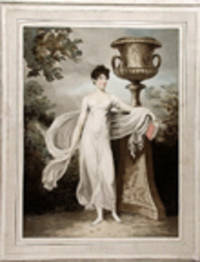
180812894London: Published by R. Reeve 7 Vere Street 1808. Colour printed aquatint. Printed on wove paper watermarked Edmeads & Pine 1802. In good condition with the exception of being trimmed to border of image on right and left margin. Trimmed just outside platemark on top and bottom margin. Facsimile work on lower right corner. Skillfully repaired tear in upper left corner. Skillfully mended tear on right side of image. Repaired tear on left margin. Some surface soiling in margins. A charming image of a young woman holding a book by the celebrated painter Adam Buck.<br/> <br/>Adam Buck 1759-1833 made a name for himself as an accomplished miniature painter. After arriving in London he soon gained popularity as a skillful portraitist and became a regular exhibitor at the London exhibitions. During his career he exhibited more than 170 paintings at the Royal Academy and was a regular contributor to the Society of British Artists and the British Institution. His work was eagerly reproduced by contemporary engravers; and these delicate prints enjoyed a wide circulation throughout England and Europe. Colour printed stipples of his charming paintings were eagerly collected by contemporary print enthusiasts and they survive today as a wonderful example of fine English printmaking.<br/> <br/>Not in O'Donoghue. Published by R. Reeve, 7 Vere Street unknown books
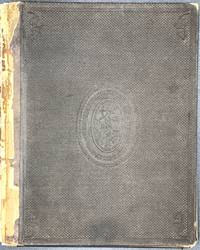
65490Pebbled cloth boards detached spine perished gilt stamped oval decoration on front board blind stamped oval decoration on rear board. 20 cm. 38 pp. of notes approx. 9000 words in a neat hand. "A.B. Dundor F & M College Sep. 24/61" on front endpaper. The first set of lecture notes entitled "Notes on Psychology" consists of 30 pp. approx. 7200 words. Entered dos-a-dos at the end of the notebook are an additional 8pp. approx. 1800 words from a course of three lectures entitled "Lectures on Philology" by Prof. James DeLauney. An additional note mentions a course on Political Economy given by Dr. Nevin with only one brief entry for Oct. 17 1861. Adam B. Dundor was born in Berks County Pennsylvania in 1838. He graduated from Franklin & Marshall College in 1862 with an A.B. and stayed on to earn his A.M. from the school in 1865. He worked toward his M.D. at Long Island College Hospital and Jefferson Medical College 1863-4. He lived and practiced medicine in Reading Pennsylvania until his death in 1910. see: Bulletin of the American Academy of Medicine Vol. XII p.231 Easton PA: 1911.<br/>Blind stamped name of Irvin H. Hartman Reading PA. in upper corner of the first page of the notebook. Hartman is listed as a witness to Dundor's will and presumably obtained this notebook from the family. <br/><br/> hardcover books
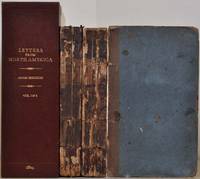
18243471baY4London: Hurst Robinson 1824. Book. Very good- condition. Hardcover. Later edition. Octavo 8vo. 2 volume set. Hardcover; bound in original paper covered boards covers detached. Protected in an attractive custom clam-shell box with a leather spine. Contains 2 errata slips; appendix volume 2; bookplates; private/personal library book pockets. Howes H560: "best edition". Measures 23.6cm. Hurst, Robinson Hardcover books
180962254London: Printed for Richard Phillips Bridge-Street Blackfriars. By T. Gilbert Fleet-street 1809. First edition 4to. xvi 348 116pp. Engraved map frontispiece twelve plates. Three-quarter brown leather and marbled boards. Corners worn down spine with leather label and marbled boards rubbed. Small bookplate on front pastedown a winged dragon and the initials S.H. presumed to be Admiral Samuel Hood. Some manuscript notes on back blank page. In July 1808 Neale was appointed physician to the forces a position he held during the Peninsular War when he was also one of the physicians-extraordinary to the duke of Kent. <br/><br/> Printed for Richard Phillips, Bridge-Street, Blackfriars. By T. Gilbert, Fleet-street hardcover books
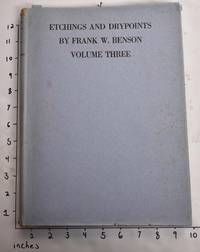
1923164979Boston / New York: Houghton Mifflin Company / Riverside Press 1923. 7/525 copies with signed etching. Hardcover. VG/VG- dj edge wear foxing and minor loss to top of dj spine. Interior clean and complete. Better than average copy with blind stamp of previous owner. Burlap binding with cream paper spine label and light blue paper board covers in light blue dj with black lettering. xx/124 pp. 63 bw illus. Volume 3 of 5 eventual volumes of Benson's Etchings and Drypoints compiled and arranged by Adam E. M. Paff. The book on hand is #7 of 525 numbered copies with an original etching signed by Benson of which only 475 were for sale. Includes 76 illustrations in black-and-white from Benson's work during the years 1916-1923. Interesting burlap spine with paper label. Houghton Mifflin Company / Riverside Press hardcover books
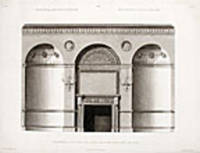
177517099London 1775. Engraving by D. Cunego. In excellent condition with the exception of being trimmed just outside the platemark on left margin. Some paper discolouration on left margin and 1" loss lower left corner. A fine engraving of the fireplaces at St. James's Palace and the Queen's House in London.<br/> <br/>Robert and his brother James Adam forever changed the face of British architecture by introducing innovative Classical design ideas. From 1754-57 Robert lived in Italy where he had a long productive friendship with Piranesi which was inspirational for both men. Adam's first book on Diocletian's palace in Dalmatia is clearly very like the archaeological investigations Piranesi was making at the same time of similar ruins. Piranesi's friendship and passion for Roman Classicism were seminal influences on Adam and the greatest single factor other than his own talent in the work Adam produced on his return to England. Upon his return the brothers launched their career by building the Adelphi from the Thames to the Strand in London which although not a commercial success at the time included one of London's most cherished buildings the Adlephi Theatre. Together the Adam brothers designed and built some of the most famous buildings in England including such bastions of English architecture as Kenwood House Keddlestone Manor and Syon House. To the interiors of their English country houses the Adams brought wonderful ornamental elements in niches lunettes festoons and reliefs. Their classically designed buildings were so numerous in London that they changed the prevailing feel of the city and established their brand of neo-Classicism as the model of elegance and importance. It is asserted that the brothers originated the concept of the uniform facade attached to the typical English row house an architectural device that distinguishes London buildings. This monumental contribution is evidenced in the Adams' designs for Portland Place and Fitzroy Square and these were used as architectural models for the whole city. The brothers brought their talents into other areas by designing furniture to complement their beautiful interiors and by creating and publishing a treatise of design entitled 'Works in Architecture'. The work was published in three volumes over an extended span of time beginning in 1773 with the final volume being published posthumously in 1822.<br/> <br/>Cf. Brunet I.47; cf. Lowndes I p.8; DNB; Wilton-Ely The Mind and Art of Giovanni Battista Piranesi. unknown books
17745385London 1774. Engraving by J. Zucchi. A fine architectural engraving of the interior of Kenwood House in Hampstead London re-modelled in 1761-1773 and now home to the Iveagh Bequest picture collection.<br/> <br/>Robert and his brother James Adam forever changed the face of British architecture by introducing innovative Classical design ideas. From 1754-57 Robert lived in Italy where he had a long productive friendship with Piranesi which was inspirational for both men. Adam's first book on Diocletian's palace in Dalmatia is clearly very like the archaeological investigations Piranesi was making at the same time of similar ruins. Piranesi's friendship and passion for Roman Classicism were seminal influences on Adam and the greatest single factor other than his own talent in the work Adam produced on his return to England. Upon his return the brothers launched their career by building the Adelphi from the Thames to the Strand in London which although not a commercial success at the time included one of London's most cherished buildings the Adelphi Theatre. Together the Adam brothers designed and built some of the most famous buildings in England including such bastions of English architecture as Kenwood House Keddlestone Manor and Syon House. To the interiors of their English country houses the Adams brought wonderful ornamental elements in niches lunettes festoons and reliefs. Their classically designed buildings were so numerous in London that they changed the prevailing feel of the city and established their brand of neo-Classicism as the model of elegance and importance. It is asserted that the brothers originated the concept of the uniform facade attached to the typical English row house an architectural device that distinguishes London buildings. This monumental contribution is evidenced in the Adams' designs for Portland Place and Fitzroy Square and these were used as architectural models for the whole city. The brothers brought their talents into other areas by designing furniture to complement their beautiful interiors and by creating and publishing a treatise of design entitled 'Works in Architecture'. The work was published in three volumes over an extended span of time beginning in 1773 with the final volume being published posthumously in 1822.<br/> <br/>Cf. Brunet I.47; cf. Lowndes I p.8; DNB; Wilton-Ely The Mind and Art of Giovanni Battista Piranesi. unknown books
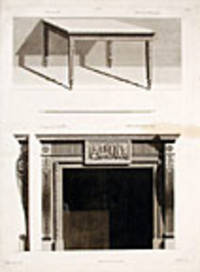
177817139London 1778. Copper engraving. Engraved by Caldwell. In excellent condition with the exception of a waterstain in middle of sheet. Left margin is trimmed just outside platemark. An elegant engraving of a fireplace and table at Shelburne House in Berkeley Square in London.<br/> <br/>Robert and his brother James Adam forever changed the face of British architecture by introducing innovative Classical design ideas. From 1754-57 Robert lived in Italy where he had a long productive friendship with Piranesi which was inspirational for both men. Adam's first book on Diocletian's palace in Dalmatia is clearly very like the archaeological investigations Piranesi was making at the same time of similar ruins. Piranesi's friendship and passion for Roman Classicism were seminal influences on Adam and the greatest single factor other than his own talent in the work Adam produced on his return to England. Upon his return the brothers launched their career by building the Adelphi from the Thames to the Strand in London which although not a commercial success at the time included one of London's most cherished buildings the Adlephi Theatre. Together the Adam brothers designed and built some of the most famous buildings in England including such bastions of English architecture as Kenwood House Keddlestone Manor and Syon House. To the interiors of their English country houses the Adams brought wonderful ornamental elements in niches lunettes festoons and reliefs. Their classically designed buildings were so numerous in London that they changed the prevailing feel of the city and established their brand of neo-Classicism as the model of elegance and importance. It is asserted that the brothers originated the concept of the uniform facade attached to the typical English row house an architectural device that distinguishes London buildings. This monumental contribution is evidenced in the Adams' designs for Portland Place and Fitzroy Square and these were used as architectural models for the whole city. The brothers brought their talents into other areas by designing furniture to complement their beautiful interiors and by creating and publishing a treatise of design entitled 'Works in Architecture'. The work was published in three volumes over an extended span of time beginning in 1773 with the final volume being published posthumously in 1822.<br/> <br/>Cf. Brunet I.47; cf. Lowndes I p.8; DNB; Wilton-Ely The Mind and Art of Giovanni Battista Piranesi. unknown books
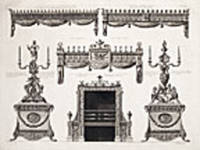
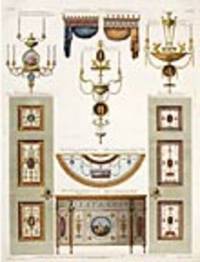
177517116London 1775. Engraving by B. Pastorini. In excellent condition. An elegant engraving showing the decorations of the chimney piece and curtain cornices at Sutton Park House in North Yorkshire.<br/> <br/>Robert and his brother James Adam forever changed the face of British architecture by introducing innovative Classical design ideas. From 1754-57 Robert lived in Italy where he had a long productive friendship with Piranesi which was inspirational for both men. Adam's first book on Diocletian's palace in Dalmatia is clearly very like the archaeological investigations Piranesi was making at the same time of similar ruins. Piranesi's friendship and passion for Roman Classicism were seminal influences on Adam and the greatest single factor other than his own talent in the work Adam produced on his return to England. Upon his return the brothers launched their career by building the Adelphi from the Thames to the Strand in London which although not a commercial success at the time included one of London's most cherished buildings the Adlephi Theatre. Together the Adam brothers designed and built some of the most famous buildings in England including such bastions of English architecture as Kenwood House Keddlestone Manor and Syon House. To the interiors of their English country houses the Adams brought wonderful ornamental elements in niches lunettes festoons and reliefs. Their classically designed buildings were so numerous in London that they changed the prevailing feel of the city and established their brand of neo-Classicism as the model of elegance and importance. It is asserted that the brothers originated the concept of the uniform facade attached to the typical English row house an architectural device that distinguishes London buildings. This monumental contribution is evidenced in the Adams' designs for Portland Place and Fitzroy Square and these were used as architectural models for the whole city. The brothers brought their talents into other areas by designing furniture to complement their beautiful interiors and by creating and publishing a treatise of design entitled 'Works in Architecture'. The work was published in three volumes over an extended span of time beginning in 1773 with the final volume being published posthumously in 1822.<br/> <br/>Cf. Brunet I.47; cf. Lowndes I p.8; DNB; Wilton-Ely The Mind and Art of Giovanni Battista Piranesi. unknown books
177517118London 1775. Engraving by T. Vivares. In excellent condition with the exception of some paper discolouration in the bottom right corner of the sheet. A fine architectural engraving of a part of the vast Adelphi development in London; the largest project undertaken by the Adam brothers.<br/> <br/>Robert and his brother James Adam forever changed the face of British architecture by introducing innovative Classical design ideas. From 1754-57 Robert lived in Italy where he had a long productive friendship with Piranesi which was inspirational for both men. Adam's first book on Diocletian's palace in Dalmatia is clearly very like the archaeological investigations Piranesi was making at the same time of similar ruins. Piranesi's friendship and passion for Roman Classicism were seminal influences on Adam and the greatest single factor other than his own talent in the work Adam produced on his return to England. Upon his return the brothers launched their career by building the Adelphi from the Thames to the Strand in London which although not a commercial success at the time included one of London's most cherished buildings the Adlephi Theatre. Together the Adam brothers designed and built some of the most famous buildings in England including such bastions of English architecture as Kenwood House Keddlestone Manor and Syon House. To the interiors of their English country houses the Adams brought wonderful ornamental elements in niches lunettes festoons and reliefs. Their classically designed buildings were so numerous in London that they changed the prevailing feel of the city and established their brand of neo-Classicism as the model of elegance and importance. It is asserted that the brothers originated the concept of the uniform facade attached to the typical English row house an architectural device that distinguishes London buildings. This monumental contribution is evidenced in the Adams' designs for Portland Place and Fitzroy Square and these were used as architectural models for the whole city. The brothers brought their talents into other areas by designing furniture to complement their beautiful interiors and by creating and publishing a treatise of design entitled 'Works in Architecture'. The work was published in three volumes over an extended span of time beginning in 1773 with the final volume being published posthumously in 1822.<br/> <br/>Cf. Brunet I.47; cf. Lowndes I p.8; DNB; Wilton-Ely The Mind and Art of Giovanni Battista Piranesi. unknown books
176640581Vindobonae: Jo. Thom. Nob. de Trattnern 1766. 8vo 20.3 cm 8". 24 246 2 pp. <br><br>Uncommon first edition. The Belgian-born physician Chenot 17211789 who studied medicine at the University of Vienna before being sent by imperial command to Transylvania to assist in fighting outbreaks of the plague was a prominent voice in the debate over how to conduct quarantines hygiene and sanitary treatments and other protective measures; he was a staunch opponent of the theory that air itself could carry the disease. Here he offers his firsthand perspective on the plague having contracted it himself and survived!<br>Â Â Â Â WorldCat finds => only six U.S. institutions Harvard National Library of Medicine New York Academy of Medicine Stanford University of Pennsylvania University of Wisconsin reporting holding a hard copy. In the present example as in others reported the last leaf of the preface appears at the back of the volume where it was originally printed being leaf Q4.<br>Â Â Â Â Provenance: From the residue of the stock of the F. Thomas Heller bookselling firm est. ca. 1928. <br>Â Â Â Â <br>Â Â Â Â Blake NLM 18th Century p. 86; Wellcome II 334. Not in Garrison & Morton. Early plain papercovered boards spine with hand-inked paper shelving label; binding much worn overall with joints cracked loss of paper at corners and spine head. Pages waterstained. Early underlining and occasional marks of emphasis in red pencil to roughly first half of volume. => Another sort of survivor Jo. Thom. Nob. de Trattnern hardcover books
1983145600Universal City: Universal 1983. Archive of three scripts for the 1983 film including a Second Draft Third Draft and Revised Final Draft with the Second and Third Draft scripts appearing under the working title "Capitol Cab." Scripts belonging to producer Cassius Weathersby with his name on the cover sheet for revision pages dated 5/16/83 laid into the Revised Final script. Also included is a borderless double weight photograph of Weathersby conferring with star Mr. T on the set and a promotional button for the film. <br/><br/>The dead-end drivers of a rundown cab company must band together with the help of their naive newest member to save themselves from a rival company and to help Mr. T teach kids to say no to drugs. <br/><br/>Set and shot on location in Washington DC. <br/><br/>Second Draft: Yellow titled wrappers noted as Second Draft on the front wrapper. Title page present dated January 4 1983 noted as Second Draft with credits for screenwriter Joel Schumacher. 94 leaves with last page of text numbered 93. Xerographic duplication rectos only. Pages Fine wrapper Near Fine bound with two gold brads. <br/><br/>Third Draft: Orange titled wrappers noted as Third Draft on the front wrapper noted as production No. 00864 dated February 10 1983. Title page present dated February 10 1983 noted as Third Draft with credits for screenwriter Joel Schumacher and producers Jon Peters Peter Gruber Topper Carew and Cassius Weathersby. 90 leaves with last leaf of text numbered 89. Xerographically reproduced on eye-rest green stock with pink and blue revision pages dated 2/14/83 and undated. Pages Fine wrapper Near Fine lacking the rear wrapper bound with three gold brads.<br/><br/>Revised Final Draft: Yellow titled wrappers noted as Revised Final Draft on the front wrapper and production No. 02156 dated April 5 1983. Title page present dated April 5 1983 noted as Revised Final Draft with credits for screenwriter Joel Schumacher and producers Jon Peters Peter Gruber Topper Carew and Cassius Weathersby. 94 leaves with last leaf of text numbered 88. Xerographic duplication with pink and yellow revision pages throughout dated variously between 4/11/83 and 5/30/83. Pages Near Fine front wrapper lightly soiled else wrappers Near Fine bound with three gold brads. <br/><br/>Parish and Hill Black Action Film. Universal unknown books
1961140159France: N.p. 1961. Collection of 91 vintage candid photographs featuring director Rene Clair and members of the cast and crew at release parties for the 1961 film. Clair is seen with fans giving a speech signing autographs conducting a recorded interview and cavorting with stars of the film like Colette Castel Alfred Adam and Annie Fratellini. The festivities seem to take place in a large music hall with musicians and traditional instruments appearing in a few photos. Bourvil is also present in two contact prints seen traveling cavorting with Clair getting a shave and playing bocce. Several with brief numerical annotations in holograph pencil and a few double weight photographs with rubberstamps crediting photographer Martin on the versos. <br/><br/>A businessman Noiret wants to buy land around the village of Cabosse claiming his desire for seclusion but with intentions to sell the water from the village fountain purportedly a fountain of youth. <br/><br/>Shot on location throughout France. <br/><br/>Photos range from 4.5 x 7 inches to 8 x 10.5 inches most are 7.25 x 9.25 inches with 87 frames on 35mm and medium-format negative strips. Very Good plus overall with light curling and foxing negatives lightly rubbed. N.p. unknown books
178328002Dublin: printed for Price Whitestone Colles et al. 1783. First Dublin edition 3 vols. 8vo pp. 10 492 2; 8 608; 8 600; first page of table of contents in vol. I misbound at the back; all else very good in contemporary full calf red and brown morocco labels on spines. This edition is printed the same year as the first London edition. <br/><br/> printed for Price, Whitestone, Colles, [et al.] unknown books
1818027685London: Longman Hurst Rees Orme and Brown 1818. Quarto. Hand-colored frontispiece 295pp. 10 other hand color plates. With the errata sheet on the verso of the directions to the binder which shows where the following items all present are to be placed: The Greek Reis to face the title page Dresden Koenigstein on the Elbe Meissen the Margravite 2 views Prague Wissegorod of Prague and Brunn 2 views; Halietz on the Dniester and Greek palace at Terapia 2 views Jassy Capitol of Moldavia; and on the Black Sea Agatopoli the Promentory of Eneada and finally The Turkish boatmen and barber. In all there are 15 aquatints on the 11 plates Dr. Adam Neale's travels covered several neglected areas especially in Moldavia and the Ottoman Empire. His travels commenced in July 1805 until March 1806. His vivid English text details observations and descriptons of the regions especially those suffering as a result of the Napoleonic wars. the battle of Austerlitz had just taken place in December 1805. In addition he provides statistical data on population rulers and related points of interest. This is one of the best accounts on Romania at the time as well as the Balkan region. Bound in a later 3/4 black morocco over marbled paper covered boards with matching endpapers raised bands lettering within three compartments gilt top edge gilt light off-setting to plates and a few text pages. A very handsome copy. see Abbey Travel 19; Tooley 1954 No. 344; Cat. Russica No. N261. Longman, Hurst, Rees, Orme and Brown unknown books
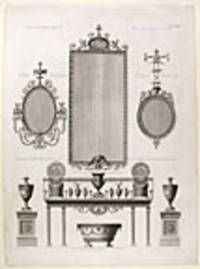
177517573London 1775. Engraving by P. Begbie. In excellent condition with the exception of two tears on right margin. A fine architectural engraving of ornate mirrors and tables from Robert Adam's seminal work on British architecture.<br/> <br/>Robert and his brother James Adam forever changed the face of British architecture by introducing innovative Classical design ideas. From 1754-57 Robert lived in Italy where he had a long productive friendship with Piranesi which was inspirational for both men. Adam's first book on Diocletian's palace in Dalmatia is clearly very like the archaeological investigations Piranesi was making at the same time of similar ruins. Piranesi's friendship and passion for Roman Classicism were seminal influences on Adam and the greatest single factor other than his own talent in the work Adam produced on his return to England. Upon his return the brothers launched their career by building the Adelphi from the Thames to the Strand in London which although not a commercial success at the time included one of London's most cherished buildings the Adlephi Theatre. Together the Adam brothers designed and built some of the most famous buildings in England including such bastions of English architecture as Kenwood House Keddlestone Manor and Syon House. To the interiors of their English country houses the Adams brought wonderful ornamental elements in niches lunettes festoons and reliefs. Their classically designed buildings were so numerous in London that they changed the prevailing feel of the city and established their brand of neo-Classicism as the model of elegance and importance. It is asserted that the brothers originated the concept of the uniform facade attached to the typical English row house an architectural device that distinguishes London buildings. This monumental contribution is evidenced in the Adams' designs for Portland Place and Fitzroy Square and these were used as architectural models for the whole city. The brothers brought their talents into other areas by designing furniture to complement their beautiful interiors and by creating and publishing a treatise of design entitled 'Works in Architecture'. The work was published in three volumes over an extended span of time beginning in 1773 with the final volume being published posthumously in 1822.<br/> <br/>Cf. Brunet I.47; cf. Lowndes I p.8; DNB; Wilton-Ely The Mind and Art of Giovanni Battista Piranesi. unknown books
177517101London 1775. Copper engraving with hand colour. Engraving by P. Begbie. In excellent condition with the exception of being trimmed just on the platemark on the left margin. Mild soiling mostly marginal. A fine engraving of an ornate harpsichord designed for the Empress of Russia.<br/> <br/>Robert and his brother James Adam forever changed the face of British architecture by introducing innovative Classical design ideas. From 1754-57 Robert lived in Italy where he had a long productive friendship with Piranesi which was inspirational for both men. Adam's first book on Diocletian's palace in Dalmatia is clearly very like the archaeological investigations Piranesi was making at the same time of similar ruins. Piranesi's friendship and passion for Roman Classicism were seminal influences on Adam and the greatest single factor other than his own talent in the work Adam produced on his return to England. Upon his return the brothers launched their career by building the Adelphi from the Thames to the Strand in London which although not a commercial success at the time included one of London's most cherished buildings the Adlephi Theatre. Together the Adam brothers designed and built some of the most famous buildings in England including such bastions of English architecture as Kenwood House Keddlestone Manor and Syon House. To the interiors of their English country houses the Adams brought wonderful ornamental elements in niches lunettes festoons and reliefs. Their classically designed buildings were so numerous in London that they changed the prevailing feel of the city and established their brand of neo-Classicism as the model of elegance and importance. It is asserted that the brothers originated the concept of the uniform facade attached to the typical English row house an architectural device that distinguishes London buildings. This monumental contribution is evidenced in the Adams' designs for Portland Place and Fitzroy Square and these were used as architectural models for the whole city. The brothers brought their talents into other areas by designing furniture to complement their beautiful interiors and by creating and publishing a treatise of design entitled 'Works in Architecture'. The work was published in three volumes over an extended span of time beginning in 1773 with the final volume being published posthumously in 1822.<br/> <br/>Cf. Brunet I.47; cf. Lowndes I p.8; DNB; Wilton-Ely The Mind and Art of Giovanni Battista Piranesi. unknown books
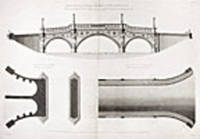
177517103London 1775. Engraving by T. Miller. In excellent condition with the exception of some very faint off-setting. A fine engraving of a proposed bridge over the river at Sion House in London.<br/> <br/>Robert and his brother James Adam forever changed the face of British architecture by introducing innovative Classical design ideas. From 1754-57 Robert lived in Italy where he had a long productive friendship with Piranesi which was inspirational for both men. Adam's first book on Diocletian's palace in Dalmatia is clearly very like the archaeological investigations Piranesi was making at the same time of similar ruins. Piranesi's friendship and passion for Roman Classicism were seminal influences on Adam and the greatest single factor other than his own talent in the work Adam produced on his return to England. Upon his return the brothers launched their career by building the Adelphi from the Thames to the Strand in London which although not a commercial success at the time included one of London's most cherished buildings the Adlephi Theatre. Together the Adam brothers designed and built some of the most famous buildings in England including such bastions of English architecture as Kenwood House Keddlestone Manor and Syon House. To the interiors of their English country houses the Adams brought wonderful ornamental elements in niches lunettes festoons and reliefs. Their classically designed buildings were so numerous in London that they changed the prevailing feel of the city and established their brand of neo-Classicism as the model of elegance and importance. It is asserted that the brothers originated the concept of the uniform facade attached to the typical English row house an architectural device that distinguishes London buildings. This monumental contribution is evidenced in the Adams' designs for Portland Place and Fitzroy Square and these were used as architectural models for the whole city. The brothers brought their talents into other areas by designing furniture to complement their beautiful interiors and by creating and publishing a treatise of design entitled 'Works in Architecture'. The work was published in three volumes over an extended span of time beginning in 1773 with the final volume being published posthumously in 1822.<br/> <br/>Cf. Brunet I.47; cf. Lowndes I p.8; DNB; Wilton-Ely The Mind and Art of Giovanni Battista Piranesi. unknown books
177717127London 1777. Copper engraving with lovely early colour. Engraved by B. Pastorini. In excellent condition. An elegant engraving depicting a collection of ornate furniture in the Earl of Derby's celebrated house in Grosvenor Square London.<br/> <br/>Robert and his brother James Adam forever changed the face of British architecture by introducing innovative Classical design ideas. From 1754-57 Robert lived in Italy where he had a long productive friendship with Piranesi which was inspirational for both men. Adam's first book on Diocletian's palace in Dalmatia is clearly very like the archaeological investigations Piranesi was making at the same time of similar ruins. Piranesi's friendship and passion for Roman Classicism were seminal influences on Adam and the greatest single factor other than his own talent in the work Adam produced on his return to England. Upon his return the brothers launched their career by building the Adelphi from the Thames to the Strand in London which although not a commercial success at the time included one of London's most cherished buildings the Adlephi Theatre. Together the Adam brothers designed and built some of the most famous buildings in England including such bastions of English architecture as Kenwood House Keddlestone Manor and Syon House. To the interiors of their English country houses the Adams brought wonderful ornamental elements in niches lunettes festoons and reliefs. Their classically designed buildings were so numerous in London that they changed the prevailing feel of the city and established their brand of neo-Classicism as the model of elegance and importance. It is asserted that the brothers originated the concept of the uniform facade attached to the typical English row house an architectural device that distinguishes London buildings. This monumental contribution is evidenced in the Adams' designs for Portland Place and Fitzroy Square and these were used as architectural models for the whole city. The brothers brought their talents into other areas by designing furniture to complement their beautiful interiors and by creating and publishing a treatise of design entitled 'Works in Architecture'. The work was published in three volumes over an extended span of time beginning in 1773 with the final volume being published posthumously in 1822.<br/> <br/>Cf. Brunet I.47; cf. Lowndes I p.8; DNB; Wilton-Ely The Mind and Art of Giovanni Battista Piranesi. unknown books
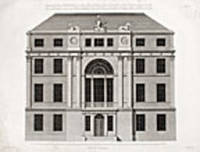
177517117London 1775. Engraving by R. Blyth. In excellent condition except for mild discolouration lower left. An elegant engraving showing the facade of a house in Whitehall used as the offices for Chelsea Hospital.<br/> <br/>Robert and his brother James Adam forever changed the face of British architecture by introducing innovative Classical design ideas. From 1754-57 Robert lived in Italy where he had a long productive friendship with Piranesi which was inspirational for both men. Adam's first book on Diocletian's palace in Dalmatia is clearly very like the archaeological investigations Piranesi was making at the same time of similar ruins. Piranesi's friendship and passion for Roman Classicism were seminal influences on Adam and the greatest single factor other than his own talent in the work Adam produced on his return to England. Upon his return the brothers launched their career by building the Adelphi from the Thames to the Strand in London which although not a commercial success at the time included one of London's most cherished buildings the Adlephi Theatre. Together the Adam brothers designed and built some of the most famous buildings in England including such bastions of English architecture as Kenwood House Keddlestone Manor and Syon House. To the interiors of their English country houses the Adams brought wonderful ornamental elements in niches lunettes festoons and reliefs. Their classically designed buildings were so numerous in London that they changed the prevailing feel of the city and established their brand of neo-Classicism as the model of elegance and importance. It is asserted that the brothers originated the concept of the uniform facade attached to the typical English row house an architectural device that distinguishes London buildings. This monumental contribution is evidenced in the Adams' designs for Portland Place and Fitzroy Square and these were used as architectural models for the whole city. The brothers brought their talents into other areas by designing furniture to complement their beautiful interiors and by creating and publishing a treatise of design entitled 'Works in Architecture'. The work was published in three volumes over an extended span of time beginning in 1773 with the final volume being published posthumously in 1822.<br/> <br/>Cf. Brunet I.47; cf. Lowndes I p.8; DNB; Wilton-Ely The Mind and Art of Giovanni Battista Piranesi. unknown books
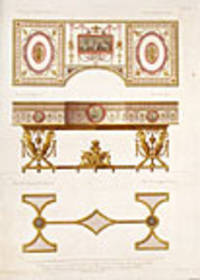
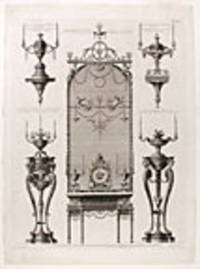
177517575London 1775. Engraving by B. Pastorini. In excellent condition. A fine engraving of various pieces of ornate furniture from Robert Adam's seminal work on British architecture.<br/> <br/>Robert and his brother James Adam forever changed the face of British architecture by introducing innovative Classical design ideas. From 1754-57 Robert lived in Italy where he had a long productive friendship with Piranesi which was inspirational for both men. Adam's first book on Diocletian's palace in Dalmatia is clearly very like the archaeological investigations Piranesi was making at the same time of similar ruins. Piranesi's friendship and passion for Roman Classicism were seminal influences on Adam and the greatest single factor other than his own talent in the work Adam produced on his return to England. Upon his return the brothers launched their career by building the Adelphi from the Thames to the Strand in London which although not a commercial success at the time included one of London's most cherished buildings the Adlephi Theatre. Together the Adam brothers designed and built some of the most famous buildings in England including such bastions of English architecture as Kenwood House Keddlestone Manor and Syon House. To the interiors of their English country houses the Adams brought wonderful ornamental elements in niches lunettes festoons and reliefs. Their classically designed buildings were so numerous in London that they changed the prevailing feel of the city and established their brand of neo-Classicism as the model of elegance and importance. It is asserted that the brothers originated the concept of the uniform facade attached to the typical English row house an architectural device that distinguishes London buildings. This monumental contribution is evidenced in the Adams' designs for Portland Place and Fitzroy Square and these were used as architectural models for the whole city. The brothers brought their talents into other areas by designing furniture to complement their beautiful interiors and by creating and publishing a treatise of design entitled 'Works in Architecture'. The work was published in three volumes over an extended span of time beginning in 1773 with the final volume being published posthumously in 1822.<br/> <br/>Cf. Brunet I.47; cf. Lowndes I p.8; DNB; Wilton-Ely The Mind and Art of Giovanni Battista Piranesi. unknown books
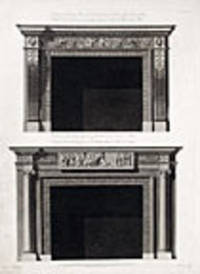
177517122London 1775. Engraving by Joshua Record. In excellent condition. An elegant engraving showing the chimney in the anteroom of Lord Derby's house in Grosvenor Square London.<br/> <br/>Robert and his brother James Adam forever changed the face of British architecture by introducing innovative Classical design ideas. From 1754-57 Robert lived in Italy where he had a long productive friendship with Piranesi which was inspirational for both men. Adam's first book on Diocletian's palace in Dalmatia is clearly very like the archaeological investigations Piranesi was making at the same time of similar ruins. Piranesi's friendship and passion for Roman Classicism were seminal influences on Adam and the greatest single factor other than his own talent in the work Adam produced on his return to England. Upon his return the brothers launched their career by building the Adelphi from the Thames to the Strand in London which although not a commercial success at the time included one of London's most cherished buildings the Adlephi Theatre. Together the Adam brothers designed and built some of the most famous buildings in England including such bastions of English architecture as Kenwood House Keddlestone Manor and Syon House. To the interiors of their English country houses the Adams brought wonderful ornamental elements in niches lunettes festoons and reliefs. Their classically designed buildings were so numerous in London that they changed the prevailing feel of the city and established their brand of neo-Classicism as the model of elegance and importance. It is asserted that the brothers originated the concept of the uniform facade attached to the typical English row house an architectural device that distinguishes London buildings. This monumental contribution is evidenced in the Adams' designs for Portland Place and Fitzroy Square and these were used as architectural models for the whole city. The brothers brought their talents into other areas by designing furniture to complement their beautiful interiors and by creating and publishing a treatise of design entitled 'Works in Architecture'. The work was published in three volumes over an extended span of time beginning in 1773 with the final volume being published posthumously in 1822.<br/> <br/>Cf. Brunet I.47; cf. Lowndes I p.8; DNB; Wilton-Ely The Mind and Art of Giovanni Battista Piranesi. unknown books
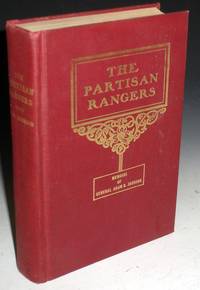
1904025984Louisville KY: G.G. Fetter Co 1904. First Edition. Octavo. xii 476 pages 64 leaves of plates illustrations portraits. The memoirs of Brigadier-General Adam Rankin Johnson trace the progress of the leading Kentuckian Confederate leader in the Civil War. After cavalry service in the commands of Nathan Bedford Forest and John Hunt Morgan Johnson established his own reputation for innovation and audacity; for instance he captured an Indiana town with only 12 men making fake cannons with stovepipe sections giving him the nickname "Stovepipe" Johnson. Authorized by the Confederate government to perate behind Union lines Johnson's Tenth Kentucky Cavalry conducted numerous raids in western Kentucky and Tennessee. His Partisan Ranger Brigade used irregular but highly flexible operations to succeed with smaller forces. He was blinded from a wound in 1864 but moved to Texas where he founded the town of Marble Falls and became one of the states' most honored citizens. This volume has sketches photographs roster brigades and much more. This copy has the bookplate of Texas Senator A.J. Wirtz who gave LBJ a helpful push in politics. His daughter remained Lady Bird's best friend from days at the University of Texas. A fine copy bound in maroon cloth lettered and decorated in gilt spine lettering gilt. Fine copies of this item are exceedingly rare. Nevins CWB I 113; Howes J122; Graff 2213; Jenkins Basic Texas Books 108. G.G. Fetter Co unknown books
1929WRCLIT59988Buffalo: Printed for the Author and New York and London: Oxford University Press 1929. Three volumes. Quarto. Gilt navy blue cloth t.e.g. others untrimmed. Portraits plates and facsimiles. Spines very slightly darkened very light wear at edges short crack to one inner hinge otherwise a very good set of a work most often seen worn and shaken. First edition. One of five hundred sets printed at the Volksfreund Press. A fourth supplemental volume was published in 1930 in an edition of only 225 copies. The monumental catalogue of Adams's collection consisting of: Volume I: Letters of Samuel Johnson James Boswell Edmund Burke Joshua Reynolds and David Garrick; Volume II: Catalogue of Books; and Volume III: Miscellaneous Autograph Letters. Oxford University Press hardcover books