ADAM (Paul)Livre Rare Book

42 895 résultats
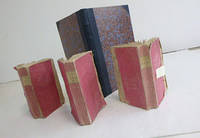
14233Paris, éditions Lapina, 1930. In-4, 236 pp., 24 planches hors texte, sous chemises et étuis en carton marbré, pièces de titre en percaline. Coins des étuis abîmés, usures d'usage sur les chemises et les étuis, papier légèrement jauni, manque deuxième état de la planche p.192.
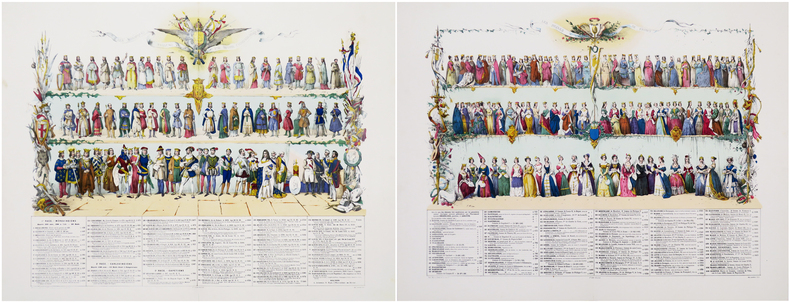
1863LBW-8436Paris, Maison Bouasse Lebel & Anc.nne M.on Basset réunies, [1863]. Ensemble de deux planches, 490 x 605 mm et 470 x 590 mm.
18319158BB1831. 2. 1. 1. Auflage Halberstadt Pesth Brüggemann Wigand o.J. ca. 1829-1835 4° jeweils mit einer ganzseitig illustrierten Titelseite durchgehend s/w-illustrierte lithographische Tafeln die Vögel teilweise ca 30 % akkurat und farbtief handkoloriert Säugetiere: 147 Tafeln Vögel: 184 Tafeln beachte die Nummerierung: Tafel 156a und 156b Amphibien: 74 Tafeln zwei Lesebändchen Halbleder-Einband der Zeit mit Lederecken goldener Rückenbeschriftung 6 Bünden und Rundumrotschnitt florale Musterpapiervorsätze Vierfarbendruck Rücken oben einseitig 25cm angeplatzt Einband stellenweise etwas beschabt Papier teils minimal altersfleckig die ersten 40 Tafeln am äusseren Seitenrand mit einer Blatt für Blatt immer kleiner werdenden 9cm langen dünnen roten rötlichen Abfärbung des Farbschnitts nur an der Blattkante - ohne Bildverlust eine Tafel Seebär rückseitig von alter Hand mit einem Papierstreifen verstärkt in der Illustration ebendort eine sehr unauffällige hauchdünne helle Linie sichtbar wie fast immer teilweise ein wenig knapp beschnitten sonst ein sehr gutes sauberes Exemplar mit komplett intaktem Block kollationiert. Abholung im Ladengeschäft in Frankfurt am Main Nordend ggü. Musterschule möglich. Das spart die Portokosten. Pickup at the store in Frankfurt am Main Nordend close to Musterschule is possible. It saves the shipping costs. unknown
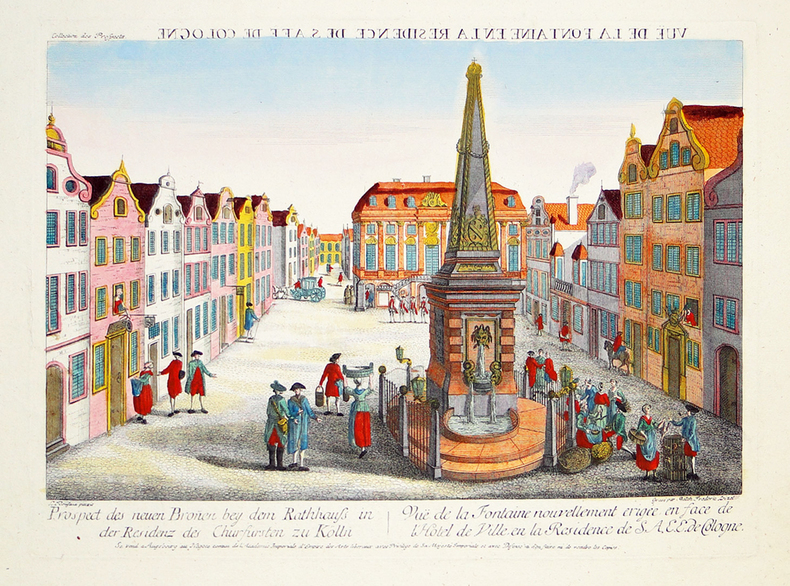
1780LBW-2791Augsbourg, Négoce commun de l'Académie Impériale d'Empire des Arts Libéraux, [circa 1780]. 295 x 395 mm.
1780LBW-2790Augsbourg, Négoce commun de l'Académie Impériale d'Empire des Arts Libéraux, [circa 1780]. 295 x 395 mm.
1773402036Mannheim, Schwan, 1773-78. 4to. Mit 6 gefalteten Kupfertafeln u. 4 gestochenen Titelvignetten. Moderner Halbpergament (Bd. 1) u. Halbpergament d. Zeit (Bd. 2-4, etwas fleckig u. verstaubt). [3 Warenabbildungen]
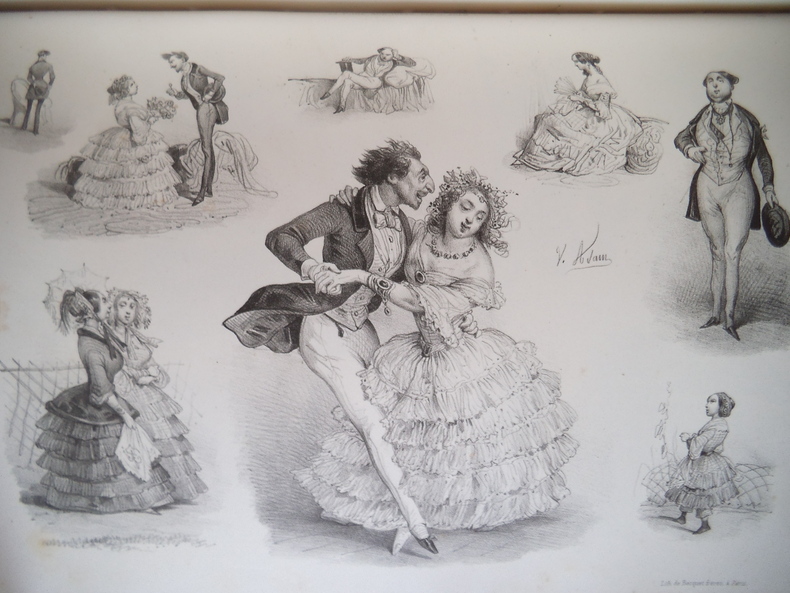
14595Album de 100 planches lithographiées, en noir, numérotée de 1 à 120. (Sans les planches 4 10 11 16 19 21 22 23 29 34 43 45 50 57 63 65 67 73 75 76 planches absentes d’origine) Petit folio reliure pleine toile verte de l’éditeur. Plaque avec titre doré sur le premier plat, filet en encadrement avec écoinçons. Paris J. MONROCQ éditeur sans date 245x315mm. Lithographie de BOCQUET frères à Paris. Toutes les lithographies sont signées V.ADAM. dans la planche. Magnifique sélection de croquis, de plaisanteries, de caricatures, de costumes, de jeux, d »’animaux, de fantaisies etc. Revue extraordinaire de sujets dessinés par Victor ADAM de planches lithographiées en noir, comme autant de vignettes empruntées à ses albums thématiques passés ou à venir (animaux toutes espèces, chevaux cavaliers, petits contes mis en action etc.) ou bien encore d’illustrations tirées des albums d’ALLOUARD et KOEPPELIN la France aux XIVème et XVème siècles, ou de MICHELANT Les faits mémorables de l’histoire de France etc. Publiée en 1855 sous le titre La foire aux idées (1851-1854) Planches imprimées et lithographiées par BECQUET frères Paris avec l’adresse en marge inférieure droite. Paris MONROCQ frères éditeurs, en marge inférieure gauche. Très bon état. Les exemplaires complets sont Fort rare.
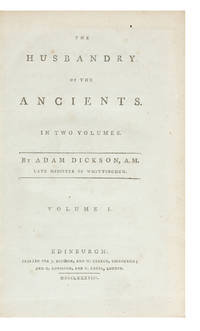
2722One engraved plate. xxiii 527 pp.; vi 494 pp. Two vols. 8vo cont. calf a few unimportant binding defects spines gilt red morocco lettering pieces on spines. Edinburgh: J. Dickson & W. Creech 1788. First edition of the author's most important book; it was published posthumously by one of the author's daughters who has provided here a biography of her father. Dickson 1721-76 wrote a number of practical works on agriculture which described techniques adapted to the soil and climate of Scotland. In the present work Dickson "collects the agricultural processes of the ancients under their proper heads and compares them with modern practice in which his experience renders him a safe guide. The first volume contains accounts of the roman villa crops manures and ploughs; the second treats of the different ancient crops and the times of sowing."-D.N.B. V pp. 943-44. Attractive set. ❧ Fussell II p. 57-Dickson "was able to dispose of some obscurities in Rei Rusticae Scriptores that had puzzled earlier non-agricultural scholars.". unknown books
1692019576Amstelodami Amsterdam: Peter Le Clert 1692. Book. Very good condition. Hardcover. Early edition. Octavo 8vo. Book I: xxxiv 372 pages of text viii pages of index. Book II: xxiv 274 pages. Book III; 275-638 pages followed by vi pages of index. In book III pages 451-537 are mis-numbered 551-637. Original full vellum binding with minor shelfwear moderate soiling hand-lettered spine and a small paper label. Gilt heraldic device stamped on the front cover. Measures 196mm x 157mm. Illustrated with a frontisportrait of the author and complete with two 2-page tables and a large fold-out table. Title printed in red and black. Previous owner's bookplate affixed to the inside of the front cover over a remnant of another bookplate: Bruno Kisch Pragensis. Previous owner's markings on the front endpaper and stamped on the back of the title page. There is a small amount of minor damp-staining and rippling to the bottom corner of the final half of the text. The final two endpapers have a small crease. Numismatics. Early printing. Peter Le Clert Hardcover books
1692019576Amstelodami Amsterdam: Peter Le Clert 1692. Book. Very good condition. Hardcover. Early edition. Octavo 8vo. Book I: xxxiv 372 pages of text viii pages of index. Book II: xxiv 274 pages. Book III; 275-638 pages followed by vi pages of index. In book III pages 451-537 are mis-numbered 551-637. Original full vellum binding with minor shelfwear moderate soiling hand-lettered spine and a small paper label. Gilt heraldic device stamped on the front cover. Measures 196mm x 157mm. Illustrated with a frontisportrait of the author and complete with two 2-page tables and a large fold-out table. Title printed in red and black. Previous owner's bookplate affixed to the inside of the front cover over a remnant of another bookplate: Bruno Kisch Pragensis. Previous owner's markings on the front endpaper and stamped on the back of the title page. There is a small amount of minor damp-staining and rippling to the bottom corner of the final half of the text. The final two endpapers have a small crease. Numismatics. Early printing. Peter Le Clert Hardcover
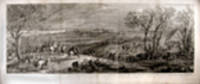
168515007Paris: distribuë par l'Auteur en l'Hostel des Manufactures des Gobelins et en la rue St.Jacques 1685. Copper engraving on two joined sheets by Van Huctenburg and A.F. Baudouinst after Van der Meulen. Titled in French and Latin. Painted from life by the artist who accompanied Louis XIV on his campaigns Adam Frans Van der Meulen depicted in this wonderful panorama a post-battle view of Dôle the capital of Franche-Comté and the handsome surrounding region. In it Louis XIV and his brother survey the city they've won from a hilltop. There is actually no unpleasant evidence of military activity except for some smoke billowing from the far side of Dôle. Adam Frans Van der Meulen was a landscape and genre painter who specialized in battle scenes and his early works i.e. those from the years before he left for Paris the earliest dated work is from 1653 are mainly cavalry skirmishes in the manner of his teacher Pieter Snayer. After he moved to Paris the character of his work changed and became more ceremonial. He now specialized in large topographical views and military scenes and in royal journeys processions and receptions. His most important task was to accompany the king on his many campaigns during the wars of conquest waged in the 1660s and 1670s against inter alia the Spanish Netherlands and as Peintre de conquêtes du roi officially to portray the memorable sieges battles and conquests of le Roi Soleil in large-scale canvases or cartoons which were later transformed into tapestries. Van der Meulen was born in Brussels in 1632. In 1646 he was apprenticed to the battle painter Pieter Snayers. In 1651 he became a master in the Guild of St Luke in Brussels but by 1663 he had moved to Paris where he joined a group of Netherlandish artists associated with the French painter Charles Le Brun 1619-90 who not only was Premier peintre du roi but also from 1663 director of the Parisian tapestry manufactory Manufacture royale des Gobelins. Van der Meulen quickly became a protégé of Le Brun and on his recommendation Van der Meulen was appointed court painter to Louis XIV on 1 April 1664 and at the same time became Le Brun's collaborator in the tapestry manufactory. In 1673 he was accepted as a member of the Académie royale de Peinture et de Sculpture without any obligation to submit a morceau de réception; in 1681 he became conseiller and in 1686 premier conseiller. He died as a highly esteemed artist in the Hôtel des Gobelins 15 October 1690. distribuë par l'Auteur, en l'Hostel des Manufactures des Gobelins, et en la rue St.Jacques unknown books
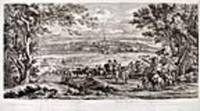
168516903Paris: distribuë par l'Auteur en l'Hostel des Manufactures des Gobelins et en la rue St.Jacques 1685. Copper engraving on two joined sheets after Van der Meulen. Titled in French and Latin. In excellent condition. Some infill work along the bottom margin. Image size: 18 1/2 x 38 5/8 inches. A striking contemporary view of Gray in Franche-Comte by the celebrated court painter Van der Meulen.<br/> <br/>This fine view shows the town of Gray in Franche-Comte built on the banks of the Saône River. One of the most important trading towns in Franche-Comte the region became a possession of the Spanish Hapsburgs in 1556. Although some of the region's fortified towns were occupied by France during the Wars of Religion peace and prosperity continued until the advent of the Thirty Years War when the region was ravaged by both Catholics and Protestants. Louis XIV conquered Franche-Comté in 1668 and again in 1674 and finally obtained its cession from Spain. Van der Meulen's striking image depicts the king and his armies entering the town after they successfully re-conquered the region. Adam Frans Van der Meulen was a landscape and genre painter who specialized in battle scenes and his early works i.e. those from the years before he left for Paris the earliest dated work is from 1653 are mainly cavalry skirmishes in the manner of his teacher Pieter Snayer. After he moved to Paris the character of his work changed and became more ceremonial. He now specialized in large topographical views and military scenes and in royal journeys processions and receptions. His most important task was to accompany the king on his many campaigns during the wars of conquest waged in the 1660s and 1670s against inter alia the Spanish Netherlands and as Peintre de conquêtes du roi officially to portray the memorable sieges battles and conquests of le Roi Soleil in large-scale canvases or cartoons which were later transformed into tapestries. Van der Meulen was born in Brussels where he was baptized in 1632. In 1646 he was apprenticed to the battle painter Pieter Snayers. In 1651 he became a master in the Guild of St. Luke in Brussels but by 1663 he had moved to Paris where he joined a group of Netherlandish artists associated with the French painter Charles Le Brun 1619-90 who not only was Premier peintre du roi but also from 1663 director of the Parisian tapestry manufactory Manufacture royale des Gobelins. Van der Meulen quickly became a protégé of Le Brun and on his recommendation Van der Meulen was appointed court painter to Louis XIV on 1 April 1664 and at the same time became Le Brun's collaborator in the tapestry manufactory. In 1673 he was accepted as a member of the Académie royale de Peinture et de Sculpture without any obligation to submit a morceau de réception; in 1681 he became conseiller and in 1686 premier conseiller. He died as a highly esteemed artist in the Hôtel des Gobelins 15 October 1690. distribuë par l'Auteur, en l'Hostel des Manufactures des Gobelins, et en la rue St.Jacques unknown books
16853659Paris: distribuë par l'Auteur en l'Hostel des Manufactures des Gobelins et en la rue St.Jacques 1685. Copper engraving on two joined sheets by A.F. Baudouin with the figures by R. Bonnart after Van der Meulen. Titled in French and Latin. A fine view of the fortified town of Calais and its environs recalling king Louis XIV's gradual acquisition of territory on the Channel coast from 1667 onwards.<br/> <br/>This excellent panorama shows Calais as seen from the landward side looking across to the ramparts of the fortifications surrounding the town to the roofs of the town itself and then beyond to the sea. In the fore and mid-ground the French army of King Louis XIV moves forward towards the town this scene enlivened by Van der Meulen's portrayal of the stormy conditions: hats blow off cloaks are wrapped around peoples' heads foot soldiers lean into the wind. This sort of detail supports the statement in the imprint that the present scene was painted from life by Van der Meulen. Adam Frans Van der Meulen was a landscape and genre painter who specialized in battle scenes and his early works i.e. those from the years before he left for Paris the earliest dated work is from 1653 are mainly cavalry skirmishes in the manner of his teacher Pieter Snayer. After he moved to Paris the character of his work changed and became more ceremonial. He now specialized in large topographical views and military scenes and in royal journeys processions and receptions. His most important task was to accompany the king on his many campaigns during the wars of conquest waged in the 1660s and 1670s against inter alia the Spanish Netherlands and as Peintre de conquêtes du roi officially to portray the memorable sieges battles and conquests of le Roi Soleil in large-scale canvases or cartoons which were later transformed into tapestries. Van der Meulen was born in Brussels where he was baptised in 1632. In 1646 he was apprenticed to the battle painter Pieter Snayers. In 1651 he became a master in the Guild of St Luke in Brussels but by 1663 he had moved to Paris where he joined a group of Netherlandish artists associated with the French painter Charles Le Brun 1619-90 who not only was Premier peintre du roi but also from 1663 director of the Parisian tapestry manufactory Manufacture royale des Gobelins. Van der Meulen quickly became a protégé of Le Brun and on his recommendation Van der Meulen was appointed court painter to Louis XIV on 1 April 1664 and at the same time became Le Brun's collaborator in the tapestry manufactory. In 1673 he was accepted as a member of the Académie royale de Peinture et de Sculpture without any obligation to submit a morceau de réception; in 1681 he became conseiller and in 1686 premier conseiller. He died as a highly esteemed artist in the Hôtel des Gobelins 15 October 1690. distribuë par l'Auteur, en l'Hostel des Manufactures des Gobelins, et en la rue St.Jacques unknown books
168515007Paris: distribuë par l'Auteur en l'Hostel des Manufactures des Gobelins et en la rue St.Jacques 1685. Copper engraving on two joined sheets by Van Huctenburg and A.F. Baudouinst after Van der Meulen. Titled in French and Latin. Painted from life by the artist who accompanied Louis XIV on his campaigns Adam Frans Van der Meulen depicted in this wonderful panorama a post-battle view of Dôle the capital of Franche-Comté and the handsome surrounding region. In it Louis XIV and his brother survey the city they've won from a hilltop. There is actually no unpleasant evidence of military activity except for some smoke billowing from the far side of Dôle. Adam Frans Van der Meulen was a landscape and genre painter who specialized in battle scenes and his early works i.e. those from the years before he left for Paris the earliest dated work is from 1653 are mainly cavalry skirmishes in the manner of his teacher Pieter Snayer. After he moved to Paris the character of his work changed and became more ceremonial. He now specialized in large topographical views and military scenes and in royal journeys processions and receptions. His most important task was to accompany the king on his many campaigns during the wars of conquest waged in the 1660s and 1670s against inter alia the Spanish Netherlands and as Peintre de conquêtes du roi officially to portray the memorable sieges battles and conquests of le Roi Soleil in large-scale canvases or cartoons which were later transformed into tapestries. Van der Meulen was born in Brussels in 1632. In 1646 he was apprenticed to the battle painter Pieter Snayers. In 1651 he became a master in the Guild of St Luke in Brussels but by 1663 he had moved to Paris where he joined a group of Netherlandish artists associated with the French painter Charles Le Brun 1619-90 who not only was Premier peintre du roi but also from 1663 director of the Parisian tapestry manufactory Manufacture royale des Gobelins. Van der Meulen quickly became a protégé of Le Brun and on his recommendation Van der Meulen was appointed court painter to Louis XIV on 1 April 1664 and at the same time became Le Brun's collaborator in the tapestry manufactory. In 1673 he was accepted as a member of the Académie royale de Peinture et de Sculpture without any obligation to submit a morceau de réception; in 1681 he became conseiller and in 1686 premier conseiller. He died as a highly esteemed artist in the Hôtel des Gobelins 15 October 1690. distribuë par l'Auteur, en l'Hostel des Manufactures des Gobelins, et en la rue St.Jacques unknown
16853659Paris: distribuë par l'Auteur en l'Hostel des Manufactures des Gobelins et en la rue St.Jacques 1685. Copper engraving on two joined sheets by A.F. Baudouin with the figures by R. Bonnart after Van der Meulen. Titled in French and Latin. A fine view of the fortified town of Calais and its environs recalling king Louis XIV's gradual acquisition of territory on the Channel coast from 1667 onwards.<br/> <br/> This excellent panorama shows Calais as seen from the landward side looking across to the ramparts of the fortifications surrounding the town to the roofs of the town itself and then beyond to the sea. In the fore and mid-ground the French army of King Louis XIV moves forward towards the town this scene enlivened by Van der Meulen's portrayal of the stormy conditions: hats blow off cloaks are wrapped around peoples' heads foot soldiers lean into the wind. This sort of detail supports the statement in the imprint that the present scene was painted from life by Van der Meulen. Adam Frans Van der Meulen was a landscape and genre painter who specialized in battle scenes and his early works i.e. those from the years before he left for Paris the earliest dated work is from 1653 are mainly cavalry skirmishes in the manner of his teacher Pieter Snayer. After he moved to Paris the character of his work changed and became more ceremonial. He now specialized in large topographical views and military scenes and in royal journeys processions and receptions. His most important task was to accompany the king on his many campaigns during the wars of conquest waged in the 1660s and 1670s against inter alia the Spanish Netherlands and as Peintre de conquêtes du roi officially to portray the memorable sieges battles and conquests of le Roi Soleil in large-scale canvases or cartoons which were later transformed into tapestries. Van der Meulen was born in Brussels where he was baptised in 1632. In 1646 he was apprenticed to the battle painter Pieter Snayers. In 1651 he became a master in the Guild of St Luke in Brussels but by 1663 he had moved to Paris where he joined a group of Netherlandish artists associated with the French painter Charles Le Brun 1619-90 who not only was Premier peintre du roi but also from 1663 director of the Parisian tapestry manufactory Manufacture royale des Gobelins. Van der Meulen quickly became a protégé of Le Brun and on his recommendation Van der Meulen was appointed court painter to Louis XIV on 1 April 1664 and at the same time became Le Brun's collaborator in the tapestry manufactory. In 1673 he was accepted as a member of the Académie royale de Peinture et de Sculpture without any obligation to submit a morceau de réception; in 1681 he became conseiller and in 1686 premier conseiller. He died as a highly esteemed artist in the Hôtel des Gobelins 15 October 1690. distribuë par l'Auteur, en l'Hostel des Manufactures des Gobelins, et en la rue St.Jacques unknown
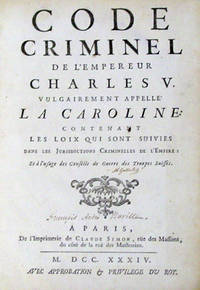
55578Paris Claude Simon 1734. Gr.8° Gestochenes Portrait Le Baron de Besenval Titelkupfer 15 Bl 365 S. 1 Bl. OLdr der Zeit mit Rückenschild goldgeprägter Rücken Erste von 3 franz. Ausgabe. Gewidmet «A Monsieur le Baron de Besenval Lieutenat general des Armées du Roy Colonel du Regiment des Gardes Suisse des sa Majeste.»Franz Adam Vogel «Garde juge des Gardes suisse du Roi» übersetzte die Kriminalordnung Kaiser Karls V aus dem Jahr 1532 ins Französische. Formel des Kriegsrates in deutscher Übersetzung.Die Constitutio Criminalis Carolina CCC oder Carolina gilt heute als erstes allgemeines deutsches Strafgesetzbuch. Eindeutschend wird sie schon früh auch als peinliche Halsgerichtsordnung Karls V. bezeichnet. Peinlich bezieht sich hierbei auf das lateinische „poena“ übersetzt „Strafe“ und bezeichnet Leibes- und Lebensstrafen. Die Carolina hatte weit über das Reich hinaus Gesetzeskraft und galt teilweise bis ins frühe 19 Jht.Jean-Victor de Besenval Baron de Brünstatt 1671- 1736 schweizer Offizier in franz. diplomatischen Diensten. 1703 in Berlin ab 1707 franz. Botschafter bei König Karl XII von Schweden und von 1710 bis 1721 am Hof des polnischen Königs u Kurfürsten von Sachsen August dem Starken.KANN ERST NACH MESSERERHÖFFNUNG VERKAUFT WERDEN! 010 Paris, Claude Simon, 1734 unknown
1896213503London: Oxford University Press 1896. First Edition . Hardcover. VG. Notes from lectures delivered in the University of Glascow in 1763. 293 pages plus 8 pages of advertisements. Pages are in very good clean condition; edges yellowed. Black endpapers. Burgundy hardcovers with gilt titles and emblem on the spine. Spine a little darkened and worn. Corners lightly bumped and rubbed. Some wrinkling on the upper cover light scuffing on the lower. Binding tight. Rare book. VG- <br/> <br/> Oxford University Press hardcover
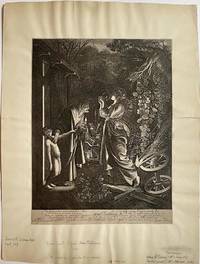
K80071Mocking of Ceres a nocturnal scene; Ceres drinks avidly from a jug of water given to her by an old woman holding a candle at a doorway; besides the elderly woman is Stellio a naked youth who points at Ceres; a burning torch rests on some wooden wheels; in the background a woman milks a cow.Inscription below: two columns of Latin verse by Janus Rutgers: Dam frugum genitrix. fugisset set iam stellis faetus erat.With a dedication to Scipioni Burghesio / S.R.E Cardinal Scipio Borghese.Below left AElsheimer pinxit. With: HGoudt sculpsit et dicauit Romæ 1610.Made during Goudts residence in Rome from about 1604 to 1610 this engraving depicts the goddess Ceres on her quest to find her daughter Proserpina. Quenching her thirst at a strangers home she is mocked by a little boy for drinking so greedily.NL De godin Ceres op zoek naar haar dochter Proserpina rust uit bij een hut. Ze drinkt uit een kruik gegeven aan haar door een oude vrouw. Een kleine naakte jongen naast de oude vrouw wijst naar Ceres en lacht haar uit. De prent heeft een Latijns onderschrift. Naar een schilderij van Adam Elsheimer. Gemaakt door Hendrick Goudt. Ceres was de <em>godin</em> van de akkerbouw in het bijzonder van het graan en de moederliefde. Engraving on laid paper cut within the margins and pasted on a larger sheet of paper; total: 314 x 239 mm; darkening paper filled in lacuna on the right side on the mount; otherwise in very good condition. Hollstein 5. unknown
51-6926Paris: Dentu An X 1802. 3 text volumes in original pink wrappers. 14 x 21cm. Atlas: folio. 27.5 x 36cm. Half goatskin and marbled boards by the artisan binder Sasha Mosalov. Original pink boards saved separately. . A few plates with marginal waterstains.OCLC Numbers465192568 and 1501424368.3 vol. ; in-8 XVIII-303 332 315-1 p. Atlas with 14 pages 43 leaves of plates 4 folded : 37 illustrations.The atlas includes plates of Corfu Zante Ithaca and Athens in addition to 5 views of the plain of Troy which have been re-engraved from the aquatints in Morritt's Vindication. Le Chevalier's survey of the Troad marks the beginning of modern archaeological exploration in that area despite the fact that his theory as to the location of Troy proved to be incorrect. Le Chevalier worked with Choiseul Gouffier and Louis Francois Cassas. Paris: Dentu, An X (1802) hardcover
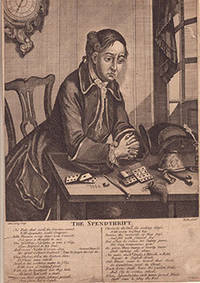
51-7006England: circa 1800. Etching and engraving top; with letterpress below the image. 35 x 24cm. Very rare. Similar to British Museum number 19350522.2.120 and Museum number 20107081.2109. Also similar to Reverse image of Colonial Williamsburg Object number 1967-338. From the collection of Frederick Gale Ruffner Jr 1926-2014 the founder of Gale Research Detroit. England: circa 1800 unknown
120901aafA Paris, chez Briasson, M. DCC. LXIV., 1764, kl. in-8vo, (17 x 11 cm), VIII (faux-titre, titre, avertissement) + 302 p. / 2 ff. (faux-titre, titre) + 370 p. + 1 f. (privilège du Roi), Exlibris gravé ‘Bibliothèque de Villeneuve-Butel’, avec monogramme au même nom. reliure pleine basane d’époque, pages de gardes en papiers dominotés, tranches marbrées, pièce de titre en maroquin rouge, dos lisse orné de compartiments fleuronnés et cloisonnés, charnières et coiffes restaurées, bel état.
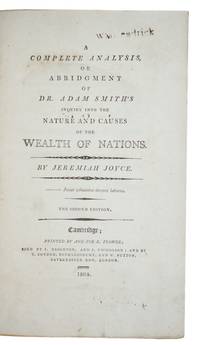
1804AQ21202Cambridge: Printed by and for B. Flower 1804. 324pp. Modern morocco-backed marbled boards gilt. Slightly rubbed to extremities occasional marking else a crisp unpressed and generously margined copy displaying several untrimmed fore-edges and some marginal paper flaws. With occasional neat early underlining of key passages suggesting a close reading a handful of single-word manuscript translations into French early ink-stamps of Wm. McKendrick to early blank preceding title and following leaf and later ink inscription to modern blank fly. The second edition of the first work of economics in English consciously intended to be used as a textbook: as the author himself notes in a preliminary 'advertisement' the work was to be 'found convenient as a text book in those institutions of liberal education in which the "Wealth of Nations" makes an essential branch of their letters'. A lucid abridgement by English radical Jeremiah Joyce 1763-1816 of Scottish philosopher Adam Smith's monumental Wealth of nations it condensed the two thick quartos of the original edition London 1776 or the by then well known bulky triple-decker octavo editions of the late eighteenth century into a single convenient octavo volume. Mizuta 82. Second edition. 8vo. Printed by and for B. Flower hardcover
1806996Y39Edinburgh: William Creech 1806. Leather. Good. 8.5" by 5.5". None. Complete in three volumes the Edinburgh edition of Adam Smith's magnum opus an economical treatise on building a nations' wealth. Commonly known as the Edinburgh edition. Complete in three volumes. First edition to be printed by and for William Creech. With a life of the author. Uniformly bound in half diced calf with cloth boards. Renewed endpapers. Lacking two pages of advertisements to the rear of Vol. III.The Wealth of Nations offers one of the first accounts of what builds nations' wealth established as a fundamental work in classical economics and described as the "first formulation of a comprehensive system of political economy".A product of the Scottish Enlightenment and the dawn of the Industrial Revolution the treatise offered a critical examination of the mercantilist policies of the day shaping the field and providing a theoretical foundation for free market capitalism that prevailed in the 19th century. It also influenced several authors and economists such as Karl Marx as well as governments and organisations setting the terms for economic debate and discussion for the next century and a half.From Scottish economist philosopher and pioneer in the field of political economy Adam Smith named the "father of economics" or the "father of capitalism". Uniformly bound in half diced calf with cloth boards. Renewed endpapers. Externally joints to Vol I and II are tender. Rubbing to the extremities notably to the spines. The odd minor mark to the boards. Internally firmly bound. Pages are generally bright and clean with offsetting to the endpapers and scattered spotting usually found to the first and last couple leaves. Good William Creech hardcover
100-33883Corgi. Paperback. New. In shrink wrap. Corgi paperback
1826349092 blade 4to. Titelbl. som ovenfor beskrevet. Selve digtet fylder 2 1/2 side og består af fem vers m. 8 linier i hvert. Enkelte rettelser med overstregninger. Ud over rettelserne er der en enkelt afvigelse fra den trykte version: Vers 4, linie 6 står: ""De Piger saa villige fandt:"" i stedet for det trykte: ""De Skiønne saa villige fandt:"".