Friedal, Adam deBiblio.com
37 325 résultats
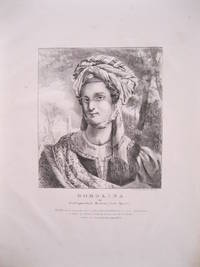
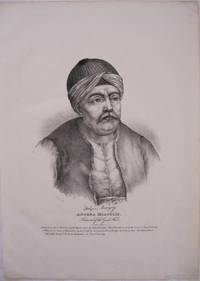
1920Philhellenic: London " Drawn from life & pub.d. in London by Adam Friedal .now in course of Publication by A. Friedal & sold by commision for A Friedal . 12 Pheonix Row Blackfriars Road & by all the Principal Book & Printsellers in Town & Country." March 1826. Black & white lithograph portrait of Andreas Miaoulis from the second edtion of Friedals "Series of Greek Portraits 2nd part" verso blank. Printed signature in Greek Andreas Vokos nicknamed Miaoulis 1768 – 1835 was an admiral and politician who commanded Greek naval forces during the Greek War of Independence 1821-1829. Miaoulis who was of Arvanite origin was born in Euboea and settled on the island of Hydra east of the Morea and was known among his fellow islanders as a trader in corn who had gained wealth and made a popular use of his money. He had been a merchant captain and was chosen to lead the naval forces of the islands when they rose against the government of the Sultan. Miaoulis contributed in every way possible to the cause of the resistance against the Turks. He expended the money he had made from his wheat-shipping business during the Napoleonic Wars. Between May 1825 and January 1826Miaoulis led the Greeks to victory over the Turks in skirmishes off Modon Cape Matapan Suda and Cape Papas. As early as 1822 Miaoulis was appointed navarch Greek: ÎάυαÏχος or admiral of the swarm of small vessels which formed the insurgent fleet. He commanded the expedition sent to take revenge for the massacre of Chios in the same year. He was victorious at the Battle of Nauplia in September. In 1824 after the conquest of Psara by the Turks he commanded the Greek forces which prevented the further progress of the Sultan's fleet though at the cost of the loss of many fire ships and men. But in the same year he was unable to prevent the Egyptian forces from occupying Navarino though he harassed them with some success. In 1825 he succeeded in carrying stores and reinforcements into Missolonghi when it was besieged for the second time though he could not avert its fall. When independence had been obtained Miaoulis in his old age was entangled in the civil conflicts of his country as an opponent of Capodistrias and the Russian Party : he seized some of the principal ships of the Greek fleet at Poros in August 1831 including the Hellas and destroyed them during the counter-attack of the Russian fleet. He was one of the deputation sent to invite King Otho to accept the crown of Greece and was made rear-admiral and then vice-admiral by him. Otto also awarded him with the Grand Cross of the Order of the Redeemer. Clean and bright; light spotting. Adam de Friedal there is much confusion about Friedal's origins He is supposed to be a Danish Phihellene and apparently passed himself off as a Baron. St Clair tells us that Friedal carried a lithographic press on his back whilst in Greece where he seems to have been between 1821-24. He was at Missolonghi for a while with Lord Byron and married the sister of one of Byron's artificers John Hodges. Byron wrote a letter introducing Friedal to the notice of the London Greek Commitee. Friedal returned and settled in London and produced his first portrait of Mavrocordato dated September 1824. "The Greeks. Twenty-four Portraits In Four Parts Of Six Portraits Each of the Principal Leaders and Personages Who Have Made Themseves Most Conspicuous in the Greek Revolution." 1st edition 1824. thereafter there are a number of editions with differences to the portraits. The portraits in the 1st Edition probably after Friedal's original drawings are fairly primitive with each new edition they became more refined. A second edition of the first 2 parts was issued in 1826. Some of these plates are marked 'second edition' others merely have anew date on the plate surface. In most cases a completely new portrait replaces that of the previous ediion; parts 3 & 4 are unchanged. In 1827 two editions appeared with the imprint "London and Paris 1827" some on India paper. one in which the portraits had no or a very simple background the other with full complex backgrounds. A French edition appeared the same year. In 1828-9 Dean & Munday brought out another series of Friedal plates some but not all marked 'fourth edition' their most distinguishing feature being that they are full length. They re- issued a number of plates in 1830 marked fifth and sixth edition. There exist wrappers for a 'sixth edition 'appearing in 1832. Navari. Navari/ Blackmer: 633; Sotheby's/Blackmer:606; Philhellenic Andreas Miaoulis London " Drawn from life & pub.d. in London by Adam Friedal ..now in course of Publication by A. Friedal & sold by commision fo unknown
1919Philhellenic: London " In course of Publication in London by A. Friedal & sold by the principal book & printsellers in town & Country." August 1826. Black & white lithograph portrait of Laskarina Bouboulina from the second edtion of Friedals "Series of Greek Portraits 2nd part" verso blank. The portrait bust shows a romanticised image of Bouboulina replacing the previous portrait of the first edition; she is noticeably younger and prettier wearing a sarik or turban against a background of trees and a mosque. possibly reflecting her early life in Constantinople. thus the image can be considered a first edition; Friedal would refine it even further in later editions of the work. Bouboulina was born in a prison in Constantinople; she originated from the Arvanite community of the island of Hydra daughter of Stavrianos Pinotsis a captain from Hydra island. The Ottomans had imprisoned Pinotsis for his part in the failed Orlof Revolution of 1769–1770 against the Ottoman rule. Her father died soon afterward and the mother and child returned to Hydra. They moved to the island of Spetses four years later when her mother married Dimitrios Lazarou-Orlof. She married twice first Dimitrios Yiannouzas and later the wealthy shipowner and captain Dimitrios Bouboulis taking his surname. Bouboulis was killed in battle against Algerian pirates in 1811. Now 40 years old Bouboulina took over his fortune and his trading business and had four more ships built at her own expense including the large warship Agamemnon. In 1816 the Ottomans tried to confiscate Bouboulina's property because her second husband had fought for the Russians against the Turks in the Turko-Russian wars. She sailed to Constantinople to meet Russian ambassador Count Pavel Strogonov and seek his protection. In recognition of Bouboulis's service to the Russians Strogonov sent her to safety in Crimea. She also met with the mother of Mahmud II who afterward reportedly convinced her Allegedly Bouboulina joined the Filiki Etaireia an underground organization that was preparing Greece for revolution against Ottoman rule. She would have been one of few women but she is not named in historical members lists. She bought arms and ammunition at her own expense and brought them secretly to Spetses in her ships to fight "for the sake of my nation." Construction of the ship Agamemnon was finished in 1820. She bribed Turkish officials to ignore the ship's size and it was later one of the largest warships in the hands of Greek rebels. She also organized her own armed troops composed of men from Spetses. She used most of her fortune to provide food and ammunition for the sailors and soldiers under her command. On 13 March 1821 Bouboulina raised on the mast of Agamemnon her own Greek flag based on the flag of the Comnenus dynasty of Byzantine emperors. The people of Spetses revolted on 3 April and later joined forces with ships from other Greek islands. Bouboulina sailed with eight ships to Nafplion and began a naval blockade. Later she took part in the naval blockade and capture of Monemvasia and Pylos. She arrived at Tripolis in time to witness its fall on 11 September 1821 and to meet general Theodoros Kolokotronis.During the ensuing defeat of the Ottoman garrison Bouboulina saved most of the female members of the sultan's household. In 1823 Emperor Alexander I of Russia granted Bouboulina the rank of Admiral of the Russian Navy Clean and bright; light spotting. Adam de Friedal there is much confusion about Friedal's origins He is supposed to be a Danish Phihellene and apparently passed himself off as a Baron. St Clair tells us that Friedal carried a lithographic press on his back whilst in Greece where he seems to have been between 1821-24. He was at Missolonghi for a while with Lord Byron and married the sister of one of Byron's artificers John Hodges. Byron wrote a letter introducing Friedal to the notice of the London Greek Commitee. Friedal returned and settled in London and produced his first portrait of Mavrocordato dated September 1824. "The Greeks. Twenty-four Portraits In Four Parts Of Six Portraits Each of the Principal Leaders and Personages Who Have Made Themseves Most Conspicuous in the Greek Revolution." 1st edition 1824. thereafter there are a number of editions with differences to the portraits. The portraits in the 1st Edition probably after Friedal's original drawings are fairly primitive with each new edition they became more refined. A second edition of the first 2 parts was issued in 1826. Some of these plates are marked 'second edition' others merely have anew date on the plate surface. In most cases a completely new portrait replaces that of the previous ediion; parts 3 & 4 are unchanged. In 1827 two editions appeared with the imprint "London and Paris 1827" some on India paper. one in which the portraits had no or a very simple background the other with full complex backgrounds. A French edition appeared the same year. In 1828-9 Dean & Munday brought out another series of Friedal plates some but not all marked 'fourth edition' their most distinguishing feature being that they are full length. They re- issued a number of plates in 1830 marked fifth and sixth edition. There exist wrappers for a 'sixth edition 'appearing in 1832. Navari. Navari/ Blackmer: 633; Sotheby's/Blackmer:606; Philhellenic Laskarina Bouboulina Bobolina London " In course of Publication in London by A. Friedal & sold by the principal book & printsellers in town & Country." Augus unknown
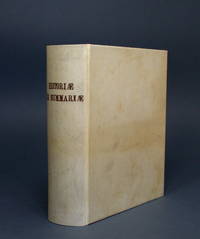
16923615Amstelodami Amsterdam Peter Le Clert 1692. Hardcover. . ~ ~ NOTE: THE PRICE OF THIS BOOK IS CURRENTLY REDUCED! ~ ~ . Three volumes in one. Octavo 205 x 180mm. Pp. xxxii 368 viii; xxii 274; 275-638 i.e. 538 vi. Numerous errors in pagination. Tome I pp. 369-372 misbound; Tome III pp. 451-537 misnumbered 551-637; pp. 568-569 572-573 blank. Plus engraved frontispiece portrait of Matthaeus Hostus chipped at corner with slight loss to background skilfully restored on mount. Folding tables. Title-page printed in red and black list of contents printed on verso. Woodcut device to title. Large illustrated woodcut head- and tail-pieces and initials; occasionally slight browning. HARDCOVER bound in handsome modern vellum lettering to spine sprinkled edges. A fine copy. Crisp interior exceptionally well preserved attractive binding. ~ First part complete in itself of the collective work "Tractatuum series". This part is entirely made up of the works of Matthaeus Hostius which are divided into three tomes having each a separate title-page. First Tome contains 5 books or parts; Second Tome contains 3 books; Third Tome contains 10 books. Each of the 18 books has a separate title-page. The "Tractatuum series" contains the following works: I. Matthaei Hosti: Historica antiquitas: Rei nummariae Mensurarum Ponderum &c. in tres tomos distincta; II: Joannis Seldeni i.e. Alessandro Sardi: Liber de nummis; III: Philippi Labbe: Bibliotheca nummaria; IV: Guilielmi Budaei: De asse & partibus eius libri V; Cum indicibus locupletissimis. Matthaeus Host 1509-1587. Adam Rechenberg 1642-1721. Alessandro Sardi 1520-1588. Guillaume Bude 1468-1540. Philippe Labbe 1607-1667. Lipsius p. 326. I-5 OUT <br/> <br/> Amstelodami, [Amsterdam] Peter Le Clert hardcover
1822015288London: J. RICHARDSON AND CO.; THOMAS TEGG; G. OFFOR; J. SHARPE AND SON; ROBINSONS AND CO.; G. WALKER; J. EVANS AND SONS 1822. Book. Very Good. Hardcover. 1st Edition. First Edition THUS First Printing. New ed. with a life of the author. Incomplete Volume I and II of the five volume set. Brown cloth borders in gilt decorated spine title label to spine grey end pages marbled pattern to text block. Vol I contains Life of the author ; The Theory of Moral sentiments ; A dissertation on the origin of languages. Vol II contains the first part of An inquiry into the nature and causes of the wealth of nations advertisement for the Third edition and then this the fourth edition preceding the main text. Tight binding clean pages two vols complete. . These belonged to the Irish antiquarian folklorist and archaeologist Thomas J. Westropp and are signed to the title pages by him. J. RICHARDSON AND CO.; THOMAS TEGG; G. OFFOR; J. SHARPE AND SON; ROBINSONS AND CO.; G. WALKER; J. EVANS AND SONS Hardcover
11691Amsterdam Abraham van der Putte 17XX. 16 576 p. Origineel Perkament 8° Schutbladen los hele werk licht gebruind. Amsterdam, Abraham van der Putte unknown
BIB-65710Leather Binding fake. Publisher: Albert Bonnier 1865 Leather Binding fake 52 p. : 17 pl. Fair condition. --- Information regarding the book: Bindning och skick: Blått konstskinnband med klotframsida. Dekorationer i guld och blindtryck. Bakre pärmen nött eller missfärgad upptill. Några planscher har små fläckar på baksidan men är i fint skick på bildsidan. Riss i någon textsida baktill. F.d. biblioteksbok med ett par stämplar och klassifikationsbokstäver. hardcover
200732367Glasgow: Magnum Opus Hermetic Sourceworks 2007. First edition. Cloth bound in fine condition. Limited edition of 100 copies numbered and signed by McLean; Translated by Vincent Matley with an Introduction by Adam McLean; 11.5" x 8"; 49 pages with 24 full page color illustrations; Bound in leatherette. This late Eighteenth Century work is preserved in two manuscripts. It is almost completely unknown. It consists of a series of seven 'keys' presenting the alchemical work in a sequence of twenty two emblematic figures. These are provided with explanatory texts providing practical explanations of the allegorical imagery. The allegorical images present a kind of alchemical drama featuring as its main characters Vulcan Apollo Diana Mercury Saturn and the alchemical adept. It follows the conventional alchemical idea of the sequence of colour changes - black through white to red. It uses the idea of the hermaphrodite and bird symbols. This work could well be the last alchemical emblematic sequence ever to have been created. Magnum Opus Hermetic Sourceworks unknown
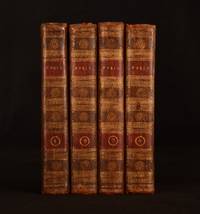
1794643P40London: P. Dodsley R. Owen 1794. Leather. Very Good. 7" by 4". None. A complete set of Edward Moore's fashionable satirical periodical 'The World'. Complete in four volumes.Each volume is bound with the half-title.A collection of the weekly newspaper 'The World' which was published from 1753 to 1756 with a total of two-hundred and nine publications.The newspaper saw contributions from people such as Horace Walpole E. S. Dallas Edward Lovibond and Charles Hanbury Williams. It was devoted to the satirising the follies and vices of the fashionable society of the eighteenth century.The publication typically saw a circulation that averaged from two to three thousand copies.Edited by Edward Moore under the pseudonym 'Adam Fitz-Adam'. He became the editor through the influence of Lord Lyttelton. Moore was a dramatist who wrote 'The Foundling' 'Gil Blas' 'Fables From the Female Sex' and more. In a full calf binding. Externally generally smart. A little loss to the head and tail of the spines. Minor bumping to the extremities. Rubbing to the rear board of Volume I. Front hinge of Volume I is starting but firm. Hinges of Volume IV are starting but firm. Volume IV is lacking the endpapers. Prior owner's ink inscription to the recto to the front free endpaper and to the verso to the rear endpaper of Volume I. Ink mark to the rear pastedown of Volumes II and IV. Internally firmly bound. Pages are very lightly age-toned with the occasional mark. Very Good P. Dodsley, R. Owen hardcover
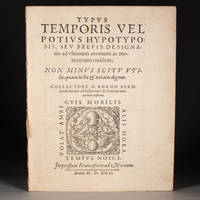
159200695<p>A BRIEF HISTORY OF TIME ---- 24 p. 4to A-C4 189 x 150 mm ---- First and only edition of this <strong>curious digest of time</strong> a pamphlet the author composed for his friends as the title indicates. Jordan worked as a cellar keeper <em>Keller</em> in the German village of Steinheim though we find little else about him. ¶ He opens his brief treatise with a philosophical summary of ancient time outlines the traditional ages of the world and offers Galen's six periods of the typical human life. As one might expect Jordan then explores the salient details of the standard solar year—mentioning the new Gregorian calendar—and the typical lunar cycle. But then <strong>he ventures much deeper into the weeds of time</strong>. He discusses the concept of an <em>annus emergens</em> when time is measured from an extraordinary event e.g. the founding of Rome or the birth of Christ; the lengths of the years for other planets in the known solar system; the lengths of the four seasons each introduced with a line of verse reminiscent of emblem literature; alternative starting points for the year; the twelve signs of the zodiac a chart of where they fall during the year and still more on the zodiac structure; the month's division into weeks and the week into seven days with historical background on the structure of a day plus notes on the etymological roots of each day's name; when different groups start their days e.g. some count from noon others from midnight; and how the day is divided into still smaller segments. The author ends with a brief postscript. "Let those who want read; those who do not let them decline" <em>Legant qui velint: qui non volunt despiciant</em>. ¶ We find a single copy in North America Linda Hall and this the only copy we find in auction records. ---- CONDITION: Sewn but without covers clearly removed from a larger Sammelband. Last leaf is blank. ¶ Small spot of skinned paper adhered to A2v and A3r affecting a couple of words on the former though hardly affecting legibility; a bit dusty at the edges; remnants of adhesive on spine. ---- REFERENCES: USTC 699894; VD16 ZV1333 ¶ J.W. Chr. Steiner <em>Geschichte und Alterthümer des Rodgau's im alten Maingau </em>1833 p. 73 for the author's work as a <em>Keller</em></p>
1896612391896. Wien und Leipzig Wilhelm Braumüller 1896 8° XI 1 154 pp. 67 in den Text gedruckten Abbildungen 14 chromolith. Tafeln mit 392 Figuren und je einem Tafelerklärungsblatt orig. Leinenband mit Rücken- u. Deckelprägung; feines Expl. Erste Auflage des Atlas zweite Monographie zu den Beleuchtungsbildern des Trommelfells! "Das vorliegende Werk unterscheidet sich sowohl bezüglich der Anordnung des Stoffes als auch der Anzahl der beigegebenen Trommelfellbilder wesentlich von der 1865 erschienen Monographie. Während in dieser die Krankheiten des Trommelfells nach den Anomalien der Durchsichtigkeit der Farbe der Wölbung und des Zusammenhanges behandelt wurden habe ich in dem jetzigen Werkle die Trommelfellbefunde nach den einzelnen klinischen Krankheitsformen geschildert. Abgesehen von der grösseren Uebersichtlichkeit des Stoffes entspricht diese Anordnung mehr dem Bedürfnisse des Studierenden und des praktischen Arztes. Hierbei musste ich um die Grenzen einer Monographie nicht zu überschreiten auf die Beschreibung der Trommelfellbefunde und ihrer diagnostischen Verwerthung beschränken. Um die Verständniss des Textes zu erleichtern hielt ich es für zweckmässig eine größere Anzahl nach der Natur gezeichneter Abbildungen pathologisch-anatomischer Befunde dem Werke einzufügen." Vorwort "Knowledge advanced rapidly as did technical means of examination. This prompted Adam Politzer 1835-1920 to reedit his atlas in 1896 with a slightly different title: 'Atlas der Beleuchtungsbilder des Trommelfells im gesunden und kranken Zustande" From the 24 chromolithographs of the tympanic membrane in two plates in the first edition the second edition completely reorganized and restructured was expanded to 154 pages of many clinical observations. It included 392 drawings of the tympanic membrane divided into 14 plates separate from the text . These were completed by 67 drawings in black and white inserted in the text. The development of examination techniques and above all the improvement in the light used for otoscopy made it possible to produce the atlas which was the best and most complete available at the end of the nineteenth century. The many diseases shown were only a small part of the large number of cases in Politzer's collection which shows that he had reached his otology objectives at the same time as otology reached maturity as an independent specialty. One distinctive feature of the new edition of the atlas was that once again all the images of diseases of the ear had been painted by Politzer from life. As in the previous edition they were reproduced by Berger in Vienna using lithography. The atlas was received with much gratitude and respect by Politzer's colleagues: The new work just published by Dr. Adam Politzer the well-known professor of otology at Vienna University shows once again the tireless activity of its author and his continuing enthusiasm for the progress ofotological science . It is worthy in every way of the previous works of the great master and needs no other recommendation. The atlas was also described as a work of art. " Albert Mudry: Adam Politzer 2010 pp.174-178 unknown
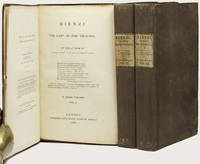
183534467London: Saunders and Otley 1835. 3 volumes. First Edition RARE in original printer's boards. With the half-titles present. 8vo original printer's gray pressed paper boards with original printed paper labels on the spines. xiii 302; 364; 356 4 ads pp. Rare in the publisher's original boards. The text very fresh through near to completely free of foxing and age one volume with a small amount of margin worming not effecting any text the bindings solid but with expected mellowing to the paper boards. RARE IN PRINTER'S BOARDS THIS SET IS IN FULL CONTEMPORARY STATE. Published only one year after what is largely considered the author's masterpiece THE LAST DAYS OF POMPEII. RIENZI is an historical novel based on Nicholas Gabrini de Rienzi who from a low and despicable situation raised himself to sovereign authority in Rome in the fourteenth century; assuming the title of Tribune and proposing to restore the ancient free republic. It is considered one of the best researched of the popular historical novels which so captivited the public of that era. A spectacular story of one of the heroes of the Italian Renaissance Edward Bulwer-Lytton personally reworked it into the 1842 libretto for the opera by the same title in which he collaborated with Richard Wagner. Saunders and Otley hardcover
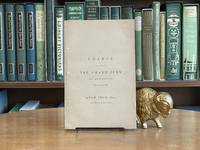
1848087004London: Printed by E. Couchman 1848. First edition. Paperback. pp. 44. 8vo. Original printed wrappers. Trace of pencil marks to corner of cover and one tiny chip otherwise crisp and unmarked. Peel 228: "The charge was to the jury at the beginning of the trial of a Native for murder and deals with whether the charter rights of HBC extended to judicial authority over Natives." Scarce. Printed by E. Couchman paperback
2016x-0199674108Oxford Univ Pr 2016. Hardcover. New. 2nd har/psc edition. 740 pages. 11.00x9.00x1.25 inches. Oxford Univ Pr hardcover
179048326Dublin: printed by P. Byrne 1790. 6 volumes 8vo engraved frontispiece 2 folding engraved maps and 5 folding tables; contemporary full mottled calf red and black morocco labels on spines 2 lacking; spine ends chipped extremities rubbed and worn but in all a good serviceable set. Engraved bookplates of Alexander Crofts. First published in 2 volumes folio in 1762. Anderson 1693-1765 was a Scottish economist and for 40 years was a clerk in South Sea House the headquarters of the South Sea Company. Late in his life Anderson traveled to the American colonies begetting a son Adam E. Anderson later noted for being an early settler and planner of the Ohio Territory. printed by P. Byrne unknown
1865000092Stockholm: Albert Bonnier 1865. Hardcover. Fine. Folio - over 12 - 15" tall. 17 DOUBLE PAGE COLOUR LITHOGRAPHIC PLATES 52pp text Each with large folded text pages describing the picture in Swedish French English and German. Bound in the original red buckram cloth with gilt titles and blind heavy border frame to the covers. Each print tells the story of Swedish life and culture.Wallander1821-1888 PLEASE EMAIL FOR PHOTOS <br/> <br/> Albert Bonnier hardcover
1914LH-1DEP-6P8YT. & A. Constable At the Edinburgh University Press. Very Good. 1914. Hardcover. Ltd 875 sets on rag paper. Tan cloth t.eg.; Edinburgh Edition . T. & A. Constable At the Edinburgh University Press hardcover
1964166462N.p.: N.p. 1964. Draft script for Season 2 Episode 7 of the 1963-1965 television series. Copy belonging to an unidentified crew member with a penciled drawing with annotations on the rear wrapper laying out a set design.<br /> <br /> In the year 2024 astronauts visiting Mars are picked off one by one by mysterious "Sand-Beasts" shark-like monsters that live and travel under the planet's surface. Loosely based on a short story by screenwriter Jerry Sohl which originally appeared in "Imaginative Tales" magazine in September of 1955. <br /> <br /> Lacking front wrapper but with rear wrapper present. 54 leaves with last page of text numbered 53. Mimeograph duplication rectos only. Pages Very Good plus rear wrapper Very Good bound with two gold brads. N.p. unknown
177434076London 1774. Engraving coloured by hand by B. Pastorini old dampstain to upper left margin. A fine engraving with contemporary hand colouring of a painted plaster and stucco ceiling from the interior at Kenwood House in Hampstead London re-modelled in 1761-1773 and now home to the Iveagh Bequest picture collection.<br/> <br/> Robert and his brother James Adam forever changed the face of British architecture by introducing innovative Classical design ideas. From 1754-57 Robert lived in Italy where he had a long productive friendship with Piranesi which was inspirational for both men. Adam's first book on Diocletian's palace in Dalmatia is clearly very like the archaeological investigations Piranesi was making at the same time of similar ruins. Piranesi's friendship and passion for Roman Classicism were seminal influences on Adam and the greatest single factor other than his own talent in the work Adam produced on his return to England. Upon his return the brothers launched their career by building the Adelphi from the Thames to the Strand in London which although not a commercial success at the time included one of London's most cherished buildings the Adlephi Theatre. Together the Adam brothers designed and built some of the most famous buildings in England including such bastions of English architecture as Kenwood House Keddlestone Manor and Syon House. To the interiors of their English country houses the Adams brought wonderful ornamental elements in niches lunettes festoons and reliefs. Their classically designed buildings were so numerous in London that they changed the prevailing feel of the city and established their brand of neo-Classicism as the model of elegance and importance. It is asserted that the brothers originated the concept of the uniform facade attached to the typical English row house an architectural device that distinguishes London buildings. This monumental contribution is evidenced in the Adams' designs for Portland Place and Fitzroy Square and these were used as architectural models for the whole city. The brothers brought their talents into other areas by designing furniture to complement their beautiful interiors and by creating and publishing a treatise of design entitled 'Works in Architecture'. The work was published in three volumes over an extended span of time beginning in 1773 with the final volume being published posthumously in 1822.<br/> <br/> Cf. Brunet I.47; cf. Lowndes I p.8; DNB; Wilton-Ely The Mind and Art of Giovanni Battista Piranesi. unknown
17745327London 1774. Engraving by T. Miller expert repairs to old fold touching image area. A fine architectural engraving of Kenwood House in Hampstead London re-modelled in 1761-1773 and now home to the Iveagh Bequest picture collection.<br/> <br/> Robert and his brother James Adam forever changed the face of British architecture by introducing innovative Classical design ideas. From 1754-57 Robert lived in Italy where he had a long productive friendship with Piranesi which was inspirational for both men. Adam's first book on Diocletian's palace in Dalmatia is clearly very like the archaeological investigations Piranesi was making at the same time of similar ruins. Piranesi's friendship and passion for Roman Classicism were seminal influences on Adam and the greatest single factor other than his own talent in the work Adam produced on his return to England. Upon his return the brothers launched their career by building the Adelphi from the Thames to the Strand in London which although not a commercial success at the time included one of London's most cherished buildings the Adlephi Theatre. Together the Adam brothers designed and built some of the most famous buildings in England including such bastions of English architecture as Kenwood House Keddlestone Manor and Syon House. To the interiors of their English country houses the Adams brought wonderful ornamental elements in niches lunettes festoons and reliefs. Their classically designed buildings were so numerous in London that they changed the prevailing feel of the city and established their brand of neo-Classicism as the model of elegance and importance. It is asserted that the brothers originated the concept of the uniform facade attached to the typical English row house an architectural device that distinguishes London buildings. This monumental contribution is evidenced in the Adams' designs for Portland Place and Fitzroy Square and these were used as architectural models for the whole city. The brothers brought their talents into other areas by designing furniture to complement their beautiful interiors and by creating and publishing a treatise of design entitled 'Works in Architecture'. The work was published in three volumes over an extended span of time beginning in 1773 with the final volume being published posthumously in 1822.<br/> <br/> Cf. Brunet I.47; cf. Lowndes I p.8. unknown
177531064London 1775. Engraving by D. Cunego. Adam's design for a surprise for George III's 25th birthday<br/> <br/> Robert Adam was probably introduced to the Royal Family by Lord Bute fellow Scotsman and patron. Queen Charlotte employed him to create a large temporary folly in the garden of Buckingham House. As shown here several portals held large painted linens. These were allegories showing George III as a bringer of peace and prosperity the Treaty of Paris ending the Seven Years' War had recently been signed. These painting were illuminated from behind and the overall effect must have been quite grand. Adam clearly succeeded in making a structure that was festive triumphant and regal. Robert and his brother James Adam forever changed the face of British architecture by introducing innovative Classical design ideas. From 1754-57 Robert lived in Italy where he had a long productive friendship with Piranesi which was inspirational for both men. Adam's first book on Diocletian's palace in Dalmatia is clearly very like the archaeological investigations Piranesi was making at the same time of similar ruins. Piranesi's friendship and passion for Roman Classicism were seminal influences on Adam and the greatest single factor other than his own talent in the work Adam produced on his return to England. Upon his return the brothers launched their career by building the Adelphi from the Thames to the Strand in London which although not a commercial success at the time included one of London's most cherished buildings the Adlephi Theatre. Together the Adam brothers designed and built some of the most famous buildings in England including such bastions of English architecture as Kenwood House Keddlestone Manor and Syon House. To the interiors of their English country houses the Adams brought wonderful ornamental elements in niches lunettes festoons and reliefs. Their classically designed buildings were so numerous in London that they changed the prevailing feel of the city and established their brand of neo-Classicism as the model of elegance and importance. It is asserted that the brothers originated the concept of the uniform facade attached to the typical English row house an architectural device that distinguishes London buildings. This monumental contribution is evidenced in the Adams' designs for Portland Place and Fitzroy Square and these were used as architectural models for the whole city. The brothers brought their talents into other areas by designing furniture to complement their beautiful interiors and by creating and publishing a treatise of design entitled 'Works in Architecture'. The work was published in three volumes over an extended span of time beginning in 1773 with the final volume being published posthumously in 1822.<br/> <br/> Cf. Brunet I.47; cf. Lowndes I p.8. unknown
1977127711New York: Kulchar Foundation 1977. First edition of the first book by Adam. Quarto original boards. Boldly signed by the author on the front free endpaper "All good wishes Helen Adam." In near fine condition. Kulchar Foundation hardcover
18762526LEIPZIG METZGER & WITTIG 1876. 8 vo. Set of 21 vols. printed in French. The first edition was 1821 with subsequent editions published throughout the 19th and 20th centuries. Ex-library; usual stamps. 19th century contemporary half calf and marbled boards. Covers a little rubbed corners rounded. Joints of volume I are splitting but bindings are tightly strung. In fair condition. METZGER & WITTIG hardcover
1749677611749. 1749 Treatise on the Game Laws of Bavaria Austria and Mainz Ickstatt Johann Adam von 1701-1776. Klett Johann Friedrich Editor and Translator. Grundliche Abhandlungen von den Jagdrechten: Wie sich Solche aus den Allgemeinen Naturlichen Und Besondern Staatsrechten Erweisen Lassen. Mit einer Vorrede von dem Verschiedenen Zustande der Jagden bey den Romern und Deutschen und einem Anhang von den Neuesten Mehrentheils Ungedruckten Churmaynzischen Churbayerischen Erzherzoglich-Oesterreichischen Und Andern Jagdordnungen. Nebst einem Entwurf von einer Vorteilhaft Eingerichteten Waldordnung. Herausgegeben und mit einem Register Versehen von Johann Friedrich Klett. Nuremberg: Auf Kosten Johann Georg Lochners 1749. xlvi 428 16; 172 pp. Two parts each with title page. Title page of second part with title beginning Wald-Ordnung dated 1748. Quarto 7-3/4" x 6-1/4". Contemporary speckled calf blind rules to boards raised bands and lettering piece to spine marbled pastedowns. Light rubbing and a few minor worm holes to boards moderate rubbing to extremities light chipping to spine ends corners bumped and somewhat worn later library bookplate to front pastedown later owner bookplate to front free endpaper. Title page of first part printed in red and black attractive woodcut head and tail-pieces. Light toning to text light foxing in places early owner signatures to verso of front free endpaper illegible and head of title page "Collegii Diessensis" later library stamp to title page's verso. A handsome copy. $850. Only edition Part II a reissue of a work first published in 1748. The first part is an overview of Bavarian forestry hunting and fishing laws from 1664-1742 followed by similar sets of laws promulgated in Austria in 1743 and in Mainz in 1744. The second part is a translation of the Bavarian laws with editorial commentary by Klett who also translated Part I. Early game and land laws record the earliest attempts to preserve the environment. They also offer fascinating insights into social history due to their relevance to topics ranging from class structure to foodways. Das Verzeichnis Deutscher Drucke des 18. Jahrhunderts 14598590-006. unknown
961Budapest: Sumptibus Davidis Richteri 1717. Soft cover. Good. Quarto. 32pp. A4-D4. Disbound. <br/> <br/> Budapest: Sumptibus Davidis Richteri, 1717. paperback
184782227Edinburgh:: Adam & Charles Black 1847. publisher's black morocco spine and corners; cloth sides. . Vertical creases to flyleaves; some tissue overleaves damages; maps in very nice condition. The binding has some stains and wear but is tight and sound. Oversized folio. Complete with sixty maps engraved on steel on fifty-four sheets. With Geographical Descriptions and an Index of 575000 Names. Adam & Charles Black, hardcover