42 895 résultats
2673Leipzig: im Schwickertschen Verlage 1780. Hardcover. Good. Oblong quarto. iv 72pp. Foreward dated 1.9.1780. Musical score. Printer's device on title-page cut out but replaced with a facsimile. Contemporary vellum. <br/> <br/> Leipzig: im Schwickertschen Verlage, [1780]. hardcover
201223256Berlin Germany: Kehrer Heidelberg Berlin 2012. First Edition. First Printing. Hardcover. As New/No Dust Jacket As Issued. Berlin Germany: Kehrer Heidelberg Berlin 2012. Hardcover. As New/None As Issued. First Edition/First Printing. 296 pages. Retrospective Monograph. The single most valuable book on the photographic art and achievement of Saul Leiter ever published. The First Hardcover Edition. Precedes and should not be confused with all other subsequent editions including its Facsimile Reissued Edition which was released as a memorial tribute after Saul Leiter died the following year on November 23 2013. Published in a small and limited first print run as a hardcover original only that sold out upon publication. The First Edition is now rare. A brilliant production by Kehrer Verlag: Oversize-volume format. Red cloth boards with black titles embossed on the cover and spine as issued. Photographs by Saul Leiter. Essays by various contributors. Pictorial slipcase. Printed on pristine-white thick coated for the images and uncoated for the text stock paper in Germany to the highest standards. The reproduction quality is outstanding in every respect. Without DJ as issued. Presents in its First Edition format "Saul Leiter: Retrospektive". The definitive retrospective on the greatest photographic re-discovery of our time. "Nearly 40 years went by before his extraordinary photography was re-discovered" Publisher's blurb. That is not at all surprising because Saul Leiter gave street photography a fresh new look that differed from ALL of the other great street photographers of his - and our - time. Instead of the gritty hard-edged "in-your-face" imagery of Garry Winogrand or Martin Parr today Leiter's "look" is melancholy ephemeral and lyrical deploying a consistently understated palette to convey some of the most sublime images of The Street we will ever see. Saul Leiter understood that photography is the exact opposite of painting because he was good at both : Painting is about a "vision" that one realizes on canvas. Photography is about developing and mastering a "look" - by taking thousands of photographs even if or because one is Saul Leiter - that somehow becomes identifiably and uniquely one's own. Precisely because anyone can take photographs a distinctive look is much harder if not altogether impossible to achieve than one thinks for most practicing photographers who must inevitably fall back on the established look of a particular genre whether it's portraiture street photography or the nude. The one great contribution of photography is to re-define the visual arts through its "look" aesthetics instead of through "vision" the counter-productive and exhausted idea it inherited from painting. Instead Saul Leiter - and the truly great photographers such as Avedon on the one hand and Robert Frank on the other - found and perfected a look that is uniquely theirs and theirs alone which all other derivative photographers imitate at their peril. An absolute "must-have" title for Saul Leiter collectors. This copy is very prominently neatly and beautifully signed in black ink-pen on the title page by Saul Leiter. It is signed directly on the page itself not on a tipped-in page. This title is a great art photography book. This is one of few such signed copies of the First Hardcover Edition/First Printing still available online and is in especially fine condition: Clean crisp and bright. A rare signed copy thus. Lavishly illustrated with plates. One of the greatest photographers of the 20th century and our time. A fine collectible copy. SEE ALSO OTHER SAUL LEITER TITLE IN OUR CATALOG. ISBN 3868282580. Kehrer Heidelberg Berlin hardcover
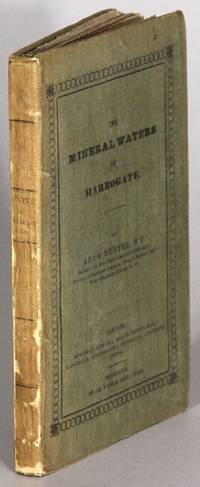
183066791London: Longman and Co.; Black Edinburgh; Langdale Harrogate; Inchbold and Cross Leeds 1830. First edition 12mo pp. vii 1 138; original printed green muslin an early example of printed cloth some fraying along the joints and spine spine sunned else very good. The text treats of the medical history of mineral baths sulfur springs chalybeate springs saline springs directions for taking the waters baths exercise and diet. The binding is one of the first cloth bindings with printed covers. Books bound in full cloth date from the 1760s onwards. These early cloth bindings were generally of coarsely woven hessian cloth or canvas and used most frequently on school textbooks. Publishers' full cloth bindings date from the early to mid-1820s William Pickering being one of the early innovators. In 1829 gilt was used to label the spines on these cloth-bound volumes and by 1834 the cloth was finally embellished with an illustration. I can find no books in the bookbinding literature with printed cloth covers of an earlier date. OCLC locates copies at the BL Oxford Leeds Cambridge U. of St. Andrews York Aberdeen Edinburgh National Library of Scotland McGill 1 in Paris and in the U.S. only 3: College of Physicians in Philadelphia Wisconsin and Penn. Longman and Co.; Black, Edinburgh; Langdale, Harrogate; Inchbold, and Cross, Leeds unknown
1880177604Mangalore: Printed at the Basel Mission Press 1880. First separate edition of Smith's essay on astronomy published in India and very uncommon: WorldCat locates three copies in British institutions BL Glasgow NLS and six more worldwide. The edition was published by Dr A. Burnell judge in Mangalore and a keen adherent of Positivism - he printed it alongside other texts which he deemed upheld the philosophy described in his obituary in The Academy 4 November 1882. The text is reprinted from the 1811 edition of Smith's collected works. The essay was first published in 1795 in Essays on Philosophical Subjects. Using astronomical knowledge as his reference Smith presents a model for the development of scientific knowledge as a series of attempts to create coherent systems to bring order to seemingly chaotic events. "The important historical and philosophical insights in Smith's essay should not be overshadowed by his occasional errors or omissions. His account of the development of astronomy is largely correct and it serves well to illustrate his philosophy of science. Most impressively Smith's emphasis on the subjective aspects of theory choice mirrors the positions of some of today's most prominent philosophers of science. As a scholarly work on the history of astronomy Smith's essay would soon be completely supplanted by for example the work of Delambre. Even so philosophers as late as the early twentieth century would have done well to heed Smith's insights into the nature of scientific inquiry" Timberlake. Octavo. Original brown wrappers printed in black. Wrappers very worn with tape repair contents toned: a sound copy. Not in Tribe; Vanderblue p. 44. Todd Timberlake "A Modern Scientist Considers Smith's History of Astronomy" 22 January 2020 Adam Smith Works website accessible online. unknown
178294149London Printed For J. Dodsley 1782. New Edition. Hardback. Full contemporary analine calf recased. Raised bands with gilt cross-bands uniform spine-tooling and contrasting gilt-blocked Morocco lables. An exceptional set of presentation quality - scans and additional bibliographic detail on request. ; 0 pages; ""Names of the Authors of the World"": v. 4 p. 342-344. Referenced by: English Short Title Catalog ESTCT101133. Originally published in 209 weekly numbers from Jan. 4 1753 to Dec. 30 1756 with Edward Moore The earl of Chesterfield Richard Owen Cambridge and Horace Walpole as principal contributors. Moore was editor and contributed 61 papers. London, Printed For J. Dodsley hardcover
1753000698<p>London: London: Printed for Robert. Dodsley in Pall-Mall where letters to the author are taken in and sold by Mary. Cooper at the Globe in Pater-Noster-Row 1753. 1st Printing. Full leather. Very Good. First edition four volumes in two folio; 1-628; 629-1258 16pp In contemporary tree calf lightly worn hinges cracked but firm spines gilt red and green gilt-lettered leather spine labels contemporary marbled endpapers woodcut headpieces opening each number a very clean copy. Very attractive example of this full bound-up run of Edward Moore's weekly periodical in handsome period binding with original collective title-pages added to each volume. Contributors include Horace Walpole Soame Jenyns and John Boyle Earl of Orrery and with Chesterfield's articles of late 1754 extolling Johnson's imminent Dictionary on the eve of its publication ESTC P1858 citing 14 examples in the UK 5 of which at British Library and 4 at Cambridge and 8 examples in US 3 of which at University of Virginia.</p> London: Printed for R[obert]. Dodsley in Pall-Mall, (where letters to the author are taken in) and sold by M[ary]. Cooper at the hardcover
1991Atlantic-9780824783204CRC Press 1991. 1. Hardcover. New. CRC Press hardcover
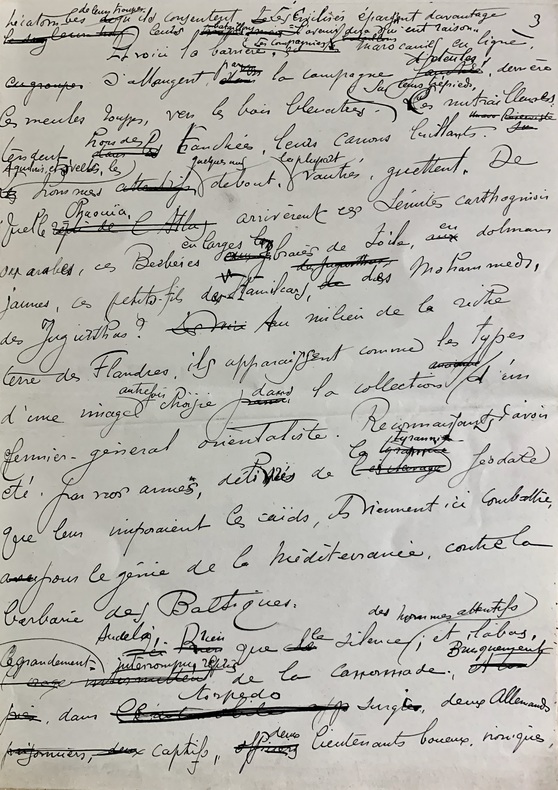
awd-879Manuscrit autographe intégral titré au début et signé à la fin, 7 ff. paginés remplis au recto, dont 1 découpé et recollé. Nombreuses ratures et corrections. (21/29 cm chaque) « Enturbanné de gazes sanglantes et piqueté de taches pourpres sur les épaules, l’aviateur allemand mince, morne, dans sa tunique réséda, se laisse conduire. Deux réservistes moustachus, pansus, l’amènent, bayonnette (sic) au canon, par le faubourg tumultueux de la ville flamande, où les femmes aux corsages clairs, les cyclistes alertes, les boutiquiers accourus se précipitent, s’appellent, se montrent l’ennemi chétif. Tout à l’heure il survolait l’église. Les mitrailleurs l’ont atteint. Il a dû descendre et s’affaisser parmi les ailes rompues de son appareil. Le vautour à terre est traîné vers la citadelle entre les rangs de la cohue, plus curieuse que malveillante. Très loin, l’orage de la canonnade gronde sans émouvoir ces français accortes, ces français gouailleurs. Ils continuent de vendre, d’acheter, de flâner, de prendre aux cantines des feuilles de nouvelles, de s’assembler autour des soldats contant leurs aventures. Sur une place, le spahi soudanais dompte, les maxillaires serrés, un cheval trop fringant. Poudreuses, les motocyclettes militaires arrivent à grand bruit entre les tramways combles. Dans les cafés, lieutenants et capitaines écrivent. A mesure que l’on monte vers la haute ville, plus de soldats se pressent dans les rues de briques. Chasseurs bleus et goguenards, fantassins d’écarlate et d’azur, anglais cossus et athlétiques en draps verdâtres, marocains vêtus de jaune avec de singuliers turbans dont une bande couvre la nuque, et sous le petit béret à rubans, highlanders, les genoux nus, en kilt masqués par un tablier brun, tout le monde mange, boit, rit, fume, au seuil des tavernes, des maisons. Tout le monde s’interpelle en français, en anglais, en arabe. Bientôt les groupes deviennent foules, que divisent les prolonges et les fourragères, que contournent les automobiles d’officiers. Plus haut, ce sont des colonnes au repos derrière les faisceaux, autour des cantines. Les États-majors causent à l’écart. Tels Anglais attribuent le succès des Allemands aux hécatombes de leurs troupes. Les Civilisés épargnent davantage leurs bataillons : l’avenir, déjà, qui eut raison… Voici la bannière. Les compagnies marocaines en ligne s’allongent par la campagne d’XX, derrière des meules rousses, vers les bois bleuâtres. Sur leurs trépieds, les mitrailleuses tendent, hors des tranchées, leurs canons brillants. Aquilins et sveltes, les hommes, quelques-uns debout, la plupart vautrés, guettent. De quelle chaouïa arrivent ces Sémites carthaginois ou arabes, ces berbères en larges baies de toile, en dolmans jaunes, ces petits-fils des Hamilcars, des Mohammeds, des Jugurthas ? Au milieu de la riche terre des Flandres, ils apparaissent comme les types d’une image d’autrefois, choisie dans la collection d’un fermier-général orientaliste. Reconnaissants d’avoir été, par nos armes, délivrés de la tyrannie féodale que leur imposaient les caïds, ils viennent ici combattre, pour le génie de la Méditerranée, contre la barbarie des Baltiques. Au-delà, rien que le silence ; des hommes attentifs des hommes attentifs ; et là-bas, ce grondement interrompu, repris, de la canonnade. Brusquement, dans le torpédo surgis, deux allemands captifs, deux lieutenants boueux, ioniques, les mains emmaillotées, avec quelques-uns des nôtres, christs mourants qui caressent leurs plaies dans la capote bleue. Et quand ils ont franchi nos avant-postes, la huée de la ville monte à la face des prisonniers barbares, massacreurs de femmes et d’enfants. Cela se passe au soleil d’août, vers la fin de l’après-midi. Notre moteur maintenant retentit sur une route désertée, qu’ombragent des platanes et des ormes épanouis. On nous a dit de revenir très vite si nous apercevions de ces XX téméraires, qui s’avancent loin de leurs infanteries. Et nous essayons de les discerner entre les barrages qui, ornent partout si royalement cet espace de cultures rectilignes. Mille dômes d’or sur la terre que l’ennemi convoite. Il en a chassé les quatre familles assises en un immense chariot au milieu de leurs paquets, de leurs ustensiles, de portraits chers. La bataille s’étant reprochée de leur bourg il fallait évacuer, en moins d’une heure, pour éviter les supplices et les exécutions que les Barbares prodiguent à la plus certaine innocence. Point de larmes ni de lamentations. Plutôt de la bonne humeur, et la certitude qu’avant peu la victoire nous couronnera. Chacun semble content d’avoir sacrifié sa maison à l’honneur de la patrie. Les jeunes filles et les enfants sourient à nos modestes cadeaux et les reçoivent de bonne grâce. Même cette veuve qui, dans la petite voiture de son XX, trottinant, pousse un peu de linge, des casseroles, les images des parents défunts, le crucifix de cuivre avec le coquillage du bénitier. De grosses femmes en sueur, ses fil adolescents qui plient sous le faix, décrivent sans geindre, leur infortune. C’est du provisoire. Ils rentreront chez eux, derrière notre sûre victoire. Des âmes sans pareilles. Plus avant nous rencontrons l’avant-garde à cheval d’un train d’artillerie. Il vient au ravitaillement des munitions. Bien qu’elles soient rouges par places, les toiles de leurs civières, repliées sur les caissons gris, tous ces hommes sortent calmes et fiers du combat. Un lignard hâlé, intelligent, le nez écarlate, nous conte qu’ils répondent au feu de l’ennemi depuis cinq jours et quatre nuits, sans repos ni trêve. Mais ça va : ‘On les a contenus.’ Des batteries prussiennes furent anéanties en grand nombre. Le peloton cycliste accepte nos cigarettes et nos tablettes de chocolat. Ces Nantais ont beaucoup connu de la bataille. Ils déclarent l’ennemi fixé en bien des points. L’un extrait de sa musette un tesson d’acier XX et bleu, fragment ramassé de l’obus qui a coupé la jambe d’un camarade. Ils ne s’en montrent pas moins de gais fatalistes, des XX lurons. A les en croire il paraît impossible que ces multitudes allemandes ne se désagrègent pas tout à l’heure. Leurs soldats ne sont redoutables qu’en masses, sous le revolver des lieutenants. Or ces masses s’allongent, se divisent, perdent, chaque jour de leur cohésion, de leurs cadres, de leurs artilleries. Notre canon les fauche par mille et mille. Nos élans à la baïonnette les épouvantent et laisse de la terreur dans l’âme des survivants, de leurs voisins. S’ils n’avaient su multiplier cette accumulation scientifique de leurs nombres pour déborder sans cesse à notre gauche, ils étaient déjà perdus. Ils le seront. Leur effort titanique s’épuise. L’intelligence et la foi illuminent les yeux de nos amis instantanés. Dans leurs charrettes, les blessés eux-mêmes témoignent de cette confiance. Il n’importe guère que l’éclat d’obus ait déchiré de haut en bas ce pantalon garance, puis la jambe à cette heure méticuleusement bandée, ni qu’une explosion ait noirci ce visage contusionné où deux yeux effrayants persistent et visent dans un masque de boursouflure noirâtre, ni que les balles aient couché ces dormeurs fiévreux sur la paille des chariots successifs, avec la tête dans les bras bleus, les jambes écarlates ballant aux cahots. Ce qui seulement importe pour eux, pour les autres, c’est l’espoir de la chance finale. Une paysanne à tignasse grise se précipite au-devant de l’automobile : ‘Y-a-t-il un médecin parmi vous ?’ Cinquante mètres plus bas un fantassin souffre sur une table où on le déshabille. Quand nous arrivons il achève de mourir, stoïque. Derrière un char de blessés, l’un tire par la bride, le cheval bien sellé, harnaché, du capitaine qui succomba. L’épée pend derrière l’arçon. Au soir, le vent qui se lève emporte et dissipe l’orage de la canonnade par-delà les campagnes riches en moissons. Les lièvres courent, s’arrêtent, écoutent. Les perdrix rappellent. Paul Adam. »

1792018054Neuchatel Hambourg Leipzig: Fauche-Borel 1792. Cinque volumi in 8° piccolo di 4-XII-384pp.; 4-406pp.; 4-400pp; 4-437pp; 4-432pp. Il primo volume ha un faux-titre non gli altri. Legatura in mezza pelle marrone dei primi dell800. Seconda edizione della traduzione di Jean Antoine Roucher 1745-1794 poeta e letterato che aderì alla Rivoluzione ma venne ghigliottinato durante il Secondo Terrore dopo essere stato in cella con André Chenier. Jammes Cat2001: "Deuxième édition peu connue". Fauche-Borel unknown
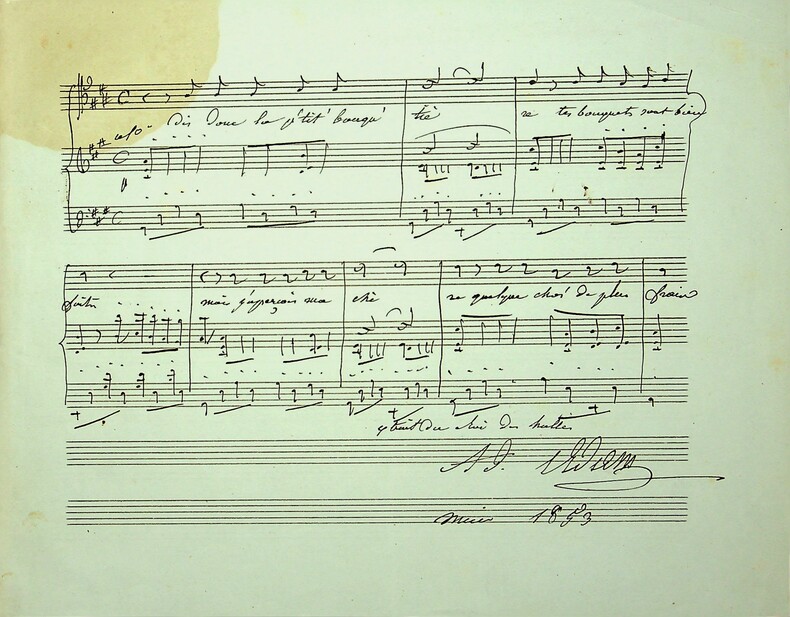
013991Adolphe Adam (1803-1856), compositeur. Partition A.S., mai 1853, 1p in-4 oblong. Extrait autographe de son opéra Le Roi des halles, créé peu de temps avant, le 11 avril 1853. Trois portées et sept mesures. Tache angulaire (mouillure ?) qui n'a pas fait baver l'encre néanmoins. Peu commun. [109-2]
REIS0989Berlin Haude und Spener 1812. 2 Tle. 16°. Gest. Frontisp. Titelbl. 8 S. 294 S. mit 3 doppelblattgr. gest. Taf.; gest. Frontisp. Titelbl. 8 VIII 176 v. 269 S. mit 5 doppelblattgr. gest. Taf. Geheftete Buchblöcke mit losem Pappumschlag Rücken mit von Hand beschriftetem Papierstreifen beklebt mit Umschlagresten und je e. bedruckten Papierschildchen auf den Bandrücken Rückenschildchen der zweiten Abteilung schadhaft ein loser Einbanddeckel liegt bei. Seiten teilw. stockfleckig einige wasserfleckig sonst nur mäßig vergilbt einige Seiten des zweiten Teils tintenfleckig erste Lage des zweiten Teils lose. Breitrandiger Druck. Engelmann. Bibliotheca geographica 98. Vgl. ADB 17240ff. - Zweite deutsche Ausgabe. Erste u. zweite Abteilung des zweiten Teils eines Berichts über die erste russische Weltumseglung. A. J. Krusenstern 1770-1846 russisch Ivan Fedorovic Kruzenstern aus Estland stammender Admiral der russischen Flotte war von Zar Alexander I mit der Leitung dieser erfolgreichen seemännisch und wissenschaftlich bedeutenden Expedition betraut worden die mit dem Ziel unternommen wurde neue Handelsbeziehungen mit Japan zu knüpfen. - Exemplare mit allen Kupfertafeln die Frontispize koloriert der Text der zweiten Abteilung ist unvollständig Ss. 177-269 fehlen. Ohne die Karte. - Wortgetreuer Nachdruck der 1810 bis 1812 in Quartformat erschienenen Erstausgabe 1810-12 der lediglich der naturwissenschaftlichen Anhang nicht mehr beigegeben wurde. Berlin, Haude und Spener 1812. unknown
1805b180<p>SMITH Adam<br />AN INQUIRY INTO THE NATURE AND CAUSES OF THE WEALTH OF NATIONS The Eleventh Edition with Notes Supplementary Chapters and a Life of Dr Smith by William Playfair In Three VolumesPrinted for T. Cadell and W. Davies 1805. 11th edn. 3 vols. 8vo 8¾ x 5½ ins. Contemporary full calf spines gilt tooled in five compartments of which 2 with dark green labels with gilt titles and 3 with floral decoration appears to be spines or parts of these once saved boards with gilt fillet borders some wear at joints getting thin but boards still firm; corners somewhat rubbed/bumped. Pp. I xl 515 &II viii 567 &III viii 590 Spine of vol.II a bit cracked and missing parts of dark green label. See pict for overall condition.<br />A rare and very collectible complete 3 vol set.</p> T. Cadell and W. Davies hardcover
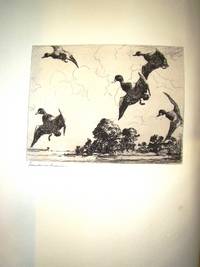
1923012409Boston: Houghton Mifflin 1923. First Edition. Hardcover. Fine in a Near Fine dustwrapper and quite uncommon as such. Frank Benson. Folio 9" x 12-1/2" bound in linen-backed boards; xxii 100 pages. Copy #258 of 525 numbered copies with an ORIGINAL SIGNED ETCHING by Benson bound in at the front. Illustrated with detailed information about Benson's work. In the scarce dustwrapper which other than a thumb-sized chip at the head is in very nice condition. <br/><br/> Houghton Mifflin hardcover
19805512eP Harris. As New. Hardcover. 1980. 416 pages. Internally extremely clean and tight. Comes in original slipcase which has a bump to one corner and light bumps to other corners one minor impact dent to lower exterior of slipcase. There is also some light speckling to the tail of the slipcase. Remains firm and tight. Great collectors copy.<br><p><meta charset=utf-8><span>Paul Harris Publishing 1980. Type: Z vpp; 35pp; 5pp; 160 plates. A very scarce limited edition facsimile reprint of the 1812 fir st edition copy held at the University of Glasgow Library. This limited edition . P Harris hardcover
BN46736TASCHEN. <br/><br/> TASCHEN unknown
2021x-9811609683Palgrave Macmillan 2021. Hardcover. New. pck edition. 1206 pages. 9.50x6.25x3.00 inches. Palgrave Macmillan hardcover
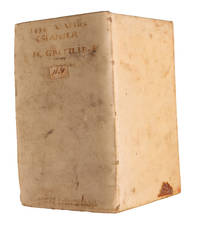
167161153Tubingae Cotta 1671. 8vo. In contemporary full vellum with title in contemporary hand to spine. Small paper-label pasted on to upper part of spine. Soiling and miscolouring to extremities. Internally nice and clean. 14 1552 72 pp. <br/><br/><em>The rare first edition of Osiander’s commentary on Hugo Grotius's seminal work “De Jure Belli†in which he is analyzing Grotius's legal and ethical arguments through a Lutheran theological lens “Major Lutheran theologians such as Johann Adam Osiander who taught at Tübingen in the second half of the seventeenth century and counted many Swedish youngsters among his students engaged intensely with Grotius’s De iure belli ac pacis. Moreover Lutheran theologians thoroughly engaged with contract law in particular recycling ideas and concepts from the Roman law the early-modern scholastic tradition and Grotius but integrating them into a Biblical framework especially the Eighth Commandment prohibiting false testimony.†</em> hardcover
167161153Tubingae, Cotta, 1671. 8vo. In contemporary full vellum with title in contemporary hand to spine. Small paper-label pasted on to upper part of spine. Soiling and miscolouring to extremities. Internally nice and clean. (14), 1552, (72) pp.
167461127Stockholm Wankijff 1674. 8vo. In contemporary full calf with three raised bands and blindstamped ornamentation to spine. Small paper-label pasted on to top of spine. Scratches to boards and Annotations in contemporary hand to front free end-paper. A few small worm-tracts throughout and a few dampstains. 12 166 pp. <br/><br/><em>First edition of this rare German-Italian grammar. Not much is known about Adam Styla. He presumably received his education in Cracow and Italy and most like tought Italian to Grand Treasurer of the Crown Michal of Raciborsko Morsztyn a son of Jan Andrzej Morsztyn. He was the secretary of King Jan III Sobieski. Apart from this present work he also wrote a Latin and French grammar book. OCLC only list 4 copies non in the US. </em> hardcover
167461127Stockholm, Wankijff, 1674. 8vo. In contemporary full calf with three raised bands and blindstamped ornamentation to spine. Small paper-label pasted on to top of spine. Scratches to boards and Annotations in contemporary hand to front free end-paper. A few small worm-tracts throughout and a few dampstains. (12), 166 pp.
65395Helmstad Henningi Mulleri 1670. 4:o. 16 163 12 blank 175-201 102-129 110-116 237-252 20 s. Enstaka småfläckar. Modernt skinnband blindpräglad rygg med upphöjda bind och guldprägade pärmar. Bunden i Valencia Spanien. Warmholtz 1637. Bra exemplar av Maders textkritiska utgåva av Adam av Bremens viktiga krönika över Hamburgstiftet med dess skildring av hednakulten i Uppsala m.m. Joachim Johann Mader 1626-80 var tysk historiker och bibliograf som arbetade biblioteket i Wolfenbüttel och på akademien i Helmstad. Tidigare fanns dansken Anders Sørensen Vedels utgåva från 1579 utökad av Erpold Lindenbrog 1595 och omtryckt flera gånger. unknown
1785PRGstFER60Edinburgh: Printed for John Bell & William Creech Sold in London by T.Cadell and G.Robinson 1785. 1785. 12mo. pp. xvi 317. with half-title. contemporary calf joints cracked spine worn small piece chipped from upper rear joint. Third Enlarged Edition. Jessop p. 122. Edinburgh: Printed for John Bell & William Creech, Sold in London by T.Cadell and G.Robinson, 1785. unknown
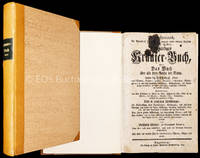
17834143DB1783. 2 Teile in 1 Band von 2. Augsburg Wolf 1783. 4 Bl. 566 S. Mit zahlr. Textholzschnitten Moderner Halblederband. Nissen 1218. Äusserst erfolgreiches Destillier- und Kräuterbuch erschien erstmals 1557 in Frankfurt. Es fehlt der zoologische und der mineralogische Teil. Das Papier durchgehend stockfleckig. Das Titelblatt mit grösserem Titenfleck. unknown
17834143DB2 Teile in 1 Band (von 2). Augsburg, Wolf, 1783. (4) Bl., 566 S. Mit zahlr. Textholzschnitten Moderner Halblederband.