Sisman AdamABAA

1 033 résultats
2010USISHON00HMRRandom House 2010. Very Good. Sisman Adam. An Honourable Englishman: The Life of Hugh Trevor-Roper. New York: Random House 2010. 643pp. Indexed. Illustrated. 8vo. Hardcover. Book condition: Very good with lightly bumped edges. Dust Jacket Condition: Very good with subtly bumped edges and shallow scratches in rear panel. Random House hardcover books
2010USISHON00DGRandom House 2010. Fine. Sisman Adam. An Honourable Englishman: The Life of Hugh Trevor-Roper. New York: Random House 2010. 643pp. Indexed. Illustrated. 8vo. Hardcover. Book condition: Near fine with a small red remainder mark on the bottom edge. Dust Jacket Condition: Very good with light bumping to edges. Random House hardcover books
2000276428New York: Farrar Straus & Giroux 2000. hardcover. fine/near fine. xxii 351pp. cloth-backed boards d.w. New York: Farrar Straus and Giroux 2000. A fine copy in a near fine dust wrapper.<br/><br/> Farrar Straus & Giroux unknown books
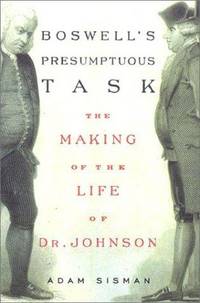
2001USISBOS00LRFarrar Straus and Giroux 2001. Very Good. Sisman Adam. Boswell's Presumptuous Task: The Making of the Life of Dr. Johnson. New York City: Farrar Straus and Giroux 2001. 351pp. Indexed. Bibliography. 8vo. 1/4 Cloth. Book condition: Very good with faint moisture staining at bottom edge of text block. Dust Jacket Condition: Very good with tape repair at head of spine. Farrar, Straus and Giroux hardcover books
2001USISBOS00CTPengiun Books 2001. Very Good. Sisman Adam. Boswell's Presumptuous Task: the Making of the Life of Dr. Johnson. NY: Pengiun Books 2001. 351pp. Indexed. 8vo. Paperback. Book condition: Very good. Pengiun Books paperback books
20014664New York: Farrar Straus and Giroux 2001 First American edition. Illustrations; notes bibliography index. Black cloth-backed gray boards. A very fine copy in pictorial dust jacket. A look at James Boswell and his writing of "The Life of Samuel Johnson" considered one of the best biographies of the English language. Farrar, Straus and Giroux hardcover books
200145221NY: Farrar Straus and Giroux 2001. First American edn. 8vo pp. xxii 351. Notes bibliography index. Volume very slightly warped o/w a nice copy in slightly chipped and soiled dj. Farrar, Straus and Giroux unknown books
200047909New York: Farrar Straus and Giroux 2000. Inscribed and signed by the author on authorÕs note card and flatsigned on half title. 351 pp. Hardcover. 8vo. Black cloth backed light gray paper covered boards. Bumped to head heel and corners; bookplate to front free endpaper; else interior tight clean and bright; a very nice copy in like dustjacket. Very good/Very good. Farrar, Straus and Giroux hardcover books
2006Embry 182891Viking 2006. First edition first printing. Remainder mark to lower edge else fine in fine dust jacket. B&W photos Viking, 2006. First edition, first printing. unknown books
2001Embry 124342Farrar Straus and Giroux 2001. First U.S. edition. Fine in fine dust jacket in mylar cover. Farrar, Straus and Giroux, 2001. First U.S. edition. unknown books
1937WAS22636Adam Smart and Co. San Francisco 1937. Good. 9 x 11 inches unnumbered pages boards with cloth spine corners lightly bumped slight wear to spine extremities Owner's lengthy inscription in ink. Printed by the Grabhorn Press of San Francisco. Adam Smart and Co., San Francisco hardcover books
1939303512San Francisco Privately Printed 1939 1939. First edition. Small folio. 22 two-tone illustrations by W.R. Davenport. Original 1/2 gilt stamped light brown cloth over tan and red patterned boards corners bruised uncut. Very good. Unpaginated. No dust jacket. No other signatures or bookplates. One of 500 unnumbered copies printed at the Grabhorn Press. Presentation copy with a card signed and inscribed by Alfred Sutro laid in loose. Heller & Magee 308. 1st Edition. Hardcover. Very Good. [San Francisco, Privately Printed, 1939 hardcover books
193917100517San Francisco: The Grabhorn Press 1939. Limited Edition. Hardcover. Near fine/very good. Davenport W. R. One of 500 copies folio size 44 pp. inscribed by Alfred Sutro Adam Smart. Alfred Sutro 1869-1945 a lawyer residing in San Francisco was an avid book lover and collector and was president of the Book Club of California in San Francisco; "Words at Play" was published under his pseudnym Adam Smith. Printed by the Grabhorn Press this anecdotal book of children's rhymes was conceptualized by Alfred Sutro for his grandchildren and includes drawings by W. R. Davenport whose charming illustrations accompany the poetry's playfulness and wordplay.<br/><br/>This volume warmly inscribed by Alfred Sutro on the front free endpaper: "To Al and Enid Tanner who even / if not grandparents are of / books for children with many / Christmas Greetings from / Alfred Sutro / Dec. 23 28 1938 ". <br/><br/>___DESCRIPTION: Quarter rose cloth with white and red decorative paper boards gilt lettering on the spine fore- and bottom edges uncut author's inscription on the front free endpaper as set forth above title page printed in rose and black twenty-two illustrations by W. R. Davenport in black and pink used as borders for the text; Benedictine linotype machine-made paper folio size 12.25" by 9" pagination: 44 unnumbered pages all versos blank one of 500 copies unnumbered. In a plain brown laid paper dust wrapper.<br/><br/>___CONDITION: Volume is near fine with clean boards straight corners a strong square text block with solid hinges the interior is clean and bright and entirely free of prior owner markings; some rubbing to the corners and top edges of the board else fine. The dust wrapper is very good clean overall with minor soiling overall edge wear with some chipping to the spine and hinges.<br/><br/>___CITATION: Grabhorn Bibliography no. 308. <br/><br/>___POSTAGE: International customers please note that additional postage may apply please inquire for details. <br/><br/>Swan's Fine Books is pleased to be a member of the ABAA ILAB and IOBA and we stand behind every book we sell. Please contact us with any questions you may have we are here to help. [The Grabhorn Press] hardcover books
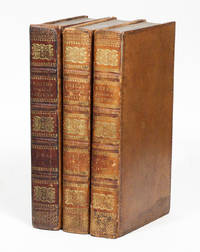
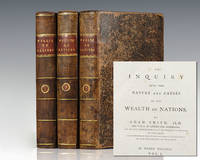
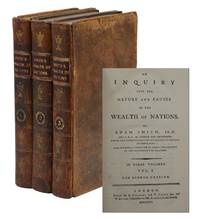
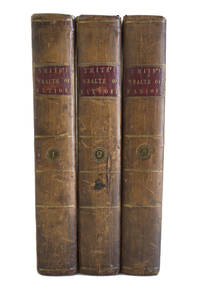
17862442London: A. Strahan and T. Cadell 1786. Fourth edition. Contemporary calf. Very Good. HANDSOME EIGHTEENTH-CENTURY EDITION OF THE "GREATEST CLASSIC OF MODERN ECONOMIC THOUGHT.". This classic work of the Scottish Enlightenment - originally published in the same year as the Declaration of Independence and Gibbon's History of the Decline and Fall of the Roman Empire - is a magisterial study of the sources of national wealth and of the political and institutional arrangements that foster or suppress it. Based on a 2016 analysis of data from Google Scholar The Wealth of Nations is the second only to Marx's Das Kapital as the most-frequently cited among books in the social sciences published before 1950. And while Smith recognized the economic benefits that flow from voluntary transactions between individuals and is as a result sometimes thought of as the apostle of laissez faire capitalism he supported several forms of government intervention in the economy either to create and maintain the necessary conditions for economic growth or to ameliorate the incidental harms that such conditions could create.<br /> <br /> The Wealth of Nations proposed that "no society can surely be flourishing and happy of which the far greater part of the members are poor and miserable. It is but equity besides that they who feed cloath and lodge the whole body of the people should have such a share of the produce of their own labour as to be themselves tolerably well fed cloathed and lodged." WN this edition vol. 1 page 119. Smith believed that this condition of society could be achieved only through the higher productivity that is made possible by the division of labor. As an example of the division of labor Smith offered the example of the "trade of the pin-maker" which he apparently learned about from Diderot and d'Alembert's Encyclopédie in which "one man draws out the wire another straights it a third cuts it a fourth points it a fifth grinds it at the top for receiving the head ." and so forth. WN this edition vol. 1 pages 7-8.<br /> <br /> In a famous passage Smith explains that such arrangements arise naturally from voluntary transactions between individuals based on their common recognition of the benefits that division of labor creates:<br /> <br /> This division of labour from which so many advantages are derived is not originally the effect of any human wisdom which foresees and intends that general opulence to which it gives occasion. It is the necessary though very slow and gradual consequence of a certain propensity in human nature which has in view no such extensive utility; the propensity to truck barter and exchange one thing for another.<br /> <br /> . Man has almost constant occasion for the help of his brethren and it is in vain for him to expect it from their benevolence only. He will be more likely to prevail if he can interest their self-love in his favour and shew them that it is for their own advantage to do for him what he requires of them. Whoever offers to another a bargain of any kind proposes to do this. Give me that which I want and you shall have this which you want is the meaning of every such offer; and it is in this manner that we obtain from one another the far greater part of those good offices which we stand in need of. It is not from the benevolence of the butcher the brewer or the baker that we expect our dinner but from their regard to their own interest. We address ourselves not to their humanity but to their self-love and never talk to them of our own necessities but of their advantages. WN this edition vol. 1 pages 19-21.<br /> <br /> "Throughout the book Smith's 'system of natural liberty and justice' . plays a pervasive role as explanatory model and regulatory ideal though the famous image of an 'invisible hand' appears late and only once in the whole work . It appears at volume 3 page 181 of this edition. A quasi-Newtonian treatment is given to those forces which act like gravity when market price departs from natural price and it always carries with it a normative implication that policies or practices that prevent these forces from acting are detrimental to the public interest. Monopolies special privileges informal combinations by merchants or employers to raise prices and keep down wages import duties export bounties as well as institutions such as apprenticeships and restrictions on labour mobility . are all condemned from this perspective." Dictionary of National Biography.<br /> <br /> Smith was not unmindful of possible deleterious consequences of the division of labor: "The man whose whole life is spent in performing a few simple operations of which the effects too are perhaps always the same or very nearly the same has no occasion to exert his understanding or to exercise his invention in finding out expedients for removing difficulties which never occur. He naturally loses therefore the habit of such exertion and generally becomes as stupid and ignorant as it is possible for a human creature to become." WN this edition vol. 3 pages 182-83. Smith believed that public elementary education would compensate for this tendency.<br /> <br /> Edition: This copy of The Wealth of Nations is the fourth edition 1786 issued ten years after the first. It was the penultimate edition published during Smith's lifetime the last being the fifth edition of 1789. It carried forward the significant changes made in the third edition of 1784 without making any material additional changes of its own as Smith specifically admitted in the prefatory Advertisement to this edition. A detailed collation of the first five editions is provided in Edwin Cannan's 1904 edition of Smith's work.<br /> <br /> Provenance: With the armorial bookplate of Thomas Howitt bearing the motto "Aquila Non Capit Muscas" "Eagles do not catch flies" on the front pastedown of each volume. Howitt may have been the Lancaster physician of that name 1785-1832; see archives of the Royal College of Surgeons of England ref no. GB 0114 MS0092 the entry for Howitt's son also named Thomas Howitt. It is possible that Howitt's son Thomas Jr. 1830-1922 was responsible for the additions to these volumes described below.<br /> <br /> Volume 2 is bound with additional pages at the end on which a prior owner has pasted articles on the California gold rush of 1849 citing a discussion on page 354 of the volume in which Smith argues that "of all those expensive and uncertain projects however which bring bankruptcy upon the greater part of the people who engage in them there is none perhaps more perfectly ruinous than the search after new silver and gold mines." Another extract pasted at the beginning of volume 1 from an unknown source recommends the reduction of taxes.<br /> <br /> London: A. Strahan and T. Cadell 1786. Octavo contemporary full calf with elaborately gilt-decorated spines; vol 1 rebacked with original spine laid-down. Bound without half-titles. Vol 1 spine darker more toned than the other two. Light flaking to spines a little chipping to leather at extremities. Some foxing to title and first few leaves of each volume; otherwise text clean. A lovely early set of Smith's masterpiece. A. Strahan and T. Cadell unknown books
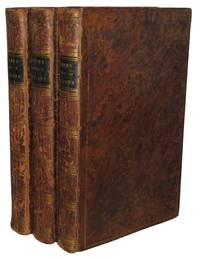
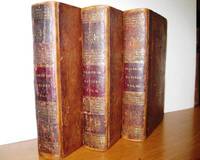
1799124769London: A. Strahan and T. Cadell 1799. Rare 18th century edition of Adam Smith's magnum opus and cornerstone of economic thought. Octavo 3 volumes. Bound in full contemporary tree calf gilt titles to the spine morocco spine labels. In very good condition. A very nice set of this classic work. Adam Smith's masterpiece first published in 1776 is the foundation of modern economic thought and remains the single most important account of the rise of and the principles behind modern capitalism. "The history of economic theory up to the end of the nineteenth century consists of two parts: the mercantilist phase which was based not so much on a doctrine as on a system of practice which grew out of social conditions; and the second phase which saw the development of the theory that the individual had the right to be unimpeded in the exercise of economic activity. While it cannot be said that Smith invented the latter theory.his work is the first major expression of it. He begins with the thought that labour is the source from which a nation derives what is necessary to it. The improvement of the division of labour is the measure of productivity and in it lies the human propensity to barter and exchange.Labour represents the three essential elements-wages profit and rent-and these three also constitute income. From the working of the economy Smith passes to its matter -'stock'- which encompasses all that man owns either for his own consumption or for the return which it brings him. The Wealth of Nations ends with a history of economic development a definitive onslaught on the mercantile system and some prophetic speculations on the limits of economic control.The Wealth of Nations is not a system but as a provisional analysis it is complete convincing. The certainty of its criticism and its grasp of human nature have made it the first and greatest classic of modern economic thought" PMM. A. Strahan and T. Cadell unknown books
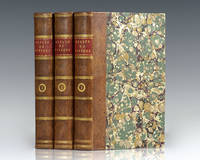
1793124986London: A. Strahan and T. Cadell 1793. Rare 18th century edition of Adam Smith's magnum opus and cornerstone of economic thought. Octavo 3 volumes bound in half calf over marbled boards gilt titles to the spine morocco spine labels. In near fine condition. A very nice set of this classic work. Adam Smith's masterpiece first published in 1776 is the foundation of modern economic thought and remains the single most important account of the rise of and the principles behind modern capitalism. "The history of economic theory up to the end of the nineteenth century consists of two parts: the mercantilist phase which was based not so much on a doctrine as on a system of practice which grew out of social conditions; and the second phase which saw the development of the theory that the individual had the right to be unimpeded in the exercise of economic activity. While it cannot be said that Smith invented the latter theory.his work is the first major expression of it. He begins with the thought that labour is the source from which a nation derives what is necessary to it. The improvement of the division of labour is the measure of productivity and in it lies the human propensity to barter and exchange.Labour represents the three essential elements-wages profit and rent-and these three also constitute income. From the working of the economy Smith passes to its matter -'stock'- which encompasses all that man owns either for his own consumption or for the return which it brings him. The Wealth of Nations ends with a history of economic development a definitive onslaught on the mercantile system and some prophetic speculations on the limits of economic control.The Wealth of Nations is not a system but as a provisional analysis it is complete convincing. The certainty of its criticism and its grasp of human nature have made it the first and greatest classic of modern economic thought" PMM. A. Strahan and T. Cadell hardcover books
1791140941390London: Printed for A. Strahan; and T. Caddell 1791. Sixth Edition. Very Good. The Sixth Edition. Complete in three volumes In contemporary full tree calf rebacked with new spines. Bindings worn former owner bookplate to pastedowns. Old tidemarks to preliminary pages and faintly to textblock edge light foxing and browning to pages light and sporadic pencil marks in text. Printed for A. Strahan; and T. Caddell unknown books
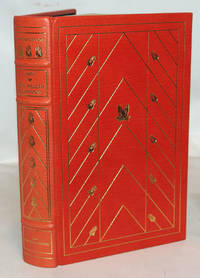
1978TB31761Franklin Center Penn.: Franklin Library 1978. Collector's Edition. Fine in bright full bright red leather covered boards with three raised bands on the spine with gilt tool work and gilt text in the compartments and gilt designs on both boards. A small quarto of 9 3/4 by 6 inches with gilt on the three edges of the text block black silk end sheets and a black silk placement ribbon sewn in at the head of the spine. 683 pages of text including an extensive index. One of the volumes in the Franklin Library's collection of The Great Books Of The Western World. A very bright clean and tight copy with no prior ownership markings of any kind. Franklin Library hardcover books
1796140940161London: A. Strahan; and T. Caddell jun and W. Davies 1796. Eighth Edition. Very Good. The Eighth Edition. Complete in three volumes bound with half-title present by Pigge of Lynne with a small circular binder's label to front pastedown of each volume; in contemporary full tree calf with smooth spines divided into compartments with double gilt rule lettered on new red goatskin labels and numbered in a new small circular green goatskin label with gilt stamped urns of trophies to top compartment. Binding worn at corners and spine ends; outer joints cracked though binding remains firm. Previous owner names at front pages toned occasional crease occasional foxing heaviest at preliminary and terminal pages. Small dampstain to upper corner of last few pages of Volume II. An early set published in the late 18th century in a charming contemporary binding. A. Strahan; and T. Caddell jun and W. Davies unknown books
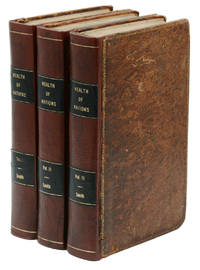
1811AS006London: Printed for J. Maynard and F. Zinke 1811 Early edition. Three volumes. Finely bound in full contemporary brown tree calf boards and spines decoratively ruled in gilt black morocco spine labels lettered in gilt blue marbled text block edges. A near fine set with some light wear to extremities superficial cracking to the backstrips bookplates to front pastedowns Vol. II with a three-inch scratch to the rear board Vol. III with front hinge lightly starting but still sturdy. Overall a beautiful set. First published in 1776 The Wealth of Nations has been hailed as "The first and greatest classic of modern economic thought." The book is Smith's meditation on the influence of labor on economic development the relationship of a nation's economy to its national development and the intellectual underpinnings of a self-regulating free-market economic system. A groundbreaking text The Wealth of Nations had immediate widespread impact and continues to be a pillar of economic theory today. Indeed the authors of Printing and the Mind of Man aver that "Where the political aspects of human rights had taken two centuries to explore Smith's achievement was to bring the study of economic aspects to the same point in a single work." PMM 221. Hard Cover. Very Good. London: Printed for J. Maynard and F. Zinke hardcover books
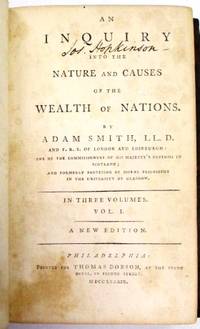
178932679Philadelphia: Thomas Dobson 1789. viii 9-412; vi 7-430; v 1 blank 7-387 55 pp. Volumes I and II with the ownership signature of Joseph Hopkinson prominent Philadelphia and Jersey lawyer who defended Justice Samuel Chase in his impeachment trial and the Whiskey Rebellion defendants; son of the Signer Francis Hopkinson. Volume III with the ownership signature of "J.P. Cilley 1873". The three volumes bound in original calf the first two volumes with gilt borders rebacked with gilt-lettered morocco spine labels. Minor wear clean text Very Good.<br/><br/> The first American edition. 'Printing and the Mind of Man' describes this work as "the first and greatest classic of modern economic thought." <br/>Evans 31196. PM 221 London 1776. Kress 3288. Thomas Dobson unknown books
179630670Philadelphia: Thomas Dobson 1796. 412; 430; 387 1 blank 53 1 blank pp. Contemporary tree calf some chipping rebacked with remnants of original spines laid down. Scattered toning generally light foxing lightly worn. Good. <br/><br/> The second American edition the first having issued in 1789 also published by Dobson. 'Printing and the Mind of Man' describes this work as "the first and greatest classic of modern economic thought." <br/>Evans 31196. PMM 221 London 1776. Kress 3288. Thomas Dobson unknown books
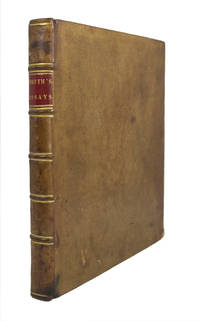
179568261Adam SmithÃs Posthumously Published Essays SMITH Adam. Essays on Philosophical Subjects. To Which is Prefixed an Account of the Life and Writings of the Author; by Dugald Stewart.London: Printed for T. Cadell Jun. and W. Davies. 1795. First edition. Quarto 10 3/4 x 8 1/2 inches; 273 x 215 mm. xcv 1 blank 244 pp. Contemporary speckled calf. Board edges ruled in gilt. Spine ruled in gilt. Red morocco spine label lettered in gilt. Edges speckled brown. Green silk page-marker. Board edges a bit rubbed and corners bumped. Previous owner's old ink signature on title-page not affecting text. Occasional minor foxing or staining. Otherwise an excellent copy. A posthumously published collection of essays mainly of a scientific and philosophical nature. Smith had instructed lis literary editors Joseph Black and James Hutton to destroy almost all of his manuscript material amounting to some sixteen volumes. These essays were exempted because the editors perceived them to ìbe part of a plan he had once formed for giving a connected history of the liberal sciences and elegant artsî even though Smith had to abandon the plan because it was too extensive. The essays illustrate the diversity of Adam SmithÃs interests and comprise: ìThe Principles which lead and direct Philosophical Enquiries; illustrated by the History of Astronomy;î ìThe Principles which lead and direct Philosophical Enquiries; History of the Ancient Physics;î ìThe Principles which lead and direct Philosophical Enquiries; History of the Ancient Logics and Metaphysics; ìOf the Nature of that Imitation which takes place in what are called the Imitative Arts;î ìOf the Affinity between Music Dancing and Poetry;î ìOf the Affinity between certain English and Italian Verses;î ìOf the External Senses.î ESTC T33499 . Goldsmiths' 16218. Kress B. 3038. Rothschild 1902. HBS 68261. $9500 Printed for T. Cadell Jun. and W. Davies, etc. unknown books
179566518First Edition In Contemporary Boards Uncut SMITH Adam. Essays on Philosophical Subjects. To Which is Prefixed an Account of the Life and Writings of the Author; by Dugald Stewart. London: Printed for T. Cadell Jun. and W. Davies etc. 1795. First edition. Quarto. xcv 244 pp. Contemporary boards rebacked. Small library stamp on title and verso and on last page a small ink smudge on title previous owner's bookplate. Overall a very good large paper copy totally uncut. A posthumously published collection of essays mainly of scientific and philosophical nature. Smith had instructed his literary editors Joseph Black and James Hutton to destroy almost all of his manuscript material amounting to some sixteen volumes. These essays were exempted because the editors perceived them to "be part of a plan he had once formed for giving a connected history of the liberal sciences and elegant arts" even though Smith had to abandon the plan because it was too extensive. HBS 66518. $10000 Printed for T. Cadell Jun. and W. Davies, etc. hardcover books
179367815ìThe First and Greatest Classic of Modern Economic Thoughtî SMITH Adam. An Inquiry into the Nature and Causes of the Wealth of Nations. In Three volumes. The Seventh Edition. London: Printed for A. Strahan; and T. Cadell 1793. Seventh edition. Three octavo volumes 8 1/4 x 5 1/8 inches; 210 x 130 mm. x 499 1 blank; vi 518 5 appendix 1 blank; v 1 blank 465 1 blank 49 index 1 colophon pp. Full contemporary speckled calf. All board edge stamped in blind. Each volume with a red morocco spine label lettered in gilt and a small green morocco volume number label printed in gilt. Top edges dyed brown others speckled red. Outer hinges of each volume with a few tiny wormholes. Boards a bit rubbed. Inner hinges of volume III a bit cracked but firm. Paper flaw to lower outer margin of leaf T4 of volume III but not affecting text. Overall a very good and internally very clean set. Adam Smith 1723-1790 spent ten years in the writing and perfecting of The Wealth of Nations. ìThe book succeeded at once and the first edition was exhausted in six months.Whether it be true or not as Buckle said that the ëWealth of Nationsà was ëin its ultimate results probably the most important that had ever been writtenÃ.it is probable that no book can be mentioned which so rapidly became an authority both with statesmen and philosophersî D.N.B. ìThe history of economic theory up to the end of the nineteenth century consists of two parts: the mercantilist phase which was based not so much on a doctrine as on a system of practice which grew out of social conditions; and the second phase which saw the development of the theory that the individual had the right to be unimpeded in the exercise of economic activity. While it cannot be said that Smith invented the latter theory . . . his work is the first major expression of it. He begins with the thought that labour is the source from which a nation derives what is necessary to it. The improvement of the division of labour is the measure of productivity and in it lies the human propensity to barter and exchange . . . From the working of the economy Smith passes to its matter -- ëstockà -- which compasses all that man owns either for his own consumption or for the return which it brings him. The Wealth of Nations ends with a history of economic development a definitive onslaught on the mercantile system and some prophetic speculations on the limits of economic control . . . The certainty of its criticism and its grasp of human nature have made it the first and greatest classic of modern economic thoughtî Printing and the Mind of Man. Einaudi. Goldsmiths' 15565. Kress 2618. Printing and the Mind of Man 221. Sabin 82303. HBS 67815. $3000 Printed for A. Strahan; and T. Cadell hardcover books