1 033 résultats
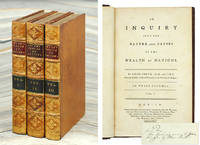
179648831Philadelphia PA: Thomas Dobson 1796. Second American edition. Hardcover. Very good/No jacket issued. Philadelphia PA: Thomas Dobson 1796. 3 vols. Second American edition. 412; 430; 387; Index pp. Hardcover. 12mo. Professionall y rebound in period style full brown calf; spine elaborately decorated in gilt with contrasting lettering labels; front and back covers with central blind-stamped devices. Marbled endpapers. New additional endpapers; interior quite toned throughout. Very good/No jacket issued. Multiple volumes - extra shipping charges apply Insurance required to ship this item. Thomas Dobson hardcover books
1981033897Indianapolis: Liberty Classics 1981. Edited by R. L. Meek et al. viii 610p. stiff wrapeprs. Reprint of the 1978 edition The Glasgow edition of the works and correspondence of Adam Smith 5. Liberty Classics unknown books
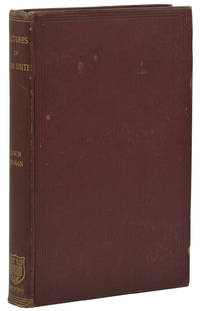
1896140940980Oxford: Oxford at the Claredon Press 1896. First Edition. Very Good. First edition first printing. Bound in publisher's original burgundy cloth ruled in blind with spine stamped in gilt; lacking a dust jacket. Very Good. Cloth rubbed and lightly spotted. Offsetting to free endpapers. Owner name effaced with some abrasion from front paste down and small vintage bookseller label partially removed from rear paste down. The first publication of major lectures of Adam Smith from notes taken by his student at the University of Glasgow circa 1863-4. These lectures contain the formative ideas he later worked into The Wealth of Nations. Oxford at the Claredon Press unknown books
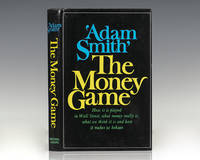
81058hardcover. 335pp 8vo cloth-backed boards. New York: Summit Books 1981. Very good in price clipped dust jacket.<br/><br/> unknown books
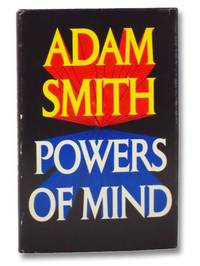
19752275972Random House 1975. Book Club BCE/BOMC. Hard Cover. Very Good/Very Good. Book club edition. Jacket lightly rubbed. 1975 Hard Cover. We have more books available by this author!. xi 1 418 pp. 8vo. "The author describes his participation in and observations of a variety of mind-expansion and mind-control experiments. Random House hardcover books
1968123736London: Michael Joseph 1968. Early printing of this classic work. Octavo original cloth. Very good in a very good dust jacket. Michael Joseph hardcover books
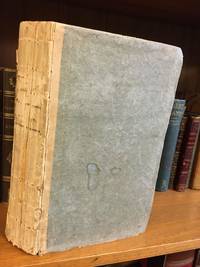
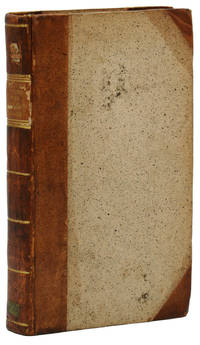
18171335432Boston: Wells and Lilly 1817. Early American Edition. Hardcover. Octavo xii 262 2 250 2; VG-; bound in publisher's blue-gray boards paper spine; some wear and rubbing to boards some chipping and cracking to spine most of the titling has worn off; text block uncut; mild foxing primarily to extremities; ownership name in ink to the title page; with half-title two title pages; two volumes in one; scarce; shelved case 10. Mizuta: TMS25;<br /> <br><br /> <br><br /> The first American edition was published in 1817 by Anthony Finley in Philadelphia. This edition came out later that year.;. 1335432. Shelved Dupont Bookstore. Wells and Lilly hardcover books
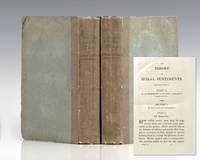
1808109787Edinburgh: Printed for Bell and Bradfute W. Laing and Mundell Doig & Stevenson 1808. Rare example Adam Smith's first book bound in the original boards. Octavo 2 volumes bound in original boards edges uncut. In near fine condition contemporary name to the title pages. Scarce in the original boards. Adam Smith's Theory of Moral Sentiments his first book is "one of the truly outstanding books in the intellectual history of the world" Amartya Sen. First published in 1759 it laid the foundation for Wealth of Nations and proposed the theory repeated in the later work: that self-seeking men are often "led by an invisible hand. without knowing it without intending it to advance the interest of the society." "The fruit of his Glasgow years. Moral Sentiments would be enough to assure the author a respected place among Scottish moral philosophers and Smith himself ranked it above the Wealth of Nations. Its central idea is the concept closely related to conscience of the impartial spectator who helps man to distinguish right from wrong. For the same purpose Immanuel Kant invented the categorical imperative and Sigmund Freud the superego" Niehans 62. Basing moral sentiment on "the power one man has of putting himself in the place of another" in contrast to Hume's idea of self-interest "Smith was henceforth recognized as one of the first authors of the day" DNB. With Moral Sentiments and Wealth of Nations Smith created "not merely a treatise on moral philosophy and a treatise on economics but a complete moral and political philosophy in which the two elements of history and theory were to be closely conjoined" Palgrave III:412-13. To Smith when man pursues "his own private interests the original and selfish sentiments of Moral Sentiments he will in the economic realm choose those endeavors which will best serve society. Herein lies the connection between the two great works which make them the work of a single and largely consistent theorist" Paul "Adam Smith" 293. In his Theory of Moral Sentiments Smith develops an ethics based on a "unifying principle--in this case of sympathy--which would shed light on the harmonious and beneficial order of the moral world. As such it was of considerable interest to Smith's contemporaries who were groping for an ethics that would flow from man's impulses or sentiments rather than from his reason from 'innate ideas' or from theological precepts. If Smith had written only The Theory of Moral Sentiments he would enjoy in the philosophers hall of fame a niche not unlike that reserved for Shaftesbury or Hutcheson." Both Moral Sentiments and Wealth of Nations reflect Smith's "attempt to anchor the new science of political economy in a Newtonian universe mechanical albeit harmonious and beneficial in which society is shown to benefit from the unintended consequences of the pursuit of individual self-interest. There is thus a considerable affinity between the structure of The Theory of Moral Sentiments and that of The Wealth of Nations. Each work is integrated by a great unifying principle. What sympathy accomplishes in the moral world self-interest does in the economic one. Either principle in its respective realm is shown to produce a harmony such as the one that characterizes Newton's order of nature. Smith's ethics is one of self-command or self-reliance just as is his laissez faire economics. Smith's ethics and his economics are integrated by the same principle of self-command or self-reliance which manifests itself in economics in laissez faire" Spiegel Growth of Economic Thought 229-231. Printed for Bell and Bradfute, W. Laing, and Mundell, Doig & Stevenson hardcover books
WELLER9780857080776New. New book. unknown books
1976046251Indianapolis: Liberty Fund 1976. Selected by John Haggarty; edited and with an introduction by Benjain A. Rogge. 233p. dj. Liberty Fund unknown books
1791140940981Leipzig: In der Graffschen Buchhandlung 1791. First Edition Thus. Very Good. 463 pp. First edition of this second German translation overall of The Theory of Moral Sentiments made from the fifth English edition; no other German translation was published until 1926. Contemporary calf over speckled boards. Very Good. Binding lightly rubbed and marked spine with two small paper shelf tickets. Upper joint started but binding remains firm. Pages a little toned and with occasional foxing. In der Graffschen Buchhandlung unknown books
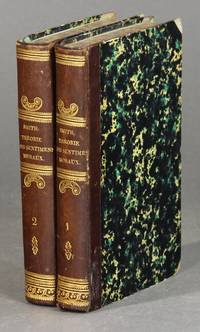
179854493Paris: F. Buisson 1798. 2 volumes 8vo pp. viii 466; 4 51 1; sporadic foxing; pencil notes in the top margins of C6v and C7r in volume I and K5r in volume II; paper flaw in C4 of the second volume affecting 4 or 5 letters; F1 in volume II with blank corner torn no loss and the second A gathering in volume II substantially toned; all else quite nice in contemporary brown calf-backed marbled boards with vellum tips; smooth gilt-decorated spine laid out in three compartments gilt-lettered direct in 1; very pretty marbled edges green silk bookmarkers; near fine. There's a wonderful abstract of an article on line compliments of Laurie Breban and Jean Dellemotte at the Sorbonne which "aims at providing a critical analysis of Sophie de Grouchy's translation and commentary of Adam Smith's Theory of Moral Sentiments . This paper focuses on Sophie de Grouchy's translation of the Theory of Moral Sentiments 1759 published in 1798." At that time her translation was not the first attempt to spread Adam Smith's moral philosophy in France. However the two previous translations did not succeed there. The first one from Marc-Antoine Eidous and entitled Metaphysique des moeurs 1764 was unanimously criticized because of its bad quality. Smith himself looked at it as responsible for the bad reception of his work across the Channel. As for the second translation 1774-75 from Jean-Louis Blavet it seems to have been poorly disseminated. This contrasts with the reputation of Grouchy's translation which was praised from the very moment of its publication for its accurateness with respect to the original text. The success was such that it has been viewed for two centuries as the definite French translation of the Theory of Moral Sentiments. And Grouchy is even sometimes considered as "Smith's best-known contemporary translator." <br/><br/> F. Buisson hardcover books
19611326973Madrid: Aguilar 1961. Segunda edición. Hardcover. Octavo; Fair/no DJ; Hardcover w/out DJ; Spine grey with gold print; Boards in grey cloth with gold print wear to corners and spine caps stain on rear and small stain on spine shelfwear; Text block has cracked front hinge owner label on front flyleaf significant amount of notes and underlining in ink and pencil throughout; Text in Spanish; xx 893 pages. 1326973. FP New Rockville Stock. Aguilar hardcover books
179234586London: A. Strahan T. Cadell and others 1792. 2 volumes 8vo. iii-xv 1 488; iii-viii 462pp. Lacks half-titles. Expertly bound to style in half russia and period marbled paper covered boards.<br/> <br/>Eighteenth century edition of Adam Smith's first published work.<br/> <br/>Adam Smith's first published work first printed in 1759 would lay the basis for The Wealth of Nations and establish his reputation as a philosopher of note.<br/> <br/>ESTC T121726; Alston III.829; Goldsmiths 15514. A. Strahan, T. Cadell [and others] unknown books
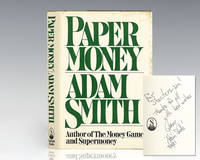
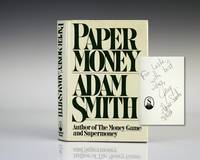
1981112445New York: Summit Books 1981. First edition of this modern classic. Octavo original half cloth. Presentation copy inscribed and dated by the author on the half-title page in the year of publication "Fr Shecters-san! Thanks for all with best wishes Jerry 'Adam Smith' 2/2/81." Very good in a very good dust jacket. Jacket design by Robert Anthony. George Jerome Goodman was an American author and economics broadcast commentator best known by his pseudonym Adam Smith which was assigned by Clay Felker at New York magazine in order to keep his published articles about Wall Street anonymous. "Like the painter Mondrian Adam Smith makes it look simple." Summit Books hardcover books
198120005New York: Summit Books 1981. First edition of this modern classic. Octavo original half cloth. Inscribed and dated by the author on the half-title page. Near fine in a near fine with a few closed tears. George Jerome Goodman was an American author and economics broadcast commentator best known by his pseudonym Adam Smith which was assigned by Clay Felker at New York magazine in order to keep his published articles about Wall Street anonymous. "Like the painter Mondrian Adam Smith makes it look simple." Summit Books hardcover books
1962M11662Edinburgh:: Royal College of Surgeons of Edinburgh 1962. 1962. 8vo. xiv 237 pp. Frontis. illustrated figs. tables indexes. Blue cloth gilt-stamped cover emblem and spine title dust-jacket. Previous owner's inked signature on f.f.e.p. and dust-jacket. Very good. Royal College of Surgeons of Edinburgh, 1962. hardcover books
2009Embry 183053Harriman House 2009. Two tiny marks to upper edges else fine in fine dust jacket in mylar cover. Introduction and Notes by Jonathan B. Wight. Harriman House, 2009. unknown books
110826Dublin: Printed for Messrs. Whitestone Chamberlaine Watson et al. 1776. 3 vols. 8vo viii 1-391; viii- 1-524 3 ads; iv 1-412 pp. Diced calf with gilt rules recently rebacked. Lady Davy’s bookplate and inscription in each vol. purple ink signature of a later owner upon each bookplate occasional marginal staining closed tear to p.259 of vol. 3. Preserved in an archival clamshell box. § The Adam Smith-John Playfair-Humphry Davy copy an incomparable association. First Dublin edition the only edition printed in the same year as the first London 1776. Lady Davy’s copy with her bookplate and ink inscription in each volume stating the books were given by Adam Smith to John Playfair. As a tangible record of the connections between these three influential Enlightenment figures this book is intriguing. Adam Smith 1723-1790 who established the foundations of modern economics with this book and John Playfair 1748-1819 the mathematician and geologist were friends in later life. They both belonged to the Oyster Club in Edinburgh and each owned copies of the other's books. Smith’s library catalogue lists a presentation copy from Playfair and the sale catalogue 1820 of Playfair’s library includes books by Smith but not this one. Jane Davy formerly Apreece 1780-1855 was a well-known and widely-travelled literary hostess. As a young wealthy widow she rejected a proposal of marriage from John Playfair in favour of Humphry Davy 1778-1829 whom she married in 1812 a few days after he had received his knighthood. The binding style with wove paper endpapers and diced calf boards postdates Smith’s death in 1790. The first volume has the binders ticket ‘Lycett Nelson Street City Road’ and records show that the firm was declared bankrupt in 1829 making it possible that Jane Davy received the book perhaps as a gift from Playfair during their courtship or on his death. Both Playfair and Davy visited London and could have commissioned the binding.This copy is the only evidence we have that Smith owned a copy of this Dublin edition which appeared in the same year as the first and is the only other edition printed in that year but surely Lady Davy's attestation suffices. The copy has a small ink correction to page 368 in vol. 3. This correction was not made to the printed text until the 4th edition. Smith was known to make authorial marginal notes in books; though the hand that made this correction cannot be known it is unlikely that anyone else would have felt emboldened to emend the great man's text. More about the relationships between Adam Smith and John Playfair and John Playfair and Jane Davy remains to be discovered stimulated by the discovery of this extraordinary association copy. A fascinating copy of a great Enlightenment text. PMM 221. Printed for Messrs. Whitestone hardcover books
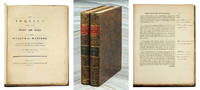
110446London: W. Strahan and T. Cadell 1776. 2 vols. 4to 12 x 9.25 inches or 305 x 240 mm large-paper top edge just trimmed other edges untrimmed; 12 510 pp.; 4 587 588 ads pp. Volume I: A4 a2 B-Z Aa-Zz 3A-3S4 T4 -3T4 blank as usual; Volume II: A2 B-Z Aa-Zz Aaa-Zzz 4A-4E4 4F2. With the usual cancels: M3 Q1 U3 2Z3 3A4 and 3O4 in volume I cancels D1 & 3Z4 in volume II. In vol. 2 p. 288 is misprinted as 289. Old speckled calf recently rebacked edges untrimmed and substantially larger than 2 copies recently sold as in “original boardsâ€. Copious annotations in ink in a neat early hand. Some soiling to a few leaves in the press and occasional spotting or foxing as usual. § First edition the issue without the Edinburgh imprint of W. Creech as copies with his imprint have cancel titles those lacking the Edinburgh imprint such as this probably have priority of "the first and greatest classic of modern economic thought. Where the political aspects of human rights had taken two centuries to explore Smith's achievement was to bring the study of economic aspects to the same point in a single work" PMM. The records of copies at auction and through the trade in the last several years all show copies measuring at least an inch shorter and narrower than this copy -- the Schiff copy alone was almost as tall the Bradley Martin copy an inch shorter. The annotations are “memory aids†clearly written by an attentive reader who wanted to be able to refer back quickly to the key points of interest to him or her; they are not attempts to dispute or correct the text or even comment on it and one might surmise the reader to have been a high-level student or more likely a teacher. The two suggested errata have both been corrected by a different hand. ESTC T96668; Goldsmith 11392; Kress 7621; PMM 221; Rothschild 1897. W. Strahan hardcover books
17641334674Paris: Briasson 1764. First French Edition. Hardcover. Octavos 2 volumes; VG; bound in contemporary acid-washed calf spines with two burgundy morocco labels each gilt titling and tooling; marbled endpapers; text block red; 1 leaf ad in volume 2 rear; JL consignment; shelved case 3. The first French edition was unauthorized the first authorized French translation would not appear until 1774. The 1774 translation was done by Blavet who published a letter from Smith in which Smith called Eidous's translation 'mortifying' a reaction which prompted Blavet to pursue his own attempt.;<br /> <br><br /> <br><br /> First appearing in 1759 The Theory of Moral Sentiments lays the ethical and philosophical groundwork for Smith's later economic work.;. 1334674. Shelved Dupont Bookstore. Briasson hardcover books
17971329312Paris: H. Agasse 1797. First French Edition. Hardcover. Octavo 316 283 pages; VG; bound in period quarter calf green marbled boards gilt titling and tooling to spine; mild wear and rubbing marbled paper slightly damaged in four places; speckled text block; interior clean with no names or markings; two parts bound together lacking frontispiece portrait as usual only bound into some copies; both half-titles and title pages present; JL consignment; shelved case 3. Essays on Philosophical Subjects is a posthumously published history of astronomy until Smith's own era plus some thoughts on ancient physics and metaphysics; This French translation published two years after the first English was translated by Pierre Prévost a Swiss philosopher and physicist who he demonstrated in 1791 that all bodies cold or hot emit heat by radiation. 1329312. Shelved Dupont Bookstore. H. Agasse hardcover books
2000185272Osprey Publishing 2000-04-01. Paperback. Very Good. Clean has a good binding no marks or notations. Light wear. Osprey Publishing paperback books
1929USMIJER00MELHarper & Brothers 1929. Good. Smith George Adam. Jeremiah: Being the Baird Lecture for 1922. New York: Harper & Brothers 1929. Fourth edition revised and enlarged. 410pp. 8vo. Navy cloth. Book condition: Good with bumped edges faint soiling spine slightly askew front hinge cracked and former owner' neat underlining marginalia and highlighting throughout in different color inks. Harper & Brothers hardcover books
1919016161New York: George H. Doran Company 1919. xi 256p. original burgundy cloth. George H. Doran Company unknown books