872 résultats
1821290354Von Jenisch und Stagesche Buchhandlung Augsburg 1821. Hardcover Pappe mit Leinenrücken ohne Schutzumschlag Nur 2. Band. Mit einem Kupfer. Zustand: Keine Beschädigungen keine Eintragungen. Rücken Ecken Kanten stark bestoßen berieben abgeschabt. Der erste und letzte Druckbogen ist lose. Schiefstand. In allem original. Von Jenisch und Stagesche Buchhandlung, Augsburg, hardcover
186774888Frauenfeld : J. Huber 1867. 285x220mm. 64ÊSeiten Register broschiert. Couvertures dtaches. 4942 J. Huber unknown
18247100279Erlangen: Carl Heyder 1824. (14), XC, 262; (2), 434 Seiten. Frakturdruck. 8° (18 x 11 cm). Dekorativer zeitgenössischer Pappband mit klassizistischer Rückenvergoldung auf Lackpapier und Baummarmor-Papierbezug. [Hardcover / fest gebunden].
1878326681878. Wien. med. Wschr. 28/25. - Wien L.W.Seidel 22. Juni 1878 4° Sp.677-699 feine Broschur. Erstdruck! unknown
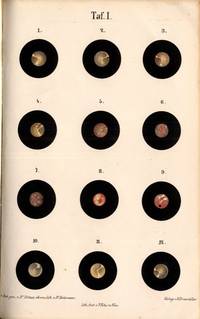
1865442551865. Wien W. Braumüller 1865 8° VI 1 Blatt Druckfehler 143. 1 pp. 13 Holzschnitte 2 farblith. Tafeln mit 24 von Politzer gezeichneten Abbildungen Halbledereinband der Zeit; Rücken erneuert; feines Exemplar. First Edition of the first OTOSCOPY ATLAS! "In 1865 Adam Politzer 1835-1920 published his first work on otoscopy or rather his first great work as an artist. He was the first to think of publishing a book on this subject. The 143-page atlas showing methods of examining the ear included 37 drawings of the tympanic membrane by Politzer entitled "Die Beleuchtungsbilder des Trommelfells im gesunden und kranken Zustande". There were 13 drawings in black and white distributed through the text and 24 drawings in color reproduced as two separate plates using chromolithography by Carl I Heitzmann at the Köke lithography workshops in Vienna. Scientific images began to be used in medical circles as they could be an excellent aid to understanding a phenomenon and teaching it. The images represented true or real facts i.e. they allowed reality to be studied more or less directly and analyzed according to perception and interpretation. Recognizing a certain feature did not mean understanding the message of the image itself in which the feature could have a particular meaning. It was necessary to know how to interpret the images before recognizing the features taking into account that the images were only two-dimensional. Interpreting them was the major problem. The objectives of their analysis were clearly defined and these were essential for determining the means of interpretation. The atlas was the first real one of observations made during direct visual examination of the ear based on the diagnostic approach and examination of the tympanic membrane with different images of healthy and diseased ears described in relation to the color transparency position healthiness cicatrization and mobility of the tympanic membrane. Politzer introduced color for the first time. Apparently simple to use in fact it was not at all. Color is affected as much by light as by darkness so it was connected closely to light and revealed to the eye therefore through observation. Politzer had to perfect a technique for keeping the light constant during examination of the ear so he could finalize the colors he saw while studying pathologies of the tympanic membrane. His atlas was soon considered essential to the study of otology. In the introduction Politzer clearly explained the importance of examining the tympanic membrane correctly because if it was done well many diseases of the ear could be identified without further examination: . Politzer showed that the color of the tympanic membrane depended on the combination of three factors: its own color the color of the promontory806 seen against the light and the effect of the light source. Revolutionary at that time the importance of the otoscopie image in diagnosis is still today the key point in examining a patient with ear problems. In more than 90% of cases the otoscop¬ie image is sufficient for making a correct diagnosis. This new method with its three main stages followed almost exactly that used by art critics to study a work: description of the object observed using the appropriate vocabulary understand¬ing after studying it how the image is composed and analysis of the meaning of the image or rather of the pathology found. More simply studying an image means asking questions in this instance looking for anomalies from which to make a diagnosis. Because it is transient the image has to be reproduced so it can be used again. It then becomes a transposition of the real thing or a reality in itself and can be used for training in observation. That was without doubt Politzer's aim when he published the otoscopy atlas." Albert Mudry: Adam Politzer 2010 pp.174-178 Garrison-Morton No.3378 unknown
1899326551899. Wien. med. Wschr. 49/ 7-8. - Wien Moritz Perles 1899 44° Sp.297-391 Broschur. unknown
1866MASTER080243IWASHINGTON D.C.: W. H. & O. H. MORRISON. FAIR. SOILED BOARDS SHOWS HEAVY WEAR RUBBED CORNERS. Pages: 413. . 1866. HARDCOVER. TORN AT UPPER SPINE. NEEDS REPAIR WORK ALTHOUGH BINDING INTACT FIRST SIGNATURE LOOSE. . W. H. & O. H. MORRISON hardcover
18623950064Boston: Lee and Shepard Publishers 1862. First Edition. Hardcover. Good in No Dust Jacket dust jacket. First Edition. Exlibrary marks. Sound binding and hinges. Writing on endpapers. Pages clean tanned. CLoth over boards has shelf wear edge wear bumped corners darkened spine wear to titlel/author label on spine label at lower spine. Volume 1 of the journal of Count Adam Gurowski 1805-1866 Polish-born author who emigrated to the United States in 1849. Topics he includes cover a wide variety of issues of the day. Ex-Library; 8.0" tall; 315 pages. Lee and Shepard Publishers hardcover
1867326521867. Wien. med. Wschr. 17/16. - Wien L.W. Seidel & Sohn 23. februar 1867 4° Sp.241-256 feine Broschur. Erstdruck! unknown
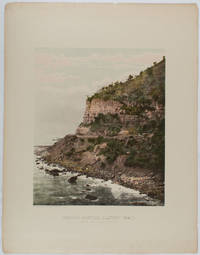
1888178444Sydney.: Phillips-Stephan Photo-Litho & Typographic Process Co. Ld. circa1888. Photo-lithograph 35.8 x 30 cm; 57 x 44 cm sheet including caption minor edge wear and chips to the ample margins but in very good condition. Rare atmospheric lithograph of costal cliffs near Clifton now a suburb of Wollongong NSW soon after the Coalcliff Colliery had been officially opened. The image was produced using a process pioneered by Samuel Phillips a photographer and Adam Stephan a lithographic printer in 1887 from their studio in Wolloomooloo. . Phillips-Stephan Photo-Litho & Typographic Process Co. Ld. unknown
180926021Paris: Imprimerie Impériale 1809. Fine. Imprimerie Impériale Paris 1809-1829 71 x 53.50 cm une feuille Original unshaved full-page etching from the Imperial edition of the Description de l'Égypte or Recueil des observations et recherches faites en Égypte pendant l'expédition française publié par les ordres de Sa Majesté l'Empereur Napoléon le Grand A Collection of the observations and research carried out in Egypt during the French expedition published on the orders of his Majesty the Emperor Napoleon the Great'.Produced between February 1802 and 1830 on the orders of Naopleon Bonaparte and published between 1809 and 1828 1000 copies were printed and distributed to institutions on vergé paper with an 'Égypte ancienne et moderne' watermark visible when held up to the light. Light marginal spotting not touching image otherwise in very fresh fine condition. An engraving from the Description de l'Egypte one of the masterpieces of French printing and the birth of a new field: Egyptology. A gigantic survey of Egypt at the time of Bonaparte's conquests in 1798 and 1799 the work is divided into 13 volumes of engravings making up 892 plates of which 72 colored as well as presenting the splendors of the Egypt of the Pharaohs in 9 volumes. The other volumes discuss natural history and present a fascinating portrait of Coptic and Islamic Egypt as it was seen by Bonaparte's Eastern Armies. The Egyptian campaign' militarily a disaster demonstrates through the engravings of the Description d'Egypte the scientific success it nonetheless became thanks to the 167 expert members of the Commission of the Sciences and Arts of the Institut d'Egypte Egyptian Institute who followed Napoleon's army. The Institut gathered together in Egypt the mathematician Monge the chemist Berthollet the naturalist Geoffroy Saint-Hilaire as well as numerous artists engineers architects and doctors. They were tasked with re-discovering modern and ancient Egypt and displaying its natural treasures as well as the know-how of its inhabitants.This edition the so-called Imperial edition of the plates for the Description de l'Egypte was printed in four large formats two of which were specially created for it and christened Moyen-Egypte and Grand-Egypte. A special press was built to print it the process extending over 20 years from 1809 to 1829. The Imperial edition proved so popular that a second edition this time in black and white and without the Egypte ancienne et moderne watermark known as the Royal Edition was published during the Restoration by the printing house of C.-L.-F. Panckoucke Paris.The engravings of the Description d'Egypte owe a great deal to Baron Dominique-Vivant Denon illustrator diplomat collector and later Director of the Musée Napoléon the Louvre. His exploration of the South of Egypt gave Bonaparte the idea of sending the experts of the Institut there thus creating a faithful and complete portrait of the area. This was the research gathered together from 1802 in the mammoth Description de L'Egypte.Denon embarked on this story of archeological exploration at the age of 51 reaching first Alexandria and then Cairo before exploring Upper Egypt. Along with the members of the Institut d'Egypte the Natural History Museum's painter H.J. Redouté brother of Pierre-Joseph Redouté author of Roses the mineralogist Dolomiue and the draughtsman Joly Denon then explored the Nile Delta and Lower Egypt. When however he joined the 21st Light Infantry Regiment as it marched across Upper Egypt in pursuit of the retreating Mameluks in November 1798 he found himself the only civilian. In the very midst of the battle itself he reeled off sketches of the works of art that peppered his path right up to the threshold of the Sudan. He said that he had crossed a country that is apart from its name entirely unknown to Europeans and therefore everything was worth describing Voyages dans la Basse et la Haute Egypte pendant les campagnes Imprimerie Impériale unknown
1840003888Jeannin. BONAPARTE Napoleon ADAM Victor; CHAMPIN Jean-Jacques. Dernier Pelerinage au Tombeau de Napoleon. Paris Jeannin 1840. Large folio lithograph 510 x 355 mm. Blind-stamped. Lithographie par Champin; les figures par V. Adam. Printed by Lemercier Bernard et Cie. Scattered foxing and toning; marginal marks and handling wear; a few creases to right-hand margin. Good to very good. One of the more atmospheric plates from Adam's suite documenting the exhumation return and state funeral of Napoleon in 1840. The plate forms part of Victor Adam's Retour en France des Depouilles Mortelles de Napoleon a suite of twenty lithographs documenting the Retour des Cendres. The scene depicts visitors making a final pilgrimage to Napoleon's tomb at St Helena shortly before the removal of his remains to France in October 1840. This plate is from the original first edition of the complete series of twenty large-format lithographs issued in Paris in 1840. . Good. Soft cover. 1st Edition. 1st Printing. 1840. Jeannin paperback
185856192Mainz Kunze 1858. Small 4to. Contemp. hcalf. Gilt spine. Gilt lettering. VIII556 pp. textillustrations 20 tintet lithographed plates. unknown
1828000010263Harrisburg Pa.: Jacob Baab fu¨r den Verfaszer 1828 75 pages the book is in German. It is translated as: King Saul reproved by Samuel and cast off by the Lord in an illustration on the first book of Samuel - 15 chap. 17 18 19 verses: besides a serious call against the altar at Bethel with an appendix and an encouragement to the house of David. The book has a leather backstrip but the boards are very worn. There is a semblance of the remaining paper on the boards. The end pages are missing and the block of the book is barely holding from one string on the binding. Very scarce though. Jacob Baab, fu¨r den Verfaszer hardcover
189080321Leipzig: Seemann 1890. In-8 p. mm. 223x140 bella legatura in p. marocchino verde restaur. ricchiss. decoraz. e titolo oro ai piatti e al dorso tagli dorati con incise delle figure dentelles dorate ai risg. conservata copertina originale pp. 8280 con 194 illustrazioni in bianco e nero e in tinta nel testo relative a strumenti di legatoria esempi di legature etc. Opera interessante dedicata all'arte del rilegatore. Esemplare ben conservato. Seemann, unknown
184014793AB1840. 24 Hefte in 4 Bänden. Wien Benko 1840 - 1841. 22 : 145 cm. Mit 13 stat 24 lithographierten Frontispiece. Halbleinenbänder der Zeit mit Rückenvergoldung und Rückenschild. Ohne die Frontispüiece zu Band 1 Heft 4 und 6; Band 2 Heft 23 und 6; Band 3 Heft23 und 5; Band 4 Heft 2 4 und 6. - Band 2 etwas wasserrandig sonst innen gut. Einbände etwas angestaucbt und leicht berieben. unknown
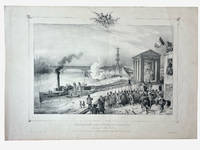
1840003892Jeannin. BONAPARTE Napoleon ADAM Victor. Debarquement des Cendres de Napoleon a Courbevoie le 15 Decembre 1840. Paris Jeannin 1840. Large folio lithograph 510 x 355 mm. Blind-stamped. Dessine d'apres nature et lithographie par V. Adam. Printed by Lemercier Bernard et Cie. Light spotting and minor marginal age toning; a well-preserved example overall. Very good. Original large-format lithograph from Victor Adam's Retour en France des Depouilles Mortelles de Napoleon the important contemporary suite of 20 plates commemorating the Retour des Cendres ceremonies of 1840. The scene depicts the ceremonial landing of Napoleon's remains at Courbevoie on 15 December 1840 after their return from St Helena aboard the Belle-Poule. Crowds line the Seine while artillery salutes mark the arrival of the imperial cortège before its procession into Paris. . Very Good. Soft cover. 1st Edition. 1st Printing. 1840. Jeannin paperback
1810404012BB1810. 14,5 x 12 cm.
183790614HBSt. Gallen:, Wartmann und Scheitlin, 1837. xxvi Seiten, 1 Bl. (Inhalt), 132 Seiten, moderner goldgeprägter HPgtbd., 20 x 12 cm.
1839Alibris.0033965Gottfr. Basse. 1839. Hard cover. Good. ex-library rebound as hardcover without original covers card pocket inside front cover label on 1st blank page stamp on 1st title page 2nd title page is loose foxing age spots on some pages. 524 p. . Two books bound together: "Das Narrenschiff" new edition by Sebastian Brant and "Kleinere Gedichte" by Stricker. Gottfr. Basse hardcover
1832489AG1832. Lithographie 9 x 7; Titel ausgeschn. und über Darstellung geklebt, unten angerändert. Auf Wunsch Digitalaufnahme in jpg-Format erhältlich- photo in jpg-format available. Je nach Versandart können die Portokosten bis zu 2 ? weniger als angegeben betragen.+
182862274<p>lithograph. EXTREMELY RARE view from 'Album Pittoresque de la Fregate La Thetis et de la Covette L'Esperance'. Condition: with paper loss not affecting plate with some smudges and water stains paper a bit wavy.</p> Vicomte de la Touanne / Bulla, Editeur, Paris.
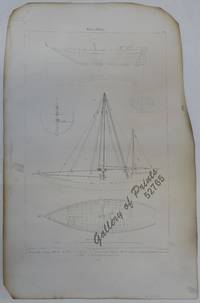
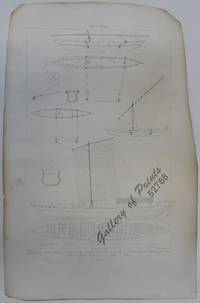
184152765lithograph. EXTREMELY RARE view from 'Essai sur la Construction Navale des Peuples Extra-Europeens'. Reference: Graesse V. 134; Cat. Nederl. Scheepvart Mus. 758; Polak 7321; Sabin 58593; Taylor 72; not in Kroepelin & Hill Collections. Condition: with light spots and stains not affecting plate with paper loss along margins with burn marks along edges. Arthus Bertrand, Paris.
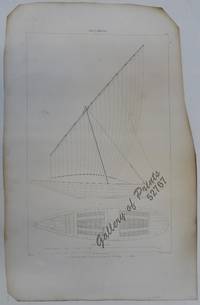
184152767lithograph. EXTREMELY RARE view from 'Essai sur la Construction Navale des Peuples Extra-Europeens'. Reference: Graesse V. 134; Cat. Nederl. Scheepvart Mus. 758; Polak 7321; Sabin 58593; Taylor 72; not in Kroepelin & Hill Collections. Condition: with light spots and stains affecting plate with paper loss along margins with burn marks along edges. Arthus Bertrand, Paris.
184152768lithograph. EXTREMELY RARE view from 'Essai sur la Construction Navale des Peuples Extra-Europeens'. Reference: Graesse V. 134; Cat. Nederl. Scheepvart Mus. 758; Polak 7321; Sabin 58593; Taylor 72; not in Kroepelin & Hill Collections. Condition: with light spots and stains affecting plate with paper loss along margins with burn marks along edges. Arthus Bertrand, Paris.