872 résultats
18711100London: Alex Murray& Son 1871. Later printing. Hardcover. Good. Bookplates for Sir Robert Stout donating his library in 1926 and Victoria University College book plate in front. Some faint pencil marks seen. Rear cover loose. 781 pages plus 16 pages of adverts. 3 volumes from 1812 reprinted into one volume. Carmine coloured cloth with gilt title to spine. Pages are nice and white - slight foxing to pages edges and dusty looking to top edges <br/><br/> Alex Murray& Son hardcover
1811013068London: Printed for J. Maynard 1811. Volume 2 & 3 only. Books measure 21x14.cm. Collation vi 514pp v 448pp 48pp index. Bound in period mottled calf gilt tooling. Calf rubbedscuffed worn with loss hinge joints split boards still holding. Internally tanning to endpapers. Pages in good clean condition. . Full Calf. Good Plus. 8vo. Printed for J. Maynard Hardcover

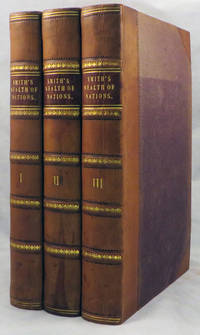
181127288London: J. Maynard.Haymarket; and F. Zinke.Strand 1811. 3 volumes. Very early printing. This printing now with an Account of the Life of the Author which has been specially drawn up for the first time as well as studies on the author and the French economists of the period and a method of facilitating the study of the work. 8vo bound in very handsome and well preserved three-quarter contemporary polished calf over cloth covered boards compartments of the spines decorated with gilt decorated raised bands bordering decorations tooled in blind one compartment lettered in gilt one with maroon morocco lettering label gilt. lxxi 360; vi 512 513-514 appendix; vi 448 50 pp.extensive index. An especially bright and fine set in very handsome and well preserved contemporary bindings. The text remains very clean crisp and fresh. There has been no restoration work of any sort to bindings or text. Rare thus. AN UNUSUALLY WELL PRESERVED AND HANDSOME SET OF THIS EXTRAORDINARY WORK. Eighteenth century editions of Smith’s magnum opus are becoming very scarce. This edition of 1811 is a very early English printing of the nineteenth century still in 18th century style. It retains Smith’s introduction and also incorporates the author’s advertisements to the third and fourth editions and a new advertisement to this edition setting out the additions made to the preliminary materials for this edition.<br> ‘The history of economic theory up to the end of the nineteenth century consists of two parts: the mercantilist phase which was based not so much on a doctrine as on a system of practice which grew out of social conditions; and the second phase which saw the development of the theory that the individual had the right to be unimpeded in the exercise of economic activity. While it cannot be said that Smith invented the latter theory – the physiocrats had already suggested it and Turgot in particular had constructed an organised study of social wealth – his work is the first major expression of it. He begins with the thought that labour is the source from which a nation derives what is necessary to it. The improvement of the division of labour is the measure of productivity and in it lies the human propensity to barter and exchange: "labour is the real measure of the exchangeable value of all commodities … it is their real price; money is their nominal price only". Labour represents the three essential elements – wages profit and rent – and these three also constitute income. From the working of the economy Smith passes to its matter – "stock" – which compasses all that man owns either for his own consumption or for the return which it brings him. The Wealth of Nations ends with a history of economic development a definite onslaught on the mercantile system and some prophetic speculations on the limits of economic control.<br> ‘Where the political aspects of human rights had taken two centuries to explore Smith’s achievement was to bring the study of economic aspects to the same point in a single work … The certainty of its criticism and its grasp of human nature have made it the first and greatest classic of modern economic thought’ PMM. <br> Smith's classic work was begun at Toulouse in 1763-64 where he had travelled as guardian of Henry Scott the young duke of Buccleuch and in the company of David Hume historian and fellow professor at Glasgow University. The work took shape over the next ten years and was finally published in 1776. At one point during its composition Hume wrote that Smith was "cutting himself off entirely from human society." But his labors however severe his methods yielded the "first and greatest classic of modern economic thought" Printing and the Mind of Man.<br> "It may be said that the WEALTH OF NATIONS certainly operated powerfully through the harmony of its critical side with the tendencies of the half-century which followed its publication to the assertion of personal freedom and 'natural rights.' It discredited the economic policy of the past and promoted the overthrow of institutions which had come down from earlier times but were unsuited to modern society. As a theoretic treatment of social economy and therefore as a guide to social reconstruction and practice in the future it is provisional not definitive. But when the study of its subject comes to be systematized on the basis of a general social philosophy more complete and durable than Smith's no contribution to that final construction will be found so valuable as his" Britannica J. Maynard...Haymarket; and F. Zinke...Strand hardcover
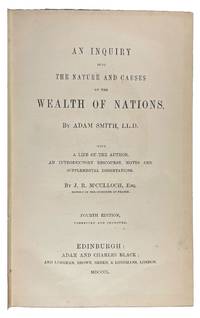
183939773London printed for Adam & Charles Black 1839. WITH A LIFE OF THE AUTHOR AN INTRODUCTORY DISCOURSE NOTES AND SUPPLEMENTAL DISSERTATIONS BY J.R. McCULLOCH. A NEW EDITION CORRECTED THROUGHOUT AND GREATLY ENLARGED. 8vo. lv648pp. Engraved frontispiece stained. Half calf front cover detatched lacks spine. unknown
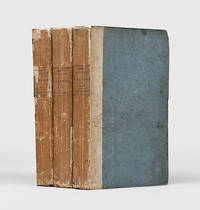
1811166402Edinburgh: for Silvester Doig and Andrew Stirling and 6 others in London and York 1811. In original boards Third Edinburgh edition of "the first and greatest classic of modern economic thought" PMM unrestored in original boards. First published in 1776 and in Edinburgh in 1806 the second Edinburgh edition in 1809 "the Wealth of Nations had no rival in scope or depth when published and is still one of the few works in its field to have achieved classic status meaning simply that it has sustained yet survived repeated reading critical and adulatory long after the circumstances which prompted it have become the object of historical enquiry" ODNB. 3 vols octavo. Uncut in original boards printed paper spine labels. Late 19th-century library stamp of Leonard Jaques to title pages vol. I spine label chipped and consolidated light wear at extremities joints of the same cracked with front joint weak but still holding contents spotted. A very good copy. Tribe 101. See Printing and the Mind of Man 221 first edition. hardcover
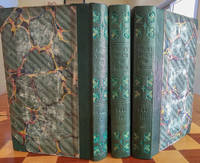
1811021345London: J. Maynard and F. Zinke 1811. Early Edition. Hardcover. Light pencil underlining and a few notes text rather clean; owner ink stamp on title page of first volume. Near Fine. Three volumes 5-1/4" x 8-8/8" in contemporary marbled boards rebacked in attractive green blindstamped morocco leather with matching corners all edges marbled lxxi 360; vi 514; v 448 50 pages. First published in 1776 this is a reprint of the Fifth Edition of 1786 the final edition to be published in Smith's lifetime. Adam Smith 1723-1790 spent ten years in the writing and perfecting of THE WEALTH OF NATIONS. The book succeeded at once and the first edition was exhausted in six months. GOLDSMITH 11663; GROLIER 100 ENGLISH 57; KRESS B.154; PRINTING AND THE MIND OF MAN 221: "The certainty of its criticism and its grasp of human nature have made it the first and greatest classic of modern economic thought." <br/><br/> J. Maynard and F. Zinke hardcover
18597928Edinburgh: Adam and Charles Black 1859. Fifth Edition. Leatherbound. Very Good-. 8vo. Pp. lxvi 2 685. Frontis engraved portrait. With an additional engraved portrait preceding the biographical sketch. Dark green embossed morocco green endpapers red morocco title label amid five raised bands with gilt rules; sprinkled edges. Front joint partially split top edge soiled frontis. tissue guard removed leaves crisp and bright. Armorial bookplate of Vernon K. Armitage on the front pastedown. Single-volume edition with the text of Smith's final revision the fourth edition of 1786 set in double columns. From Printing and the Mind of Man 221: "Where the political aspects of human rights had taken two centuries to explore Smith's achievement was to bring the study of economic aspects to the same point in a single work . ." Moreover "the first and greatest classic of modern economic thought."<p>McCulloch provides updates within the context of American independence the French Revolution and recent legal developments.<p>Former owner barrister Vernon Kirk Armitage was a son of Lancashire industrialist Sir Elkanah Armitage. Adam and Charles Black unknown
181177160Edinburgh:: Printed for Silvester Doig and Andrew Stirling. 1811. contemporary half calf and marbled sides. The joints are cracked but the cords are still barely holding the covers on. Endsheets lightly foxed; contents otherwise fine. 8vo. Printed for Silvester Doig and Andrew Stirling.... unknown
1812RSMIINQ00kwCadell and Davies et al. 1812. Very Good. Smith Adam. An Inquiry Into the Nature and Causes of the Wealth of Nations in 3 volumes. The Wealth of Nations. London: Cadell and Davies et al. 1812. 499 523 515pp. Indexed. 8vo. Book condition: Very good. Rebound from original boards. Faint moisture stained edges at beginning of vol.1 through Contents and Advertisement to Fourth edition. First several pages of Index in vol. 2 have spotting and light creasing to fore-edges. Binding and boards are significantly clean and aging well with little chipping to edges. Cadell and Davies et al. hardcover
1819GD012177okTTEdinburgh: Stirling and Slade 1819. Edinburgh: Stirling & Slade 1819 8vo. 3 volumes early reprint originally published in 1776. Book set rebound in a red cloth with brown leather spines. Spines have darkened red leather title and author labels. Date of 1819 in gilt bottom of spines. Name of previous owner with stamp indicating owner presented this book set to Hereford Permanent Library. Book set in very good condition. Hard Cover. Very Good/No Jacket. 8vo - over 7¾" - 9¾" tall. Edinburgh: Stirling and Slade Hardcover
1814058714Edingurgh: Oliphant Waugh & Innes 1814. Fourth Edition . Hardcover. Good/No Jackets. 8vo - over 7¾" - 9¾" tall. 3vol.set: Missing the Buchanan Volume; 525542&482pp.index; HBs quarter-bound; blue w/beige&blk.-original boards&paper spines; heavy rub w/heavy stain; covers detached; corners&edges worn; some lt.fox&tan on pages; extensive annotations and underlining in red pencil. "In this fourth edition I have made no alterations of any kind. I now however find myself at liberty to acknowledge my very great obligations to Mr Henry Hope of Amsteram. <br/> <br/> Oliphant, Waugh & Innes hardcover
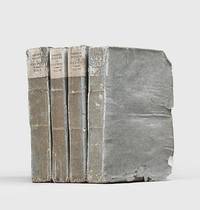
1801171776Basel: Printed and sold by James Decker; Levrault Freres Paris 1801. In the original wrappers An attractively printed continental edition of Smith's masterpiece "the first and greatest classic of modern economic thought" PMM the first Basel edition to include the 1793 English translation of Turgot's Réflexions sur la formation et la distribution des richesses. The first Basel edition of 1793 did not include Turgot's work which had a considerable influence on Smith. McCulloch described it as "the best work on the science published previously to The Wealth of Nations" p. 49. The preface to its inclusion here notes that "as they are affirmed by the Marquis de Condorcet Turgot's biographer to be the germ from which Mr. Adam Smith formed his excellent treatise on The Wealth of Nations it is hoped the curious reader will not be displeased to find them here in an English dress". The Wealth of Nations was first published in 1776: this edition reprints the text of the fourth edition of 1786. 4 vols octavo. Original blue paper wrappers spines with printed paper labels printer's waste endpapers edges uncut. Manuscript shelf-mark to front cover of Vol. 1. Bumping rubbing and chipping minor foxing to endpapers and contents text otherwise crisp: a very good copy. Goldsmiths' 18148; Kress B4447; Printing and the Mind of Man 221 first edition; Tribe 76; Vanderblue p. 20. John Ramsay McCulloch The Principles of Political Economy 1849. unknown
185041312Edinburgh: Adam and Charles Black;: and Longman Brown Brown Green & Longmans London 1850. 8 3/4 x 5 9/16 inches. Half-title Title vi i-lxvi 1-685 advertisement leaves. Largely uncut and unopened. Illustrated with two portraits of Smith by Scottish engravers Robert Charles Bell 1806-1872 and John Kay 1742-1826. In brown cloth with decorative blind tooling spine gilt. Slight wear to the top and bottom of spines.<br/> <br/> Few works cast as long and enduring a shadow as Adam Smith's Wealth of Nations in the pantheon of economics theory and beyond. Originally authored in the throes of the Enlightenment Wealth of Nations remains an intellectual colossus a foundational treatise that paved the pathways of modern economics. Its exploration of market dynamics the "invisible hand" and the division of labour presents core concepts that weave through the epochs of economic thought. The present edition published in Edinburgh in 1850 contains contributions by John Ramsay M'Culloch an economist and a luminary of his own time. In his 'Introductory Discourse' M'Culloch comprehensively contextualized Smith's magnum opus with portraits of political science before the time of publication upon publication and after the publication of Wealth of Nations thus emphasising its discipline-defining significance and connecting eras of economic contemplation. In his analysis of the "Progress of economy since the publication of the Wealth of Nations" M'Culloch demonstrated how the work reverberated with his own era's questions and dialogues by responding to his contemporaries such as Thomas Robert Malthus Jean-Baptiste Say and David Ricardo. In doing so M'Culloch reminded readers of the enduring value of Smith's work to serve as a guide to the ever-present and ever-pressing dilemma: how to make a capitalist economy more humane and more meaningful. and Longman, Brown, Brown, Green & Longmans, London unknown
1811178413London: printed for J. Maynard and F. Zinke 1811. The foundation of modern economics A well-preserved copy in the original boards of this early edition of "the first and greatest classic of modern economic thought" PMM first published in 1776. The text of this edition is a reprint of the fifth edition of 1786 the last published in Smith's lifetime. The life and the essay by Germaine Garnier 1754-1821 the translator of the Wealth of Nations into French were first included together in 1806. 3 vols octavo. Tables in the text. Uncut in the original boards neatly rebacked to style. Housed in custom-made cloth solander box. Neat contemporary ownership signature "Hutchins" to title pages. Light wear to edges inner hinges reinforced repair to closed tear on front free endpaper of vol. I contents spotted and partly unopened. A very good copy. Tribe 102; Vanderblue p. 4. See Printing and the Mind of Man 221 first edition. hardcover
1811024646Hartford: Oliver D. Cooke 1811. Hardcover. Very Good/No Jacket. Complete in two volumes; from the eleventh London edition with Notes Supplementary Chapters and a Life of Dr. Smith by William Playfair. Later probably fourth American edition very good in original tree calf bindings that are quite rubbed but complete. Maroon leather title label on spine reads "Wealth of Nations" in three lines. The label on volume 1 is slightly loose and missing the lower left corner affecting the "N" in the title. Outer gutters in both volumes have small cracks but are still firmly attached. Short 1870 gift inscription in both volumes with a faint red number on the pastedown of both volumes. Volume 2 does show some dampstaining on the inner boards and endpapers and the text block is slightly stiff. Interior pages also have some light foxing and darkening. Volume 1 is 355 pages Volume 2 is 424 pages. A reasonably nice set of this classic of Economics in an early American edition and the original binding. <br/> <br/> Oliver D. Cooke hardcover
18021521London: Printed for A. Strahan Printers-Street; for T. Cadell Jun. and W Davies in the Strand 1802. 10th. Thick 8vo 3 volumes xii 499 vi 518 3 vii 465 45 index pp. original grey paper over original publisher boards recent grey cloth spines with red and gilt leather spine labels lower outside corners of all 3 volumes with recent neat grey cloth boards with a few stains bindings very good original book sticker inside volume one pastedown of 'A. and I. Black and L. I. Parry / Leadenhall Strt Street' typescript note on provenance and rebacking of set tipped into volume one 'W. Fitch 1803' in ink top of titles. "The Wealth of Nations had no rival in scope or depth when published first published in 1776 and is still one of the few works in its field to have achieved classic status meaning simply that it has sustained yet survived repeated reading critical and adulatory long after the circumstances which prompted it have become the object of historical enquiry" ODNB. Absolutely fine copy of Smith's classic work in economics in original publisher's boards untrimmed and volumes 2 and 3 unopened with a recent grey cloth spines and gilt on red leather spine labels contents clean with scattered foxing throughout all three volumes very good set. Printed for A. Strahan, Printers-Street; for T. Cadell Jun. and W, Davies, in the Strand hardcover
1809180832Edinburgh: for Mundell Doig and Stevenson; Lackington Allen and Co. Cradock and Joy and T. Hamilton London; and Wilson and Son York 1809. One of the few works in its field to have achieved classic status Second Edinburgh edition of the "first and greatest classic of modern economic thought" PMM. This edition includes a 66-page Life of Smith and two essays by Germain Garnier 1754-1821 comparing Smithian economics with the contemporary approach of the French school. The British copyright for the Wealth of Nations expired in 1804. The following year William Playfair 1759-1823 brought out in London an edition universally derided for its editorial liberties and for exorcising any suggestion of Smithian radicalism in the aftermath of the French Revolution. The first Edinburgh edition criticized Playfair extensively but by 1809 the debate had moved on and these criticisms have been themselves been exorcised here. Following the first publication of the Wealth of Nations in 1776 Smith moved to Edinburgh to take up a post as commissioner of customs. He remained in the city until his death in 1790. Scotland informed much of his analysis in the Wealth of Nations which was written in Kirkcaldy 11 miles north of the capital. For Donald Winch Smith was "a North Briton who regarded Scotland not merely as his home but as the best place from which to observe the affairs of the capital with the minimum of involvement in party politics" ODNB. 3 vols octavo 207 x 128 mm. Tables in the text. Contemporary sprinkled calf spines ruled and decorated in gilt and with twin red and dark green morocco labels edges sprinkled blue. Light bumping and wear minor worming foxing and offsetting to contents: a very good copy. Tribe 96; Vanderblue p. 14. unknown
1801177821Dublin: Printed by N. Kelly and William Porter for P. Wogan Gilbert and Hodges W. Porter J. Moore and B. Dornin 1801. Political economy and the Anglo-Irish union Fourth Irish edition of the "first and greatest classic of modern economic thought" PMM in a handsome contemporary Irish binding. Towards the end of the Wealth of Nations Smith outlines an expansive and audacious plan for the political-economic consolidation of the British Empire. In this plan Ireland was to be united with Great Britain in a move largely modelled on the Anglo-Scottish union of 1707. Smith stresses the political and economic benefits to the Irish anticipating that the move would end British trade restrictions and even neutralize the fractious nature of Irish politics. Ironically Smith's wider theories of political economy in the Wealth of Nations were often co-opted by Irishmen diametrically opposed to his political proposals most notably the United Irishman Arthur O'Connor 1763-1852 whose approach to democratic land reform was "a radicalised version of Smith's political economy" Andersen. The United Irishmen mounted a rebellion in 1798 the failure of which led to precisely the Anglo-Irish union advocated by Smith. This fourth Irish edition was the first to be published in the newly formed United Kingdom of Great Britain and Ireland. 2 vols octavo 204 x 131 mm pp. xiii 1 498; viii 489. 61; lacking blank A1 in vol. II. Tables in the text. Contemporary red straight-grain sheep spines lettered ruled and decorated in gilt covers panelled in gilt marbled endpapers. With 1824 prize inscription in Latin to fourth blank of vol. I. Extremities refurbished light scuffing faint sunning to spines minor foxing and offsetting to contents leaf P6 of vol. II with 7 cm closed tear touching text: a very good copy. Kress B.4448; Tribe 75; Vanderblue p. 20. L. S. Andersen "The Political Economy of Ireland and Its Counterfactuals: Review of James Strafford The Case of Ireland: Commerce Empire and the European Order 1750-1848 CUP 2022" History of European Ideas vol. 50 no. 1 2023. unknown
1812QQ0269Willam Baynes 1812. ~Original half green polished calf over marbled boards low raised bands and blind and gilt decor to spines. Replacement brown gilt leather spine labels. Sunning to spines; some rubbing to boards. Mild wear to board corners. All edges speckled red top edges darkened. Small ink spot to fore-edges of vol. I. Front endpaper of vol. I cracked at gutter. 8vos 14 x 22.1cm. Some foxing largely to early and late pages. Inscription in old hand to front free endpaper of each vol.: 'Wroth / Edlesborough / Dunstable / Beds': almost certainly the Rev'd William Bruton Wroth Vicar of Edlesborough from 1815 to his death in 1863. A little pencil sidelining to vol. I; pencil doodle of pipe-smoking man to vol. I p. xlix. Includes Advertisements to the third fourth and 'present' editions at front of vol. I though in fact the 'present edition' Advertisement 'follows the 1806 edition exactly in stating the novelty of prefixing an account of Smith’s ‘Studies and Doctrines’ to an edition of Smith' Tribe. Also as per Tribe '"A Short Account of the Life and Writings of Dr. Adam Smith" pp. i-xxxiv here is the one that originally appeared in 1806 revised as in the Edinburgh 1809 edition excising the quotations in criticism of Playfair but also with a new section added on the end which refers to Smith’s character and then two-thirds down p. xxxiii becoming a straight plagiarism of Dugald Stewart as in EPS Essays on Philosophical Subjects'. An early edition of Smith's classic 1776 work which 'had no rival in scope or depth when published and is still one of the few works in its field to have achieved classic status meaning simply that it has sustained yet survived repeated reading critical and adulatory long after the circumstances which prompted it have become the object of historical enquiry' ODNB. Tribe 108. ~Robust packaging. Tracking can be added to overseas orders on request. Used books are exempt from USA tariffs. 5th edition. Very Good/Fine. lxxii 360 vi 514 vi 448 50pp. Willam Baynes Hardcover
18014591CB1801. 6. Aufl. 2 Bände. Dublin printed by N. Kelly Bd. 2 William Porter for P. Wogan Gilbert and Hodges W. Porter J. Moore and B. Dornin 1801. XIII 498 S. - VIII 489 S. 30 Bl. Lederbände der Zeit mit zwei farb. Rückenschildern sowie Linien- und Titelvergoldung am Rücken leicht berieben und bestoßen. Band 2 oberes Kapital mit kleiner Fehlstelle. Außengelenke mit stellenweiser Beschabung und etwas Wurmfraß. Vordere Vorsätze mit handschriftlichem Besitzvermerk. Band 1 letzte 5 Blätter sowie hinteres Vorsatzblatt mit Wurmgang am Unterrand. Beide Bände stellenweise geringfügig bis leicht fleckig sonst in sehr schöner Erhaltung. Sechste Dubliner Auflage des grundlegenden Werkes der Wirtschaftswissenschaften das den Beginn der klassischen Nationalökonomie markiert. unknown
186957649Oxford Clarendon Press. Good with No dust jacket as issued. 1869. Hardcover. The boards on Volume 1 are almost completely detached---they are present but hanging by a few threads. The front board of Volume 2 is fully detached from the spine. The rear board is fairly firmly attached. ; Two volume set. There are no dust jackets. The text of both volumes Is unmarked and very readable. Volume one is signed by T. North Whitehead son of philosopher Alfred North Whitehead. Brown boards with gilt lettering on spine. ; 8vo 8" - 9" tall; 917 pp . Oxford, Clarendon Press hardcover
1805188399Glasgow: printed by and for J. & J. Scrymgeour and for Mundell & Son and Arch. Constable & Co. Edinburgh 1805. One of the few works in its field to have achieved classic status An early edition of a foundational work of economics and the first to include a biography of Smith. "The Wealth of Nations had no rival in scope or depth when published and is still one of the few works in its field to have achieved classic status meaning simply that it has sustained yet survived repeated reading critical and adulatory long after the circumstances which prompted it have become the object of historical enquiry" ODNB. This was "the first post-copyright three volume edition" Tribe - the copyright had lapsed in 1804 following first publication in 1776. The biography draws heavily on Dugald Stewart's memoir of Smith first published in 1795 while incorporating later biographical material and was frequently reprinted in the first half of the nineteenth century. The "view of the doctrine of Smith" is a translation of Garnier's preface to the 1802 French edition of Smith's works - "this translation is the base from which all later editions worked modifying in time only spelling and punctuation" Tribe. Glasgow the place of publication was more formative for Smith than any other Scottish city: he entered the university aged fourteen and later held chairs in logic and moral philosophy there forming close associations with figures such as David Hume James Watt and Robert Foulis. 3 vols octavo 204 x 122 mm. Contemporary marbled calf twin black labels gilt ornaments to smooth spines blue speckled edges. Slight rubbing and tiny wear to spines and extremities very minor loss to label lettering light foxing to contents. A very good copy. Tribe 87. unknown
18395136166145<p><strong>SMITH Adam.</strong> <em>An Inquiry into the Nature and Causes of the Wealth of Nations.</em></p><p>Edinburgh: Adam and Charles Black; London: Longman & Co. 1839. A New Edition corrected throughout and greatly enlarged with a Life of the Author an Introductory Discourse Notes and Supplemental Dissertations by J. R. McCulloch. 8.5" x 5.75 lxiii 648pp. Engraved portrait frontispiece. Recent three-quarter red morocco over marbled boards raised bands gilt-ruled spine with gilt ornaments spine lettered in gilt edges speckled. Light rubbing at corners and spine ends a few small scuffs to the leather joints sound; foxing to the engraved portrait and occasional light spotting to text otherwise clean and tight. Very Good.</p><p>This expanded McCulloch edition became one of the principal 19th-century scholarly presentations of Smith's foundational work in political economy incorporating extensive editorial commentary and biographical material. The substantial format and dignified morocco binding reflect the period's canonization of Smith as a cornerstone of economic thought.</p> Adam and Charles Black hardcover
181836657Hartford: Cooke & Hale 1818. Later printing. Leather bound. Fair. Octavo. 1 lx 335 pages 1/ Brown calf leather binding with red leather title label on the spine. Former institutional copy with label on the front paste down. Covers are shelf worn. Spine is rubbed and scuffed. Moderate toning to the contents. This is volume 1 of a 2 volume set. Fair condition. Cooke & Hale unknown
1817fh139jSilvester Doig and Andrew Stirling Adam Black and John Fairbairn et al 1817. Hardcover. Fair. an early edition. published in 3 volumes. unfortunately we only have volume 1 and 3. marbled boards are much worn. a new spine has been added retaining the original spine labels. a previous owner's stamp mark in each book and a signature in volume 3. age related marks foxing and small imperfections as may be expects in a set over 200 years old. the front end page has been repaired in volume 1. the binding is strong. Our orders are shipped using tracked courier delivery services. Silvester Doig and Andrew Stirling, Adam Black and John Fairbairn et al hardcover