1 033 résultats
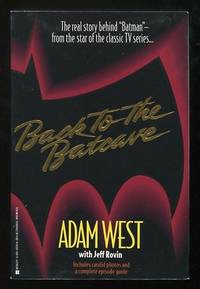
199426274New York: Berkley Books. Near Fine. 1994. First Edition. Softcover. very slight wear to several corners of front cover otherwise nice and clean. Trade PB B&W photographs INSCRIBED and SIGNED by Adam West on the title page with an additional handwritten note from West to the inscribee laid in. The author recounts his experience of portraying Batman in the campy 1960s TV series. Includes a full annotated episode guide to the series. From the author's prefatory note: "It is certainly not my intention to celebrate anything about myself within these pages. Bookshelves are heavy with autobiography. To add my two cents' worth of glowing comments on my life and times seems an unworthy exercise. This modest book is not the memoirs of an aging actor nor written simply for the pleasure of the author. This book is for the many loyal Batfans who have asked for it." Signed by Author . Berkley Books paperback books
193017897E1930s. Original autograph signature of British author Adam Sadler written in vintage fountain pen ink on a 4†x 3†piece of paper. Fine. Adam Sadler is the author of ‘The Sunlit Road’ ‘Lord Harry’ etc. unknown books
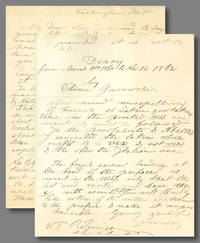
WRCLIT77774Washington 1 December no year. Two pages in ink on two conjugate quarto sheets of ruled paper. With a number of deletions and insertions. Old folds from mailing small marginal nick very good. To W.T. Robinson who was apparently assisting Gurowski in some capacity with the publication of his writings. Gurowski begins by saying he is ". certain the book will be better as you anticipate and . that your kind cooperation will not hurt it ." and then clarifies his intention in the manuscript explaining: ". where I mentioned the battles of Ligny & Waterloo my meaning is Thiers the historian says that etc. the correction made in the proof sheet points that I was misunderstood. I restored in the proof-sheet the name of Thiers & these lines are to explain the meaning." Gurowski is not pleased with "the Commonwealth . containing the advertisement . The title is not such as I wish" and writes out his preferred version "Diary / from March 4th 1861 to Nov 12 1862 / by / Adam Gurowski" which he hopes can be inserted "provided it is not too late." In the concluding paragraphs Gurowski provides further instructions arising from the translation of his book from manuscript into proof-sheets. Count Adam Gurowski 1805- 1866; Polish-born American author. In 1825 in Warsaw ". he became identified with those opposed to Russian influence and was in consequence several times imprisoned. He was active in organizing the November Uprising of 1830 in which he afterward took part. On its suppression Adam lost the greater part of his estates and escaped to France where he lived for several years . He was also a member of the national Polish committee in Paris and became conspicuous in political and literary circles. The remainder of his estates had in the meantime been confiscated and he himself condemned to death . In 1849 he went to the United States where he engaged in literary pursuits and became deeply interested in American politics. He wrote articles for the AMERICAN CYCLOPAEDIA and worked on the editorial staff of the New York TRIBUNE. During the Crimean War he sided with Russia and his editorials and pamphlets were an effective influence on American public opinion in favor of Russia. He was strongly opposed to slavery . From 1861 to 1863 he was translator in the State Department in Washington D.C. being acquainted with eight languages. In 1862 he published the first volume of his three- volume Diary. It included three categories of men: Praise Half and Half and Blame. President Abraham Lincoln merited the Praise column as did Edwin M. Stanton and poet Walt Whitman but otherwise Gurowski was highly critical of officials in the Lincoln administration. William O'Connor who translated some of the count's papers into English described him as 'a madman with lucid intervals' . Whitman considered the tempestuous count a friend and attended his funeral. 'His funeral was simple but very impressive -- all the big radicals were there' Whitman wrote." - Wikipedia. unknown books
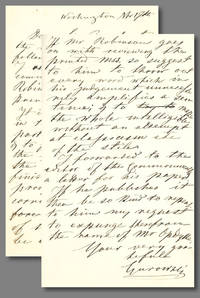
WRCLIT77773Washington 17 November no year. Two pages on two panels of a folded quarto lettersheet. In ink with several insertions and revisions. Old folds from having been mailed otherwise near fine. To an unidentified "Dear Sir" but perhaps W. T. Robinson who was assisting Gurowski with the publication of his writings: "To shorten the time I make the following suggestion which I request you to kindly communicate to Mr. Robinson & to the Printer-Stereotyper. It is to put at once in type the whole written part of the manuscript & to forward to me the proofsheets before the other part is finished . If Mr Robinson goes on with reviewing the printed mss. do suggest to him to throw out every word which in his judgement unnecessarily amplifies a sentence; & to make the whole intelligible . I forwarded to the editor of the Commonwealth a letter for his paper. If he publishes it then be so kind to repeat to him my request to expunge therefrom the name of Mr Opdyke." Count Adam Gurowski 1805-1866; Polish-born American author. In 1825 in Warsaw ". he became identified with those opposed to Russian influence and was in consequence several times imprisoned. He was active in organizing the November Uprising of 1830 in which he afterward took part. On its suppression Adam lost the greater part of his estates and escaped to France where he lived for several years . He was also a member of the national Polish committee in Paris and became conspicuous in political and literary circles. The remainder of his estates had in the meantime been confiscated and he himself condemned to death . In 1849 he went to the United States where he engaged in literary pursuits and became deeply interested in American politics. He wrote articles for the AMERICAN CYCLOPAEDIA and worked on the editorial staff of the New York TRIBUNE. During the Crimean War he sided with Russia and his editorials and pamphlets were an effective influence on American public opinion in favor of Russia. He was strongly opposed to slavery . From 1861 to 1863 he was translator in the State Department in Washington D.C. being acquainted with eight languages. In 1862 he published the first volume of his three- volume Diary. It included three categories of men: Praise Half and Half and Blame. President Abraham Lincoln merited the Praise column as did Edwin M. Stanton and poet Walt Whitman but otherwise Gurowski was highly critical of officials in the Lincoln administration. William O'Connor who translated some of the count's papers into English described him as 'a madman with lucid intervals' . Whitman considered the tempestuous count a friend and attended his funeral. 'His funeral was simple but very impressive -- all the big radicals were there' Whitman wrote ." - Wikipedia. unknown books
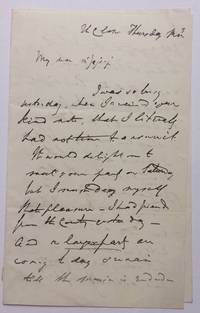
283824unbound. very good. A.L.S. 8vo. 3 pages The Close c. 1850's a very difficult to read example with his usual misspellings the use of shorthand and sloppy penmanship in small part; ".I was so bright yesterday when I received your kind note that I literally had not time to answer it. It would delight me to meet your party on Saturday but I must be by myself. Not pleasure - I have a friend from the country visiting - and a larger party are coming and will remain till the picnic is ended." Fine condition.<br/><br/> British scientist considered one of the founders of the modern science of geology. Charles Darwin was a student under Sedgwick in 1831 and accompanied him on several field trips. Although Sedgwick defended the science of geology against the more conservative churchmen of the time he refused to support Darwin's theory of evolution.<br/><br/> unknown books
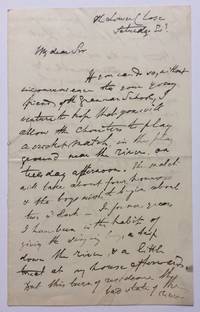
283825unbound. very good. A.L.S. 8vo. 2 pages an example that is easier to read than most The Lower Close c. 1850's in part; ".I can do so without inconvenience to your friend of the Grammar School. I venture to hope that you will allow the Charters to play a cricket match in the playground near the river on Tuesday afternoon. The match will take about four hours & the boys wish it to begin about two o'clock. In former years I have been in the habit of giving the singing boy a trip down the river and a little treat at my house afterwards." Signed in full and in excellent condition.<br/><br/> British scientist considered one of the founders of the modern science of geology. Charles Darwin was a student under Sedgwick in 1831 and accompanied him on several field trips. Although Sedgwick defended the science of geology against the more conservative churchmen of the time he refused to support Darwin's theory of evolution.<br/><br/> unknown books
1964040306Paris: Librairie Armand Colin 1964. 173 56p. maps original stiff printed wrappers ex libris Cahiers de la Fondation Nationale des Sciences Politiqes. Partis et élection 137. Librairie Armand Colin unknown books
200872873Tuscaloosa:: University of Alabama Press. As New in As New dust jacket. 2008. Hardcover. 0817316256 . First edition. As new in like dust jacket. Still in original shrinkwrap. . University of Alabama Press, hardcover books
201376576Boston:: David R. Godine. Fine in Fine dust jacket. 2013. Hardcover. 9781567924541 . First edition. INSCRIBED by the author in the year of publication. Fine in a fine dust jacket. . David R. Godine, hardcover books
200710364Kolkata: Laurens & Co Press 2007. First edition. Hardcover. Fine. First edition. One of 333 hand numbered copies in slipcase. Folio. A book of daguerreotypes by Fuss based on engravings by William Blake. All elements in fine condition. "Signed" by Fuss with his fingerprint to colophon page. Beautiful artist book. Laurens & Co Press hardcover books
200150125Koln Germany: DuMont Buchverlag 2001. Hardcover. Fine/fine. Hard Cover. Fine/Fine. ISBN:3-7701-7086-5. A diverse survey of architecture throughout the world with vivid illustrations and in-depth text on the subject. <br/><br/> DuMont Buchverlag hardcover books
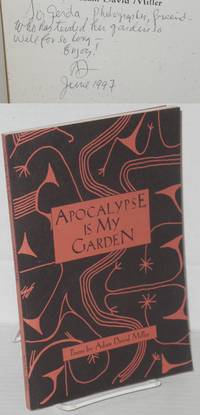
1997205109Berkeley: Eshu House Publishing 1997. Paperback. 85p. personal inscription to Berkeley photographer/German exile Gerda Mathan signed by the poet damp-ripple to back cover and many adjacent pages an otherwise good first edition trade paperback in pictorial wraps. Eshu House Publishing paperback books
1997147156Berkeley: Eshu House Publishing 1997. Paperback. 85p. very good first edition trade paperback in pictorial wraps. Eshu House Publishing paperback books
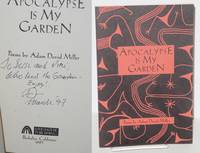
1997206519Berkeley: Eshu House Publishing 1997. Paperback. 85p. personal inscription to poet/author Piri Thomas and wife Susie signed by the poet very good first edition trade paperback in pictorial wraps. Eshu House Publishing paperback books
2001Embry 187226BlueHen Books 2001. First edition first printing. Fine in fine dust jacket in mylar cover. BlueHen Books, 2001. First edition, first printing. unknown books
2013260154New York: Gagosian Gallery 2013. hardcover. fine/near fine. Text in English and German. Illustrated with many full-bleed images. 79 pages oblong 4to white boards frosted mylar dust wrapper. New york: Gagosian Gallery 2013. A fine copy in a near fine dust wrapper.<br/><br/> Gagosian Gallery unknown books
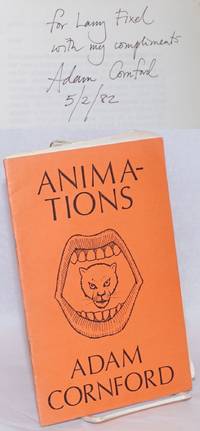
1982241542no place: Self-published by the author 1982. Pamphlet. 14p 5.5x8.5 inches mild foxing to edges light wear else good first printing chapbook inscribed on its minimalist titlepage to a fellow poet signed in full datelined 5/2/82 stapled orange pictorial wraps. Laid in find a mimeo'd flier promoting a Bay Area reading with Maskaleris Georgiou Valaoritis and Barbara Fields. True first issue elaborated to nearly one hundred pages six years later and published by City Lights in their Pocket Poet series. Inscribed to SF poet Lawrence Fixel. Self-published by the author unknown books
2015164265Boston: Adelson Galleries 2015. Softcover. VG. Color-illustrated softcover with white lettering. 57 pp. Color illustrations. Published in conjunction with the exhibition Andrew Stevovich: Familiar Faces held in Boston February 6th - March 15th 2015 and New York March 24th - April 25th 2015. Adelson Galleries unknown books
179048326Dublin: printed by P. Byrne 1790. 6 volumes 8vo engraved frontispiece 2 folding engraved maps and 5 folding tables; contemporary full mottled calf red and black morocco labels on spines 2 lacking; spine ends chipped extremities rubbed and worn but in all a good serviceable set. Engraved bookplates of Alexander Crofts. First published in 2 volumes folio in 1762. Anderson 1693-1765 was a Scottish economist and for 40 years was a clerk in South Sea House the headquarters of the South Sea Company. Late in his life Anderson traveled to the American colonies begetting a son Adam E. Anderson later noted for being an early settler and planner of the Ohio Territory. <br/><br/> printed by P. Byrne unknown books
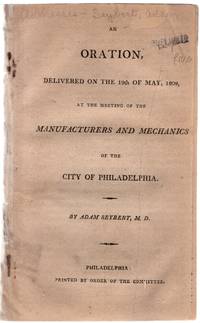
1809205Philadelphia: Pr. by order of the committee 1809. 8vo. 16 pp. <br><br>1st edition. Seybert a medical doctor issues a rallying call for progress in developing national industry to rival that of Europe: All of the raw products are present for clothing glassmaking smelting and much more. <br>Â Â Â Â <br>Â Â Â Â Shaw & Shoemaker 18591. Removed from a nonce volume; six-digit number stamped on title-page. Stapled and respined with archival tissue. Pr. by order of the committee hardcover books
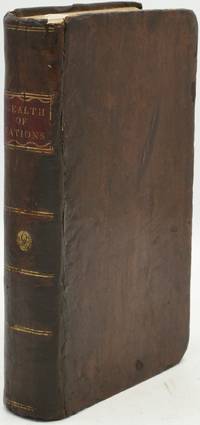
1796289419Philadelphia: Printed By Thomas Dobson 1796. Second American Edition. Hard Cover. Very Good binding. Volume 2 only of 3 volumes; the Second American Edition. Scattered foxing. Full sheep binding. Edgewear to spine with some small loss of leather at top. Front board has been discreetly reattached. A quite serviceable copy of this volume from this early edition. Very Good binding. Printed By Thomas Dobson unknown books
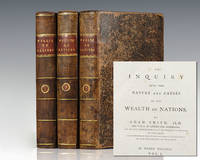
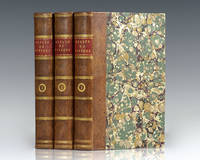
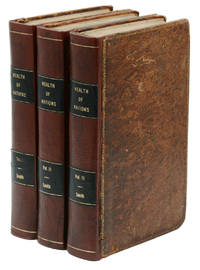
17862442London: A. Strahan and T. Cadell 1786. Fourth edition. Contemporary calf. Very Good. HANDSOME EIGHTEENTH-CENTURY EDITION OF THE "GREATEST CLASSIC OF MODERN ECONOMIC THOUGHT.". This classic work of the Scottish Enlightenment - originally published in the same year as the Declaration of Independence and Gibbon's History of the Decline and Fall of the Roman Empire - is a magisterial study of the sources of national wealth and of the political and institutional arrangements that foster or suppress it. Based on a 2016 analysis of data from Google Scholar The Wealth of Nations is the second only to Marx's Das Kapital as the most-frequently cited among books in the social sciences published before 1950. And while Smith recognized the economic benefits that flow from voluntary transactions between individuals and is as a result sometimes thought of as the apostle of laissez faire capitalism he supported several forms of government intervention in the economy either to create and maintain the necessary conditions for economic growth or to ameliorate the incidental harms that such conditions could create.<br /> <br /> The Wealth of Nations proposed that "no society can surely be flourishing and happy of which the far greater part of the members are poor and miserable. It is but equity besides that they who feed cloath and lodge the whole body of the people should have such a share of the produce of their own labour as to be themselves tolerably well fed cloathed and lodged." WN this edition vol. 1 page 119. Smith believed that this condition of society could be achieved only through the higher productivity that is made possible by the division of labor. As an example of the division of labor Smith offered the example of the "trade of the pin-maker" which he apparently learned about from Diderot and d'Alembert's Encyclopédie in which "one man draws out the wire another straights it a third cuts it a fourth points it a fifth grinds it at the top for receiving the head ." and so forth. WN this edition vol. 1 pages 7-8.<br /> <br /> In a famous passage Smith explains that such arrangements arise naturally from voluntary transactions between individuals based on their common recognition of the benefits that division of labor creates:<br /> <br /> This division of labour from which so many advantages are derived is not originally the effect of any human wisdom which foresees and intends that general opulence to which it gives occasion. It is the necessary though very slow and gradual consequence of a certain propensity in human nature which has in view no such extensive utility; the propensity to truck barter and exchange one thing for another.<br /> <br /> . Man has almost constant occasion for the help of his brethren and it is in vain for him to expect it from their benevolence only. He will be more likely to prevail if he can interest their self-love in his favour and shew them that it is for their own advantage to do for him what he requires of them. Whoever offers to another a bargain of any kind proposes to do this. Give me that which I want and you shall have this which you want is the meaning of every such offer; and it is in this manner that we obtain from one another the far greater part of those good offices which we stand in need of. It is not from the benevolence of the butcher the brewer or the baker that we expect our dinner but from their regard to their own interest. We address ourselves not to their humanity but to their self-love and never talk to them of our own necessities but of their advantages. WN this edition vol. 1 pages 19-21.<br /> <br /> "Throughout the book Smith's 'system of natural liberty and justice' . plays a pervasive role as explanatory model and regulatory ideal though the famous image of an 'invisible hand' appears late and only once in the whole work . It appears at volume 3 page 181 of this edition. A quasi-Newtonian treatment is given to those forces which act like gravity when market price departs from natural price and it always carries with it a normative implication that policies or practices that prevent these forces from acting are detrimental to the public interest. Monopolies special privileges informal combinations by merchants or employers to raise prices and keep down wages import duties export bounties as well as institutions such as apprenticeships and restrictions on labour mobility . are all condemned from this perspective." Dictionary of National Biography.<br /> <br /> Smith was not unmindful of possible deleterious consequences of the division of labor: "The man whose whole life is spent in performing a few simple operations of which the effects too are perhaps always the same or very nearly the same has no occasion to exert his understanding or to exercise his invention in finding out expedients for removing difficulties which never occur. He naturally loses therefore the habit of such exertion and generally becomes as stupid and ignorant as it is possible for a human creature to become." WN this edition vol. 3 pages 182-83. Smith believed that public elementary education would compensate for this tendency.<br /> <br /> Edition: This copy of The Wealth of Nations is the fourth edition 1786 issued ten years after the first. It was the penultimate edition published during Smith's lifetime the last being the fifth edition of 1789. It carried forward the significant changes made in the third edition of 1784 without making any material additional changes of its own as Smith specifically admitted in the prefatory Advertisement to this edition. A detailed collation of the first five editions is provided in Edwin Cannan's 1904 edition of Smith's work.<br /> <br /> Provenance: With the armorial bookplate of Thomas Howitt bearing the motto "Aquila Non Capit Muscas" "Eagles do not catch flies" on the front pastedown of each volume. Howitt may have been the Lancaster physician of that name 1785-1832; see archives of the Royal College of Surgeons of England ref no. GB 0114 MS0092 the entry for Howitt's son also named Thomas Howitt. It is possible that Howitt's son Thomas Jr. 1830-1922 was responsible for the additions to these volumes described below.<br /> <br /> Volume 2 is bound with additional pages at the end on which a prior owner has pasted articles on the California gold rush of 1849 citing a discussion on page 354 of the volume in which Smith argues that "of all those expensive and uncertain projects however which bring bankruptcy upon the greater part of the people who engage in them there is none perhaps more perfectly ruinous than the search after new silver and gold mines." Another extract pasted at the beginning of volume 1 from an unknown source recommends the reduction of taxes.<br /> <br /> London: A. Strahan and T. Cadell 1786. Octavo contemporary full calf with elaborately gilt-decorated spines; vol 1 rebacked with original spine laid-down. Bound without half-titles. Vol 1 spine darker more toned than the other two. Light flaking to spines a little chipping to leather at extremities. Some foxing to title and first few leaves of each volume; otherwise text clean. A lovely early set of Smith's masterpiece. A. Strahan and T. Cadell unknown books
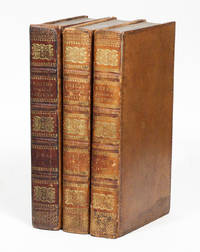
1799124769London: A. Strahan and T. Cadell 1799. Rare 18th century edition of Adam Smith's magnum opus and cornerstone of economic thought. Octavo 3 volumes. Bound in full contemporary tree calf gilt titles to the spine morocco spine labels. In very good condition. A very nice set of this classic work. Adam Smith's masterpiece first published in 1776 is the foundation of modern economic thought and remains the single most important account of the rise of and the principles behind modern capitalism. "The history of economic theory up to the end of the nineteenth century consists of two parts: the mercantilist phase which was based not so much on a doctrine as on a system of practice which grew out of social conditions; and the second phase which saw the development of the theory that the individual had the right to be unimpeded in the exercise of economic activity. While it cannot be said that Smith invented the latter theory.his work is the first major expression of it. He begins with the thought that labour is the source from which a nation derives what is necessary to it. The improvement of the division of labour is the measure of productivity and in it lies the human propensity to barter and exchange.Labour represents the three essential elements-wages profit and rent-and these three also constitute income. From the working of the economy Smith passes to its matter -'stock'- which encompasses all that man owns either for his own consumption or for the return which it brings him. The Wealth of Nations ends with a history of economic development a definitive onslaught on the mercantile system and some prophetic speculations on the limits of economic control.The Wealth of Nations is not a system but as a provisional analysis it is complete convincing. The certainty of its criticism and its grasp of human nature have made it the first and greatest classic of modern economic thought" PMM. A. Strahan and T. Cadell unknown books
1793124986London: A. Strahan and T. Cadell 1793. Rare 18th century edition of Adam Smith's magnum opus and cornerstone of economic thought. Octavo 3 volumes bound in half calf over marbled boards gilt titles to the spine morocco spine labels. In near fine condition. A very nice set of this classic work. Adam Smith's masterpiece first published in 1776 is the foundation of modern economic thought and remains the single most important account of the rise of and the principles behind modern capitalism. "The history of economic theory up to the end of the nineteenth century consists of two parts: the mercantilist phase which was based not so much on a doctrine as on a system of practice which grew out of social conditions; and the second phase which saw the development of the theory that the individual had the right to be unimpeded in the exercise of economic activity. While it cannot be said that Smith invented the latter theory.his work is the first major expression of it. He begins with the thought that labour is the source from which a nation derives what is necessary to it. The improvement of the division of labour is the measure of productivity and in it lies the human propensity to barter and exchange.Labour represents the three essential elements-wages profit and rent-and these three also constitute income. From the working of the economy Smith passes to its matter -'stock'- which encompasses all that man owns either for his own consumption or for the return which it brings him. The Wealth of Nations ends with a history of economic development a definitive onslaught on the mercantile system and some prophetic speculations on the limits of economic control.The Wealth of Nations is not a system but as a provisional analysis it is complete convincing. The certainty of its criticism and its grasp of human nature have made it the first and greatest classic of modern economic thought" PMM. A. Strahan and T. Cadell hardcover books
1791140941390London: Printed for A. Strahan; and T. Caddell 1791. Sixth Edition. Very Good. The Sixth Edition. Complete in three volumes In contemporary full tree calf rebacked with new spines. Bindings worn former owner bookplate to pastedowns. Old tidemarks to preliminary pages and faintly to textblock edge light foxing and browning to pages light and sporadic pencil marks in text. Printed for A. Strahan; and T. Caddell unknown books