Musica disques - Rédacteur en chef : Claude ChuteauLivre Rare Book

927 résultats
19701022411970 N° 192, Mai 1970 - Petit In-4, broché, couverture et 4ème de couv. illustrées - Revue mensuelle illustrée - 64 p. - Sommaire en image
1975513207Cambridge University Press 1975. Hardcover with Dust Jacket. VERY GOOD/Very Good. Second Printing with corrections. xv 394pp. Sewn binding in blue simulated cloth with gilt stamped lettering. Ex-library; exceedingly clean and sharp with sound binding and no evidence of use. Shipped professionally in a box. 'A study of Syriac Christianity up to the early fifth century A.D. through a theme central to its life worship poetry and art. By his survey Father Murray offers the fullest and most vivid picture yet available of the development and character of the culture illustrating both its original close relationship to Judaism and its remoter background in Mesopotamian civilization. He is interested too in the subsequent influence of Syriac Christian culture particularly on European literature. The book deals with a topic of interdisciplinary importance at the cultural cross-roads of the ancient and medieval worlds of east and west and of Christianity Judaism and Islam. It should be of interest to a correspondingly wide range of special-ists. No knowledge of Syriac is assumed.' Publisher's blurb. Cambridge University Press hardcover
QWA-19816François-Xavier de Guibert, 2003, in-8 br. (17 x 24), 269 p., 1ère édition, préface de Patrick de Laubier, nombr. Illustrations en n., couverture à rabats, très bon état.
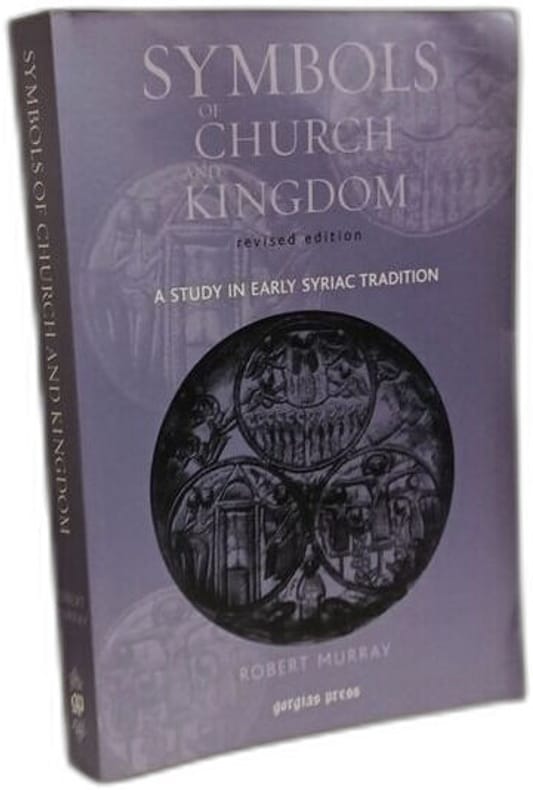
2004100146564Gorgias Press 2004 220 pages 15 494x2 286x23 114cm. 2004. Broché. 220 pages. Cet ouvrage classique de Robert Murray dans sa version révisée et mise à jour offre une étude approfondie du développement et des caractéristiques de la culture syriaque chrétienne primitive. Il illustre à la fois sa relation étroite originelle avec le judaïsme et ses racines plus anciennes dans la civilisation mésopotamienne constituant une introduction remarquable au christianisme syriaque dans son ensemble
39 pages. Contents: Cover photo of the 4/20 Wurlitzer Publix #1 installed in the Seattle Paramount 8n 1927, a true "Crawford Special"; The Kilgen Wonder Organ - Part 2 of a fictional trip through the Kilgen Plant in St. Louis during its busiest days - with photos; Willimantic Connecticut's Windham Regional Technical School's new 3/15 Wurlitzer - article with photos; Robert Morton, No. 2296 Special is now located in a home in Solon, Ohio... after many travels; Eddie Jones Retires; Integration Accomplished - Mr. Garo Ray has placed the tone generating system complete with drawbars into his 42 rank pipe organ, controlling the entire instrument from the orthodox pipe organ console; Benjamin (Ben) Mortimer Hall III Found Dead - photo and article with the unfortunate news; From Scratch - Bob Sieben built his 3-ranker in his home workshop; "The Organ Loft" - an organ radio show on WZOW-FM in Utica, New York with Don Robinson; What is Required of the Theatre Organist - reprint of a 1927 article by Jesse Crawford; The Monster Snorts - Beulah and Marion Martin of Whiteville, North Carolina rebuild their Moller console; Alexander D. Richardson - he has performed in every entertainment medium, primarily in his home town of New York City; Back cover Rodgers Organ Company ad promotes Lyn Larsen and his "Something Special" album. Unmarked with moderate wear. A quality copy. Magazine
Biography and testimonials of the life of Evgenia Kaeilara, a devout and revered Greek Orthodox Abbess. Printed in Large Type.327p. plates. [ NO copies found in WorldCat] Book
Wraps a bit worn. Front Cover of wraps inscribed in large letters by Moschonas to J. F. Callahan in pen ; 1968/1969 199pp. Articles in Greek, French and English ; Ekdoseis Tou Institoutou Ton Anatolikon Spoudon Tes Patriarchikes Bibliothekes Alexandreias 17/18; Vol. 17/18; 199 pages
Wraps a bit worn. Front Cover of wraps inscribed in large letters by Moschonas to J. F. Callahan in pen ; 1970 118pp. Articles in Greek, French and English, Arabic. ; Ekdoseis Tou Institoutou Ton Anatolikon Spoudon Tes Patriarchikes Bibliothekes Alexandreias 19; Vol. 19; 118 pages
Wraps a bit worn. Front Cover of wraps inscribed in large letters by Moschonas to J. F. Callahan in pen ; 1971 143pp. Articles in Greek, French and English, Arabic. ; Ekdoseis Tou Institoutou Ton Anatolikon Spoudon Tes Patriarchikes Bibliothekes Alexandreias 20; Vol. 20; 143 pages
Wraps a bit worn. Front Cover of wraps inscribed in large letters by Moschonas to J. F. Callahan in pen. Small tears to spine ends. ; 1972 248pp. Articles in Greek, French and English, Arabic. ; Ekdoseis Tou Institoutou Ton Anatolikon Spoudon Tes Patriarchikes Bibliothekes Alexandreias 20; Vol. 21; 248 pages
135705aafESD- Edizioni Studio Domenicano, 1996, gr. in-8vo, 511 p., brochure originale illustrée. / ill. Softcover.
1995100127564Cambridge University Press 1995 356 pages 16 69x23 19x2 82cm. 1995. Relié. 356 pages.
1988260214005Monks of New Skete 1988. Hardcover. Like New. 7x5x1. Monks of New Skete : A Book of Prayers. Cambridge NY : New Skete Orthodox Church in America 1988. Duodecimo 12mo 7.625"/19.3cm h. Bound in publisher's gray cloth gilt double eagle emblem to both boards. Red stain to all textblock edges. Four silk ribbons fixed to headband. Plain gray-green endpapers. Off white pages: four sheets before begin pagination then: vi vii-xlv xlvi-l 627 628 colophon 629-638 blank. Preface and intro both in red ink; Prayers morning night various other times meals; Orders of: Vespers Great Vigil Matins Little Hours; Appendix Dismissals Exaltations Trisagion for the Dead Special Petitions Prayers for New Year's Day. Condition notes: a fine copy of the handsomely produced and rarely seen New Skete Prayer book: Light wear to boards sharp corners. Binding solid and square. Interior lovely and unmarked. The preface and intro provide background on the history and use of the prayers in the Orthodox Church in America as well as some background on the early 1965 and 1976 prayer book issues from the skete. We personally inspect every book we offer. Monks of New Skete hardcover
198685879Monastère Orthodoxe Saint-Michel Malicorne sur Sarthe, 72, Pays de la Loire, France 1986 Book condition, Etat : Bon broché, sous couverture imprimée éditeur blanche, illustrée d'une icone du Christ en couleurs grand In-8 1 vol. - 96 pages
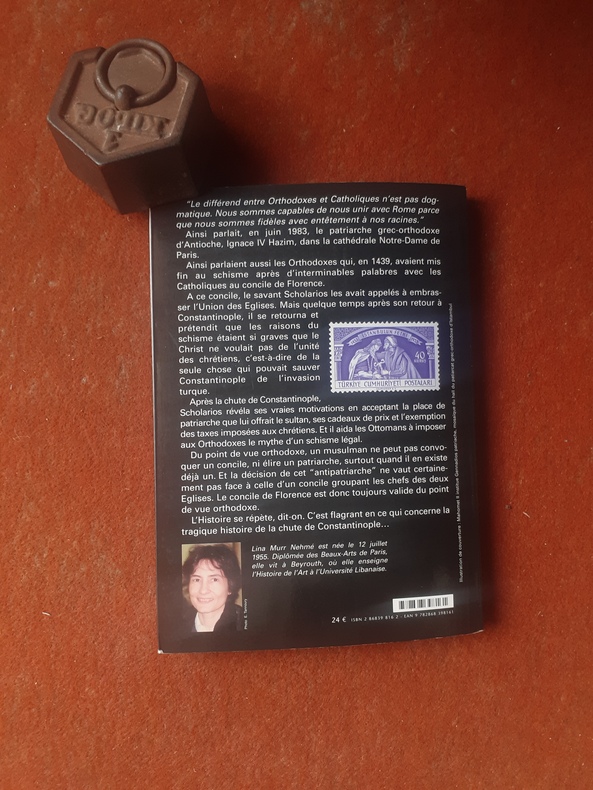
199822763Lavardac, 1998, Broché, 327 pages. Bon état.
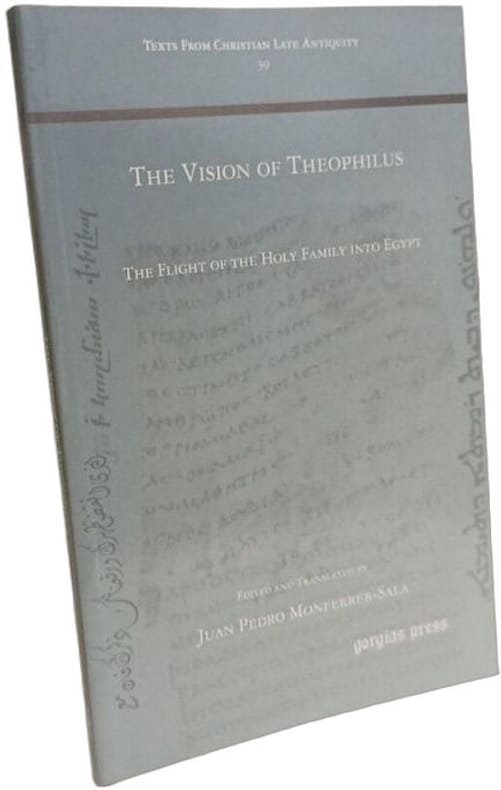
2015100144208Gorgias Press 2015 130 pages 15 1x22 8x1 3cm. 2015. Broché. 130 pages.
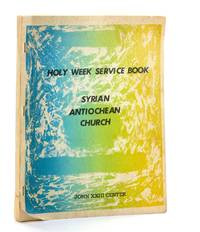
1969509769John XXIII Center for Eastern Christian Studies 1969. Paperback. VERY GOOD. First English Edition translated from the French 'Office de la Semaine de la Passion.' 200 2 pp. with errata sheet taped inside rear cover. 8x11' Stab-staplebound in printed covers with exposed spine. A bit worn some red pen underlining and scant black pen notations stain to fore edge owner's label to title page. Quite scarce with only 6 library holdings recored in OCLC. 'Some of the greatest Christian prose poetry and music can be found in the worship services of Holy Week for the betrayal suffering death and resurrection of Our Lord has always inspired men to create the best. This Service Book contains many beautiful thoughts which tell tell the deep insight that the Syrian people have about their Savior His love for them and the terrible humiliation which He allowed to befall Himself so that mankind could be reconciled to the Father. It is a beautiful expression of a Christian culture which is neither Latin nor Greek but belongs to the ancient Semitic world. Today it is used in the Jacobite and Syrian Catholic Churches which are found mainly in the Near East and India. The style of these prayers is simple and direct very biblical in their orientation and devoid of any later western philosophical thought. It is meant to give voice to the cry that is in the hearts of the people a simple cry of love repeated time and again as the worshipper is struck by the vision or concept of the glorious transcendence of God now being abused. For the Syrian it is Christ the God-man who is suffering willingly to save man and this thought stirs the very core of his being.'. John XXIII Center for Eastern Christian Studies paperback
20151046803Paderborn : Schöningh, 2015. 357 S. Originalbroschur.
Good Turkish Missing covers with original end-papers. Slight tears on end-papers. Overall a good copy. Roy. 8vo. (24 x 16 cm). In Gagauz Turkish. 40, 4 p., b/w ills. First edition of this extremely rare translation in book form, which is the first comprehensive book on the Bessarabian Gagauz people, translated from the magazine "Viata Bessarabiei" in 1933... Ciachir worked for the Romanian magazine titled "Viata Basarabiei" [i.e. The life of Bessarabia] between 1933-34. Mihail Ciachir (or Çakir) was a Protoiereus and educator in the Gagauz language, and the first publisher of Gagauz books in the erstwhile Russian Empire and in the Soviet Union. Ciachir was born in the Bessarabian village of Ceadîr-Lunga, in a Gagauz deacon's family. Bessarabia is a historical region in Eastern Europe, bounded by the Dniester river on the east and the Prut river on the west. About two-thirds of Bessarabia lies within modern-day Moldova, with the Ukrainian Budjak region covering the southern coastal region and part of the Ukrainian Chernivtsi Oblast covering a small area in the north. In the aftermath of the Russo-Turkish War (1806-1812), and the ensuing Peace of Bucharest, the eastern parts of the Principality of Moldavia, an Ottoman vassal, along with some areas formerly under direct Ottoman rule, were ceded to Imperial Russia. The acquisition was among the Empire's last territorial acquisitions in Europe. The newly acquired territories were organized as the Bessarabia Governorate of the Russian Empire, adopting a name previously used for the southern plains between the Dniester and the Danube rivers. Following the Crimean War, in 1856, the southern areas of Bessarabia were returned to Moldavian rule; Russian rule was restored over the whole of the region in 1878, when Romania, the result of Moldavia's union with Wallachia, was pressured into exchanging those territories for the Dobruja. In 1917, in the wake of the Russian Revolution, the area constituted itself as the Moldavian Democratic Republic, an autonomous republic part of a proposed federative Russian state. Bolshevik agitation in late 1917 and early 1918 resulted in the intervention of the Romanian Army, ostensibly to pacify the region. Soon after, the parliamentary assembly declared independence, and then union with the Kingdom of Romania. However, the legality of these acts was disputed, most prominently by the Soviet Union, which regarded the area as a territory occupied by Romania. The Gagauz people is living mostly in southern Moldova (Gagauzia, Taraclia District, Basarabeasca District) and southwestern Ukraine (Budjak). Gagauz is mostly Eastern Orthodox Christians. The term Gagauz is also often used as a collective naming of Turkic people living in the Balkans, speaking Balkan Gagauz Turkish. The origin of the Gagauz is obscure. At the beginning of the 20th century, a Bulgarian historian counted 19 different theories about their origin. A few decades later the Gagauz ethnologist M. N. Guboglo increases the number to 21. In some of those theories, the Gagauz people are presented as descendants of the Pechenegs, Cumans-Kipchaks, or a clan of Seljuk Turks, or a mix of all. The fact that their confession is Eastern Orthodox Christianity may suggest that their ancestors already lived in the Balkans prior to the Ottoman conquest in the late 14th century. (Wikipedia). Not in OCLC.
64368, Brepols, 2023 Hardback, 187 pages, Size:178 x 254 mm, Illustrations:1 b/w, 25 col., 2 tables b/w., 1 maps color, Language: English. ISBN 9782503599977.
New English Paperback. Pbo. Roy. 8vo. (24 x 17 cm). In Turkish. [xxv], 285 p. Fener Patrikhanesi'nin ökümeniklik iddiasinin tarihî seyri, (325-1453).
Fine English Paperback. Pbo. Roy. 8vo. (24 x 17 cm). In Turkish. 106 p. Türkiye'nin Fener Patrikhanesi meselesi. Question of Fener Patriarchate in Turkey.
Very Good Turkish, Ottoman (1500-1928) Original newspaper. Folio. (49 x 33 cm). In Ottoman script (Old Turkish with Arabic letters) and imprint details in bilingual in Russian and Turkish. 4 p. An early issue of this extremely rare newspaper published in Tbilisi by Mehemmedaga Sahtahtli between 1903 and 1905 as 392 issues in total, published for all Turks and Islamic groups in Russia, which had a significant position in the modernization history of Azerbaijani and Russian Turks and the political and social changes at the end of the 19th and the early 20th centuries for Islamic minorities in Russia. The articles were included in this issue as follows: Tiflis-Musahabe by Mehemmed Bey Kasimbekov, pp. 1-2 (about the Girls' Schools in the Caucasus.; Türkistan'a Seyahat by Tacir Arif, pp. 2-3 [Voyage into Turkestan], Öz Muhbirlerimizden-Uralsk'dan-Men Garra' Gurra'-Tercüman ve Muharriri, pp. 3 [an article criticizing "Sark-i Rus"' publishing policy]; Kirim, Öz Muhbirlerimizden-Kirim'dan-Akmescid'de Darü'l-Muallimîn, pp. 3-4 [about the school for theachers, which was opened in Akmescit (Simferopol) in 1870 and provides education in Russian, the number of students and the education program and the inadequacy of the Muslim education of the same school]; Öz Muhbirlerimizden-Bakû'dan, pp. 4 [about the Muslims of Baku losing their influence from the commercial life of the city]; etc. The first Turkish newspapers titled "Ziya", "Ziya-yi Kafkasiye" and "Keshkul" published in Tbilisi in the 19th century were closed by the Russian authorities. The newspaper "Sark-i Rus", published in 1891, long after the closure of Keskul, became the first Turkish newspaper published in the Caucasus at the beginning of the 20th century. Mehemmedaga Sahtahtli, or Mammad agha Shahtakhtinski (1846-1931), was an Azerbaijani linguist and public figure. In 1902, Shahtakhtinski returned to Caucasus and settled in Tiflis. Here in March 1903, he founded the Azeri-language newspaper Sharg-i Rus ("The Russian Orient") dedicated to the academic enlightenment of the Muslims of the Caucasus. His articles propagated the necessity of Europeanisation, which he saw as the only possible way to a stable and developed future. He sharply criticised Islamic fanaticism, which in his opinion was a major obstacle in the development of Azeri culture and was incompatible with the idea of progress. He also dismissed Pan-Turkism, a popular theory among Turkic-speaking scholars and political activists of the time, and propagated the use of folk Azeri as a literary language, as opposed to the common practice of using Ottoman Turkish. He was among the peacemakers during the bloody Armenian-Tatar massacres of 1905-1907. In 1907, he was elected to the State Duma of the Russian Empire (second convocation). After dissolution of the duma, he worked for Petersburg-based newspaper "Russia", then edited by Pyotr Stolypin. Between 1908 and 1918, Shahtakhtinski lived in various parts of the Middle East, including Anatolia, Iraq and Persia, meanwhile writing articles for "Turkestan Times" (Russian: Turkestanskie Vedomosti). During this time abroad, he worked at the Russian embassy to the Ottoman Empire as translator between 1909 and 1912. In 1919, he returned to then-independent Azerbaijan to give lectures at the newly established Azerbaijan State University. Shahtakhtinski was among the numerous scholars who had followed Mirza Fatali Akhundov in proposing an alphabet reform for Azeri, suggesting to reform the existing Perso-Arabic script. The unsuitability of the Arabic alphabet to Turkic languages in general was in his opinion a major obstacle to the spread of literacy among Azeris. Between 1879 and 1903, Shahtakhtinski designed several model alphabets for Azeri, some of them Roman-based, however none of them was implemented in practice. He attended Congress of the Peoples of the East, acting as an interpreter for Turkish, French, German, Persian and Arabic in 1920. In 1923, Shahtakhtinski as member of a special four-mem
pp. xviii, 564. Inked ownership. 8vo. Original full cloth binding, worn. Third printing. Coldwar/Economics 8
Very Good Latin Paperback. Roy. 8vo. (23 x 16 cm). In Latin. [xviii], [2], 312 p. Compendium Theologiae Orientalis: In commodum audiotrum Facultatis Theologicæ concinnatum. Editio altera. First Edition.