929 résultats
77716Paris, Hachette, 1994. 11 x 18, 314 pp., broché, très bon état.
61535Paris, Desclée De Brouwer, 1997. 25 x 31, 248 pp., 110 planches en couleurs, 210 illustrations en couleurs et en N/B, reliure d'édition pleine toile + jaquette, sous étui carton blanc, état neuf.
QWA-19816François-Xavier de Guibert, 2003, in-8 br. (17 x 24), 269 p., 1ère édition, préface de Patrick de Laubier, nombr. Illustrations en n., couverture à rabats, très bon état.
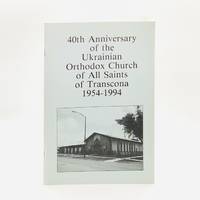
19945272Winnipeg Transcona Manitoba: Ukrainian Orthodox Church of All Saints Transcona Manitoba 1994. First Edition First Printing. Stapled Wraps. pp. 71. Small 8vo. measuring 6" x 9". Richly illustrated with many black-and-white photographs portraits group portraits illustrations facsimiles et al. No detectable flaws contents and extremities without blemish errata leaf laid-in to the prefatory matter. Many congratulatory messages from various prominent elected and religious officials. Comprises a history of the founding of the Parish details of various clubs list of prominent parishioners parishioners who have passed etc. Near fine. Rare in commerce. Unrecorded in OCLC. Not found in Peel BAC/LAC University of Manitoba Archives & Special Collections etc. <br/><br/> Ukrainian Orthodox Church of All Saints, Transcona, Manitoba paperback
0428717063.Ghardcover. Good. Access codes and supplements are not guaranteed with used items. May be an ex-library book. hardcover
New English Paperback. Pbo. Roy. 8vo. (24 x 17 cm). In English and Turkish. 50 p. 5500 years' witnesses Syrians.= 5500 yilin taniklari Süryaniler.
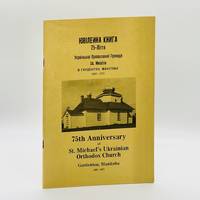
19726454Gardenton Manitoba Canada: Vydano zakhodom I U vile noho Komitetu pry Hromadi St. Michael's Ukrainian Orthodox Church Jubilee Committee 1972. First Edition First Printing. Card Covers. pp. 42. 8vo. measuring 24 cm. Textured illustated twice-stapled card covers. Richly illustrated with many black-and-white photographs portraits illustrations facsimiles etc. Various congratulatory messages from a variety of civic political and religious leaders. Bright clean and unmarked with firm sound binding; fine. Corresponds to OCLC #16356823 & #823192639. Text in English and Ukrainian Cyrillics. Rare to be offered in commerce. Equally scarce amongst institutional holdings. <br/><br/> Vydano zakhodom I U vile noho Komitetu pry Hromadi | St. Michael's Ukrainian Orthodox Church Jubilee Committee] unknown
1967DD5-1084Wiesbaden, Harrassowitz Verlag, 1967. original kartoniert, XI, 186 Seiten; etwas fleckig guter Zustand: gut
Good Turkish, Ottoman (1500-1928) Original wrappers. Tear on the upper left side of front cover, chippings on extremities. A good copy. Roy. 8vo. (24 x 17 cm). In Bulgarian. 107 p. First and only edition of this scarce early book in Bulgarian, printed in Constantinople (Macedonian Printing House) on the history of the Archbishopric of Ohrid, also known as the Bulgarian Archbishopric of Ohrid, which was an autocephalous Eastern Orthodox Church established following the Byzantine conquest of Bulgaria in 1018 by lowering the rank of the autocephalous Bulgarian Patriarchate due to its subjugation to the Byzantines. In 1767, the Archbishopric's autocephaly was abolished, and the Archbishopric was placed under the tutelage of the Patriarchate of Constantinople. 13 copies in OCLC: 793578483, 48911077.
Very Good Turkish Paperback. Demy 8vo. (21 x 14 cm). In Turkish. 160 p., many b/w ills. and Syriac sections. (Mar Gabriyel) Deyr-el-Umur tarihi. Translated by P. Cebrail Aydin. Dayro d-Mor Gabriel (The Monastery of Saint Gabriel), also known as Deyrulumur, is the oldest surviving Syriac Orthodox monastery in the world. It is located on the Tur Abdin plateau near Midyat in the Mardin Province in southeastern Turkey. It has been involved in a dispute with the Turkish government that threatened its existence. Dayro d-Mor Gabriel was founded in 397 by the ascetic Mor Shmu'el (Samuel) and his student Mor Shem'un (Simon). According to tradition, Shem'un had a dream in which an Angel commanded him to build a House of Prayer in a location marked with three large stone blocks. When Shem'un awoke, he took his teacher to the place and found the stone the angel had placed. At this spot Mor Gabriel Monastery built. Scarce.
Fine Greek, Modern (post 1453) Paperback. Roy. 8vo. (24 x 17 cm). In Greek. 288, [6] p., ills. Ex-libris at last page. Euripides Iphigenia or Tavros: Critical and interpretative version.
Very Good Croatian First Edition of this very early and rare translation into Croatian (in any European language) of 'Sokollu' by Ahmed Refik Altinay, (1881-1937) including Sokollu Mehmed Pasha's first biography in any language, the Ottoman grand vizier (1565-1579) who served under three successive sultans including Süleyman the Magnificent. Signed and inscribed in Ottoman Turkish by translator Delitch, to Tahir Alangu, (1915-1973), who was a Turkish folklorist. Sokollu (Serbo-Croatian and Bosnian: Sokolovic), is a prominent Bosnian family of Serbian ethnic origin. Notable members of the family were high state officials in the Ottoman Empire during the 16th century. Prominent members include Sokollu Mehmed Pasha, Ferhad Pasha Sokolovic, Makarije Sokolovic, and Savatije Sokolovic. This book is the first book which is dealing with this family in depth. Ahmet Refik Altinay was a Turkish historian, academic, writer and poet, who gave history lectures at Darülfünun after the First World War. Delic was an eminent Belgrade historian of the Ottoman era, who translated from Turkish the biography of Mehmed Sokolovic by Ahmed Refik, written with as much science as love. Original cloth bdg. Blind tooled to board. Title and author gilt on spine. Cr. 8vo. (20 x 14 cm). In Croatian. [2], 262 p., 15 unnumbered b/w plates and portraits. OCLC 456508581.
New Greek, Modern (post 1453) Paperback. Cr. 8vo. (20 x 14 cm). In Greek. 91, [7] p., ills. [Heaven's judgement that is to say. To horrible miracle of St. Spyridon against the unjust papists at Corfu]. Ouranou krisis. Etoi thauma phrikton kai ixesion tou phaumatourgi kotatou spuridonos, di ou tas boydas ton paranomon papiston, emataidse, me sugchoresas autois, na egeiroun aatarion, etoi phusiastegion, mesa eis ton en te kerkura agion tou naon, suntephuen, meta kai ieras kai eginikeiou akolouphias, eis auto, dara zelotou tinos adelphou. First Edition in 1850 in Athens.
Good Greek, Modern (post 1453) Original booklet. Cr. 8vo. (20 x 14 cm). In Greek (Modern). 8 p. Heavily stains on pages, tear on lower spine and lower right cover, staple rusted. Fair copy. Extremely rare pamphlet of the regulations of "the Maronite Brotherhood, or Enosis" which consists of 27 articles in modern Greek. The Maronites constitute a Christian group whose members adhere to the Syriac Maronite Church with the largest population around Mount Lebanon in Lebanon. The Maronite Church is an Eastern Catholic sui iuris particular church which is in full communion with the Pope and the Catholic Church, with the right of self-governance under the Code of Canons of the Eastern Churches, one of more than a dozen individual churches which are in full communion with the Holy See. The Maronites derive their name from the Syriac Christian Saint Maron, some of whose followers migrated to the area of Mount Lebanon from their previous place of residence which was located around the area of Antioch, and established the nucleus for the Syriac Maronite Church. Saint Maron sent Saint Abraham, often referred to as the Apostle of Lebanon, to convert the non-Christian native population to Maronite Christianity. The name of the Adonis River was changed to Abraham's river by the inhabitants after Saint Abraham preached there. Mass emigration to the Americas at the outset of the 20th century, due to famine mainly resulting from Ottoman blockades and confiscations during World War I, which killed an estimated one third to one half of the population during the Lebanese Civil War between 1975-1990 and the low fertility rate greatly decreased their numbers in the Levant. Maronites today form more than one-quarter of the total population in the Republic of Lebanon. All Lebanese presidents have been Maronites as part of a tradition that persists as part of the National Pact, by which the Prime Minister has historically been a Sunni Muslim and the Speaker of the National Assembly has historically been a Shi'i Muslim. Enosis is the movement of various Greek communities that live outside Greece, for incorporation of the regions they inhabit into the Greek state. Widely known is the case of the Greek-Cypriots for the union of Cyprus into Greece. The idea of enosis is related to the Megali Idea, an irredentist concept of a Greek state which dominated Greek politics following the creation of the modern Greek state in 1830. The Megali Idea was a project which called for the annexation of all ethnic Greek lands, parts of which had participated in the Greek War of Independence in the 1820s but were unsuccessful and remained under foreign rule. In 1821, several parts of Western Thrace rebelled against Ottoman rule, participating in the Greek War of Independence. During the Balkan Wars, Western Thrace was occupied by Bulgarian troops and in 1913 Bulgaria gained Western Thrace under the terms of the Treaty of Bucharest. Following World War I, Western Thrace was withdrawn from Bulgaria under the terms of the 1919 Treaty of Neuilly and put temporarily under Allied management before being given to Greece at the San Remo conference in 1920. Following the conclusion of World War I, Greece began the occupation of Smyrna and surrounding areas of Western Anatolia in 1919 at the invitation of the victorious Allies of World War I, particularly David Lloyd George the British Prime Minister. The occupation was given official status in the 1920 Treaty of Sèvres, with Greece being awarded most of Eastern Thrace and a mandate to govern Smyrna and its hinterland. Smyrna was declared a protectorate in 1922. However, the attempted Enosis failed when the new Turkish Republic prevailed in the resulting Greco-Turkish War of 1919-1922, after which most Anatolian Christians who had not already fled during the war were forced to relocate to Greece in the 1923 population exchange treaty executed between Greece and Turkey. Not located in OCLC.
Very Good Turkish, Ottoman (1500-1928) Original newspaper. Folio. (49 x 33 cm). In Ottoman script (Old Turkish with Arabic letters) and imprint details in bilingual in Russian and Turkish. 4 p. An early issue of this extremely rare newspaper published in Tbilisi by Mehemmedaga Sahtahtli between 1903 and 1905 as 392 issues in total, published for all Turks and Islamic groups in Russia, which had a significant position in the modernization history of Azerbaijani and Russian Turks and the political and social changes at the end of the 19th and the early 20th centuries for Islamic minorities in Russia. The articles were included in this issue as follows: Tiflis-Musahabe by Mehemmed Bey Kasimbekov, pp. 1-2 (about the Girls' Schools in the Caucasus.; Türkistan'a Seyahat by Tacir Arif, pp. 2-3 [Voyage into Turkestan], Öz Muhbirlerimizden-Uralsk'dan-Men Garra' Gurra'-Tercüman ve Muharriri, pp. 3 [an article criticizing "Sark-i Rus"' publishing policy]; Kirim, Öz Muhbirlerimizden-Kirim'dan-Akmescid'de Darü'l-Muallimîn, pp. 3-4 [about the school for theachers, which was opened in Akmescit (Simferopol) in 1870 and provides education in Russian, the number of students and the education program and the inadequacy of the Muslim education of the same school]; Öz Muhbirlerimizden-Bakû'dan, pp. 4 [about the Muslims of Baku losing their influence from the commercial life of the city]; etc. The first Turkish newspapers titled "Ziya", "Ziya-yi Kafkasiye" and "Keshkul" published in Tbilisi in the 19th century were closed by the Russian authorities. The newspaper "Sark-i Rus", published in 1891, long after the closure of Keskul, became the first Turkish newspaper published in the Caucasus at the beginning of the 20th century. Mehemmedaga Sahtahtli, or Mammad agha Shahtakhtinski (1846-1931), was an Azerbaijani linguist and public figure. In 1902, Shahtakhtinski returned to Caucasus and settled in Tiflis. Here in March 1903, he founded the Azeri-language newspaper Sharg-i Rus ("The Russian Orient") dedicated to the academic enlightenment of the Muslims of the Caucasus. His articles propagated the necessity of Europeanisation, which he saw as the only possible way to a stable and developed future. He sharply criticised Islamic fanaticism, which in his opinion was a major obstacle in the development of Azeri culture and was incompatible with the idea of progress. He also dismissed Pan-Turkism, a popular theory among Turkic-speaking scholars and political activists of the time, and propagated the use of folk Azeri as a literary language, as opposed to the common practice of using Ottoman Turkish. He was among the peacemakers during the bloody Armenian-Tatar massacres of 1905-1907. In 1907, he was elected to the State Duma of the Russian Empire (second convocation). After dissolution of the duma, he worked for Petersburg-based newspaper "Russia", then edited by Pyotr Stolypin. Between 1908 and 1918, Shahtakhtinski lived in various parts of the Middle East, including Anatolia, Iraq and Persia, meanwhile writing articles for "Turkestan Times" (Russian: Turkestanskie Vedomosti). During this time abroad, he worked at the Russian embassy to the Ottoman Empire as translator between 1909 and 1912. In 1919, he returned to then-independent Azerbaijan to give lectures at the newly established Azerbaijan State University. Shahtakhtinski was among the numerous scholars who had followed Mirza Fatali Akhundov in proposing an alphabet reform for Azeri, suggesting to reform the existing Perso-Arabic script. The unsuitability of the Arabic alphabet to Turkic languages in general was in his opinion a major obstacle to the spread of literacy among Azeris. Between 1879 and 1903, Shahtakhtinski designed several model alphabets for Azeri, some of them Roman-based, however none of them was implemented in practice. He attended Congress of the Peoples of the East, acting as an interpreter for Turkish, French, German, Persian and Arabic in 1920. In 1923, Shahtakhtinski as member of a special four-mem
Very Good Greek, Modern (post 1453) Paperback. Demy 8vo. (22 x 15 cm). In Greek. 685 p., b/w ills. [The eagles of the East (Anatolia)]. Oi aetoi tes Anatolis. Signed and inscribed by Marikane.
Very Good English Original wrappers. Roy. 8vo. ('4 x 17 cm). In English. pp. 97-127, 9 b/w plates. This offprint from the Greek journal published in a long run from 1928 to 1961 in 24 volumes, examines the 14th-century coastline of the Byzantine Empire of Trebizond with toponyms and topography on two portolan maps of the period. "Bryer was a British historian of the Byzantine Empire and founder of the Centre for Byzantine, Ottoman, and Modern Greek Studies at the University of Birmingham. Part of his childhood was spent in Jerusalem and he was acquainted with Sir Steven Runciman, historian, and Byzantine Scholar. He initially remained at Balliol for his doctorate on the Empire of Trebizond, which he completed in 1967, but in 1964 he moved to the University of Birmingham where he created a program in Byzantine studies. In 1975 he founded the journal Byzantine and Modern Greek Studies. From 1976, he was the founding Director of the Centre for Byzantine Studies, and in 1980 he was appointed Professor of Byzantine Studies, a post which he held until 1999." (Wikipedia). Not in OCLC.
Good Turkish Missing covers with original end-papers. Slight tears on end-papers. Overall a good copy. Roy. 8vo. (24 x 16 cm). In Gagauz Turkish. 40, 4 p., b/w ills. First edition of this extremely rare translation in book form, which is the first comprehensive book on the Bessarabian Gagauz people, translated from the magazine "Viata Bessarabiei" in 1933... Ciachir worked for the Romanian magazine titled "Viata Basarabiei" [i.e. The life of Bessarabia] between 1933-34. Mihail Ciachir (or Çakir) was a Protoiereus and educator in the Gagauz language, and the first publisher of Gagauz books in the erstwhile Russian Empire and in the Soviet Union. Ciachir was born in the Bessarabian village of Ceadîr-Lunga, in a Gagauz deacon's family. Bessarabia is a historical region in Eastern Europe, bounded by the Dniester river on the east and the Prut river on the west. About two-thirds of Bessarabia lies within modern-day Moldova, with the Ukrainian Budjak region covering the southern coastal region and part of the Ukrainian Chernivtsi Oblast covering a small area in the north. In the aftermath of the Russo-Turkish War (1806-1812), and the ensuing Peace of Bucharest, the eastern parts of the Principality of Moldavia, an Ottoman vassal, along with some areas formerly under direct Ottoman rule, were ceded to Imperial Russia. The acquisition was among the Empire's last territorial acquisitions in Europe. The newly acquired territories were organized as the Bessarabia Governorate of the Russian Empire, adopting a name previously used for the southern plains between the Dniester and the Danube rivers. Following the Crimean War, in 1856, the southern areas of Bessarabia were returned to Moldavian rule; Russian rule was restored over the whole of the region in 1878, when Romania, the result of Moldavia's union with Wallachia, was pressured into exchanging those territories for the Dobruja. In 1917, in the wake of the Russian Revolution, the area constituted itself as the Moldavian Democratic Republic, an autonomous republic part of a proposed federative Russian state. Bolshevik agitation in late 1917 and early 1918 resulted in the intervention of the Romanian Army, ostensibly to pacify the region. Soon after, the parliamentary assembly declared independence, and then union with the Kingdom of Romania. However, the legality of these acts was disputed, most prominently by the Soviet Union, which regarded the area as a territory occupied by Romania. The Gagauz people is living mostly in southern Moldova (Gagauzia, Taraclia District, Basarabeasca District) and southwestern Ukraine (Budjak). Gagauz is mostly Eastern Orthodox Christians. The term Gagauz is also often used as a collective naming of Turkic people living in the Balkans, speaking Balkan Gagauz Turkish. The origin of the Gagauz is obscure. At the beginning of the 20th century, a Bulgarian historian counted 19 different theories about their origin. A few decades later the Gagauz ethnologist M. N. Guboglo increases the number to 21. In some of those theories, the Gagauz people are presented as descendants of the Pechenegs, Cumans-Kipchaks, or a clan of Seljuk Turks, or a mix of all. The fact that their confession is Eastern Orthodox Christianity may suggest that their ancestors already lived in the Balkans prior to the Ottoman conquest in the late 14th century. (Wikipedia). Not in OCLC.
Very Good German Original three silver gelatin and sepia-toned photographs. (23x17,5 cm & 18x12,5 cm). Mounted small papers on the front side of photos have trilingual descriptions in German, Ottoman Turkish, and Arabic. These photographs show the rare scenes from the Ukrainian front during World War I. 1-) Die Ukrainer beim Siegeln des Friedens Protokolls [i.e. The Ukrainians sealing the peace protocol]. 2-) Oberst Höfer, Kommandant der 17. Infanterie-Brigade, hat als Bataillon Kommandeur bein einem Sturm gegen die Russen, als er seinem Batallion Selbat vorausstürmte, den rechten Arm verloren [i.e. Colonel Höfer, commander of the 17th Infantry Brigade, lost his right arm as battalion commander in a rush against the Russians while charging ahead of his battalion in Selbat]. 3-) Deutsch-russischer Krakowiak an der ukrainischen Front (?) [i.e. German-Russian soldiers are dancing together on the Ukrainian front].
1976GB00504K2NGI5N00Circulation Service Inc 1976. Hardcover. Acceptable. Readable copy. Pages may have considerable notes/highlighting. ~ ThriftBooks: Read More Spend Less.Dust jacket quality is not guaranteed. Circulation Service, Inc hardcover
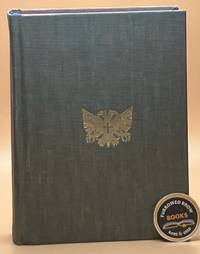
1988260214005Monks of New Skete 1988. Hardcover. Like New. 7x5x1. Monks of New Skete : A Book of Prayers. Cambridge NY : New Skete Orthodox Church in America 1988. Duodecimo 12mo 7.625"/19.3cm h. Bound in publisher's gray cloth gilt double eagle emblem to both boards. Red stain to all textblock edges. Four silk ribbons fixed to headband. Plain gray-green endpapers. Off white pages: four sheets before begin pagination then: vi vii-xlv xlvi-l 627 628 colophon 629-638 blank. Preface and intro both in red ink; Prayers morning night various other times meals; Orders of: Vespers Great Vigil Matins Little Hours; Appendix Dismissals Exaltations Trisagion for the Dead Special Petitions Prayers for New Year's Day. Condition notes: a fine copy of the handsomely produced and rarely seen New Skete Prayer book: Light wear to boards sharp corners. Binding solid and square. Interior lovely and unmarked. The preface and intro provide background on the history and use of the prayers in the Orthodox Church in America as well as some background on the early 1965 and 1976 prayer book issues from the skete. We personally inspect every book we offer. Monks of New Skete hardcover
1976GB00504K2NGI3N00Circulation Service Inc 1976. Hardcover. Good. Disclaimer:A copy that has been read but remains in clean condition. All pages are intact and the cover is intact. The spine may show signs of wear. Pages can include limited notes and highlighting and the copy can include previous owner inscriptions. At ThriftBooks our motto is: Read More Spend Less.Dust jacket quality is not guaranteed. Circulation Service, Inc hardcover
1999S6686<p>SS Cyril and Methodius Center for Cultural Studies 1999. Brand new. In Russian. Soft cover 25 cm 490 pp.</p><p>.</p><p>.</p><p>================================================</p><p><b>IMPORTANT: The shipping cost in not included in the price. You will have to approve it at confirmation of the order.</b></p> SS Cyril and Methodius Center for Cultural Studies paperback
1985S6022<p><strong>Katalogos tÅn NeÅn AravikÅn CheirographÅn tÄ“s Hieras MonÄ“s Hagias AikaterinÄ“s tou Orous Sina</strong></p><p>Bilingual: in Greek and Arabic. Hard coverjacket 21.5X28.5 cm 15672 pp. ill.: 144 b/w plates 20 colour plates. Bibliography. Indices. Read the contents at the attached image.</p><p>The catalogue of the Arabic manuscripts found in 1975 in the Monastery of Saint Catherine at Sinai. The manuscripts are described in two languages modern Greek and Arabic. It is mainly liturgic patristic and ascetic manuscripts.</p> Hellenic National Research Foundation hardcover
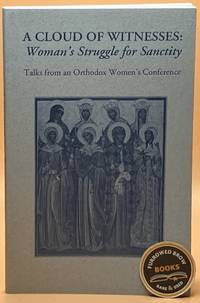
1992260403002Valaam Society of America 1992. Paperback. Like New. 8x5x1. Nectaria R. Nun et al : A Cloud of Witnesses: Women's Struggle for Sanctity : Talks from an Orthodox Women's Conference. Chico CA : Valaam Society of America 1992. No additional printings listed. Octavo 8vo 8.25"/21cm h. Bound in publisher's matte color pictorial wrappers. 6 7-143 144 blank. Contents see photo introductory comments eight papers delivered at conference including addresses by Sarah Elizabeth Cowie Catherine McCaffery Magdalena Berry D. Ruth Stark et al. Notes passim. Condition notes: an excellent copy with light wear to wrappers no spine crease. Interior unmarked. A printer's imperfection has slight folds to pp 7-10 with slightly distorted printing to p 8 without loss of readability. Light wear to wrappers. We personally inspect every book we offer. Valaam Society of America paperback