2 182 résultats
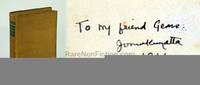
1938241H0034London: Secker and Warburg. Fair in Poor dust jacket. 1938. First Edition. Hardcover. Signed and inscribed by Jomo Kenyatta atop front free endpaper. "One of the first really competent and instructive contributions to African ethnography by a scholar of pure African heritage. Through his upbringing Mr. Kenyatta combines to an unusual extent the knowledge of Western ways and Western modes of thought with a training and outlook essentially African. As a first-hand account of a representative African culture as an invaluable document in the principles underlying culture-contact and change; last not least as a personal statement of the new outlook of a progressive African this book will rank as a pioneering achievement of outstanding merit." - Introduction. Author was the founding father of Kenya and led the nation from its independence in 1963 until his passing in 1978. pp. xxvi 339. Index. Glossary. Eight pages of black and white photographic plates. One-page map of Gikuyu Country. Somewhat above-average soiling and wear to original tan cloth. One-inch opening between foot of backstrip and front board. Brilliant gilt lettering in green panels upon backstrip. Contents unmarked with occasional moderate soiling and minimal foxing. Binding tender in places but intact. Two openings each less than one centimetre to central portion of front hinge. Very heavy wear to dust jacket now in archival protection.; 8vo - over 7¾" - 9¾" tall; Facing Mount Mt. Kenya - The Tribal Life of the Gikuyu Kenya Africa Mau Mau Kikuyu Gekoyo Gikuyu; Signed by Authors . Secker and Warburg hardcover
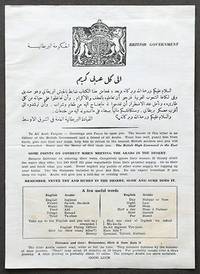
1940170773London: British High Command in the East c.1940-43. Greetings and Peace be upon you A rare chit for RAF pilots to carry during the North Africa Campaign 1940-3 in case of being lost or captured. Written for the benefit of British personnel in the field the focus is simple and concise. The first paragraph in English and Arabic presents a simple greeting asking for hospitality. The following gives points of conduct such as "remove footwear before entering their tents" and "do not expect breakfast if you sleep the night. Arabs will give you a mid-day or evening meal". A word list includes translations of "friend" "food" "tired" and "enemy". The document was colloquially known as a "goolie chit" a "throwback from an earlier war when Royal Flying Corps pilots in India and Mesopotamia needed security in the form of a document that promised a reward to anyone who would bring a British aviator back to British lines. It was so called because local tribesmen in the area were said to turn over aviators to the women who castrated them for use as servants" Feast. We have encountered two other issues: one slightly simplified British issue and an American issue carried by all pilots and crewmen of the Twelfth Air Force with a message from President Roosevelt instead of the British High Command in the East. Quarto single-sheet 244 x 173 mm text in Arabic and English on recto only edge-mounted on thick black card within white card mount all on laminate board presented in dark oak frame with conservation acrylic glazing 353 x 280 mm. Vignette of the Great Seal of the Realm at head. Backed on coarse linen minor foxing sometime folded. A very good example of a fragile publication. "Notes for Communicating with Arabs" IBCC Digital Archive document 25543; Sean Feast Coming Down 1988. unknown
19134001Oxford University Press 1913. First Edition in English. Hardcover. VG. decouverts par Aurel Stein dans les Sables due Turkestan Oriental.TEXT IN FRENCH translated by and published for E. Chavannes. Large format. 232 pp 37 plates one folding. Oxford University Press hardcover
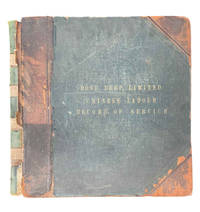
190522629<p>Manuscript record of Chinese immigrant workers in the Rose Deep Gold Mine near Johannesburg 996 pages large 4to.; original half leather binding title in gilt on upper cover. The manuscript chronicles the service of 874 Chinese immigrants dating from February 1905 to January 1908. Each miner has a full page listing: registration number name and surname amount earned moneys advanced remittance to China number of shifts worked number of working shifts in month leave sickness accidents desertion unlawful absence deaths repatriation total shifts lost and remarks as to conduct and character. After the Anglo-Boer War production on the gold mines of the Witwatersrand was very low due to a lack of labour. The British government was eager to get these mines back working as quickly as possible as part of their overall effort to rebuild the economy. Much of the local labour had returned to farming and the Governor Lord Milner reluctantly agreed with the assent of the British government to import Chinese coolies each on a three-year contract that terminated with compulsory repatriation. The mines had become unpopular with Africans due to attempts to reduce wages in order to maximise profits. Some mines experimented using whites as unskilled labour but these experiments were unsuccessful as they tended to demand higher wages. On the 19th of June 1904 the first Chinese labourers thus arrived at the Witwatersrand. Between 1904 and 1910 there were almost 64000 Chinese working on the Witwatersrand gold mines near Johannesburg. Most of these contractors were recruited from the Chinese provinces of Zhili Shandong and Henan. This measure was very successful in increasing the production of gold from mining but in the long run it faced stiff resistance from white labour that considered the Chinese unfair competition in terms of skilled and semi-skilled jobs. Chinese labour in the South African Mines met appallingly dangerous condition a lack of sanitation good food and welfare. Herbert Hoover who would become the 31st U.S. president was a director of Chinese Engineering and Mining Corporation CEMC when it became a supplier of coolie labour to South African mines. The first shipment of 2000 Chinese workers arrived in Durban from Qinhuangdao in July 1904. Almost all the Chinese labour was entirely recruited and shipped by CEMC. When the living and working conditions of the labourers became known public opposition to the scheme grew and questions were asked in the British Parliament. The scheme was abandoned in 1911. The mass importation of Chinese to work on the gold mines contributed to the fall from power of the Conservative government in the Britain. However it did stimulate to the economic recovery of South Africa after the Anglo-Boer War by once again making the mines of the Witwatersrand the most productive gold mines in the world. Little is known about the lives of the Chinese men who actually worked in the Witwatersrand gold mines and this is a rare document which sheds light on this largely forgotten page in Imperial history. Spine lacking and worn.</p> No Publisher hardcover
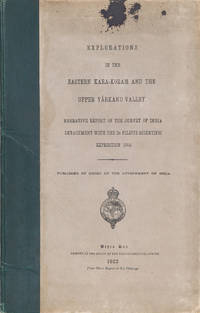
19223976Dehra Dun: Government of India 1922. First Edition. Hardcover. VG. narrative of the report of the survey of India detachment with the DeFilippi Scientific expedition 1914. Printed at the office of the trigonometrical survey. 42 pp ill. panoramas 29 lithographed plates and two folding maps inserted in rear pocket. The Depsand Plateau upper Yarkand River march to Suget Yarkand Valley and journey to Europe. Notes regarding the disused routes of the Kora-Koram. Large format. VG to VG. Internally nice. There is a splash of dark ink on the top front cover about 1 1/2 inches x 1 inch. Soiling on board edges. Better than vg but not quite vg. Rare. Government of India hardcover
19123986Paris: Privately printed 1912. First Edition. Hardcover. Very Good. Itinerary of the Pelliot Mission. Three Years in Upper Asia. mimeographed translated from Pelliot's article in L'Illustration. TEN Original photos inserted in text presumably these were originals from the magazine illustration. Paul Pelliot made an important three year journey through Central Asia Chinese Turkestan and Western China. Soon after his return he related details of his journey and that speech was printed in L'Illustration. Henry Getty translated that article and obtained original photos to insert. It seems like only a small number of copies could have been printed. Half leather over marbled boards marbled endpapers. Other than some browning around the very edges of the sheets this is in VG to vg condition and RARE. Privately printed hardcover
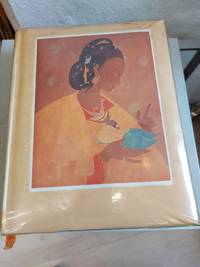
196887563Lahore: Nisar Art Press 1968. Gebunden mit Plastik Schutzumschlag. Nisar Art Press unknown
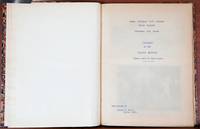
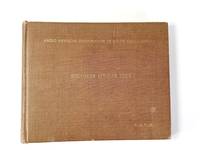
1955410891Johannesburg 1955. Foxing to prelims and postlims light spotting to text leaves photographs clean and well-preserved. 8 x 9.5 inches 203 x 242 mm. Preliminary text leaf: "Visit of British Educationists to Southern Africa December 28 1954––January 12 1955." 48 black-and-white photographic prints mounted back-to-back; interleaved with text leaves all mounted on guards. Light-brown cloth gilt-lettered on front cover. Provenance: G. H. G. Harris a member of the tour gilt initials on front cover pencil signature on title typed letter from the Harry Oppenheimer 27 June 1955 mounted on front pastedown. The letter on the pastedown from Harry Oppenheimer Deputy Chairman presents the volume to Mr. Harris: "After your visit to Southern Africa. it occurred to us that you might care to have some photographs to remind you of the places and people you encountered here. We have accordingly had a selection of photographs assembled in the form of an album. It is as you are aware our hope that as a result of your visit more young men from the British Isles may be interested in making their careers with us."<br /> <br /> The opening text describes the trip made during December 1954 and January 1955 on which "twenty educationists–University Professors Careers Masters and Headmasters from the United Kingdom–visited South Africa and the Rhodesias as guests of Anglo American Corporation of South Africa Limited."<br /> <br /> In South Africa they visited the gold mine of South African Land and Exploration Company Ltd.; the uranium and sulphuric acid plants of Daggafontein Mines Ltd.; the Orange Free State Goldfields Welkon and Allanridge; Premier diamond mine at Cullinan near Pretoria; the diamond mines at Kimberley; and the Cornelia Colliery near Vereeniging. They went to Victoria Falls and in the Rhodesias they visited the copper mines of Nchanga Consolidated Copper Mines Ltd and Rhokana Corporation; the research labs of Rhoanglo Mine Services Ltd at Kitwe; and the mining towns of Chingola and Nkana. <br /> <br /> The names of the twenty members of the party are listed on the preliminary text leaf. The photos start at the company's headquarters in Johannesburg and then follow the course of the trip. A number show The Ernest Oppenheimer Hospital at Welkom and others show the De Beers facilities including dogs trained to attack intruders. Each photo faces a printed caption detailing the subject in the image. <br /> <br /> The Anglo American Corporation of South Africa was founded in 1917 by Ernest Oppenheimer with financial backing from the American bank J.P. Morgan & Co. The AAC became the majority stakeholder in De Beers in 1926. In the late 1940s and 50s the AAC focused on the development of the Free State goldfields and the Vaal Reefs mine. Ernest Oppenheimer died in 1957 and the company continued under his son Harry the author of the letter to Mr. Harris that is found on the pastedown of this album. The company has at least one connection to the literary world: they loaned a diamond to artist Richard Chopping to use as a model for the paintings he made for Ian Fleming's James Bond series’ dust jackets.<br /> <br /> Rare: given the presentation of this volume it is likely that twenty albums were compiled and distributed to the educationists. We trace no copies in WorldCat/OCLC nor any at auction. A very scarce piece of corporate promotion. unknown
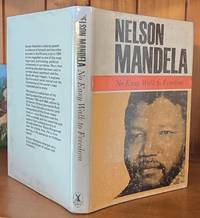
196527180London: Heinemann Educational Books. Near Fine in Very Good dust jacket. 1965. First Edition. Hardcover. Foreword by Ahmed Ben Bella - President of Algeria introduction by Oliver Tambo. Edited by Ruth First. With black/white photographic illustrations unclipped dustjacket that has small piece missing from top of spine see images overall a very good copy of this first edition. ; 210 x 140mm; 189 pages . Heinemann Educational Books hardcover
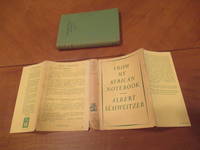
1951051287London Uk: George Allen & Unwin 1951. 1st Edition 2nd Printing. Hardcover. Near Fine/Very Good. Map Photographs. 132 Pp. Catalog At End. Green Cloth Lettered In Brown. Second Printing Stated 1951. Signed By Albert Schweitzer On The Half Title Page Obtained In Person On A Trip To Lambarene By The Previous Owner. Near Fine Slight Browning To Upper And Lower Edges Five Words Faintly Underlined. Dust Jacket Priced 8S 6D Light Usage Slight Browning To Spine A Few Short Tears And Minute Losses At Edges. <br/> <br/> George Allen & Unwin hardcover
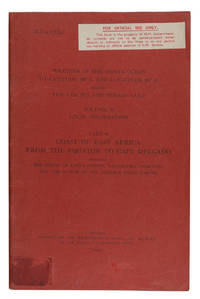
1940ABC_46347London: Meteorological Office Air Ministry 1940. Original publisher's printed red wrappers. 8vo. With map frontispiece and several illustrations and tables in the text. First edition of a rare climatological study originating from a series of meteorological handbooks of the Indian Ocean issued by the British government between 1940 and 1944. The three-volume series comprising a total of 12 parts was prepared by the Meteorologial Office Air Ministry in cooperation with the Naval Meteorological Branch Admiralty London; it was reprinted for the U.S. Navy as late as 1980. The ESSA Technical Memorandum of 1969 mentions another reprint in 1945.The present volume is the last of nine parts of volume II covering the climate of the East African coast from the equator to Cape Delgado discussing tropical cyclones and depressions winds visibility clouds rain and hail temperature humidity and other meteorological events. The frontispiece shows a map of the relevant area; additional diagrams illustrate surface winds and higher winds as well as the amount of clouds and rainfall. The tables show the general climate in Mombasa Tanga Zanzibar Dar es Salaam Kilwa and Lindi as well as the monthly frequency of wind direction and force at sea and in the upper air and the visibility at coastal stations.Library shelfmark in pencil as well as a mounted blank loaning sheet to final blank page. 7 combinations of letters and digits in black felt pen to lower cover. Traces of a shelfmark label and a cancelled inscription to front cover. Not a single copy in auction records.l U.S. Department of Commerce ESSA Technical Memorandum EDSTM10 A Note on Climatology of Thailand and Southeast Asia 164 19; WorldCat 1181290135. Meteorological Office, Air Ministry, unknown
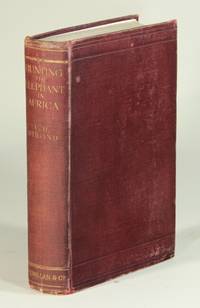
191352528London: Macmillan and Co 1913. First edition 8vo pp. xv 1 379 1 6 ads; folding table giving particulars of 25 felled elephants 27 photographic illustrations on 16 plates; some rubbing at the extremities otherwise a very good copy in original red cloth gilt-lettered spine. Czech Africa p. 156: "A pre-eminent elephant hunting title this details Stigand's big game hunting efforts primarily in British East Africa North Eastern Rhodesia Nyasaland and the Lado Enclave. Macmillan and Co unknown
1989VB2300310560Adesegun Johnson & Koram Publishers 1989. paperback. Very Good. 1x4x8. VERY GOOD MAY HAVE ONE PAGE OF WRITING PAGES ARE IN GREAT CONDITION USED PRODUCTS DO NOT CONTAIN ORIGINAL CONTENTS WILL HAVE SHELF WEAR AND STICKERS ON COVER. MAY HAVE MISSING CD INSERTS CODES. Adesegun, Johnson & Koram Publishers paperback
1902002846London: Longmans Green and Company 1902. An historical account of the reconquest of the Soudan. Second edition revised first one volume edition. The text had been revised considerably and a new chapter added describing the ultimate destruction of the Khalifa and the end of the war. Scarce. 8vo pp xiv 381pp. Original red cloth gilt titles and pictorial gilt riverboat decoration to both spine and front board. With frontispiece maps and plans. All 14 color maps present - most are fold-out maps. Spotting and shelf wear to cover and spine . Only library markings are a Navy library sticker U.S.S. Leviathan inside front cover and an embossed Navy seal on the title page. Otherwise a tight clean book. Revised Edition. Decorative Cloth. Very Good/No Jacket Issued. 8vo - over 7¾" - 9¾" tall. Ex-Library. Longmans, Green and Company hardcover
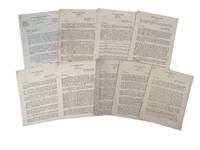
1946234091946. ColonialismReligion Archive of letters by Dr. John A. Reuling recording his 1946 missionary work in Africa across mid-century Portuguese Belgian British and South African colonial systems where evangelism was a tool of westernization and colonialism alongside education public health and agricultural training. Written during Reuling's first year as Africa Secretary for the American Board the letters track his movements through Elende Bailundo Currie Institute Chikore Mt. Silinda Mange Adams College Johannesburg McCord Hospital Groutville and other mission and colonial settings. Reuling criticizes mine compounds overcrowded townships migrant labor white settler indifference and extractive demand for "gold manganese copper diamonds etc." while also presenting mission schools and hospitals as tools for reshaping African society through Western medicine wage labor preparation and Christian discipline. Reuling calls for African church autonomy and African leadership yet his language remains paternal and administrative indicative of mid-century missionary attitudes towards development in Africa.<br /> <br /> John A. Reuling African Mission Letters. Angola Belgian Congo Southern Rhodesia Portuguese East Africa South Africa and Boston 1946. Archive of 10 typed letters 43 pages total including nine multi-page circular letters from Dr. John A. Reuling and one typed American Board Foreign Department letter to Rev. Henry A. Jessop. The letters are dated April 28 through December 17 1946 and include Reuling's sequential mission letters numbered 1 2 4 5 6 8 9 10 and 11 each circulated to "Dear Friends." The content covers colonial and mission administration in African schools hospitals mine labor township poverty public health and Christian churches.<br /> <br /> 1 Reuling John A. Letter #1. Elende Mission Station Cuma Angola Portuguese West Africa April 28 1946. Five-page typed circular letter tracing Reuling's route through London Lisbon Liberia Brazzaville Luanda Lobito Bay and inland Angola including his statement that correspondence between Galangue and Chilesso could require "over 400 miles of foot travel."<br /> <br /> 2 Reuling John A. Letter #2. Currie Institute Dondi Bela Vista Angola Portuguese West Africa June 10 1946. Seven-page typed circular letter describing Angola mission stations African pastoral ordination plantation and fishing labor and the economic damage caused when Western trade displaced earlier Ovimbundu caravan networks while "giving them nothing in return."<br /> <br /> 3 Reuling John A. Letter #4. Missao do Bailundo Teixeira de Silva Angola West Africa June 21 1946. Four-page typed circular letter on African schooling in Angola including overcrowded classes pupils walking 70 to 150 miles Currie Institute Means School for Girls Liceu fees and Reuling's statement that "the 20th century has caught up with the Ovimbundu."<br /> <br /> 4 Reuling John A. Letter #5. Chikore Mission Station Southern Rhodesia August 8 1946. Three-page typed circular letter assessing the Leopoldville Conference where mission and African delegates addressed urbanization industrial development mission-government relations education medicine African economic status and the claim that "Africa and Africans are subject to the same restlessness" affecting the postwar world.<br /> <br /> 5 Reuling John A. Letter #6. Mt. Silinda Institute Southern Rhodesia August 20 1946. Three-page typed circular letter on Mt. Silinda's industrial training teacher training hospital farm mahogany forest Association of Churches and African church responsibility for "full financial responsibility for its own work."<br /> <br /> 6 Reuling John A. Letter #8. Mange Mission Station Alto Maxixe Inhambane Portuguese East Africa September 6 1946. Four-page typed circular letter linking mission work in Mozambique to African church self-support South African General Mission cooperation coastal travel and mine recruitment that carried men from Mange to Johannesburg by ship and rail.<br /> <br /> 7 Reuling John A. Letter #9. Johannesburg Union of South Africa September 21 1946. Seven-page typed circular letter analyzing Johannesburg mining Orlando township mine compounds African teachers Bridgman Memorial Maternity Hospital and the colonial economy driven by American demand for "gold manganese copper diamonds etc."<br /> <br /> 8 Reuling John A. Letter #10. Adams M.S. Natal South Africa October 7 1946. Four-page typed circular letter on Adams Mission Station African nationalism Communist organizing McCord Hospital drought relief soil-cement housing and African leaders watching events in "Egypt Indonesia India."<br /> <br /> 9 Reuling John A. Letter #11. Groutville Mission Station Natal South Africa October 21 1946. Four-page typed circular letter on Adams College Inanda Seminary McCord Hospital South Coast churches Groutville Church Mr. Robbins Cuma and Chief Albert Luthuli.<br /> <br /> 10 Reuling John A. Typed letter to Rev. Henry A. Jessop. Boston Massachusetts December 17 1946. One-page typed American Board Foreign Department letter in which Reuling explains that he did not reach Umsunduze notes that he was preparing "to have my appendix out" and names American Board personnel including the Booths Sticks Bergsmans Kaetzels Rubensteins and his own children.<br /> <br /> The archive records missionary reform at the end of World War II through the lens of mid-century colonial development. Reuling's letters are especially strong coverage of African education and public health including operational details rarely present in formal mission reports such as pupils sleeping in adobe thatched houses pupils walking 25 to 30 miles to school a mission doctor being absent on furlough malaria treatment limited by quinine shortages and African nurses at McCord Hospital serving as "a positive demonstration" of African competence. They also preserve Reuling's paternal assumptions about African population including his his belief that mission intervention could guide African development and his insistence that Christian institutions could keep postwar unrest from turning violent. Original typed letters many stapled at upper left with fold lines scattered stains occasional edge wear. Overall good to very good condition. unknown
190272362Huerth 1902. kart. unknown
1921AFRICA001341Seeley Service & Co London. 1921. First edition. Octavo. 479 pages. Many maps and illustrations. Original pictorial black cloth stamped in green. This work is a continuation of the author's groundbreaking ahem 1896 work The Great Rift Valley. The Gregory Rift in the Great Rift Valley was named in his honour.On the front free endpaper is the 1945 ownership inscription of a certain H.K. Hotham with his Queen Street Melbourne address where it turns out he was a seller of eucalyptus oil. Edges and endpapers faintly spotted. Near fine in the scarce dustwrapper which is complete slightly nicked and with long closed tears. Seeley, Service & Co, London. hardcover
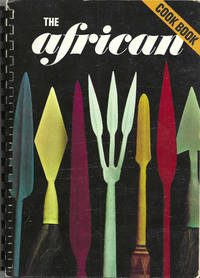
19649415New York: Harvest House 1964. Small quarto in comb binding 25.5 x 18 cm. 64 pages. Illustrated. Index. FIRST EDITION. A cookbook of regional African recipes by Bea Sandler restaurant consultant and food magazine editor. An expanded edition was released in 1970 by World Publishing Co. with the contracted title African Cookbook and re-issued again in 1993. The introduction to the 1993 edition notes that “The first publication of this book was . the first volume on African cooking to appear in this country or anywhere outside of Africa.†The second half of that statement was incorrect but it was indeed the first published in the U.S. The cookbook originated with Sandler’s role in planning the menu for The Tree Houses Restaurant at the African Pavilion of the 1964-65 New York World’s Fair. Sandler writes in the preface that after being given this task “to our amazement we could not find an African cook book published in America†though they were able to turn up a couple of volumes published in Africa after which “we embarked on a long and complex testing program. We invited people who had been in Africa to participate in the testings and to advise us on the final selection of menu items.†Each chapter of the book “is designed to give you a complete luncheon or dinner as you would get it at the African Pavilion.†For instance one chapter provides a complete “Couscous Menu†consisting of Groundnut Soup Couscous Mauritania a salad and Mango-Banana Sundae. Other recipes in the book include “Tree House†Chutney Curry of Beef Kenya Chicken Moamba Foo-Foo and Nigerian Pancakes as well as six recipes for alcoholic cocktails including Paw-Paw Paradise and Tanganika Tonic. The lower portion of each page prints a description of one of the countries featured at the pavilion. Sandler went on to travel extensively around Africa compiling recipes for her 1970 edition of this cookbook. This original World's Fair publication is very uncommon. One small pencil annotation to margin otherwise internally clean and sound. Photographically illustrated covers are lightly rubbed and with some bumping to corners otherwise fine. Not in Tipton-Martin's The Jemima Code. Harvest House unknown
19133999Cambridge England: Cambridge University Press 1913. First Edition. Hardcover. VG. A physiographic sketch and account of some travels. 564 pp 207 maps diagrams and other illustrations. Large format heavy book. A most important study of the area between the Oxus and Jaxartes Rivers which includes the Altai and Pamir Mountains. Includes the historically important regions of Bohara and Samarkand. A solid vg copt in original cloth. Beveled edges. A really good travel narrative. Cambridge University Press hardcover
19063852NY/London: Putnam's/Everett 1906. First American. Hardcover. VG to near Fine. 2 volumes: 292 & 292 pp. One of the more detailed biographies. Penzer pp 213-332. Penzer spends more time on this on this title than any other but considering the amount of criticism it is likely because he was jealous. A lovely set in original cloth. Putnam's/Everett hardcover
1916011133Garden City New York: Doubleday Page & Co 1916. 527pp w/2 folding plates ans 2 folding maps - profusely illustrated throughout on plates and in the text; original cream buckram with pictorial paste-down on upper cover and pictorial label on spine a small chip at the top. The scarcest of Kunz's major works along with his treatise on pearls. Chapters on evolution and development of the elephant on elephant hunting and on the art and commerce of ivory carving. Touches on all aspects of ivory collecting commerce and art. Text clean. Excellent condition. 1st Edition. Decorative Cloth. Very Good/No Jacket. 4to - over 9¾" - 12" tall. Doubleday, Page & Co Hardcover
190421056Chicago: Chapman Publishing Company 1904. First edition . Hardcover. Near Fine. Biographies of many of the Oregonians who have contributed to the development and progress of Western Oregon. 1033 pages illustrated with numerous photographs of the prominent individuals plus index. Smith: Pacific Northwest Americana 8308. Bound in original black leather with bevelled edges raised bands lettering stamped in gilt and border and rule stamped in blind. All edges of text block in gilt. A handsome near fine copy. A sturdy copy seldom found in such attractive condition. <br/> <br/> Chapman Publishing Company hardcover
192963842London: H.F. & G. Witherby 1929. Tall 8vo. 223 pp. plus 1 pp. publisher’s ads. Photo frontisp. numerous photo plates throughout by W. Woodhouse. Red embossed publisher’s cloth gilt lettering & ruling on spine minor bumping to couple corners edgewear to lower fore-edges dustsoiling to upper fore-edge minor sunning head of spine w/ d.j. wraparound cover art image of hunter shooting at a man-eater lion w/ brushfire in the background chipping & tear to head of spine w/ about 1.75 in. of loss to lettering chipping & edgewear to foot of spine some minor creasing still a VG/G- copy w/ mimeographed private library slip laid-in for M.R. Steele and bookseller’s label on rear pastedown. First edition stated of this work describing the author’s hunting adventures while leading an American hunting party through the African bush tracking down man-eating lions and rogue elephants. Chadwick 1882 had first emigrated to South Africa in the 1920’s and became a transport rider and member of the Bechuanaland Protectorate Police while working as a professional hunter earning a living selling ivory and lion skins from his trophies. The original dustjacket is exceedingly scarce with Ellen Herring of Trophy Room Books noting that they had only seen this one copy. H.F. & G. Witherby, hardcover
190638631New York: Augustus C. Brown/Self published 1906. Second edition . Hardcover. Very good plus. Inscribed by Brown on the front endpaper; "With the compliments of A.C. Brown." Fixed to the front endpaper is a signed letter from Brown to Arthur-Haynsworth-Masten relating how few copies he had printed. Additional signed letter from Brown presenting this second enlarged edition fixed to the rear endpaper. A factual Civil War narrative of Grant's campaign against Richmond in the May to December 1864 period. Dornbush; Military Bibliography of the Civil War Vol. 1 N20. Broadfoot; Civil War Books pg 64. Two small notices of the author's death fixed to the rear free endpaper. From the library of Arthur-Haynworth-Masten with his neat bookplate placed on the front paste-down endpaper. Bound in original brown cloth with lettering and border stamped in gilt. A very good plus copy. <br/> <br/> Augustus C. Brown/Self published hardcover
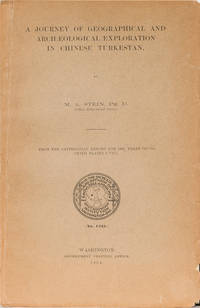
19042154Washington DC: Smithsonian Institution 1904. First. Orig Printed Wraps. VG. pp 747-774 with plates 1-7 from the Smithsonian Report for 1903. Map showing a portion of Chinese Turkestan taken from Stein's original. Very scarce Stein offprint/ephemera. VG in original printed Smithsonian wrappers. Smithsonian Institution unknown