Nia LivingstoneBiblio.com
3 220 résultats
18990672like new. unknown
2010DADAX3844353062LAP Lambert Academic Publishing 2012-01-04. paperback. New. 5.91x0.25x8.66. Buy with confidence. Excellent Customer Service & Return policy. LAP Lambert Academic Publishing paperback
3844353062.Gpaperback. Good. Access codes and supplements are not guaranteed with used items. May be an ex-library book. paperback
ANAIS-1571010459Mastermedia Publishing Company. hardcover. Good. 0x0x0. Buy with confidence. Excellent Customer Service & Return policy. Mastermedia Publishing Company hardcover
MA03A-07152SELF-PUB. Collectible - Good. Pittsburgh: Gregg Livingstone Neel 1973. xi148pp. Illus. portraits facsimiles. Good book. Spine and boards mottled. Owner's name and provenance note on title page. Inquire if you need further information. SELF-PUB hardcover
1973008144Greg Livingstone Neel 1973. Hardcover. Good. Hardcover clean with light shelfwear. Interior clean binding secure. No jacket. Ink name on front end-sheet.Your purchase benefits literacy and summer reading programs in Cincinnati and Hamilton County Ohio. We ship every business day. All books ship in cardboard bookfolds with delivery confirmation. Greg Livingstone Neel hardcover
1453536426.Ghardcover. Good. Access codes and supplements are not guaranteed with used items. May be an ex-library book. hardcover
B9781848132146Paperback / softback. New. Reveals the US role in the darkest periods of Latin American history including Pinochet's coup in Chile the Contra War in Nicaragua and the death squads in El Salvador. This book shows how George W Bush's administration used the War on Terror as a pretext for intervention. paperback
B9781545345733Paperback. New. paperback
B9781546689805Paperback. New. paperback
1683039like new. unknown
1683039-nnew. unknown
20032-0333800893Palgrave Macmillan 2003. Hardcover. New. 222 pages. 8.50x5.50x0.50 inches. Palgrave Macmillan hardcover
385p. + Plus photographs. Chapter heading drawings. Inked ownership of Emilie Latimer. 8vo. Original full cloth binding. Original dust jacket, slight tear without loss. AFRICA/3 + AFRICA/2 Lacks DJ
ANGLETERRE, Penguin Books, 19732 - In-4 - Couverture souple illustrée en couleurs - frontispice et illustrations NB ou couleurs, certaines PP - Abondante iconographie - 368 pages - Propre
2001TK250090Harris Museum & Art Gallery Preston 2001. 1st Edition. HARDCOVER. Extra Large 4to. in illustrated boards stiff red end-papers unpaginated approx. 32pp on thick art paper colour plates etc __CONDITION : An extremely well preserved AS NEW unread and unmarked copy. . To see more of our Art Monographs etc type DbbARTIST in the Keywords search box __We always ship in PROTECTIVE CARD PARCELS Harris Museum & Art Gallery, Preston hardcover
6420ANGLETERRE, Penguin Books, 19732 - In-4 - Couverture souple illustrée en couleurs - frontispice et illustrations NB ou couleurs, certaines PP - Abondante iconographie - 368 pages - Propre
1881RO70051502MEGARD Bibliothèque Morale de la Jeunesse. 1881. In-8. Cartonnage d'éditeurs. Etat d'usage, Couv. légèrement passée, Mors fendus, Rousseurs. 224 pages. Frontispice illustré en noir et blanc (portrait de David Livingstone).. . . . Classification Dewey : 840-Littératures des langues romanes. Littérature française
1020648112.Ghardcover. Good. Access codes and supplements are not guaranteed with used items. May be an ex-library book. hardcover
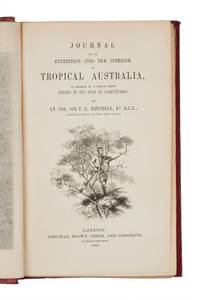
18485001112London: Longman Brown Green and Longmans 1848. Octavo frontispiece 11 lithograph plates and seven maps four folding a very good copy complete with 24 pp. publisher's advertisements neatly recased in the original red cloth spine gilt the cloth in bright condition. <p><p>First edition of Mitchell's account of his last expedition. In late 1845 with Edmund Kennedy as his second-in-command Mitchell set out from Sydney in search of an overland route to the Port Essington settlement. Although he did not find the hoped-for route over the next year he explored a vast area of unknown country in tropical Queensland returning to Sydney in December 1846. As with his earlier expeditions Mitchell showed contempt for official orders preferring instead to follow his instincts. In this instance he seemed more interested in discovering the fabled Kindur River one of his more enduring but erroneous beliefs. To justify his decision he here represented his discovery of the Victoria River which was in fact the Barcoo as the legendary great north-flowing source. Although Mitchell did not succeed in finding a northward route and - if anything - further confused the riddle of the inland rivers upon his return the expedition charted a vast area of previously unknown country without significant mishap or the loss of a single man.</p> <p>The fine tinted lithograph views in the books are all after Mitchell's own drawings. His work as a topographical artist has gained increasing respect in recent years and can be appreciated in the plates prepared for this book. It is characterised by a fine attention to detail and an accomplished use of tone and shading.</p> <p>An attractive copy in its original cloth binding.</p> </p> . Longman, Brown, Green and Longmans unknown
18485000630London: Longman Brown Green and Longmans 1848. Octavo frontispiece 11 lithograph plates and seven maps four folding; a fine copy unusually clean bound without the advertisements in later half blue morocco gilt top edges gilt. <p><p>An elegantly bound copy of the first edition.</p> <p>In late 1845 with Edmund Kennedy as his second-in-command Mitchell set out from Sydney in search of an overland route to the Port Essington settlement. Although he did not find the hoped-for route over the next year he explored a vast area of unknown country in tropical Queensland returning to Sydney in December 1846. As with his earlier expeditions Mitchell showed contempt for official orders preferring instead to follow his instincts. In this instance he seemed more interested in discovering the fabled Kindur River one of his more enduring but erroneous beliefs. To justify his decision he here represented his discovery of the Victoria River which was in fact the Barcoo as the legendary great north-flowing source. Although Mitchell did not succeed in finding a northward route and - if anything - further confused the riddle of the inland rivers upon his return the expedition charted a vast area of previously unknown country without significant mishap or the loss of a single man.</p> <p>The fine tinted lithograph views in the books are all after Mitchell's own drawings. His work as a topographical artist has gained increasing respect in recent years and can be appreciated in the plates prepared for this book. It is characterised by a fine attention to detail and an accomplished use of tone and shading.</p> </p> . Provenance: G.R. Nicolaus with pictorial bookoplate. Longman, Brown, Green, and Longmans unknown
1241142238.Gpaperback. Good. Access codes and supplements are not guaranteed with used items. May be an ex-library book. paperback
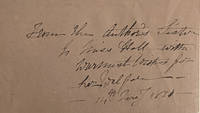
184810244London: John Murray 1848<br>. First edition. Frontispiece 10 tinted lithographs & 7 maps 4 folding. Pp. xiv 438 2pp publisher’s advertisements. 8vo. original red cloth blindstamped border gilt vignette to spine. Joints a little worn some rubbing and soiling to cloth.Booksellers label from Melbourne. <br>With a presentation inscription from Mitchell’s sister: ‘From the Author’s sister to Miss Hall with warmest wishes for her welfare’.<br>Between 1831 and 1848 Mitchell made four major expeditions into the Australian interior. Mitchell's final year long expedition sought to solve once and for all the question of the drainage of North-Eastern Australia. He set out in December 1845 with Edmund Kennedy as second in command and proceeded north into tropical Queensland. He had hoped the Barcoo River what he called the Victoria would lead all the way to the Gulf of Carpentaria and thereby provide an overland route between Sydney and Port Essington on the Gulf of Carpentaria. A very good copy with a lovely association.Ferguson 4828 Association copy belonging to the author’s sister and inscribed by her John Murray hardcover
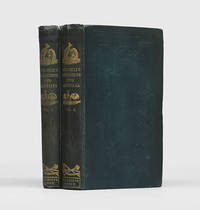
1838173536London: T. & W. Boone 1838. The deep tracks of his boat carriage quickly became their ribbon to follow to the south-west First edition of this illustrated account by the explorer who opened up the lush pastures of western Victoria to colonial settlement. His three daring expeditions added extensively to knowledge of Australia's inland waterways. This copy is from the collection of Jonathan Wantrup a leading bibliographer of Australiana with his book label on the front pastedowns. Appointed deputy surveyor-general of New South Wales in 1827 Mitchell 1792-1855 arrived in Sydney in September and began a six-year effort to produce a topographical map of the colony. His "Map of the Colony of New South Wales 1834 otherwise known as the 'map of the nineteen counties' has scarcely been equalled anywhere. It was perhaps Mitchell's greatest achievement. He determined too to extend his surveys outside the nineteen counties and though there are other reasons for his exploratory expeditions this was a major factor" ODNB. Mitchell's first expedition begun in late 1831 while his map was still in progress "explored between the Nammoi and the Gwydir and crossed the latter to strike the Barwon but there was no north-west river; all streams were clearly tributaries of the Darling. The murder by Aborigines of two of his party as they were bringing up provisions made a return to the settled colony imperative" ODNB and his party reached Sydney in February 1832. His second expedition undertaken three years later charted the course of the Darling to the point where it turned south establishing the likely region where it met the Murray. "Mitchell's third and most significant journey was undertaken ostensibly to connect the Murray with the Darling but also to explore the Murray and perhaps the country south of it. The expedition left Sydney in March 1836 and moved down the Lachlan. It was impossible to cross to the Darling so Mitchell proceeded to the Murrumbidgee and into the Murray following it down to what was thought to be the Darling junction. He traced the Darling upstream only sufficiently far to satisfy himself that it was in fact that river. Some 30 miles below the Goulburn river junction he turned off south-west. The region he then opened up he named Australia Felix now the western district of Victoria which certainly forms one of the richest tracts in Australia. At the Murray he found the country on the eve of being taken up by graziers and the deep tracks of his boat carriage quickly became their ribbon to follow to the south-west. This journey which lasted over seven months thus added greatly to the knowledge of a very fertile region of Australia" ODNB. Copies in the original cloth are nearly always found either rebacked or recased and this is a better example than most. 2 vols octavo. Frontispieces Vol. I hand-coloured 44 plates 3 hand-coloured 1 folding 5 maps and plans 3 hand-coloured 2 folding large folding map at rear with hand colouring vignette title pages illustrations and tables in text; 16 pages of publisher's advertisements at end of Vol. II. Original green vertically combed cloth recased spines lettered in gilt with gilt vignettes of kangaroos emus and aboriginal weapons boards decoratively blocked in blind yellow coated endpapers edges untrimmed binder's ticket of Remnant & Edmonds on front pastedown of Vol. I. Cloth clean light cockling and creasing small split at head of spine of Vol. II some plates foxed as usual large folding map with small splits at folds and stub rear repaired on verso: a very good set. Ferguson 2553; Hill 1165; Wantrup 124a. hardcover
1023149036.Ghardcover. Good. Access codes and supplements are not guaranteed with used items. May be an ex-library book. hardcover